“I’ll Trust The Science”

Friday’s Column: Brent’s Bent

Today, the term “science” is overused, or should I say abused? People conflate consensus with knowledge. To get rid of today’s biases, let’s go back in time to see how Noah Webster defined the word nearly 200 years ago. Webster told us that “science” refers to “knowledge, or certain knowledge; the comprehension or understanding of truth or facts by the mind” (Webster). The focus then shifts to determining the facts upon which we can rely. Perhaps you’ve heard that something can only be established as fact if it is observable or repeatable in the case of an experiment. That determination is valid.

Thus, regardless of whether you accept the existence of a Creator or believe our existence is the result of random chance, you must recognize your conclusion as a matter of faith. This admission is not to say that there isn’t any evidence. There is proof. The Creator supplies testimony of Himself that the creationist accepts. But, it becomes a matter of faith because we were not present to witness firsthand events, and we cannot recreate our universe’s emergence from chaos or nothingness. As a creationist, I have more reason to believe in my facts than the person who has to think that everything came from nothing, an event that all of written history fails to report.

I apologize for the lengthy preface, but a brother once chastised me for not approaching these topics more “scientifically.” There appears to be an irrational belief that you cannot open your mouth to speak on a subject unless you have a doctorate. People seem to have forgotten that the world had learned men before American colonials established Harvard or Yale. Indeed, men like Abraham Lincoln, who kept the American Union together, were self-taught. No one questions Lincoln’s wisdom as they read the speeches that have outlived him.

However, in this information age, we have become skeptical of any information that contradicts our paradigm. I’m not necessarily condemning this skepticism because it’s often justified. As Christians, we recall the Holy Spirit’s compliment to the noble Bereans for cross-referencing Paul’s sermons with God’s Word (Acts 17.11). But we must remember that education is only a tool, a means to an end. Education teaches us how to comprehend the truth. Any idiot can wield a chisel, but only the diligent can carve a statue out of a marble slab. I say this to remind us that a man with an advanced degree can have an overpriced piece of paper and stumble over a topic, whereas an avid reader can speak eloquently about the issues about which he reads.

I cannot speak eloquently on the science found in Genesis 1.1-2. I can only offer what I’ve learned from researching the topic. I will say that I have made an effort to comprehend opposing viewpoints. They can be entertaining, even if I know they are not valid explanations for our existence. I add that God did not intend the Bible to be a science textbook. As a result, any science gained from the Bible results from the fact that the Bible is true (John 17.17).

Friends who do not believe in a Creator are left to believe in one of several competing theories. Most of us are familiar with the Big Bang. In August 2022, some said that the James Webb Space Telescope disproved the Big Bang theory. On the other hand, scientists claim that such a declaration results from a false scientific approach (Cooper). Fair enough. There would be several other intriguing alternative explanations, even if one dismissed the Big Bang. The concept of quantum entanglement is one of these theories. Don’t worry. I won’t even attempt to explain it since I have no advanced degrees in physics.

However, time, energy, space, and matter are all mentioned in Genesis 1.1. Interestingly, NASA informs us that the universe “includes all of space, and all the matter and energy that space contains. It even includes time itself” (Brennan). So, Genesis 1.1 looks at our existence from a scientific point of view.

“In the beginning” refers to time.

“God created” refers to energy.

“The heavens” refers to space.

“The earth” refers to matter.

But this is where things get tricky. God used the idea of time to help us understand. He did this by dividing the creation into 24-hour blocks of creative work, starting in verse 3. Real-time, however, began when the light from day one merged into the sun on day four, the sun around which our planet transits. A year is a unit of time defined by one complete revolution around this star. God elaborated further with the creation of the sun, moon, and stars, saying that they “serve as signs and for seasons, and for days and years” (Genesis 1.14 NASB).

We would not know that there were three consecutive 24-hour periods if God did not elaborate that what He did on days one through three was completed in an evening and morning, a day (i.e., the Hebrew “yom,” which implies the length of a typical day). As a result, God completed the initial work of creation when time did not exist. I don’t say this as a concession to allow for a fourteen billion-year-old universe.

The unspoken implication is that God first created the material from which He would later shape our universe, as demonstrated in Genesis 1.2. There was something nebulous there, over which God’s Spirit hovered before He said, “Let there be light.” What happens when you try to age something that existed before time? Consider the dating techniques we employ and the potential flaws they contain. These methods necessitate consistency. When estimating the decay of a radioactive isotope in a rock, for example, I must assume that this radioactive element has always decayed at the same rate. Have any of us been alive during the time required to observe the stated decay rate? In short, the answer is no. How did these radioactive isotopes get into that rock in the first place?

There’s also the question of what we see when God creates flora, fauna, and humanity. He made all of these things fully mature and capable of reproducing. Thus, despite being only seconds old, Adam would have appeared to be an adult man. Why should our planet and universe be any different? There is no reason for me to make an exception. As a result, a mature world may appear billions of years old despite being only ten thousand years old.

Despite being frequently used against Christians, I believe Occam’s razor is on the side of creationists. The most basic explanation for our origin is that a Being with the ability to create a universe did so. Otherwise, our observations of this complex universe force us to resort to explanations including absurdities, such as the possibility that a Higgs boson or something similar exploded and produced all of the universe’s material, which gradually shaped itself into what we now observe. The latter shaping process managed to do so without the assistance of Intelligence and created conditions on one specific planet orbiting a star in just the right place to allow primordial seas to slosh together the right set of molecules capable of transforming an inanimate substance into an animated one. The topper is that we have not even explained from whence the Higgs boson has come. 

When all is said, it comes down to faith. Which set of facts will be accepted? I’ll borrow a smug expression from today: “I’ll trust the science.” Yes, I believe in the science of Genesis 1.1-2.

Sources Cited

Webster, Noah. “Websters Dictionary 1828 – Webster’s Dictionary 1828 – Science.” Websters Dictionary 1828webstersdictionary1828.com/Dictionary/science. Accessed 26 Jan. 2023.

Cooper, Keith. “The James Webb Space Telescope Never Disproved the Big Bang. Here’s How That Falsehood Spread.” Space.com, 7 Sept. 2022, www.space.com/james-webb-space-telescope-science-denial.

Brennan, Pat. “What Is the Universe? | What Is an Exoplanet? – Exoplanet Exploration: Planets Beyond Our Solar System.” Exoplanet Exploration: Planets Beyond Our Solar Systemexoplanets.nasa.gov/what-is-an-exoplanet/what-is-the-universe. Accessed 26 Jan. 2023.

Brent Pollard

Do You Want A Better Life?

Neal Pollard

Who would answer “no” to that question? Who wants a worse life or a life that never gets better? But the better question is, “How do you get a better life?” Advertisers have so many answers to that, involving their currency or investment tool, their pill, diet, or workout routine, their travel agency or vacation destination, or product for your home, transportation, business, and the like. So many put so much into these promising plans, but still find their life wanting.

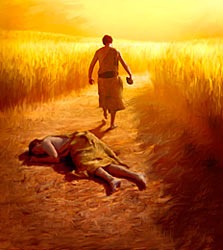
In religious matters, there is no room for subjective thought when it comes to what it takes to have a better life. We find ourselves often bobbing in a sea of religious confusion. Many groups claim to be the best religion and point to their ingredients as reasons for such claims. They point to their numeric size, number of programs they have, or how socially active they are. Our religious attitude ought to be one of humility, not boasting of our achievements or comparing ourselves with others (cf. 2 Cor. 10:12). Genesis 4:1-16 points us to the first recorded version where more than one kind of worship was offered to God and how God rated them. But this chapter also paints a picture of two ways of living life.

Cain is mentioned by three Bible writers after Moses writes about him in this chapter. The writer of Hebrews calls Abel’s offering more excellent than his (Heb. 11:4). John calls his works evil and his allegiance “of the wicked one” (1 John 3:12). Jude implies that the way of Cain is the wrong way to go (11). It seems that Genesis four shows us the better ingredients for a better way of living today.

  • Better living isn’t determined by age (1-2). Cain was the firstborn, a place of honor and privilege especially throughout the Old Testament.  But under the New Covenent, there is no spiritual advantage because of birth order. It is not a matter of firstborn, but a matter of being born again (John 3:1-7). Growing older should mean growing wiser, but reaching a milestone on a calendar does not equate to better living.
  • Better living isn’t determined by occupation (2).  Growing up, we might be tempted to see our occupation as the gateway to happiness and satisfaction, financial freedom and security, independence, and privilege.  When we look at Cain and Abel, what they did for a living wasn’t the determiner of the quality of their lives. Some occupations can stand in the way of better living, whether the nature of the job or the quality of the people one works with. Some can let their jobs stand between them and their relationship with God and His church. But, one can do right in unfavorable work circumstances, staying faithful to God.
  • Better living is determined by worship (3-4). That statement may be offensive to our multicultural world that says there are no absolute rights or wrongs. Contrast our culture’s thinking on this matter with what we read in Genesis four. Both Cain and Abel brought an offering to the Lord. God responded to both offerings, but He accepted one while rejecting the other. While many make worship nothing more than taste, preference, and personal, we learn here that not all worship is equal. God “had regard for” Abel’s, but not for Cain’s. It does not say if Cain was sincere. It doesn’t seem to matter. We learn here that the worshipper and the worship offered rise and fall together. God regarded Abel and his offering, but rejected Cain and his offering. Can one offer God vain worship, and have God reject it but accept him? Apparently not.
  • Better living is determined by attitude (5-7). Cain reacts to having himself and his worship rejected by God. He was very angry. His insides burned! His countenance fell. He took on an ugly look. We’re not told how old he was, but it almost sounds like a temper tantrum. Whether home training, lack of discipline, poor stress management, pride, jealousy, or anything else leads us to lose our tempers, all of them are matters only we can control. When we don’t control them, we’re responsible! Ill-tempered people are not living the better life! A positive life doesn’t require prospering, education, or earthly success. But you can’t have a positive attitude without mastering self.
  • Better living is determined by action (8-16). The word “sin” is first used in Genesis 4:7, but God was looking ahead with perfect foresight to what Cain was going to do to his brother (cf. 1 John 3:11-15). Bible writers speak of his deeds, offering, and way. These are all action words. After his sin, he is rebuked and punished by God and separated from God. Sin will not deliver what it promises. All actions have consequences (Gal. 6:7-9).

Someone said, “The line of Cain gives us murder, cities, polygamy, musicians, metal workers, and poetry, but not one who walked with God.  In fact, Cain’s legacy led to a repeat of his violent ways by a descendant (cf. 4:23). Abel leaves no physical lineage, but he leaves a great spiritual heritage (Heb. 11:4). We each get to choose what kind of life we’ll pursue. It matters which way we decide.

cain-and-abel

Ten Important Words With Good Illustrations

Neal Pollard

I–nteresting (illustrations are to grab attention or make the point memorable; beware of being one-dimensional–always quotes, poems, sports, etc.)

L–asting ( the preacher joke is that you can re-preach most sermons, you’ve just got to change the illustrations.  Why?  We remember good illustrations.  An illustration can help make a Bible lesson live on in people’s hearts)

L–earning (the purpose of the illustration is to aid in teaching the lesson; the illustration is not an end in itself.  It is a means to an end)

U–nderstandable (in that [a] people understand why the illustration was used where it was; does it fit & help establish the point?; [b] especially older illustrations or illustrations taken from those who speak formally or loftily need to adapted to your vernacular and way of speaking and not sound like you copied it out of an illustration book)

S–upportive (Don’t overdo illustrations; it’s not about the illustrations, but about the Bible lesson you are delivering; Some get this concept backwards)

T–ruthful (Be careful that your illustration will pass the truth test; Some people are jaded about “preacher stories,” finding them hard to believe or learning themselves they aren’t true; Verify as best you can the illustration you use and if you cannot verify then be careful not to pass it off as a “true story.”)

R–ealistic (In addition to truthful, make sure the illustration is “reasonable,” something people can relate to; Ex.–In cross-cultural situations, especially in 3rd-world countries, illustrations about extravagances or items said to cost “X” when the same item is either much cheaper there or is so extravagant that your audience can’t relate)

A–ssorted (Vary types of illustrations: poem, current events, historical events, quotes, parables, fables, jokes [in moderation], Bible accounts)

T–asteful (avoid overly shocking, graphic, suggestive, morbid, salacious illustrations; Wendell Winkler once said, “Avoid creating in one’s mind what you are trying to condemn” [Ex.: illustration about sexual immorality or the like])

I–lluminating (The purpose of the good illustration is to shed light on a Bible truth; It should help produce an “aha” that drives home your point)

O–pportunistic (Take advantage of current events, congregational situations, holidays, etc.  Use wisdom, common sense, and discernment to know what is and isn’t off-limits; Note: Concerning “congregational situations,” only in exceptional circumstances would I use a “negative” one rather than a positive or neutral one).

N–ecessary (Without them, lessons are dry and lifeless; Like windows without curtains; They can make all the difference in whether or not the point sinks in, convicts, and moves the heart of the hearer).

A VISIT TO A TEEN’S RELIGIOUS WORLD

Neal Pollard

I love the World War II generation and the enormous impact they have had on our nation!  Perhaps no generation has had a greater challenge since them than the one presently coming to maturity.  Last night, at Teens In The Word, we asked the teens to describe the religious philosophy of their peers as they interact with them at school, their jobs, and their extracurricular activities.  It was heartening to see and hear our teens’ conviction, knowledge, and heart, but disheartening to discuss the fruit of a couple of generations of our culture’s social experiment to reprogram the thinking of people, especially this burgeoning generation.

Our teens attend schools in Douglas, Jefferson, and Denver Counties, go to large High Schools, charter schools, private schools, and homeschools. Despite these diversities, what they encounter is remarkably similar.  It might surprise you that many of their peers believe in a Higher Power and would consider themselves spiritual. More than anywhere else, these peers attend community churches.  Whatever the church growth gurus and experts claim, the teens that go to these churches tell our teens something very different.  Their religious experience is heavily dependent upon entertainment, doing fun things with a party atmosphere, not motivated or influenced by much biblical teaching, segregated from adults, hard-rocking music, dancing, and overall a very tactile experience.  What impact does it have on “faith”?  If speaking in terms of growing closer to God and learning more about Him, not that much. The prevailing worldview of many of our teens’ friends is “what’s right for me may not be right for you,” that God and the devil, heaven and hell are mindsets more than realities (really just your conscience inside of you), and that essentially the only or worst sins, the “objective wrongs,” are offending others and judging others.  When our teens seek to assert objective truth from scripture, they sometimes encounter scorn or rejection. While our teens know a varying degree of peers whose faith and beliefs are more concrete and committed, perhaps the most frequently observed comment last night was that many of their peers “believe in God but not the Bible or Christ.”  They see the Bible as a book of myths or fairytales and not the revealer of truth or a standard of authority.

As we closed our class last night, I was left awestruck.  Our teens are among my most cherished heroes.  They are on the frontline of faith, battling in a world more opposed to truth than that of any generation now living which preceded them.  We were struck with more than admiration, though.  We felt determination, the need to redouble our efforts to establish and defend the trustworthiness and integrity of the Bible, the existence of God, and from that the authoritative nature of Scripture.  Not only will this bolster the faith of our teens, but it will help them in dialoging with those among their peers possessing good and honest hearts (cf. Lk. 8:15).

Here are four things you can do right now for our teens.  (1) Pray for them. (2) Live Christ without hypocrisy before them. (3) Actively encourage them. (4) Help equip them.  Look for heroes where you will.  I have found mine!

Our teens recently feeding the homeless (photo credit: Lexi Hoagland)

“Addressing The Huge Unmet Needs Of Young Children”


Neal Pollard

The philosophically liberal magazine, American Prospect, included an article in the January/February, 2014, edition, by Sharon Lerner entitled, “Starting Smart.”  The article begins by asserting that there is almost universal support in the public, business, and political sectors for mandatory, universal Pre-K education.  Lerner, considering such broad favor, ardently calls for leveling the playing field wherever there is a perceived gap, and mandating public education for the nation’s youngest citizens is alleged as the way to go (62-65).  While I have multiple problems with the content of the article, my biggest disagreement is that social, economic, or other physical needs are, as the article contends, a small child’s greatest unmet needs.

The hugest unmet needs of young children in this and every culture are spiritual.  It would be interested to know what percentage of our nation’s children get even weekly Bible instruction.  For several decades, there has been a steep decline in spiritual interest in our country.  Secular interests have far eclipsed spiritual interest.  I am confident that such tragic facts, when we stand before Christ at the Judgment, will help explain the moral volcano that has spilled its damaging influence over just about every aspect of society.

While our evangelistic efforts can help us reach more “unchurched” folks and incorporate them into our Bible school program, something else has amazed me.  Growing up in the church, I have for all my life seen neglect from some members of the church in this area.  Parents did not bring their children to Bible class regularly if at all.  When those children grew up and left the home, they usually left the church, too.  I still witness that same trend, both in congregations where I have preached and in places where I travel to speak.  In essence, this robs children of the solid foundation they must have to navigate the turbulent spiritual waters of this life.  Parents, let us take Solomon’s words to heart and do all we can to properly train our children for later life and eternity (Pr. 22:6)!  God has entrusted their eternal welfare into our hands.