Joshua The Conqueror

The writer of Hebrews compares our desire to have eternal life to the work of Joshua in leading Israel into Canaan (Heb. 4:8). For those who lead the church in the various ways, parents in Christian homes, elders, deacons, preachers, and teachers, mature Christians, etc., the same factors are at play in our mission to conquer for Christ.

Neal Pollard

The book of Joshua begins with an understated transitional statement, one that signaled perhaps one of the most pivotal events in Israelite history. “Now it came about after the death of Moses the servant of the Lord…” The Lord now looks to Joshua, Moses’ servant, to accomplish the task first given to Moses, to lead the nation into the land promised to Abraham centuries before (Gen. 15:18). Can you imagine being in Joshua’s sandals, trying to follow only the greatest leader the people have ever had? And even he wasn’t able to get the people into the Promised Land before his death. 

It is not surprising, then, that having so great a task and following so great a leader Joshua needs encouragement for this work. Notice how the sixth book of the Bible opens, addressed to the man saddled with the responsibility of getting the people of God across the finish line of their purpose. There are at least five truths Joshua needed to keep in mind.

  • He should remember how he would be victorious (2-3). God emphasizes that He is giving the land to Israel. Israel is going to have to obey and work according to God’s commands, but the victories would come through and because of Him. 
  • He must understand the scope of his mission (4). God lays out specifically the mission, stating in broad terms to boundaries of the territory. The mission would not be a success until all of it had been taken.
  • He could have blessed assurance of God’s help (5). God fortifies Joshua with promises like, “I will be with you” (5), “I will not fail you or forsake you” (5). He reminds Joshua that He was with Moses, and He offered Joshua the same help. 
  • He would have to be a man of strong character (6-7). God calls Joshua to be strong, courageous, unafraid, and obedient. With such a lofty objective, God needed and expected leadership that was trustworthy and reliable. 
  • He had to rely on the Word of God (8-9). Not surprisingly, after a generation was denied the promise land through unbelief and disobedience, this would be critical! God says, “This book of the law shall not depart from your mouth, but you shall meditate on it day and night, so that you may be careful to do according to all that is written in it; for then you will make your way prosperous, and then you will have success” (8). God promises to be with him if he would follow Him! 

The writer of Hebrews compares our desire to have eternal life to the work of Joshua in leading Israel into Canaan (Heb. 4:8). For those who lead the church in the various ways, parents in Christian homes, elders, deacons, preachers, and teachers, mature Christians, etc., the same factors are at play in our mission to conquer for Christ. God gives the victory, the mission, the promises, the word, and the guidelines for our daily living. He is counting on us to partner with Him to gain the victory! 

Deuteronomy: The Second Giving Of The Law (XXXIV)

Moses Blesses The Tribes (33:1-29)

Neal Pollard

The very last words of Moses recorded in the Bible are his reassurance to Israel that God will take care of them. Smith puts it, “In Deuteronomy 31 Moses was the statesman, and in chapter 32 the singer; now in chapter 33 he is the seer” (Pentateuch, 531). The preamble to this prophetic projection concerning each tribe consists of his declaration of God’s power and love (1-3a). The people respond with an acknowledgement of God and pledge of submission to His revealed will through Moses (3b-5). The next 20 verses are devoted to blessings upon the individual tribes.

  • Reuben (6): A prayer that they continue to exist but be few in number (cf. Gen. 49:3-4).
  • Judah (7): A prayer that the tribe which was first to fight (Num. 10:14) and renowned for its military might would be successful in battle through God’s hand. He records the fuller blessing through the voice of Jacob (Gen. 49:8-12). 
  • Levi (8-11): First, note the absence of Simeon. He and Levi are the second and third sons of Leah. Where is Simeon? Eugene Merrill suggests, “Simeon had already become involved in idolatry at Baal Peor (cf. Num 25:6–15), a sin that brought such devastating population loss that the whole tribe eventually became assimilated into Judah (cf. Josh 19:1–9)” (NAC, 438). Levi is reminded of their forefather’s transgression, depriving them of a territorial allotment (8-9). Yet, Moses cries out for a blessing and protection on them as they discharge their God-given duties in leading worship (10-11). 
  • Benjamin (12): A simple prayer that God will protect and preserve them.
  • Joseph (Ephraim and Manasseh)(13-17): A prayer for their prosperity and productivity of the land in mountains, hills, bushes, and pastures, and well as the multiplication of these tribes. 
  • Zebulun and Issachar (18-19): A prophesy that they will worship correctly and prosper generously from the mountains to the seas.
  • Gad (20-21): A call to this tribe to praise God for expanding their territory and rewarding them for their conquest.
  • Dan (22): Interestingly, this is an echo of the animal metaphors used by Jacob (Gen. 49:16-17). In both analogies, he springs on adversaries–here as a lion cub, in Genesis as a serpent. 
  • Naphtali (23): This tribe is affirmed and encouraged, as one satisfied with favor and full of blessing as they possess their territory. 
  • Asher (24-25): A foreseeing of prosperity, blessings, and peace for time to come. 

After the blessings upon the individual tribes, Moses sums up with an overarching blessing for the whole nation. What comes next for Israel will be wonderful. Why? They have a matchless, majestic God who helps with everlasting arms and impenetrable refuge (26-27). They will enjoy security and prosperity (28). They are chosen and saved by God, who will guard and protect them before their cowering enemies (29). The parting encouragement of Moses is that the future could not look brighter, but they must keep looking to the God who makes these conditional pledges to them.

Israel has nothing on the church. What lies ahead for us eclipses what they were told. Our task is to embrace God’s conditional promises in Christ, realizing we are a chosen people most blessed (1 Pet. 2:9-10). May we never reject our inheritance. 

Deuteronomy: the Second Giving of the Law (XXXI)

Choosing Life (30:1-20)

Neal Pollard

What better way is there to preach a climactic conclusion than to put a powerful emphasis on God? In these last 20 verses, Moses mentions “the Lord your God” a stunning 15 times (“Lord” 19 total times and “God” 17 total times). He makes a full court press for these travel-worn wanderers to be totally committed to “return” (2), “obey” (2,8,10,17,20), “love” (6,16), “observe” (8,12-14), “keep” (10,16), “turn” (10), “walk” (16), “choose” (19), and “hold fast” (20). This is the divine expectation. He punctuates it with the repeated use of the word “all”–all your heart (2), all I command (2,8), all your heart and all your soul (6,10)!

Yet, in response to their commitment, look at what God would do. He would “restore” (3), “have compassion” (3), “gather” (3,4), “bring” (4,5), “prosper” (5,9), “multiply” (6), “circumcise their hearts” (6), punish their enemies (7-8), “rejoice over you” (9), and “bless” (16). He wanted this for them and their descendants (6, 19). 

In the absence of obedience, Moses has repeatedly reminded them of how painful, counterproductive, and defeating life would be. Serving a substitute god would be unfulfilling, and its end would be divine rejection. In the humble practice of obedience, God would bless them beyond their comprehension. Through Moses, God encourages them to see this choice as one they were fully capable of making. In the heart of this chapter, Moses says these commands to obey were not out of reach or too difficult (11-13). It was near to them (14)! They could do this!

So, what’s the bottom line? Much like Joshua will do at the end of his tenure as Israel’s leader, Moses says “choose.” But understand what you are choosing between– “life and prosperity” or “death and adversity” (15), “life and death” (19), and “the blessing and the curse” (19). In case it was not abundantly clear, Moses final word is, “So choose life in order that you may live, you and your descendants, by loving the Lord your God, by obeying His voice, and by holding fast to Him; for this is your life and the length of your days, that you may live in the land which the Lord swore to your fathers, to Abraham, Isaac, and Jacob, to give them” (19b-20). The blessings of choosing God, when summed up, are life, legacy, love, length of days, and a land of promise. While the particulars have changed under Christ, it is only because they are better. They are parallel to these, only superior! We face the same contrasting choices, framed by New Testament writers as the world or the Lord (Js. 4:4; 1 Jn. 2:15-17). It’s really not much of a choice, is it? 

The Duty Of Courage And Strength

Brent Pollard

The Book of Joshua is a powerful account of the Israelites’ conquest of Canaan and subsequent settlement in the Promised Land under God’s leadership. This account is woven with a resounding call for courage and strength as God exhorts Joshua and the people five times (Joshua 1.6-7,9,18; 10.25). These admonitions emphasize the importance of these virtues in a life of faith, obedience, and service to God.

Though Christianity emphasizes the virtues of humility, gentleness, and forgiveness, it does not minimize the importance of courage and strength. On the path of faith, we must exhibit courage and strength to confront the inevitable challenges and adversities. Our responsibility is to be resilient and brave in the face of these hurdles.

Believers consider fear a greater sin than non-believers because faith provides them with greater motivation for courage (1 John 4.18). Thus, discouraging fear is a comfort and a call to action, encouraging believers to confront danger, responsibility, pain, loss, and even ridicule without succumbing to fear. Avoiding the path of risk may lead us astray from our divine calling while shying away from duties that appear daunting and fail to honor our commitments.

Therefore, strength is a desirable trait and a requirement for overcoming sin and fulfilling our mission. Believers must confront their inner sinful desires and external evils by facing and overcoming moral weakness, which often stems from spiritual deficiencies. Believers, like the Israelites in Canaan, must deal with these and life’s general uncertainties. 

Grave dangers and the completion of difficult tasks emphasize the importance of bravery and strength. To claim their spiritual inheritance, resist sin and temptation, and expand God’s Kingdom, believers must actively engage and struggle, just as the Israelites confronted their enemies.

Fortunately, Joshua’s pages contain the secret to courage and strength. We must recognize that these characteristics are divine gifts that, through faith and reliance on His power, even the most naturally timid can obtain. As Moses handed over the reins to Joshua, he told the people, “Be strong and courageous, do not be afraid or tremble at them, for the Lord your God is the one who goes with you. He will not fail you or forsake you.” (Deuteronomy 31.6 NASB95).

Personal and communal victories serve as reminders of God’s faithfulness and power. They strengthen our courage to face future challenges. For example, the conquest of Canaan by the Israelites not only reinforced their faith in God’s promises but also empowered them to confront future battles. Nevertheless, the journey of developing courage and strength is ongoing, demanding the active application of divine grace. We can expand our capacity for these virtues by stepping out in faith and obedience. While developing courage and strength requires practice, individuals can enhance these traits through dedication and effort, becoming stronger and more courageous. The synergy between courage and strength equips believers with the spiritual armor needed to face life’s battles with resilience confidently.

Viewed through the Book of Joshua, God reminds us that courage and strength are virtues for the battlefield and integral aspects of the Christian life. These virtues require our continual attention and cultivation as we maneuver through the intricacies of faith, obedience, and service. Likewise, as God equipped Joshua and the Israelites for their challenges, He provided us with the same divine resources to be courageous and strong in our spiritual journey.

“Have I not commanded you? Be strong and courageous! Do not tremble or be dismayed, for the Lord your God is with you wherever you go.” (Joshua 1.9 NASB95)

Deuteronomy: The Second Giving Of The Law (X)

Why Israel Was Inheriting The Land (9:1-29)

Neal Pollard

The challenge was formidable! The inhabitants still included giants and their fortifications were still high and impregnable (1-2). How would they do it? More to the point, why should they anticipate that it would happen? 

The power and promise of God (3-4a,5). He builds on something he has just said,  “But you shall remember the Lord your God, for it is He who is giving you power to make wealth, that He may confirm His covenant which He swore to your fathers, as it is this day” (8:18). God would be a consuming fire destroying, subduing and driving the natives out of the land (3-4). They could believe this because God had sworn it with an oath to their forefathers, Abraham, Isaac, and Jacob (5; Gen. 12:7). The ark of the Lord would go ahead of them as they invaded Canaan (Josh. 3:11). Consider the prayer the weeping prophet would pray, thinking back to this moment in history, when his people faced a self-induced crisis (read Jeremiah 32:17-22). 

The wickedness of the Canaanites (4-5). God makes a point of it to say that the conquest was not a matter of Israel’s meritorious goodness. He warned against such self-righteousness. He corrects the mindset, stating, “It is not for your righteousness or for the uprightness of your heart that you are going to possess their land, but it is because of the wickedness of these nations that the Lord your God is driving them out before you” (5). Genesis 15:16 had predicted this day would come. Now it was time. Even today, we are saved “not on the basis of deeds which we have done in righteousness, but according to His mercy, by the washing of regeneration and renewing by the Holy Spirit” (Titus 3:5). This should humble us and combat any self-righteousness on our part. 

The righteousness of God (6). This is implied by Moses’ three-fold use of “righteousness” (4,5,6), when the people are told it was not because of their righteousness. The word means “the state of doing what is required according to a standard, the state or condition of fairly deciding what is right in a legal case, without prejudice, and the state of not having any sin or its associated guilt, according to a standard” (Swanson, DBL, np). This does not describe man at his best, much less the conduct of Israel from the moment they left Egypt. Instead, God’s faithful character was bringing this conquest about. They needed to never forget that. Through Christ, we are made the righteousness of God through Him (2 Cor. 5:21). We have no basis to establish our own righteousness (Rom. 10:1ff). Isaiah would describe our righteous deeds, at best, as “filthy garments” (64:6). 

The intercession of Moses (7-29). What a powerful illustration we have in the bulk of this chapter. Moses reviews how they provoked the Lord to wrath, from Mount Sinai through these 40 years in the wilderness (7-8). They were rebellious against God (7,24). They acted corruptly and turned aside (12). They were stubborn and fit for destruction (13-14). They sinned against God (16). They were wicked (27). They needed to clearly understand this to grasp why they were alive to hear this impassioned sermon. In addition to the character of God already mentioned, there was the righteous intercession of their godly, earthly leader. Moses pleaded with God on their behalf. What did he do?

  • He fell down before the Lord (18).
  • He fasted for 40 days and nights (18).
  • He prayed for Aaron and the people (19-20,26).
  • He destroyed what offended God (21). 
  • He appealed to God’s goodness and promises (27-29).

Consider how wonderful it is to know that godly people are praying for us. Many times throughout the years, I have bowed my head in meetings with elders where they prayed earnestly on behalf of their sheep who struggled physically, financially, emotionally, and spiritually. This is in addition to their private petitions. What about the godly women, older and younger, whose ministry includes intercessory prayer? How much have we been spared and what floodgates of blessings have been opened to us because of the righteous prayers of others on our behalf (Jas. 5:16)? Thank God for godly Christians who steadfastly pray for their brethren, for you and me (1 Th. 5:17). May we be people who do that for others, too! 

Genesis: These Are The Generations (XIII)

Stumbling In The Face Of Blessings (12:1-20)

Neal Pollard

How important is Abram to the subsequent narrative of the entire Old Testament? From creation to the flood is at least 1656 years, and it is covered in six chapters. Abram’s lifespan is 175 years (25:7), and it is covered in 15 chapters (ch. 11-25)! In the first full chapter, this chapter, we see the development of Abram’s faith.

To say “development” is to point out that it needed to grow and mature. As this chapter and even later circumstances show, Abram wrestles with fear and anxiety when facing intimidation. Yet, God foresaw what his faith could become and chose this man to father the nation through whom His Son would come. 

A Commission (1,4-6,8-10). Let’s not dismiss the greatness of Abram’s faith to receive and obey such an incredible charge, a call to leave his homeland for a distant land (1). The commendation of Scripture is, “So Abram went forth as the Lord had spoken to him” (4a). He was 75 years old, and while he would live another century he was at best middle-aged! Abram collected his apparently considerable possessions and the people of his household and traveled toward Canaan. The trek recorded here covers hundreds of miles, with Abram first going northeast well into modern-day Syria before heading southwest into the heart of what would become Israel. However, Abram goes on his own much further south into Egypt because of famine (10). This would prove a stumbling block in his journey of faith.

A Commitment (2-3, 7). God binds Himself with an incredible promise to Abram that requires divine ability to fulfill. There are several components to this promise:

  • I will make of you a great nation (2).
  • I will bless you (2).
  • I will make your name great (2).
  • I will bless those who bless you (3).
  • I will curse those who curse you (3).
  • In you all the families of the earth will be blessed (3).
  • To your descendants I will give this land (7).

As you can see, there are seven parts to what God promises Abram. Eventually, God will fulfill every one of them even though some would be long after this patriarch’s death. While we see obedient faith on this man’s part, we also see grace and mercy on God’s part through each stage of this mission.

A Concern (11-14). Perhaps it was a lapse of faith that caused Abram to head into Egypt for famine relief (there is no record of God telling him to go down there). His confidence is certainly shaken once he and Sarai get into this pagan territory. Knowing his wife’s beauty, Abram coaches her to mislead any who inquire about her by telling them he was her brother rather than her husband. Technically, they are half-siblings (20:12), but that was not the nature of their relationship. Sure enough, his concern was well-founded. The Egyptians, seeing Sarai, found her “very beautiful” (14).

A Compromise (15-20). Abram’s faith failed him in Egypt. By his influence, Sarai sells the lie. Because of it, Pharaoh takes her into his house (15) and gifts Abram with much livestock and servants (16). The Lord strike’s the pharaoh’s house with plagues, leading him to confront Abram (17-18). Not only did Abram deceive, but he also brought suffering on others and was the proper subject of rebuke from this pagan ruler. Pharaoh says, ““What is this you have done to me? Why did you not tell me that she was your wife? Why did you say, ‘She is my sister,’ so that I took her for my wife? Now then, here is your wife, take her and go” (18-19). God’s providence is still with Abram and Sarai, as they are allowed to leave unharmed and with increased goods (20). God shows grace and favor even when His people fell short.

While these words are written worlds away from where we are today, I think about some unmistakable parallels to our circumstances today. We have been given a commission (Mat. 28:18-19), one requiring faith on our part to follow. Yet, with that comes a divine commitment of help and His presence (Mat. 28:20). We are going out as sheep among wolves (Mat. 10:16), and being frightened and intimidated in carrying out our mission is an ever-present concern (1 Pet. 3:14-15). What we cannot do is compromise our faith! God is counting on us to faithfully represent Him to the world. However, isn’t it wonderful that God extends His grace and mercy when we do fail? This is not a license to give up and stop pursuing our mission! Abram doesn’t stop. Let us be thankful for God’s patience and faithfulness, even when we are not at our best. We can still be people of faith, even if we stumble along the narrow road.  

Conquering Self

Neal Pollard

Joshua 23 marks the beginning of Joshua’s farewell address. He is “old, advanced in years” (1). He summons all Israel, their elders, heads, judges, and officers, to challenge and admonish them (2ff).  He reviews all God had done to allow Israel to conquer Canaan (3-5). He wanted them to appreciate what God had given them. After reviewing their blessings, Joshua warns them to persevere going forward. There was another battle to fight, and that was a future apostasy. So, Joshua directs their attention to what they needed to do to fight that part of themselves that fall away from the Lord. 

They would have to conquer complacency. He tells them to be firm (6), to keep and do all the Law (6), cling to the Lord (8), and take diligent heed (11). There could be no half-hearted following! They had to stay “all in.”

They would have to conquer compromise. They could not turn to the right or the left or associate with the nations surrounding them (6-7). They could not make these people’s gods their gods (7) or their women their spouses or friends (12). Failure to conquer compromise would carry grave consequences (16)! 

They would have to conquer callousness. In the face of God’s promises and threats (14-15), they needed to keep their hearts soft to His Word. Instead, he wanted them to examine their hearts and souls and remain convicted (14)! Hardness of heart is spiritually fatal.

Perhaps the most formidable foe to my own faithfulness is me. Satan’s influence is certainly strong (1 John 5:19), but I must internalize James’ warning, too. ” Let no one say when he is tempted, “I am being tempted by God”; for God cannot be tempted by evil, and He Himself does not tempt anyone. But each one is tempted when he is carried away and enticed by his own lust. Then when lust has conceived, it gives birth to sin; and when sin is accomplished, it brings forth death” (Js. 1:13-15).

If I don’t conquer the desire for sin, I set in motion something ultimately lethal for myself. Tragically, Israel would not conquer themselves. They would become complacent, callous compromisers. And what God warned would happen did happen.

The comfort for us is that their outcome doesn’t have to be ours. We can look back on these events and learn from them. “Now these things happened to them as an example, and they were written for our instruction, upon whom the ends of the ages have come.Therefore let him who thinks he stands take heed that he does not fall. No temptation has overtaken you but such as is common to man; and God is faithful, who will not allow you to be tempted beyond what you are able, but with the temptation will provide the way of escape also, so that you will be able to endure it” (1 Cor. 10:11-13)! 

Finding Faith On The Mountain Of Curses

Brent Pollard

Dr. Scott Stripling, excavations director for the Associates for Biblical Research (ABR), made a significant biblical archaeology discovery on Mount Ebal in 2020. Stripling found the amulet in the eastern dump pile, and they believe it came from one of the altars that Professor Adam Zerta excavated more than 30 years ago.

Tomographic scans revealed an ancient proto-alphabetic Hebrew inscription on the amulet, hundreds of years older than any other known Hebrew inscription from ancient Israel. Two epigraphers, Pieter Gert van der Veen and Gershon Galil, identified the amulet as a curse tablet (defixio). The word “cursed” appeared ten times in the inscription, as did the tetragrammaton (YHWH) twice.

Mount Ebal is significant in biblical history because it was where curses were pronounced during the covenant ceremony before the Israelites’ entry into Canaan (Deuteronomy 11:26ff). Due to its discovery within the ruins of an altar, Dr. Scott Stripling and Pieter Gert van der Veen propose a link between the discovered amulet and the biblical covenant renewal ceremony (Joshua 8:30ff). Furthermore, Prof. Gershon Galil’s textual analysis suggests that the person who inscribed the amulet was most likely a prominent figure, and the deliberate placement of the talisman near the religious site supports the biblical account of Joshua’s altar’s historical accuracy.

What is the significance of this? The consensus is that Israel entered Canaan around 1250 BC or in the 13th century BC. (Metych) Scholars have long assumed that they had no written language when they arrived in Canaan. Furthermore, scholars believe that the Hebrews only wrote their Scriptures once imprisoned in Babylon or even the Persian or Greek eras. Consequently, scholars think that various cultures influenced a substantial portion of the concepts presented in Scripture. (e.g., Noah of Genesis vs. Utnapishtim of The Epic of Gilgamesh).

However, this Ebal inscription predates the pottery discovered in the 2010s, dating back to the end of the First Temple period 2,710 years ago. (Staff) The engraving on Ebal is at least three hundred years older. And, despite being written in a proto-alphabetic script, the message indicates that those who placed the amulet there were YHWH worshippers. YHWH is God’s covenant name, which He taught Moses when He tasked the latter with leading His people out of Egypt (Exodus 3.14). And now we have proof that people in Joshua’s time could write.

There is also the implication that the Exodus may have occurred earlier than previously believed. The Pharaoh Merneptah created a victory stele discovered in Thebes in 1896. (Kettley) Merneptah claimed to have defeated the nomadic people “Israel” in his campaigns in Canaan on the stele. Merneptah was a little-known pharaoh who ruled from 1213 to 1203 BC.

Suppose Israel was already present in the early 13th century BC. Could we not deduce from the evidence atop Ebal that these “nomads” against whom Merneptah fought were not a people devoid of civilization and culture? Why would Merneptah boast about his victory over them if they weren’t fearsome and capable of mounting a defense? Some believe that Merneptah’s father, Rameses II, ruled Egypt during the Exodus. If true, though I am skeptical, Merneptah may have wanted to boost his image following his father’s failure.

I am mindful of the warning from the Hebrews’ writer that “It is a terrifying thing to fall into the hands of the living God” (Hebrews 10.31 NASB1995). Even so, I don’t think I have ever been happier to read about God’s curses. It may be one of the few times that you can build your faith when you read: “Cursed, cursed, cursed—cursed by the God YHWH. You will die cursed. Cursed, you will surely die. Cursed by YHWH— cursed, cursed, cursed.” (Eliyahu Berkowitz)

Works Cited

Metych, Michele, editor. “Canaan | Definition, Map, History, and Facts.” Encyclopedia Britannica, 14 Apr. 2023, www.britannica.com/place/Canaan-historical-region-Middle-East.

Staff, JPost. com. “2,700 Year Old Hebrew Inscription Uncovered in City of David.” The Jerusalem Post | JPost.com, 18 Aug. 2013, www.jpost.com/features/in-thespotlight/ancient-engraved-earthenware-discovered-in-city-of-david-323438.

Kettley, Sebastian. “Merneptah Stele: How This 3,200-year Artefact Could Prove Bible RIGHT.” Express.co.uk, 26 May 2020, www.express.co.uk/news/science/1285868/Merneptah-Stele-Israel-artefact-ancient-Egypt-Pharaoh-Merneptah.

Eliyahu Berkowitz, Adam. “‘Curse’ Text on Ancient Amulet Could Change Way Scholars Read Bible.” The Jerusalem Post – Christian World, 24 Mar. 2022, www.jpost.com/christianworld/article-702243.

Further Reading

Sudilovsky, Judith. “Researchers Decipher Oldest Known Hebrew Inscription on ‘cursed’ Tablet.” The Jerusalem Post | JPost.com, 24 Mar. 2022, www.jpost.com/archaeology/article-702271.

Siegel-Itzkovich, Judy. “Ancient Tablet Found on Mount Ebal Predates Known Hebrew Inscriptions.” The Jerusalem Post | JPost.com, 14 May 2023, www.jpost.com/archaeology/article-743039.

WHEN GOD CONQUERS A HEART

Monday’s Column: Neal At The Cross

img_5670

Neal Pollard

The story of Rahab the harlot is one of the better-known stories of the entire Conquest Period. Perhaps it is because it occurs before but is connected with the most famous (and first) place to be conquered, Jericho, but it is also because of who the heroine of the story is. Three New Testament writers mention her, Matthew for her place in the Messianic genealogies (Mat. 1:5), the writer of Hebrews for her faith (Heb. 11:31), and James for her works (Jas. 2:25). But, there is no escaping who she was or how she made her living when Israelite spies paid her a visit. The Hebrew word, ZANA, means “to commit fornication, be a harlot, play the harlot, illicit heterosexual intercourse,” TWOT). They say, “Such persons received hire (Deut 23:19), had identifying marks (Gen 38:15; Prov 7:10; Jer 3:3), had their own houses (Jer 5:7), and were to be shunned (Prov 23:27)” (ibid.). She is not only a Canaanite, but she operated a sordid business.

But from the moment we hear from her in Scripture, we can see that there is much more to her than the aforementioned description. Despite the fact that she needed to do more growing (don’t we all?), she shows the difference God can make in even the most unlikely places. What do we find in Joshua two?

When God conquers a heart, one will be ruled by His authority (2-5). The Bible doesn’t sanction Rahab’s lie, but consider for a moment that she was ordered by the King of Jericho to surrender the two spies from Israel. She feels no allegiance to the earthly ruler, and she will explain that it is because of her faith in Jehovah (9). If God has conquered our hearts, won’t we say with Peter and John, “We must obey God rather than men” (Acts 5:29)?

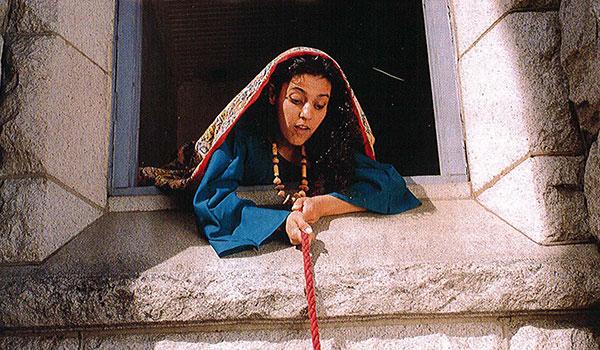
When God conquers a heart, one will help His people (6-7,14-21). She saved the spies’ lives. She hid them and helped them escape. She recognized these men as God’s servants doing God’s business. She wanted to serve and protect them. Ultimately, she lets them down through her window and enables their escape (15, 20). Those whose hearts God possess are allies of the righteous (Mal. 3:18). 

When God conquers a heart, one has faith in God’s provision (8-13). Nothing in the text tells us that the spies preached to her, yet somehow she had arrived at the conviction that she could have hope of salvation. She says she knew God had given Israel the land (9), something these spies’ fathers most likely did not believe (cf. Num. 13-14). She saw how afraid her fellow-citizens were of God’s wrath and power, working through His people (9). She had faith based on the signs and works God had performed from the Red Sea to the Amorites (10). It led her to acknowledge God as “God in heaven above and on earth beneath” (11). Therefore, she asked, in exchange for protecting the spies, for the deliverance of her family and herself (12-13). She hadn’t seen the battle yet, but she believed that it belonged to the Lord. It takes genuine faith to draw a conclusion like that. We’ve not experienced death, the resurrection, the judgment, and an eternal destiny, but do we have faith that God will provide for us through them (cf. 1 Pet. 1:3-9)? If God possesses our hearts, we do!

When God conquers a heart, one will meet the conditions of salvation (14-21). The spies made the salvation of Rahab and her family conditioned upon three things: tie a scarlet thread in her window (18), gather all she wanted to be saved into her house (18), and not tell anyone these spies’ business (20). There was no picking and choosing what she preferred to follow. Obedience meant the difference in life and death (5:25). So today, a heart which God owns will not shun to do anything His Word commands. There’s no arguing, bargaining, debating, or rationalizing, but instead a faith that does what God wills. 

The spies’ mission was a great success and Joshua was encouraged (22-24). They were ready to do battle, ready to conquer. Back in Jericho, there was a woman born into a life of godlessness who had lived a life of worldliness who now faced the hope of happiness and righteousness. Great things follow when we allow God to conquer our hearts! 

Neal’s Note: I send out an email most mornings that I call “The Lehman Learner.” I walk through books of the Bible (in the past I’ve done the Psalms, Luke, 1-2 Corinthians, 1-2 Kings, etc.). This article is from last week. If you would like to receive The Lehman Learner, write to this email and request it. You will be added to the mailing list.)

What The Israelites Lost Besides Canaan

Neal Pollard

If you were to ask the typical Bible student what the consequences of Israel’s following the foolish counsel of the ten negative spies, you might hear talk of the wilderness wandering or the fact that God denied them the Promised Land. This was truly, from a physical standpoint, the most visible result of their faithlessness. Yet, looking closer, the Israel of that generation lost much more. They teach us today what not to do in doing the Lord’s work.

–They lost proper perspective. Who did Israel send to Canaan? Every tribe sent a “leader among them” (Num. 13:2; lit., “An exalted one; a king of sheik; captain; chief”). Also, who was Israel? They were not a people chosen of God because they were the biggest, strongest, or fiercest nation, but because God loved them (Deu. 7:7)! But, when Israel goes into Canaan, they walk by sight (Num. 13:28,32) rather than faith. They saw the giants, not the God who made them. They saw themselves as grasshoppers (Num. 13:33), not God’s people! They saw by fear and not by faith.

So often, today, we set our aim too low because our perspective is skewed. We launch out as far as we can see and go no farther. This hamstrings our budgets, our goals for evangelism, and the extent of our involvement in needed works. If we focus solely on ourselves, we become latter day followers of the Israel described in Numbers 13.

They lost sight of their purpose. Why had they left Egypt? At the bush, God told Moses (Exo. 3:8,17), and Moses, between the Red Sea and Mount Sinai, told Israel (Exo. 13:5). From the days right after their exodus from Egypt, Israel knew she was journeying toward Canaan. Certainly, she was prone to get sidetracked, as when Aaron led the calf-building project (Exo. 32) and when the people periodically, bitterly complained (Exo. 15-17). But, they ultimately plodded up to the precipice of the Promised Land. They camped at the corner of Canaan. This was where they were going. What happened? A few challenges, formidable as they might have seemed, derailed them. Rather than occupy the land God promised them, “They said to one another, ‘Let us appoint a leader and return to Egypt'” (Num. 14:4). How exasperated with them God must have been!

Do we get like that today? Our purpose for being on this earth, to win souls (Mat. 28:19), help our brethren get to heaven (Jas. 5:19-20), help people in need of it (Jas. 1:27), and save ourselves (Acts 2:40), can get lost in the shuffle of career success, material gain, worldly acceptance, and even the material rather than the spiritual concerns within the local work of the church. Why are we here?! That determines where we go from here!

They lost the sense of their identity. They were God’s special people. He had covenant with them and they with Him (Exo. 24). They were God’s children. Exodus 6:7 captures succinctly God’s sentiment toward Israel, where God says, “And I will take you to me for a people, and I will be to you a God.” Nobody could defeat them. Nobody stood a chance before them. They were the hands and feet of God on the earth. No army stood a chance against them. They could have recalled Egypt as “Exhibit A” of this (Exo.. 15:4; Heb. 11:20). Instead, when they looked in the mirror of fear, they saw themselves as grasshoppers.

Christians are God’s people. We are the Lord’s army (Eph. 6). Can you think of fighting for a more powerful ruler? We are the body of Christ (1 Cor. 12; Col. 1:18). Can you think of a healthier, stronger organism? We are branches of His vine, and the Father’s the farmer (John 15). No drought, pest, or conditions can keep us from being weighed down with fruit for Him! Yet, we have got to conquer the cricket concept if we want God to be pleased with us!

We are able to do more for the Lord, and we are able to do it better. But, this requires our enthusiastic, wholehearted participation in the work of the church. Don’t let the giants of time, apathy, inaction, and distraction turn you back. Through Christ we can do all the things He’s already commanded us to do! On to the milk and honey!

elah_valley_below_adullam

OPTIMISM

Neal Pollard

Joshua and Caleb were positively optimistic. They surveyed the situation and saw the taking of Canaan as a no-lose situation (cf. Num. 14:7-9). But have you stopped to consider what made them so optimistic? When the majority was cursed with a pessimistic spirit, these men saw looming victory.

They were optimistic about the land (7). They didn’t just refer to it as the land, but as a good land. They saw it not just as a “good land,” but an exceedingly good land. The Hebrew word translated “exceedingly” means “power and strength.” The idea is that it’s exceptional. It’s the same word used in Deuteronomy 6:5, that “you shall love the Lord your God with all….”  The word is a word with great depth and the word God used to describe His view of creation in Genesis 1:31, which was “very” good. A passion that strong can’t be faked or contrived! They saw such potential in Canaan.

They were optimistic about the labor (9). Their faith led them to the optimistic conclusion that the Canaanites were their prey and that those native people’s protection was removed from them. They repeatedly admonished Israel not to fear them. Someone has said, “Fear wants to give your present to your past so you don’t have a future.”

They were optimistic about the Lord (8). He was the heart of their optimism. Joshua and Caleb mention His name three times in encouraging the people to take possession. They say that the Lord is with them and is pleased with them. To act with the assertion that the Lord is on our side is the height of optimism. They weren’t fooling themselves. God had already said He’d be with them, and they could look into the past and see His assistance and provision.

We have the same reasons to see this life with the same level of optimism. We don’t have a physical territory to inherit, but we still have a heavenly inheritance. Hebrews 9:15 tells us it’s eternal. Our labor is different, but we still should be optimistic about the battle with the enemy (Heb. 2:14-15). We live in a different age, but we serve the unchanging God (Mal. 3:6). A.W. Tozer has said, “He is immutable, which means that He has never changed and can never change in any smallest measure. To change he would need to go from better to worse or from worse to better.  He cannot do either, for being perfect He cannot become more perfect, and if He were to become less perfect, He would be less than God.”  All of this should give us the fuel for optimism however dark or doubtful the situation seems!

7755365008_6b2c390a60_o

How Do We Avoid Going Into The Wilderness?

Neal Pollard

I thought about this question as I meditated today on the state of the church in our nation.  Composed of so many dedicated, wonderful people, the church as a whole, nonetheless, is tempted to drift from biblical moorings. It is anecdotal to observe seismic philosophical shifts in the leadership and direction of various congregations, pulled for one reason or another from the place and being the people God wants it to be.  The whole wilderness analogy is drawn from the events in the book of Numbers, a wandering that went for forty years in the wake of a 40-day scouting trip.  It might have been different for Israel, and it can be different for us.  Return with me for a moment to that fateful event that would forever shape their nation.

  • It begins with leadership (Num. 13:25ff).  The spies chosen were “leaders” among the 12 tribes (13:2).  Obviously, they had sway with the people (14:1).  Because of their negative influence, the people went the wrong direction–into the wilderness and ultimately to their deaths.
  • It involves faith-driven obedience (Num. 13:30). Caleb understood this and argued for the people to proceed on that basis.  Yet, their reaction was the opposite of obedience.  Moses, Aaron, and Joshua warned them, “Only do not rebel (emph. mine) against the Lord…” (Num. 14:8).  That very rebellion, called “iniquity” by Moses in his prayer to God (Num. 14:19), cost them the promised land (Num. 13:23ff).  Instead, they earned a trip into the wilderness. Why? Hard-hearted disobedience and unbelief (Heb. 3:15, 18-19).
  • It includes courage (Num. 13:25-33).  The majority of the spies lacked the courage to act and obey.  They were content to go back to Egypt (Num. 14:2ff). They would rather face bondage alone than Canaan with God.  So, their cowardice was not only wrong but misplaced. They were afraid of the wrong things and the wrong ones. This fear led them into the wilderness (cf. Num. 14:9).

We live in daunting times, yet in them God still has given us a job to do.  If we do not do it or if we fail to do it the way He has commanded, we will wind up, like Israel, in the wilderness!  God give us the leadership, faith-filled obedience, and courage to follow Christ and thereby miss the wilderness.