“And Yet I Will Rejoice”

Many Christians serve a “God of good times,” praising Him when life is easy. But the God of the Bible is bigger. When the fig tree fails, the vines are bare, and the fields are empty, will you get angry, give up, or rejoice?

Carl Pollard

Corrie ten Boom was born on April 15, 1892, in the Netherlands to a devout Christian family. Her father, Casper, ran a thriving watchmaking business. Their deep faith shaped their response to the Nazi occupation of the Netherlands during World War II. The ten Booms joined the underground resistance, transforming their home into a safe haven for Jews and others persecuted by the Nazis. Using a hidden room in their house, they saved countless lives. Tragically, in 1944, a betrayal led to their arrest. Corrie and her sister Betsie were sent to a concentration camp, enduring brutal conditions. Betsie died there, and their father passed away in prison. Corrie survived and later wrote, “There is no pit so deep that God’s love is not deeper still.” 

How could she say this after such devastating loss? Life often feels like a pit—barren, hopeless, empty. The prophet Habakkuk faced a similar pit in Judah, a nation crumbling under the threat of invasion. Yet, he wrote one of the Bible’s boldest declarations of faith in Habakkuk 3:17-19: though everything fails, “I will rejoice in the Lord.” Unlike most prophets who spoke for God to the people, Habakkuk spoke to God for the people, asking two questions we often wrestle with: “Why?” and “How long?” His story offers three vital truths for navigating life’s darkest moments.

The Reality of Fear (v. 16)

Habakkuk trembled when God revealed His plan: the Babylonians would bring judgment on Judah. “I hear, and my body trembles; my lips quiver at the sound; rottenness enters my bones; my legs tremble beneath me.” He knew destruction was certain—starvation, cannibalism, the ruin of Solomon’s temple, the end of his nation. The dread was so deep it made him physically weak. We’ve all felt fear like this—news of a tragedy, a diagnosis, or loss that shakes us to the core. Yet, Habakkuk chose to “quietly wait for the day of trouble” to come upon the invaders. God promised to judge the Babylonians and deliver His people, though not in Habakkuk’s lifetime. The Hebrew word for “wait” means to rest or settle down, like David’s soul finding rest in God (Psalm 62:1). Instead of letting fear consume him, Habakkuk anchored his heart in God’s promises. Can we trust God’s timing, even when we’re afraid?

The Choice of Joy (vv. 17-18)

“Though the fig tree should not blossom, nor fruit be on the vines, the produce of the olive fail and the fields yield no food, the flock be cut off from the fold and there be no herd in the stalls, yet I will rejoice in the Lord; I will take joy in the God of my salvation.” Habakkuk describes total ruin in an agricultural society—permanent crops like figs and olives gone, annual crops like wheat vanished, livestock dead. This wasn’t just financial loss; it was famine, hopelessness, death. Yet, he declared, “I will rejoice in the Lord.” Like Job, who praised God after losing everything, Habakkuk’s faith didn’t rely on blessings. Satan once questioned if Job trusted God only because of His gifts. Job proved his faith was real, and Habakkuk does the same. True joy, rooted in Christ, can’t be taken away. When life strips everything else, can we choose to find joy in God alone?

The Strength to Rise (v. 19)

“God, the Lord, is my strength; He makes my feet like the deer’s; He makes me tread on my high places.” Habakkuk found strength not in himself but in God. Spiritual maturity means refusing to rely on our own resources. God gave him “feet like a deer’s” to walk confidently in difficult, high places—places he’d rather avoid. I’m terrified of heights; anything over 6’5” makes me weak. But God equips us to go where we wouldn’t choose, strengthening us for the journey. Sometimes, God strips away what we depend on to make Him our only joy. Faith says, “The just shall live by faith.” Habakkuk knew God would either rescue him or allow his death, but even death is under God’s control. Are we willing to let God lead us to higher places, trusting His strength?

Habakkuk had questions, and so do we. But faith rests in these truths: God is too wise to make mistakes, too kind to be cruel, and always in control. 

A man once saw a butterfly struggling to escape its cocoon. Frustrated, he cut it open, only to watch it die, unable to fly. The struggle strengthens its wings, just as trials strengthen our faith. Many Christians serve a “God of good times,” praising Him when life is easy. But the God of the Bible is bigger. When the fig tree fails, the vines are bare, and the fields are empty, will you get angry, give up, or rejoice? “And yet, I will rejoice.” If you’re struggling to praise God, battling sin, or need to obey the gospel, trust His promises—they never fail. Let God lead you today.


Habakkuk: Living By Faith (III)

Do you have a “no matter what” faith? How does one develop such a faith, one that grows and develops even when life is hard? Habakkuk knows.

FAITH TRIUMPHANT (3:1-19)

Neal Pollard

Nothing has changed in the circumstances Habakkuk is wrestling with. Babylon is still coming to execute God’s wrath for Judah’s sin. Babylon is still more wicked than Judah, the catalog of sins just reviewed in the previous chapter. But we notice the change in tone in the last verse of Habakkuk 2. The prophet has gladly resigned himself to the fact that God is on the throne, still in charge and perfectly knowing what He is doing.

This transformation leads directly to the prayer with which he ends this short book. The odd notation, “according to Shigionoth,” identifies it as a highly emotional poem. BDB Lexicon speaks of it as a “wild, passionate song, with rapid changes of rhythm” (993). So dramatic was this form of poetry that it “would be a song which provoked great excitement by its performance” (Koehler, HALOT, 1414). Habakkuk has come through the thick and dangerous fog of the trial of his faith, and he emerges into the clear blue sky of confidence in God’s character and work. What does his triumphant faith look like?

Appeal (2). He petitions God out of a deep fear and reverence that is apparent throughout this prayer. Yet, he is bold enough to ask God to revive His work and make it known. He asks for mercy amid His just wrath. It’s the only two things he asks for in the whole prayer. Habakkuk will describe the wrath in the latter part of the chapter (8,12). He wants God to swiftly answer (“in the midst of the years”). 

Admiration (3-4). As he copes with God’s pending judgment, Habakkuk still has a heart to praise. He writes of God’s splendor, radiance, and unmistakable power. He is pictured as a king coming in procession, only His harbingers are the radiance and rays of His glory. 

Awe (5-12). Habakkuk’s response to the greatness of God’s power is to describe His coming in judgment. He envisions the carnage in the aftermath of God’s wrath on the disobedient. He comes with pestilence and plague (5), standing, surveying, then shattering (6), rage, anger, and wrath (8), chastisement (9), and indignation and anger (12). All creation trembled at His coming (10-11). This God with whom Habakkuk had debated is transcendent, doing what is right in the proper measure at the proper time. Habakkuk can only watch in jaw-dropping wonder. 

Acknowledgement (13-16). Habakkuk proclaims the acts of God with four “you” statements–You went forth, You struck, You pierced, and You trampled. He acted in salvation for His people and in retribution against the wicked. Habakkuk’s acknowledgement of such perfect justice is telling: “I heard and my inward parts trembled, At the sound my lips quivered. Decay enters my bones, And in my place I tremble. Because I must wait quietly for the day of distress, For the people to arise who will invade us.” Not only does he acknowledge the greatness of God, but the justice of His decision to bring about the Babylonian Captivity against his sinful brethren. 

Acceptance (17-18). Out of this comes the resignation of trusting faith. It’s a “no matter what” faith on Habakkuk’s part. These verses have become some of the best known and most quoted of the entire book (along with 1:13, 2:4, and 2:20). How can we illustrate triumphant faith? How about these words? “Though the fig tree should not blossom And there be no fruit on the vines, Though the yield of the olive should fail And the fields produce no food, Though the flock should be cut off from the fold And there be no cattle in the stalls, Yet I will exult in the Lord, I will rejoice in the God of my salvation.” If every earthly blessing is withheld from me, I know that God is worthy of my trust and deserving of my worship and praise. This is the faith that will cause us to live (2:4)!

Acclamation (19). Habakkuk’s final declaration is of his strength through the Lord (cf. Phil. 4:13). Though the Chaldeans are knocking on the door, ready to break it in and take them away, the prophet pictures himself (and the faithful) as those who are still standing through God’s help. Like Job, praising God despite his pain (Job 42:2), Habakkuk rises from the ashes of his perplexity and the trial of his faith. He stands on the rock solid foundation of God’s trustworthiness. After the trial, with God’s help and by God’s mercy, he will stand. 

Where am I in my faith? Is it being tested? Am I listening to God’s truth as He teaches it? If so, then, no matter what, I will triumph through Him! 

Haunted Ruins

Dale Pollard

Perhaps Nimrod’s extraordinary ability to hunt was partly responsible for the reason why so many were inclined to stick close to him and construct a tower amidst the ruined site of early Babylonia (or Shinar, Genesis 11:2). He’s a hunter after all and apparently an excellent one (Genesis 10:8-12). There’s a phenomena that’s been observed in nature where carnivorous animals like lions and crocodiles develop a “taste” for human flesh. They’ll begin to actively hunt people for a number of reasons but it’s been known and documented in several predatory species. Since animals acted as they do presently after the flood (Genesis 9:2), then it’s logical to assume that all of that death caused by the deluge attracted numerous carnivores to settlement areas early on.

Theoretically, aquatic animals and eventually the land dwelling predators would have had ample opportunity to develop that “taste” for humans. If that were the case, it makes even more sense why earth’s population had a difficult time spreading out over the earth as earth would have been more of a challenge to subdue and dominate than it was before (Genesis 1.28). Mankind may have dominion over the animals, but Job knew there were at least a few exceptions to this (Job 41:1-4). Ferocious man-eaters would have made first settlements more vulnerable but sticking together under the leader of a great hunter makes perfect sense— at least on the surface. 

After the birth of Babel the Bible sheds light on its death and lasting memory. Eventually, wild creatures would inhabit the ruins of Babylon and other cities after God’s judgment (Isaiah 13:21, Isaiah 34:13-14). 

The specific animals mentioned in these passages and similar ones remain unknown, but are often translated as “ostrich” and “jackal.” Interestingly enough, the Hebrew word used for “jackal” is also used to refer to dragons in the same book of Isaiah. (Isaiah 27:1). 

The following verses are even more haunting:

“Babylon shall become a heap of ruins,
the haunt of jackals,
a horror and a hissing,
without inhabitant…
The sea has come up on Babylon;
she is covered with its tumultuous waves.
Her cities have become a horror, a land of drought and a desert, a land in which no one dwells, and through which no son of man passes.
And I will punish Bel in Babylon,
and take out of his mouth what he has swallowed.
The nations shall no longer flow to him;
the wall of Babylon has fallen” (Jeremiah 51:37, 42-47). 

It seems that the second destruction of Babylon was foreshadowed by the first destruction during the deluge. Tragically, the name of the once great city would  nearly becomes synonymous with “the end,” especially in Revelation. 

“And he called out with a mighty voice,“Fallen, fallen is Babylon the great! She has become a dwelling place for demons a haunt for every unclean spirit, a haunt for every unclean bird, a haunt for every unclean and detestable beast” (Revelation 18.2). 

Babylon’s downfall serves as a true tale of caution for us today as God allows the rise and fall of every nation— even setting their boundaries (Acts 17:26). No matter how great a nation becomes it will never become greater than the One who allowed its very existence in the first place. 

Isaiah: The Holy One Who Rules The World (XLVI)

The Servant’s Words To The Weary Exiles (51:1-23)

Neal Pollard

James Smith observes, “Four exhortations to Zion follow the third Servant poem (which he identifies as 50:10-51:8, NP). Each is accompanied by promises designed to lift the spirits of God’s people during the period of their captivity” (OT Survey, 145). The first exhortation, to trust God in adversity, is found in the last several verses of chapter ten, followed by three in this chapter. First, remember their heritage (1-3). Second, listen to divine instruction (4-6). Third, take courage in God’s deliverance (7-8). This is followed by an extended call to God to “awake” and to Jerusalem to “rouse” (9-23). Verses 9-16 have been called a “wake up prayer to God,” while verses 17-23 have been called a “wake up prayer to a drunken woman” (Zion)(Smith, 147). It appears to me that there are three categories of individuals that are the subject of this “Servant song,” looking at past, present, and future. All the way through this section, the central focus is on one individual–The Servant–who is the coming Christ. 

Isaiah 51 speaks of the expectation of the righteous (1-8).  One is struck with the calls for the upright to act: “listen” (1,7), “look” (1,2), “pay attention” (4), “give ear” (4), “lift up” (6), “fear not” (7), and “be not dismayed” (7). These are calls of encouragement from the Lord. Blessed assurance fills the content of this paragraph. They could remember Abraham and Sarah, who were unlikely candidates for beginning an entire nation (2). They could remember Eden and appreciate what God was capable of, even as they found themselves in waste places, wildernesses, and deserts (3). The reason for their optimism was the character of God, from His law (4) to His deliverance and salvation (5-6,8). It was but for them to be faithful and fearless (7). 

Isaiah 51 speaks of the endurance of the Lord (9-16). Isaiah builds upon the righteous character of the Lord in assuring the godly and obedient. This prayer begins with the nation pleading with God to awake, but He declares that He is not only awake but also at work. He is the God of comfort (12), creation (13), capability (14-15), covenant (15,16), and covering (16). He declares who and what He is–“I am” (12,15) and what He has done– “I have” (16, cf. 22). To a people afraid of their enemies and lacking confidence in their deliverance, God reminds them of His limitless ability which aids them and destroys their enemies. 

Isaiah 51 speaks of the enfeeblement of the wicked (17-23). The tables are turned, and now God is calling for the spiritually drunk to wake up and sober up. They called on God to wake up, and He proves to them He is never asleep on the job. Instead, they are reeling from drinking the cup of God’s anger due to their rebellion (17). Sin has left the nation weak, aimless, unguided, inconsolable, helpless, and the object of God’s wrath and rejection (18-20). Yet, even in this condition, they are offered hope from God. He offers to take the chalice of reeling and divine anger from their hands and put it in the hands of their tormentors (21-23). Grace even in judgment! Hope even in the wake of their sin!

In the past, the people had seen God deliver them from Egypt (Rahab, 9; see 30:7). In the future, the people would see God deliver them from the Chaldeans (23; see 49:26). In the present, the people should look to the God they had ignored and forsaken, repenting and once again finding their strength and salvation in Him alone. What a timeless message! 

Isaiah: The Holy One Who Rules The World (XLII)

Comparing Bel And Babylon To The Lord (46:1-47:15)

Neal Pollard

Isaiah: Trusting The Holy One Who Rules The World

Comparing Babylon To The Lord (46:1-47:15)

Neal Pollard

It seems plausible that the central idea in Isaiah 46-48 is given in the statement, “I am God, and there is no other; I am God, and there is none like me” (46:9). You will notice a decided contrast, specifically between the Lord with Bel and Nebo (46:1) and between God and Babylon (47:1). The Babylonians are associated with their gods, and God calls His people to sit in the jury and judge between both. The verdict is a foregone conclusion, if they will honestly examine the evidence. At least five pieces of evidence are brought forth in these two chapters. 

His Power (46:1-7). By contrast, Bel, Nebo, and any material god must be created by man before it can be worshipped. It cannot save (2). It must be carried to the place of worship and set up before men fall before it (7). It is inanimate, inaudible, and impotent (7). But God made us, carries us, and saves us (4).

His Perception (46:8-10). It is in this section that the aforementioned statement is made of the special, unique nature of God (9). “He declares the end from the beginning and from ancient times things not yet done” (10). For an example, look at the previous chapters where He presents for their consideration a king who would not be born for well over a century when Isaiah writes. Our God has perfect foreknowledge. None other has that ability.

His Purpose (46:10-13). As a part of His foreknowledge, God sets forth His purpose. He declares His purpose and counsel (10), then reveals what it is. It involves using a man from a far country, whom He calls a “bird of prey” (11). It is not shown here who that is. Jeremiah and Ezekiel call Nebuchadnezzar an eagle (Jer. 49:22; Ezek. 17:3). But the main thing is not the predator, but the God who purposes to use him. He purposes what He does in order to bring about His righteousness and salvation (13). Whatever He purposes will happen (Job 42:2), and He purposes only what is good and right (Gen. 18:25).

His Perseverance (47:1-9). The attention is suddenly turned upon Babylon, with God sending this nation a message even before it rises to global prominence. Isaiah appears to look past the Assyrians and the Babylonians to the Medo-Persian rise to power as a world empire. Cyrus will humble and subjugate Babylon, a sign that God has not given up on His people. God was angry at His people for their sin and would use Babylon to punish them (47:6), but this heathen nation was foolish not to see that they could not flaunt His will and survive. 

His Purity (47:10-15). Isaiah lays out the sin and wickedness of Babylon–lovers of pleasure (8), complacent (8), wickedness (10), sinful pride (10), and sorcery (12). It would harm them and any who allied with them (15). The next chapter will vindicate the character of God, but He is not susceptible to any of these spiritual impurities. He is the antithesis of them.

A recurring theme of Scripture is something we often sing, that “there is no God like Jehovah.” How foolish to trust anything or anyone besides Him. God’s Old Testament people made that mistake to their harm and destruction. We must not follow their footsteps, in view of our Awesome and only God! 

The Tower Of Borsippa

Dale Pollard

Once the Bir Cylinders were translated, its claims raised the eyebrow of many Biblical skeptics. The set of clay cylinders (600 b.c.) would serve as further proof that what some consider to be one of the most bizarre and barely believable accounts— actually happened. They were discovered by Sir Henry Rawlinson during the mid-19th century at the Babylonian site of Borsippa. The cylinders, covered in parallel inscriptions, were found inside the walls of a gigantic, heavily damaged tower at the site. This tower—a type of the Mesopotamian ziggurat —had been repaired extensively during the reign of the infamous King Nebuchadnezzar. Bricks were unearthed that were stamped with the name of the king but the cylinders inside those ancient walls were what stole the spotlight. Rawlinson (known as the father of Assyriology) translated the inscriptions as follows:

“I am Nebuchadnezzar, King of Babylon … my great lord has established me in strength, and has urged me to repair his buildings … the Tower of Babylon, I have made and finished … the Tower of Borsippa had been built by a former king. He had completed 42 [cubits?], but he did not finish its head; from the lapse of time it had become ruined … the rain and wet had penetrated into the brickwork; the casing of burnt brick had bulged out … Merodach, my great lord, inclined my heart to repair the building. I did not change its site, nor did I destroy its foundation platform; but, in a fortunate month, and upon an auspicious day, I undertook the rebuilding … I set my hand to build it up, and to finish its summit. As it had been in ancient times, so I built up its structure..”

There’s another translation of this text that’s even more direct. This one was done by Rawlinson’s contemporary Assyriologist, Julius Oppert. He would translate a few of lines with a slight, but illuminating variation: 

“… the most ancient monument of Babylon; I built and finished it … A former king built it—they reckon 42 ages [ago]—but he did not complete its head. For a long time, people had abandoned it without order expressing their words ….”

But Wait, There’s More 

The Tower of Babel Stele is an inky black colored ceremonial stone and it’s only about 20 inches tall. It was discovered over a century ago among the ruins of the city of Babylon. Since then, it has been kept as part of a private Norwegian Collection. 

The tablet, belonging to King Nebuchadnezzar, dates to around 600 b.c. and it includes an illustration of the king standing next to a diagram of a large, seven-storied tower; above it, a separate floor plan of the massive “temple” that crowned the top. The lower part of the tablet contains an inscription, describing Nebuchadnezzar’s tower-building strategy. What could be translated from the partial text is as follows:

“Nebuchadnezzar, king of Babylon am I: In order to complete [the towers] Etemenanki and Eurmeiminanki, I mobilized all countries everywhere … the base I filled in to make a high terrace. I built their structures with bitumen and baked brick throughout. I completed it raising its top to the heaven ….” 

The Etemenanki ziggurat (the Borsippa tower) as described by fifth-century b.c. historian Herodotus: 

“In the middle of [Babylon’s] precinct there was a tower of solid masonry … upon which was raised a second tower, and on that a third, and so on up to eight. The ascent to the top is on the outside, by a path which winds round all the towers. … On the topmost tower there is a spacious temple … There is no statue of any kind set up in the place, nor is the chamber occupied of nights by any one but a single native woman, who, as the Chaldeans, the priests of this god, affirm, is chosen for himself by the deity out of all the women of the land.”

IMG_2130.jpeg

The ‘Tower of Babel Stele’ 

What Are You Showing?

Brent Pollard

The geopolitical landscape under Hezekiah, King of Judah, saw an increase in the threat from Babylon while Assyria’s influence declined. Hezekiah’s political interests and personal ambitions were intertwined to solidify his kingdom amidst evolving circumstances. When he recovered from a severe illness, envoys from Babylon, a rising power seeking to weaken Assyria, visited him. Overwhelmed with relief and eager to impress his potential new allies, Hezekiah made a critical error.

The scripture recounts in 2 Kings 20.13, “Hezekiah listened to them, and showed them all his treasure house, the silver and the gold and the spices and the precious oil and the house of his armor and all that was found in his treasuries. There was nothing in his house nor in all his dominion that Hezekiah did not show them.” (NASB95) This act of pride had serious future consequences, as the prophet Isaiah sharply points out in Isaiah 39.4 by questioning Hezekiah, resulting in a prophecy of doom for his lineage and nation.

This passage emphasizes the importance of being careful with what we disclose. It encourages us to consider the consequences of our actions, which can affect not only our own but also the fate of the community.

The Dangers of Pride and Showing Off

Hezekiah intended to gain political favor by displaying his kingdom’s wealth, but he also revealed a more profound spiritual issue that the Scriptures emphasize: the danger of pride. The Parable of the Rich Fool in Luke 12.16–21, in which a man obsessed with wealth plans to build larger barns to store his crops only to die the same night, reinforces this New Testament message. Like the rich fool, Hezekiah’s pride in his treasures arose from prioritizing material security over spiritual faithfulness.

When displaying our possessions, achievements, or abilities, we must consider whether they serve a greater purpose or feed our ego. Self-reflection is critical to avoiding arrogance and conceit.

Wisdom in Confidentiality

Hezekiah’s strategic error stemmed not only from his pride but also from his failure to anticipate the consequences of his disclosures. Jesus advised such individuals not to “give what is holy to dogs, and do not throw your pearls before swine, or they will trample them under their feet, and turn and tear you to pieces.” (Matthew 7.6 NASB95) Protecting valuable things, whether spiritual beliefs or important assets, is essential.

The principle of caution prompts us to be careful when sharing information. Sometimes, it is preferable to keep things private to protect ourselves and our communities from potential harm. This wisdom, rooted in scripture, encourages us to consider the possible impact on the larger community before sharing information.

Consequences Extend Beyond the Individual

Isaiah’s prophecy reveals a fundamental biblical truth: our actions have a long-term impact on our descendants and community. The exile of Judah’s elite to Babylon, which Isaiah predicted, exemplifies how Hezekiah’s decisions had severe and long-term consequences. This interconnectedness of fate resonates with Paul’s assertion in 1 Corinthians 12.26, “And if one member suffers, all the members suffer with it; if one member is honored, all the members rejoice with it.” (NASB95)

Acting community-mindedly requires us to consider how our decisions affect others.

Hezekiah’s encounter with the Babylonian envoys underscores the significance of humility, discretion, and foresight in our social dealings. As we navigate life’s complexities, it is critical that we embody these virtues and only show others what honors God and promotes communal well-being. It is imperative to heed Hezekiah’s missteps and aim to make choices that glorify God and enrich future generations. Integrating foresight and wisdom into our daily choices empowers us to enhance our lives and contribute to a brighter world.

A Tower Reaching Heaven (And Comparative Mythology)

Dale Pollard
Babylon’s Babel 

Sumerian culture talks about a ziggurat dubbed “Etemenanki” and it was hailed as the “House of the Foundation of Heaven and Earth.” It was dedicated to Marduk, a serpentine/dragon deity, and the patron deity of Babylon. It was said to have measured three-hundred feet tall and featuring seven stacked levels.

Famed Assyriologist, George Smith (1840-1876), provided a translation of some Sumerian clay tablets and here’s his brief summary of the inscription: 

“…we have the anger of the gods at the sin of the world, the place mentioned being Babylon. The building or work is called tazimat or tazimtu, a word meaning strong, and there is a curious relation, lines 9 to 11, that what they built in the day the god destroyed in the night.”
(The Chaldean Account of Genesis, 1876, p. 162).

Egypt’s Babel 

A portion of the Qur’an makes a few claims that resemble the legendary biblical tower— save a few key differences. In the Islamic story, the event takes place in Egypt and the Pharaoh orders a minister named Haman to build a tower that reaches the heavens.

Mexico’s Babel 

Pedro de los Rios, writing sometime before 1565:

“Before the great inundation which took place 4,800 years after the erection of the world, the country of Anahuac was inhabited by giants, all of whom either perished in the inundation or were transformed into fishes, save seven who fled into caverns. When the waters subsided, one of the giants, called Xelhua, surnamed the ‘Architect,’ went to Cholula, where, as a memorial of the Tlaloc which had served for an asylum to himself and his six brethren, he built an artificial hill in the form of a pyramid. He ordered bricks to be made in the province of Tlalmanalco, at the foot of the Sierra of Cecotl, and in order to convey them to Cholula he placed a file of men who passed them from hand to hand. The gods beheld, with wrath, an edifice the top of which was to reach the clouds. Irritated at the daring attempt of Xelhua, they hurled fire on the pyramid. Numbers of the workmen perished. The work was discontinued, and the monument was afterwards dedicated to Quetzalcoatl.”
(Mexico as it is and was, 1844, Brantz Mayer, p. 28)

Non-Canonical Coincidences 

In the Greek Apocalypse of Baruch (written between the 1st-3rd Cen.) we find a description of the condition of Jerusalem after the sack by Nebuchadnezzar.

The Greek Apocalypse details a vision of Baruch ben Neriah and in it he sees the punishment of the builders of the “tower of strife against God,” which sounds remarkably similar  to the Tower of Babel.

Abydenus (a Greek historian of the mid-fourth century B.C.), as quoted by Eusebius, spoke of a great tower at Babylon which was destroyed. The record notes:

“[U]ntil this time all men had used the same speech, but now there was sent upon them a confusion of many and divers tongues”

Josephus, the Jewish historian, quoting from an ancient source, records these words:

“When all men were of one language, some of them built a tower, as if they would thereby ascend up to heaven, but the gods sent storms of wind and overthrew the tower, and gave every one his peculiar language; and for this reason it was that the city was called Babylon”

(Antiquities of the Jews, 1.4.3).

THE TRUTH BEHIND THE TOWER 

While we don’t need the extra biblical evidence and anecdotes to prove what God already told us, it’s certainly interesting and faith-building to discover. We shouldn’t forget the main message of His account. When humans are united we’re either powerfully wicked or powerfully righteous. The top of our metaphorical towers will either touch heaven or hell and the end result depends on what we’ve decided to unite under. If Christ is on the banner we fly then we’ll find success. If pride, greed, or any other selfish ambition brings us together— that tower will inevitably fall.  

The Birth of Behemoth-Buildings 

First to Scrape The Sky: 

The first skyscraper was built in Chicago by William LeBaron Jenney in 1885. While that nine story structure no longer stands, many skyscrapers from that time period remain.

King of the Towers: 

The Burj Khalia in Dubai is the tallest building in the world— standing at 2,717 feet tall. 

Jenney’s “Home Insurance Building” (demolished in 1932 to make room for a larger building)

Revelation’s Resounding Relevance In A Changing World

Brent Pollard

Historically, I’ve seen the Book of Revelation as rooted in a bygone era, primarily relevant to the early Christians of the first and second centuries. Therefore, Revelation 2.10, which urged faithfulness to achieve eternal life, crystallized the central message for contemporary Christians. Earlier readings of Revelation painted it as a cryptic missive, but recent interactions, set against the backdrop of current news and social media, have reshaped my understanding of its relevance to our times. (And, no, I’m not referring to premillennial notions of the end times.)

Faith & Integrity:

Revelation emphasizes the importance of unwavering allegiance to one’s beliefs. Individuals today frequently navigate the turbulent waters of societal expectations and political correctness, just as early Christians did with the imposing orthodoxy of the Roman Empire. The letters to the seven churches can be read as a call to fortitude, warning against surrendering one’s values to the winds of societal change.

Furthermore, the church in Pergamum, which Jesus chastised for its flirtation with idolatrous teachings, serves as a stark warning against even seemingly minor compromises. Deviating from long-held Biblical teachings for modern ideologies can resemble the ancient seduction of the Imperial Cult.

Perseverance & Opposition:

Revelation encourages perseverance, especially when faced with persecution. Like their forefathers, modern Christians may face scorn or disdain for their steadfast adherence to biblical values. On the other hand, Revelation offers solace by promising rewards for unwavering faith.

Hope & Future:

In the grand narrative, Revelation emphasizes the transient nature of earthly regimes. The predicted demise of “Babylon” (Rome) is a powerful reminder of the transient nature of societal norms and structures. Current political correctness or societal mores are fleeting, particularly when viewed through eternity.

Revelation’s resounding theme is hope despite its occasionally bleak portrayals. Regardless of current challenges, the promise of the New Jerusalem and God’s ultimate triumph herald a brighter horizon.

Discernment & Judgment:

The rich tapestry of symbols and visions in Revelation invites discernment. This challenge reflects today’s environment, which is rife with competing narratives and information overload. The imperative is to cut through the noise and identify truths that align with biblical beliefs.

In conclusion, Revelation is not limited to the period in which John wrote it. It sends an enduring message, urging believers throughout the ages to remain steadfast in the face of external pressures and to cherish the eternal promise. This message emphasizes Revelation’s continuing relevance, encouraging our forefathers and current believers to consider its teachings.

For even more on the book of Revelation, we highly recommend Hiram Kemp’s study of Revelation at Lehman Avenue church of Christ (all archives are on our YouTube page and the class is a little over halfway done.

The Man From Meroe

Friday’s Column: Brent’s Bent

We know little about the treasurer from “Ethiopia,” introduced in Acts 8. How did he come to believe in Judaism? What was his given name? What happened to him after Phillip baptized him into Christ? A study of this enigmatic figure is fascinating.

Did you know that the treasurer’s homeland was known as the “Kingdom of Meroe”? The remnant of the once-powerful Kingdom of Kush ruled over even their Egyptian neighbors for a time. If you recognize the name “Kush,” it is because Noah had a grandson named “Cush” (cf. Genesis 10.6-8; Daniel 11.43). The “Ethiopians” are Cush’s descendants.

The “Kandake” line of queens ruled over Meroe. It is known as “Candace” in English Bible translations. The sequence of queens is likely named Candace, a famous empress who ruled the Kushites during Alexander the Great’s conquest. She was a well-known military general and tactician. According to legend, Alexander refused to invade “Nubia” for fear of being defeated by her.

The Ethiopian eunuch, as treasurer, would overlook an impressive treasury. Meroe was a prosperous kingdom due to her trade with the Romans and African tribes from Africa’s western grasslands. They traded with the Romans for gold and other sub-Saharan products until the third century AD. Meroe maintained prominence after their trade with the Romans declined in the early third century due to her ability to smelt iron. Meroe’s workers’ tools and weapons were sought after by her neighbors. Meroe eventually fell from grace and was conquered by her southern neighbor, Axum. This formerly independent state is now an integral part of Sudan.

Meroe’s inhabitants worshiped Egyptian gods and a few gods of their creation. Someone proselytized people in the region at an unknown point in antiquity. According to the Old Testament book of Jeremiah, Jews were living in lower Egypt just before Judah and Benjamin’s Babylonian captivity (cf. Jeremiah 44.1ff). God foresaw those fleeing south to avoid the Babylonians and warned them against their actions (cf. Jeremiah 42.19ff). The treasurer is an example of someone who converted to Judaism. There remain adherents to Judaism in the region today. 

What distance did the treasurer go to worship God? Meroe to Jerusalem was about 3,000 miles round trip. So, the treasurer was devout. And consider that once in Jerusalem, the Old Law prohibited his entry into the Temple proper because he was a eunuch and forbade entry. Thus, his desire to be close to God was strong!

Though we do not know the treasurer’s name, we know some of the Meroitic men’s surnames. Arkinidad, Amanislo, Pakheme, Shorkaror, Teritegas, and Yesbokheamani were some of their names. Such names are foreign to the English-speaking ear. It’s possible that the treasurer’s name sounded strange to Philip as well. 

What happened to the Ethiopian treasurer after he became a Christian? The treasurer returned to Meroe and converted Queen Candace and many of his fellow Meroites, according to Irenaeus and Eusebius, two Christian writers of the second century AD. They also stated that the treasurer was a martyr dying in Ceylon after preaching the Gospel throughout Arabia Felix (i.e., Yemen). Though we cannot verify the information of Irenaeus and Eusebius, it is consistent with the character introduced on the sacred page.

Brent Pollard

1 Peter–Part X

Wednesday’s Column: Third’s Words

Gary Pollard

I’ll be repeating the book of I Peter in present-day terminology. It’s not a true translation of the book, as I am not qualified to do so. It will be based on an exegetical study of the book and will lean heavily on the SBL and UBS Greek New Testaments, as well as comparisons with other translations (ESV, NASB, NIV, ERV, NLT). My goal is to reflect the text accurately, and to highlight the intent of the author using concepts and vocabulary in common use today. 

This is not an essentially literal translation, and should be read as something of a commentary. 

I Peter – Part X

Younger people, listen to the leaders. Every one of you should think of the other as being more important than yourselves. God stands against prideful people, but he’s very patient with humble people. Stay humble under God’s power and he’ll lift you up when it’s time. He cares about you, so you should always let him handle your anxieties. 

Exercise self-control, and make sure you’re watching carefully. Your enemy (the devil) is on a determined path – like a hungry lion – looking for someone to kill. Fight him with determined faith, he’s not targeting just you. Everyone in God’s family is experiencing the same kind of suffering all over the world. After you’ve suffered for a short period of time, the God who gives so much grace will personally make you strong, give you confidence, restore you, and give you security. He has eternal power. 

I’m sending this short letter to you through Silvanus, my faithful brother. This is all true, and it’s extremely important for you to understand God’s timeless kindness and let it keep you strong. The woman at Babylon sends her greeting; she is chosen, just like you. Mark, my son, says hi. Make sure you greet and affirm each other. I hope all of you who follow Christ enjoy peace. 

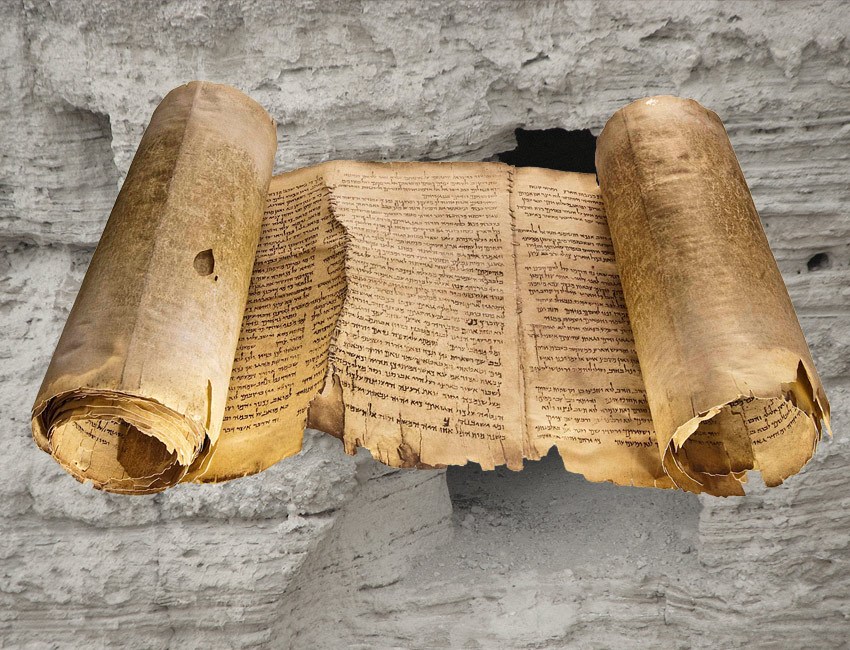
The Book That Was Lost In The House Of The Lord

Monday’s Column: Neal At The Cross

Neal Pollard

The last righteous king to ever sit on the throne of the southern kingdom was Josiah, often called the “boy king”–as he was only eight years old when he acceded to the throne. We have the general evaluation of his reign in 2 Kings 22:2 as one who “did right in the sight of the Lord and walked in all the way of his father David, nor did he turn aside to the right or to the left.” What a divine endorsement! The verses that follow show us a few reasons how he demonstrated that righteousness.

The first act of his office noteworthy enough to be preserved by inspiration was his commissioning of repairs on the temple. He sent Shaphan the scribe to Hilkiah the High Priest to pay carpenters, builders, and masons from the temple treasury to repair the temple (3-7). While Shaphan and Hilkiah finalized these plans, the High Priest makes a remarkable statement: “I have found the book of the law in the house of the Lord” (8). It is stated so matter-of-factly that we may lose the impact of this report. How could God’s Word be lost in God’s house? Was it not read in worship? Was it not consulted for direction? Was it not the heart and center of all that went on inside those walls? Incredibly, it had been buried, stored, or otherwise tucked away. Looking back to Manasseh and Amon’s reigns, they had had no need for the Book. They had abandoned God.

Shaphan takes the Book from Hilkiah, reads it, and then brings it to Josiah. He reads it to the king, who, when he hears “the words of the book of the law, he tore his clothes” (11). This godly king recognizes what a sin has been committed against God through this gross negligence! 

He sends a contingent to inquire of God about His written will, knowing God’s wrath was kindled against his people for not listening to and obeying the words of the book (13). The message they will hear from Huldah the prophetess is grim and hopeless, indicating that Judah would reap what they sowed (14-17). But, the punishment would not come in Josiah’s lifetime because of his tenderhearted, humble, penitent, and tearful response to the Word (18-20). His faith in God’s Word (and his obedient response to it that we read about in the next chapter) extended God’s grace and mercy to Josiah and the children of Judah. Sadly, the people did not share Josiah’s reverence for The Book (cf. Jer. 25:1ff). 

Surely, the Book could not get lost in the house of the Lord today! In how many sermons and Bible classes can God not “get a word in edgewise”? Human wisdom, insight, and guidance, without biblical support, is a quick way to “lose” God’s Word in His house. It also happens when church leaders do not constantly, habitually drive themselves to ask, in the face of decisions, “What does it say in the Book?” Homes where spouses and parents are not building on the bedrock foundation of the Book, but rather the sand of society, are unprepared for the storms of life (cf. Mat. 7:24-27). The constant plea of a faithful people is, “Is there a word from the LORD?” (Jer. 37:17).  There is an endless fountain of spiritual blessings held in reserve for the people who find and follow The Book! What a tragedy that it could ever get lost, especially in the house of the Lord! 

Can These Dry Bones Live Again?

Tuesday’s Column: Dale Mail 

blond man with goatee smiling at camera with blazer on
Dale Pollard

Six hundred years before Christ would make His providential appearance, a righteous man finds himself in captivity. While exiled, Ezekiel was able to witness the spirit of God in a very intimate way (Ezekiel 1). Even so, he was still living under the thumb of the Babylonians like every other Israelite with him. While under these unideal circumstances though, he is privileged to see awe inspiring visions from God. Have you ever paid attention to the eerie sensations described throughout this book? In Ezekiel 1:4, the prophet feels a great and stormy wind on the bank of the river Chebar. The wind brings with it a massive cloud with fire flashing around it and a substance like glowing metal in the center of it. The wings of the creatures he saw (verse 24) made sounds like that of roaring waters. The voice of the Almighty was like the sound of a great army camp. What sights he was able to see! This great connection to God didn’t take away his pain or sorrow, though.

Chapter 19 is one long lament as Ezekiel cries over his hard-hearted Israelite brothers. Why won’t they listen to him? Even after Ezekiel performs some radical visual illustrations like eating his bread over dung and laying on his side for an entire year, they won’t respond to the “invitation.” How frustrating is that, preachers? God never abandons His faithful servant but His confused prophet is still left to wonder what God is going to do about the mess which makes up his reality. A familiar feeling for many faithful Christians today.  

Never underestimate the hand of the Almighty. This truthful statement can be pulled from Ezekiel 37, when the prophet is taken up and then placed in the middle of a dark valley. Ezekiel is surrounded on all sides by heaps of dry human bones and he’s probably wondering why in the world God has taken him to such a place. The text answers the question by asking a question. God speaks to Ezekiel and says, “Can these dry bones live again?” What an odd thing to ask. However, Ezekiel responds, “Only you know, oh Lord.”

It’s always when we’re deep in the valleys of life that we’re forced to answer the difficult questions about God’s abilities. When we’re surrounded by darkness, the question we have to ask is, “Does God have the power to see me through this?” If you remember, Ezekiel has become frustrated with the fact that Israel just won’t listen to him or Him. He’s lost hope in their ability to change— they’re just too far gone. However, God demonstrates to His prophet in a dramatic way that NOTHING is impossible for Him. 

He doesn’t bring the bones to life in the blink of an eye, but we know He could have. Instead, He allows Ezekiel to hear those bones rattle and to hear the sounds of fibers and flesh sticking together. He wanted to leave an impression on Ezekiel to demonstrate the might of the Almighty. Ezekiel had no idea how those bones came to life, but he knew one thing for certain. God did it. You may not understand why God has allowed you to enter your valley, but you can be certain that He has the power to see you through. You are standing on your two feet because God has given you the strength to do so. God has promised His faithful servants a heavenly light at the end of our tunnels and whatever God says— He will always accomplish (Ezekiel 37:14). 

 The Doom of Jerusalem 

Tuesday Column: Dale Mail

image

Dale Pollard

Have you ever been to a “show and tell”? Maybe it was in school and the teacher asked you to get up in front of the class and show a particular object and explain and talk a little bit about it. I remember as a child dragging my giant yellow dump truck to class and showing everyone how the scoop on the back worked. I was very proud of it and after the class I sat on the truck and rode it down the hill in the parking lot. 

Jeremiah’s “show and tell” was not nearly as lighthearted. Instead of bringing a toy truck to show the people, he brought a sword and began to shave his face with it. The hair that he shaved off was what has been left alive by the people. The point of him dividing it into thirds was to make a point. That one third are the ones that survived the siege. Then the few that survive will be taken off but taken care of by God. In Zechariah 13 we find out that the fire of destruction took care of the first third. This wasn’t a fire that was meant to refine them. 

When we look at accounts like these it should make us think. Why was that account there? It’s definitely for our learning, but what is it that we need to take away? I believe at least two lessons can be learned from this. The first is that God will keep His word. If God says that He is going to punish the wicked for their wickedness, then He will most definitely do so. The second lesson to be learned is that in all of this, we can clearly see God’s love. Did God have to take care of the remnant? We know from previous scripture that God wanted to destroy them all at one point and start over. God still cares for His people and He still saw them through their trials, despite what they had done to Him. As His children today we need to realize that even though God may not necessarily strike us down on the spot for rejecting Him, He still takes it just as seriously. God still feels the same about selfishness and a self-serving lifestyle. It’s an ongoing battle to put away those human desires that pull us away from God but it’s a supernatural force that allows us to remain close to Him.