Judah And Boaz

Neal Pollard

There is a very interesting blessing directed to Boaz in Ruth 4:11-12. “Then all the people who were at the gate and the elders said, ‘We are witnesses. May the Lord make the woman, who is coming into your house, like Rachel and Leah, who together built up the house of Israel. May you act worthily in Ephrathah and be renowned in Bethlehem, and may your house be like the house of Perez, whom Tamar bore to Judah, because of the offspring that the Lord will give you by this young woman.’” There are three parts to this blessing and all are framed as comparisons between events in Genesis in the Patriarchal Age and the events of this book.

  1. How Rachel and Leah came into Jacob’s family and how Ruth came into Boaz’s.
  2. How this built up the nation and how they pray for this marriage to continue the same.
  3. How one widow was blessed through deception and sin and how they wanted honorable Boaz and Ruth to be blessed in this admirable arrangement.

The whole, three-part blessing, seems to be a contrast between the lesser (Genesis characters) and the greater (Boaz and Ruth). God had done incredible things through the faulty characters of the former. Leah was at times jealous and bitter. Rachel was conniving and petulant. Jacob was a deceiver. Judah reneged giving his third son to Tamar, who disguises herself as a prostitute to raise up seed to give her a name and place among them. Judah’s character problems in that situation are many and apparent.

The beautiful story of Ruth shows a woman who willingly returns, a widow, with her mother-in-law to be among her people and serve her God. An abiding trust in God’s providence brings about this relationship between Ruth and the highly-honorable Boaz. Unlike Judah’s sons, Boaz accepts his role in this levirate marriage and takes the near kinsman role. This blesses not only Ruth and Boaz, but the once forlorn mother-in-law, Naomi.

God had tremendously blessed the descendants of Jacob, Rachel, Leah, Judah and Tamar, despite their moral failings. In the same lineage, what would He do for Boaz and Ruth? It seems the people are calling on the God who had blessed their weaker ancestors to amplify His goodness and gifts on those who so faithfully acted through this union. What a thoughtful and powerful blessing!

Even when we are faithless, God is faithful, “for He cannot deny Himself” (2 Tim. 2:13). God was fulfilling His promises to Abraham (Gen. 12:2-3). At times, this was accomplished despite the contrary and sinful actions of people. At other times, this was accomplished through the godly, selfless deeds of good people. Knowing that God is always at work (Rom. 8:28), would you like your part to be remembered like Judah or Boaz? Like Rachel and Leah or Ruth?

What Judas Missed: The Providence Of Absence

The Synoptic Gospels all record Jesus instituting the Lord’s Supper during the Last Supper. John, writing later, highlights different moments from the same night. When we lay these accounts side by side, a clearer picture emerges—one that reveals both divine providence and human frailty in sharp relief.

Brent Pollard

God’s wisdom shines through the four Gospel accounts in unexpected ways. Nowhere is this more evident than in the reconstruction of our Lord’s final Passover with His disciples.

The Synoptic Gospels all record Jesus instituting the Lord’s Supper during the Last Supper. John, writing later, highlights different moments from the same night. When we lay these accounts side by side, a clearer picture emerges—one that reveals both divine providence and human frailty in sharp relief.

Luke, the careful historian, notes that the final Passover began with an argument. The disciples disputed among themselves who was the greatest (22.24). This prompted Jesus to teach humility not only through words, but also through action. He wrapped a towel around His waist and washed their feet (John 13.4ff). True greatness, He demonstrated, lies in serving others.

However, John’s Gospel clarifies a crucial aspect of that night’s sequence. Despite his prominent place in Leonardo da Vinci’s famous painting, Judas probably wasn’t present when Jesus instituted the Lord’s Supper.

Here’s what likely happened: After washing the disciples’ feet, Jesus and the Twelve began their Passover meal. During this time, shortly after Jesus’ act of service, He handed a morsel of bread to Judas, identifying him as the betrayer (John 13.26). Judas departed immediately, vanishing into the night (John 13.30).

Only after Judas left did Jesus take the bread and declare it His body, which was soon to be broken (Matthew 26.26; Mark 14.22). Later still—meta to deipnesai, the Greek phrase meaning “after supper”—He took the cup and proclaimed it the new covenant in His blood (Luke 22.20; 1 Corinthians 11.25).

The betrayer had already gone.

Does Judas’s absence from this sacred moment carry symbolic weight? We must be careful not to over-read. Peter sat at that table, yet within hours, he would deny his Lord three times. As we often declare about the Lord’s Supper, participation has nothing to do with personal worthiness. None of us merits the sacrifice of the Lamb of God. None of the disciples gathered that night deserved what Jesus was about to do for them.

Judas’s swift departure likely served a more immediate, though no less providential, purpose. His exit facilitated the dark necessity that would lead to our Lord’s arrest in Gethsemane. God’s sovereignty moves through betrayal as surely as through blessing, orchestrating even the actions of the wicked for redemptive ends.

One question remains: Why didn’t John include the institution of the Lord’s Supper in his Gospel?

The answer sheds light on God’s design as revealed in Scripture. John’s was the last Gospel written. By then, the Synoptic Gospels had circulated throughout the churches for decades. Christians were already familiar with the details of how Jesus instituted the Lord’s Supper. This freed John, through the inspiration of the Holy Spirit, to provide what the other Gospel writers hadn’t recorded.

John gives us the intimate moments—the private teachings and prayers that occurred between supper and arrest. Consider the High Priestly Prayer of John 17, where Jesus intercedes for His disciples and for all who would believe through their word. Consider the comforting promise of John 14:1-3, where Jesus tells them that He is going to prepare a place for them in His Father’s house. These treasures appear nowhere in the Synoptic Gospels.

John’s Gospel doesn’t merely supplement the others—it completes the portrait. Each evangelist contributes unique dimensions to our understanding. Together they reveal not just what happened, but what it means.

When we delve into these unique perspectives, we gain something precious: a more comprehensive picture of Jesus’ final hours with those He loved. We see sovereignty and tenderness intertwined. We witness the depth of Christ’s care for His followers even as betrayal ripened and denial gestated in the hearts around that table.

Every detail carries weight. Every exclusion and inclusion serves a divine purpose. The argument about greatness becomes the occasion for the greatest act of humility. The betrayer’s exit clears the stage for the institution of the meal that would sustain the church through millennia. The absence of specific details in one Gospel creates space for other revelations in another.

The table Judas abandoned still stands. It declares that God’s grace reaches the unworthy, that true greatness kneels with a towel, that covenant blood speaks better things than thirty pieces of silver clutched by a traitor stumbling toward his fate.

We come to that table not because we deserve it, but because we desperately need it. We remember not merely historical events, but present realities—Christ’s body broken, His blood shed, His love poured out while we were yet sinners. And in remembering, we are transformed by the One who loved His own to the uttermost, even unto death.

Come. Remember. Be changed.

Through Heaven’s Eyes

Landon Bryant

Have you ever felt worthless? Or at the very least unimportant? 

These are very human thoughts and feelings. It doesn’t take very long in scripture to find numerous examples of how God values the people in his kingdom. 

Just a few examples being: 

Matthew 10:29-31, ESV “Are not two sparrows sold for a penny? And not one of them will fall to the ground apart from your Father. But even the hairs of your head are all numbered. Fear not, therefore; you are of more value than many sparrows.”

Or Jeremiah‬ ‭31‬:‭3‬ ‭NASB2020 “The Lord appeared to him long ago, saying, “I have loved you with an everlasting love; Therefore I have drawn you out with kindness.”

And last but not least, Psalm 139:13-14 NIV, NASB “For you created my inmost being; you knit me together in my mother’s womb. I praise you because I am fearfully and wonderfully made; your works are wonderful, I know that full well.”

With that in mind, I want to tell you about a movie I used to watch as a young boy. 

The Prince of Egypt is an animated children’s movie that attempts to tell the story of the Exodus. As a kid I just thought it was a good movie and never really understood the biblical aspect of the story. Watching it again with children of my own now gave me a fresh perspective. 

Here are the lyrics from one of the musical numbers in the film, and I want you to think about how this might apply to your own life. 

THROUGH HEAVEN’S EYES

“A single thread in a tapestry

Though its color brightly shines

Can never see its purpose

In the pattern of the grand design

And the stone that sits on the very top of the mountains mighty face

Does it think it’s more important than the stones that form the base?

So how can you see what your life is worth or where your value lies?

You can never see through the eyes of man. 

You must look at your life, Look at your life through heaven’s eyes

‬‬ A lake of gold in the desert sand Is less than a cool fresh spring

And to one lost sheep, a shepherd boy is greater than the richest king

If a man loses everything he owns, has he truly lost his worth?

Or is it the beginning of a new and brighter birth?

So how do you measure the worth of a man?

In wealth or strength or size? In how much he gained or how much he gave?

The answer will come to him who tries, to look at his life through heaven’s eyes

And that’s why we share all we have with you, Though there’s little to be found

When all you’ve got is nothing, there’s a lot to go around

No life can escape being blown about by the winds of change and chance

And though you never know all the steps, You must learn to join the dance

So how do you judge what a man is worth, By what he builds or buys?

You can never see with your eyes on earth, 

Look at your life through heaven’s eyes

  • Through Heaven’s Eyes: By Stephen Schwartz. 

Another way of saying this is that it’s about perspective. We all have a purpose, whether we have found it yet or not. We are made in the image of God. The alpha and the omega, the one who spoke everything, literally everything, into existence. No matter how broken this life becomes nothing in this world can take that away from you. 

Don’t count yourself out on any grounds. Just because you can’t see how you are supposed to shine in this brightly colored tapestry of Gods people doesn’t mean you aren’t as important as any other of those threads around you. 

What Is The Bread of Angels? 

Friday’s Column: Brent’s Bent

Brent Pollard

“Man did eat the bread of angels; He sent them food in abundance” (Psalm 78.25 NASB1995).  

The Bible is a book whose depths we cannot comprehend. As a result, we discover something new every time we read the Scriptures. Recently, as our devotional Bible reading turned to Psalm 78, I had one of those moments. In verse 25, Asaph refers to manna and says God gave the Israelites “bread of angels.” I couldn’t recall hearing that addressed by any preacher I’d heard, nor had I previously read any commentaries on the verse. So I put on my “scuba gear” and went for a dive. 

We must establish the context first. The main goals of Psalm 78 are that Israel should not repeat their unruly past and properly instruct future generations about God’s Law. Asaph recalls God’s miracles in Israel’s history, but Israel still rebelled. Asaph mentions one of these wonders: God feeding the people with manna from heaven. And God did this, although the Israelites had repeatedly enraged Him. According to Asaph, they put God to the test in their hearts (78.18). 

As a result, our “bread of angels” was a providential answer to a need. The people were hungry, and God satisfied their hunger and provided more than they required. However, Asaph recalls that the people believed God should cater to their food preferences (78.18). So, God punished them again because they complained after He sent the manna (78.31-33). Asaph’s point was that they were unappreciative of a lavish gift. 

Following the context, we will move on to the Hebrew language. Lechem abbirim is Hebrew for “bread of the mighty ones.” The word “abbir” appears 47 times in the Old Testament, referring to everything from animals to strong or stubborn men. However, only twice in some of our English translations is this word rendered as angels (Psalm 78.25,cf. Psalm 103.20). Why is this the case? The Septuagint is most likely the answer because the Greek translation of the Hebrew Scriptures uses the word “angels” here. We should also mention that the Latin Vulgate uses the phrase “panem angelorum” (bread of angels). And the translators of the King James Version were heavily influenced by the Latin Vulgate. But there could be more to it than that. 

Another hint comes from a non-canonical book written by a Jew living in Alexandria during the first century BC who pretended to be Solomon. People refer to this as the Book of Wisdom. “In contrast, you fed your people with the food from angels,” Wisdom 16.20 says. Again and again, you provided your people with a bread that had been prepared in heaven. It was a bread that was able to satisfy anyone’s longing and please anyone’s taste.” (Common English Bible) Even though it lacks the weight of what God-breathed (cf. 2 Timothy 3.16), it still provides valuable commentary for understanding Jewish thought before Christ’s birth. 

As a result, Asaph may have referred to angels—mighty ones—as ministering spirits (cf. Psalm 103.20-22; Hebrews 1.14). In other words, God prepared and sent the manna from heaven via the angels. If true, it would not be the first time the Bible mentions angels in passing. For example, Stephen stated that an angel was present in the burning bush (Acts 7.35). Otherwise, all we know about manna is that it came with the dew (Numbers 11.9). As a result, it descended from heaven. 

Finally, most commentators agree that the bread of angels refers to food fit for angelic consumption or the king’s table (cf. Daniel 1.8). Manna, in other words, was a dish fit for heaven. Nonetheless, God gave it to men who did not value it. We might find a modern parallel in being given a free meal at a three-star Michelin restaurant but complaining that we would rather have eaten at McDonald’s. (With no offense to McDonald’s.) 

Fortunately, this is not a matter of salvation, and there is room for debate. I agree with most commentators that the phrase refers to the quality of the food rather than the consumers’ identity. However, it is intriguing to speculate that angels may have been responsible for distributing it to the people. After all, people did not always see the angels who were present. The Arameans, for example, once pursued Elisha to his home in Dothan. The servant of Elisha was terrified, but Elisha prayed to God to open his eyes. God complied, and the servant saw the heavenly host encircling Dothan, protecting Elisha (2 Kings 6.15-17). So, even if manna arrived with the dew, it could still have been brought down from heaven by angels. 

———————————————————- 

[No, I haven’t given up on the book of Proverbs. Chapter 8 will pick up where the previous installments left off. I believe that my articles on Proverbs have become white noise for some of my readers. And they’ve lost interest. I appreciate the kind words of individuals who have read and valued those posts. Your kind words always make their way to me. Before tackling another block of Proverbs for a month or two, I’ll present a few weeks of non-Proverbs-related content. And God willing, I shall eventually conclude my study of Proverbs. Even once I resume the series, I anticipate taking a few more breaks, so please be patient with me until we finish the book of Proverbs. Thanks, Brent] 

The Lord Will Provide

Saturday’s Column: Learning From Lehman

Harold Nicks

In Genesis 22, we have the story of Abraham where God instructs him to offer Isaac as a sacrifice. We know from the text that God was testing Abraham and we know that God stopped him and then provided a ram to sacrifice instead. Because of God’s provision Abraham named that place THE LORD WILL PROVIDE! Three months ago, a tornado devastated many parts of Bowling Green affecting some of our own members, as well as many others in the community.

We have witnessed the outpouring of help and concern by the aid and donations made over 100 congregations and individuals – giving their money and their time to help those who have lost their homes and possessions. God has used us as the facilitators of this aid and used it as an opportunity to show His love and tell people about Him. We can honestly say THE LORD WILL PROVIDE.

I want to keep with the theme of God’s provisions but change the verb tense to THE LORD HAS PROVIDED!

THE LORD HAS PROVIDED us with a magnificent world to live in. In Genesis 1 we read that everything he made was good and He has provided everything we need to enjoy a fulfilling life. As Spring approaches (my favorite time of the year) we will see God’s handiwork as the trees begin to bud and flowers bloom and He created it all for us.

David wrote in Psalms 8 : “when I consider your heavens the work of your fingers, the moon, the stars you have set in place What is man that You are mindful of him.” He loves us and has made this world for us to enjoy.

THE LORD HAS PROVIDED each of us with talents, abilities, and opportunities to serve….and He expects us to use them to serve Him, as well as our fellow man. The Bible instructs us to use our talents and gifts to the best of our abilities as pointed out in Matt 25 in the parable of the talents and again In Romans 12: 6-8, Paul says, “Since we have gifts that differ according to the grace given to us, each of us is to exercise them accordingly: if prophecy according to the proportion of his faith; if service, in his serving; or he who teaches, in his teaching; or he who exhorts, in his exhortation; he who gives, with liberality; he who leads, with diligence; he who shows mercy with cheerfulness.”

THE LORD HAS PROVIDED us with a peace in times of trouble. Those who do not know Him can’t really understand. With Covid and all the political turmoil in our country and the war in Ukraine we can still have the assurance of God’s love and understand HE is in control.

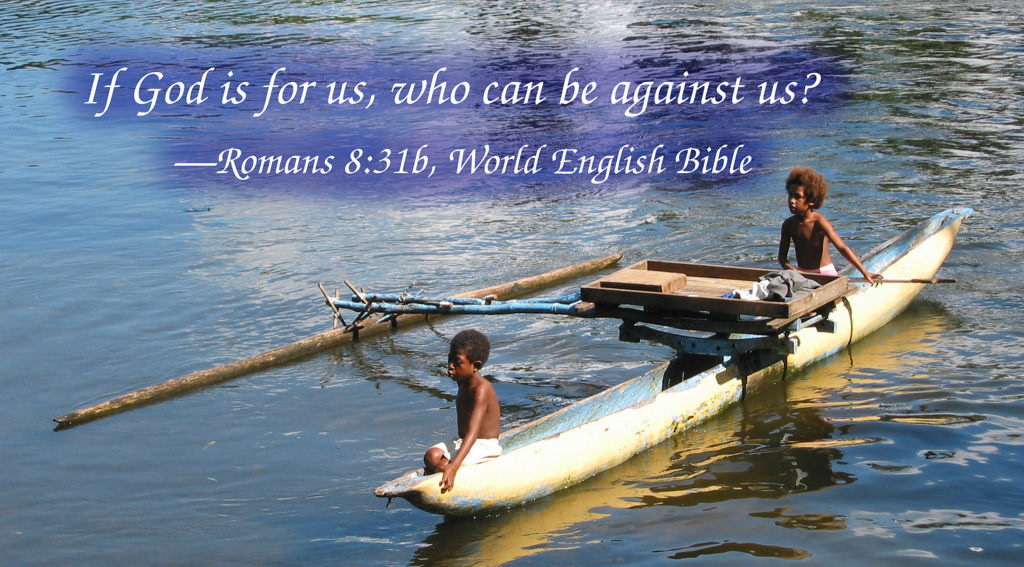
We read in Philippians 4:6-7 to be anxious for nothing, but in everything by prayer and supplication with thanksgiving let your request be made known. And the peace of God, which surpasses all comprehension, will guard your hearts and minds in Christ Jesus. His assurances are also given to us in Romans 8. Verse 31 says, “If God is for who can be against us. In verse 38 and 39 Paul encourages us with these words “For I am convinced that neither death, nor life nor angels, nor principalities, nor powers, nor height, nor depth, nor any other created thing will be able to separate us from the love of God, which is in Christ Jesus our Lord.”

THE LORD HAS PROVIDED us with a way to live with Him for eternity through Jesus. “For God so loved the world that He gave His only begotten son that whoever believes in Him shall not perish but have eternal life” (John 3:16).

He has provided reconciliation through Jesus – He has now reconciled you in His fleshly body through death, in order to present you before Him holy and blameless and beyond reproach (Col. 1:22).

He has provided redemption through Jesus – In Him we have redemption through His blood, the forgiveness of our trespasses, according to the riches of His grace (Eph. 1:7).

God has provided many things for us, but most of all is the way to live with Him forever. Jesus said in John 14:6, “I am the way, the truth, and the life; no one comes to the Father but through Me.”

If you are searching for peace and a way to be with God for eternity, He has provided a way.

The Good, The Bad, & The Lucky

Tuesday’s Column: Dale Mail

Dale Pollard

In 1951, two to three miles off the coast of Point Reyes, California, a military plane went down after battling faulty electrical issues and then eventually running out of fuel. The plane made a crash landing in the ocean and to make matters a little more terrifying, it was a Great White shark haven. There was one Army service man who managed to escape the aircraft, but once in the water he had no idea where to go. It was in the early morning and the fog was too thick to see through. Knowing he had to do something, he simply chose a direction and began to swim. After a couple of miles of swimming he finally, to his relief, reached land. Later on in life he’d go on to become the star of several Hollywood movies, direct his own movies, and even star in movies that he himself directed! His name was Clint Eastwood. 

He got lucky. Occasionally, that happens in life. We flip a coin, spin a bottle, or make a random turn and it all ends up working out in the end. Accidental fortune might happen in some areas of life, but not when it comes to our spiritual lives. There won’t be anyone in heaven who says, “I have no idea how I got here. I just randomly went through life and made the right choices, I guess!”

 If we’re looking for a deeper faith, a closer walk with God, or directions along the narrow way, we’ll have to be intentional about that. 

Psalm 25:5 reminds us that not only does God guide us into all truth, but that this is a path that must be taught. 

Life Lessons Hit Hard

Thursday’s Column: Captain’s Blog

IMG_0806
Carl Pollard
 
April 30th 2:30 PM.
 
It was a gorgeous sunny day without a cloud in the sky. I shot Dale a text and told him to meet up with me at a mom and pop gas station outside of Huntsville for a BLT.
 
I grabbed my motorcycle keys, helmet, and leather vest. On the way out the door I decided to throw on my jean jacket underneath my vest. I don’t know why I did this because the temperature was close to 80 degrees. I hopped on my bike, turned on some Hank Williams Jr., and headed towards Huntsville.
 
2:37 PM
 
I was biking on the road that led to those amazing gas station BLT’s. I had been on this road hundreds of times, but today’s trip ended a little differently than normal. I noticed a truck slowly pulling out of the driveway of the local shooting range. He crept forward and then stopped. I figured he was stopping because he saw me coming. I get about 100 feet away from the truck, and he pulls out. He turned left blocking both lanes of traffic and I knew what was about to happen. I pulled the clutch and grabbed a fist full of brakes, but it was too late.
 
2:38 PM
 
It’s amazing how many thoughts you can have in such a short time. Everything slowed down and as the truck got closer I thought about Emily, my family, my spiritual state, and BLT’s. The initial impact was to my left leg, then my head hit the front body panel of the truck. The last thing I remember is a sharp pain in my head and a blinding flash of white.
 
2:43 PM
 
I woke up in a ditch and the first thing I saw was my motorcycle upside down next to me and somehow “Feelin’ Better” by Hank was still playing from the speakers on my bike. Incredibly, I didn’t break a single bone or have any major head injuries. Needless to say, I never got that BLT.
 
May 12th 1:21 PM
 
I’m at the church building with my brother writing an article for tomorrow morning. I can’t stop thinking about everything that happened. I can’t help but feel like God’s providence was written all over that day.
The jean jacket I grabbed at the last minute saved my arms from getting road rash, the crash bars I installed literally the night before absorbed the initial impact. Those bars were an inch and a half solid steel pipe and they folded like a quesadilla. That would’ve been my leg if it weren’t for the time I spent installing them the night before.
 
I realized several important facts that day:
 
  1. Only God knows what tomorrow holds (Prov. 27:1).
  2. Death is certain, but when we die is uncertain. Because of sin we are destined to die. I could’ve died on a motorcycle, or from a heart attack from too much bacon. Bottom line, we must be spiritually prepared to leave this earth at any moment (Heb. 9:27; Matt. 24:42-44).
  3. Some things are more important than a motorcycle. Like my parents’ mental health and blood pressure. Emily’s well-being and peace of mind is far more important than a bike. It’s a matter of looking at things from the other person’s point of view. Practicing the golden rule (Matt. 7:12). I would be a wreck if either of my parents bought a motorcycle (pun intended).
 
So here’s my two cents for those reading this:
 
It’s beneficial to take a step back and look at our priorities. If we value anything on earth more than God, we will leave this earth unprepared.
 
If there’s sin in our lives, procrastination is the absolute worst thing we could do. Tomorrow is never promised.
 
Be mindful of what our actions do to others. It may not even be sinful, but it’s all about showing a love that values others’ peace of mind and well-being above yourself.
 
P.S. Watch out for black Dodge trucks; they don’t stop.

God Provides (2 Kings 4) 

Thursday’s Column: Carlnormous Comments

tempImagehquiDk

Carl Pollard

2 Kings 4 records an incredible story. In verse one we are introduced to a poor widow who has just hit rock bottom. She didn’t know what to do or where to turn and in her pain and sorrow she did the only thing she knew she could do; she turned to God. She “cries out to Elisha” and the Hebrew word for “cries” literally means that she was wailing in anguish. This widow was heartbroken and in need. But this account reveals to us some comforting truths about God. By studying this account we can find peace in knowing that God has a solution to our problems. 

Elisha says to her, “‘What shall I do for you? Tell me; what have you in the house?’ And she said, ‘Your servant has nothing in the house except a jar of oil.’ Then he said, ‘Go outside, borrow vessels from all your neighbors, empty vessels and not too few. Then go in and shut the door behind yourself and your sons and pour into all these vessels. And when one is full, set it aside’” (2-4). This woman had nothing but a jar of oil, but not for long. She does what Elisha tells her to do and the jar of oil filled every single vessel she collected. 

And that’s the end of that story. The widow came to God while she was at her lowest, and God provided for her. He gave her the oil she needed to fix her problems. The end. 

But what about MY oil? Maybe you’re thinking, “When is God going to fix my problems and provide my oil? When will He give me the money for an electric bill? When will He fix my broken heart? When will God take care of me?” Let me tell you about the oil that God has given you. If you’re a christian, God has already taken care of you. He has blessed us with a gift far more precious than gold. He has promised to one day wipe away every tear from your eyes. If you’re a Christian, God is already taking care of your most valuable possession–your soul. 

God has given us the oil that never runs dry. Now that’s not to say that God will do for us physically what we ask, but even if he doesn’t He has already shown us more love and care than anyone else on earth. God is more concerned with my spiritual state than my bank account. God is more concerned about my work as a Christian than my 9-5 job. God is more concerned about my soul than whether or not I am comfy here on earth. 

God never promised us that if we become Christians we would be financially blessed. But He HAS promised to give us a reward like no other if we are faithful in times of trouble. God has and will provide for those who are faithful to Him. 

I’d like to suggest that the account from 2 Kings 4 isn’t necessarily about the oil. It was about the widow’s faith, it was about her obedience, and it was a demonstration of the power of God. But from this account we learn that God provides for those in need, and we can find peace in knowing that our most valuable possession is in the hands of Almighty God. 

“I Will Survive” 

Friday’s Column: Brent’s Biblical Bytes

81121814_2462862270639428_5746232403106463744_n

Brent Pollard

Gloria Gaynor rose to fame in the late 1970s with her B-side recording of “I Will Survive.” Yes, that is correct. Gaynor secured her musical legacy with a song added as filler. The A-side recording was a cover of the Righteous Brothers’ song, “Substitute.” Yet, who other than an ardent fan even recalls Gaynor’s cover? Rolling Stone magazine included “I Will Survive” in their “500 Greatest Songs of All Time” in 2004. In 2016, the Library of Congress added the song to its National Recording Registry to ensure its preservation. I do not mean to diminish the rest of Gaynor’s career, but it is doubtful that her name would be long remembered without her disco anthem.   

The Apostle Paul says something like “I will survive” in Philippians 4.13. “I can do all things through Him who strengthens me.” (NASB) I realize that this is an oft-abused Scripture. For example, athletes cite it after achieving a difficult win.  We likewise note aspiring Don Quixotes quoting it to rationalize their efforts to obtain their impossible dream. As with many Scriptures, however, the context clues us in on the meaning. The Apostle Paul wasn’t supplying us with a handy aphorism to pull out when needing to boost troop morale. He was letting us know how to survive any and everything. Note the preceding verses where Paul tells the Macedonians that he has learned how to get by with surplus or shortage. In the proceeding verses, Paul tells the Philippians that were a part of God’s Providence that enabled him to do “all things” since they provided financial support.   

So, is God promising us in Philippians 4.13 that we can do whatever it is that we have set our hearts to do? Of course not. But God is letting us know that He has our back. We can count on Him and His Providence. We might wear thrift store clothing and supplement our groceries with Dollar Tree items, but God will provide our needs in keeping with His promise (cf. Matthew 6.33).  Hence, we can move forward with boldness as we do the Father’s Will. We can survive, whether that be with little or much. That is a beautiful message to lean on as we face the uncertainty of this world.   

As I travel US 129 in White and Hall Counties, I note handmade signs that have popped up along the shoulders of the road, presumably in the wake of COVID-19. The placards state, “We will be OK.” I appreciate those signs. They speak to us truthfully whether we are talking about pandemics or uncertain election results. Because of God, we will survive. We might even say that we will do more than survive. We will thrive!      

Sources Cited 

“I Will Survive.” Wikipedia, Wikimedia Foundation, 3 Nov. 2020, en.wikipedia.org/wiki/I_Will_Survive


“Does Everything Happen For A Reason?”

Thursday’s Column: Carlnormous Comments

IMG_0806

Carl Pollard
Have you ever been misquoted? Like when you say something and your friend takes that and runs with it, and they turn it into a phrase that you never even said to begin with. No one likes getting words put in their mouth, especially if they’re harmful or a lie. When it comes to Gods word, it’s no different. God has clearly shown us what He has said, and there’s not any need to add to it. Sadly some people have taken Romans 8:28, a beautiful verse, and have changed it to mean something entirely different.
 
“Everything Happens For a Reason.” You’ve probably heard this phrase used before. This phrase has hurt and angered a lot of people who experience a great tragedy. We often say these words to indicate that God is in charge of all things. Unfortunately, that thought has to be balanced with the knowledge that God created us in his image; therefore, we have free will and the right to choose. 
 
If you’re like me, we won’t always use that freedom correctly. As humans we make bad and harmful decisions, and much of the pain and suffering we experience is a result of a wrong choice. God is in charge of this world, but He has chosen to give us freedom to follow. Often, things happen in our lives because we, or someone else, made a wrong choice.
 
Romans 8:28 is the verse that people will point to when they use this phrase. Let’s take a moment to dig into this verse and see what is being said. “And we know that for those who love God all things work together for good, for those who are called according to his purpose.” Is God behind every tragedy? Does God cause people to wreck? Does God cause all the good and bad that happens in the world? God doesn’t make everything happen for a reason because of this: He doesn’t control our every decision. We have free choice to live however we want, and those choices are often done out of greed or selfishness or a lack of care and concern for others.
 
So what does this verse mean? Paul is trying to make a very important point. God takes the good and the bad, and uses it to accomplish His will. God causes all things to work together for Good. He doesn’t cause everything to happen;  He takes what occurs and uses it for good. He can take a bad situation and use it to accomplish His will. Bad things happen and the world is filled with sin, but God can take a seemingly terrible situation and something good can come from it. Israel made many bad decisions, but God still used them to bring about the Messiah. God can take the terrible events in our lives, and use them as a way to grow His kingdom.

A Message From The Rattling Bones

Tuesday’s Column: Dale Mail

Dale Pollard

Six hundred years before Christ would make His providential appearance, a righteous man finds himself in captivity. While exiled, Ezekiel, was able to witness the spirit of God in a very intimate way (Ezekiel 1). Even so, he was still living under the thumb of the Babylonians like every other Israelite with him. While under these unideal circumstances though, he is privileged to see awe-inspiring visions from God. Have you ever paid attention to the eerie sensations described throughout this book? In Ezekiel 1:4 the prophet feels a great and stormy wind on the bank of the river Chebar. The wind brings with it a massive cloud with fire flashing around it and a substance like glowing metal in the center of it. The wings of the creatures he saw (verse 24) made sounds like that of roaring waters. The voice of the Almighty was like the sound of a great army camp. What sights he was able to see! This great connection to God didn’t take away his pain or sorrow, though.

 Chapter 19 is one long lament as Ezekiel cries over his hardhearted Israelite brothers. Why won’t they listen to him? Even after Ezekiel performs some radical visual illustrations like eating his bread over dung and laying on his side for an entire year, they won’t respond to the “invitation.” How frustrating is that, preachers? God never abandons His faithful servant, but His confused prophet is still left to wonder what God is going to do about the mess which makes up his reality. A familiar feeling for many faithful Christians today.  

Never underestimate the hand of the Almighty. This truthful statement can be pulled from Ezekiel 37, when the prophet is taken up and then placed in the middle of a dark valley. Ezekiel is surrounded on all sides by heaps of dry human bones and he’s probably wondering why in the world God has taken him to such a place. The text answers the question by asking a question. God speaks to Ezekiel and says, “Can these dry bones live again?” What an odd thing to ask. However, Ezekiel responds, “Only you know, O Lord.”

 It’s always when we’re deep in the valley’s of life that we’re forced to answer the difficult questions about God’s abilities. When we’re surrounded by darkness, the question we have to ask is, “Does God have the power to see me through this?” If you remember, Ezekiel has become frustrated with the fact that Israel just won’t listen to him or Him. He’s lost hope in their ability to change— they’re just too far gone. However, God demonstrates to His prophet in a dramatic way that NOTHING is impossible for Him. 

He doesn’t bring the bones to life in the blink of an eye, but we know He could have. Instead, He allows Ezekiel to hear those bones rattle and to hear the sounds of fibers and flesh sticking together. He wanted to leave an impression on Ezekiel to demonstrate the might of the Almighty. Ezekiel had no idea how those bones came to life, but he knew one thing for certain. God did it. You may not understand why God has allowed you to enter your valley, but you can be certain that He has the power to see you through. You are standing on your two feet because God has given you the strength to do so. God has promised His faithful servants a heavenly light at the end of our tunnels and whatever God says— He will always accomplish (Ezekiel 37:14). 

Trail Magic

Friday’s Column: Supplemental Strength

81121814_2462862270639428_5746232403106463744_n

Brent Pollard

My dad has discovered YouTube. He had been using the service to watch streaming worship services during the height of the coronavirus lockdown; he has since noted its potential entertainment value. One of his favorite channels is one that plays classic country music from the 1950s and 1960s. Recently, however, he has been watching the videos of hikers along the Appalachian, Pacific Crest, and Continental Divide Trails. I use to enjoy hiking in my healthier days, so I have sat down to watch more than one of these videos with him. I have never even contemplated doing a thru-hike of one of the previously mentioned 1,000 mile plus trails, but have admired those who have completed them. As I watched one video of a hiker who undertook the Appalachian Trail to conquer his depression, I heard him use an unfamiliar term: “trail magic.” In another video, a young woman from Opelika, Alabama, used the words in regards to her trek along the Pacific Crest Trail. Curiosity compelled me to look that phrase up. The phenomenon originated on the Appalachian Trail but has since popped up along the other lengthy trails as well.

 The Appalachian Trail Conservancy defines trail magic as follows:

“1) Finding what you need most when you least expect it. 2) Experiencing something rare, extraordinary, or inspiring in nature. 3) Encountering unexpected acts of generosity, that restore one’s faith in humanity.” 1

As the videos demonstrated, trail magic presented itself in a cooler of cold drinks left at a taxing point in the trail. Or maybe a veteran thru-hiker set up a tent at a spot along the pathway to feed the hikers who came through. It could also be a person volunteering to provide a wearied hiker a ride to his or her nightly lodging when the trail came close to a town offering a hostel or hotel serving hikers. Thru-hikers have no reason to expect that any of these things will happen to them as they make their journey even though it happens enough to warrant a name (i.e., trail magic). That is why it is so appreciated.

 When I read that, my mind immediately associated aspects of this phenomenon to what those of us who are Christians call “providence.” How often have we found something unexpected in our life, typically at the most opportune time, that screams “God” to us? In other words, a sudden something that points to God’s hand at work in our lives. No, providence is not a miracle, since it does not circumvent the laws of nature to occur. It works within the established framework around us, making it even more amazing since it can require God’s forethought rather than just a momentary expression of His unlimited power. Yet, it is as appreciated by us as any miracle would be since it satisfies our momentary need, whether remission from cancer or unexpected inflow of funds when presented with a financial crisis.

 This characteristic of God has earned Him a unique name first applied by father Abraham, Jehovah-Jireh. Do you recall the reason Abraham called God by that name? God had asked him to offer his only son as a sacrifice. This son was the promised one for whom he had long waited. Yet, Abraham complied. When his son, Isaac, noticing a missing sacrifice, asked his father about it, he replied, “God will provide for Himself the lamb for the burnt offering, my son” (Genesis 22.8 NASB). After nearly sacrificing his son, an angel stopped Abraham, and Abraham noted a ram with its head stuck in a nearby thicket. Abraham offered the ram as a sacrifice in place of his son and called the location “Jehovah-Jireh,” meaning “The Lord will provide.”

 Our path to Heaven is strait and narrow (Matthew 7.13-14). It is, therefore, most welcome that as we make our way through this life that we encounter this celestial trail magic. Let us never fail to thank our God since He is also Jehovah-Jireh.

 REFERENCES

1 Bruffey, Daniel. “Trail Magic.” Appalachian Trail Conservancy, The Appalachian Trail Conservancy, appalachiantrail.org/explore/hike-the-a-t/thru-hiking/trail-magic/.

Screen Shot 2020-07-03 at 7.09.01 AM

Is God Really Everywhere at Once?

Thursday’s Column: Captain’s Blog

IMG_0806

Carl Pollard

One of the most mind boggling topics we can study is the omnipresence of God. When one contemplates the power of God, it is easy to see why so many are intimidated by this subject. Most who believe in God believe in His ability to be in every location on earth at one time, and by recognizing God as the creator, we are automatically ascribing Him as the Author of time.
God is the creator of time, and as humans we are stuck in a timeline. We see everything through the eyes of time. The date we were born, the day we got married, and what time our doctors appointment is next week. God isn’t bound to time the way we are.
2 Peter 3:8 says, “But do not overlook this one fact, beloved, that with the Lord one day is as a thousand years, and a thousand years as one day.” God does not experience time the same way we do. What seems like forever to us is just a second to God, and what seems like a moment to us is forever to God. God has the power to move through His creation unrestricted. The laws of the universe do not apply to Him because He is not a part of the universe in the same sense that you and I are. God is spirit, not matter or physical substance to be measured and weighed. He is The Almighty God and is not bound to His creation of time.
Psalm 33:13-14 reads, “The Lord looks down from heaven; he sees all the children of man; from where he sits enthroned he looks out on all the inhabitants of the earth.” If God sees all the inhabitants of the earth, He is automatically breaking the laws of time and space. For example, I am writing this blog at 6:24 PM. At this very moment it is 2:24 AM in Dar es Salaam. It is 6:24 AM in Bangkok. It is 11:24 AM in New Zealand. God sees those who are awake on half the planet, and those who are asleep on the other half. God is naturally present in every aspect of the natural order of things, in every manner, time, and place.
God is omnipresent, and it is very important for us to understand this. A God with this much power and holiness, that is everywhere on earth at any given moment, takes the time to listen to us. A God who created everything with His Words, sees all the inhabitants of the earth, and has the power and might to be everywhere on this earth at one time is the God who looked at me and you and saw that we needed a Savior.
What an incredible God we serve!
space-shot-550x413-1

“I Drive A Donkey”

Neal Pollard

There is an obscure Bible character that holds a great deal of fascination for me.  His name is Harbona(h) and his name only appears twice, both in connection with the account of Esther.  He is introduced in Esther 1:10 and plays a key role in this divine story of providence in Esther 7:9.  His name means “donkey driver.”  Granted, his name means more than that.  The Exhaustive Dictionary of Bible Names says his name means, “Warlike; martial; a destroyer. Ass driver; the anger of him who builds” (Cornwall and Smith 96).  Harbonah was the eunuch in Ahaseurus’ court who informed the king of Haman’s treachery, saying, “Behold indeed, the gallows standing at Haman’s house fifty cubits high, which Hanan made for Mordecai who spoke good on behalf of the king!”  Ahaseurus, true to form, wasted no time and said, “Hang him on it.”  Thus, ended the life of the man who tried to end the life of the Jews, through whom the Messiah of the world would eventually be born.  Thus, Harbonah has an important footnote in the beautiful unfolding of God’s providence in the life and book of Esther.  His name is favorably included in only sacred volume God ever moved men to write.  That’s a pretty good legacy for a man whose name means “donkey driver.”

All of us are probably curious, if uninformed, about what our name means.  I once learned that my middle name, by which as a “junior” I am called, Neal, means “champion.”  Lest I should be exalted above measure, my first name, Gary, means “hunting dog.”  My surname, Pollard, means “tree topper.”  Thus, taken together, I can be proud to know that my full name means “champion hunting dog tree topper.”  Solomon wrote about a good name, calling it better than it is more desired than great wealth (Prov. 22:1) and better than a good ointment (Ecc. 7:1).  Regardless of what your given name means, what means most and how your name will be remembered on the lips of others, good or bad, is determined by what you do on this earth as is associated with that name.  So even if your name is Rafe Bosephus McGillicutty, that name will be sweet on others’ lips if how you wear your name honors the Lord and promotes His cause.

The Curious Case Of The Caratinga Cow

Tuesday’s Column: Dale Mail

DaleandJanelledirectorypic

Dale Pollard


We know that tomorrow isn’t promised and we also understand that, unless God comes first, everyone will die one day. With that being said, I am almost 100% certain that nobody reading this will pass from this life after having a cow fall through your roof. The “steaks” just aren’t that high. While this is an unlikely way to die, it’s not an impossible way to go. In fact, this is exactly what happened to Joao Souza in 2013. A one-ton cow was grazing on the hills behind his home in Caratinga before it somehow found it’s way up on to his roof. An unknowing Souza was snoozing on his couch when suddenly his life was over. The asbestos-filled roof collapsed under the weight of the cow. Being done in by a bovine is not exactly a bodacious way to make that final transition, but the media had reported two more similar events of cows seemingly falling from the sky in this area just two years prior. Even though this event actually occurred, how ridiculous would it be for us to spend our days in fear— worrying that we will meet a similar fate? 

The last verse of Matthew six will tell you not to exert so much energy worrying about tomorrow. This passage has brought peace and comfort to many Christians throughout the years, but many of us still worry about our tomorrows. I guess if our tomorrows were actually ours to begin with, we may really have something to fear. The truth is, God owns the future. He doesn’t tell us not to worry about the things that are unlikely to happen, He simply tells us not to worry. God’s almighty hand still holds the world, and for the faithful believer this reality can set your mind to rest. I’m not sure what tomorrow brings. It’s possible that a cow could even come crashing through my roof and send me into eternity— but that’s alright. It’s not just alright because I could use a little more dairy in my diet, but it’s alright because a life in Christ comes with a secure future. It doesn’t matter what Fox News tells us when the Good News already told us everything we need to know. No matter what the day may bring nothing can change the fact that Jesus came, He died, and He definitely is alive, well, and active every day. Don’t worry about tomorrow. Let’s live our lives with joy and in the peace only He can provide. 

cow-2896329_960_720

    I hope this moos you and that you have an udderly fantastic day. If this beefed up your spiritual cow-fidence please share with someone else.  

Lessons From Adversity (1): Let Go and Let God

Friday’s Column: Supplemental Strength

brent 2020

Brent Pollard

We find God not in an anxious mind, but a still heart. God exhorts us in Psalm 46.10a, “Be still, and know that I am God” (KJV). Contextually, this statement occurs amid the possibility of much turmoil. We admit sometimes we must move forward to receive God’s deliverance, as the Israelites did when pressed by pharaoh’s army at the Red Sea (Exodus 14.13-16). Yet, there are also times when we can do nothing. For those times, we’re to be still.


What do we mean by “still?” Without trying to sound like a Hebrew scholar which I’m not, allow me to suggest by using this word God is saying, “Drop your arms!” In other words, quit fighting or putting up a resistance. The New American Standard states in Psalm 46.10a we are to “cease striving.” Each of us reach a point in our life when the time for our struggle ends and we must enter the vestibule of God’s Providence.


What do we do, for example, when the doctor says we have cancer? The Kubler-Ross model of grief puts anger as third on its list of seven stages. We all experience grief differently, so anger may come either sooner or later for you than at stage three. However, I can tell you from experience, anger is something you feel dealing with cancer. “Why me? Why not this sinner over here? I never smoked. I never drank. I’ve been chaste.” Yet, God says, “Be still, and know that I am God.” He has shown us through His Word, His grace is enough (2 Corinthians 12.8-10). And for any lingering anxiety, there’s prayer. What does prayer do? It grants peace we cannot even comprehend (Philippians 4.6-7).


Though an entire lesson can be given about Providence, let me briefly suggest why it’s more awesome than the miracles for which people beg when they hear “cancer.” For a miracle, God instantaneously suspends natural law, and directly intervenes. It’s amazing, I admit. It shows His power in a way one cannot ignore (e.g. parting the Red Sea). Yet, it’s also not the thing to which He must resort to heal one’s body of a disease like cancer. His Providence is there to use the immune system which He placed within us. Providence is quiet. It requires that we be still to observe it. When we do, we see God in a thousand different things. Like a domino stacking champion, God aligns the bits and pieces that, when struck, fall into place revealing the beautiful mosaic He planned for us all along.


The more still you make yourself throughout life, the more you see His Providence. Through prayer comes peace, yes, but so, too, the wisdom to know when to move and when to be still (James 1.4-6). So, let go and let God. Live faithfully and trust Him do the rest.

1930543_24646795921_6267_n
view from Pike’s Peak

God Is Always In Control

Neal Pollard

While the knowledge of my fear of snakes is widespread, some of the events of my past that hardened that horror as less so. A couple of years before moving to Colorado, we were hit by Hurricane Isabel. On our one acre lot, we had well over 100 trees. In fact, about 100 of them fell in that storm, which was the deadliest and costliest of the 2003 Atlantic hurricane season. Cleanup took months, as the storm shook up the environment in some notable ways. To me, the most disturbing was that it forced a great many copperhead snakes out of their dry dens and rocky hillsides down into neighborhoods like ours. In the course of several months of cutting and removing trees, we ran into about a dozen of these demonic creatures. 

On one occasion, a copperhead was near my foot. Also near my foot was a garden hoe, which I promptly dispatched for the purpose of eliminating this threat. To my utter dismay, the blade of the hoe, put to the head of the snake, sank into the rain-softened ground. Rather than killing the snake, it made it mad. At this point, I was in a quandary. Pushing the hoe harder was not causing further harm to the snake, but releasing the snake from the hoe felt like a bad option, too. For what seemed like a week, I continued to work the hoe on that copperhead until it was hurt badly enough for me to properly finish the job.

Have you ever been caught on the horns of a dilemma which seemed bigger than you? As you were in the throes of it, you prayed, pleaded, and petitioned God for help. You realized that without His help, you were in big trouble. It could have been regarding your health, finances, a relationship, a sin struggle, or big decision. Most of us become keenly aware of our need of God’s intervention in moments like those. Yet, it is a helpful reminder that even when life is not so scary or circumstances are less dramatic, God is still in control. Our prayers should reflect this. Our plans should be governed by it. Our priorities should show that we get that.

What will happen to our nation in time to come? What might the church face that scares and intimidates us? What could happen in our individual lives that fills us with dread? No matter what, trust that God is always in control. Take heart in this truth: “The Lord is my light and my salvation; Whom shall I fear? The Lord is the defense of my life; Whom shall I dread? When evildoers came upon me to devour my flesh, My adversaries and my enemies, they stumbled and fell. Though a host encamp against me, My heart will not fear; Though war arise against me, In spite of this I shall be confident” (Psalm 27:1-3). 

In other words, God is always in control!

13533881412553

Who Can Be Against Us?

Neal Pollard

Have you ever had someone that seemed to have it out for you? Not only did they not like you, but they actively undermined you. They may have slandered you or even lied about you. You may have even felt that they were trying to ruin your life!

Have you ever had something that seemed to overwhelm and overshadow you? It could be something from your past, present, or future, worry, guilt, regret, fear, trouble, pain, problem, or other stress. Maybe it was something that was nearly impossible to shake or something of which you were constantly reminded.

In a beautiful context writing about assurance, Paul asks, “If God be for us, who can be against us?” (Romans 8:31). That is an eminently fair question to ask. Here are some potential foes that could undo us: tribulation, distress, persecution, famine, nakedness, sword, death, life, angels, principalities, powers, the present, the future, height, depth, or any other created thing (35, 38-39). Examine that list closely. Doesn’t it include just about every potential threat and trial? Do we believe the assertion of Romans 8:31, this rhetorical question firmly implying that God is bigger and stronger than any potential problem or person?

When it comes to our righteous plans, isn’t this same principle vital to our process? What can we do and be as a church? The only limitation is that which goes against God’s will or that which can dominate God’s will. We must give great care to the first part, but we need not worry for a second about the second part. There will be factors that strain or intimidate. There will be reverses and failures. But, if we will persist and persevere, what can defeat us?

How exciting, in our personal and congregational lives, to serve a God more powerful than any foe or fear! We can succeed by His help and to His glory, come what may! Let us trust this timeless truth and live our lives as though we believe it!

24587741766_468160c634_b

THE MORE I KNOW, THE LESS I KNOW

Neal Pollard

It is a true paradox. Today,  I’ve been married longer than I have ever been.  I’ve been a father longer than I have ever been.  The same is true for me as a Christian, a preacher, and every other relationship I am in.  My experience in all of these has never been greater than it is right now.  Yet, as I examine things, I realize just how much I do not know.  I am not saying that truth is unknowable, for such a statement would be false and contradictory to what God affirms in Scripture (John 8:32; Eph. 1:18; 1 Tim. 3:15; etc.).  It is just that I realize how little I understand compared to what needs to be understood, that I find the challenge of putting truth into practice in every situation requiring wisdom and understanding as daunting as I ever have.  Yet, despite such a realization, my optimism has never been greater.  Why?  Because I have never believed more strongly in the power and wisdom of God, nor have I ever depended more on Him for strength and provision where I am lacking than I do today.  I feel smaller, but He seems bigger.  While the walk on the narrow way seems a steeper, more strenuous, incline each day and the challenges to faith more daunting, more than proportionate to this is my realization that God “is able to do exceedingly abundantly above all that we ask or think, according to the power that works in us” (Eph. 3:20). My conviction about what the Bible says has never been stronger. My belief in God’s existence, involvement, concern, and righteousness has never been more than this moment.  Yet, my awareness of my finiteness and limitations, the transiency of this life, and the ferocity of the adversary is acute.  Incredibly, this doesn’t cause me to despair. It causes me to hope. It takes the focus off me and puts it where it belongs—on Him! He is able to establish me through His Word (Rom. 16:25). He is “able to make all grace abound to” me, that I, “having all sufficiency in all things, may have an abundance for every good work” (2 Cor. 9:8).  The most important thing for me to know, every day in every challenge and responsibility, is that God is able (Rom. 14:4; Phil. 3:21; 2 Tim. 1:12; Heb. 2:18).

Don’t misunderstand me. I am not despairing. I am not even frustrated. I am hopeful and excited.  One of the greatest promises of Scripture is, “But He gives more grace” (Jas. 4:6). He will walk with me through the darkest valleys (Psa. 23:4). As He holds my hand and guides me through His word and His providence, He also points me toward His house.  He tells me He will help me get home and when the narrow way becomes too steep or arduous for me to walk alone, He will carry me in His everlasting arms (cf. Deu. 32:7). I will keep studying His inspired guidebook and striving to apply it to my life.  And as I do, I will increase my dependence and reliance upon Him, confident that “He who has begun a good work in [me] will complete it until the day of Jesus Christ” (Phil. 1:6).  That’s really all I need to know!