We’ve Not Reached The Judgment Yet

Thursday’s Column: Carlnormous Comments

Neal Pollard (pinch-hitting for Carl today)

Solomon makes an interesting observation in the book about his grand experiment seeking the meaning of life. In Ecclesiastes 8, he is writing about the “evil man” who is basically living life as he pleases, doing what he wants with no regard for judgment. There seem to be multiple reasons for him to continue living this way:

  • He’s doing evil and is not suffering immediate consequences for it (11).
  • He’s repeatedly doing evil and is even living a long life (12; cf. 7:15).
  • He doesn’t seem to suffer a fate any worse than the righteous, and sometimes seems to do better than the righteous (14). 

Frankly, Solomon is making a timeless observation. Perhaps you have sung the song, “Tempted and tried, we’re off made to wonder why it should thus all the day long, while there are others living about us never molested though in the wrong.” Billionaires, movie stars, professional athletes, politicians, and the like provide public examples of this passage and that song. We can produce more local, if lesser known, examples of those who seem prosper, living so wicked year after year. 

Solomon does not have the understanding we have this side of Calvary, but he ultimately grasps the principle that should guide our lives today. At the very end of Ecclesiastes, he says, “The conclusion, when all has been heard, is: fear God and keep His commandments, because this applies to every person. For God will bring every act to judgment, everything which is hidden, whether it is good or evil” (12:13-14). This is a vital principle for me to internalize and live by.

When I am tempted to live like this world is my home and the pleasures of earth are what life is about, I need to understand that I may not be struck dead while pursuing life on those terms, not even if I persist in it over a long period of time. I may not die a horrible death as the result of pursuing what God calls “evil.” However, Ecclesiastes 8:11-14 does not describe the end. Ecclesiastes 12:13-14 does.

If I drift away from fellowship with God and His people, if I live like the world when I am out of sight of the church, if I put someone or something above my faithfulness to God, I probably won’t suffer immediate consequences. God loves me enough to let me know that. He will let me make whatever choices I want, but He wants me to know the results of my decisions. Solomon rightly says, “Still I know it will be well for those who fear God, who fear Him openly” (Ecc. 8:12; cf. 3:14; 5:7; 7:18; 12:13). There is an appointment for every one to “be recompensed for his deeds in the body, according to what he has done, whether good or bad” (2 Cor. 5:10). It is when we appear before the judgment seat of Christ, and Paul says we must all do so. Wisdom is living this life preparing for that moment, understanding that judgment is not now but then. Such knowledge should move us to “fear God and keep His commandments.”

THE BLINK

Tuesday’s Column: Dale Mail

Dale Pollard

God created the world in 6 days.

144 hours. 

8,640 minutes. 

518,400 seconds. 

That’s not a lengthy period of time to create the human experience but it’s all destined to end in an instant. Just like that, time is gone— 

everybody. Everywhere. Will be carried off into eternity. 

The blink of an eye happens in 0.3 of a second. 

God gave us that ability so that we might protect our delicate corneas and sclera from dust particles and other small debris which easily aggravate the eye. 

The reflex and speed of the human blink is testimony to our mighty Creator’s designing ability but in His divine wisdom, He knew the blink would also be an illustration for the way in which He will return on day. 

The average person will blink 15 to 20 times a minute.

900 to 1,200 times an hour.

14,400 to 19,200 times a day.

100,800 to 134,400 times a week.

That’s between 5.2 and 7.1 million times a year. 

In other words, it seems like God intended to remind us all millions of times a year that He is coming back.

The blink of an eye occurs in 0.3 a second. 

You can’t hear the gospel message in that time.

You can’t believe that Jesus is the son of God in that time.

You won’t be able to repent in that amount of time.

You couldn’t confess Jesus as your Lord and Savior in that time.

You certainly can’t be immersed in water for the forgiveness of sins in that time. 

“In a moment, in the twinkling of an eye, at the last trumpet. For the trumpet will sound, and the dead will be raised imperishable, and we shall be changed.” – I Cor. 15:52

Now is the time to prepare for that last and final blink.

“Does the Bible Really Teach That?”

Monday’s Column: Neal At The Cross

16174665_10154303308455922_2453812807432667966_n

Neal Pollard

Have you ever heard “chimney corner Scriptures”–those things that sound like or we think that are in the Bible but are not (“Let your conscience be your guide” or “confession is good for the soul” or “God works in a mysterious way”).  It is not as funny when our hearts and minds are not adequately protected from a teacher or preacher who promotes something as biblical that is not.  It may be someone who touts a thing as acceptable to God which the Bible teaches is not.  It may be someone who asserts that something must be believed or done, though the Bible does not bind it.  Either way, God holds each of us accountable for knowing His will.  We are cheating ourselves and our souls who allow a teacher or preacher to dictate to us how we should feel or think about a given matter.  I am not saying we should be suspicious or distrusting.  Instead, I am saying we should be like the Bereans.  One of the most powerful, positive statements made about any group of people is said of them in Acts 17:11: “Now these were more noble-minded than those in Thessalonica, for they received the word with great eagerness, examining the Scriptures daily to see whether these things were so.” You have likely read that passage before, but what is the Holy Spirit saying about them?

They Were Characterized By EXCELLENCE.  They were noble-minded. Notice that it began here.  All else positive that is said about them began with their mindset.  Jesus praises people who hunger and thirst for righteousness (Mt. 5:6). These people were predisposed to accept God’s Word.  What higher praise can be lavished on anyone?

They Were Characterized By EAGERNESS.  The antithesis of this would be apathy and indifference.  These were “word-receivers.”  They were sponges, anxious to know God’s Word.  The Bible, from cover to cover, touts itself as the message of salvation.  Doesn’t it deserve our greatest enthusiasm?

They Were Characterized By EXAMINING. But, they were not uncritical, undiscerning students.  They were listening to one of history’s greatest Christians, borne along by the Holy Spirit, but they still checked after him.  Every man who purports to be God’s proclaimer deserves that same level of scrutiny.

They Were Characterized By EVERYDAYNESS.  They were not content to wait for the next Bible class or sermon.  They were daily devourers of these Divine dictates!  Aren’t there things you feel compelled to do on a daily basis (eat, sleep, brush your teeth, check social media)? We prove to God we are serious about the blessing of having a relationship with Him by constant, consistent consultation of His revealed mind and desires–we only find that in His Word!

How can we tell whether something is just a man’s conviction or is God’s command?  How do we know that some strange, new doctrine is true or false? Do not be content to let somebody be your sole source of gauging that!  Be a Berean!

The Benefits Of Finding Ourselves In Scripture

Neal Pollard

Given his job, the Ethiopian of Acts 8 was one of that country’s most important people. Yet, he was more than important. He was very religious, apparently a proselyte (convert) to the Jewish faith. He didn’t restrict his religion to the assemblies. He read his Bible even when he was going about his secular tasks (Acts 8:28). Though he could not enter the assembly of the Lord (Deut. 23:1), he made the long and grueling trip from northern Africa to Palestine and was returning home. Many of us are familiar with the Old Testament passage he was reading when Philip joined him in his chariot. Reading Acts 8:32-33, we recognize the place as Isaiah 53:7-8. The Eunuch was trying to find out about who Isaiah wrote about, “of himself or of some other man” (Acts 8:34). Philip preached Jesus to him and he became a Christian (Acts 8:35-39).

Those are essentially the facts. Yet, I wonder how coincidental it was that the Eunuch was reading from that part of Old Testament scripture. This African official likely had a scroll containing the entire prophecy of Isaiah, which was not divided into the individual chapters like they are today. It would seem that the context in which Isaiah 53 occurs would be of particular interest to this man. Flip forward a few chapters to Isaiah 56. Isaiah is telling foreigners and eunuchs not to look down on themselves (3-5).

This official of Candace was very likely not some hopeless non-Jew looking for a crumb from the Jews’ table. He had the great hope and promise of Scripture. Perhaps this portion of Isaiah was of particular motivation and inspiration to him. For Philip to explain that the time of that prophecy had now been fulfilled, that access to this promise was now available, certainly led the Eunuch to urgently respond and enthusiastically react. Jesus was the One referenced in Isaiah 53, but he (the Eunuch) was the one referenced in Isaiah 56. No, not just him, but all like him–one from the “all nations” of Isaiah 56:7 who could reap the benefits brought by the “Sin-bearing Servant” of Isaiah 53 and the one who would “sprinkle many nations” (52:15).

I hope that you read your Bible with the same hunger and expectation. Perhaps there are portions that bring you greater hope and expectation, that speak with greater poignancy to your life’s circumstances. The Bible is a book filled with wonderful, relevant promises. Trust them. Let them bear you along through the rough spots of life. God designed the Bible to be a book of hope and inspiration, but it cannot do us any good unless and until we consult it! Find yourself in the Bible!

8ca1271b91f7acccd098a3db98a1689e-bible

Open Mic At Bear Valley

Neal Pollard

It is one of the preacher or teacher’s public speaking nightmares. And it happened to me yesterday morning between Bible class and worship services. I had no clue until I began to be approached by multiple members. My wireless mic was “hot,” and I was visiting with several people and, true to form, I was having plenty to say. As far as I know, I said nothing personal or embarrassing, but after I was informed of my amplified voice I began thinking back to who I spoke to and what I said. My private conversations were being broadcast throughout the auditorium, foyer, nursery, and beyond.

The Bible gives us some insights into what the day of judgment will be like. How much is accommodative language and how much depicts what it will be like is something we must leave until we are there. Yet, there are some statements made that are not open to interpretation. Solomon writes, “For God will bring every act to judgment, everything which is hidden, whether it is good or evil” (Ecc. 12:14). There is appointed a day when “God will judge the secrets of men through Christ Jesus” (Rom. 2:16; cf. 14:10-12; 2 Cor. 5:10). Jesus taught, “But I tell you that every careless word that people speak, they shall give an accounting for it in the day of judgment. For by your words you will be justified, and by your words you will be condemned” (Mat. 12:36-37). Clearly, the words we speak—even those which are not public—are subject to the universal judgment at the end of time.

With that in mind, I want to be more careful to control that hard-to-tame tongue (cf. Jas. 3:2ff). Lying, gossiping, complaining, bitter, slanderous, angry, malicious, backbiting, or jealous words can flow freely, especially in private conversations. I may think I am covered by the cloak of secrecy or privacy, but how would I speak if I knew that everything I said what being broadcast for everyone to hear? If I could think of my speech in that way, how much more positively would I speak of others, of my own circumstances, of the church, and of my God?

Yesterday was good for me! If all of us could experience an unplanned moment like that at least once, it might cause us to reflect on what we are saying when we think that those around us can’t (or won’t) hear. It might help us live soberly, righteously, and godly in view of the end.

shure_mikrofon_55s

WHAT YOU DO WITH WHAT YOU HAVE

Neal Pollard

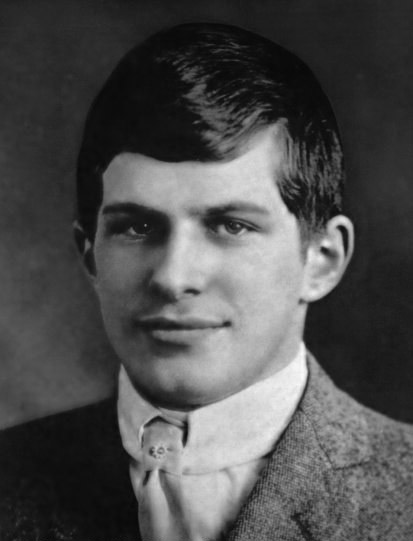
In discussions about the smartest person who ever lived, William James Sidis’ name will come up as being in the mix. Though measuring IQs with a specific number is not an exact science, he is reputed to have had an IQ of 200 or more. He was reading the New York Times at 18 months old. He taught himself eight languages and made up another one. He enrolled at Harvard University at the record young age of 11. He was a professor at what’s now Rice University by the age of 17. He was a renowned mathematician. But, adjusting to mainstream society proved an ongoing problem for Sidis, whose extreme, socialistic politics and eccentric behaviors dogged him for the rest of his life. He died of a brain aneurysm in 1944 at the age of 46. With such a brilliant mind, his contributions to the world were relatively small. In fact, most of us have never heard of Bill Sidis (much information from Amy Wallace’s sometimes disputed biography, The Prodigy, Dutton: New York, 1986).

We all know people who rose from poverty, dysfunction, and perceived disadvantage who have risen to great heights in their profession and their personal lives. Those abused as children, those who grew up in homes afflicted with drug use or alcoholism, and those whose parents went through failed relationship after failed relationship, have grown up to break such patterns by becoming loving, effective parents and spouses. Some who were given little have done much with it.

Jesus teaches the parable of the talents in Matthew 25, which demonstrates the good and bad stewardship of three particular individuals. Two faithfully used what they were given, but another was unfaithful. The Lord shows us God’s dim view toward one who fails to use what he or she has been given.

Most of us are somewhere on the continuum between the one talent man and the world’s smartest man. Scripture shows us that we must be faithful stewards (1 Cor. 4:2) and that we will give an account for our stewardship (Mat. 25:14-30), whether money, abilities, opportunities, time, or whatever our relative resources. May we be encouraged to do as much as we can with what we have been given. How great to be acknowledged by Christ before all nations as one who did the most with what we had!

william_james_sidis_1914

Each One Will Bear His Own Load

Neal Pollard

Ulm Minster, a Lutheran church building in southern Germany, is the tallest church building in the world, has the tallest steeple in the world, and is the 4th tallest structure built before 1900. Construction began in the 1300s and was finished in 1890. The masonry building is thought to be the tallest load-bearing brick or masonry building in the world. That means that each brick supports its own weight (Wells, Matthew. Skyscrapers: Structure and Design, King: London, 2005. p. 8).

In Galatians 6, Paul urges Christians to reach out, gently and introspectively, to help a fallen brother (1). We do so because it is the fulfillment of Christ’s law to help each other (2). None of us is above this (3). But at the same time, we have personal accountability (4) and responsibility (5). The example, in context, is financial support of the Word rather than fleshly indulgence (6ff). But a fair application of this principle extends to the need we each have to pull our own weight. Just as I need to help others in need, I need to realize my need to stand on my own two feet. What are some areas where the individual Christian must bear his own load?

  • Involvement in the work of the church. 1 Corinthians 12 tells us every member plays a vital part to the overall function of the body. I cannot just be a pew-sitter. I must be at work. When I hear announcements about needs or opportunities, I should not console myself thinking that others will do it. Let them do their part. I must do mine.
  • Financial contribution to the church. Being in a generous, giving church is no substitute for my personal obligation. The command is to “each one of you” (1 Cor. 16:2; 2 Cor. 9:6-7).
  • Personal relationship with God. A godly spouse, parent, or child is a wonderful asset in our lives, but none are a substitute for my own faith and intimacy in the relationship with God. No one can say my prayers, read my Bible reading, or walk my walk with the Lord.
  • Battling temptation.  Temptation is common to all men and escape is available to every man, but none can do the escaping for me (cf. 1 Cor. 10:13). I can draw strength from others and receive prayers from others and confess to others, but it is ultimately a battle I must win, with God’s help, in the trenches of my own life.
  • Being an encouragement to those in need. The exhortation to “therefore encourage one another and build up one another” (1 Th. 5:11) is very personal. The uplift I give is uniquely mine and no one can give this in the way that I can.
  • Visiting those who are sick, in prison, and the like. Matthew 25:31-46 puts the individual in the Judgment before Christ. That means I will answer for whether or not I did this, whether preachers, elders, deacons, or others did.
  • Meeting benevolent needs. The same passage challenges me in meeting the physical needs of those around me. Paul makes it personal, too, in Galatians 6:10.
  • Loving the brotherhood, with each individual brother and sister. This is to be the trademark trait of a disciple of Christ (John 13:34-35). And, it is individual (cf. 2 Th. 1:3). As I measure how I treat, talk about, and think about the spiritual family, am I bearing my load?

Pink Floyd was pessimistic when they said, “All we are is just another brick in the wall.” But, there is such an exciting prospect when we consider that we make up that holy temple to the Lord (Eph. 2:19-22). When all of us, as individuals, bear our part of the load, more and more growth and expansion is possible! Help each other, but do your own part. It’s the way Christ wants it.

ulmer_mc3bcnster-westfassade

“He Shot Me”


Neal Pollard

I want to preface this story by saying that, of all my siblings, I probably got away with more than the other two combined.  However, on at least one occasion, I was punished for something I did not do.  My brother was about four years old, and he, some neighborhood buddies, and I were playing war.  Brent had a toy Kentucky rifle, while I was toting my new, unloaded Daisy B-B gun.  Perhaps my parents had worried that at nine years old I was too young for such a potent weapon, but they allowed me to own it.  In the heat of battle, Brent and I converged around the corners of our house.  I aimed and fired.  He fell down to play dead for the obligatory “five Mississippis,” but he fell on the sight of that Kentucky rifle.  This led to perhaps the quickest peace treaty in the history of boys playing war.  Brent had a nasty gash under his eye and very nearly did permanent damage to himself.  When Dad and Mom asked what happened, he said, “Neal shot me!” You, Brent, and I know what he meant, but seeing things from their point of view they concluded I had fired a B-B that produced the gaping wound.  These were the last moments between my Daisy and me.  Soon it was a mangled heap of metal.  Dad felt terrible when he understood what Brent meant.

Before you wag your head in disbelief at how this was handled, consider a few facts.  The Sunday before, another buddy and I had been putting Easter eggs on the chain link fence at our property line for target practice.  We did pretty well, though we were oblivious to the fact that we were putting small dings in my buddy’s stepfather’s new 1979 customized Chevy van.  It was another thirty feet beyond the eggs.  I escaped any punishment for that one.  Dad had shown me how to safely use the gun, but I had my own ideas.  The target practice example was my worst but not my only.  I was destined for a date with a demolished Daisy.  My track record caught up to me.

Paul deals with “track records” and character with his son in the faith.  He had been teaching Timothy about how to deal with sin in the latter part of 1 Timothy five.  Public sinners were to be rebuked publicly (20).  Yet, dealing with others’ sins was to be done prudently to avoid sharing responsibility in their sins (22).  The rebuking one was to keep himself free from sin (22b).  Then, Paul ends by writing, “Some men’s sins are clearly evident, preceding them to judgment, but those of some men follow later. Likewise, the good works of some are clearly evident, and those that are otherwise cannot be hidden” (24-25, NKJ).  In context, Paul is guiding Timothy in the investigating of those who would serve as elders.  Prudence and deliberation, in looking into their character, was vital.  Jumping to conclusions too quickly, whether too charitably or too severely, was unwise.  To help Timothy, Paul emphasizes that character often becomes apparent after sufficient examination.

By way of broader application, isn’t the same true of all of us.  As Jesus once put it, “Yet wisdom is vindicated by all her children” (Luke 7:35, NASU).   John and Jesus had been wrongly rejected by the Jews, but time and fruit would eventually exonerate the character of each.  That is, those converted through their work would prove the rightness of their teaching.  This would require the test of time and sufficient proving grounds.

Is one preaching for fame, glory, wealth, or power?  Look long and hard, with a good and discerning heart.  You will often see.  Is an elder serving through selfish ambition, to wield power, or out of materialistic greed?  It often comes to the surface.  Why are we Christians?  Why do we serve God?  It so often comes to light in this life.  Yet, whether it does in this life or not, it will ultimately.  Let us strive to keep watch over our hearts (cf. Mark 7:20-23).  Let us constantly purify our motives (cf. Eph. 6:5-8).  Remember that character will be tested.  Strive to do what is right even when you are not seen by others, and character will usually be apparent.

copper2

Some Things That Will Not Be At The Judgment

Neal Pollard

What will the throne of judgment look like? What will Christ, the Judge, look like? Will the Judgment be experienced through the sense of sight? What will be different there from this life? What will be changed?

The Bible speaks often about the moment of reckoning, when the righteous and wicked dead (John 5:28-29) and all living (Mat. 25:31-33) will stand before the King of kings to give account for the conduct of the body (2 Cor. 5:10). As we attempt to paint a mental picture of the Judgment Day, some things shouldn’t be envisioned because they won’t be there.

  • There will not be an unbeliever at the Judgment (Phil. 2:10-11). With an introduction only heaven could produce, John says Jesus will come with clouds, every eye shall see Him, and all nations of the earth will wail because of Him (Rev. 1:7). No person will be able to continue in unbelief. Faith will be permanently past tense. Evidence of God’s power and the power of His promises will be beyond the realm of the hopes for and in the arena of the finally seen (Heb. 11:1). Jokes scoffing the Divine will not slip off the sin-darkened hearts of the defiant. No skeptics, no agnostics, no doubters, and no infidels will be at the Judgment.
  • There will not be a material possession at the Judgment (2 Pet. 3:10). The inhabitants of this planet seem to be more engrossed with things daily. The Lord calls things “corruptible” (1 Pet. 1:18) and inferior treasure (Mat. 6:19). People seek material things to provide them a life of joy, peace, and comfort. We will give an account for our stewardship of material things. We will answer “yes” or “no” when asked if we robbed God (Mal. 3:8). But no person will bring his possessions or amassed wealth into the venerable court of justice.
  • There will not be a mistrial at the Judgment (Acts 17:31). Each of us will appear before the Judgment seat of Christ (Rom. 14:10). We will each “stand trial” (2 Cor. 5:10). Christ, the “true” (John 8:16), universal (Acts 10:42), righteous (Acts 17:31), God-ordained (Rom. 2:16) and ready (1 Pet. 4:5) judge will sit to hear the case of every mentally accountable person to have lived. Jesus will judge without bias (Eph. 6:9) by relying on heaven’s unabridged record of the individual’s life (Rev. 20:12). He will judge according to the perfect law of liberty (Jas. 1:25). No one will be able to legitimately cry “foul.” When the law book is closed and the last judgment is handed down, no one will be able to find a loophole or mistake in the proceedings that will allow them to go free or be retried. There will not be any miscues or oversights.
  • There will be no secrets at the Judgment (Rom. 2:16). God now knows every man’s secret sins (Psa. 90:8) and He shall bring such things to the Judgment (Ecc. 12:14). God sees every secret place (Jer. 23:23). He reveals the deepest, darkest secrets (Dan. 2:22). At the Judgment, such things will judged (Rom. 2:16). “…All things are open and laid bare to the eyes of Him with whom we have to do” (Heb. 4:13b).
  • There will be no baptistery at the Judgment. Most people will go into eternity not having been washed, sanctified and justified (cf. 1 Cor. 6:11). As Christ divides the sheep from the goats, it will matter whether a person has fully obeyed the gospel (cf. 1 Pet. 3:21; Rom. 6:3-4; Col. 2:12; Acts 2:38; Gal. 3:27; Acts 22:16; Mark 16:16). Perhaps people will cry out for another person to baptize them. The angst of many who bargained for a later date to be baptized will be realized when they stand before Christ without His blood covering their sins.
  • There will be no invitation song at the Judgment. When the trumpet sounds, no sermon will be preached to convince the lost to obey the gospel. There’ll be no pleading with the lukewarm and unfaithful Christians. No song leader will stand before that numberless crowd to appeal to the lost and erring. Legions of hearts will be melted by the power of God. Fearful realization will fill those unready to meet Christ. Perhaps many will cry out for another chance, but the last opportunity will have passed.

There will be a righteous Judge who will give a fair trial to every individual. All will give an account. An eternal sentence will be handed down based upon one’s life and acceptance or rejection of Christ’s sacrifice. There will be no parole, stay of execution, or pardon for the lost. We all will need abundant grace to be able to stand at His right hand side, but Scripture tells us how that is extended. We must prepare for that in this life (Heb. 9:27). OLYMPUS DIGITAL CAMERA