Those Who Support The Savior

Women were widely regarded as second-class citizens in the Jewish and Roman world of the first century. How does Jesus elevate the role and work of women in His kingdom? In more ways than you might think. Luke 8 gives us some valuable insight…

Neal Pollard

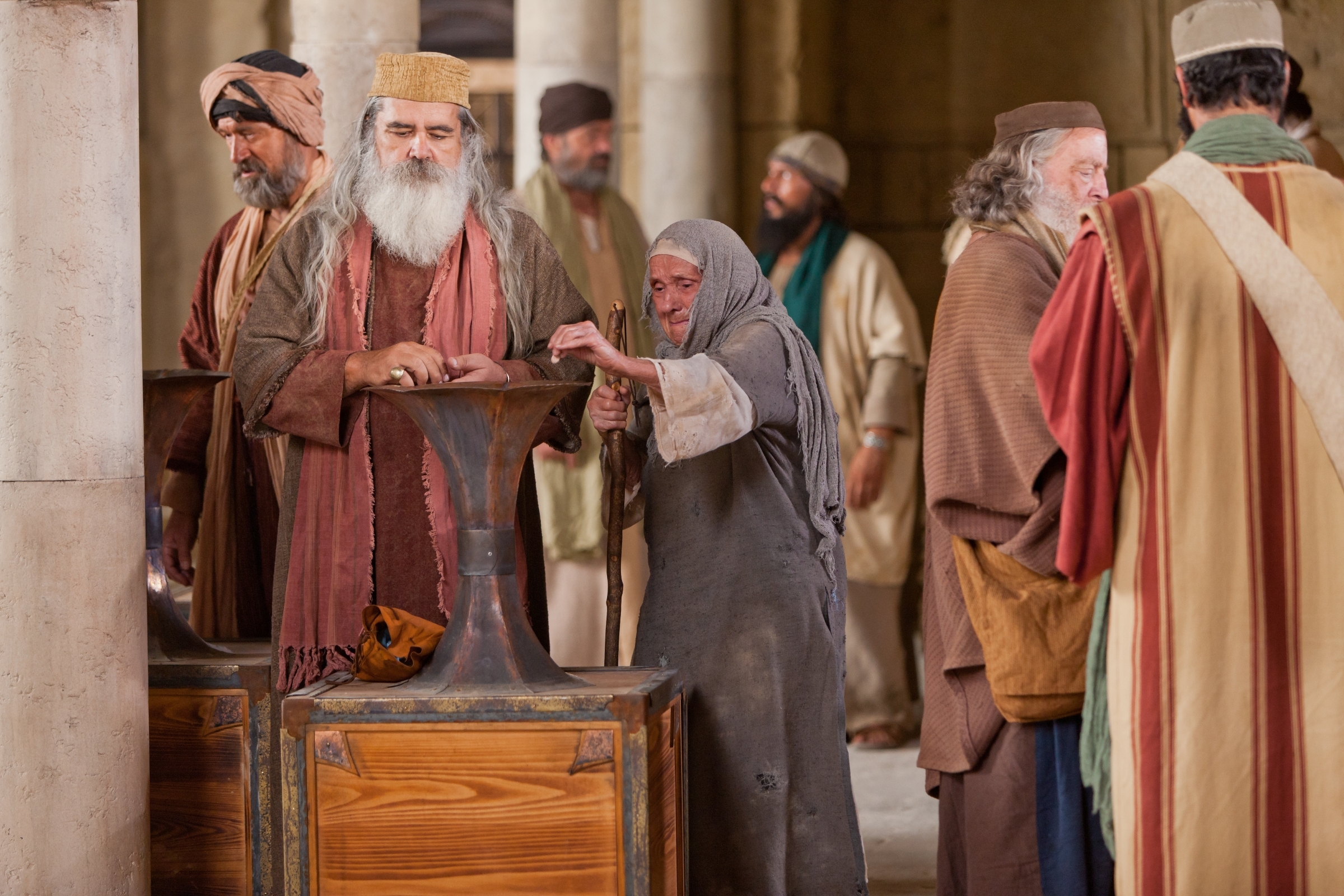
In Luke 8:1-3, Luke provides an interesting interlude between the visit to Simon’s house and his record of Jesus’ teaching of the parable of the sower. It is a practical note, helping us understand how Jesus and the twelve had the financial wherewithal to go from one city and village to another, proclaiming and preaching the kingdom of God (1). They owed this opportunity, monetarily, to the generosity of “some women.” Among them, according to Luke, was Mary Magdalene (who had seven demons cast out of her), Joanna the wife of Chuza, Susanna, and many others (2-3). They weren’t preachers or public proclaimers, but they were vital partners in the success of Jesus’ ministry! They also provide such a powerful example to us today, reminding us that we all can have a role in causing His work to succeed. 

They Did Not Let Social Position Keep Them From Supporting Jesus (2). In the first-century Jewish world, being a woman did not put you at the top of the social heap.  As Stein says, “That certain women followed Jesus indicates that his attitude toward women was quite different from the attitude of most first-century rabbis” (NAS commentary on Luke, 340). They could have used disadvantage as an excuse, but instead they accompanied and supported them. 

They Did Not Let Setbacks Or Sicknesses Keep Them From Supporting Jesus (2). How much time had they lost, individually and collectively, to these problems? We don’t know, but they responded in gratitude to the One who released them from them. These things were not crutches to lean on, but springboards of opportunity. 

They Did Not Let Secular Ties Keep Them From Supporting Jesus (3). One of the women had a husband who worked for Herod Antipas. “It may be that the special knowledge of Herod and his court reflected in Lk. came through him; he and his wife are no doubt named as well-known personalities in the church and are evidence for the existence of Christian disciples among the aristocracy” (Marshall, NIGTC, 317). Many believe Luke’s intimate knowledge of Herod’s household came through her. Herod was a politician, and that life, then as now, brings a spotlight. No doubt, whatever Joanna did reflected on her husband, Chuza, which, in turn, reflected on Herod. Whatever pressure she might have felt did not keep her from identifying with and furthering the work of Jesus. What an example! 

They Did Not Let Sacrificial Choices Keep Them From Supporting Jesus (3). Did you notice that Luke says this ongoing contribution was coming out of their private means? Women did not ordinarily have financial independence, but these women were willing to use their own funds (stipend or allowance?) for Jesus’ divine mission. The old saying is, “Success comes in ‘cans,’ not ‘can’ts’.” They counted the cost (14:28)! 

Their financial support was not meant to be a substitute for doing the duties of discipleship. Mary, the first person Jesus will appear to after His resurrection (Mark 16), is given the job of being the first to tell others He had risen (Mat. 28:7ff). Today, as then, support comes in so many forms. We support Jesus by helping fulfill His Great Commission, by being His hands and feet in helping others, by financially contributing to His work, by edifying the church, etc. We might offer any number of excuses for why we cannot, but we do well to follow these women who did not let anything stop them from supporting the Savior! 

Abel

Neal Pollard

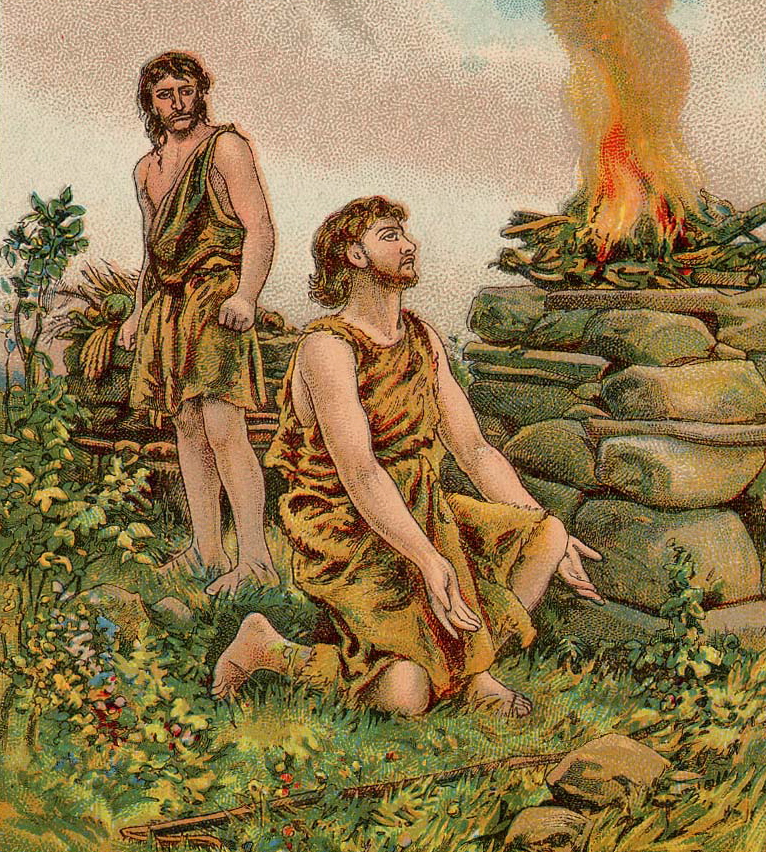
Abel is the first true victim in the Bible, if not the first hero. In fact, he is the first character about whom there is only good spoken of in the Genesis record. Abel comes onto the scene offering God acceptable worship and he leaves a martyr for righteous conduct. But, writers as late as John and the Hebrews’ author look back on his life near the beginning of time and make distinct, New Testament points. He is a vital biblical character we can learn at least three important things from.

We see the importance of Abel’s offering (Gen. 4:4). It was his “firstlings.” The Lord had respect for His offering. John would write, “This is the message you have heard from the beginning: We should love one another. We must not be like Cain, who belonged to the evil one and killed his brother. And why did he kill him? Because Cain had been doing what was evil, and his brother had been doing what was righteous” (1 Jn. 3:11-12). Abel worshipped God the way God wanted to be worshipped, and how does He want to be worshipped? Jesus plainly answers that. “God is spirit, and they that worship Him must worship Him in spirit and in truth” (John 4:24).

We see the importance of Abel’s blood (Heb. 12:24). Blood sacrifice has been a vital part of man’s spiritual relationship with God since the dawn of time. Blood is vital to life. Giving of blood is the greatest expression of sacrifice. Abel died as the result of innocence and righteousness. That blood even “cried out to God” after Abel’s murder (Gen. 4:10-11). Yet, Abel, as righteous as he was, was a sinner. Add to that, his blood saves no one from sin. As important as his shedding of blood is to the unfolding of history, Jesus’ blood is superior (Heb. 12:24). He was perfectly innocent, and His death was an offering of the just for the unjust (1 Pet. 3:18). His sacrifice is also the way man is saved from his sins (Eph. 1:7).

We see the importance of Abel’s faith (Heb. 11:4). Among the mighty in faith throughout the ages, Abel’s name is prominently etched. Of him we read, “It was by faith that Abel brought a more acceptable offering to God than Cain did. Abel’s offering gave evidence that he was a righteous man, and God showed his approval of his gifts. Although Abel is long dead, he still speaks to us by his example of faith.” Here, we see what Abel’s faith was: (1) active, (2) saving, (3) notable, and (4) influential. First, his faith acted. He offered a sacrifice. Next, his faith was productive. God counted him righteous as the result of his faith. He didn’t earn that recognition, but God granted it as the result of his faith. Then, his faith is noteworthy. It was such faith that God testified of Abel’s sacrifice, the product of his faith. Finally, his faith is influential, as it is still upheld, now nearly 6,000 years later, as an example for us to follow. Though he is dead, his faith is still living and leading people today. Today, we can learn from and imitate the type faith Abel had.

What a hero for the ages! Such adjectives as faithful righteous, innocent, and better describe him and what he did. Let us learn from and imitate this patriarchal giant, that we can continue to shine as a beacon of faith, sacrifice, and obedience even after we depart this life!

Painful, But Exhilarating

Neal Pollard

    On a particular occasion, I was listening to a great sermon on worship. It was interesting and, in a very real way, enjoyable.  But it was also forceful and convicting.  The longer he preached, the more the message kept penetrating and pricking my heart.  His sermon consisted of two points, that worship is an intentional meeting with God and, when we come, we must bring an offering.  That may sound somewhat plain, but it was powerful.

   Do not think that my view is that it is not a good sermon if your toes have not been crunched and you have not gone on a guilt trip.  I love feel good sermons on grace and heaven, the same as the next brother or sister.  However, as I listened to him preach that night, I thought of so many sermons by Camp, Clark, McCord, Winkler, Nichols, and others of their ilk.  The rich overflow from a man who has studied, prepared, and honed his ability to present gospel truths reaches into the heart of a hearer.  If we open our hearts during such sermons, we will be convicted by our shortcomings but motivated by the lesson to improve, grow, and increase what is good. 

   As he spoke about the “bucket,” I thought about the fact that more times than I want to admit I have come with an empty or nearly empty bucket.  But hearing him preach about it, I felt resolve to fill it up next time I meet God in worship.  In fact, that was what struck me most about his sermon.  The more I heard, the more I wanted to please, love, and obey my Lord.  It was painful, but exhilarating!

   In our dramatically consumer-centric culture, you and I must break out of such selfishness and humbly approach the Audience of worship and give our everything to please Him.  We need to come with our prayers, praise, thoughts, longings, meditation, money, and the like, urgently desiring to give and give some more to our great God!   That will do more than transform our worship.  It will change our very beings to the core! 

Recognizing Who We Are

Carl Pollard

As Christians it can be easy to lose sight of what our purpose is now that we have been justified through Christ. We are offerings to God. Romans 11:36 says, “from God and through God everything exists.” Now present your bodies a living sacrifice to THAT God. So that your life is acceptable to THAT God. Renew your mind so that you will prove what the will of God is. 

You know when you buy toys for your kids or grandkids often times on the package in fine print are these words, “Batteries not included.” Do you know what that means? It means that you get the toy, but the power to make it work is not included. That is not the kind of gift that God gives. God’s gift of holiness includes the power of the fullness of the Holy Spirit – the power to make it work.

We are different from the rest of the world (Rom. 12:2). I am not an offering to me. 

A sacrifice is “an act of giving up something valued for the sake of something else regarded as more important or worthy.” What is worthy of your sacrifice? What is worth the sacrifice of your life? For way too many in the world it’s not God and I’m convinced it’s because they just don’t understand who HE is. 

Will I sacrifice my life to my job? My spouse? Family? Who is it that is worthy of my soul? If any of those things pull you away from the One that holds your breath and life in your hand and determines your eternal destination, you’ve made a costly and foolish mistake. A truly faithful christian is one that lives as an offering to God. 

God offers us something that nothing in this world can, He offers transformation that prepares us to be in His presence. God knows what we need and He has offered it. 

I found some advice for those of you that are married, what not to buy your wife…Don’t buy clothing that involves sizes. The chances are one in seven thousand that you will get her size right, and your wife will be offended the other 6999 times. Avoid all things useful. No mops, brooms, Clorox wipes, etc. 

Don’t buy jewelry. The jewelry your wife wants, you can’t afford. And the jewelry you can afford, she doesn’t want. Finally, don’t spend too much. “How do you think we’re going to afford that?” she’ll ask. But don’t spend too little. She won’t say anything, but she’ll think, “Is that all I’m worth?”

Unlike shopping for your wife, God knows exactly what we need. He knows our struggles. He knows our battle with sin, so He offered salvation. So will we recognize who we are and what God has done to make us who we are today? 

Give Like Jesus

Neal Pollard

When we think about Jesus and material possessions, perhaps we think of passages like Luke 8:3 that tell us He lived from the financial support of Mary Magdalene, Joanna, Susanna, and many others. Or His own words: “The foxes have holes and the birds of the air have nests, but the Son of Man has nowhere to lay His head” (Luke 9:58). Jesus lived humbly. Despite this, how often do we reflect on Jesus’ giving?

  • He gave Himself. Scripture says this explicitly in several places. He gave Himself “for our sins” (Gal. 1:4;). He gave Himself “for me” (Gal. 2:20). He gave Himself “for us” (Eph. 5:2; Ti. 2:14). He gave Himself for the church (Eph. 5:25). He gave Himself “for all” (1 Tim. 2:6). No matter how you look at the cross, it must be described in terms of His giving. This gift was the most significant act of all history. The writer of Hebrews says “we have been sanctified through the offering of the body of Jesus Christ once for all” (10:10). Isn’t it interesting that Paul praises the unexpected generosity of the Macedonian givers, in part, by saying “they first gave themselves to the Lord and to us by the will of God” (2 Cor. 8:5). Gracious, generous giving is impossible without our first giving ourselves to God. Submitting ourselves to Him in utter dependency, yielding our will and desires, is a prerequisite for Christlike giving.
  • He found it more blessed to give than receive (Acts 20:35). This was His mentality and outlook. His default position was doing for others, not having others do for Him (Mat. 20:28). Paul, speaking with the Ephesian elders, reflects back on this character trait of Jesus, saying, “In everything I showed you that by working hard in this manner you must help the weak and remember the words of the Lord Jesus, that He Himself said, ‘It is more blessed to give than to receive.’ ” What is Paul talking about? In the context, he is talking about material things like gold, silver, and clothing (33), material needs (34), and helping the weak by working hard (35). He’s not referring to the Sunday collection (cf. 1 Cor. 16:1-2), but an attitude of heart instead. Again, the Macedonians embodied this attitude. Paul is still speaking of them when he writes, “Each one must do as he has purposed in his heart, not grudgingly or under compulsion, for God loves a cheerful giver” (2 Cor. 9:7). We should grow to the point where it brings us joy to give to God. Isn’t that how Jesus gave Himself for us? Study Hebrews 12:1-3 closely!
  • He gave with grace (2 Cor. 8:9). Most lexical definitions of “grace” include the word “gift,” “favor,” and “benefit.” These are undoubtedly giving terms and, when Paul uses it in 2 Corinthians 8:9, a financial term. Paul says, “For you know the grace of our Lord Jesus Christ, that though He was rich, yet for your sakes He became poor, so that you through His poverty might become rich.” He ties Christ’s gracious giving to his admonition that Corinth be gracious givers, too. He urges them to complete this gracious work (6), to abound in this gracious work (7), and co-participate in this gracious work (19-20). For Jesus, grace meant giving up something to meet the needs of others. For us, gracious giving means giving up something to supply the needs of others. Like with Jesus, we prove the sincerity of our love by gracious giving (8).

Should we give out of duty and obligation? Not entirely and certainly not primarily. Should we give out of gratitude? That’s certainly better than guilt. How about giving out of an effort to imitate our Savior? When we are giving, it is not merely “to the church.” It is giving to the head of the church, the one who gave everything to purchase it (Acts 20:28). Remarkably, sacrificial giving is a tangible, explicit way for us to give like Jesus. Could there be a stronger motivation?

What Generous Giving Shows

Monday’s Column: Neal At The Cross

Neal Pollard

After praising the Corinthians in the midst of his second letter to them, Paul challenges their growth in a specific area of their Christianity. It is an area where several need to be challenged. Jesus urges us to have proper hearts by laying up treasure in heaven (Mat. 6:19-21) and Paul spends time showing what a proper heart looks like. Notice what he says on this subject in 2 Corinthians 8. 

GENEROUS GIVING REFLECTS THE GRACE OF THE LORD (1-2,9)

Paul holds up the impoverished churches of Macedonia and the Lord Jesus Christ as examples of grace for the Corinthians. The poor saints of Macedonia, in a great ordeal of affliction, had abundant joy and a wealth of liberality to give generously despite that poverty. Who does that look like? The Lord Jesus Christ, who, though rich, for our sakes became poor that we through His poverty might become rich. Do you want to look like Jesus? Give generously and abundantly.

GENEROUS GIVING REVEALS AN EAGER, SACRIFICIAL HEART (3-6)

What kind of hearts did the Macedonians have? They had willing hearts, which caused them to give “beyond their ability” (3). They had begging hearts, which considered being allowed to give a favor (4). They had giving hearts, which prompted a financial generosity out of their first giving themselves to God (5). How is my giving? Let me first ask how my heart is, when it comes to “my” money. Paul uses Macedonia’s example to spur on Corinth.

GENEROUS GIVING REINFORCES OTHER OTHER SPIRITUAL QUALITIES (7-8,24)

Paul credits Corinth for their faith, utterance, knowledge, earnestness, love, and sincerity. The first three seem to be alluding to their spiritual gifts (cf. 1 Cor. 12-14), necessary to grow the church. The last three are attitudes Christians must possess. Yet, Paul tosses generosity right onto that figurative pile. He calls for them to abound in this gracious work, too. It proved the sincerity of their love. Later, Paul urges them to “show them the proof of your love and of our reason for boasting about you” (24). It’s not generous giving or these other qualities, or vice versa. God wants all of us. 

GENEROUS GIVING READIES ONE FOR COMPLETION (10-15)

Paul calls for them to finish what they intended to do in this matter. Intentions, as great as they may be, cannot be spent or used to meet the various needs Paul is concerned about. The completion of it was as vital as the readiness to do it. God sees giving as the great equalizer between those with abundance and those with need. He’s not talking about redistribution of wealth. He’s talking about a healthy attitude toward one’s wealth that leads to God supplying all that’s needed through our generosity. Don’t just intend or desire to give. Do it!

GENEROUS GIVING RESULTS IN ACCOMPLISHING GOD’S WORK (16-24)

This is a matter of practicality. Real needs in spreading the gospel existed, requiring monetary aid to accomplish. Titus brought it to their attention. Paul is reminding them of it. As they participated in this gracious work, they were helping the church. 

Do you find it interesting that for the inspired Paul, the subject of giving was not off-limits whether he was talking about the rich or the poor or the weak or the strong? Giving is a fundamental aspect and expression of our faith. It is not a substitute for good works. It is a specific example, one of many good works. We need to excel in this gracious work also!

Better Living 

Neal Pollard

We find ourselves often bobbing in a sea of religious confusion. Many groups claim to be the best religion and point to their ingredients as reasons for such claims. Several years ago, our boys played basketball in a league hosted by a huge community church in the Denver area.  Their church’s campus includes a K-12 school, two restaurants, a gymnasium half the size of our church building, a coffee shop, and a hundred social program. Other groups would make their claim as “better” or “best” based on their numeric size, the number of programs they have, or how socially active they are.

Our religious attitude ought to be one of humility, which does not boast of our achievements or compare ourselves with others (cf. 2 Cor. 10:12).  Genesis 4 is not just about two kinds of worship, but also about two ways of living life. Cain is mentioned by three Bible writers after Moses introduces him in Genesis. The writer of Hebrews calls Abel’s offering more excellent than his (Heb. 11:4). John calls Cain’s works evil and his allegiance “of the wicked one” (1 Jo. 3:12). Jude implies that the way of Cain is the wrong way to go (11). Let’s make a few brief observations from Genesis four and see if we can find the elements which make for a better way of living today.

  • BETTER LIVING IS NOT DETERMINED BY AGE (1-2).  By birth order, Cain came first. He was the first person to be born in the natural order of childbirth. He was the very first newborn to be held in his mama’s arms. She didn’t realize that her cooing, sweet infant was a future murdering, and she was proud of him. She called him “a man child with the help of the Lord.” This depicts such a bright, optimistic future, and by contrast Scripture says, “Again, she gave birth to his brother, Abel” (2). Abel began in his brother’s shadow, first known to us as “his (Cain’s) brother.”
  • BETTER LIVING IS NOT DETERMINED BY OCCUPATION (2). When we look at these brothers, what they did for a living was not the determiner of the quality of their lives. While what they did had an indirect bearing on the events of this account, the fact of their occupation was spiritually neutral—Cain farmed and Abel tended sheep. One can reap blessings from tilling the ground (Heb. 6:7), but they may have to fight thorns, thistles, and weeds doing it (Gen. 3:18-19). Tending sheep may be done by slaves (Luke 17:17), kings (1 Sam. 17:34), or apostles (John 21:17). God’s pleasure or displeasure was not connected to either’s occupation.
  • BETTER LIVING IS DETERMINED BY WORSHIP (3-4). Moses says both brought an offering to the Lord. He also says God responded to bother offerings, accepting one and rejecting the other. That very notion is foreign to many people in our society today, even those in religion. Many make worship nothing more than taste, preference, and personal inclination. But, Moses shows us (1) Not all worship is equal: God had regard for Abel’s, but not Cain’s. The words “had respect to” signify in Hebrew to look at something with a very serious glance. God tells us how He wants worship done, in attitude and action; (2) The worshipper and the worship rise and fall together: God had regard for Abel AND his offering and did not for Cain AND his offering. That’s a sober reminder for me that my personal relationship with God is hindered or helped based on the way I worship God. Can I offer God vain and ignorant worship, and have God reject it but accept me? We are not earning God’s favor by getting worship right. At the same time, are we tempting God and hoping we stay in His favor while disobeying His commands for worship? People have tried to make this an “either-or” proposition, that Cain and Abel’s offering was either about getting the worship right or was about the nature of the person offering the worship. In other words, is it sincerity or obedience, our both sincerity and obedience? To thoughtfully ask the question is to answer it!
  • BETTER LIVING IS DETERMINED BY ATTITUDE (5-7). Cain reacts to having himself and his worship rejected by God by burning with anger and his face taking on an ugly look. He sounds like a small child in the throes of a tantrum or a teenager huffing and sulking in anger. God warns Cain of the recipe for disaster he was making through his attitude. He told Cain that his tempestuous attitude was an invitation for sin to pounce on him, but He told him he could master it! You can have a positive attitude without prosperity, education, or earthly success, but you cannot have a positive attitude without mastering self.
  • BETTER LIVING IS DETERMINED BY ACTION (8-16). Improper worship and attitude preceded and precipitated improper action. The first time “sin” is used (Gen. 4:7), God was looking ahead with perfect foresight to what Cain would do to his brother. He does the unthinkable, killing his own brother (cf. 1 Jo. 3:11-15). His deeds and ways were a recipe for disaster: He is rebuked by God, punished by God, and separated from God. Sin promises a good time and fulfillment, but it’s not true.

It’s been said that the lineage of Cain gave us murder, cities, polygamy, musicians, metal workers and poetry, but not one who walked with God! Thanks to his legacy, a descendant repeats his violent ways (Gen. 4:23). Abel seems to leave no physical lineage, but he still speaks after death. His was a life of faith, generosity, good works, righteousness, and obedience. We get to choose the kind of life we want to pursue. If we choose well, we will be satisfied, others will be blessed, and God will be pleased.

the_story_of_cain_and_abel_bible_card