How is God’s expectation of repentance in Hosea’s day parallel to our day?
“Return” (14:1-9)
Neal Pollard
God ends His message through Hosea with a plan for Israel’s repentance. It is thorough and thoughtful. It is pointed, but pleading. God can perfectly foresee the collision course with spiritual disaster that this nation is on, and He wants them to feel the urgency of their situation. The postscript at the end of the book (9) calls on the wise, understanding, and discerning person to know and do.
The Lord begins with what the people must do (1-3). In a word, they must “return.” In this, they must acknowledge that they have gone astray (“you have stumbled…”)(1). Their repentance and returning would be articulated with words (2-3). With humility and honesty, they must confess to God how they had betrayed Him.
The Lord promises what He will do (4-8). Notice that God looks to the future and uses the word “will” 12 times in these last six verses. If they genuinely return to Him, He is anxious and ready to heal and love them. But, more than that, God focuses them on what their return would do for them. Every other occurrence of the word “will” speaks of the abundance and blessings that would follow Israel’s restoration. It would be apparent to others that God was blessing these penitent people.
The Lord appeals to what He expects and why (9). He expects people to evaluate their spiritual situation and make the right decision. He expects that every accountable one could do that and, in wisdom, would do that. He expects them to do that because His ways are right and “the righteous will walk in them, but transgressors will stumble in them.”
Consider that our situation parallels what God says to Israel through Hosea in this chapter. Through Christ, He has told us what we must do (Luke 3:10,12,14; Acts 2:37ff; Acts 16:30). Think about the multitude of promises that flow out of our obedient, penitent response to His will (Js. 1:17). He tells us what He expects and why (6:6; Dt. 10:12; Mic. 6:8). The question is, will we be wise, understanding, and discerning? Will we appreciate the protective love of our spiritual groom and His reasonable expectations that we be faithful to Him?
As you read chapter 13, think about how the prophet talks about death and life? How do you think verse 14 relates to 1 Corinthians 15?
From Death To Life (13:1-16)
Neal Pollard
Before a final appeal to Israel in chapter 14, God makes closing arguments in testifying against the nation’s unfaithfulness. If this was a legal proceeding, He would be the omniscient witness, prosecutor, and jury, and the omnipotent judge. Yet, having such power, He also has the total restraint inherent in an absolutely flawless character. He does not simply annihilate. He pleads. Yet, it is an open and shut case (see 4:1; 12:2).
God sentences the northern kingdom to the death penalty. When you read of Ephraim, Israel, and Samaria in this chapter, these are all distinct identifiers of the tribes that broke away from Judah (1 Kings 12). Ephraim is the largest tribe and thereby represents all the people of the kingdom. Israel is spoken of here as the name of the northern kingdom. Samaria is the capital.
This chapter reveals how death occurred for them (1). They exalted themselves and turned to Baal.
This chapter reveals what death looked like (2-3). They sinned more and more and wantonly longed for idolatry. Yet, they would disappear like the morning cloud, the dew, chaff blown in the wind, and smoke out of a chimney.
This chapter reveals why death was tragic (4-6). They had rejected their Savior from the beginning, who had cared for them and provided for them. Blessed by Him, they became satisfied, proud, and forgot Him.
This chapter reveals how death would come (7-8). He would appear and attack like a predator–lion, leopard, bear, and lioness. It would be both a planned attack but also an attack from one who acts with just cause.
This chapter reveals what death meant for them (9-13). It was destruction when help was available (9). It meant vulnerability when a king was possible (10-11). It meant bondage when freedom was attainable (12). It meant desolation (13).
While physical and spiritual death loomed for Israel, there was still a future restoration for some of God’s people. It would not be the northern kingdom, but for those who sought refuge in Judah by faith in God’s message. But there was an ultimate hope and life for those who were faithful to God. Thus, Paul takes Hosea’s words in verse 14 and applies it to our hope in the resurrection because of Christ. He quotes the verse in 1 Corinthians 15:55-57, saying, “O death, where is your victory? O death, where is your sting? The sting of death is sin, and the power of sin is the law; but thanks be to God, who gives us the victory through our Lord Jesus Christ.” Israel did not have the purity or trust of heart to turn to Him, but even in this gloomy and impending doom, God shows the hope that is always possible for those who come to Him for life (John 5:40).
How does Jacob’s character compare and contrast with Hosea’s audience in Hosea 12? Open your Bible to this chapter and let’s look closer.
A Word To Jacob (12:1-14)
Neal Pollard
Hosea appeals to the family history of Israel, the name given to Jacob by God in Genesis 32:28 after He contended with Him. The prophet appeals to certain troublesome attributes of the patriarch’s character as symbolic of the sin problems of his contemporaries to whom he writes (2). He refers to Jacob’s treachery against Esau from the womb and his contending against God as a man (3). While these liabilities did not debilitate Jacob’s faith, his descendants, the nation, expressed the worst of these traits in their lives.
Hosea appeals to how their father Jacob wept and sought God’s favor. He turned away from sin and immorality and turned to “the Lord, the God of hosts” (5). The nation had done the opposite. They went from faithfulness in their earlier days to the scheming and fighting against God of their unrighteous present. They multiplied lies and violence (1). They made alliances with the pagan nations (1). They were dishonest and oppressing (7). They trusted in wealth above all else (8). Because their hearts were not turned to God like Jacob’s was, they are worthless and their worship is, too (11). He has provoked God to bitter anger, and He will punish him for his reproach (14).
Despite their unfaithfulness, look at God’s steadfastness toward these descendants of His beloved patriarch. He appeals to them to return to Him, conform to His ethics, and wait continually for Him (6). He has been their God through thick and thin, from the beginning (9). He sent them abundant revelation through prophets, visions, and parables (10). But they fell back upon their baser nature. Therefore, God will allow them to go their own way and suffer the consequences of such.
In the spirit of Romans 15:4 and 1 Corinthians 10:6,11, what should we take from this admonition? Think back to the beginning of our Christian walk. We turned away from the deficiencies and destitutions of our soul and character and called out to Him (Acts 22:16). Where are we now? Are we building on that faithfulness (Heb. 10:32-39) or are we reverting to the “old man” ways (Eph. 4:17-22)? If we turn away from Him, it pains Him. But He will allow us to go whatever way we desire (cf. Acts 14:16). Yet, let there be no doubt, He desires us to return to Him (cf. 2 Pet. 3:9).
Which New Testament disciple do you most relate to? What aspect of Peter’s life resonates most with you?
Carl Pollard
I want to be bold, but sometimes I’m afraid. Big decisions can be intimidating. I aspire to be committed, yet I often back down even when I know I shouldn’t. I want to please people, but at times I let them down. Occasionally, I fail God. That is why Peter deeply resonates with me.
Many people relate to Peter because, as humans, we constantly fall short. However, scripture provides us with examples to reflect upon, and there is no better example than Peter. He faced failures, yet he grew from them.
Eugene Peterson once said, “Among the apostles, the one absolutely stunning success was Judas, and the one thoroughly groveling failure was Peter. Judas was a success in the ways that most impress us: he was successful both financially and politically. He cleverly arranged to control the money of the apostolic band and skillfully manipulated the political forces of the day to accomplish his goals. In contrast, Peter was a failure in ways that we most dread: he was impotent in a crisis and socially inept. At the arrest of Jesus, he collapsed—a hapless, blustering coward. In the most critical situations of his life with Jesus, such as the confession on the road to Caesarea Philippi and the vision on the Mount of Transfiguration, he often said embarrassingly inappropriate things. He was not the companion we would want in times of danger nor the person we would feel comfortable with at a social gathering. Yet time has reversed our judgments on the two men. Judas is now a byword for betrayal, while Peter is one of the most honored names in the Church and the world. Judas is a villain, and Peter is a saint. However, the world continues to chase after the successes of Judas—financial wealth and political power—while defending itself against the failures of Peter—impotence and ineptness” (quoted in Tim Kimmel, Little House on the Freeway, 191-192).
When we examine Peter, we see a committed follower of Christ. Though he stumbled often, he remained dedicated to Jesus. He abandoned his home and career to follow Him, making his life a full-time service to Christ. Many Christians today attempt to separate their spiritual lives from their “real” lives, often settling for just a piece of Jesus. In contrast, Peter desired for Christ to be his entire life.
In John 13:6-9, we read: “So He came to Simon Peter. He said to him, ‘Lord, do You wash my feet?’ Jesus answered and said to him, ‘What I do you do not realize now, but you will understand hereafter.’ Peter said to Him, ‘Never shall You wash my feet!’ Jesus answered him, ‘If I do not wash you, you have no part with Me.’ Simon Peter said to Him, ‘Lord, then wash not only my feet, but also my hands and my head.’”
Peter longed for his life to be filled with Christ. Pliny the Elder, a Roman writer from the same era as Jesus, recounted a story about the erection of an obelisk that would stand 99 feet tall. Twenty thousand workers were chosen to pull on the ropes and activate the hoisting apparatus. The operation was fraught with responsibility and risk; one mistake could cause the obelisk to fall, ruining years of effort. The King demanded that the engineer focus entirely on the task, so he ordered the engineer’s own son to be strapped to the apex of the obelisk, ensuring that both his heart and mind were committed to the task.
On an even larger scale, our commitment to Christ affects thousands, perhaps even millions of people. Their souls are in the balance, and a half-hearted Christian walk does not honor that responsibility. How do we feel about Christ? Do we merely want a piece of Him on Sundays, or do we desire for Him to be immersed in every aspect of our lives?
“It is not what men eat but what they digest that makes them strong; not what we gain but what we save that makes us rich; not what we read but what we remember that makes us learned; not what we preach but what we practice that makes us Christians.”
Peter was far from a shallow disciple; he genuinely sought Christ in his life. As he said, “Behold, we have left everything and followed You” (Mark 10:28).
How does God feel about us when we refuse to be faithful to Him?
How Can I Give You Up? How Can I Surrender You? (11:1-12)
Neal Pollard
Israel and Judah have betrayed God and given Him up for far inferior and worse alternatives. Their wanton pursuit of such love interests was met by violence and mistreatment from their misguided choice. What utter folly in exchanging the perfect, providing, and protecting God for the perverse, pitiless, and pompous world and its idols!
Despite their resolute determination to forsake Him, God’s perfect love cannot be extinguished. That does not mean He will change His mind about their judgment and punishment, but He does not do so with out of control rage and jealousy. He does so, as it were, with audible weeping and restraint. These are His people, and He loves them so much.
He recalls the love He had for the nation at its beginning, when He led them out of Egypt (1). He calls Israel His son, the very way He refers to the nation to Moses (Ex. 4:22). The ultimate fulfillment of this prophecy, according to Matthew, is when Joseph and Mary take Jesus from hiding in Egypt to settle in Nazareth (Matt. 2:15,19-23). In the context, though, God is recalling the beginning of their relationship. Yet, in such recall, He remembers how their idolatry and unfaithfulness started even back in this formative stage (2). While God was teaching them to walk, taking them in His arms, leading them with bonds of love, lightening their burdens, bending over and feeding them, they refused to return to Him (3-5). For that reason, God says, they will return not to Egypt but instead go to Assyria (5).
He will allow them to have the consequences of their own choice. They will experience the sword of the notoriously cruel Assyrians (6). Their property and bodies will be demolished (6). Why? Because they turned from Him and none exalted Him (7). Despite how God felt about Israel, He would not make them love Him and be faithful to Him. He allows us to go the way we prefer to go, even if it is disastrous for us.
But do not miss the heart of God! It is vividly depicted in the last five verses. He says, “My heart is torn within me, and my compassion overflows” (8b, NLT). This is why He cries out to the nation, “How can I give you up…How can I surrender you…How can I make you like Admah…treat you like Zeboiim?” (8). The cities mentioned here are the lesser known towns in the Valley of Zoar that were destroyed with the better known dens of wickedness, Sodom and Gomorrah (Deut. 29:23). He will not execute His fierce anger or come in wrath (9). He speaks of a future where they would return to Him and resettle (11), even as they were presently walking in treachery before a God who is faithful (11b). This reminds me of something Paul will say later about the steadfast character of God: “For if we died with Him, we will also live with Him; If we endure, we will also reign with Him; If we deny Him, He also will deny us; If we are faithless, He remains faithful, for He cannot deny Himself” (2 Tim. 2:11-13; cf. Rom. 3:3).
He desires our faithful devotion (see Hos. 4:1). But even when we refuse to come to Him, He loathes to let us go. If we persist, He will do so. Yet, He does so not with gritting teeth or clinched hand. He does so with weeping and wailing, devastated at the very loss.
How does one argue human value without the existence of God?
Gary Pollard
“What makes human life valuable?”
A purely naturalistic answer is not adequate. Life begets life, which is true. Self-preservation is built into our programming, that’s true. Life is valuable because of its potential to contribute to future generations (the reproductive success aspect of biological imperatives), which is also true. Humans rely on each other for survival, that’s true. We have a unique capacity for empathy, true. We have consciousness and recognize the value of others, true (kinda). And there are cultural narratives that emphasize the value of human life (depends on the cultural narrative).
But what stops a society from devolving into the practice of eugenics? If some have superior genetics in the mental and physical health department, why not be more selective about who gets to reproduce? Why would we allow the survival of those who don’t or can’t contribute to future generations? Why would we allow/desire the survival of those who don’t or can’t meaningfully contribute to society? What about empathy’s subjective nature? We don’t usually show empathy (as much anyways) to those whose experiences or values are very different from our own, not without a transcendent directive that calls us to aim higher than self. We have consciousness and recognize the value of others…until we decide that they aren’t valuable any longer (see all militant religious conflicts over the last fifteen centuries). And those cultural narratives that value human life are primarily religious in their nature, with none emphasizing absolute selfless love more than Christianity. By Christianity, of course, I mean actual Christians. Not godless pagans who use iconography and distorted narratives to manipulate others for personal elevation. They are not — and cannot by definition be — Christians.
So what does make human life valuable? We have to posit their value from a transcendent point of view.
We are the only life on the planet that looks like God (Gen 1.27). While there’s been much debate over what “in his image and likeness” means, it’s not exactly ambiguous in scripture. Genesis 5.1 and 5.3 make the best case for this: “When God created people, he made them like himself.” And, “After Adam was 130 years old, he had another son who looked just like himself. Adam named his son Seth.” Same exact wording. Genesis 9.6 says, “God made humans to be like himself. So whoever kills a person must be killed by another person.” The value of human life comes from our resemblance to the Creator.
As Jesus affirmed, the two most important laws are to love God with all of our being and to love other people like self (cf. Mt 22.36-40). If we love God, we’re going to love other people — including people who hate and hurt us (Mt 5.44). That isn’t a natural reaction to hostility! Human life has value because God gave it value.
Human life is valuable because the Creator sacrificed himself to give us life. If God “Doesn’t want anyone to be destroyed, but for everyone to change their lives,” our view of people should be the same (cf. II Pt 3.9).
From a naturalistic point of view, there’s no utility in ensuring the survival of people who can’t contribute to society. Drawing from the reasons we’ve listed James says, “Pure, genuine religion is this: providing for orphans and widows who need help and keeping yourself free from the world’s evil influence” (1.27).
Think about what we have in Christ: the encouragement he has brought us, the comfort of his love, our sharing in his spirit, and the mercy and kindness he has shown us. If you enjoy these blessings, then do what will make my joy complete: Agree with each other, and show your love for each other. Be united in your goals and in the way you think. In whatever you do, don’t let selfishness or pride be your guide. Be humble, and honor others more than yourselves. Don’t be interested only in your own life, but care about the lives of others too (Phil 2.1-4).
Have you ever found yourself in over your head, when you had to ask for help? We never like to get to that point, financially, emotionally, physically, or spiritually. But, unless we callous our hearts to the truth, we need God constantly–especially spiritually. In Psalm 38, David comes before the Lord pleading with Him to help in a dire situation. While it involves the opposition of earthly enemies (12,19), the main concern is his own opposition to God’s will. The main problem on David’s mind is his sin problem. David gives us an example of how to pray to God in time of trouble, especially the self-induced kind.
ACKNOWLEDGE HOW YOUR SIN MAKES HIM FEEL (1-3)
David knows that God hates sin and is displeased by its presence in our lives. Meaningful repentance and change is not possible until we can see our sin through His perfect eyes. This honest assessment will keep us from being defensive or from rationalizing.
SPECIFICALLY ADDRESS THE SERIOUSNESS OF YOUR SIN (4-8)
Look at all the descriptive terms and synonyms David uses regarding his sin. His “iniquities” are heavy burdens, foul and festering wounds, that which causes him to be bent over and bowed down, the cause of constant mourning, a debilitating sickness, and a numbing, crushing, agitating thing. See your sin that way and there is no way to hang onto it, much less embrace and defend it.
CONFESS YOUR INABILITY TO RESOLVE THIS ALONE (9-14)
Pride is such a destructive thing! David shows no sign of it in this psalm. He feels isolated from friends and tormented by foes. He feels incapable of solving this problem himself. Resolution must be preceded by recognition of how daunting our circumstance is without God.
TELL GOD OF YOUR HOPE THAT HE WILL HELP YOU (15-22)
The state of mind David has expressed inevitably leads to divine dependency. He hopes in God. He’s confident that God will answer him. Though he knows he’s close to falling, he pleads with God to intercede. His final plea as he speaks to God? “Make haste to help me, O Lord, my salvation.”
We must resist the devil and our own fleshly desires. God has equipped us with the ability to be disciplined and to deny self. But, the battle cannot be won without leaning on the Everlasting Arms. Don’t just know that. Express it to God daily, throughout the day. It will help you see your problems more clearly and to see God as the solution.
Hosea calls for a trumpet to sound, an action that symbolizes judgment and warning in both the Old and New Testaments (Ex. 20:18; Jud. 6:34; Hos. 5:8; 1 Cor. 15:52; 1 Th. 4:16). An enemy will come against Israel because of transgression and rebellion (1). While the whole chapter will specifically address what that sin was, Hosea describes the whole matter in verse seven. This is one of the best-known passages from the book, where the prophet writes of Israel, “For they sow the wind And they reap the whirlwind.” What was the iniquity they sowed?
Lip service (2-3). It is an act of desperation, in view of impending doom. They cry out, “My God, we of Israel know You!” (2). They not only confess Him, but they appeal to their identity as Israel. However, “Israel” has rejected the good. How well this illustrates the condemnation Christ would later make of their descendants, quoting Isaiah 29:13, “This people honors Me with their lips, But their heart is far away from Me” (Mat. 15:8). Jesus calls this hypocrisy, and so it was for Israel! We sow to the wind when our devotion is no more than skin deep.
Failure to consult God (4-6). This was true of their earthly rulers, their kings and princes (4). This was true of their idols (4). Verses five and six make a difficult text, and the wording is confusing. It seems that Hosea is referring to the calf set up by Jeroboam (1 Ki. 12:28-29; cf. Hos. 10:5-6). God is outraged at Israel’s guilt and immorality. They pay homage to a calf idol and ignore Him. That calf would be broken in pieces (6), and the people who worship it would be “cut off” (4). We sow to the wind when we fail to keep God in the only place He will accept (Mat. 6:24,33; Ex. 20:3; Js. 4:4).
Political folly (8-10). The same issues the prophet Isaiah repeatedly addressed, trusting in earthly alliances rather than submitting to the authority and power of God, are highlighted by Hosea. “They hire allies among the nations” (10), but they would have the respect of no one (8). Like a donkey, stubborn and resistant to rule, they turn to man instead of God. Their foolish choice of lovers and protectors would cause them to diminish and be of no delight. We sow to the wind when we put our trust in man and refuse to submit to the Lordship of the only Master who can save and deliver us (Prov. 3:5; Isa. 36:4).
Empty rituals (11-13). Like the first offense mentioned in this chapter (lip service), this is a matter of a people more than willing to worship but unwilling to know and practice His Word. They regarded the many precepts of His law as a strange thing, but they kept on coming to worship and going through the motions anyway (12). Yet, as Hosea has already told them, “I delight in loyalty rather than sacrifice, and in the knowledge of God rather than burnt offerings” (6:6). Because of this, God will cause them to go into “Egypt” (13; this must be symbolic given the timeframe, standing for exile and captivity. They are going to Assyria (7:11). We sow to the wind when we refuse to repent of the sin of our daily lives, but insist on continuing to offer worship.
Self-reliance (14). The condemning, closing indictment is succinctly put: “Israel has forgotten his Maker.” They built their palaces and fortified cities with no thoughts of God. But God vows to set those dwellings on fire. How God had warned them against self-reliance from the time of the giving of the Law! “Beware that you do not forget the Lord your God by not keeping His commandments and His ordinances and His statutes which I am commanding you today; otherwise, when you have eaten and are satisfied, and have built good houses and lived in them, and when your herds and your flocks multiply, and your silver and gold multiply, and all that you have multiplies, then your heart will become proud and you will forget the Lord your God who brought you out from the land of Egypt, out of the house of slavery” (Deut. 8:11-14). He warned that the danger would be to say, “My power and the strength of my hand made me this wealth” (Deut. 8:17b). So it was in Hosea’s day. So it usually is in every generation. We sow to the wind when we trust in our income, our wisdom, and our strength, forgetting the God who gives every good and perfect gift (Js. 1:17). God reminds us “that there were not many wise according to the flesh, not many mighty, not many noble” chosen by God (1 Cor. 1:26-27a). When self is too strong and sufficient, we buy into the illusion that we have provided everything for ourselves. The rich farmer shows us how poorly that ends (Luke 12:20)!
Are you happy? On a daily basis, how do you usually feel? Anxious, tired, drained, sad, joyful? I was reading a report done on overall happiness and joy here in the US. The past four years it hit an all time low. Do you know what year Americans were happiest? Studies have shown that in 1957, people were by and large much happier than today and really at any point in US history. Why 1957? That year the average house at the time was a third of the size we live in today. The average salary was less than 4,000 a year. Life expectancy was 69 years. So why is it that even though homes were smaller, salaries were so modest, and life expectancy was 10 years shorter than today, people by and large much happier than today?
Maybe it’s because joy has never and will never be attached to physical possessions. We are losing our joy at an astounding rate. Even in the church, where we claim to have access to the peace of God and eternal life, joy can be far too elusive.
In Nehemiah 8:10, Nehemiah the Governor of Judah has just finished leading the Israelites in building the new wall around Jerusalem. They have returned from captivity and have what seems like a fresh start. One of the ways they show their gratitude was by gathering together to have Ezra read the books of Moses to them.
Nehemiah is doing some of the greatest work he could possibly choose to do. He used to be a cupbearer, but now he is leading the Israelites back to a relationship with God. After the reading of Scripture, notice what Nehemiah says, “Then he said to them, “Go your way. Eat the fat and drink sweet wine and send portions to anyone who has nothing ready, for this day is holy to our Lord. And do not be grieved, for the joy of the Lord is your strength.”
Why this reminder to the people? Because God’s people NEED joy! One of Satan’s first lines of attack to weaken our efforts in serving God is to take our joy. Psalm 16:11 reminds us where joy is found: “you will show me the path of life: in your presence is fulness of joy; at your right hand there are pleasures for evermore.”
I agree with the psalmist and I can confidently say joy is found in the presence of God! He has used His word, and time spent in prayer to give me encouragement and strength.
With Thanksgiving today, be especially thankful for the joy that comes from being a child of God!
God declares His “judgment” (1) against “the revolters” (2) who “played the harlot” and “defiled itself” (3). Their deeds prevented them from returning to God, and they did not know the Lord (4). No wonder He portrays Himself as a forsaken husband! His chosen people, Israel, had rejected Him. She enticed her sister, Judah, to stumble with her (5). Pride and iniquity characterize them both (5). God, in His holiness, will not let this infidelity go without response!
He has withdrawn from them (6-9). He had provided for her every need, but she was dissatisfied with Him. She strayed, looking for her fulfillment elsewhere. After they stumble in their transgression, they will go with their possessions to seek Him and He will not be there (6). They committed spiritual adultery, bearing “illegitimate children” (7). There was a day of rebuke coming for the nation, which God declares with certainty (9). They had made their bed, and now in desperation as they face judgment they want to sacrifice to Him. He would not hear their prayers, accept their sacrifices, or bless their lives. We can get to the point where, after rejecting Him repeatedly, God will withdraw from us (2 Chron. 15:2).
He will pour out His wrath on them (10-14). His response will not only be unavailability or silence, which are horrible enough. He vows to pour out His wrath like water on His people. Why? Treachery (10), determination to follow man’s commands (11), and turning to man rather than Him (13). God described the outpouring of His wrath as oppression and crushing (11), a moth that eats and rottenness (12), and a lion that tears to pieces and carries away so that no one can deliver (14). Reading this, we are reminded that the loving God is also just and wrathful when His grace, love, and mercy are continually spurned. The writer of Hebrews exclaims, “It is a terrifying thing to fall into the hands of the living God” (10:31). In the perfect nature of God, there is a need to persuade men of the terror of the Lord if they are living in rebellion against Him (2 Cor. 5:11). This expression, “pour out wrath,” is commonly used to describe God’s just judgment (Isa. 42:25; Ezek. 14:19; Nah. 1:6). Especially note how He expresses it in Ezekiel 7: “I will shortly pour out My wrath on you and spend My anger against you; judge you according to your ways and bring on you all your abominations. My eye will show no pity nor will I spare. I will repay you according to your ways, while your abominations are in your midst; then you will know that I, the Lord, do the smiting” (8-9). Keep in mind that He does not want this. He wants an intimate relationship, but He will not force His love on anyone.
He will go away and return to His place (15). Regardless of how deplorable she has acted and how resolute God is in His expressed determination to punish, He still is waiting and longing for His beloved to come to her senses and come home. Notice that God says “I will go away and return to my place until…” Until what? “Until they acknowledge their guilt and seek My face.” His hope is that in her affliction, suffering the consequences of sin (Gal. 6:7-8), “they will earnestly seek Me.” Oh what love, matchless love! As long as there is time, there is hope. What God is ever after is for us to realize the emptiness of sin and the unmatched satisfaction found only in faithful devotion to God!
There is an unmistakable cycle in the first few chapters of Hosea. Symbolized by the marriage between the prophet and the harlot, Gomer, their resulting children, her unfaithfulness, her suffering the consequences thereof, and his taking her back, God illustrates His rocky marriage with the nation of Israel. He had lavished them with His grace, blessings, and love, and they had responded by turning to Baal. He gave them material blessings, which they turned around and used for idolatrous purposes (8).
The cycle can be described as sin, punishment, and redemption. First, the nation sinned–which God calls “harlotry” and “adultery” (2). Then, God promises punishment both through what He will do (3) and what He will not do for her (4). This is followed by a more detailed description of the sins of the nation (5), looking elsewhere for blessings and satisfaction. Then, there is the vow of punishment (6-7). In the midst of all this, God laments that Israel used Him and took what He gave her and cheated on Him (8). For this, He declares His intention to repay her unfaithfulness (9-13). Writhing in the pain of rejection, God determines to withdraw His blessings (9), expose her adultery (10), and turn her partying into poverty and pain (11-13). There is a constant unfaithfulness by the wife and hurt, angry response by the husband. He had not neglected or mistreated her, giving her reason to look elsewhere for comfort, protection, and attention. She was simply untrue in heart. Surely God would just give up on her and let her go!
But remember there is redemption in the cycle, too (14-23). Even after all the spiritual adultery, God continues courting and wooing Israel (14). He declares His love so strongly that He believes, even after all the evidence to the contrary, that His bride will finally come to recognize what she has in Him. She will call Him “husband” (Ishi) and not “master” (Baali)(16). She’ll no longer speak the name of her former lovers (17). He will renew and rededicate His love for her, giving her righteousness, justice, lovingkindness, and compassion like an engagement ring (19). She will give Him faithfulness and intimacy (20), and He will respond to that by unrestrained generosity and affection (21-23).
Throughout the chapter, names are highlighted for significance in this whole cycle. He wants to call her “my people” and “compassion” (2), the opposite of His declaration that they are not His people and He would have no compassion because of her unfaithfulness to Him. There is the change of name by which He hoped for her to call Him (16). The crescendo of this hopeful section (14-23) is, “And I will say to those who were not My people, ‘You are My people!’ And they will say, ‘You are my God!’”
It is altogether appropriate to put ourselves in the place of Gomer and see this story through God’s eyes and His relationship with us. It should be a deterrent for us, understanding how our sin and rebellion hits our perfect, loving God. While He will punish us if we refuse to change, He longs for our love, faithfulness, and closeness. He is there waiting to lavish all that He has promised upon us, yet He rightfully expects our heart and affection. He could do nothing more to prove His endless longing for us (Rom. 5:6-10).
I’m trying to convince my wife (Janelle) that she needs to make a podcast/Youtube series that would provide a nurses perspective on the many kinds of medicines used in the Bible as well as the medical practices of ancient cultures mentioned in the Bible. Would their medical practices actually work or make things worse? If you think that would be interesting as well, please send her a message and let’s all annoy nurse Janelle until she makes it happen.
On a similar note, this article was written after researching a few of these bizarre medical practices.
DID YOU KNOW…
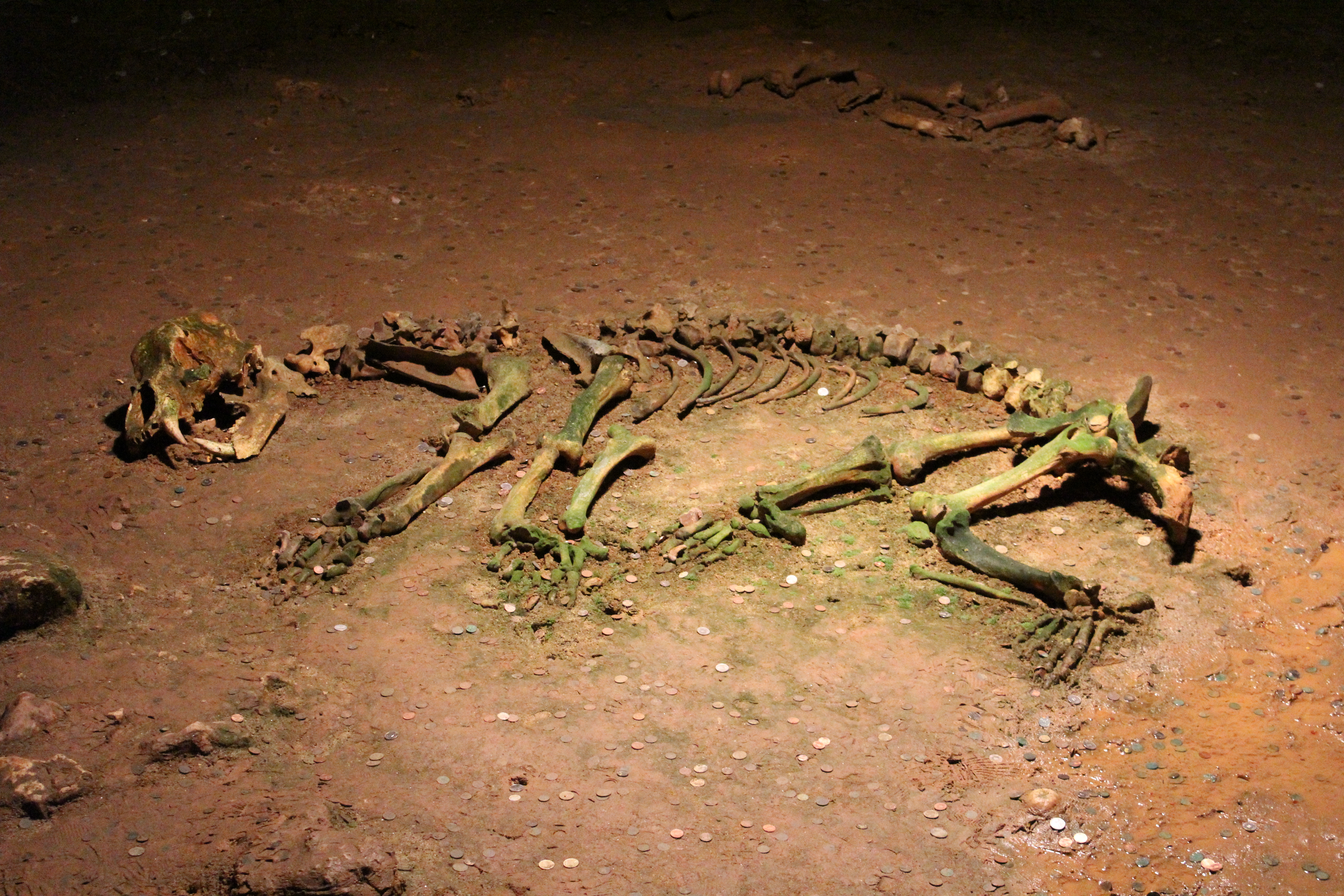
The use of dragon bones in medicine is a fascinating aspect of ancient beliefs, particularly if you view these “dragons” as possible examples of humans and dinosaurs co-existing. However, what’s really strange is the fact that various societies around the world all decided to use the bones in such a unique way— medicine.
For example, in medieval Europe, people sometimes discovered large bones and believed them to hold magical properties. Powders made from these bones were used as talismans or medicinal remedies.
During the Middle Ages, alchemists often incorporated “dragon” substances in their potions and elixirs. They believed that dragon bones could enhance the efficacy of their concoctions or serve as some sort of protective charm.
Some Mesoamerican civilizations had legends about dragon-like creatures, and they used the large fossilized bones in rituals and their medicinal practices because they believed the remains held mysterious power.
An article in the Associated Press in 2007 had this to say about the ancient Chinese:
“Villagers in central China spent decades digging up bones they believed belonged to flying dragons and using them in traditional medicines. Turns out the bones belonged to dinosaurs…
The calcium-rich bones were sometimes boiled with other ingredients and fed to children to treat dizziness and leg cramps.”
The Bible has an interesting account about “magic” bones in 2 Kings 13:20-21. This passage recounts the power of God working through the prophet Elijah— even after his death.
Here’s a brief summary for those who might be unfamiliar with this incredible account:
The prophet Elijah made a significant impact (perhaps the most significant) in Israel. Even after his death his prophetic legacy was admired by the people, but Elijah would perform one last miracle from beyond the grave. Some men were burying a man when they saw a raiding party coming. In haste, they threw the deceased man into the tomb where Elijah’s bones lay and when the dead man touched the bones of Elijah he came back to life and stood on his feet.
While there may or may not be anything to the medicinal benefits of dinosaur bones as claimed by ancient cultures, there’s no need to speculate where the power was coming from in our biblical account. It’s obvious that it was God’s hand at work and not the prophet’s bones. The same can be said of baptism or even our Bibles. The power isn’t in water found in a baptistery or words on a page because we know the source is actually our Savior. The cure to the world’s greatest disease isn’t some secret recipe that utilizes dragon bones. What we need is what we already have and it’s widely available.
“Be not wise in your own eyes; fear the LORD, and turn away from evil. It will be healing to your flesh and refreshment to your bones.”
It seems to me that, as chapters 63-64 formulate the prayer of God’s people, chapters 65-66 form God’s answer to their lament. This final chapter also serves as a powerful summary and overview of the entire book. God addresses multiple audiences as He looks ahead one final time to the coming of the Messiah. Let’s notice the grand close to this often-regarded magnum opus of all the Old Testament prophetic works.
A word to the humble (1-5). Isaiah at least alludes to, if not quotes, the Spirit-led David (2 Sam. 7:5-7) and Solomon (1 Ki. 8:27) at the former’s resolve to build the temple and the latter’s dedication of the temple. He expresses how He cannot be confined or contained in the worship structures built by man, even His own people’s sanctioned efforts. Perhaps Paul also has Isaiah 66 in the background of his thoughts as he preaches, “The God who made the world and all things in it, since He is Lord of heaven and earth, does not dwell in temples made with hands; nor is He served by human hands, as though He needed anything, since He Himself gives to all people life and breath and all things; and He made from one man every nation of mankind to live on all the face of the earth” (Acts 17:24-26a; cf. 1-2). He declares that He dwells not in literal structures, buildings, but in the right kinds of hearts. Specifically, He is to be found in humble, contrite, and trembling hearts. Could this be a three step process? Humility is affliction of heart, the poor in spirit (Mat. 5:3). Contrite is the crippling effect, the penitent in heart. Trembling is fear or terror at the power of God. If I’m convicted, experience godly sorrow, and then am filled with the dread of not having my sins forgiven, God knows that this is my best hope of doing what pleases Him. Verses 3-5 contrast this tenderness of heart, as He depicts those who choose their own way, delight in their abominations, refuse to listen, and prefer what God hates. These wicked ones may hate the humble of heart, but the arrogant will finally be put to shame. What a needed reminder for us, if we are trying to serve God in humility. We may be viewed contemptibly who are living by the gospel according to self, but God will humble the proud (Psa. 138:6; Prov. 3:34; Mat. 23:12; etc.).
A word to the faithful (6-14). Isaiah engages in intimacy imagery to discuss the future rebirth of God’s people, likened to a mother giving birth to a child. He follows the metaphor from conception to the resulting child’s maturity. Restoration and return from captivity will happen as if the conception and birth occurred on the same day (7), even though there were birth pangs in between. Birth is an occasion for rejoicing (10). The mother-child relationship, with its intimacy and closeness (11-13) is the perfect picture of divine comfort (13). Don’t miss the connection of Isaiah’s Son (7:14; 9:6) and Servant (49:1) to be born and the “nation” (1 Pet. 2:5,9) that would come soon thereafter. Peace and glory would be seen and known to all who would become part of this privileged people. The New Testament shows the glorious fulfillment of this starting in Acts two.
A word to the unrighteous (15-21). The language in this next to last paragraph is of judgment, a recurring theme throughout this entire book. Fire is an often-used symbol of judgment, from Mt. Sinai onward. This paragraph is full of the language of divine punishment– “render His anger with fury” (16), “His rebuke with flames of fire” (16), and “gather all nations” (18). God depicts Himself as all-knowing (18). In the wake of judgment, there will be restoration of true worship and faithful service (20-21). While the end for the wicked is depicted in darkest colors, there is hope for as long as there is still time. Remarkably, God extends a promise of forgiveness and restoration until the end of all things! Even when promising retribution, He offsets it with His perfect grace.
A word to the whole world (22-24). Isaiah implies an eternal picture as He closes. His language of “new heavens and new earth” (22) will be taken by Peter (2 Pet. 3:13) and John (Rev. 21:1) and given eschatological (eternal) meaning. The eternal aspect is also embedded in the idea of the place and the people enduring (22). The picture of perpetuity is also seen in verse 23. Jesus takes the word picture in verse 24 and applies it to hell (Mark 9:48). Because of the successful work of Messiah, spiritual life and torment are co-eternal (Mat. 25:46).
James Smith writes, “While gold and silver depict the glories of Zion, so fire and worms depict the fate of the wicked” (OT Survey Series, 171). Through this dramatic imagery, Isaiah points his readers ahead to more than return from a foreign, physical land. There is return from the figurative wilderness of sin. The Messiah will bring this about, and those who humble their hearts and faithfully follow Him will enjoy all He has to offer in the eternal fellowship and all His perfect home contains. This is a glory and hope for all nations! All because it comes from the heart and hand of a holy God.
All he said was what was true. For prophesying that Judah would he devastated by Babylon, Jeremiah was cast into the dungeon of the king’s son (Jer. 38:1-6). He was suspended by cords which surely cut into his armpits. He soaked in unsanitary mire. He was left there to starve to death. Were it not for the compassionate heart of Ebedmelech, Jeremiah likely would have died.
The book of Lamentations, written by Jeremiah, is entirely filled with his sorrowful cries because of God’s punished people. The book can be seen as five, distinct mournful poems. Each poem reflects a different facet of the common sorrow [chapter one, the physical suffering of Judah; chapter two, God’s scolding of Judah; chapter three, Jeremiah’s spiritual suffering because of Judah’s sins; chapter four, the spiritual suffering of Judah because of their sins; chapter five, Jeremiah’s supplications for contrite Judah] (F.D. Hemenway., 454).
In Lamentations 3:55, the weeping prophet tells the Lord, “I called on Your name, O Lord, from the lowest pit.” This image is identical to the words of the psalmist, who says in Psalm 88:6, “You have laid me in the lowest pit, In darkness, in the depths.” Heman seems to complain that he has been placed there because of injustice and not because of his iniquity. Our minds are called back to Dothan, where jealous brothers cast Joseph into an empty pit. The sins of Joseph’s brothers caused him to look up from his pit.
But, no doubt or question arises about why Judah is in this figurative pit from which Jeremiah cries. Though Jeremiah has lived godly and has not deserved suffering , he realized he stood among a nation of people who failed to obey Jehovah. So, from the low dungeon of despair, Jeremiah says several things.
“You Heard Me When I Cried” (Lamentations 3:56). From this statement we see that THE LORD RECOGNIZES HIS PEOPLE! David knew this (Psalm 6:8; 18:3-6; 66:19), as he often exclaimed that “God has heard me.” Paul’s inspired conviction of hope was “the Lord knows them that are His ” (2 Tim. 2:19). To the Corinthian brethren, Paul said, “But if any man love God, the same is known of God” (1 Cor. 8:3). In verse 56, Jeremiah finds comfort in calamitous times. He also makes an impassioned plea that God not turn away from His crying, Because Jeremiah was a child of God, he was assured that God would, in some way, answer him.
“You Drew Near When I Called” (Lamentations 3:57). THE LORD RESPONDS TO HIS PEOPLE! Jeremiah recognized the “Shepherd” aspect of the Lord. One can clearly envision the cradling Arms of the Almighty, scooping up His lambs injured by their own choices and giving them comfort in their repentance (cf. Psalm 23). James would teach us that God draws near to us if we draw near unto Him (James 4:8).
“You Have Pled The Causes Of My Soul” (Lamentations 3:58). Truly , THE LORD REPRESENTS HIS PEOPLE! David prayed that God would plead his cause and deliver him (Psa. 119:154). The prophet Micah patiently waited for the representation of the Lord on his behalf. He said, “I will bear the indignation of the Lord, because I have sinned against him, until he plead my cause, and execute judgment for me” (Micah 7:9). He who, in the flesh, experienced humanity represents man before God as mediator (1 Tim. 2:5).
“You Have Redeemed My Life ” (Lamentations 3:58). THE LORD REDEEMS HIS PEOPLE! A suffering Job rejoiced, ” I know that my redeemer lives, and that he shall stand upon the earth at the latter day” (Job 19:25). Jeremiah, knowing the mercy of the Lord, confidently spoke of how God had preserved his life in times past. In a greater sense, Christ is the means of mankind’s redemption from eternal condemnation. That prolific passage, Titus 2:11-14, proclaims that God’s saving grace has appeared to all men in the person of Christ, “that he might redeem us from all iniquity.” Christ’s incorruptible blood redeems the faithful obedient one (cf. 1 Pet. 1:18). Part of the enchanting song sung by the adorers of Christ includes the words “…For You were slain, And have redeemed us to God by Your blood Out of every tribe and tongue and people and nation” (Rev. 5:9).
“You Have Seen My Wrong” (Lamentations 3:59). Additionally, we learn that THE LORD REPRIMANDS HIS PEOPLE! God sees all that we do, though many think that God only sees the good we do. Others think that God only sees other people’s wrongs, and still others think that God only sees non-Christians’ sins. God sees everything everyone does every instant everywhere and every time. How wonderful and reassuring this is to those who walk in the light. How fearful this is for those who walk in darkness. God, in His justice, will punish all whose wrongs are not covered by Christ’s precious blood.
Obviously, God’s people had sown iniquity. Jeremiah rebukes his brethren throughout the book of Jeremiah because of their idolatry, hypocrisy, failings in the home, materialism, and stubborn wills. Through the Babylonians, Judah reaped the captivity. But, as Jeremiah prophesied, Judah would not be captive forever (Jer. 30-35). God heard the cries of Jeremiah from the low dungeon of despair.
Christians have the confidence that God will deliver them from the Pits of Persecution, the Dungeons of Despair, and the Cells of Sin. What hope!
God not only answers the prayer of chapters 63 and 64, His response is the consistent message of the whole book. He loved them, but they had turned other places and disregarded their covenant relationship with Him. This resulted in the judgment of Assyria (seen in chapters 1-37) and Babylon (chapters 38-66). In this chapter, there are at least four answers God gives to the prayer.
There will be judgment for the unrighteous (1-7). Up front, God offers His grace to all who are willing to receive it (1-2). Paul quotes these verses in speaking of the mission of gospel preaching under Christ (Rom. 10:21). But, despite His pleading, the unrighteous rebelliously ignore Him. As in Romans, so here the Gentiles found a God who they did not seek while the Jews rejected a God who sought them! In these verses, we find the first of multiple lists. God lines out His people’s sins one by one: (1) unlawful sacrifices (v. 3), (2) unlawful offering of incense (v. 3), (3) practicing necromancy (v. 4), (4) violating the dietary laws of the Law of Moses (vs. 4), and (5) arrogant self-righteousness (vs. 5). How God hates willful disobedience! It’s like smoke in His nostrils (5), and He vows to repay their sin (6-7). He had seen this unrighteous pass from father to son, year after year. He has had enough!
There will be salvation for the remnant (8-12). God’s reply includes a promise of One from among the righteous remnant (9). He sees a righteous minority among the faithless majority, and He will bless them as surely as He will punish the other. He promises rest for those who seek Him (10; cf. Mat. 11:28-30). But that preservation is contrasted with the certain judgment of all those who ignore Him and choose sin instead (11-12).
There will be consequences for both (13-16). There are contrasting destinies laid out for both groups. The list in these verses are reminiscent both of Jesus’ sermon on the plains, recorded by Luke in Luke 6:20-26, and Jesus’ final parable of preparation in Matthew 25:31-46. James Smith neatly charts the contrast:
CONTRASTING DESTINIESIsaiah 65:13–15
God’s Servants
The Wicked
1. Shall eat. 2. Shall drink. 3. Shall rejoice. 4. Sing for joy of heart. 5. Called by a new name.
1. Shall be hungry. 2. Shall be thirsty. 3. Put to shame. 4. Cry for sorrow of heart. 5. Leave their name as a curse.
(OT Survey Series, 168).
Once again, along with provision and joy, the righteous obedient will be blessed by having a new name (62:2; Acts 11:26). Each paragraph reaffirms that Isaiah is looking ahead to the Christian Age, to what the Messiah would usher in at His coming to earth.
There will be reward for the people of God (17-25). At the end of the chapter, God’s focus is solely on the blessings enjoyed by the faithful. When will these promises be fulfilled? First, let us notice what the promises are.
1) New heavens and new earth (17).
2) Gladness and rejoicing (18-19).
3) Longevity (20).
4) Prosperity (21-23).
5) Answered prayer (24).
6) Safety and unity (25).
Second, let us notice when those promises would be. Christ would definitely bring about the establishment of all these blessings with His coming, life, death, burial, resurrection, and ascension. Much of the New Testament is devoted to these promises for those in Christ Jesus (Eph. 1:3). Yet, none of these are restricted only to the Christian Age, but find their ultimate fulfillment in eternity following the general resurrection (John 5:28-29) and universal judgment (Matt. 25:31-34). The perfection of these promises will be enjoyed for those who inherit eternal life. There will ultimately be “new heavens and a new earth” (2 Pet. 3:13; Rev. 21:1). There will be a permanent end to sorrow (Rev. 21:4). There will be an end to death (Rev. 21:4). There will be an eternal inheritance (1 Pet. 1:4). There will be an end to the fears and threats always possible in this life (Rev. 21:8).
The readers should anticipate the first coming of the Messiah, but they should also live with anticipation of His second coming (Heb. 9:27-28). The same hope brought by His successful mission of salvation would sustain them as they anticipated His final mission of judgment.
Chapter 63 sets the stage for the obviously heartfelt, intense prayer of God’s people. Truly, “The one praying believes that the people who are called the ‘people of Yahweh’ should receive special attention and divine intervention from their God. The problem, of course, is that God cannot deal with them compassionately as long as they continue in their sins and do not confess them or turn from them” (Gary Smith, NAC, 684). Willful, habitual sin is a stubborn obstruction to effective prayer (1:15; 59:2). Yet, when we look at the heart of the one presenting prayer in this context, we see one who has turned a spiritual corner. The prayer here is of one totally transparent and humble as he calls on God in prayer. Notice the specific contents of this powerful prayer.
He calls for God to personally appear (1-2). The confidence of this praying one is that the evident action of God will be unmistakable in the eyes of his enemies (cf. Psa. 23:5). Those enemies will tremble when they see God in action.
He pleads for God to duplicate His deeds of the past (3-4). This petitioner draws on his history and heritage, when God unexpected, awesome things. He has faith in a God who acts, who makes mountains tremble and who does what human eyes and ears cannot anticipate.
He longs for fellowship with God (5). As fearsome as God’s power is, He meets with the one who rejoices in doing righteousness. Those who walk in the light need not fear or hesitate to commune with God (1 John 1:7).
He asks for God to be merciful (5b). There is never a question of the flawlessness of God’s character, as perfectly balanced as a holy God would be. Why was God angry with them? They had sinned–for a long time! Could they hope for salvation while so stubbornly sinful?
He acknowledges weakness, sin, and inadequacy (6-7). How does God feel when one falls unpretentiously before Him? Jesus illustrates it well in a parable, when a tax collector could not even lift up his eyes to heaven, but was beating his chest, “saying, ‘God, be merciful to me, the sinner” (Luke 18:13). Jesus’ startling conclusion? “I tell you, this man went to his house justified rather than the other; for everyone who exalts himself will be humbled, but he who humbles himself will be exalted” (Luke 18:14). The praying one in Isaiah 64 confesses to spiritual uncleanness, with even “righteous deeds” being like filthy garments, withered by sinfulness and gnarled by self-sufficiency. Honest prayers have heaven’s rapt attention.
He claims heritage and identity (8-9). Only in the wake of full confession does he dare to appeal to his spiritual family ties. He calls Him Father, Potter, and Lord. He claims to simply be the work of God’s hands and part of the people of God. On that basis, he hopes for mercy and compassion.
He requests for God to restore (10-11). The present looks both grim and dim. The nation is decimated. The temple is gutted by fire. Its contents are now ruins. Only divine intervention can change the state of things.
He prays for God to act on their behalf (12). The summary petition of this fervent prayer is brief, but intense: “Will You restrain Yourself at these things, O Lord? Will You keep silent and afflict us beyond measure?” As do others in Scripture (some 61 times from Exodus to Revelation), Isaiah is essentially asking, “How long?” In the throes of suffering, sorrow, and sin, we most acutely sense our need of God’s rescue. That’s where the prophet and the people are. It is where we regularly find ourselves. We never grow beyond the need of God’s gracious intervention. With such a sense, won’t we stay glued to the practice of fervent prayer (Jas. 5:16)?
In our Christian walk, we will have high moments and low moments. And learning to persevere through those low moments will get more and more important as we go through life.
I think it’s important to remember that even through difficulties, God is still with us and working in our lives. Roman’s 8:28 says, “And we know that in all things God works for the good of those who love him, who have been called according to his purpose.”
When we are unsure of our situation or facing unknowns in life, we know that God already knows, sees what we don’t see, and already has it all figured out.
When we face these low points in life, it’s important to rely on God and his unchanging truths.
Verses like James 1:12, which says, “Blessed is the man who remains steadfast under trial, for when he has stood the test he will receive the crown of life, which God has promised to those who love him.”
Also 2 Corinthians 4:16-18, which says, “So we do not lose heart. Though our outer self is wasting away, our inner self is being renewed day by day. For this light momentary affliction is preparing for us an eternal weight of glory beyond all comparison, as we look not to the things that are seen but to the things that are unseen. For the things that are seen are transient, but the things that are unseen are eternal.”
So when we are faced with discouragement, we have to lean into our faith, hope, and trust in God. But our ability to have that to fall back on is dependent on us doing the work in the good times, of building our faith and building our trust. If you wait until your low times, it’s too late.
So what are the things that we can do to build our faith and trust in God? Making sure that you have good habits already is very important. Good Bible study habits, prayer habits, and good disciplines.
Also look for how God answers our prayers or the prayers of others. Witnessing how other people cope with their own difficult situations helps us. Another way is looking back on ways that God has taken care of you in other times in your life.
Through the rest of our lives we will be faced with a lot of ups and downs, and God wants to be there for us and to carry us through. But we have to do our part in seeking him.
We love our enemies and show kindness to people who hate us.
We focus on the transcendent — I know some Christians who are upset about the election results because it may mean their families never get into the country. As an American, I wholly disagree with that mentality — immigration is not a right but a privilege, and must be done legally. That said, I understand their frustration. Our immigration system has become insanely corrupt. It usually takes years, an enormous amount of money, lots of traveling, and miles of paperwork to do it legally. Our ancestors didn’t face anywhere near the same bureaucratic challenges that are in place today. Yes, they came here with nothing but a good work ethic and a desire to contribute, which is arguably not present today. I’m saying all of this because many — understandably — become defensive when someone says, “Maybe we should be compassionate.” What they hear is, “We should just dissolve our borders and overlook the rampant violent crime it causes.” Nope. But we should be patient with and compassionate toward our foreign-born Christian families. We’ll never win hearts and minds by leaning further into our national identity than we do our transcendent one.
Be grateful, always. Our hope isn’t in any human being or human administration. The powers that be exist because God put them there! Whatever happens in the coming years, we’re grateful that God is and rules.
Remember the past. The ancient Israelites met the most trouble when they forgot lessons learned by their predecessors. Repeated mistakes result in repeated outcomes.
Keep eyes on the ultimate goal, first and foremost. My wife and I are expecting our first child after ten years together. Yes, that changes a lot about how I view the world! Yes, I’m breathing a little easier with the possibility of better economic times ahead. But those issues pale when compared with the responsibility of aiming a conscious mind at God. Nothing matters more than hearing, “Good job,” when our Creator returns. Ideally, my loved ones hear the same thing. We’re in for perhaps brighter days — but that can’t distract from what actually matters.
You have heard that it was said, “Love your neighbor and hate your enemy.” But I tell you, love your enemies. Pray for those who treat you badly. If you do this, you will be children who are truly like your father who is in the heavens. He lets the sun rise for all people, whether they are good or bad. He sends rain to those who do right and to those who do wrong. If you love only those who love you, why should you get a reward for that? Even the tax collectors do that. And if you are nice only to your friends, you are no better than anyone else. Even the people who don’t know God are nice to their friends. What I am saying is that you must be perfect, just as your father in the heavens is perfect (Mt 5.43-48).
In explaining this section (63-65), John A. Martin says, “Isaiah was writing for the exiles in Babylon who would view their situation as somewhat hopeless. They would not be able to sense how God could possibly help them in their distress. However, they would remember the way the Lord had helped His people in bringing them out of bondage in Egypt. This would encourage them to pray for release from their bondage” (BKC, Walvoord & Zuck, eds., 1118). Isaiah begins the chapter with the picture of the Lord’s triumphant battle against His enemies, His garments stained red with the blood of His enemies (1-3). His missions are vengeance and redemption (4), and He alone was responsible for the success of both (5-6). Isaiah has not long before says, “The Lord’s hand is not shortened that it cannot save” (59:1). Here, He acts in accordance with His own righteous nature.
He is full of favor (7-9). God’s people sing of the loyal love of God as they look to the past, shown by His goodness and compassion. He felt for them, saved them, lifted them, and carried them by His mercy and love. “All the days of old” (9) shows the retrospective look at the past, full of God’s favor and tenderness toward them. These were His people and He was their God (8).
He is firm (10). Think of times like the wilderness wandering, the period of the judges, or the Babylonian Captivity where the nation turned against God for self, sin, or idolatry. Isaiah classifies such behavior as rebellion, grieving the Holy Spirit. God says He fights against His people when they turn from Him. It is frightening to hear God declare Himself our enemy!
He is fair (11-15). As if waking up from a dream (nightmare?), they “remembered” the days when Moses led them. They recalled deliverance at the Red Sea (11), the Holy Spirit in their midst (11), which Isaiah elaborates on in verses 12-14. They cry out for that fairness as they pray to God for His mercy to be shown to them once more. They feel that He is holding back, and they plead for it to return!
He is Father (16-19). Isaiah exclaims this. “For You are our Father” (16). He says that even when the people forget this, it is still so (17). With oppression and opposition, they feel like one who was never ruled or possessed as His family. They long for that again.
Isaiah represents the nation, praying to God in the midst of abandonment. Their hope is that He will be consistent with His nature and shower them once more with lovingkindness.
Scripture offers deeper insights into the nature of truth. When you choose to integrate faith into your everyday life, you will find meaning and you will be fulfilled.
You will find a purpose driven existence that the world longs to have. With God, life has meaning.
Notice with me 5 biblical truths that shape our worldview. There are many more, but these five have been the fundamentals of our faith. These are the ones that the apostles taught to the world after the ascension of Jesus. I am thankful that God has given to us a framework as Christians, a framework through which we are supposed to interpret the world.
We don’t rely on opinions, or feelings, or traditions, or our families, to tell us these truths. These truths were laid upon us by the Lord of Lords. He tells us these truths so that we would have a lens through which we can interpret the world. Without them we are Velma from Scooby Doo. We NEED these glasses to see the world properly.
Pillar number 1 in the biblical worldview…
We Were Created
How does the world say that we got here?
In the beginning there was a cosmic boom.
This is what our children our taught, and what more and more people are believing.
This is totally contrary to the words of Scripture. We say “In the beginning God created.” The world says, “In the Beginning nothing created.” It takes more faith to believe evolution than it does the first five words of the Bible. Pillar number 1 of a biblical worldview contradicts the very nature of modern historical scientists.
In the beginning God said, “Let us make man in our own imagine, in our own likeness” Gen. 1:26
We were created and molded after the Creator. From this first pillar we learn many things. Because we have a Creator we better understand the world God placed us in.
The knowledge of a Creator helps us understand ourselves better since we were made in the image of God. Because we were created we learn of the Creator who shaped us out of dust and breathed life into our bodies. We were created to ENJOY fellowship with our God.
Pillar number 2…
We Fell
In Genesis 3, man rebelled against God and as a result of that, sin entered into the world. This sin caused
Spiritual separation: Adam and Eve and their children were separated from God, both physically and spiritually. They could no longer walk and talk with God face to face.
Physical changes: Adam and Eve became mortal, and they and their children would experience sickness, pain, and physical death.
Cursed environment: The ground was cursed in the Garden of Eden and throughout the earth.
Loss of righteousness: Adam and Eve became aware of their nakedness and knew that their former perfection was gone.
Guilt and shame: Adam and Eve felt guilt and shame they had NEVER felt this before.
Judgment: Satan was judged with a divine curse. The woman would experience pain in childbirth, and her husband was to rule over her. Man must now labor for his existence on a cursed earth.
And if that wasn’t enough, Paul says this in Romans 5:12: “Therefore, just as sin entered the world through one man, and death through sin, so also death was passed on to all men, because all sinned.” From the moment we fell, all people are born into a sinful world, and with a desire to rebel against our God. No matter who you are, you will have sin in your life (Romans 3:23).
There are so many people who don’t believe in God because of the consequences of the fall. They’re angry because there is suffering and death in the world. They think if God exists, why is there so much death and pain? Either He doesn’t exist, is too weak to fix it, or just doesn’t care. In their minds, they don’t believe in God because of these things. Why do so many feel this way? They fail to have a biblical worldview. Otherwise they would realize that all of this death and suffering and sorrow is a direct result of the fall. We recognize through a biblical worldview that we live in a fallen world.
And because of this, although God is good and He exists, suffering also exists because we live in a SINFUL world.
Do you see how these worldviews can start changing your attitude? Every tear you’ve ever shed. Every graveside you’ve ever attended. Every hospital you’ve been in. Every NICU a child is taken to. Every war that is fought. Every cancer treatment you take. Every grey hair or lack of hair. Every divorce, every death, every diseases. Every failure, every insecurity, every struggle ALL exists because we LIVE in a fallen world!
What is the point if there is no God to save us from our sin?
Pillar 3…
We Are Redeemed
We are currently living in the Christian era or dispensation. We exist in a time, after the fall, but before the end. We are in the last times. No newer covenant, this is it.
God has given His Son, we either accept Him or reject it. What more could God give?
How else could He prove to His creation that He loves us? He chose us after the fall.
We are now redeemed through Christ. We are living in a time after the resurrection and before the second coming. God is working on this earth to redeem those whose hearts are soft so that we can escape judgment.
We are redeemed by the blood of Christ, and God is going to make sure that everybody has an opportunity to respond.
And that is where we are now. God is redeeming for Himself a people who will spend an eternity with Him. Ephesians 1:7 says, “In him we have redemption through his blood, the forgiveness of sins, in accordance with the riches of God’s grace.” This word redeemed literally means, to release from a captive condition, to deliver. What are we being released from? What holds us captive? The SIN we find ourselves in as we are living in a fallen world!
Christ is our redeemer who saves us again and again. God has regained His prize possession through the payment of His Son.
Not everyone will be saved, only those who have come in contact with the blood of Christ. This is why call Him our redeemer.
Those who are redeemed will be taken to paradise and saved from the destruction of this world. We live in the era of redemption.
If you don’t have this biblical worldview, you will see no reason to stop sinful behavior.
You will be just like those in the days of Noah, MOCKING the ones who are getting in a boat on dry land. This worldview should shape our perspective of life, to its CORE.
Pillar 4…
We Are A Part of The Kingdom
The Kingdom of God is the reign and rule of God in our lives. We were redeemed to be a new creation in Christ. We are a part of the reign of God in the world. As citizens in this Kingdom, we are called to live in a way that reflects His values and priorities.
We are called to live out the principles of our King in our daily lives. Jesus came, according to Mark one, preaching the kingdom of God is at hand.
It’s here now! Our worldview, that is, our jobs, our families, our friends, our words, our thoughts, our actions, our attitude, our perspective, must ALL be shaped by our citizenship. We. Belong. To God. “But our citizenship is above, and from it we await a Savior, the Lord Jesus Christ, who will transform our lowly body to be like his glorious body, by the power that enables him even to subject all things to himself” (Phil. 3:20).
We are here, but don’t belong. Live like you are in God’s Kingdom.
Pillar 5…
We Will Be Restored
This final pillar looks forward to the ultimate restoration of all things. We are promised that God will make everything new, just as it was in the beginning. Pillars 1 and 5 are connected by redemption and a kingdom.
Through these things we will be restored to God’s original perfection. This is hope greater than any earthly thing. This promise of restoration helps us persevere through this fallen world. This promise helps us live as citizens of the Kingdom. The promise of restoration provides hope for the future.
It encourages the redeemed to work toward godly love, to show mercy and forgiveness.








 The Preacher Pollard Blog