[Editor’s Note: Gary is translating the Ante-Nicene Fathers works, beginning with Origin’s work. It is meant to update the British English of Roberts and Donaldson. What follows is part of that translation]
I know that some people will try to say that God is physical somehow. This is because Moses said “Our God is a fire that destroys.” And in John’s gospel, “God is spirit, so the people who worship him must worship in spirit and truth.” According to those people, these are clear proofs that God has a body. Fire and spirit are tangible things, and those passages say that God is those things. But I have to ask those people: what do you do with the verse that says “God is light”? The same John also wrote “God is light, and there is no darkness in him at all.” It’s true! God is the light that gives us an understanding of truth, at least to people who are capable of taking it in. One of the Psalms says, “Your light lets us see light.” Is there any other kind of light that can bring enlightenment? Only God’s influence can give us an understanding of what is true. His influence is what leads us to him, because he is truth itself. That’s what the expression “your light allows us to see light” means — his light is Jesus, who makes it possible for us to see the father. Just because God is called “light” doesn’t mean that it’s like the light of the sun. It would be absurd for anyone to think that sunlight gives them access to the primal source of knowledge. It would be absurd to think that sunlight could lead someone to understand truth.
It’s probably safe to assume we believe strongly that Jesus is our savior. But what does that mean? It means that Jesus is going to rescue us from something bad. You don’t save someone from a good situation. Salvation always implies the existence of a negative circumstance. Jesus is the one who will take us out of that negative circumstance and place us in a perfect one. What is this negative circumstance? To understand this, we have to study the word translated “salvation” (σωτηρια). God told us what his son will save us from.
Hb 11.7 — Noah was saved from the flood, meaning that he and his family didn’t drown with the rest of the world.
Acts 7.25 — Moses thought the people of Israel would understand that God sent him to save them from Egypt, but they didn’t. Their salvation meant rescue from Egypt.
Lk 1.68-79 — God speaks through John the baptist’s father, saying that God would save Israel from their enemies and from the power of those who hate them.
Phil 1.28 — Paul says that suffering for Christ is proof that he will save us while our enemies will be lost; word for lost here is απωλεια which means “destruction”. We will be saved from destruction.
II Cor 7.10 — Paul says that the kind of sorrow God wants to see leads us to avoiding the fate of evil people.
I Thess 5.9 — Paul connects salvation/rescue to Jesus’s return, whether we’re alive or dead; this rescue means we live with him when the ungodly are destroyed.
Hb 5.9 — The Hebrews writer says that Jesus will save us from death, just like God saved him from death.
I Pt 1.9 — Peter makes it clear that our salvation comes after death when Jesus returns.
II Pt 3.7 — Peter says that the current earth and sky are being preserved for a specific fate: judgment of earth in the form of consuming fire and the destruction of ungodly men. A few verses later, our fate is very different. Our rescue means that we won’t suffer the fate of ungodly men.
Lk 21.28 — Jesus commands his followers to stand up and shake off their fear when sun, moon, and stars all show some kind of terrifying indication that the world is ending — he says, “Know that it is almost time for God to save you.” From what? Earth’s destruction!
So we’ve established two things: One, Jesus is the one who saves. We have no hope for salvation through any other source. Two, we are being saved from three things — 1. Sin 2. Death 3. Destruction. All three of those things are pretty much interchangeable. Sin is death and sinners will be “destroyed” at the end. Every person on this planet will be made immortal when Jesus returns. The difference is that our immortal bodies will leave this earth with Jesus when he comes back, and everyone else will suffer on this earth as it burns. Jesus is saving us from the fate of the wicked at the end by saving us from our sins.
Water is an unstoppable force. Every year, 40 billion dollars worth of damage is caused by flash floods around the world. There’s nothing you can do to stop a tsunami, a flooded river, or a tidal wave. Water is powerful. Just go to the ocean and try to fight against the waves as they crash into the beach. I ain’t exactly a small guy, last I checked I was 186 pounds (more like kilograms…), and I get thrown around like a rag doll by the waves.
There are certain parts of God’s creation that are a reminder of His power. No matter what advancements we make, what towns and cities we build, they can be wiped out in seconds by what we call “natural disasters.” I want you to picture in your mind a roaring river. Think of the trees that are swept away, the damage that occurs as a million pounds of water flood a river bed. Let’s read James 3, and keep that image in our minds.
The tongue is James’ focus as we read verses 1-12. The small muscle behind your teeth is a source of great destruction. James, the half brother of Jesus, paints a vivid picture of the tongue. He describes it basically as a weapon of mass destruction.
And for good reason. Just like a tidal wave can cause billions in damage, the tongue causes all kinds of terrible destruction. The human race as a whole speaks a staggering amount of words every single day. Let’s do the math. The average person speaks between 18-25 thousand words a day. With around 8 billion people on the planet we’re looking at around 150 trillion words that are said every day.
And God listens to every single one, He remembers every word. Sadly, the overwhelming majority of those words are evil. And that’s exactly what James is trying to address in this section of scripture. As Christians, the words we speak should be different from the rest of the world.
Leading up to chapter 3, James has just finished a discussion on faith and works.
Faith without any works is dead. If your faith in God isn’t actually affecting what you do, then it is a dead faith, and it is useless. Even the demons believe, but they don’t change their lifestyle. Immediately after this section he talks about the tongue. That’s because there is a strong connection between the heart and the tongue. Your faith and your words are tied hand in hand. How you use your words, what you say to others, is essential to your salvation. If you can’t guard your words, your faith is dead. The transformation of the tongue is essential. It may be the single greatest proof that you really are a Christian.
We must tame the tongue because we are judged by our words. James 3:1 says, ”Not many of you should become teachers, my brothers, for you know that we who teach will be judged with greater strictness.” I’ve got to be honest, as a teacher this verse is a very sobering reminder. Each Sunday, I get up and speak, and how my words impact people’s faith is seen by God. James says, don’t take the role of teacher without seriously examining your motives. When you teach, God is going to be stricter with His judgment of you. When we accept the responsibility to teach the word of truth, we will give an account for what we teach.
Keep in mind, as Christians we are expected to teach others and become teachers (Heb. 6, Matt. 28:18-20). So what is James saying? In the first century many wanted to become teachers for the wrong reason. They had bad intentions. Teachers in the first century were highly regarded and were elevated in society. Many were motivated to teach, not because they wanted to share the word, but because they wanted power and influence. James says later on that these teachers were speaking out of selfish ambition and jealousy (3:14). So James is saying, unless you’re doing it for the right reasons, don’t become a teacher! Because by our words we are judged, and as a teacher, that judgment is even more severe.
In His ministry, Jesus linked the heart directly to our words. In Matthew 12:34-35, He says, “You snakes! You are so evil. How can you say anything good? What people say with their mouths comes from what fills their hearts. Those who are good have good things saved in their hearts. That’s why they say good things. But those who are evil have hearts full of evil, and that’s why they say things that are evil.” The heart is the issue. If you want to know the spiritual state of the heart, listen to your words. They are controlled solely by your heart. And that is why Jesus says we will be judged by our words, because what we say is written on our hearts.
In Matthew 12:36-37, He continues, ”I tell you, on the day of judgment people will give account for every careless word they speak, for by your words you will be justified, and by your words you will be condemned.” On that final day, God will look at the sum total of your words, and He will know all He needs to know about the condition of your heart.
As a side note, if you struggle with feelings of doubt about your salvation, just keep track of what you say. If your words are filled with love, encouragement and praise, you can be sure of your salvation. But if your speech toward others is filled with lying, hate, gossip and insults, God will judge your heart by what He hears. So start controlling your tongue! Start encouraging each other, start sharing the gospel! Because the words filled with love bring about salvation, but the words filled with resentment, hate, gossip, and anger will send us into torment for all eternity.
Why should we be so concerned about taming our tongue? Because one day, we will be judged by every word we have said.
According to the National Fire Protection Association (NFPA), fire departments received 36,416,000 calls to respond in 2020. That included over 23 million for medical aid, 1,388,500 for fires, 750,000 for hazardous materials, and 5,938,500 for other hazardous conditions (NFPA Study). While a relatively small percentage of calls are actually to fires, firefighters leave with a mindset to save a life every time they respond to a call. A study by Hylton Haynes finished in November 2017 for NFPA research, there are 29,067 fire departments in the United States (NFPA Study II). With the total U.S. population above 330,000,000, that’s over 11,000 people for every fire department. But, no community would feel safe without trained firefighters living there. If we could pick the way we died, I can’t imagine any of us would choose death by fire.
Jude paints a dramatic picture in verse 24 of his short epistle, calling on Christians to “save others, snatching them out of the fire.” That fire is “the punishment of eternal fire” (7). We are talking about a fire which God prepared for the devil and his angels (Mat. 25:41), but will use to punish the spiritually ignorant and the disobedient (2 Th. 1:7-8). It is unquenchable (Mark 9:43). It is a lake of fire (Rev. 20:14-15) that burns (Rev. 21:8). While it is hard to imagine that any would choose that fate, Scripture says the majority will (cf. Mat. 7:13-14; 25:46). So, God enlists you and me as volunteer firefighters. The thing with this fire is that people do not experience tangible warnings of it through their skin or lungs, telling them that this fire is encroaching. The only way to perceive this is with the heart, mind, and the eyes of faith. God is counting on us to appeal to those in danger through these means. God has given us the firefighting equipment we need through His Word and our lives as living examples of that Word. Though many incredibly do not want to be rescued, others do! The exhortation is to “snatch” those in danger of fire, to “grab or seize suddenly so as to remove or gain control; to snatch or take away” (BDAG 134). We cannot forcibly rescue anyone, but we must remain vigilant to pull out of the fire all who would welcome our intervention.
Society still holds firefighters in high regard and few if any argue against the need for their existence. It is good for us to remember how God regards His children who are firefighters and how much He is relying on us to stay at that job (Dan. 12:3; 1 Cor. 1:21; Jas. 5:19-20)! Let’s keep working on our skills and improving our abilities to “save others, snatching them out of the fire.” Those rescued will be eternally grateful!
Each Sunday, Christians come together to worship our Creator. But before we can properly worship God, we need to know what He wants from us. We can’t just come together and do what we think God would want. There is no guesswork required because God has plainly told us. This isn’t an article on our singing, taking the Lord’s supper, or reading scripture. But worship requires knowledge, and this knowledge will help us to properly prepare when we come together.
If our knowledge is lacking, what happens? In Leviticus 10, Nadab and Abihu offered God something He did not ask for. “Now Nadab and Abihu, the sons of Aaron, took their respective firepans, and after putting fire in them, placed incense on it and offered strange fire before the Lord, which He had not commanded them. And fire came out from the presence of the Lord and consumed them, and they died before the Lord” (1-2).
“Strange fire?”
Depending on your translation there are several different interpretations of what they offered.
ESV “Unauthorized”
NKJV “Profane”
RSV “unholy”
None of these translations speak well of their actions, and we read the consequences of their actions. They offered God a sacrifice without proper knowledge. Some would say that how God responded was uncalled for, and while His actions may seem extreme, there are several facts we learn about Worship.
We learn that when God tells us how to do something, we better listen. We learn that proper knowledge of how to worship is essential. We learn that God takes worship seriously.
I’m thankful that God doesn’t deal with us today in the same way. The times that I’ve caught my mind wandering in the songs we sing, or when I loose my train of thought during the Lord’s supper, I’m sure that God has had plenty of opportunities to strike me down.
Leviticus 10 is a sobering reminder. And we need to ask ourselves, “Are we offering strange fire to God?”
We can avoid doing this by having the proper knowledge of what God has commanded.
It’s not about what we think sounds good, or what we think God would like.
It’s about our Creator. We don’t need to guess; He has clearly told us. In John 4:23-24, Jesus in speaking with the Samaritan woman says, “You worship what you do not know; we worship what we know, for salvation is from the Jews, But an hour is coming, and now is, when the true worshipers will worship the Father in spirit and truth; for such people the Father seeks to be His worshipers.”
What does God want us to know about worship? The people God seeks to be His are the ones who worship in Spirit and Truth.
The word Spirit literally means, “As the source and seat of insight, feeling, and will.”
Basically what Jesus is trying to convey is that:
When we sing, we sing with feeling
When we pray, we pray with feeling
When we remember Christ, we feel the weight of the sacrifice.
When we read God’s word, we do it with feeling.
God wants our hearts to be in worship.
A knowledge of God helps us accomplish this command. Which is exactly why Jesus says to worship in spirit, but also in Truth. Our emotions and feelings are based on the truth that God has revealed. The truth that comes from divine inspiration. If we worship in spirit and neglect the truth, we are offering strange fire. If we worship in truth alone without emotion, we are offering strange fire to God.
In order to worship, we must have a knowledge of what God wants from us.
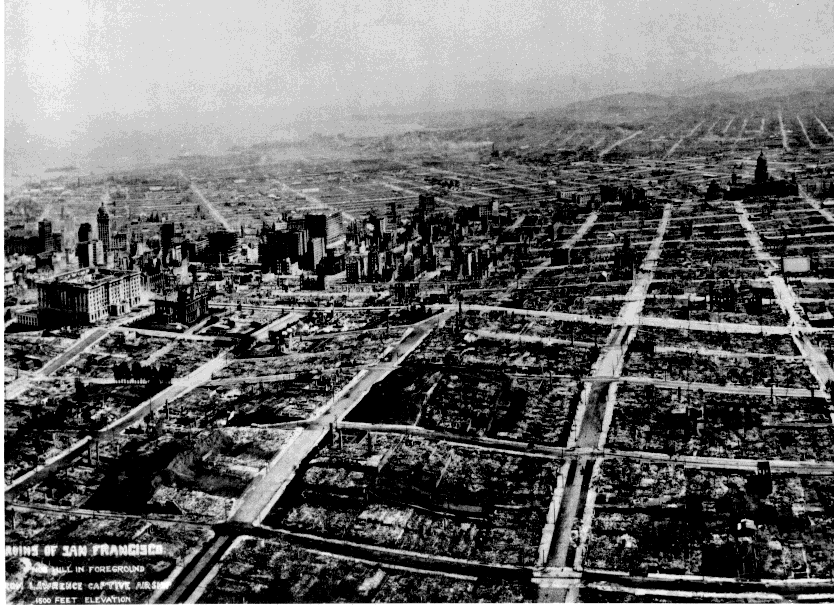
John Castillo Kennedy writes a riveting account of the fire that swept through San Francisco in the wake of the catastrophic earthquake that struck on April 18, 1906. The earthquake and resulting fires, which killed 3000 people, destroyed 80% of the city. Among the dead was the city fire chief. Firefighters, unaccustomed to using dynamite to create firebreaks, caused several of the fires.
At one point early in the fires, according to Castillo, the spread of the flames surprised people living along Pine, Bush, and Sutter Streets, forcing them to flee immediately. They had been confident that the flames would not reach them there. The author says,
“Quickly filled trunks grated up the hills. Wagons, mostly pulled by men, rattled over the rough cobblestones. Baby carriages and toy express wagons rolled along packed full with the ‘things’ people had snatched up in the flight. Pianos were bumped along the sidewalks–some went to pieces in the process. Sewing machines slipped along on their rollers with stacks of bedding and the like lashed to them. Women had their valuables on their person, or carried trinkets Gypsywise in handkerchiefs. Men wore columns of hats five-high. Some carried only a book. Parrots jabbered and scolded from many cages. Some people had blankets. Girls usually had bandboxes. Boys stretched poles between them and carried, suspended there, bundles of clothing and provisions. Once it was only a ham” (83).
These panic-stricken people, with no time to prepare, reached for the thing that had the most practical or sentimental value to them. Something made people faced with total loss and threat of life to lug heavy items or pets or food. Many of the choices seem irrational. Perhaps they were in shock or acting in impulse. In essays and contests asking people what they would grab if their house was on fire and they could only grab one thing, they have cited passports, wills, legal documents, insurance policies, personal papers, portable hard drives, phones, etc.
I’m trying to put myself in their shoes. If I was in one of the many neighborhoods forced to flee my home with no time to spare, what would I have been sure to grab? How long would it take my mind to settle on sentimental family items like old photos, my wedding video, or the boys’ baby books? Would I be relieved if I could make it out with my Bible, though I saved nothing else?
I do not judge those folks with their bizarre, split-second decisions. For some reason, it just made me do some introspection. What does my priority list look like? What do I value most in my life and in my home? What would I try to be sure to preserve?
Perhaps the answers to those questions is best provided by my choices in ordinary, every-day actions. I want my wife, children, fellow-Christians, and, most of all, my God to see from my life that they come before the things of this world. The things will all ultimately burn (2 Pet. 3:10). It is the relationships that will outlast the final, global conflagration. I pray that my influence and example will save them from the fire (Jude 23).
Reference: Kennedy, John Castillo. The Great Earthquake And Fire: San Francisco, 1906 (New York: William Morrow and Co., 1963).
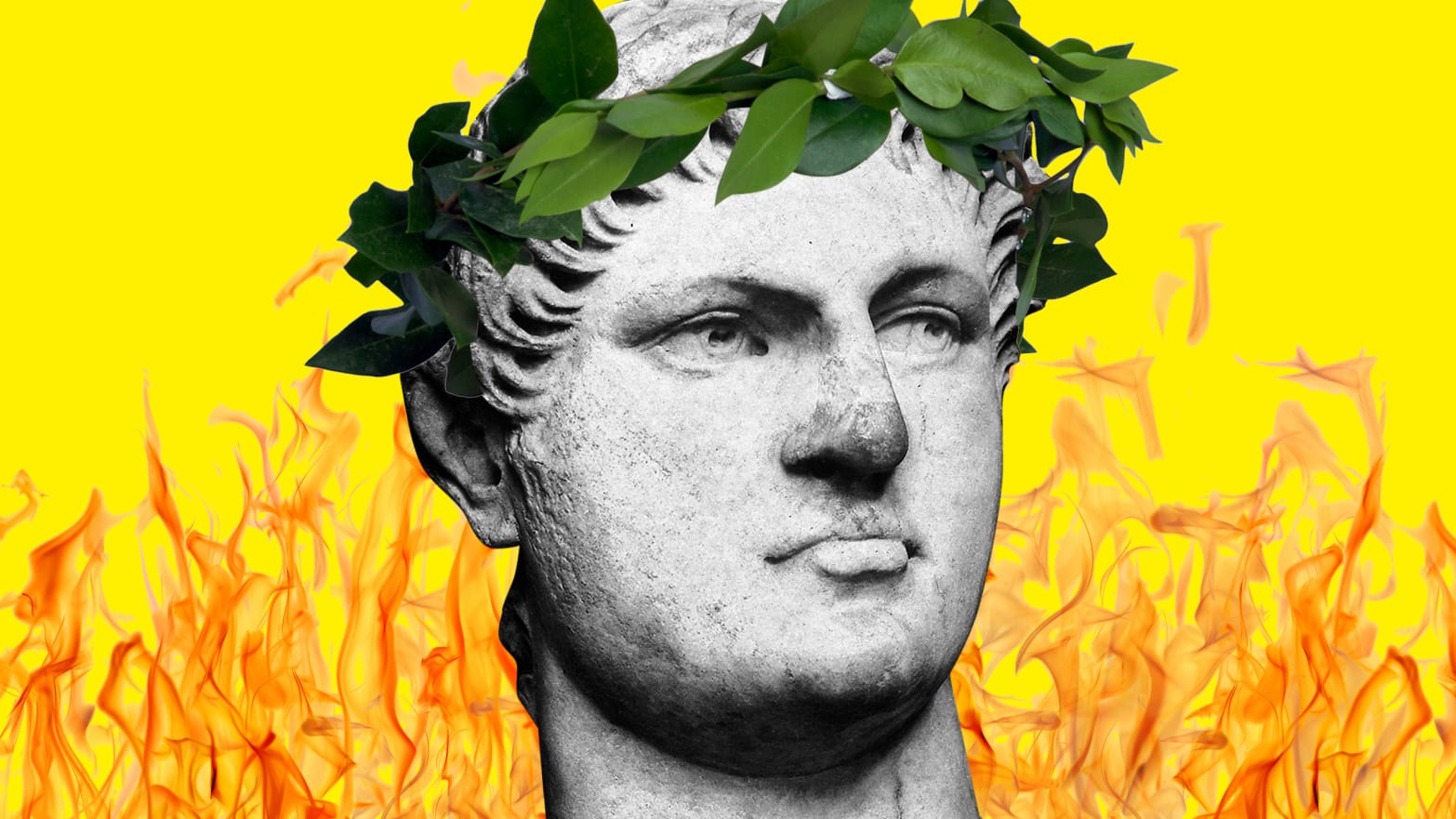
Gaius Cornelius Tacitus (AD 56-120) wrote two secular historical works describing the reigns of Tiberius, Claudius, Nero, and Gabba, Otho, Vespasian, and Vitellius (Annals and Histories).
He was the son-in-law of Agricola, the Roman General responsible for Roman expansion throughout Europe, especially northern Britain. He was not a Christian by any means, but a patriotic Roman with a family heritage tied to its conquests.
In the following excerpt, Tacitus mentions Jesus (referred to as Christus) and details the persecution of early Christians. I have abbreviated some of the excerpt (ellipsis), given contextual explanation (brackets), and added emphasis (bolded text). The information in his writings is fascinating, but I found the following to be shareable.
“…The next thing was to seek means of propitiating the gods [because of the burning of Rome], and recourse was had to the Sibylline books… But all human efforts, all the lavish gifts of the emperor, and the propitiations of the gods, did not banish the sinister belief that the conflagration was the result of an order.
Consequently, to get rid of the report, Nero fastened the guilt and inflicted the most exquisite tortures on a class hated for their abominations, called Christians by the populace. Christus, from whom the name had its origin, suffered the extreme penalty during the reign of Tiberius at the hands of one of our procurators, Pontius Pilatus, and a most mischievous superstition [of resurrection], thus checked for the moment, again broke out not only in Judæa, the first source of the evil, but even in Rome…
Accordingly, an arrest was first made of all who pleaded guilty; then, upon their information, an immense multitude was convicted, not so much of the crime of firing the city, as of hatred against mankind. Mockery of every sort was added to their deaths. Covered with the skins of beasts, they were torn by dogs and perished, or were nailed to crosses, or were doomed to the flames and burnt, to serve as a nightly illumination, when daylight had expired.
Nero offered his gardens for the spectacle, and was exhibiting a show in the circus, while he mingled with the people in the dress of a charioteer or stood aloft on a car. Hence, even for criminals who deserved extreme and exemplary punishment, there arose a feeling of compassion; for it was not, as it seemed, for the public good, but to glut one man’s cruelty, that they were being destroyed.”
The Son of God gives specific instructions for what to do when a spiritual family member sins. Jesus clearly says, “If your brother sins, go and show him his fault in private; if he listens to you, you have won your brother. But if he does not listen to you, take one or two more with you, so that by the mouth of two or three witnesses every fact may be confirmed. If he refuses to listen to them, tell it to the church; and if he refuses to listen even to the church, let him be to you as a Gentile and a tax collector.” Notice the Divine pattern.
Perpetration (15a)–“If you brother sins.” This is what initiates the situation.
Presentation (15b)–“Go and show him his fault in private.” Paul would teach this later (Gal. 6:1). Notice that this is to be done privately.
Aspiration (15c)–“If he listens to you, you have won your brother.” Ideally, this is where the matter should end.
Escalation (16-17)–Jesus tells one what to do if a sinner refuses to listen. Start by taking one or two. If that does not work, then tell it to the church.
Repudiation (18)–If all three of these approaches fail to win the sinner, then you reject them.
Tragically, we very often disobey Jesus’ instructions about this and fail to understand that rebelling against His commandment then makes us a sinner, too.How often does it happen that a person, rather than dealing directly with the sinning brother, tells someone else? Then, that someone tells another. Soon, a whole group or even the whole church knows about the sin. Often, something that was private and even between just two people is made public by gossipers who continue to spread the matter. In some cases, those who hear and spread the matter never even speak to the offender. This prevents the sinner from being aware of who knows about it or being able to reconcile. It can even be the case that the sinner has repented and handled the matter with the original offender, but now others are brought into the matter after the fact. Those who have come to hear about the situation treat the sinner “as a Gentile and a tax collector,” without ever once speaking to them about it. Rifts form and relationships are affected.
When we fail to do things God’s way, we will make matters worse. May we consider passages like Mark 7:21-23, where Jesus places “big” sins like “fornications, thefts, murders, adulteries, deeds of coveting and wickedness” alongside “little” sins like “deceit, sensuality, envy, slander, pride, and foolishness.” Jesus’ analysis is that “all” these things are “evil” and “defile the man.”
Peter has a sobering warning for the church, writing, “But false prophets also arose among the people, just as there will also be false teachers among you, who will secretly introduce destructive heresies, even denying the Master who bought them, bringing swift destruction upon themselves” (2 Pet. 2:1). He warns them about the model, the methods, and the message of these men. The counterparts of these modern messengers is the false prophets of old.
Jeremiah lived at a time when such prophets flourished, and the result of their work was the destruction of the people. Jeremiah 23 is a graphic depiction of what God helped Jeremiah see as he looked at and listened to these sinful seers. Notice that in Jeremiah 23:9-40), he saw:
Tears (9-10)–Jeremiah was heartbroken, trembling, and overcome, because he knew their message was different from God’s Word and it was taking people off course.
Pollution (11-12)–The Lord found their way wickedness, and this pollution made for a slippery path that would make them fall in calamity and punishment.
Offensiveness (13-14)–They looked to the wrong spiritual source and it led the people of God to commit horrible depravity.
Tragedy (15)–Their message was going to cause their own spiritual sickness and death.
Emptiness (16-18)–The message is from their own imagination and not from the Lord’s mouth, so they tell those who hate God they’ll have peace and those who walk in stubbornness that everything will be fine.
Storms (19-20)–The storm is the tempest of God’s wrath upon the heads of these false messengers.
Audacity (21-25)–They ran, but God didn’t send them; They prophesied, but God didn’t speak to them; God was right there listening when they said, “I had a dream, I had a dream!”
Heart Trouble (26-27)–The prophets had spiritual heart trouble, and their message was loved by people with heart trouble. It resulted in both of them forgetting God.
Straw (28)–Just as straw and grain are totally different things, so is God’s message and their false message.
Judgment (29-40)–God’s Word is like fire and a hammer. He is against their Word and against them for misusing their speaking abilities and leading His people astray. They don’t furnish the people with “the slightest benefit.” They cause the people to forget what truth is.The end result is tragedy.
So many can have a message that sounds good, makes one feel good, but does no good! In fact, their message contradicts what God said in His Word. As we grow our Bible knowledge, it will help us see these messengers and their messages for what they are. God’s Word is a blessing to us, both now and eternally. But, measure their message against the Master’s. Embrace only the words that are from Him! Reject the words that come from them!
Misty Ann Weaver made a tragic decision. The Houston-area licensed vocational nurse is charged in the burning death of three people after she started a fire in her six-story office building. Why did she take such horrible measures that resulted in the unnecessary, tragic deaths of these victims? She was apparently behind on an audit for her plastic surgeon boss, and she feared being fired. She just wanted to start a small fire, enough to cause a distraction and buy herself more time. Obviously, she accomplished more than she intended.
Ms. Weaver is an extreme example of the tendency to try and avoid consequences by resorting to sin to “cover up” a shortcoming or failure. While few of us will wind up facing three felony murder counts, we are all tempted to “cover up” in this way. When we fail to study for a test, we may resort to cheating to “cover up” that fact. When we have a low self-image, we may resort to gossip or backbiting to “cover up” perceived flaws about ourselves. When we are afraid of negative consequences for not meeting some responsibility or expectation, we may turn to lying to “cover up” that inadequacy. The irony is seen in that the “cover up” inevitably puts us in greater spiritual trouble than before we engaged in it.
We may “cover up” for fear of the disapproval of others, out of embarrassment or shame, or out of concern for certain repercussions. Yet, to turn to sin to shield ourselves from the ramifications of our actions is to compound the problem. Let us have the courage to face God and man, to provide things honest in the sight of all men (cf. Romans 12:17). Israel was warned about the danger of adding sin to sin (Isaiah 30:1). It is strength of character to do our best in our every endeavor, but it is also strength of character, when we have failed to so do, to courageously, honestly “face the music.” However we rationalize, the fallout from this will be less severe than the “cover up” is!
The video from a gas station surveillance camera shows the baffling details. 37-year-old Austin Dawkins was playing with a cigarette lighter and got too close to his gas tank as his 30-year-old wife, Jessica, stood beside him at his truck as he was pumping gas. Flames flare up, Jessica runs away, and Austin lifts the gas nozzle from tank. This sets his wife on fire, and she is seen running as the flames envelop her. She received second and third degree burns to her legs, arms, back, and head. Her husband was arrested and charged with reckless conduct, a misdemeanor. If he has a conscience, the far greater penalty will be shame, guilt, and regret at what his careless conduct did to his wife (www.myfoxatlanta.com, 11/2/13).
The macabre moments caught on video, showing the woman on fire, are graphic. No one can doubt the danger and seriousness of the situation. Spiritually, men and women so often play with fire unable to physically see the consequences of their actions. Whether allowing themselves to become romantically involved with someone other than their spouse or even courting temptation, they put themselves into a very precarious position. In the very context of this moral problem, Solomon writes, “Can a man take fire in his bosom and his clothes not be burned? Or can a man walk on hot coals and his feet not be burned? So is the one who goes in to his neighbor’s wife; Whoever touches her will not go unpunished” (Prov. 6:27-29). The Bible illustrates marital infidelity to playing with fire.
Perhaps one rationalizes indiscreet words, actions, or flirtations as harmless, innocent, and victimless. Yet, nothing could be further from the truth. The flames can spread beyond just the man and woman, doing harm to family, friends, and the church. It can ravage so many lives and leave the perpetrators with an enormous load of guilt. How much better and wiser to see adultery for the dangerous entity it is and leave it alone (cf. Prov. 6:32-33)?













 The Preacher Pollard Blog