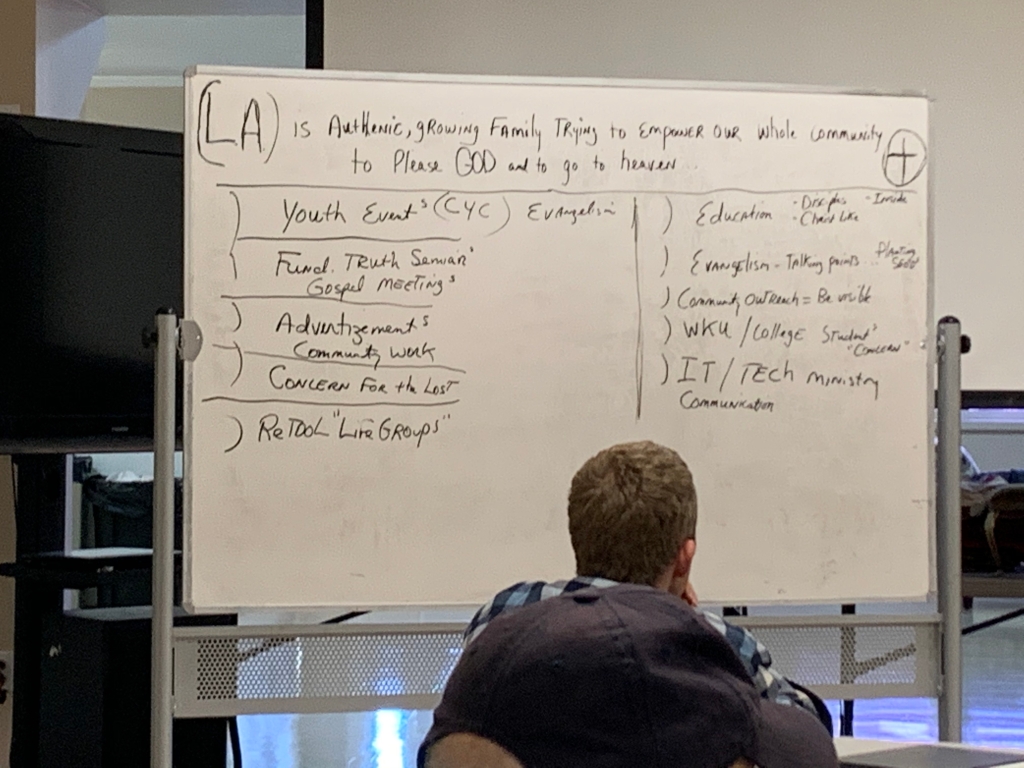
Call To Godly Leadership

To find a good place to eat, you need a trusted source—someone who’s tasted the food themselves. You wouldn’t trust a guide who’s never fished to lead you on a fishing trip, or let someone who’s never experienced childbirth lecture you about it. They might know the theory, but they lack the experience. You can’t lead others where you haven’t been. 

Carl Pollard

To find a good place to eat, you need a trusted source—someone who’s tasted the food themselves. You wouldn’t trust a guide who’s never fished to lead you on a fishing trip, or let someone who’s never experienced childbirth lecture you about it. They might know the theory, but they lack the experience. You can’t lead others where you haven’t been. 

Leadership isn’t about titles, power, or recognition, it’s about walking with God and inviting others to follow. To lead others to Christ, you must first walk with Him.

But why do we even need leaders? First, God demands it. He’s never left His people without guides. When Moses’ time ended, God chose Joshua to lead Israel into the Promised Land. When the early church needed direction, Paul sent Timothy to Ephesus. God establishes leaders to guide His people toward His will. Without them, we wander; with them, we find purpose.

Second, leadership makes us effective. We all have talents, but a leader, like a conductor waving his little stick around, brings harmony to the chaos. Jesus’ mission was clear: “The Son of Man came to seek and save the lost” (Luke 19:10). Imagine 30 Christians, each leading one person to Christ yearly and teaching them to do the same. In 10 years, that’s nearly a million souls. In 25 years, over a billion. That’s the power of leadership multiplying God’s kingdom.

Third, leaders strengthen faithfulness. Studies show up to 90% of new converts may drift away within a year. Heartbreaking. Why? Often, there’s no follow-up, no leader to nurture their faith. But with intentional guidance, 93% of converts stay faithful. Hebrews 13:7 tells us, “Remember your leaders… imitate their faith.” Leaders model steadfastness, helping us stand firm.

Fourth, leadership trains for service. Ephesians 4:11-14 says God gave leaders to equip believers for ministry, building up the church. Leaders don’t do all the work—they empower others to serve, strengthening and uniting the body of Christ. Worldly leaders can’t guide spiritual people. A president might lead a nation, but only godly leaders point us to Christ. It’s tough, requiring sacrifice and surrender, but 1 Corinthians 16:13 calls for vigilant, faithful leaders.

Two key points: First, leadership must be pursued. God designed the church and family to function under leadership, like a husband and father under Christ. Ephesians 6:4 says, “Fathers, bring [your children] up in the discipline and instruction of the Lord.” Your home is your first ministry. Lead with love, patience, and prayer—not pride or frustration. Husbands, love your wives as Christ loved the church (Ephesians 5:25). Fathers, model faith through your actions. Even if you’re not an elder, embody their qualities (1 Timothy 3:1-7). Leadership begins at home and ripples outward.

Second, leadership must be praised. Leading is tough—imagine shepherding an entire congregation’s souls on top of life’s stresses. Hebrews 13:17 says, “Obey your leaders and submit to them, for they keep watch over your souls.” Elders aren’t managers; they’re shepherds, called to serve, not dominate (1 Peter 5:2-3). Honor them by refusing gossip (Titus 3:2), supporting their efforts (1 Corinthians 15:58), and giving grace (Colossians 3:13). As the wise Hiram Kemp once said, “Like Aaron and Hur holding up Moses’ arms in battle (Exodus 17:12), support your leaders.” Leadership is servanthood (Matthew 20:25-28), and every member plays a role in the church’s mission.

Leadership must be pursued and praised. Pray for our leaders in the church and focus on the future. As a Christian man in the church, you may become an elder one day, but today, lead your family. 

God demands leaders because the lost need reaching, faith needs strengthening, and service needs equipping. Leadership isn’t about being flawless but faithful. Go to the cross, the Word, and prayer daily. Lead your family by loving like Christ, serve in the church, and shine in the world.

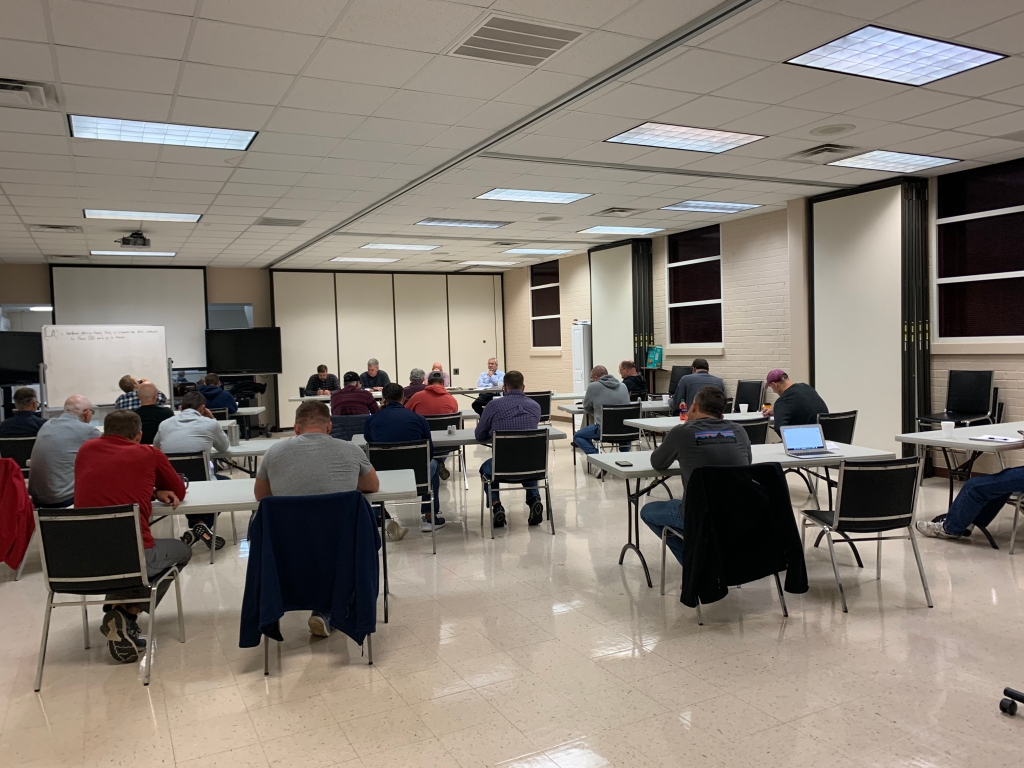
WHY PLANNING IS POWERFUL

Monday’s Column: Neal At The Cross


Neal Pollard

  • It forces us to focus. So often, churches just “do stuff.” We don’t ask who, what, where, when, or how. We don’t ask if the thing is effective, evangelistic, edifying, or empowering. Is it outmoded? Is it merely self-serving? Can it be improved? Planning clarifies. 
  • It makes us intentional. Whether we are looking at what is currently done or what should be done, planning makes us deliberate. Especially is this true when we consider whether or not the activity, program, or work is merely internally-focused (for us) or externally-focused (for lost souls). Do we plan to grow? Reach a tangible number of people each year? Increase the depth of our footprint in the community? If so, how? Specifically how? 
  • It says that leadership is thoughtful. Planning takes precious man hours from the leadership, but how it pays off! Personal analysis, congregational analysis, and biblical analysis require thought. Done well, it will build conviction that doctrine is never to be tampered with, but that methods and means in harmony with Scripture require judgment, discrimination, and scrutiny. Putting thought into the church’s works and needs is Acts 20:28 in motion.
  • It combats chaos. So often, a church’s works lack cohesion and coordination. There are no filters in place to ask if an individual work fits with the church’s vision and mission. Works may be good, but who knows what goes on with them or if they are working. Who is accountable? To whom are they accountable?
  • It expresses discontent with the status quo. It is easy to continue with works, programs, and activities that are already in place and have people managing and executing them. But, most of our methods and means of doing church work need to be evaluated regularly to ask if changes are needed. Change brings discomfort and takes work, but as our resources change–time, talent, treasure–we may find that we are more or less able to engage in the various works of the church. We should always be looking for more and better ways to serve and glorify God. 
  • It is biblical. Jesus had a tangible plan for world evangelism (Acts 1:8). Paul had a tangible plan for growing the church through the missionary journeys (Acts 15:36ff). Look at how 1 Timothy reflects and requires planning to help the Ephesus church (1 Tim. 3:15). Paul had a tangible plan for establishing elders in congregations throughout the island of Crete (Ti. 1:5ff). Something that was in God’s mind in the eternity before time (Eph. 3:9-11) deserves our best effort, using our brightest minds to find biblical ways that are most effective to grow and strengthen it! 

Goals, dreams, intentions, and ideas will not, by themselves, accomplish anything. We must work to make those things a reality. But, a crucial first step is to articulate where we want to go. That makes planning so powerful! 

The Word Is “Relationship”

Neal Pollard

Soon, we’ll have lived in our current home for two years.  We are enjoying the house, the location, the neighborhood, and most of the neighbors. However, one that lives pretty nearby has proven less than pleasant.  His wife is an officer in our neighborhood HOA, and each month’s newsletter is a new posting of the hierarchy’s “95 theses.”  Hardly anyone can keep from committing at least one infraction—certainly not us.  They’ve had very little communication with us except when the husband complained that our compost pile was too close to the fence (on the other side of which were his garbage cans).  Recently, while seeking our permission to re-paint their house, he took the opportunity to inspect the state of cleanliness of our garage.  I share his desire that we keep our homes and yards in good shape, as property values are riding on our collective interest in such.  The problem for them is that they have spurned our efforts at a relationship and they have done nothing to create one themselves.  Thus, we tolerate and peacefully co-exist.  But, there is no relationship.

Have you thought about how vital relationships are to our lives?  Think about how ineffective we are with people without them.  At best, we are mere associates. At worst, we become antagonists.  Think of how vital the entity of relationship is to:

  • Marriage (1 Pet. 3:7).
  • Parenting (Deu. 6:1ff).
  • A congregation (1 Th. 5:11).
  • Shepherding (John 10:4-5).
  • Church discipline (2 Cor. 2:6-8).
  • Restoring the erring (Gal. 6:1-2).
  • Preaching (2 Tim. 2:24-26; 4:2).
  • Church works (Eph. 4:16).
  • Deacons’ work (Acts 6:7).
  • Soul-winning (Col. 4:2-6).
  • Friendship (Prov. 18:24b).

Taking the time to build rapport may be mentally and emotionally exhausting at times.  The best of relationships will have their downs as well as their ups.  But God created us social beings not meant for isolation (Gen. 2:18).  Joel O’Steen is shallow and superficial in his “preaching,” but tens of thousands of people are drawn to him because they find him relatable. His message is deadly, but his method is engaging.  Some who consider themselves the staunchest “defenders of the faith” are virtual porcupines with their quills primed to stick those in their proximity.  Surely those of us striving to follow New Testament Christianity can strive to build relationships while we steadfastly teach and follow the truth.  How much more effective will we be as we conquer this principle every day?

“To Protect And To Serve”

Neal Pollard

This now famous motto came into the public consciousness as part of a contest run by the Los Angeles Police Department’s internal magazine, BEAT, in 1955. Officer Joseph Dorobek submitted the winning entry with “to protect and to serve.” Nearly 60 years later, it continues to be seen on the side of the department’s patrol cars and serves to “embody the spirit, dedication, and professionalism” of the LAPD’s officers (via joinlapd.com).

With so much animus and distrust of law enforcement in some circles right now, it can be easy to forget their vital role of keeping peace and enforcing the law.  Without them, anarchy and violence would reign, with no one to restrain the lawless from violating and harming those incapable of defending themselves.  While there are unethical, lawless individuals in every profession, many who hear reports against law enforcement never stop to ask whether there is ever bias on the part of the reporters.  Perhaps it is a bias against law, authority, or the perceived power delegated to those wielding a badge.  It is good to remember that God has appointed the governing authorities of each locale (cf. Rom. 13:1ff).

God does not have an official position in His Kingdom for watchdogs or police officers to police the actions of others.  He made us creatures of choice and He allows us to choose good or evil.  While occasionally there are preachers and other members who are self-appointed to such a position, the concept is foreign to Scripture.  However, He did organize the church with elders who protect (Acts 20:28; 1 Pet. 5:2) and deacons who serve (1 Tim. 3:10,13).  In fact, all members are to be servants of Christ (Gal. 5:13).  Preachers are to preach the word, and when they declare the whole counsel in love (Acts 20:27; Eph. 4:15), they will sometimes convict the hearts of the hearers.  Particularly elders, who are commissioned to protect and serve the flock, deserve our respect and esteem (1 Th. 5:12-13).  Especially is that vital in an age that disdains authority.

It was an honor for me to serve as a reserve police officer in Livingston, Alabama, for a couple of years in the early 1990s.  I was able to see the dedication and sense of honor held by these extraordinary men and women. Let us honor those public servants of God (Rom. 13:6) and those spiritual servants of God (1 Th. 5:13)!