What Is Vision?

Neal Pollard

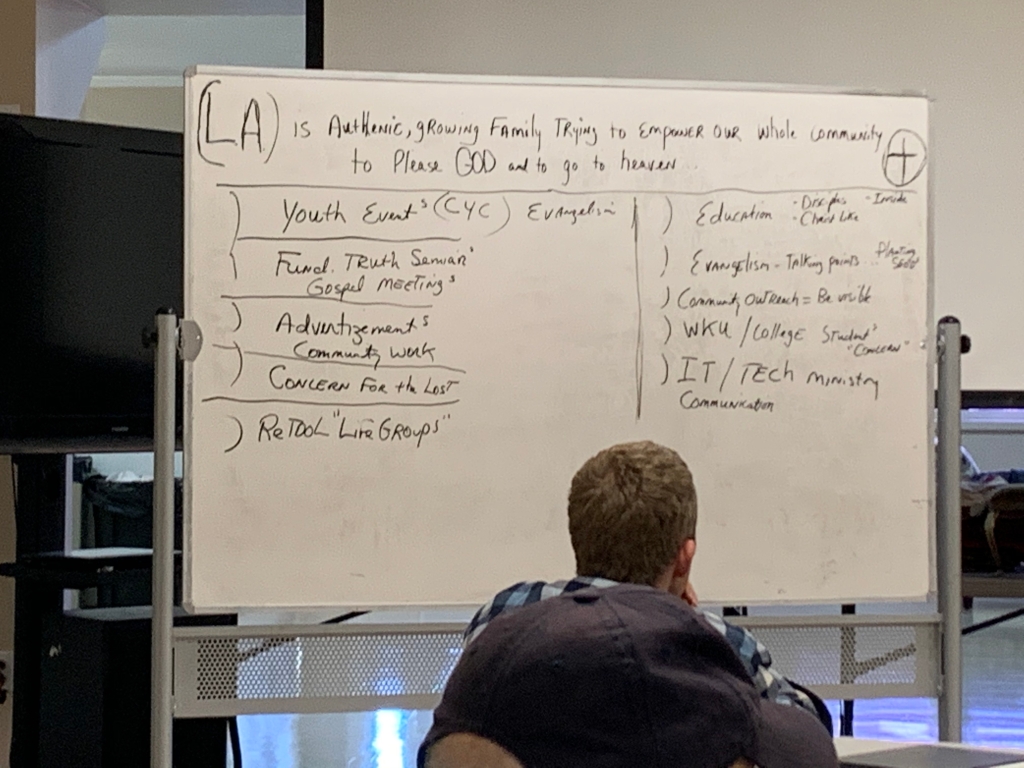
It is the ability to see what a thing could be. A carpenter, looking at a tree, sees with a trained eye much more than others can see. With his expert shaping, appropriate tools, and seasoned patience, he can make out of that tree what was once only in his mind. The Lord needs people, from the leadership down, who look at the community, each other, their income, and their abilities and see what could be done. It takes no effort, emotion, or education to say, “It can’t be done!” That’s what is expected. Vision sees what could be.

It is the ability to not obsess over what a thing has been. Due respect is owed to the labors of the past, and due recognition is owed both its successes and failures. The past, however glorious, will have ample samples of both. Yet, the people, plans, and programs of today and tomorrow should not be shackled and chained exclusively to was has been. Vision is not always settling for being “has beens.” “Will be” is what Paul seemed more focused on pursuing (cf. Phil. 3:10-12). Biblical vision recognizes that doctrine cannot change, but methods, technology, tools, and people invariably do. Vision asks how people living in the present time can best reach people living in the present time and prepare them for an endless eternity.

It is the ability to trust in what God can make it be. No plan would succeed without God’s hand in it. I love the prayers where brethren plead, “Help us in the things that are right and defeat us in the things that are wrong.” Among the Bible’s heroes are those who factor God into the plans and say, “We are well able” (Caleb, Num. 13:30). “I can do all things” (Paul, Phil. 4:13), “There is nothing too hard…” (Jeremiah, Jer. 32:17), and “No good thing does He withhold” (the sons of Korah, Psa. 84:11). Our vision can be bold when “our” is God and us! Since God made the sky, the limit exceeds even that! Our giving, our ambitions, our goals, and our sights should be set to reflect our belief in that fact.

Where will we be this time next year? In five or ten years? Vision plays a role in that. Vision attempts to see the unseen, forget the past, and trust the One who holds past, present, and future in His all-powerful hand. With those truths factored in, let us dream big dreams!

Books by the Pollards

A Tiny Spark Snail Mail Club (Kathy Pollard)

WHY PLANNING IS POWERFUL

Monday’s Column: Neal At The Cross


Neal Pollard

  • It forces us to focus. So often, churches just “do stuff.” We don’t ask who, what, where, when, or how. We don’t ask if the thing is effective, evangelistic, edifying, or empowering. Is it outmoded? Is it merely self-serving? Can it be improved? Planning clarifies. 
  • It makes us intentional. Whether we are looking at what is currently done or what should be done, planning makes us deliberate. Especially is this true when we consider whether or not the activity, program, or work is merely internally-focused (for us) or externally-focused (for lost souls). Do we plan to grow? Reach a tangible number of people each year? Increase the depth of our footprint in the community? If so, how? Specifically how? 
  • It says that leadership is thoughtful. Planning takes precious man hours from the leadership, but how it pays off! Personal analysis, congregational analysis, and biblical analysis require thought. Done well, it will build conviction that doctrine is never to be tampered with, but that methods and means in harmony with Scripture require judgment, discrimination, and scrutiny. Putting thought into the church’s works and needs is Acts 20:28 in motion.
  • It combats chaos. So often, a church’s works lack cohesion and coordination. There are no filters in place to ask if an individual work fits with the church’s vision and mission. Works may be good, but who knows what goes on with them or if they are working. Who is accountable? To whom are they accountable?
  • It expresses discontent with the status quo. It is easy to continue with works, programs, and activities that are already in place and have people managing and executing them. But, most of our methods and means of doing church work need to be evaluated regularly to ask if changes are needed. Change brings discomfort and takes work, but as our resources change–time, talent, treasure–we may find that we are more or less able to engage in the various works of the church. We should always be looking for more and better ways to serve and glorify God. 
  • It is biblical. Jesus had a tangible plan for world evangelism (Acts 1:8). Paul had a tangible plan for growing the church through the missionary journeys (Acts 15:36ff). Look at how 1 Timothy reflects and requires planning to help the Ephesus church (1 Tim. 3:15). Paul had a tangible plan for establishing elders in congregations throughout the island of Crete (Ti. 1:5ff). Something that was in God’s mind in the eternity before time (Eph. 3:9-11) deserves our best effort, using our brightest minds to find biblical ways that are most effective to grow and strengthen it! 

Goals, dreams, intentions, and ideas will not, by themselves, accomplish anything. We must work to make those things a reality. But, a crucial first step is to articulate where we want to go. That makes planning so powerful!