What Are You Waiting For?

Neal Pollard

Betty Kellenberger of Carson City, Michigan, has become something of an instant celebrity. Google her name and you’ll find endless articles devoted to this remarkable woman’s unprecedented achievement. On September 12, 2025, Betty did what only 1 in 4 people (out of around 3000) do every year. She completed the Appalachian Trail, all 2200 miles of it. She averaged about ten miles per day on the trail. Did I mention she did it alone? And that she’s 80 years old? She became the oldest woman to complete this feat!

The dream to do this was sparked for Betty when she was 14 years old, reading about the trail in her Weekly Reader magazine at school. She always wanted to do it, but never seemed to get around to it. After retiring as a teacher, she began to talk to herself and reason that if she was going to do it she needed to get started. Once she made up her mind, she had to overcome health problems, knee replacement surgery, and Hurricane Helene.

Betty gave some advice for people who may be contemplating some dream or aspiration, but hesitate to try.

  • Start sensibly.
  • Study (learn as much as you can about the goal you want to accomplish).
  • Find a buddy.
  • Stay active and stay involved.

(information and picture via Rachel Nania, AARP.org).

Have you been putting off something you know you should do for Christ? It’s easy to talk ourselves out of things, especially hard things. When challenged, we trot out our excuses–our intellect, our resources, our fears, even our age. Yet, we carry our regrets with us through life knowing we should be aiming higher. The Bible is full of people who dared greatly for God despite their limitations.

  • Moses led an entire nation on a 40 year hike through the wilderness at the age of 80, and that was only one of his limitations (Exodus 4:10).
  • Caleb was 85 when he conquered his mountain in Canaan (Joshua 14:6-14).
  • Ruth was a poor, foreign widow.
  • David was just a youth (1 Samuel 17:33).
  • The woman who gave all she had to live on was a poor widow (Mark 12:41-44).
  • Mephibosheth was handicapped (2 Samuel 9).
  • Paul had a thorn in his flesh (2 Corinthians 12:7-10).
  • Joseph, Jeremiah, and Timothy had much asked of them when they were only youths.
  • Rahab had the stigma of being a prostitute (Joshua 2; Hebrews 11:31).
  • John Mark had abandoned his coworkers (Acts 13).

What good thing for God are you avoiding or procrastinating? Take Betty’s advice. Start sensibly, but get going! Study about it, but then act on it. Find a buddy, and get them to do it with you. Resolve to stay active and involved, and never quit until you cannot go on! You’ll never regret it!


You Push That Way And I’ll Pull This Way

Neal Pollard

While it is true that each of us possesses unique abilities within the Lord’s body (Rom. 12; 1 Cor. 12), that fact bears closer scrutiny. God can use each of us, with our unique personalities, backgrounds, and experiences, to reach so many among the lost and to help so many among the saved. Yet, it is easy to lose sight of how we contribute to the health and growth of the congregation we are a part of. 

For example, the following should not be considered talents useful to the Lord’s cause:

  • Being gossips and busybodies (2 Th. 3:11; 1 Tim. 5:13).
  • Causing strife and being jealous (Rom. 13:13; 1 Cor. 3:3).
  • Judging your brother (Rom. 14:10; Jas. 4:11).
  • Returning evil for evil and insult for insult (1 Pet. 3:9). 
  • Being an obstacle or a stumbling block in a brother’s way (Rom. 14:13).
  • Speaking deceit (1 Pet. 3:10).
  • Giving the devil an opportunity (Eph. 4:27).
  • Keeping your leaders from doing their work with joy and not with grief (Heb. 13:17).

Certainly this is not an exhaustive list of ways we may misuse the stewardship of our speech and actions as members of the body of Christ. It can be so tempting, when we look at the church’s imperfections and people’s inevitable shortcomings. We have new Christians. All Christians have weaknesses. Those who lead and conduct the church’s work could inevitably do it better. 

What does the Lord want each of us to do as individual members of the Lord’s church? He calls for living in harmony in the Lord (Phil. 4:2). He wants us fitted, built, and held together (Eph. 2:21-22; 4:16). He wants us “being of the same mind, maintaining the same love, united in spirit, intent on one purpose” (Phil. 2:2). Practically speaking, this means getting behind the work of the local church, contributing to it and building it up. It means asking how we can help and throwing our energy into that. It means constructively helping when a work is lagging or in need of direction. It means lovingly, respectfully interacting with the other members of the body. 

Comedian Steve Harvey compared his rise to success with pulling a wagon uphill. He said that many people may hop on that wagon and contribute something, He said they all need to be doing something to help you get that wagon up the hill. He warned against those who get on the wagon and have no value (via OWN, 9/12/14). Perhaps you’ve found yourself pushing toward a spiritual objective, only to feel the resistance of someone working against you. This is frustrating! However, never find yourself opposing good, needed works through misuses of your resources in ways like those in the bulleted list above. In the worst case scenario, we may even find that in doing so we “may even be found fighting against God” (Acts 5:39). Let’s do all we can to help build up the body of Christ, prayerfully studying what that does and does not mean!

compromise-donkey

WHAT YOU DO WITH WHAT YOU HAVE

Neal Pollard

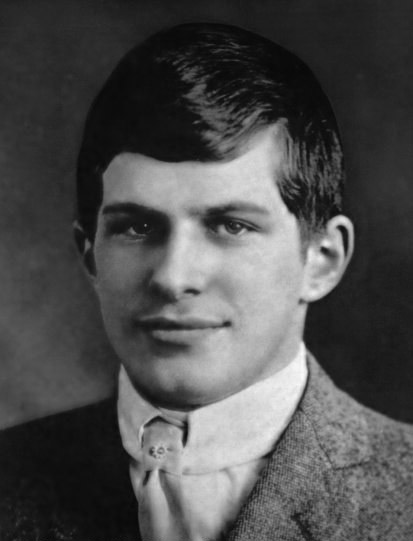
In discussions about the smartest person who ever lived, William James Sidis’ name will come up as being in the mix. Though measuring IQs with a specific number is not an exact science, he is reputed to have had an IQ of 200 or more. He was reading the New York Times at 18 months old. He taught himself eight languages and made up another one. He enrolled at Harvard University at the record young age of 11. He was a professor at what’s now Rice University by the age of 17. He was a renowned mathematician. But, adjusting to mainstream society proved an ongoing problem for Sidis, whose extreme, socialistic politics and eccentric behaviors dogged him for the rest of his life. He died of a brain aneurysm in 1944 at the age of 46. With such a brilliant mind, his contributions to the world were relatively small. In fact, most of us have never heard of Bill Sidis (much information from Amy Wallace’s sometimes disputed biography, The Prodigy, Dutton: New York, 1986).

We all know people who rose from poverty, dysfunction, and perceived disadvantage who have risen to great heights in their profession and their personal lives. Those abused as children, those who grew up in homes afflicted with drug use or alcoholism, and those whose parents went through failed relationship after failed relationship, have grown up to break such patterns by becoming loving, effective parents and spouses. Some who were given little have done much with it.

Jesus teaches the parable of the talents in Matthew 25, which demonstrates the good and bad stewardship of three particular individuals. Two faithfully used what they were given, but another was unfaithful. The Lord shows us God’s dim view toward one who fails to use what he or she has been given.

Most of us are somewhere on the continuum between the one talent man and the world’s smartest man. Scripture shows us that we must be faithful stewards (1 Cor. 4:2) and that we will give an account for our stewardship (Mat. 25:14-30), whether money, abilities, opportunities, time, or whatever our relative resources. May we be encouraged to do as much as we can with what we have been given. How great to be acknowledged by Christ before all nations as one who did the most with what we had!

william_james_sidis_1914