Decades earlier, out in the wilderness, a young Caleb stood (nearly) alone. Moses sent the twelve spies into Canaan to scout the land (Numbers 13), in the minds of the terrified ten– the land of giants was unconquerable. Only two men believed that God was bigger, Joshua and Caleb. They urged the rest to move forward and take what He had promised, but it wasn’t going to happen.
Dale Pollard
Decades earlier, out in the wilderness, a young Caleb stood (nearly) alone. Moses sent the twelve spies into Canaan to scout the land (Numbers 13), in the minds of the terrified ten– the land of giants was unconquerable. Only two men believed that God was bigger, Joshua and Caleb. They urged the rest to move forward and take what He had promised, but it wasn’t going to happen.
For his courage, God vows to Caleb:
“But my servant Caleb, because he has a different spirit and has followed me fully, I will bring him into the land into which he went, and his descendants shall possess it” (Numbers 14:24).
That promise wouldn’t be fulfilled for nearly half a century! By the time the land being divided among the tribes, Caleb was 85 years old. His spirit, however, was stronger than before. In Joshua 14, Caleb goes confidently to Joshua. He says,
“I am 85 years old. I am still as strong today as I was in the day that Moses sent me… Now therefore give me this mountain of which the Lord spoke in that day” (Joshua 14:10-12).
Which mountain? That would be Hebron. A mountain that was still inhabited by the Anakim– giants descended from the very people who melted the hearts of those ten spies years ago. To anybody else Caleb’s inheritance seemed like an impossible one. It would have appeared more like a curse– certainly not a blessing.
But up the mountain he went. God and Caleb secured that territory (Joshua 15.13-14), and the mountain that covered the people in a shadow of their previous shame now serves as a reminder. Between Faith and fear, the former is the more formidable force.
Four Quick Lessons:
Faith will always outlast fear.
Waiting is not wasted. Caleb looked forward for 45 years, but never became bitter or gave up on God.
Strength is spiritual. That “different spirit” that Caleb possessed sounds similar to that of the saints (Romans 8.9-11, I Corinthians 3.16).
Excuses are useless, God uses the toothless (Caleb was 85).
Faith is not a fleeting emotion or a vague hope; it is the foundation of a life surrendered to God. Hebrews 11:1 says, “Now faith is the assurance of things hoped for, the conviction of things not seen.” This is not a blind leap but a resolute trust in the unseen promises of a God who never fails.
Carl Pollard
Faith is not a fleeting emotion or a vague hope; it is the foundation of a life surrendered to God. Hebrews 11:1 says, “Now faith is the assurance of things hoped for, the conviction of things not seen.” This is not a blind leap but a resolute trust in the unseen promises of a God who never fails. Faith is what steadies us when life’s uncertainties threaten to unravel our peace. After all that has happened recently, faith has never been more essential for Christians.
Scripture offers countless examples of faith in action. Take Abraham, called by God to leave his homeland for a place he did not know (Genesis 12:1-4). He had no map, no clear destination, only a promise from God. Yet he obeyed, not because he saw the outcome, but because he trusted the One who spoke. This is the essence of faith: moving forward when the path is hidden, anchored by confidence in God’s unchanging nature.
Jesus Himself taught that faith doesn’t need to be grand to be powerful. In Matthew 17:20, He said faith as small as a mustard seed could move mountains. This is the truth: God does not demand perfect or unshakeable faith, but simply a heart willing to trust Him one step at a time. Whether facing loss, uncertainty, or fear, faith is the quiet resolve to believe that God is sovereign, good, and working all things for His purpose (Romans 8:28).
In a world that prizes what can be seen and measured, faith sets us apart. It’s not ignorance or denial but a deliberate choice to rest in God’s truth over visible circumstances. When trials come, when the job is lost, the diagnosis is grim, or the future feels uncertain, faith is the anchor that holds us fast. It reminds us that we do not walk alone, because the One who holds all things together is with us (Colossians 1:17).
Faith, then, is both our shield and our strength. It is trusting God’s promises when doubt whispers and hope seems distant. It is the courage to say, “I cannot see the end, but I know the One who does.” And in that trust, we find the peace and power to endure.
Many Christians serve a “God of good times,” praising Him when life is easy. But the God of the Bible is bigger. When the fig tree fails, the vines are bare, and the fields are empty, will you get angry, give up, or rejoice?
Carl Pollard
Corrie ten Boom was born on April 15, 1892, in the Netherlands to a devout Christian family. Her father, Casper, ran a thriving watchmaking business. Their deep faith shaped their response to the Nazi occupation of the Netherlands during World War II. The ten Booms joined the underground resistance, transforming their home into a safe haven for Jews and others persecuted by the Nazis. Using a hidden room in their house, they saved countless lives. Tragically, in 1944, a betrayal led to their arrest. Corrie and her sister Betsie were sent to a concentration camp, enduring brutal conditions. Betsie died there, and their father passed away in prison. Corrie survived and later wrote, “There is no pit so deep that God’s love is not deeper still.”
How could she say this after such devastating loss? Life often feels like a pit—barren, hopeless, empty. The prophet Habakkuk faced a similar pit in Judah, a nation crumbling under the threat of invasion. Yet, he wrote one of the Bible’s boldest declarations of faith in Habakkuk 3:17-19: though everything fails, “I will rejoice in the Lord.” Unlike most prophets who spoke for God to the people, Habakkuk spoke to God for the people, asking two questions we often wrestle with: “Why?” and “How long?” His story offers three vital truths for navigating life’s darkest moments.
The Reality of Fear (v. 16)
Habakkuk trembled when God revealed His plan: the Babylonians would bring judgment on Judah. “I hear, and my body trembles; my lips quiver at the sound; rottenness enters my bones; my legs tremble beneath me.” He knew destruction was certain—starvation, cannibalism, the ruin of Solomon’s temple, the end of his nation. The dread was so deep it made him physically weak. We’ve all felt fear like this—news of a tragedy, a diagnosis, or loss that shakes us to the core. Yet, Habakkuk chose to “quietly wait for the day of trouble” to come upon the invaders. God promised to judge the Babylonians and deliver His people, though not in Habakkuk’s lifetime. The Hebrew word for “wait” means to rest or settle down, like David’s soul finding rest in God (Psalm 62:1). Instead of letting fear consume him, Habakkuk anchored his heart in God’s promises. Can we trust God’s timing, even when we’re afraid?
The Choice of Joy (vv. 17-18)
“Though the fig tree should not blossom, nor fruit be on the vines, the produce of the olive fail and the fields yield no food, the flock be cut off from the fold and there be no herd in the stalls, yet I will rejoice in the Lord; I will take joy in the God of my salvation.” Habakkuk describes total ruin in an agricultural society—permanent crops like figs and olives gone, annual crops like wheat vanished, livestock dead. This wasn’t just financial loss; it was famine, hopelessness, death. Yet, he declared, “I will rejoice in the Lord.” Like Job, who praised God after losing everything, Habakkuk’s faith didn’t rely on blessings. Satan once questioned if Job trusted God only because of His gifts. Job proved his faith was real, and Habakkuk does the same. True joy, rooted in Christ, can’t be taken away. When life strips everything else, can we choose to find joy in God alone?
The Strength to Rise (v. 19)
“God, the Lord, is my strength; He makes my feet like the deer’s; He makes me tread on my high places.” Habakkuk found strength not in himself but in God. Spiritual maturity means refusing to rely on our own resources. God gave him “feet like a deer’s” to walk confidently in difficult, high places—places he’d rather avoid. I’m terrified of heights; anything over 6’5” makes me weak. But God equips us to go where we wouldn’t choose, strengthening us for the journey. Sometimes, God strips away what we depend on to make Him our only joy. Faith says, “The just shall live by faith.” Habakkuk knew God would either rescue him or allow his death, but even death is under God’s control. Are we willing to let God lead us to higher places, trusting His strength?
Habakkuk had questions, and so do we. But faith rests in these truths: God is too wise to make mistakes, too kind to be cruel, and always in control.
A man once saw a butterfly struggling to escape its cocoon. Frustrated, he cut it open, only to watch it die, unable to fly. The struggle strengthens its wings, just as trials strengthen our faith. Many Christians serve a “God of good times,” praising Him when life is easy. But the God of the Bible is bigger. When the fig tree fails, the vines are bare, and the fields are empty, will you get angry, give up, or rejoice? “And yet, I will rejoice.” If you’re struggling to praise God, battling sin, or need to obey the gospel, trust His promises—they never fail. Let God lead you today.
To say that crisis is welcomed is inaccurate, but strength in suffering is one of the most faith-building examples we can find in others. I invite you to read a brief glimpse of one such example.
Brent Pollard
My recent stay in a long-term acute medical facility resulted in my return home on a ventilator. I was unable to entirely wean off the ventilator, as I had done successfully in 2021. As a result, I find it necessary to connect myself to the ventilator every night as I prepare to sleep. The ventilator helps me expel excess CO₂ from my body, which my restrictive lung disease makes challenging to do. Since returning home, I’ve become more aware of how much trust I need to place in my ventilator to avoid panic. Suppose you have ever remained conscious while on a ventilator; you may understand what I am saying. The device helps you breathe, but you must fully surrender and refrain from interfering with the machine’s operation on your behalf. Using a ventilator presents a significant learning curve, contradicting our natural inclination.
As I reflect on my new reality, I can’t help but think of an expression you’ve probably heard before: “Let go and let God.” Organizations like Alcoholics Anonymous used that expression in the middle of the twentieth century, but its origin is unknown. Although it is not rooted in a specific scripture, several passages in the Bible convey a similar sentiment. Here are some such passages:
Proverbs 3.5-6: “Trust in the Lord with all your heart and do not lean on your own understanding. In all your ways acknowledge Him, and He will make your paths straight” (NASB95).
Psalm 46.10: “Cease striving and know that I am God; I will be exalted among the nations, I will be exalted in the earth” (NASB95).
1 Peter 5.7: “Casting all your anxiety on Him, because He cares for you” (NASB95).
Surrender is deeply complex. In the face of uncertainty about what lies ahead, the burden of expectation to solve every problem, and the unyielding grip of anxiety, we frequently overwork, cling more tightly, and eventually exhaust our resources. It is then we need to “let go and let God.” This expression does not advocate idleness or inaction; instead, it promotes a proactive faith. It takes faith to rely on the Divine’s strength, wisdom, and love to handle what is beyond our abilities. It represents a receptive and generous attitude, emphasizing openness over defensiveness.
By releasing, we make room for the divine to work. When we give up our efforts, we can begin to hear the Lord’s voice. As we release our burdens, we feel the comforting embrace surrounding us. Jesus invites us to experience this release.
“Come to Me, all who are weary and heavy-laden, and I will give you rest” (Matthew 11.28 NASB95).
Releasing is not the same as giving up—surrendering our control, not our hope. It represents giving up our fears, letting go of our timing, relinquishing our desired outcomes, and surrendering our sense of control. In this pursuit, we discover tranquility and divine peace that surpasses all understanding (Philippians 4.7).
Surrendering our burdens to God ultimately opens us to a peace beyond comprehension. Faith in His intentions for our lives brings a profound sense of peace and confidence. He comforts our weary souls and assures us that He will bear our burdens if we seek Him out.
What burden are you still trying to carry on your own that God is inviting you to release today? Let go and let God! Let us find comfort in releasing our grip and welcoming the peace only He can provide.
Humans can do some truly depraved things when desperation strikes. History is filled with examples. Take the Donner Party, for instance; the lengths people will go to when in dire straits can be shocking. A few years ago, a man created a website called “SaveToby.com.” Desperate for money, he posted pictures of his pet rabbit, Toby, claiming he would eat him if he didn’t raise $50,000. Holding a rabbit for ransom—now that’s desperation.
But what happens when desperate circumstances push your faith to its breaking point? We know that God is good all the time, yet His timing can be difficult to understand. How do we comfort a friend who has been jobless for months? What do we say to a loved one whose cancer has returned with a vengeance? How do we console parents grieving the loss of a child? What about when you lose a marriage, a job, a business? Is God still good then?
Some might say that God will never give you more than you can handle. Unfortunately, that’s a misinterpretation of 1 Corinthians 10:13. The truth is, God often gives us more than we can handle, hoping we will lean on Him even more. At times, it seems God gives us more than we can bear, appearing to act too little, too late.
In 2 Kings 6, we encounter one of the most graphic accounts in the Old Testament. God has used Elisha in challenging situations, guiding people through their desperation back to Him. But what happens when those desperate circumstances threaten to shatter your faith? Many of us have experienced that feeling of hopelessness when it seems impossible to carry on. Have you ever felt you couldn’t trust God any longer? That’s the scene we find in 2 Kings 6—a true story steeped in despair, heartache, and death.
The city is in utter chaos, besieged and starving. The famine is so severe that the price of a donkey’s head has skyrocketed to eighty pieces of silver. I can’t imagine ever paying more than twenty for something like that! It’s easy to get caught up in trivial complaints about current inflation, but here we see a dire situation where people are driven to extreme measures. The hunger is palpable, and starvation is a miserable experience that can lead people to do unspeakable things.
As the king of Israel walks along the city wall, a woman cries out for help. When he hears her story (2 Kings 6:28-30), he tears his clothes in despair. This woman highlights what happens when we turn away from God in desperate times—we open ourselves to the depths of human depravity. The siege is a cruel form of battle, leading to a breakdown of morality as self-preservation takes over.
The king, facing a terrible situation, decides to take matters into his own hands. In 2 Kings 6:31-33, he vows to kill Elisha, blaming him for the misery they’re enduring. How often do we find ourselves blaming God for our troubles? After countless prayers and searching scripture, some may feel compelled to act independently rather than trust in God’s plan. In this moment of desperation, the king chose the latter.
Elisha, however, remains unfazed. He delivers a prophecy that within twenty-four hours, food would be abundant in Samaria. Imagine that—a complete turnaround in just one day. The reality is that God can change everything in an instant if we trust Him.
The woman who made a terrible decision out of desperation; less than twenty-four hours later, she could have had all she wanted if she had just trusted God for one more day. No matter how dire the situation, we must hold on to faith—trust God for one more minute, one more hour, one more day. His timing is always perfect.
Two crucial truths about God’s timing are that He responds even when human faith has withered away, and He is not bound by time. If God wants to change everything in a day, He can and will do so.
When faced with challenges, how trusting and patient are we with God? Perseverance is vital in our Christian walk. James 1:2-4 reminds us to consider it pure joy when we face trials, as they produce perseverance, leading to maturity and completeness. Romans 5:3-5 echoes this sentiment, teaching us that suffering produces perseverance, character, and ultimately, hope.
So, where does that leave us? Samaria is under siege, enduring a horrific famine. The people are making desperate, depraved choices. The king blames Elisha and seeks his life, yet Elisha proclaims that tomorrow there will be enough food for all.
What happens next? We see God’s resourcefulness in 2 Kings 7:3-8, where four lepers decide they have nothing to lose. They venture to the enemy camp, only to find it abandoned. God had caused the Aramean army to flee in terror, leaving behind everything. The lepers stumble upon a feast, completely unaware that they were part of God’s perfect plan.
God does the impossible, using imperfect people in imperfect situations to fulfill His will. The lepers, without realizing it, were pivotal in God’s plan of deliverance. When they share the good news, everyone rejoices and experiences the blessings that follow.
So what can we learn from the siege of Samaria? Desperation can lead people to commit unspeakable acts, but God can do the impossible. Are you at the end of your rope? Ready to abandon your faith? Trust Him for one more day.
If you’re tempted to take matters into your own hands, remember to trust God for one more day. Keep praying, keep trusting, and dwell on His perfect promises. He will never disappoint you. If you find yourself spiritually starved, feed on the words of life. And please, stop eating those overpriced donkey heads—that’s just gross.
James 2:18-19 reads, “But someone will say, “You have faith and I have works.” Show me your faith apart from your works, and I will show you my faith by my works. You believe that God is one; you do well. Even the demons believe—and shudder!”
Until you have works, you cannot show that you have faith. Any verbal attempt is futile if your life doesn’t reflect your belief in God. The only real way to show your faith is to do something. If you never told someone that you were a Christian, could they tell by your actions? The question isn’t, how many works do I need to do to have eternal life, it is, how much disobedience can I have in my life and still call Jesus my master?
We aren’t working toward our reward and getting paid back like it’s a job; this faith motivates us to obey our master. James says, “show me a faith without works.” You can’t. In verse 19, he says, “you believe that God is one, that is good.” That is the Jewish Shema, and it is a great step in the right direction but it won’t save you if that’s all you have. Even demons believe. Satan ain’t an atheist! He believes in God more than most people do! It’s great that you believe in God, but so do many others who are filled with evil.
If all you need is belief, why isn’t Satan saved? Why are the demons condemned? They believe in God! But their actions are contrary to their belief. Demons have faith! But it is an imperfect faith because it is not coupled with obedience. Demons believe and “TREMBLE!”
This is a step above dead faith. A demonic faith is comprised of intellect and emotion. Belief, and fear. But can this kind of faith save? No! Noah could have believed God and even been afraid of the coming punishment, but if he never built the ark would he have been saved?
Saving faith demands a change in your life; it demands action. Dead faith is no works. Demonic faith is belief and emotion, but still no obedience, and God expects our faith to change our very being. He wants our lives to reflect the trust we have in Him. That can only be seen through action.
The Paradox of Freedom in America’s Founding and Faith
Brent Pollard
Every year on July 4th, Americans come together to commemorate their liberation from the rule of Great Britain. However, though we praise the Declaration of Independence for emphasizing self-reliance, it can also be seen as a testament to the deep reliance on a Creator God.
Reflect upon the opening line, “When in the Course of human events.” This statement establishes a benchmark that surpasses the power of any leader. It implies the existence of a higher law, a natural law, originating from a divine source.
This fundamental document declares that some rights are “self-evident,” i.e., they are part of the human condition and not something a king or queen can grant. This fact suggests that these rights come from a source beyond the control of any human government.
The famous passage “endowed by their Creator with certain unalienable Rights” clearly recognizes the divine source of these fundamental rights. They are not merely gifts from rulers; a higher power has bestowed them upon us.
The second paragraph concludes by appealing to the “Supreme Judge of the world” and recognizing the significance of considering others’ perspectives. This reverence for humanity’s perspective is rooted in a collective faith in a superior ethical framework.
The revolution is fully justified because the king broke the sacred laws governing nature and the divine. The colonists were not rebelling against a rightful authority but rather against a ruler who violated the sacred law.
This perspective highlights the importance of relying on a higher power in various significant ways:
• Origin of Rights: Our rights are not self-derived but instead bestowed upon us by a higher power, implying that we must preserve and protect them.
• Limits of Government: The government aims to safeguard these inherent rights rather than diminish them.
• Emphasizing Accountability: A higher law applies to rulers and the ruled, fostering a more just society.
These concepts shouldn’t surprise anyone familiar with how people express their dependence on God in the Scriptures. Also, God’s word reminds Christians that God has given them freedom; it also guides them by principles of lawfulness and expediency, which prevent them from indulging in their desires without restraint (e.g., 1 Corinthians 10.23).
As we approach our conclusion, we want to highlight various statements from the Bible that show our dependence on God. These scriptures highlight different aspects of our reliance on God, including our need for His guidance, power, wisdom, protection, and existence. They stress the limits of human understanding and ability, contrasting them with God’s all-knowing and all-powerful nature.
Jeremiah 10.23: “I know, O Lord, that a man’s way is not in himself, nor is it in a man who walks to direct his steps.” (NASB95)
This verse acknowledges that humans lack ultimate control over their lives and require God’s guidance.
Acts 17.28: “For in Him we live and move and exist, as even some of your own poets have said, ‘For we also are His children.’” (NASB95)
Paul underscores that we are entirely dependent on God for our very existence.
John 15.5: “I am the vine, you are the branches; he who abides in Me and I in him, he bears much fruit, for apart from Me you can do nothing.” (NASB95)
Jesus employs a metaphor to vividly demonstrate how we rely entirely on Him for spiritual productivity.
Proverbs 3.5-6: “Trust in the Lord with all your heart and do not lean on your own understanding. In all your ways acknowledge Him, and He will make your paths straight.” (NASB95)
This passage encourages reliance on God’s wisdom rather than our limited understanding.
Psalm 127:1: “Unless the Lord builds the house, they labor in vain who build it; unless the Lord guards the city, the watchman keeps awake in vain.” (NASB95)
This verse powerfully underscores the uselessness of human endeavors without God’s participation.
Philippians 4.13: “I can do all things through Him who strengthens me.” (NASB95)
Paul admits that his capability to deal with his economic circumstances originates from God, not himself.
2 Corinthians 3:5: “Not that we are adequate in ourselves to consider anything as coming from ourselves, but our adequacy is from God.” (NASB95)
Paul reiterates that all our abilities come from God, not within ourselves.
James 4.13-15: “Come now, you who say, “Today or tomorrow we will go to such and such a city, and spend a year there and engage in business and make a profit.” Yet you do not know what your life will be like tomorrow. You are just a vapor that appears for a little while and then vanishes away. Instead, you ought to say, “If the Lord wills, we will live and also do this or that.” (NASB95)
This passage highlights our inability to control the future and our need to submit to God’s will.
Psalm 46.1: “God is our refuge and strength, a very present help in trouble.” (NASB95)
This verse vividly depicts God as our ultimate source of protection and strength, particularly in challenging times.
Isaiah 41.10: “Do not fear, for I am with you; do not anxiously look about you, for I am your God. I will strengthen you, surely I will help you, surely I will uphold you with My righteous right hand.” (NASB95)
God assures us of His presence, strength, and support, indicating our essential need for these divine provisions.
The principles of independence remind us of a profound paradox: our reliance on a higher authority closely connects us to true freedom. The Declaration of Independence acknowledges our freedom from earthly rule and dependence on divine providence. We find this sentiment throughout Scripture, continually reminding us of our reliance on God for guidance, strength, and even our existence. As we celebrate our national independence, let’s also embrace the humility and wisdom that comes from recognizing our ultimate dependence on the Creator. In doing so, we honor the enduring principles that have guided our nation since its beginning and continue to shape our understanding of freedom and equality.
In 1799, Conrad Reed discovered a seventeen-pound rock while fishing in Little Meadow Creek. Not knowing what it was made of, his family used it as a doorstop for three years. In 1802, his father, John Reed, took it to jeweller who identified it as a lump of gold worth about $89,000. That lump of gold, which was used as a doorstop for three years in North Carolina, is one of the biggest gold nuggets ever found east of the Rockies. Until its composition was determined, its value was unknown.
Until the composition of our faith is determined, its strength is unknown. God will give you the opportunity to prove your faith. What kind of faith will we have? James wraps up a section in chapter 2 on faith and works with two examples.
Verses 20-26 say, “Do you want to be shown, you foolish person, that faith apart from works is useless? Was not Abraham our father justified by works when he offered up his son Isaac on the altar? You see that faith was active along with his works, and faith was completed by his works; and the Scripture was fulfilled that says, “Abraham believed God, and it was counted to him as righteousness”—and he was called a friend of God. You see that a person is justified by works and not by faith alone. And in the same way was not also Rahab the prostitute justified by works when she received the messengers and sent them out by another way? For as the body apart from the spirit is dead, so also faith apart from works is dead.”
These two examples could not be any different from each other to the Jewish mind. Abraham, the father of faith, and Rahab a gentile prostitute. Abraham was justified by works. When was he justified? When he physically took his son to a physical mountain, and placed his physical son on a physical altar.
HIS FAITH LED HIM TO DO SOMETHING IN THE WORLD AROUND HIM.
What is your faith causing you to do? At some point your faith needs to move from your mind to the world around you. Rahab was justified through the WORKING OF HER FAITH. Faith demands action. It requires Intellect, Emotion, and ACTION. Noah had a devoted faith so he believed AND obeyed. God told him what was going to happen, and how to avoid the destruction of the world.
God has warned us what is going to happen, and how to avoid the destruction of the world. Do you believe that? Then have a devoted faith. A belief that will lead you to devote your life to God. A faith that ACTS on the word of God. What is the designed end of faith? Why are we to have faith? Because true faith leads to Justification (Salvation). Just like Abraham and Rahab obeyed.
If Abraham didn’t offer Isaac, what kind of faith is that? God expects us to have a work of trust. Abraham didn’t know what would happen to Isaac, but he knew God made a promise to Him. Noah spent 100 years building a boat on dry land, but he knew that rain was coming.
What will we do with our faith? God has warned us of the destruction of our world with fire one day, are you gonna build a boat? He has told us how to be saved, through His son. Many will struggle with dead faith. All talk, no action. Many struggle with demonic faith, God has their intellect and emotion, but He doesn’t have their life. Some have a devoted faith, a trust that is seen through the life they live.
What kind of faith do I have? If I don’t have works, if God doesn’t own my life, my faith is no good. My belief in God is useless without works. The only thing that comes from that is regret, because one day we will know exactly why we aren’t paradise with God–if we failed to act on our belief.
David is known as the man after God’s heart, but he is also a flawed human capable of terrible things. This truth might seem contradictory initially, raising questions about whether one must strictly follow religious doctrine or if God’s grace is enough. Even though David lived under a different covenant, God’s nature remains the same today. So, while the requirements for salvation have changed, nine out of ten commandments from the Old Testament are still considered necessary in the New Testament. David may have broken several commands during his lifetime, but we acknowledge that he was privileged to be the ancestor of the lineage that would result in the birth of Christ. As a result, despite being flawed, God thought he was worthy of using him to spread His love and mercy in this world.
Let’s examine David under a microscope to resolve this apparent contradiction. Lest you accuse me of being picky, remember that the Law of Moses required strict adherence. Therefore, consider a list of David’s sins.
David broke the Seventh Commandment against adultery by sleeping with Bathsheba, a married woman (Exodus 20.14; Deuteronomy 5.18).
David went on to violate the Sixth Commandment by ordering the murder of Uriah, Bathsheba’s husband (Exodus 20.13; Deuteronomy 5.17).
David violated the Ninth Commandment by lying and deceiving in both sins (Exodus 20.16; Deuteronomy 5.20). David also broke this commandment when he misled Ahimelech in 1 Samuel 21.
David violated God’s Law prohibiting a leader from having more than one wife (Deuteronomy 17.17), as well as God’s purpose for marriage as expounded upon by Jesus in Matthew 19.
David broke the Law by partaking in the showbread, which God only intended for the priests (1 Samuel 21.3ff; Leviticus 24.5–9). In all fairness, Jesus did use this incident to stress the need for mercy over legalism in Matthew 12.4.
In one of his last notable acts as king, David numbered the people in a manner inconsistent with God’s regulations regarding such, bringing a plague upon his people (2 Samuel 24.1–9; Exodus 30.11–16).
What actions did David take that were considered righteous or admirable? As previously stated, David earned the moniker “the man after God’s own heart” (1 Samuel 13.14; Acts 13.22). So he must have done something, making the sins we’ve mentioned seem minor in comparison—at least, that is what we would expect. Consider a list of David’s accolades.
As a young shepherd, David showed his faith and courage by defeating Goliath with a sling and a stone, demonstrating his trust in God (1 Samuel 17.45–50).
David spared Saul’s life twice, showing respect for God’s anointed king (1 Samuel 24, 26).
David repented after committing adultery with Bathsheba and having her husband Uriah killed (2 Samuel 12:13, Psalm 51). David was a penitent man, as the psalms he wrote show. Nearly half a dozen psalms have a penitential tone.
The book of Psalms, cited at least ten times in the New Testament, shows the depth of David’s faith. A couple of those psalms were messianic, serving as prophecy (see Psalm 22). Thus, David’s heartfelt praise, lament, and trust encourage believers today.
David laid the groundwork for building a new home for God’s Ark and provided a place for God’s shekinah to dwell. The Ark of the Covenant had been in Shiloh for the first 300 years of Israel’s national life. But the debacle of the battle near Aphek led to its loss to the Philistines for seven months. When the Ark returned on a cart led by two cows set loose by the Philistines, it came to Beth-shemesh. And the Ark did not have a permanent home until David brought it to Jerusalem.
I do not want to convey the impression that faith is a transactional exchange. David did not become the man after God’s own heart because his good deeds outweighed the bad. It was David’s heart that truly distinguished him. What truly characterized him was his genuine love and devotion to God and his willingness to repent and seek forgiveness when he sinned. David based his faith on a deep, personal relationship with God rather than earning favor through deeds. And David was aware that God’s mercy could bridge the gap.
Reflecting on the life of David, we see a vivid portrait of human complexity painted against the backdrop of divine grace. David’s story is not merely one of failure or success but a testament to the transformative power of repentance and the unfathomable depths of God’s mercy. Despite his significant shortcomings, David’s heart—a heart willing to acknowledge wrongdoing and turn back to God—set him apart. His legacy, therefore, isn’t defined by his failures but by his profound relationship with God. It highlights a path of redemption and faithfulness accessible to all. This narrative encourages us to approach God with a contrite spirit and to live with the assurance that grace, not our imperfect attempts at righteousness, is the foundation of our relationship with the Divine. In all its complexity, David’s life reminds us that no one is beyond the reach of God’s love and forgiveness. It’s a message of hope and reassurance for every believer.
Universal constants (ie. truth) exist. They must, or civilization would not be able to sustain itself.
Only one religious system has a flawless narrative from beginning to end: Christianity. The collection of sacred writings we call the bible is uncanny in its preservation and authenticity. No other ancient document has ever held up to academic scrutiny like the bible has.
While no organization is perfect, none have positively impacted the planet like Christianity has. Not even close. No civilization has been as functional as those which have been built on Judeo-Christian principles. Literacy is as wide-spread as it is because of the bible.
Evidence for the existence of a higher power is everywhere. If the bible — which contains a supernaturally infallible narrative — claims that the God we serve is that higher power, it is only rational to serve that God.
“Faith is what makes real the things we hope for. It is proof of what we cannot see. God was pleased with the people who lived a long time ago because they had faith like this. Faith helps us understand that God created the whole world by his command. This means the things we see were created by something that cannot be seen” (Hb 11.1-3).
We were not there 2,000 years ago when Jesus walked the earth. We were not there when he created the earth. We were not there when he came back to life. We were not there to witness any miracles.
But what has been left to us is a series of compelling proofs, such as the complexity and order of the universe from the cosmic scale to the microscopic scale. We have a collection of ancient documents which have been preserved to a degree that no other ancient documents have, and which contain no narrative contradictions. We have a system of belief that, when followed properly, is the most functional way to live. We will not see with our own eyes until Jesus returns. Until then we are satisfied with the evidence we have, and we are confident in who God is and that he exists. This is the very definition of faith.
This past week we had some miserable cold days here in Kentucky. In fact, with windchill just the other night I saw negative 10 on the thermometer! There is such a huge contrast between summer and winter. The world goes from green to brown.
Trees go from grown out to bare. And the temperature goes from hot to cold. Those are two very different things, hot and cold. But if you mix them together, you get lukewarm water. There are some Christians in scripture who are called lukewarm and trust me, it isn’t a compliment.
The first few chapters of Revelation are addressed to 7 different churches. Each congregation had some problems they needed to take care of, and in chapter 3:14-22 we read of the church in Laodicea. The letter to the church at Laodicea is the harshest out of the 7 churches in Asia Minor. In fact, from the very beginning we read that this church is spiritually dead.
V. 14-15, “To the angel of the church in Laodicea write: The Amen, the faithful and true Witness, the Beginning of the creation of God, says this: 15 ‘I know your deeds, that you are neither cold nor hot; I wish that you were cold or hot.”
Jesus knew what they had been doing as a church, He knew their deeds. Notice that He says they are neither “cold nor hot.” This church was lukewarm. Because of their lukewarm faith, they are condemned. Revelation 3:16, “So because you are lukewarm, and neither hot nor cold, I will spit you out of My mouth.”
Hot water can purify, sanitize, and can be used to bathe. Cold water is refreshing and good for drinking. Lukewarm water can do none of these things. It is useless! The church at Laodicea understood this analogy better than anyone. To the north several miles was Hierapolis which was a city known for its hot springs. You could bathe in hot water, it was good for aches and pains, you could disinfect and clean with it. To the south of Laodicea was Colossae. It was known for having cool, clean water that was refreshing and perfect for drinking. Laodicea however drew its water from a spring 6 miles away, and by the time it flowed through the aqueduct to their city the water was disgustingly lukewarm. Certain historians described the water there as “nauseating to drink.”
And this was God’s reaction to the church there. Not good for anything. Not cool enough to drink, not warm enough to bathe. God’s response, He spewed them out of His mouth. The church made Him sick.
A lukewarm church, an attitude that was manifested by their deeds. Vs. 17, “Because you say, ‘I am rich, and have become wealthy, and have need of nothing,’ and you do not know that you are wretched and miserable and poor and blind and naked.”
Laodicea was known for its wealth. Apparently this attitude found its way into the church. They felt as though they needed nothing! They were convinced they had it all. But this couldn’t be further from the truth. Jesus says, “little do you know that you’re wretched, miserable, poor, blind and naked.”
If Christ isn’t in our life, we have wasted our time. No amount of wealth can give us what we truly need; forgiveness. If we have become lukewarm, God has no need for us. Let’s be genuine in our faith, let’s be excited to work in God’s Kingdom!
Laodicea was given a chance to answer the knocking savior (20), and we are too.
Jesus in Luke 17 gives us some challenging commands. In the previous chapter, He tells His followers that you can’t serve two masters, that God’s Law can’t be changed, and divorce for the wrong reason is adultery. He tells a very sobering story about the Rich man and Lazarus.
He begins chapter 17 with a warning to the ones who cause others to sin. He then moves on to teaching us about forgiveness toward others. Everything that Jesus has been teaching up to this point was very challenging for His listeners, and for us as readers!
He told them to go beyond what they thought was righteous. His teachings were difficult to hear, and yet essential to practice.
The apostles say this in Luke 17:5, “Lord, Increase our faith!” They recognized that their faith was in need of improvement if they were going to obey Christs commands.
It is the same for us today. Often times we lack faith to follow through with the commands Jesus gives to each one of us. It’s hard to rejoice in trials, it’s tough to say no to temptation, it’s difficult to walk the narrow path that leads to salvation. What’s stopping us from asking God the same thing the apostles asked?
Lord, increase my faith. The stronger our trust in God, the easier it becomes to make those difficult changes. Jesus responds to the apostles by telling them the power that is found in faith (Luke 17:6).
Lord, increase our faith. So that through our unwavering trust we can be found forgiven on that last day.
How strong is your faith? We can all take a step in the right direction today if we would ask God to strengthen our faith. Trust in Him! With even the smallest amount of faith Jesus tells us we can move mountains.
If we will trust God completely, our lives will be shaped by His desires and not our own. The commands from Christ our for our own benefit, but it takes faith to see that. Lord, strengthen our faith!
There’s a good chance you’ve probably heard this phrase before. While the sentiment is understandable, is this true?
I believe a better way we could say this is, “All things are possible for God.” Whether we believe it or not, for God all things are possible! What I mean is that God blesses and uses those who will faithfully trust him, but our belief isn’t what makes things possible. It’s the One we choose to believe in who does that. I believe that Georgia is going to be the number one team this year, but not everyone will agree with me.
So according to the phrase, “all things are possible to those who believe” whoever believes the most is the team that’s going to win…sadly that’s not how it works. All things are possible for God, but it doesn’t depend on our belief.
This is one of those phrases that can ruin someone’s faith. If they believe and the desired outcome doesn’t happen, does that mean God doesn’t care? This is exactly what faith healers say. If someone isn’t healed, what is their response? “They didn’t have enough faith.” This isn’t what scripture tells us.
This phrase comes from a wrong interpretation of Mark 10:27. Beginning in verse 24, it says:
“And the disciples were amazed at his words. But Jesus said to them again, “Children, how difficult it is to enter the kingdom of God! It is easier for a camel to go through the eye of a needle than for a rich person to enter the kingdom of God.” And they were exceedingly astonished, and said to him, “Then who can be saved?” Jesus looked at them and said, “With man it is impossible, but not with God. For all things are possible with God.””
For us to understand what Jesus is talking about we have to look at context. He’s not talking about a football game, or taking a test, He’s talking about entering the kingdom of God! Without God it would be impossible for us to enter Heaven and to have eternal life, but with God, all things (pertaining to our walk with Him and our journey to heaven) are possible.
Thankfully we have a caring Father that wants nothing more than for us to succeed in our walk with Him. All things are possible WITH God. We should never forget what we can accomplish when He is in our life. But our greatest accomplishment is eternal life in the Kingdom of God.
Paul settles into the heart of his argument and thesis of the epistle to the Galatians in 3:1-14. It is a letter full of contrasts–law and gospel, Spirit and flesh, Jew and Gentile, circumcision and uncircumcision, slave and free, Jerusalem of earth and above, Abraham’s seed of old and now, and faith with works of law (2:16), There is no mistaking Paul’s decided emphasis upon the advantages of faith, a word he uses 22 times in 20 verses of Galatians. He also uses the verb form an additional four times (2:7,16; 3:6,22). In this paragraph, Paul reminds these Christians that false teachers (1:6-9) were “bewitching” them into believing they were required to submit to “works of the law” in order to be acceptable to Christ. Relying on that threatened to render their Christian lives “vain” (4). It would make them “foolish” (1,3).
Positively, Paul makes his case for the pure, true gospel of Christ by highlighting what they gain by faith in Him. Notice what he says.
One receives the Spirit by faith (2-3,5,14). While Paul is talking about the miraculous work of the Spirit as part of this discussion (5), he also seems to be referring to the indwelling of the Spirit common to all who are in Christ (cf. Acts 2:38; Gal. 3;14; 4:6). The benefits of that are multiplied. We are perfected (3:3). We eagerly wait for the hope of righteousness (5:5). We do not gratify the desires of the flesh (5:16). We bear the right fruit (5:22-23). We live spiritual lives, keeping in step with the Spirit (5:25). We ultimately reap eternal life (6:8). The Holy Spirit never directly operated on the hearts of Christians, never interfered with man’s free will. One cannot rightly claim that the Spirit is moving him or her to do “X” or not do “Y,” imparting divine revelation apart from God’s revealed word in the Bible. Yet, neither should we discount or minimize the great blessing of God’s indwelling presence that comes by faith (Rom. 8:11; 1 Cor. 6:19; 2 Tim. 1:14).
One suffers with purpose by faith (4). Paul teaches this by asking, “Did you suffer so many things in vain—if indeed it was in vain?” Much as Paul argues the vanity of suffering if there is no resurrection (1 Cor. 15:2), he argues that suffering for Christ is pointless without faith in His life, death, resurrection, and total rule and authority. Why are we willing to be ridiculed, ostracized, and rejected by friends, family, co-workers, fellow-students, and others, if not for faith in Christ?
One is counted righteous by faith (6). Abraham lived 430 years before the Law (17), but he was justified. How? By faith. Paul is telling the Galatians they are not counted righteous by law, but by faith. So are we.
One is a child of Abraham by faith (7). Paul is going to continue to develop this throughout the chapter and into the next chapter. We are spiritual descendants of Abraham by faith in Christ, not by the works of law (29).
One is justified by faith (8). We looked at justification in chapter two, but remember that it means to be made righteous. Law does not do that. Faith in Christ does.
One is blessed by faith (8-10,13,14). Paul’s point is that to be justified by law, one would have to keep all of it perfectly. None of us can do that! The blessing is that because Christ became a curse for us (13), we can be blessed by trusting in that sacrifice. I strive to live a sin-free life, but because I cannot perfectly do so I am blessed by Him as I walk in His light (1 John 1:7).
One lives by faith (11-12). The “living” in this context is not primarily referring to living on earth, but ultimately living eternally with God after this life. We enter into a spiritual condition of life by our obedient faith, and we ultimately escape spiritual death by faith!
Sadly, the influence of some in religious error can make us shy away from faith as well as grace. Faith and grace can be misunderstood, causing people to minimize the importance and necessity of obedience (12). But, if we are not careful, we can lose sight of the Christ we are to obey. We can trust in ourselves and our works, forgetting that He is the power. Without His saving work, nothing we do would matter at all. It is never “faith alone” that saves. Even in this chapter, faith leads one to be baptized and thereby clothed with Christ (26-27). It never could have entered Paul’s mind to argue that faith does not have works of obedience which accompany them. He is combating a mindset that argued that one’s salvation came because of the works (in context, the works of the Old Law) rather than the saving power of Christ. Who or what do you trust in?
Faith impacts every aspect of life and that’s why we should always strive to grow our faith. A quick look at the church and we will see that there is a need for greater faith! We can grow our faith by looking to those who Jesus commended for their great trust.
Throughout Jesus’ ministry he encountered several people that showed great faith. There are only two occurrences in scripture where Jesus “marvelled.” Mark 6:7 says Jesus marveled at their unbelief (lack of faith). Luke 7:9 tells us that Jesus marveled at the centurions great faith. With our faith we have the ability to cause Jesus to marvel. The question is, will Jesus marvel at our belief or our unbelief? Let’s look at a few examples to imitate:
Example #1 Matthew 8:5-10
The centurion comes to Jesus with a faith that caused Jesus to marvel. It’s rare to find someone with this kind of faith. Many today have a hard time trusting others. And for good reason since many have evil intentions.
But we must be careful not to let this impact our faith in God. We can and should trust in the Lord! He cares for our well being and we can rely on Him. We can be wary of the world, but we should never believe God to be a liar. The centurion came to Jesus with a great faith.
Why was it great? Notice what he says to Jesus, “You don’t even have to come.” He believed that Jesus had the power to heal his servant without even being present. Most people in his position would have wanted to see Jesus heal them in person. That way you could watch Jesus do it, and watch the sickness leave. But the centurion was so confident in Christ that he knew his servant would be healed, even though he was separated from him. He saw Jesus for who He was. A man/God with power and authority.
In verse 13 we read the result of this great faith. The centurion’s faith was placed in the right thing. His faith paid off and his servant was healed “at that very moment.” He would go home to a perfectly healthy servant. And that’s the result of a great faith in the Almighty.
Example #2 Matthew 9:1-2
It says that Jesus “saw” their faith. They didn’t speak, they didn’t tell Jesus anything that showed faith. Jesus saw their faith. What did He see? He saw a group of people coming to Him carrying a paralytic. What faith did Jesus see? He saw people that came to Him for help.
They had a problem and they believed that Jesus could fix it. Do we see Jesus as the answer to our problems? Do we believe that He is what we need? Does Jesus see our faith? Do our actions show that we believe in Him?
These people saw Jesus as the master physician and they acted on their faith.
Example #3 Matthew 9:19-22
This woman’s faith was so strong she knew that just a touch would heal this problem that she had been dealing with for 12 years. She didn’t believe it was necessary for Jesus to look at her, lay hands on her, or speak. Just a touch would do the trick. Jesus responds by saying “your faith has made you well.” Jesus had the power, but the woman had the Faith to be healed. If she lacked faith she wouldn’t have been healed.
Example #4 Matthew 9:27-30
Jesus asks the men an important question, “Do you believe I can do this?” When we experience suffering and heartache what is our response? If Jesus came to you and asked, “Do you believe I can fix this?” How would you respond? These blind men came to Jesus and believed that He could heal them.
Vs. 29 says, “According to your faith be it done to you.” Once again their healing was based on the faith they possessed. God rewards those who have faith.
If you read through the accounts where Jesus heals the sick there’s a phrase that keeps coming up, “Your faith has made you well.”
Mark 10:52 “go your way, your faith has made you well”
Luke 7:50 “your faith has saved you, go in peace”
Luke 17:19 “Rise and go your way; your faith has made you well.”
Luke 18:42 “Recover your sight; your faith has made you well.”
Based on these verses, what quality saved them? Their faith. Which begs the question…
Will your faith save you? Do you believe in heaven and hell? Will your faith in God cause you to live according to His word? Will your faith save you? Or do you cause Jesus to marvel at your lack of belief?
Salvation is by faith, but not by faith alone (James 2.14–24). Faith without obedience is not a saving faith. Every example of saving faith emphasizes obedience (see Hebrews 11). The demons are the only group identified as possessing a type of faith without works (James 2.19). But “saving faith” produces good works (Ephesians 2.8-10).
But what of other types of faith? Indeed, the New Testament discusses various types of faith, not just the saving kind.
According to Matthew 8.10, there is “great faith.” Jesus praised a centurion for believing that Jesus could heal his sick servant from afar. Jesus remarked that He had not encountered such faith in anyone in Israel.
Paul writes that Abraham had “strong faith” (Romans 4.20). Abraham, a devoted follower of God, trusted the Lord’s promise to bless him and make him the father of many nations. Paul says that Abraham believed God’s promise to him and acted accordingly; his faith never wavered, even after being asked to sacrifice the son for whom he had waited.
Peter serves as an example of “little faith” on one occasion. Jesus invited Peter to walk on water with him in Matthew 14. Before Peter took his focus off of Jesus and onto the raging sea, he was doing fine. However, after taking his gaze off Jesus, he found himself sinking. Peter begged Jesus to rescue him. Jesus did so but rebuked him for his lack of faith (Matthew 14.31).
Romans 14.1 informs us that there is “weak faith.” A weak faith belongs to a brother or sister who stumbles over his brethren’s scruples in judgment rather than doctrine. It’s worth noting that Paul says that the stronger brother should keep his or her freedom in check so that the weaker brother doesn’t stumble. Paul says they shouldn’t argue about it or condemn a weaker brother for having a different view. We can easily see the compassionate nature of Christianity in this, as one would typically expect the one with weak faith to capitulate to the one with stronger faith.
Lastly, there is a dead faith. James reminds us that faith without works is dead (James 2.17). We should have faith that manifests itself in our actions rather than just words, as this shows others that we are sincere in our beliefs. In 2.16, James says that seeing someone hungry but telling them to be filled rather than feeding them is an example of ineffective (i.e., dead) faith.
Though not called “living faith,” we realize that the New Testament also implies the existence of living faith. Fruit is proof that the plant producing it is alive. In Galatians 5.22-23, faithfulness is a part of the fruit of the Spirit. Those led by the Spirit will possess this living faith.
While thinkers like Martin Luther and John Calvin have indeed clouded the waters when defining faith, we must be careful not to underestimate its significance. Faith saves us. All we have to do is make sure we’re on the same page about faith and how to explain it to others.
Regarding the various faiths we’ve seen, a weak believer can strengthen his faith. One with little faith can embiggen it. A person with dead faith can resurrect it through repentance and obedience. But a demon cannot rehabilitate his faith. Demons are powerless to change their fate as a result of their punishment. So, let’s check our faith to ensure it’s still living and saving so that other people can see that we have a great and strong faith.
Herodotus casually mentions that there were snakes that would fly from Egypt every year from the Sinai wilderness (Herodotus 2.75-76). This may strike fear in the heart of any snake-fearing person, but it sure is interesting. Marco Polo would also write in his travel log about flying venomous “birds” as well as snakes of gigantic proportions as he explored Asia.
The Bible records several strange serpents and one passage in particular is especially fascinating.
In the book of Numbers there’s an account that’s made many readers scratch their heads as they wonder what these fiery serpents are (21:6-9) that God sent to plague the Israelites.
“TheLord sent fiery serpents among the people and they bit the people so that many people died in Israel. So the people came to moses and said “we have sinned because we have spoken against the Lord and you; intercede with the Lord, that He may remove the serpents from us. And Moses interceded for the people. Then the Lord said to Moses make a fiery serpent and set it on a standard, and it shall come about that everyone who is bitten when he looks at it he shall live. And Moses made a bronze serpent and set it on the standard and it came about that if a serpent bit any man, when he looked at the bronze serpent he lived.”
Some commentators have suggested that perhaps the strange description is of a particular kind of venomous snake. Others have made the observation that the Hebrew word for serpent here (Saraph) could be symbolic to indicate their color since it means “burning ones.” Interestingly enough there are bronze colored serpents around today in Australia that are incredibly poisonous. Perhaps there’s something to this based on the Lord’s instruction to Moses to fashion a serpent made of brass. Of course this description could also literally be taken to mean snakes which either breathed fire, or were somehow on fire. God was, after all, punishing a people who had complained of their miraculous meals of manna.
Though the identity of these fiery serpents may always be a mystery, the lessons taught to us through this event are powerful. The connections John will make (Jn. 3.14-15) as well as the Hebrew writer (12.2) focus on the crucifixion and the concept of looking to Jesus for our salvation.
The relationship between belief and action here are also telling. Those Israelites that believed were led by that same belief to look— then were healed. If we believe Jesus can and will heal us of our sins, then that belief must lead us to the water (Act 2.38, Mk. 16.16).
What is faith? According to the world, faith is seen as a blind trust. It is belief in something regardless of a lack of proof. Many believe that as Christians we are called to have a blind faith. But this is simply not the case.
The word for faith in scripture is “pistis” and it is defined as “that which evokes trust.” This is trust that is formed from an objective basis. It is a confidence in the proof that has been revealed in scripture. The biblical definition is far from this idea of a blind faith.
We know what faith is, but what does it look like practically? Faith is holding on to God through tragedy and loss. Faith is knowing that no matter what sickness or trial we go through, God is still in control. Faith is persevering through life with a confidence and hope in our eternal home.
Faith impacts every aspect of life and that’s why we should always strive to grow our faith.
There is a need for greater faith. We can grow our faith by looking to those who Jesus commended for their great faith.
Throughout Jesus’ ministry he encountered several people that showed great faith. There are only two occurrences in scripture where Jesus “marveled.” One is Mark 6:7, where Jesus marveled at their unbelief (lack of faith). The other is Luke 7:9, where Jesus marvels at the Centurion’s great faith. With our faith we have the ability to cause Jesus to Marvel. The question is, will Jesus marvel at our belief or our unbelief?
In 1999 John F. Kennedy Jr. flew his small airplane from New York City to his family home in Massachusetts for a wedding. On board were his wife Carolyn and her sister. Though Kennedy was a licensed pilot, he had not yet been approved for instrument flight (using only instruments to navigate). When their takeoff was delayed until after dark, Kennedy should have waited for daylight or sought a more experienced pilot to help. Yet, Kennedy took off into the darkness. The plane never reached its destination, and all three passengers were killed in the crash.
Investigators determined that the crash was likely caused by disorientation from flying over open water at night without any landmarks or visible horizon. Kennedy’s lack of experience may well have led him to trust what he thought he was seeing more than what his instrument panel was telling him.
As humans we tend to feel comfortable with what we can see with our own eyes. That’s why blind dates never seem to go well. We want to see who we are going out with before we get there. We read of a man in Scripture who trusted the Messiah more than his own eyes.
In Matthew chapter 8, starting in verse five, it says, “When he had entered Capernaum, a centurion came forward to him, appealing to him, ‘Lord, my servant is lying paralyzed at home, suffering terribly.’ And he said to him, ‘I will come and heal him.’ But the centurion replied, ‘Lord, I am not worthy to have you come under my roof, but only say the word, and my servant will be healed. For I too am a man under authority, with soldiers under me. And I say to one, “Go,” and he goes, and to another, “Come,” and he comes, and to my servant, “Do this,” and he does it.’ When Jesus heard this, he marveled and said to those who followed him, ‘Truly, I tell you, with no one in Israel have I found such faith.’”
This centurion comes to Jesus with a faith that caused Jesus to marvel. It’s rare to find someone with this kind of faith. Many today have a hard time trusting others, and for good reason since many have evil intentions. But we must be careful not to let this impact our faith in God. We can and should trust in the Lord. He cares for our well being and we can rely on Him. We can be wary of the world, but we should never believe God to be a liar.
The centurion came to Jesus with a great faith. But why was it great? Notice what he says to Jesus, “You don’t even have to come.” He believed that Jesus had the power to heal his servant without even being present. Most people in his position would have wanted to see Jesus heal in person. That way you could watch Jesus do it, and watch the sickness leave. But the centurion was so confident in Christ that he knew his servant would be healed, even though he was separated from him. He saw Jesus for who He was. A man/God with power and authority.
Verse 13 says, “And to the centurion Jesus said, ‘Go; let it be done for you as you have believed.’ And the servant was healed at that very moment.” The centurion’s faith was placed in the right thing. His faith paid off and his servant was healed “at that very moment.” He would go home to a perfectly healthy servant. And that is the result of a great faith in the Almighty God.
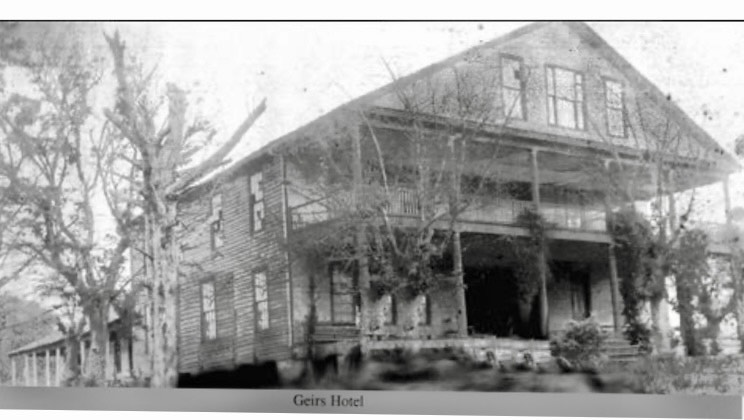
The Valhermoso Springs Resort was a gathering place for those seeking treatment from the famous Sulphur and mineral springs. The three springs were even used by the Indians for the same reason— adding yet another vale of mystery to the area. Despite being a place that attracted visitors from all around the world, including European and French royalty, there are only three low quality images of the place. Walking through the dense brush and stepping over toppled stones can give one the impression that this spot is determined to keep its secrets.
In the upper room there was a dancing hall with slat boards covered in tile. During the civil war, confederate soldiers were hidden by Mrs. Geirs who was a hot-blooded rebel sympathizer.
One of many legends surrounding this resort is that of the visit of famous outlaw Jesse James. It’s rumored that a man matching the description of Jesse rode in one night from Huntsville after robbing a bank. He wore two leather bags slung over his shoulder as he dismounted his horse. At some point, it’s unclear how he was discovered, but the law came knocking on the resort’s front door. Jesse’s stealth and cunning kept him alive during the bloody guerrilla skirmishes of the civil war, and they would help him escape the clutches of justice time and again. Legend says he left the hotel in a hurry— without his two leather bags. Did Jesse James stash his stolen goods in a cave or bury it? There’s not even hard evidence that the outlaw made a stop at the tavern, or even robbed a bank in Huntsville.
In Numbers 13 there are twelve spies who go into the land of Canaan for forty days. Their goal was to make observations that would help them conquer it as well as bring back reports about the kind of land it was. Upon their return only Joshua and Caleb are willing to take on the giant challenges that they’ll need to overcome in order to claim Canaan. Sadly, the message that the people chose to believe was that the giants were even bigger than God. What evidence did they have? Not a shred. God had proven His might and power throughout their time in the wilderness. He’s the one who directed the children toward Canaan in the first place! The fear in the crowd and the report of ten cowardly spies was contagious.
If we’re not careful, we might end up believing what’s not based in fact, too. We might be tempted to believe that Christians are a weak minority who can’t do a thing to change the culture. We might be tempted to believe that nobody is interested in spiritual things anymore. We might begin to believe that the world is bigger and stronger than the God who spoke the world into existence. Of course, this is simply not true.
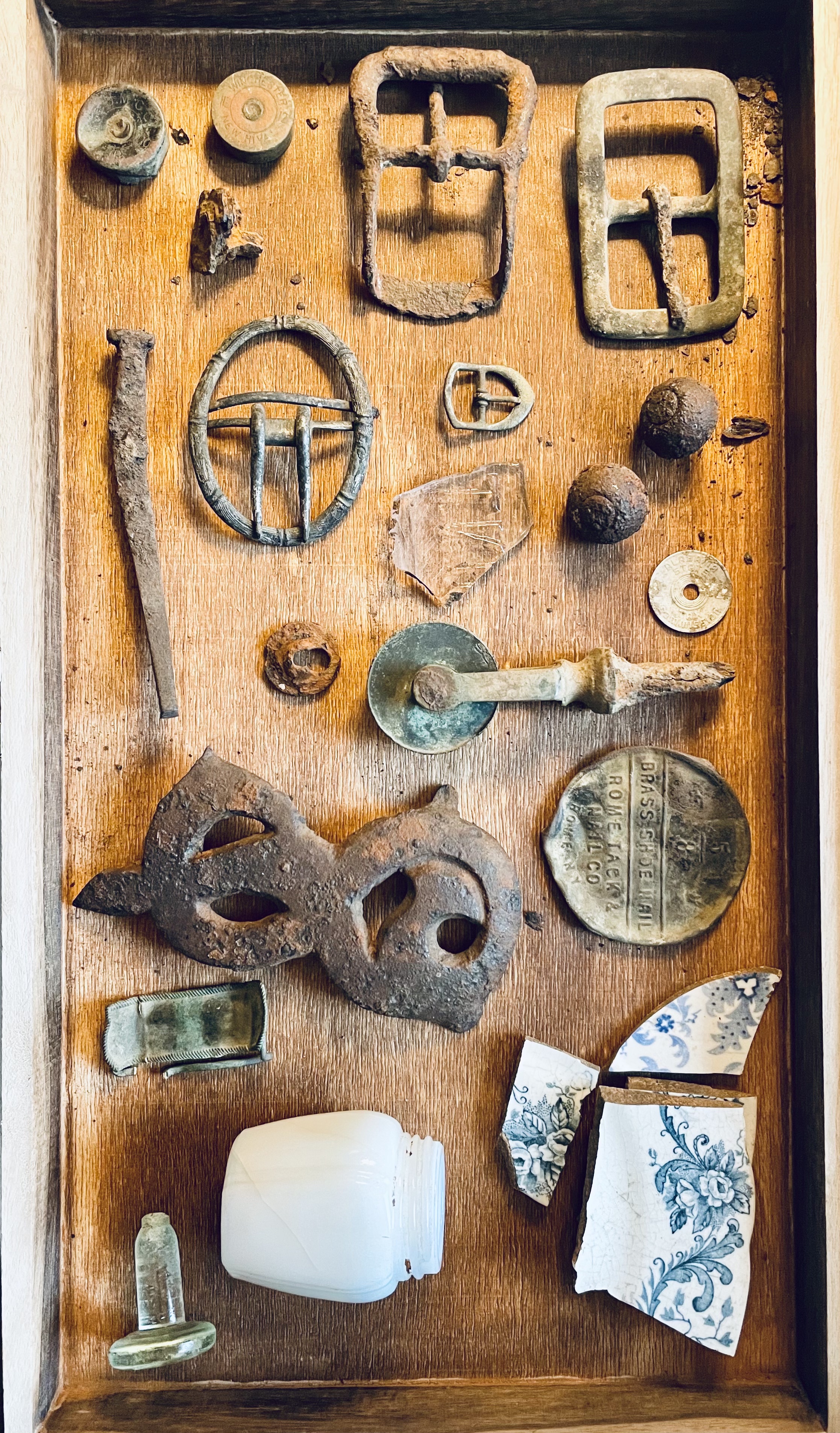
Relics found by Dale and Carl on the site of Valhermoso Springs Resort







/Centurion-GettyImages-167132808-56cc6c345f9b5879cc58f8e7.jpg)



 The Preacher Pollard Blog