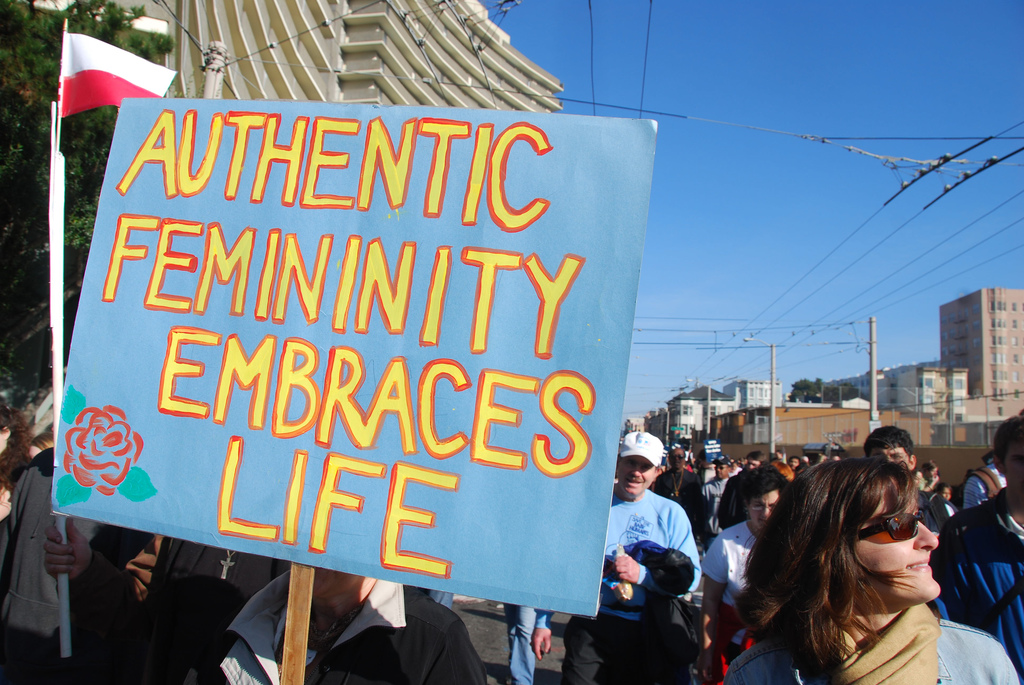
The Case For Life

Carl Pollard

Every society is ultimately judged by how it treats its most vulnerable. History bears this out. Civilizations are not remembered for their technology or wealth alone, but for whether they defended human dignity or sacrificed it for convenience. Few issues reveal this moral fault line more clearly than abortion.

At its core, abortion isnt a political or medical issue. It is a moral question, a scientific reality, and a spiritual matter that forces us to ask a simple but uncomfortable question: What is the value of human life?

Scripture is crystal clear about the source and worth of human life. Life is not accidental, disposable, or owned by society. It is given by God and bears His image.

Genesis 1:27, “So God created man in his own image.” This is not a status earned by size, ability, or independence. It is a condition of being human. From conception forward, human life carries divine worth.

Psalm 139:13–16 describes God’s involvement in the womb: “For you formed my inward parts; you knitted me together in my mother’s womb.” The psalmist does not speak of a future person, but of a present one known by God before birth.

Jeremiah 1:5 reinforces this truth: “Before I formed you in the womb I knew you, and before you were born I consecrated you.” God’s relationship with human beings begins prior to birth, not after.

Throughout Scripture, God consistently condemns the shedding of innocent blood (Proverbs 6:16–17). No category of people is more innocent or defenseless than the unborn.

Science doesn’t argue against life in the womb. In fact, modern embryology overwhelmingly affirms it.

At conception, a distinct, living human organism comes into existence. This new being has its own DNA, separate from the mother and father, determining sex, eye color, and genetic identity.

By three weeks, the heart is beating. By six weeks, measurable brain activity is present. By eight weeks, all major organs have begun to form. By ten weeks, the unborn child can respond to stimuli. These are not philosophical claims. They are biological facts taught in medical textbooks.

The question, then, isn’t when life begins. Science has answered that. The real question is whether we believe some lives are more worthy of protection than others.

Since the legalization of abortion in the United States, tens of millions of unborn children have lost their lives. Globally, abortion accounts for tens of millions of deaths every year, making it one of the leading causes of death worldwide.

Statistics also reveal another uncomfortable truth. Abortion does not solve social problems. It masks them. Poverty, lack of support, abusive relationships, and fear are not cured by ending a life. They are exploited to justify it.

Women are often told abortion is empowerment, yet many report long-term emotional and psychological distress afterward. Depression, guilt, and regret are not uncommon, even if rarely discussed publicly. Ending a life doesn’t heal anything. It compounds it.

If human rights mean anything, they must apply to all humans. If worth depends on size, location, dependency, or wantedness, then no one’s rights are secure. A newborn is smaller than a toddler. A disabled person may be dependent on others. An elderly person may be unwanted. Yet we recognize their right to live.

To argue that the unborn do not deserve protection because they cannot speak or survive independently is to adopt a standard that would justify horrific injustice elsewhere.

The womb should be the safest place on earth. Instead, it has become the most dangerous.

Human life has value not because of what it can do, but because of what it is. A child is not valuable because they are planned, healthy, or convenient. They are valuable because they are human.

This is the foundation of every just society. When life becomes conditional, morality becomes negotiable.

God’s design has always been clear. Life is sacred. Children are a blessing, not a burden. And justice demands protection for those who cannot protect themselves.

Abolishing abortion isn’t about controlling women. It is about refusing to dehumanize children. It is about building a culture that responds to crisis with compassion, not death, and support, not silence.

The answer to abortion is not apathy or anger, but truth and courage. Truth that life begins at conception. Courage to defend it even when it is inconvenient.

The measure of our humanity is not found in our slogans, but in our willingness to stand for life when it costs us something.

If life is truly sacred, then it must be protected. All of it. Especially the smallest among us.

Common Arguments Used To Defend Abortion: 

1. “My body, my choice.”

Pregnancy involves two bodies. The unborn child has a separate DNA, blood type, and biological identity. Bodily autonomy does not include the right to intentionally kill another innocent human being. Society already limits “choice” when it harms others.

2. “The fetus isn’t a person.”

Science confirms the unborn is a living human organism from conception. Personhood based on development, location, or ability is arbitrary and dangerous. If personhood is granted by others, human rights are no longer inherent.

3. “Life begins at birth.”

Birth changes location, not nature. A baby minutes before birth is biologically identical to a baby minutes after birth. No scientific event at birth creates humanity.

4. “What about rape and incest?”

Rape is a horrific crime, but abortion punishes an innocent child for the sin of another. Justice does not permit killing one innocent person to ease the suffering caused by another’s crime.

5. “The baby won’t survive or has severe disabilities.”

Human value does not depend on health, lifespan, or ability. To argue otherwise revives the logic used to justify eugenics and discrimination against the disabled. Compassion does not require killing.

6. “Women will die if abortion is illegal.”

Modern medicine can treat life-threatening complications without intentionally killing the child. Direct abortion is never medically necessary to save a mother’s life. Treating pathology is not the same as ending a life.

7. “Abortion is healthcare.”

Healthcare aims to heal, not intentionally kill a patient. Abortion ends the life of a distinct human being and therefore contradicts the fundamental definition of medical care.

8. “The child is just a clump of cells.”

Every human is a clump of cells. The question is not cellular composition but organism identity. From conception, the unborn is a complete, developing human organism.

9. “The child isn’t viable yet.”

Viability depends on technology, geography, and age. Human rights cannot depend on hospital access or medical advancement. Dependency does not negate humanity.

10. “Abortion reduces poverty and suffering.”

Killing the poor does not solve poverty. Ending life is not a moral solution to social failure. True justice addresses suffering without destroying the sufferer.

11. “Women will still get abortions anyway.”

The same argument could be used to legalize any crime. Laws exist to restrain evil, protect the innocent, and shape moral understanding. Justice does not yield to lawlessness.

12. “The Bible doesn’t explicitly mention abortion.”

The Bible condemns the shedding of innocent blood, affirms God’s work in the womb, and recognizes unborn children as known by God. Moral truths are often established by principle, not explicit wording.

13. “Abortion should be rare, but legal.”

If abortion is wrong, it should not be legal. If it is legal, society teaches it is morally acceptable. There is no moral category for “justified injustice.”

14. “Criminalizing abortion punishes women.”

Abolition seeks equal justice, not cruelty. Law recognizes moral agency while also addressing coercion and exploitation. Exempting one group from accountability denies the humanity of the victim.

15. “This is a religious belief, not law.”

Opposition to killing innocent humans is a moral principle shared across cultures and legal systems. Laws already reflect moral judgments about life, harm, and justice. Neutrality is a myth.

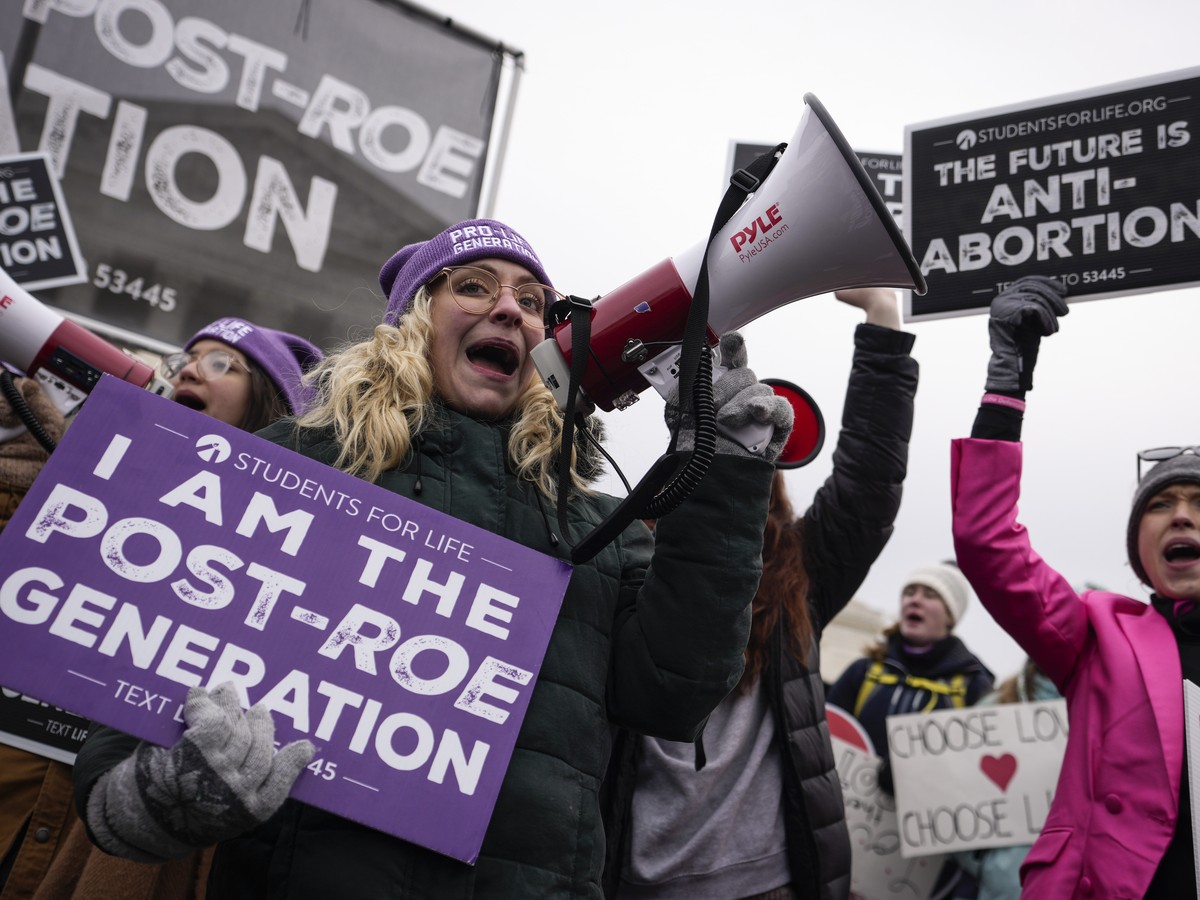
Stick Up For The Unborn

Dale Pollard

Jeremiah was a man who faced many challenges and hardships. He was someone who was intimate with failure and let down— but God’s reminder to him is the same for us today. He was designed with a purpose before he was born. 

“Before I formed you in the womb I knew you, and before you were born I consecrated you; I appointed you a prophet to the nations” (Jer. 1.5).

All humans are premeditated in their formation but are born first in the mind of God. That’s something worth thinking about. Our minds are incomprehensible in their complexity and our bodies came stock with a piece of eternity called the “soul.” 

The King of Kings had a hand in every  atom that makes up the body. 

According to ancestry.com

“Your DNA could stretch from the earth to the sun and back ~600 times.” 

Suzanne Bell is a chemist at West Virginia University and she estimates that a 150-pound human body contains about 6.5 octillion (that’s 6,500,000,000,000,000,000,000,000,000) atoms.

Jeremiah’s job was to speak on behalf of God to the people of his day. He was created for that purpose. Today our job is the same. A prophet is simply a mouthpiece for God and we were created to be a mouthpiece on behalf of the same God for the people of our day. The Bible tells us that He has a huge heart for the helpless. How is abortion even a thing? The most helpless are killed before they even see sunlight and God’s people shouldn’t get desensitized to that sort of evil. Speak up for the little guys (and girls).

You remember when the Bible actually recorded a reaction from the unborn baby’s perspective? 

“And when Elizabeth heard the greeting of Mary, the baby leaped in her womb. And Elizabeth was filled with the Holy Spirit” (Luke 1.41).

We’re all fearfully and wonderfully made, according to Psalm 139:13-14, and that includes the unborn.

The Tale Of Two Women

Friday’s Column: Brent’s Bent

Brent Pollard

“O Lord of hosts, if You will indeed look on the affliction of Your maidservant and remember me, and not forget Your maidservant, but will give Your maidservant a son, then I will give him to the Lord all the days of his life, and a razor shall never come on his head.” (1 Samuel 1.11 NASB1995) 

These are Hannah’s words uttered approximately 3,100 years ago. Barren, she cried to the Lord for a son. Hannah’s husband, Elkanah, loved her dearly. But Elkanah’s other wife, Peninnah, would oppress Hannah because she had born children for Elkanah while Hannah had not. Moreover, Peninnah was jealous of Hannah because she knew Elkanah loved Hannah more despite her barrenness.  

The priest, Eli, mistook Hannah for a drunkard and rebuked her. Hannah assured Eli she was not drunk but earnest in her pleas to the Lord. She said she was pouring out her soul before the Lord. Eli told her to depart in peace, that the Lord would grant her petition. And Hannah went her way, no longer sorrowful but filled with faith. 

In a short time, Hannah became pregnant and bore Samuel, so named because the boy resulted from the request she made of the Lord. True to her vow, Hannah took her son Samuel to the Tabernacle in Shiloh after weaning him. He would be given to Eli to live his life in service to God.  

Fast forward now to the twenty-first century. A worldly woman stumbles upon an article written by Politico. She laments when she hears about a leak from the Supreme Court regarding a possible decision about Mississippi’s abortion law banning abortion after fifteen weeks. The leaked document suggests that the Supreme Court upholds the abortion restriction and overturns the precedents of both Roe and Casey

“They are overturning Roe,” she screams. “How can they do that? Abortion is my right! Why do these politicians, these men, think they can tell me what I can do with my body? How can they intrude on my liberty?” The woman, whose name is unknown to us, calls her Representative and her Senator voicing her displeasure. “It is time to pack the Supreme Court! Limit the tenures of the Justices! The Supreme Court should not hold so much power.” She confers with her like-minded friends, some of whom are biological men who self-identify as women, and goes to the park to protest even though there has been no official pronouncement. Yet, the rumor of this decision has aroused her ire, and she will not rest until obtaining her justice.     

I cannot help but think of all of the world’s Hannahs when I turn on the news and watch recent events. Though I wish that this was abortion’s end, I know not to get my hopes up. The second woman marching in the streets has nothing she must worry about. If the leak is accurate, the Supreme Court is only giving the power regarding abortion back to the States and the people. Nothing more. It seems evident that those States expanding abortion to the third trimester, like New York, will not be limiting the procedure. And I can foresee a booming “abortion tourism” conveying those poor, subjugated women in “backward States” to bastions of “progressiveness,” where doctors will kill the unborn infants even a day before they would otherwise be born.  

Meanwhile, hundreds of Hannahs cry out to God for just one child. One child to love, nurture, and give back to God. There are hundreds of Hannahs filled with natural affection, but who will never have that opportunity to extend those deep-seated feelings because of disease or circumstance. I grieve because hundreds of Hannahs are barren, while the unnamed woman can slaughter a perfectly healthy child growing in her womb in the name of her so-called healthcare and feel no guilt.  

This Sunday is Mother’s Day, not “womb-possessing person’s day.” It is a day to celebrate the women who stepped up and made a lasting difference. I am thankful to God for having my own Hannah. She reared my siblings and me to love the Lord and serve Him during all the days of our lives. Moreover, she is our embodiment of King Lemuel’s mother (cf. Proverbs 31). We call her blessed! It may be that you feel the same for your mother too. If so, rejoice and celebrate her godly influence. 

According to UN statistics, we live in a world comprised of roughly 49.6 percent females. So, undoubtedly, you will encounter at least one woman today. I hope she is like Hannah and not the alternative. But even if she is not, love her with the kind of love modeled before you by your own Hannah. Pray that God will soften her heart and open her eyes so that she may see the truth about His wondrous creation, no matter how small (Psalm 139.13-16).  

Destroying What God Loves

Neal Pollard

God encouraged and comforted Jeremiah, a man He had delegated for a difficult task, with these intimate words: “Before I formed you in the womb I knew you, and before you were born I consecrated you; I have appointed you a prophet to the nations” (1:5). This knowledge is intimate knowledge, spoken of God’s intimate acquaintance with Moses (Dt. 34:10) and even Adam’s sexual knowing of Eve (Gen. 4:1). This consecration is “that which belongs to the sphere of the sacred” (TWOT, 786). This appointment is an intentional act of giving something or someone based on the value of the gift. God was sending Jeremiah to the people because of how highly He regarded this one who would become His prophet. Taken together, Jeremiah the fetus was cherished and beloved by God. He recognized Jeremiah as totally human in the womb as out of it.

How startling to read, then, that God “hates…hands that shed innocent blood” (Prov. 6:16,17).  This echoes what is said elsewhere in the Old Testament (Dt. 19:10; Prov. 28:17; Isa. 59:7). Certainly, the unborn are as innocent as can be. Judah’s punishment (70 years of Babylonian Captivity) was sealed because King Manasseh’s sanctioned and encouraged the killing of the nation’s children (2 Ki. 24:3-4; Jer. 15:4). The people paid the price for destroying God’s precious children, known, consecrated, and appointed by Him for work only He knows. 

It is not newsworthy for me to tell you how many abortions have been committed in our nation just since January, 1973. Those facts are frequently shared. However, it is helpful for us to ask what influence we have in trying to turn people’s hearts toward righteousness.

  • Focus more on soul-winning. Converting men and women to Christ will persuade more to sensitivity to God’s will on everything that matters, including this.
  • Thoughtfully examine the positions and voting records of every person seeking political office. Forget party affiliation. Investigate and use your constitutional rights. The lines in the sand on this issue are already horrific, yet they still keep moving.
  • Pray for national leaders to care for the precious unborn and courageous defend them.
  • Stand with and encourage groups who fight for the rights of unborn children.

Only God knows how full America’s wine vat is with the grapes of His wrath. Perhaps, like Judah and Manasseh, it is too late to save this nation. That is a matter for constant prayer. Let’s be infinitely more concerned with saving the precious life within the womb than we are the personal comforts, freedoms, and privileges we enjoy in this nation.

9447283530_c19c45f6de_b

How To Unite In A Culture Of Division

Neal Pollard

It’s no news flash to observe that our culture seems hopelessly divided along political lines. That seems to impact race, gender, and other lines, too. The most tragic consequence of this is that it has not left the church unaffected. Social media is often a barometer for how emotional and passionate brethren on both sides of this divide can become when discussing some specific aspect of this. We cannot hope that social media will provide the answer. Who your friends are and what their leanings are on political issues influence what shows up on your homepage as they share politically or socially charged blogs, videos, and the like. Pundits have, for a few years, theorized and analyzed the reality of a “political social media bubble.” Barton Swaim, in an August 1 article on The Weekly Standard online, said, “more than any other social media platforms, Facebook and Twitter are avenues for the kind of acrimony that has embittered our politics and poisoned reasonable dialog” (https://www.weeklystandard.com/barton-swaim/a-political-social-media-bubble). It’s not just conservative publications making that observation. Google the term “political social media bubble” and conservative, moderate, and liberal outlets can at least agree about its existence (a trip to The Guardian, New York Times, National Review, et al finds plenty of material if written from different points of view drawing different conclusions).  Too often, God’s people get drawn into this hurtful, messy arena and turn on each other like gladiators in the Roman Colosseum. The God of heaven must certainly weep.

This weekend, I visited the Lord’s church in Chesapeake, Virginia, a state that is often a political cauldron boiling hotter than many other places. I’m not sure how many congregations were represented, but we had to have had close to half white and half black people attending (with various Asian and Hispanic visitors there, too). Politics were mentioned a few times, but only in the sense that they have too often become a stumbling block and distraction in the Lord’s church and that they cannot solve our nation’s problems. But I was beholding the answer without it having to be pointed out. Those in attendance had a thirst for a “thus saith the Lord.” People of different colors lovingly, naturally worshipped, fellowshipped, visited, laughed with, and enjoyed each other throughout the weekend. It was genuine. It was deep. It was powerful. And it was neither contrived nor manipulated. Its glue and bond was the blood and body of God’s Son. Christ is the great uniter. As we unite on His terms and His way, we destroy barriers. That’s by design.

What Paul says to Jew and Gentile in Ephesians 2:14-18 can have application between black and white, Republican and Democrat, rich and poor, male and female, or however our country wants to erect barriers. Christ is our peace and can break down the barrier of any dividing wall. He helps us view each other as “fellow citizens” and “family” (2:19) who are “together” (2:21,22). When we get ahold of that, nothing can keep us apart!

43368956_10155859106275922_391409913101811712_n
At yesterday’s PM worship services at the Chesapeake church of Christ

Jane Roe/Norma McCorvey

Neal Pollard

She was used by pro-abortion and pro-life groups, but in fairness nobody outdid Norma McCorvey at trying to use others for personal advantage. Her effort to abort her third child, in Texas in 1970, was the case used to go to the Supreme Court. By the time the appeals process wound up in legalizing abortion at the federal level, her baby was almost three years old and in the home of adoptive parents. She was the product of neglect and horrible abuse, was promiscuous, bisexual—though mostly lesbian, and was known to try to make her way by hook or crook for most of her life. She tried to leverage her infamy into financial advantage or at least a living wage.

It’s wonderful to see that this tormented woman publicly changed her position regarding the right and sanctity of the unborn, but her home life and adult life symbolize the growing immorality stemming from a breakdown in the home. A father fairly well abandoned his role in the home. Alcohol and drugs complicated and clouded the decisions and thinking within the home. Sexual immorality created multiple problems. Sin was perpetuated from poor examples there (The Washington Post, Emily Langer, 2/18/17).

Pew Research found that 46% of “U.S. kids younger than 18 years of age are living in a home with two married heterosexual parents in their first marriage. This is a marked change from 1960, when 73% of children fit this description, and 1980, when 61% did” (Gretchen Livingston, 12/22/14). This is only part of the story. I know of several scripturally divorced and remarried couples, with blended families, who have raised righteous, believing children. But, the general breakdown of the home is at the heart of so many of society’s woes.

The foregoing is far from revelatory. Sermons, articles, and Bible classes have trumpeted it for years. What I see in our broken society is endless opportunity. It will require patience, time, and lots of love, but homes like the one McCorvey grew up in and the one she attempted herself are craving what only Christ can supply—fulfillment, joy, peace, and direction. That is where you and I come in. Let us remember what we’ve been told by God: “But you are a chosen race, a royal priesthood, a holy nation, a people for God’s own possession, so that you may proclaim the excellencies of Him who has called you out of darkness into His marvelous light” (1 Pet. 2:9). Let’s be shining!

2211858253_9a8fa45364_b

MERCY FOR THE MEADOW JUMPING MOUSE?

Neal Pollard

The meadow jumping mouse has made it to the status of “endangered” and is now protected by the Federal Endangered Species Act.  That means that cattle have more limited water and grazing access so that the mice’s habitat can be protected. Ranchers and cattlemen have taken the fight to U.S. District court in Albuquerque, New Mexico.  The habitat area covers portions of New Mexico, Arizona, and Colorado (The Denver Post, 9/10/14, A-2, “Colorado Roundup,” denverpost.com).  Meanwhile, a local politician is excoriated for his stand against abortion.  The web site “ontheissues.org” examines his record, where it is proven that he supported protecting life at all stages in 2010, voted to ban federal health coverage that included abortion, considers himself “pro-life,” prohibited federal funding for groups like Planned Parenthood, and the like. He is cast in commercials as an “anti-abortion radical” as well as one known for “his steadfast efforts to restrict women’s control over their lives” due to his “anti-abortion agenda.”

I sometimes wonder what would happen if time travel were possible and we could take such headlines back to our national forebears 100 years ago.  What would they think of federal mandates to protect rodents all while trumpeting protests in the loudest decibels possible against one in the place of government trying to take steps to afford protection for eternal beings made in the image of God.  Of course, if we could travel back further in time and cross the ocean until we reached the ancient middle east and showed these headlines to a prophet, apostle, or the Lord Himself, what would their reaction be?  Might they respond, “I was known by God from my mother’s womb, sanctified and ordained by Him for a specific job.” Or say of himself, “Your eyes saw my substance, being yet unformed.” Or describe pregnant women as being with “child” (rather than “fetus” or “tissue”)? Or speak of Jesus’ mother as having Him within her, a child, a person?

Everyone has a moral compass.  It is incredible to see how improperly calibrated many such compasses are.  In Resolute Bay, up in the Nunavut territory of Canada, a pilot attempting to land amid clouds crashed his plane, killing himself, his co-pilot, and ten passengers, in part due to a malfunctioning compass.  He could not believe it was true until ground sensors warned him of imminent contact with land.  His co-pilot seemed to have known better and pleaded with him to “go around,” to climb to safer altitude before retrying the landing.  The last words on record belonged to the pilot, who said, “Go-around thrust!” a split second before the crash (www.edmontonsun.com, Daniel Proussalidis, 3/25/14).  He hardly had time to think that he was misguided before his life ended.

Many will find out only too late their moral compass misguided their course in life!  Our work is to gently help them see the direction God tells them to go.  Only when their hearts, consciences, and affections are aligned with THE moral compass of the Bible will they be able to look at matters, big and small, and make rational, common sense decisions.  May God continue His forbearance with us as we try to repair the compass.

Innocent Blood And Bloodguiltiness

Neal Pollard

This week marked the the anniversary of one of America’s darkest days when abortion became legal in our nation.  Since pro-abortion websites tend not to deal in reporting specific numbers and pro-life websites certainly do, it is from the National Right to Life website we discover that over 56 million babies have been aborted since January 21, 1973.  That works out to an average of 3,000 every day in the past 41 years.  As one protestor’s sign read, “The abortion doctor has killed more Americans than all our wars combined.”  Yet, those 56 million people were naked and completely defenseless.  They were totally innocent.

The Psalmist decries the apostasy of the chosen people of old, saying, “But they mingled with the nations And learned their practices, and served their idols, which became a snare to them. They even sacrificed their sons and their daughters to the demons, and shed innocent blood, The blood of their sons and their daughters, whom they sacrificed to the idols of Canaan; And the land was polluted with the blood” (Psa. 106:35-38).  Proverbs 6:17 declares “shedding innocent blood” as something God hates, while Isaiah reveals that those separated from God include those who “hasten to shed innocent blood” (59:7).  In discussing one who was murdered without cause, Moses warned that those who shed innocent blood face bloodguiltiness (Deu. 19:10).

The last passage indicates a responsibility carried by the one who shed innocent blood, whether an adult having done nothing worthy of death—per that context—or anyone else who has done nothing worthy of having his or her life ended. Consistently, the Old Testament shows God’s attitude toward taking innocent lives.  As God certainly sees the unborn as living human beings (Jer. 1:5; Psa. 139:15-16; Luke 1:15; etc.), He sees the taking of those lives as the shedding of innocent blood!  The consequence of that is bloodguiltiness.

Whatever consequence our nation faces for this multi-generational practice, we need to reach out to our friends, neighbors, and co-workers.  With such a high number of abortions, many of them know, firsthand and in another sense, the bloodguiltiness.  Perhaps there are those who callously look back at the act, but most undoubtedly wrestle with guilt, regret, and loss.  What an opportunity to minister to so many who understand the weight and burden of sin!  May we share the good news of the innocent Man whose blood was shed to provide them the realistic expectation of forgiveness.