The Comfort Of Complacency

Carl Pollard

Church attendance in western culture has shifted toward a consumer model: people want inspiration, community, and moral reinforcement without reciprocal obligation. 

Surveys from Barna and Pew consistently show that active involvement (serving in ministries, financial giving beyond easy amounts, discipleship) hovers below 20% in most congregations. So around 1 in 5 people in the church are actively involved and growing. 

This pattern reflects a deliberate preference for low-pressure environments. People gravitate toward churches that minimize demands on time, energy, and resources, creating a feedback loop where leaders, fearing decline, reduce expectations to retain attendance. The result is a complacent church that prioritizes comfort over transformation.

Scripture offers us helpful insights. In Matthew 25:14–30, the parable of the talents illustrates stewardship as non-negotiable. The servant who buries his talent is not condemned for incompetence but for inaction rooted in fear and misunderstanding of the master’s character (v. 25). In the same way, modern complacency often stems from a distorted view of grace, treating it as permission to coast instead of power to grow. 

Paul counters this in Ephesians 2:8–10: salvation is “not by works,” yet Christian’s are “created in Christ Jesus for good works, which God prepared beforehand.” The text puts grace before works, but never severs them. Involvement is not additive to faith; it is its evidence!

James 2:14–17 provides more clarity: faith without action is “dead,” not deficient, but non-existent in functional terms. A body without movement is a corpse. Complacent churches foster spiritual necrosis: members gather, sing, and leave unchanged. The pressure to engage, whether through serving, giving, or accountability, is not manipulative; it is medicinal. 

Hebrews 10:24 uses the verb paroxysmon (“spur” or “provoke”), a term elsewhere negative (Acts 15:39), here used to describe mutual exhortation. Healthy tension is intrinsic to growth.

Psychologically, avoidance of pressure is (what people smarter than me call) “loss-aversion bias.” This is where the perceived cost of involvement outweighs anticipated benefits.

Theologically, it reveals a failure to grasp the church’s identity. The church is not a service provider but a body (1 Corinthians 12:12–27), where each member’s function is non-optional. Passive behavior disrupts organic unity and destroys our ability to live out the mission Jesus left us (Matt. 28:18-20). 

This article isn’t about putting down the church, but a call to disciplined obedience. Leaders must model and teach expectation without compulsion; members must embrace responsibility without resentment. The goal is not busyness but faithfulness. Complacency, however lovingly cloaked, dishonors the cost of redemption and delays the kingdom’s advance. Grace equips; it does not excuse. 

The question isn’t whether pressure belongs in church, but whether the church belongs to Christ.

Alone!

Neal Pollard

Kathy and I very recently discovered an interesting show produced by the History Channel, and the title of the series is “Alone.” It is a “reality show” (not usually a fan of those), but it involves survival experts dropped, alone, in the middle of nowhere. They get to take ten items of their choice to help them battle predators, the elements, and, most of all, isolation. Food, water, shelter, and fire top their priorities, but even having these cannot prevent the maddening monotony of being deprived of human companionship.

I love the way Solomon says it in the book of Ecclesiastes. “Two people are better off than one, for they can help each other succeed. If one person falls, the other can reach out and help. But someone who falls alone is in real trouble. Likewise, two people lying close together can keep each other warm. But how can one be warm alone? A person standing alone can be attacked and defeated, but two can stand back-to-back and conquer. Three are even better, for a triple-braided cord is not easily broken” (4:9-12, NLT, emph. mine). At the very beginning, God made it clear that it isn’t good for man to be alone (Gen. 2:18). Alone one is in trouble, in the cold, and in danger. It is not good for us.

The survivalists on the show figure that out. So does the person, even with people all around them, who keep themselves in isolation. Think of all the ways God combats our loneliness.

  • He gives us marriage (Gen. 2:18; 1 Cor. 11:9).
  • He gives us children (Psa. 127:3-5).
  • He gives us the church (Eph. 2:19).
  • He gives us the assemblies (Heb. 10:24-25).
  • He gives us fellowship (Acts 2:42).
  • He gives us hospitality (Rom. 12:10,13).
  • He gives us counselors and mentors (Prov. 15:22; 24:6; Ti. 2:3-4).
  • He gives us the aged (Lev. 19:32; 1 Tim. 5:1).
  • He gives us shepherds (Acts 20:28).

Life is difficult for the person determined to go it alone! We are left with our thoughts, which may or may not be accurate reflections of reality or at least the whole picture (Prov. 18:17). We are deprived of the very resources God has given to help us successfully overcome life’s challenges. It is an easy habit to get into to withdraw from the company of others, but it is not healthy! We need others, and, just as much, they need us!

The guys on the reality show voluntarily go it alone for money and notoriety, but, even with that incentive, the loneliness gets unbearable. For us, the prize and reward does not require us to cloister ourselves. It requires the opposite! May we never choose to be alone, when we have so many tools supplied by God to survive the challenges of this life.

“Save Your Soul, Don’t Sell It, for That Mean Green” 

Friday’s Column: Brent’s Bent

Brent Pollard

The Bible contains numerous references to money, including earning and spending, saving and giving. The Book of Proverbs, in particular, deals with financial issues like wealth and poverty. And even though money can help, it can’t solve every problem. What you need is wisdom. So let’s begin our study by examining some of the benefits of wealth described by King Solomon. 

I will begin with the one most attractive to all of us. Riches do provide one with a measure of security. Today, as inflation is so high, most of us have to do some real belt-tightening. But inflation doesn’t impact the rich nearly as much. Consider what Solomon says about the security provided by wealth: “The rich man’s wealth is his fortress, The ruin of the poor is their poverty.” (Proverbs 10.15 NASB1995).  

Another advantage of wealth is that it is easy to make “friends.” Though it creates a situation in which the wealthy have a more difficult time determining who they can trust, they have no shortage of people eager to orbit their sphere of influence. Solomon says: “Many will seek the favor of a generous man, And every man is a friend to him who gives gifts. All the brothers of a poor man hate him; How much more do his friends abandon him! He pursues them with words, but they are gone.” (Proverbs 19.6-7 NASB). 

We’ll note the last advantage of wealth is that the wealthy also wield power. “The rich rules over the poor, And the borrower becomes the lender’s slave.” (Proverbs 22.7 NASB1995) 

But money isn’t everything. Money doesn’t spare one from death, the great equalizer of all. Aside from that, the stock market may crash, or a catastrophic event may deplete a bank account, and then what? 

Wealth, as Paul clarifies in the New Testament, is not sinful. On the contrary, it is the love of money (1 Timothy 6.10). As a result, there is nothing wrong with attaining wealth. However, wisdom necessitates adherence to these guidelines: 

  • One must earn wealth honestly through labor (Proverbs 13.11). 
  • Avoid being a “trust-fund baby” [It didn’t help the Prodigal—Luke 15.11ff] (Proverbs 20.21). 
  • One should acquire wealth gradually rather than quickly. [My apologies to the lucky lottery winners.] (Proverbs 28.20,22). 
  • Do not amass wealth through deception or predatory lending (Proverbs 20.17; 21.5-6; 28.8). 
  • Remember that wealth is a tool you use, not something using you (Proverbs 23.4-5). 

On the flip side, Solomon offers advice on how to deal with financial hardship. Poverty isn’t always self-inflicted, but it can be! Self-inflicted poverty is something we should avoid at all costs. So, consider what lessons we can learn from Proverbs about spending our money. 

  • Some are economically disadvantaged due to their sloth. We can deny it because it sounds mean, but that doesn’t change the fact that it’s true (Proverbs 20.30-34). 
  • Men also waste money in the pursuit of pleasure (Proverbs 21.17). [This pursuit can include gluttony and drunkenness—Proverbs 23.21.] 
  • One can waste resources on things of no value (Proverbs 12.11). 

The Book of Proverbs contains valuable advice on managing money and avoiding financial struggles. May the Lord grant us the wisdom and grace to use our resources wisely. 

WHAT YOU DO WITH WHAT YOU HAVE

Neal Pollard

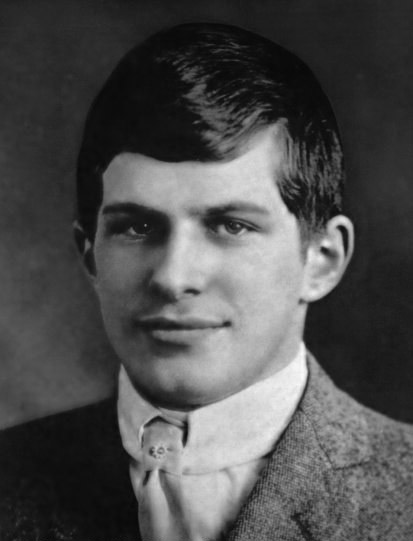
In discussions about the smartest person who ever lived, William James Sidis’ name will come up as being in the mix. Though measuring IQs with a specific number is not an exact science, he is reputed to have had an IQ of 200 or more. He was reading the New York Times at 18 months old. He taught himself eight languages and made up another one. He enrolled at Harvard University at the record young age of 11. He was a professor at what’s now Rice University by the age of 17. He was a renowned mathematician. But, adjusting to mainstream society proved an ongoing problem for Sidis, whose extreme, socialistic politics and eccentric behaviors dogged him for the rest of his life. He died of a brain aneurysm in 1944 at the age of 46. With such a brilliant mind, his contributions to the world were relatively small. In fact, most of us have never heard of Bill Sidis (much information from Amy Wallace’s sometimes disputed biography, The Prodigy, Dutton: New York, 1986).

We all know people who rose from poverty, dysfunction, and perceived disadvantage who have risen to great heights in their profession and their personal lives. Those abused as children, those who grew up in homes afflicted with drug use or alcoholism, and those whose parents went through failed relationship after failed relationship, have grown up to break such patterns by becoming loving, effective parents and spouses. Some who were given little have done much with it.

Jesus teaches the parable of the talents in Matthew 25, which demonstrates the good and bad stewardship of three particular individuals. Two faithfully used what they were given, but another was unfaithful. The Lord shows us God’s dim view toward one who fails to use what he or she has been given.

Most of us are somewhere on the continuum between the one talent man and the world’s smartest man. Scripture shows us that we must be faithful stewards (1 Cor. 4:2) and that we will give an account for our stewardship (Mat. 25:14-30), whether money, abilities, opportunities, time, or whatever our relative resources. May we be encouraged to do as much as we can with what we have been given. How great to be acknowledged by Christ before all nations as one who did the most with what we had!

william_james_sidis_1914