Origen’s “On First Principles” (Book 1, Number 6)

How do you explain the mind and intelligence of God. Origen masterfully illustrates such from nature itself in a powerful explanation….

Gary Pollard

[Editor’s Note: Gary is translating the Ante-Nicene Fathers works, beginning with Origin’s work. It is meant to update the British English of Roberts and Donaldson. What follows is part of that translation]

Note: I am now using an LLM to modernize the language of the text. This allows me to focus solely on editing and restoring as much of the original narrative as possible. The LLM’s accuracy so far has been astounding — I was on the fence about AI before, but at least for these kinds of projects they are extremely useful. I will still edit the material and compare the modernized text to primary sources. Using this tool, however, frees up a huge amount of time and mental energy. Modernization alone accounts for the bulk of my work, which leaves a lot less time and energy for restoring an original narrative. Now I can un-Rufinus Peri archon in less time and with less potential for human error. 

It might help to use another example to explain this idea more clearly. Our eyes can’t always look directly at the sun itself because its light is too intense. But when we see its rays shining through a window or a small opening, we can understand how powerful and vast the sun’s light really is.

In the same way, the things we see in the world—nature, the universe, and everything around us—are like rays of God’s presence. They give us a glimpse of his greatness, even though we can’t fully comprehend his true nature. Just as our eyes can’t directly see the sun, our minds can’t fully grasp God as he truly is. However, we can understand something about him by looking at the beauty and order of his creation.

God is not a physical being; He doesn’t exist within a body or have any physical form. He is pure intellect1, without any parts or divisions. He doesn’t have a “greater” or “lesser” side—he is completely unified2, the ultimate source of all intelligence. Unlike physical things, which need space and shape to exist, the mind doesn’t require size, color, or form to function.

Because of this, God’s nature is not limited or slowed down by anything. If he were made of multiple parts, that would mean something existed before him, which contradicts the idea of him being the absolute beginning of everything. His mind isn’t like a human mind, which depends on the body.

We can see proof of this by looking at our own thoughts. Our minds don’t need to move from place to place in order to think. For example, if someone is at sea, tossed by waves, they might have trouble thinking clearly—not because their mind needs land to function, but because their body is unsettled. The same thing happens when someone is sick; their mind struggles not because of where they are, but because their body is weakened. Since we are made of both body and intellect3, our mental abilities are affected by our physical state.

However, God, as the source of everything, is not made of different parts like we are. If he were, that would mean something else came before Him to create those parts, which isn’t possible. Unlike our physical bodies, which grow in size, the mind grows through learning and experience. A person doesn’t become wiser just because their body gets older; instead, their intellect develops through study and practice. But this growth doesn’t happen immediately. A child’s mind can’t handle complex thoughts right away because their body—specifically, their brain—is still developing. Over time, as they learn and strengthen their abilities, they can take on more complex ideas.

 1 Translator’s footnote: simplex intellectualis natura
 2 Originally μονας and ένας
 3 Originally “soul”, but context suggests “intellect” or “consciousness” is more appropriate. 

The Original Shadow-Caster

Dale Pollard

Plato’s “Allegory of the Cave” is a metaphor that uses the image of prisoners in a dark cavern to illustrate the relationship between reality and our interpretation of it. The allegory is a dialogue between Socrates and Glaucon, and it’s arguably a key passage in his work, The Republic. It’s been used as a metaphor by philosophers for thousands of years in order to explain a truth that’s been known in the subconscious human mind since the inception of man.

Cultures with different backgrounds perceive reality and their own histories in a variety of ways but they seem to only have fragments of the truth. Hundreds of ancient mythologies have been preserved on mediums like clay, stone, papyrus, and oral tradition and they perfectly illustrate the shadows on the wall in Plato’s allegory. 

The question is, what’s casting the shadow that many myths exemplify? A thoughtful study will produce an undeniable reality which the hardened skeptic shouldn’t ignore. The truth is that the Bible is the original shadow-caster. 

By piecing together the myths and the legends of floods, serpents, and heavenly battles one further elucidates a singular, supernatural, and immortal narrative. God’s Word is the only book written through His direct influence— what other work commands that level of Authority? 

“Knowing this first of all, that no prophecy of Scripture comes from someone’s own interpretation. For no prophecy was ever produced by the will of man, but men spoke from God as they were carried along by the Holy Spirit.”

   2 Peter 1.20-21 

What Standard Are We Following?

Gary Pollard

My truck overheated today. A couple of hours and $100 later, it was back on the road. Whoever worked on it last had put the thermostat in backwards, and had failed to bleed the system after a coolant flush. 

Dad pointed out at lunch that we use objective standards for everything. How I feel about the orientation of a thermostat — or whether I believe its orientations makes a difference — is irrelevant. The engine will overheat if it’s not correctly installed, because that’s how it works. 

We have standards in almost every field we rely on. We don’t want bankers changing their standards on us while handling our assets. We don’t want automotive or aircraft manufacturers going solely by what feels right to them. We don’t want surgeons to just wing it while we’re under the knife. 

Standards keep chaos at bay, and allow for reliable, consistent, effective results. On what basis would we throw standards away in the field of morality? If everything else in life requires some kind of standard to make it functional (ie. not chaotic), why wouldn’t the same apply to ethics and morality? 

There is mostly order, not mostly chaos. Good standards bring order, no standards have only ever produced chaos. When postmodern or any other progressive ideals attack your faith, find out what their standards are. There most likely are none, or they are arbitrary and reliably chaotic.  

How we feel about most things could not matter less. Our feelings do not magically bend reality! Always ask, “By what standard do we believe this to be true/false?” If that standard is subjective, it’s probably safe to throw it away. 

What Is Truth?

Gary Pollard

Introductory Explanation:

[This is an excerpt from some research I’m doing on first principles. A dangerous, neatly-organized method of destroying faith has developed in recent years, and I’m trying to wrap my tiny brain around it. The conclusion I’ve come to is that addressing each and every issue would take years, but that each one could be satisfied with a return to first principles. This section addresses the notion that truth is fluid and subject to the influence of time, language, and culture, and that no reliable, universal constants exist.] 

In Platonic thought, there is a concept known as Forms. These are things that exist outside of our physical perception but are universally accepted as Real. For example, no one has ever seen a “perfect” circle or a perfectly straight line. But we all recognize a circle or a straight line when we see one. 

There are universal constants. These are easily observed in the growth spirals of a Nautilus shell, which expresses mathematical constants like Fibonacci Numbers or Φ. We use these (and countless other reliable constants) every day to properly orient ourselves in our environment. Everything must have some kind of reference point to give it definition and meaning. Every zero has a one as its counterpart. Night has day. Life has death. Love has hate. Violence has peace. Happiness has grief. Sickness has health. 

If meaning were not fixed in language and narrative, how could civilization flourish? How would we, on an individual level, communicate with each other? How would such a thing as definable culture — which is in part the natural outgrowth of a collection of common narratives expressed as stories — even exist? What would be the purpose of linguistics? How is it that we are able to communicate with people who speak another language if the words of their language do not correspond in an adequately analogous fashion to the words of our own language? It would not be possible if meaning could not be fixed in language. 

So, some kind of objective, universal standard must exist, because order exists. This order keeps chaos at bay, as much as we are able to in this world. Chaos — like warfare, crime, civil unrest, disease — certainly exists, but we use objective standards to bring order from this chaos. These standards place boundaries around chaos, defines the undefined, and creates a narrative of propriety that allows billions of people with differing immediate contexts to somewhat peacefully coexist on the same planet. There is war and there always has been — but we are still here. Every functional civilization has laws that keep chaos at bay, which are nearly universally followed, and the breach of which introduces a chaos that is usually self-corrected by its culture or legal system. 

This is the primary first principle issue which we should adopt — there are universal constants that remain unchanged by time, language, or culture. The question every human must answer for themselves is, “Which system is most effective at keeping chaos in check?”

Building With Your Brain

What Your Brain Can Do

Dale Pollard

TBI – 75% of those with traumatic brain injury reported feeling like a different person

The mind of man (and woman) is the most complicated organ that God ever created.

  1. The brain can transform you (Rom. 12.2) 
  2. The brain can be set like a clock (Col. 3.2) 
  3. The brain can think in similar ways to God (Phil. 2.5)
  4. The brain can be fortified (Prov. 4.23)
  5. The brain can be controlled (2 Cor. 10.5) 

How Powerful Is The Brain?q

100 billion nerve cells and many more contact points between them provide our brain with capabilities that no supercomputer can match to this day. One of its most important characteristics is its ability to learn. Equally impressive, is the brains ability to create and dictate the direction of our lives through imagination. 

Let’s take a look at the rest of the natural world and find out what creatures come in second to our human intellect. 

Several life forms have brains that share some similarities with the human brain— 

  1. chimpanzees, 
  2. bonobos, 
  3. dolphins, 
  4. and elephants 

all have brains that show similarities in terms of complexity, structure, and certain cognitive abilities. Compared to the human mind, these animals don’t even come close.

You give what you focus on

When God said that we are created in His image, He meant (in context) that He’s endowed us with the unique ability to create. The man was to create a life for himself through conquest and dominion (Gen. 1.26-28). The woman was to create life itself (Jn. 16.21). Clearly God blessed humans in a special way not given to other animals. 

Create A Better Life Through Imagination 

Here’s what one doctor had to say about the our power to create a life through visualization. 

“Visualizing yourself to become the person that you want to be, is a powerful tool to stay focused. When you focus on something, you actually give your mind a command (whether you are aware of it or not). So your mind is looking forways to extract that command that you gave it. Why? Because your brain doesn’t know the difference, it will drive you to focus on creating it to happen. So understand that every time you tell yourself that things will go wrong, it’s actually going to happen. Your mind will look for the things that you tend to look for. If you think negatively, your mind will look for negative.”

NOTE: 

It’s important to understand that the same effect that your mind has on a negative thought, will be as powerful as on a positive thought. 

Try Thinking About This Instead 

“Finally, brothers and sisters, whatever is true, whatever is noble, whatever is right, whatever is pure, whatever is lovely, whatever is admirable—if anything is excellent or praiseworthy—think about such things.”

Phil. 4.8 

Following The Will Of God

Thursday’s Column: Captain’s Blog

Carl Pollard

Romans 12:1-2, “I appeal to you therefore, brothers, by the mercies of God, to present your bodies as a living sacrifice, holy and acceptable to God, which is your spiritual worship. Do not be conformed to this world, but be transformed by the renewal of your mind, that by testing you may discern what is the will of God, what is good and acceptable and perfect.”

As we enter chapter 12 the point is, “what are the practical implications of 1-11?” It is the start of a five chapter section on how we can put what Paul has said into action. In the first section of the book we learn that we all have sinned, but through faith we have received justification. This gift of justification should motivate us to faithful service. 

Paul begins 12:1 by saying “I urge,” which is the powerful petition verb (parakaleo). It is always used by Paul to indicate a significant point. 

Here it represents a transition from the doctrinal discussion to the practical. It also represents a key thought, that we must present ourselves to God as a “living sacrifice.” This is in contrast to the dead sacrifices of the Old Testament (slaying of innocent animals that wasn’t enough). 

We must give to God while we are young, alive, and capable of service.

We must present ourselves to God as a living sacrifice that is Holy and acceptable. Holy means we are free from moral filth. Holy means that we are devoted to serving God. Holy means that we are an instrument of righteousness. 

Then we come to verse 2 where Paul says, “Do not be conformed.” As Christians that are wanting to build our character we cannot let the world be our standard when it comes to: 

  • Our morals (the way we act) 
  • Philosophy (the way we think)
  • In context the way we dress and the way we worship. 

Rather than being conformed to the world, we must “renew our minds.” 

  • In intellect (change the way we reason, and think about things) 
  • In emotion (Renew our state of mind, the way we respond to different circumstances)
  • In will power (have the strength to restrain our human impulses) 

Have we found ourselves living without righteous thinking? We must renew our minds. When our gym membership runs out, we renew it. When our car insurance policy period is over, we renew it. When our thinking isn’t in line with God’s, we renew our minds. 

Why do we sacrifice, and renew our minds? To prove/discern: 

  • What the good will of God is
  • What the acceptable will of God is 
  • What the perfect will of God is

And by discerning these things, we can be known as Christians who think righteously.

via Bible Study Tools

Test His Truth

Tuesday Column: Dale Mail

image-e1601983688162

Dale Pollard

(now the pulpit minister of the Tompkinsville church of Christ, Tompkinsville, KY)

   With countless opinions and information out there, God is just another “option” and the Bible is just “good advice to follow.” Dave Mustaine summed up how many people feel when he said, “The Bible and several other self help or enlightenment books cite the Seven Deadly Sins. They are: pride, greed, lust, envy, wrath, sloth, and gluttony. That pretty much covers everything that we do, that is sinful… or fun for that matter.”

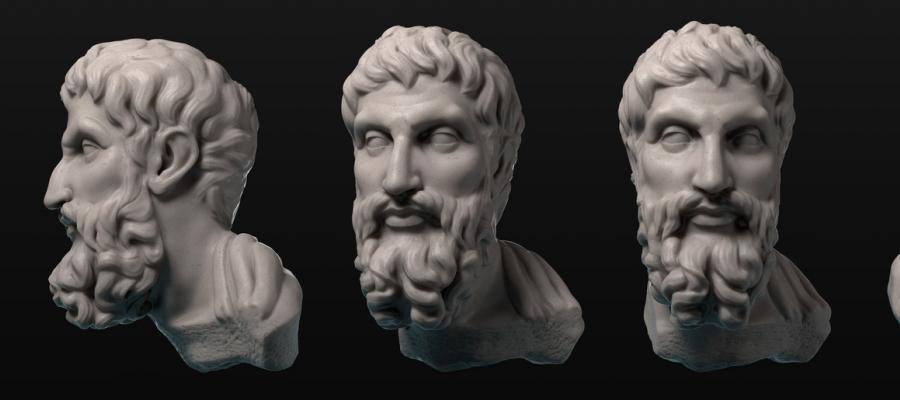
Is the Bible just an ancient “self-help” book that tells us not to do anything fun? Questioning God is not something new. Even Epicurus said, “Is God willing to prevent evil, but not able? Then He is not omnipotent. Is He able, but not willing? Then He is malevolent. Is He both able and willing? Then whence cometh evil? Is He neither able nor willing? Then why call Him God?” I truly believe that you can understand who God is just based on scripture. When He gave that book to man, He gave us a piece of Himself.

God wants a relationship with us (I Peter 5:6-7). This is why He has purposefully informed us about Himself. People need God whether they know it or not. I’d encourage you, as an individual,  to put the Bible on trial. Put the accuracy of its pages to the test. It has withstood hundreds of years of accusations and doubt. Often we are able to grow in our faith and belief as a result of seeking and searching. As His church, we have a responsibility to proclaim the excellence of our creator. We do it by our love for others, exposing the evidence of His existence, and introducing Jesus every opportunity we have. 


Why I Am Not a Buddhist

Friday’s Column: Supplemental Strength

B

Brent Pollard

There is one teaching of Buddhism that I have looked upon favorably, that our problems stem from earthly attachment and desire. I cannot argue with principles I also find recorded in the pages of the Bible, after all. Yet, despite the growing popularity of Buddhism in the West, I find Buddhism wholly deficient in addressing the spiritual needs I have. In a nutshell, Buddhism lacks two essential things I believe are needed to save.  

First, it does not embrace the only name given among men, whereby we must be saved (Acts 4.12). I recognize this is not an insurmountable obstacle for a nonbeliever. The nonbeliever secularizes the Christ and strips Him of His Divinity. Or he or she might declare Jesus of Nazareth to be a mere fabrication of men. Interestingly enough, though, since I am considering Buddhism, there are those co-opting Jesus as One influenced by the teachings of the Buddha. The theory is that Jesus was in India, learning Buddhism somewhere between the ages of 12 and 30. (That would be a fantastic departure for One Who proved His knowledge of Scripture on par with rabbis many years His senior at the age of 12, wouldn’t it? –Luke 2.46-47. This supposed abandonment of Moses’ Law also ignores His stated purpose of being the living embodiment of the same –Matthew 5.17.) 

Second, it foolishly looks within oneself to find salvation. Buddha claimed to be an ordinary man. Thus, Buddha implied anyone could achieve “enlightenment” as he had done. Buddha said that you find salvation looking within yourself. Perhaps it sounds like an oversimplification of a system of faith, but that is a distinct difference. Within Buddhism, one does not need even the existence of gods, let alone the True and Living God, since he or she attains enlightenment all alone. Meanwhile, the great monotheistic religions acknowledge that man is incapable of saving himself. Those traditions maintain that despite being created innocent and pure, we utilized our free moral agency to serve the lust of the flesh, lust of the eyes, and pride of life (1 John 2.15-17). 

Which of these ideas are more consistent with observation? Outside of the innocence of youth, do people tend to be motivated by selfishness or altruism? There has been a long-standing debate as to whether humans are born inherently good or bad. Few are those attributing good as the default position of the mature heart. Indeed, a child left to his or her own devices, without proper guidance, will become subject to the corrupting influence of those three avenues to sin previously identified above. Thus, Judaism, Islam, and Christianity all encourage parents to guide children properly regarding morality, to mold them into the servants of principle.  

In contrast, the Holy Bible teaches that there are ways seeming right to us, leading to our destruction (Proverbs 16.25). Jeremiah, the prophet, confesses to God that man cannot even order his steps (Jeremiah 10.23). These two truths ensure as Jesus taught that the vast majority of people are traveling the broad, highway to hell (Matthew 7.13-14).  

To allow for such blind groping in the dark, Buddhism has to allow for a continuous system of rebirth. In other words, few, if any, are they who manage to attain enlightenment on their first try through life. He or she will more likely fail only to be reborn and try again and again. And that is the greatest tragedy of the belief that you can look within yourself to find salvation. You get stuck on this Ferris wheel of rebirth. Paul tells the Athenians that even those who are groping can easily discover God since He is not far from us (Acts 17.22-30).  

Though I do not wish to be unfair to those embracing the Buddhist belief system, I have to wonder if the attraction of the Western mind to Buddha’s religion has more to do with the mindset implanted by the liberty afforded to citizens of Western democracies.  In other words, do Westerners instead prefer the idea of independence from God, telling him or her what to do to be righteous?  I am inclined to believe the latter.  

I can speak to my own heart. I know its evil. So, I find myself caught up in that same war with my members, as experienced by the apostle Paul (Romans 7.14ff). Like Paul, I ask who can save me from this body of death (Romans 7.24). And like Paul, I find my Savior to be Jesus Christ (Romans 7.25;8.1-2). For that reason, when presented with the choice, I believe in the Son of Man rather than Siddhartha Gautama. My righteousness is like filthy rags (Isaiah 64.6). A wretch like me can only be saved by grace through faith (Ephesians 2.8-10). 

What Does “Mean” Mean?

Neal Pollard

Does that question seem strange to you? Mean is a verb defined as “intend to convey, indicate, or refer to” (Apple Dictionary, Version 2.2.2). Postmodernism claims that there is no purely objective knowledge, truth, or norms. Therefore, meaning is what you make it mean. Several years ago, James Sire gave the framework for what we see in ever-increasing, ever-encroaching ways in our society when he wrote that the postmodernist believes “human beings make themselves who they are by the languages they construct about themselves” (181). He continues, “In postmodernism the self is indeed a slippery concept” (182). How does this play out? Science is what scientists say it is. History is what historians say it is. But, morality, law, and so many other pillars of society are influenced by this approach to truth and reality. Abortion, euthanasia, sexual ethics, gender issues, and the like are subject to what institutions and individuals determine about them. Even religion, down to New Testament Christianity, has felt the pervasive tentacles of this worldview. Where does this philosophical mindset end? What’s out of bounds, if truth is whatever you and I each say it is for ourselves? Ultimately, there can be no values, standards, or absolutes. And no one wants to live in a society where those are the “rules,” if you can call them that.  And no one can for long. It’s a system destined to collapse.

Winfried Corduan worse, “Relativism plays the role of Zorro in the world of knowledge. It stays in concealment for long periods of time only to suddenly appear at crucial moments, conquer the day, and go back into hiding” (37). In other words, we don’t want relativism on the operating table, when it’s a choice of saline or strychnine in the I.V. (i.e., “What’s ‘saline’ to you is ‘strychnine’ to me”). We don’t want it at our banking institution, when it’s a choice of debit or credit. We believe in absolutes…until we don’t. What’s right or wrong? Again, Corduan helps by defining truth as what corresponds to reality (39). We may have to explore, investigate, evaluate, and test, but we can ascertain it!

We don’t want to live in a world without a transcendent way to determine truth and meaning. We cannot. Meaning is meaningful! Amidst all the wild experimentation of our postmodern world, there is a trustworthy source of truth. It in internally cohesive and universally applicable. It has been successfully tried for thousands of years. But it makes expectations of us. It asks commitments of us. It involves sacrifice, self-denial, and submission. But it is right and it works! It is Divine Revelation. The Bible. May we have the courage to follow it and share it.

Works cited:

Corduan, Winfried. No Doubt About It: The Case For Christianity (Nashville: Broadman & Holman, 1997).
Sire, James W. The Universe Next Door: A Basic Worldview Catalog (Leicester: InterVarsity, 1997).

creativity-as-a-search-for-meaning

PINPOINTING THE PROBLEM

Neal Pollard

Terrorist madmen shoot up a school in Pakistan and kill over 100 people, mostly children.  A politically correct society is close to forbidding biblical teaching on matters that violates its bombastic code.  Pluralism (all religious paths are equally valid) and syncretism (blending two or more religious belief systems into a new system) seem to grow more popular in the religious philosophy of a great many.  An erosion of morality and ethics seems to daily redefine acceptable norms and boundaries so that things not long ago thought outrageous are now not just tolerated but celebrated.  The culture of unbelief and agnosticism spreads while the spirit of humble dependency upon God seems to shrink.  When we pause to consider all of this, our head can spin and we can begin to question how this happened and so quickly.

Paul often writes that we are engaged in spiritual warfare (Eph. 6:10-13; 2 Cor. 10:3-5; 1 Tim. 1:18; 1 Tim. 6:12). While we will witness violence, hatred, gross immorality, an anything goes mentality, and the like, lost sinners are not the enemy.  They embrace the thinking and values of the enemy, but Paul says such people are ensnared and held captive by the enemy (1 Tim. 6:9; 2 Tim. 2:26), “caught” (Gal. 6:1), and “subject to slavery” (Heb. 2:15).  New Testament writers pinpoint the source of this enormous problem as:

  • The ruler of this world (John 12:31; 16:11).
  • The god of this world (2 Cor. 4:4).
  • The prince of the power of the air (Eph. 2:2).
  • World forces and spiritual forces (Eph. 6:12).
  • The whole world lies in the power of the evil one (1 Jn. 5:19).

Peter simply calls him our adversary (1 Pet. 5:8).  In the gospel, Jesus often alludes to him as the enemy.  From Christ’s temptations in Matthew 4, we learn that he has been given the power over “all the kingdoms of the world and their glory” (8).  They are his to dispense and disperse (9).  New Testament writers pinpoint this domain with its unrighteous thinking simply as “the world” (Jas. 4:4; 1 John 2:15-17).  All who submit to living according to the thinking and values of this world are submitting to this ruler, god, prince, force, and evil one. They are pledging allegiance to his way and being guided by his leadership.

We can see the devastating effect this is having on the peace and the practice of the masses.  Yet, we must resist it in our individual lives.  Perhaps Paul said it most concisely when he wrote, “Do not be conformed to this world, but be transformed by the renewing of your mind, so that you may prove what the will of God is, that which is good and acceptable and perfect” (Rom. 12:2). Many of the spiritual problems in our lives can be pinpointed to our following the wrong leader.  May God give us the wisdom and discernment to see through his destructive schemes!

“No Doubt You Are The People, And Wisdom Will Die With You!”

know-it-all


Neal Pollard

This is, in my estimation, the most withering of Job’s comebacks to those miserable comforters introduced to us as his friends, Eliphaz, Bildad, and Zophar (2:11).  The statement is made by Job in Job 12:2 at the end of the first cycle of speeches by these friends, in all of which are accusations and insinuations that Job was suffering due to sins he had committed.  They were wrong, but they were certain they were right.

Aren’t there more than a few Eliphazes, Bildads, and Zophars today?  There are those who act as though they believe civilization has been holding its collective, bated breath in great anticipation of their arrival.  So many complexities, mysteries, and intellectual quagmires have sat stubbornly, mystifying their forebears, but pliably come forward as mere child’s play for them.  Or perhaps they purport themselves to be experts, demonstrating academic or professional credentials in support of such.  They may even move or speak with the air of unmistakeable confidence.  It might be that they have substantial followings and impressive venues to spout their philosophical triumphs.  

But, as the case was for Job, the proof is in the pudding.  God’s Word proved these men wrong.  Job 42 shows that their claims and theories, however confidently asserted, were at odds with His mind.  They spoke words of man’s wisdom.  It may have sounded right on the surface, but it wasn’t right.  

Consider Paul’s message to Corinth.  He speaks of preaching, the foolishness of God, coming in the wake of men’s inability to grasp His wisdom.  Then he writes, “Because the foolishness of God is wiser than men, and the weakness of God is stronger than men. For consider your calling, brethren, that there were not many wise according to the flesh, not many mighty, not many noble; but God has chosen the foolish things of the world to shame the wise, and God has chosen the weak things of the world to shame the things which are strong, and the base things of the world and the despised God has chosen, the things that are not, so that He may nullify the things that are,  so that no man may boast before God” (1 Cor. 1:25-29).

Humility, teachability, and submission are three indispensable quality traits we must possess when it comes to the Bible.  Our theology must be formed by the latter (the Bible) and our character is formed by the former (the quality traits).  Let us forever be less concerned with being judged right by others and be consumed with a desire to be right with God.


THE UTTER INSUFFICIENCY OF THEORIES AND QUESTIONS AS THE “ANSWER”

Neal Pollard

As a teenager I once had a Bible class teacher who found it appealing, as a teaching style, to raise questions but give no answers. Some students thought it was cool to keep things theoretical.  It is interesting that his class never really arrived at absolute truth but stayed hypothetical.  I remember feeling frustrated that he raised doubt and uncertainty for some of my peers who might have entered the classroom sure and certain.  Who knew that his sort of “style” would become more popular here in the post-postmodern and emergent age?

It seems that some want in the realm of theology what no one would want in the worlds of auto mechanic-ing, accounting, real estate or medicine—theories and questions in lieu of ironclad, definitive answers. Yet, the realm of theology deals with something more important than automobiles, money, land, or physical health.  When it comes to God and the Bible, eternity is at stake depending on the answers given and the practice encouraged.

Before we allow some smug, condescending professor, preacher, or pundit to conclude that there are no conclusions or absolutely tout the non-existence of absolute truth, let us humbly ask, “On what basis should we reject the Bible’s authoritative position or exchange it for the point of view of the theorist or inquirer?”  Some religious leaders would like us to join them in “always learning and never able to come to the knowledge of the truth” (2 Tim. 3:7).  When the Bible contains a significant number of statements clearly defining right and wrong, we should be wary of those who seem intent to put question marks where God put periods and exclamation points.  That is not to say that there are not “some things hard to be understood” (2 Pet. 3:16), but let us be careful not to toss into that category what God has already explained.