The Split Rock Of Horeb

Rising stark and solemn from the barren Saudi wilderness, the Split Rock of Horeb stands like a silent sentinel of ancient power. Towering nearly 60 feet high, the colossal granite monolith looms over the desolate plain, its weathered and tan flanks are etched by wind and time. But what sets it apart, what seizes the imagination…

Dale Pollard

 —————————————————

It’s not just a rock. 

It’s a rock surrounded by empty silence and scorched earth. It appears, not as a mere geological feature, but a thunderstruck altar where the desert drank. A place where a miracle met stone. 

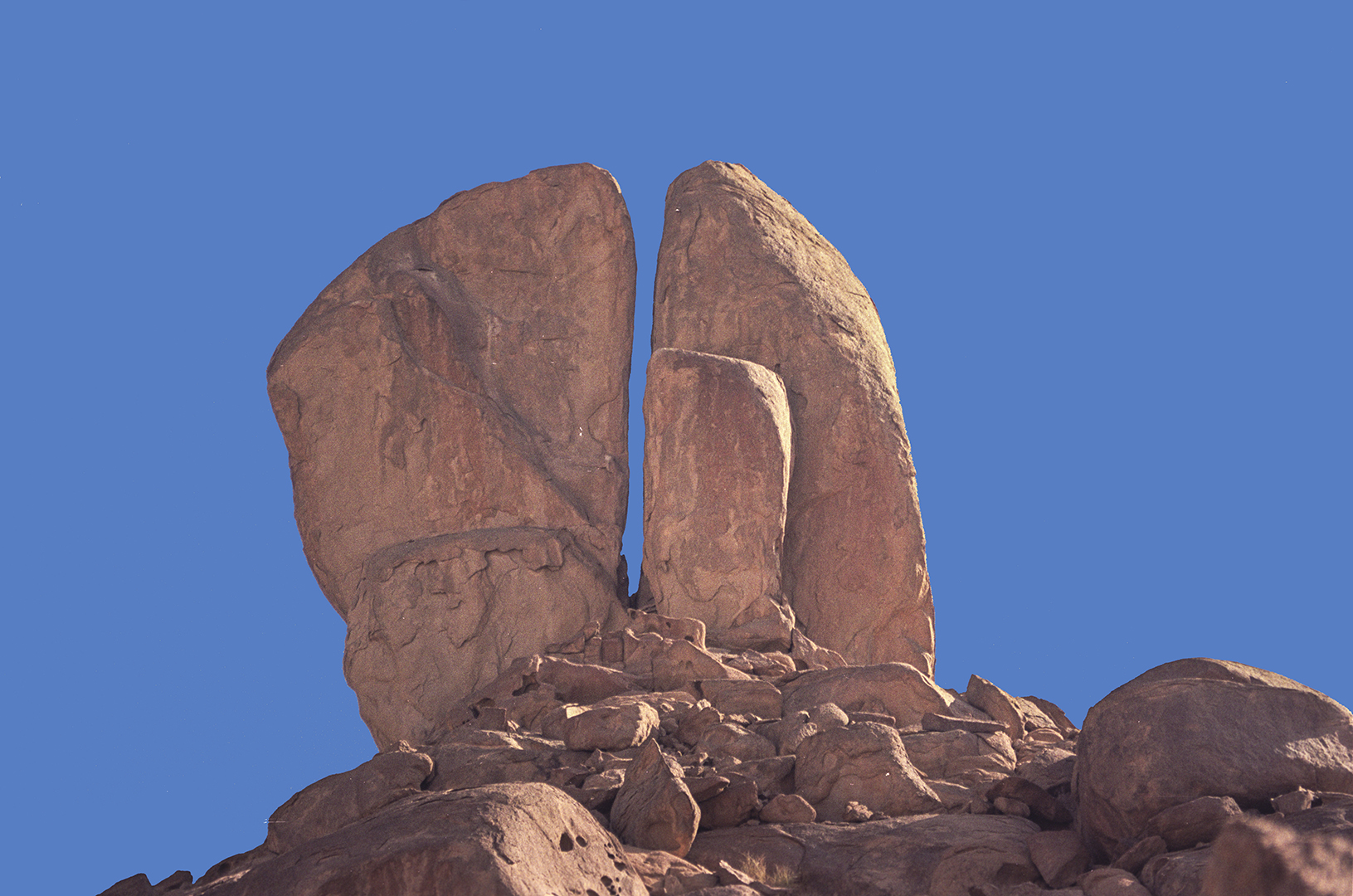
Rising stark and solemn from the barren Saudi wilderness, the Split Rock of Horeb stands like a silent sentinel of ancient power. Towering nearly 60 feet high, the colossal granite monolith looms over the desolate plain, its weathered and tan flanks are etched by wind and time. But what sets it apart, what seizes the imagination—is the cleft. A prodigious vertical split that is so unnaturally straight it’s as though it were torn by an invisible hand. 

The two halves, still joined at the base, are separated by a gap so wide a man could walk between them. Where is the magic sword from heaven that must have struck it so cleanly? 

At its base, the rock bears smooth channels and grooves—as if torrents of water once burst forth, carving trails into the stone that in wild obedience submit itself to divine command. Light filters through the divide, casting shadows that whisper about that day even to this day.

Yes, the rock still stands. 

Despite centuries of exposure to harsh desert winds, sand, and temperature extremes, the massive split rock remains tall and intact. It has an imposing presence, seemingly sliced vertically in a way that defies typical erosion patterns. The site receives occasional attention, but not too much and rarely up close. 

It’s in a remote, restricted area which is often under military control, and access has historically been limited or even outright prohibited by Saudi powers. 

NO TRESPASSING?

Many of the widely circulated photos and videos of the rock come from unauthorized expeditions, but here’s a couple  stand outs (Ron Wyatt won’t get any attention here). 

Jim and Penny Caldwell
 (1992) 

They were just the average American oil workers living in Saudi Arabia, but with a neat twist.

On numerous occasions they took considerable personal risk by sneaking into restricted areas to document the rock and other sites, including:

  • The Split Rock 
  • The blackened peak of Sinai 
  • Altar-like structures and petroglyphs of bulls (linked to the golden calf story)

Oh, and they had to smuggle all  pictures and footage out of the country. 

Bob Cornuke 

(Late 1990s-Early 2000s)

He was just your average former police investigator, but with a neat twist! 

He collaborated with the Caldwells and visited the site to gather photographic and testimonial evidence. His trips were perfectly reasonable, just slightly (ok, entirely) unauthorized and clandestine.

Other explorers have faced interrogation, arrest, or deportation by Saudi authorities and the government has since built a fence around Split Rock. Access is now heavily restricted or off-limits to the public. 

                      ————————-//————————

Bonus Neat 

Local Bedouins have called it the “Rock of Moses” for generations and their oral traditions speak of how water once flowed from it. Some Bedouins avoid the site entirely. 

Bread Facts 

“And the LORD said to Moses, ‘Pass on before the people, taking with you some of the elders of Israel, and take in your hand the staff with which you struck the Nile, and go.

I will stand before you there on the rock at Horeb, and you shall strike the rock, and water will come out of it, and the people will drink.’ And Moses did this in the sight of the elders of Israel.”

Exodus 17:6-7 

(see also, Numbers 20:1–13) 
Encouragement From Eutychus

Dale Pollard

Here’s a quick recap of the bizarre events that unfold in Acts 20.

  • Paul preaches past midnight. 
  • A young man named Eutychus falls asleep.
  • As a result he plummets to his death. 
  • He is then miraculously brought back to life.

So what?

Each word that was written in scripture was penned under God’s guidance— for our guidance. This means that even those accounts that might initially strike us as pointless are, in truth, spiritually pointed. 

With this is in mind, Let’s briefly examine three life lessons from Eutychus that deliver relevant reminders for the 21st century Christian. 

  1. A lesson on Common sense: God is with His people, God protects His people, but we still read of a young man who sits where he shouldn’t have. As a result, he tumbles to his death. Unfortunate things can happen to godly people, especially in the absence of common sense. 
  2. A Lesson On Commitment: This account is not a call for preachers to shorten their sermons, or even a warning for members who might be tempted to take a nap in worship. While Eutychus may not be the first guy that comes to mind when we think of a Bible character who demonstrated commitment— he still made it a priority to be with his Christian family. He held on, even though it was clearly past his bedtime. How many of us have forsaken the assembly simply because we don’t feel like it? How many Christians find themselves struggling to remain focused in a one hour period of worship? There is something to be said for this man’s commitment to Christ— even as the hours ticked by and exhaustion began to take its toll on him. 
  3. A Lesson On Correction: Though I would not want to be immortalized in history as the guy who fell out of a window in church, this potential tragedy became a powerful testimony of God’s grace. God does not expect total perfection, rather our constant correction. When we take a tumble spiritually, what corrections can we implement to avoid the same  mistake in the future? 

Off Your Face & On Your Feet (Part 2)

Dale Pollard

Six hundred years before Christ would make His providential appearance, a righteous man finds himself in captivity. While exiled, Ezekiel was able to witness the spirit of God in a very intimate way. Even so, he was still living under the thumb of the Babylonians just like every other Israelite with him. Even while living in these unideal circumstances he is privileged to see awe inspiring visions from God. 

After years spent with no success or response from his people, Ezekiel has become frustrated with the fact that Israel won’t listen to him or Him. He’s lost hope in their ability to change— they’re just too far gone. Chapter nineteen is one long lament as Ezekiel cries over his hard-hearted Israelite brothers. Why won’t they listen to him? Even after Ezekiel performs some radical visual illustrations like eating his bread over dung and laying on his side for an entire year, they won’t respond to the “invitation.” God never abandons His faithful servant but His confused prophet is still left to wonder what God is going to do about the mess which makes up his reality. A familiar feeling for Christians to this day.  

At this low point Ezekiel is then taken even lower. God takes him to the bottom of a valley where piled on its floor is— death. Heaps of dry human bones; not belonging to strangers but of fellow Israelites. He may have wondered why God decided to bring him to such a terrible place. Maybe his view of God was an embittered one and so he wasn’t that surprised. After all, God allowed him to endure misery from the beginning of his prophetic ministry. He faced more hardship than even the godless captives that he was called to preach to. Perhaps it wouldn’t have been too out of character, in Ezekiel’s mind, for God to now bring him into a valley of bones. 

God asks His servant a question, “Can these dry bones live again?” Ezekiel’s response isn’t one of confidence and certainty but rather a safe, “O Lord, only you know.”  

The God of Resurrection doesn’t bring the vast pile of Israelite bones to life in the blink of an eye— though we know He could have. Instead, He allows Ezekiel to hear the bones, flesh, and sinews as they rattled (literally, rumbled) together (37.7).  He wanted the “Son of man” to see and hear His hand at work in a way that was and is— unforgettable. God’s desire was to leave a lasting impression on Ezekiel and to demonstrate the might of the Almighty. Ezekiel didn’t know how God brought the bones to life, but he knew God did it. You may not understand why God has allowed you to enter your valley, but you can be certain that He has the power to see you through it. 

He Left The Manger (Poem)

Dale Pollard

He was born of a virgin, foreseen by the few 
A miraculous event— many know to be true 
He would save those in sin both friend, neighbor, and stranger 
But all that happened when He got out of the manger 

 His life was a short one, at least on this earth 
Some overlooked Him, his power, and worth 
He faced many challenges, his future looked bleak 
He was tortured and beaten, but turned the other cheek 

A beautiful life— filled with joy and with danger, 
But all that took place once the Lord left the manger 
He holds many titles, king of kings and Lord of Lords 
He established His kingdom without even a sword 

He’s the healer, our Savior, and any-life-changer 
But there’s more to His story 
He’s coming in glory 
Because Jesus left the manger 

Filled To The Brim

Tuesday’s Column: Dale Mail

Dale Pollard

The first miracle of Jesus is found in John chapter two. While many won’t give much thought to the servants in this account, let’s place the focus on them here. 

John 2.1-11 

On the third day there was a wedding at Cana in Galilee, and the mother of Jesus was there. Jesus also was invited to the wedding with his disciples. When the wine ran out, the mother of Jesus said to him, “They have no wine.” And Jesus said to her, “Woman, what does this have to do with me? My hour has not yet come. His mother said to the servants, “Do whatever he tells you. 

When Jesus refers to His mother as “woman” He was using a term of respect in that day and age. John writes that the hour of His death had not come because that is an underlying narrative of his book. 

Continuing on, 

“Now there were six stone water jars there for the Jewish rites of purification, each holding twenty or thirty gallons. Jesus said to the servants, “Fill the jars with water.” 

Now, notice the response of the servants. 

“So they filled them up to the brim.” 

They never questioned why they should fill these jars with water. This was no simple task and it was no doubt a time consuming chore. The jars held anywhere from one hundred and twenty to one hundred and eighty gallons of water. They likely drew the water out of a well— one bucket at time. 

Jesus then tells the servants, 

 “Now draw some out and take it to the master of the feast.” 

Once again, notice the response of the servants. 

“So they took it.” 

The servants didn’t ask why they should draw the water out or even why they should take it to the master of the feast. They don’t seem to hesitate even though it could have been a humiliating experience to serve water to the head of the wedding feast. They just took it! They simply listened to what Jesus told them to do. 

The servants and their unquestioning obedience is praiseworthy. As servants of Christ, we should do whatever He tells us. We shouldn’t do the bare minimum but we should, in a spiritual sense, fill our jars to the brim. We should live our lives completely dedicated to fulfilling His commands, even if it’s difficult or when it doesn’t make much sense to us. 

Trail Magic

Friday’s Column: Supplemental Strength

81121814_2462862270639428_5746232403106463744_n

Brent Pollard

My dad has discovered YouTube. He had been using the service to watch streaming worship services during the height of the coronavirus lockdown; he has since noted its potential entertainment value. One of his favorite channels is one that plays classic country music from the 1950s and 1960s. Recently, however, he has been watching the videos of hikers along the Appalachian, Pacific Crest, and Continental Divide Trails. I use to enjoy hiking in my healthier days, so I have sat down to watch more than one of these videos with him. I have never even contemplated doing a thru-hike of one of the previously mentioned 1,000 mile plus trails, but have admired those who have completed them. As I watched one video of a hiker who undertook the Appalachian Trail to conquer his depression, I heard him use an unfamiliar term: “trail magic.” In another video, a young woman from Opelika, Alabama, used the words in regards to her trek along the Pacific Crest Trail. Curiosity compelled me to look that phrase up. The phenomenon originated on the Appalachian Trail but has since popped up along the other lengthy trails as well.

 The Appalachian Trail Conservancy defines trail magic as follows:

“1) Finding what you need most when you least expect it. 2) Experiencing something rare, extraordinary, or inspiring in nature. 3) Encountering unexpected acts of generosity, that restore one’s faith in humanity.” 1

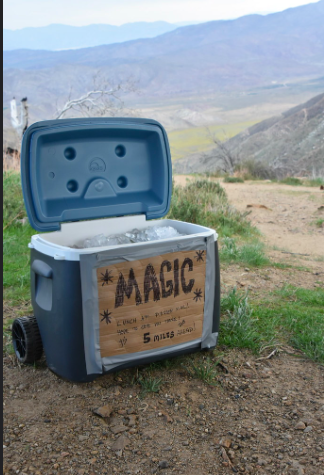
As the videos demonstrated, trail magic presented itself in a cooler of cold drinks left at a taxing point in the trail. Or maybe a veteran thru-hiker set up a tent at a spot along the pathway to feed the hikers who came through. It could also be a person volunteering to provide a wearied hiker a ride to his or her nightly lodging when the trail came close to a town offering a hostel or hotel serving hikers. Thru-hikers have no reason to expect that any of these things will happen to them as they make their journey even though it happens enough to warrant a name (i.e., trail magic). That is why it is so appreciated.

 When I read that, my mind immediately associated aspects of this phenomenon to what those of us who are Christians call “providence.” How often have we found something unexpected in our life, typically at the most opportune time, that screams “God” to us? In other words, a sudden something that points to God’s hand at work in our lives. No, providence is not a miracle, since it does not circumvent the laws of nature to occur. It works within the established framework around us, making it even more amazing since it can require God’s forethought rather than just a momentary expression of His unlimited power. Yet, it is as appreciated by us as any miracle would be since it satisfies our momentary need, whether remission from cancer or unexpected inflow of funds when presented with a financial crisis.

 This characteristic of God has earned Him a unique name first applied by father Abraham, Jehovah-Jireh. Do you recall the reason Abraham called God by that name? God had asked him to offer his only son as a sacrifice. This son was the promised one for whom he had long waited. Yet, Abraham complied. When his son, Isaac, noticing a missing sacrifice, asked his father about it, he replied, “God will provide for Himself the lamb for the burnt offering, my son” (Genesis 22.8 NASB). After nearly sacrificing his son, an angel stopped Abraham, and Abraham noted a ram with its head stuck in a nearby thicket. Abraham offered the ram as a sacrifice in place of his son and called the location “Jehovah-Jireh,” meaning “The Lord will provide.”

 Our path to Heaven is strait and narrow (Matthew 7.13-14). It is, therefore, most welcome that as we make our way through this life that we encounter this celestial trail magic. Let us never fail to thank our God since He is also Jehovah-Jireh.

 REFERENCES

1 Bruffey, Daniel. “Trail Magic.” Appalachian Trail Conservancy, The Appalachian Trail Conservancy, appalachiantrail.org/explore/hike-the-a-t/thru-hiking/trail-magic/.

Screen Shot 2020-07-03 at 7.09.01 AM