The Jezebel Church Of Christ

Thyatira was a church family where love wasn’t an issue, faith wasn’t a problem, and service wasn’t an area of concern. However, they had a big problem and Jesus needed them to address it.

Dale Pollard

Revelation 2:18-29

“And to the angel of the church in Thyatira write: This is what the Son of God, the One who has eyes like a flame of fire and His feet are like burnished bronze, says: ‘I know your deeds, and your love and faith and service and perseverance, and that your last deeds are greater than at first.

But I have this against you, that you tolerate the woman Jezebel, who calls herself a prophetess, and she teaches and deceives My slaves so that they commit sexual immorality and eat things sacrificed to idols. And I gave her time to repent, and she does not wish to repent of her sexual immorality.

Behold, I will throw her on a bed of sickness, and those who commit adultery with her into great tribulation, unless they repent of her deeds. And I will kill her children with pestilence, and all the churches will know that I am He who searches the minds and hearts; and I will give to each one of you according to your deeds.” 

Thyatira was a church family where love wasn’t an issue, faith wasn’t a problem, and service wasn’t an area of concern. However, they had a big problem and Jesus needed them to address it. For a congregation with so many outstanding attributes and praised by the Son of God, what kept them from meeting the qualifications of His lamp stand (Rev. 1.12-23)?

Their problem was that they tolerated sin. 

Consider Jezebel, who of her it’s said, 

“Behold, I will throw her on a bed of sickness, and those who commit adultery with her into great tribulation, unless they repent of her deeds. And I will kill her children with pestilence” (Rev. 2.22-23).

Who would put up with that level of wickedness? The followers of Jezebel and the members of the church at Thyatira. God wanted them to see sin the same way He does. When sexual immorality is seen as a sickness, it’s no longer seductive. When the consequences of sin make you sick, it’s not as enticing. 

How Do You Make An Ahab?

Neal Pollard

Perhaps two kings most epitomize how bad the northern kingdom (Israel) was. The first symbol of their spiritual rottenness was Jeroboam. His legacy lives at the end of each successive king’s biography. Their epitaph all point back to him: “For he walked in all the way of Jeroboam the son of Nebat and in his sins which he made Israel sin, provoking the Lord God of Israel with their idols” (26). His influence stained all the rest of them. The second symbol was Ahab, who we are introduced to in 1 Kings 16. His life is summed up starting in verse 30: “Ahab the son of Omri did evil in the sight of the Lord more than all who were before him.” The writer then goes on to elaborate with details before summarizing, saying, “Thus Ahab did more to provoke the Lord God of Israel than all the kings of Israel who were before him” (33). 

What makes for a man like this, able to stand out in an already wicked environment? 

HAVE A CULTURE OF VIOLENCE AND DIVISION. The entire nation divided in Rehoboam’s reign, and the root cause was sin (ch. 11). Now, for the second time, a dynasty is supplanted by murder and overthrow. This time, not only is Zimri killed, but there’s a division between two factions–Tibni and Omri. Omri prevails and Tibni dies. How old was Ahab as all this took place? The Bible does not say. But, the victories of his father were surely retold as he established himself on the throne.

LIVE IN A HOME WHERE SIN IS SERVED. Ahab’s father held the ignominious distinction of doing evil in God’s sight, one who “acted more wickedly than all who were before him” (25). He learned from the “best” at being the “worst.” No wonder Ahab went even further and lower. He was mighty. He built the city, Samaria, which became the capital of Israel. But God’s focus was on his disobedience and idolatry. That was the cradle where young Ahab was nurtured. 

MARRY FOOLISHLY. The writer makes a statement to the effect of, “And if that wasn’t enough…” He says, “It came about, as though it had been a trivial thing for him to walk in the sins of Jeroboam the son of Nebat, that he married Jezebel the daughter of Ethbaal king of the Sidonians…” (31). Even modern, secular people know the name “Jezebel,” synonymous with being wicked and ruinous. She was as toxic an influence as the equally infamous woman who was Samson’s foil: Delilah. Through her influence, Ahab descends more deeply into deviance and deplorability (cf. 21:25). 

Isn’t it remarkable how the more things change, the more they stay the same? What three factors do more to shape our direction and influence our eternity than our culture, upbringing, and marriage? All of these can be overcome, but usually they aren’t. Under Christ, the church and evangelism are the divine countermeasures. God’s Word is the guide that can lead us from such darkness into heavenly light. They can lead to a turnaround. We cannot choose the behavior of the culture or the home environment we are raised in. But we can change the future, if we know better and do better. Sadly, Ahab would succumb to all three influences, and others paid the price. 

An interesting postscript is found here. During Ahab’s reign, a man named Hiel rebuilt Jericho. When Joshua and the people conquered and destroyed the city, he man an oath cursing any man who attempted to rebuild it. He warned that anyone who did so would pay with the life of their oldest and youngest sons (Josh. 6:26). Hiel’s ignorance of Scripture cost him dearly (34). Maybe this is more than a historical aside and footnote. What does this story have in common with the larger downfall of Ahab, Omri, and their predecessors? Their moral and spiritual failure was due to ignoring God’s Word. As a prophet would soon say, “My people are destroyed for lack of knowledge. Because you have rejected knowledge, I also will reject you from being My priest. Since you have forgotten the law of your God, I also will forget your children” (Hos. 4:6). 

God’s Solutions For Our Problems

Tuesday’s Column: Dale Mail

blond man with goatee smiling at camera with blazer on
Dale Pollard

It’s been said that the there are more stars in the known universe than all of the sand on earth combined. That being said, in just one grain of sand there are more atoms than all of the stars. That’s pretty amazing. Our planet is but a speck in the grandeur of space. Countless stars, planets, galaxies, lightyears and somehow God is well aware of the happenings of people. Have you stood on the mountain tops? Have you observed the power of the oceans as the waves crash on the shore? Has your heart almost stopped after the vibrating sensation of a thunder clap resonates in your chest? The might of the Creator is everywhere in the world around us and at times it just demands to be noticed. 
A section of scripture that is mysterious and fascinating is found in 1 Kings 19:11-13. The Lord of hosts is about to show Himself to a depressed and exhausted Elijah, but in a way that he would never forget. “The Lord said, ‘go out on the mountain in the presence of the Lord, for the Lord is about to pass by.’ Then a great and powerful wind tore the mountains apart and shattered the rocks before the Lord, but the Lord was not in the wind. After the wind there was an earthquake, but the Lord was not in the earthquake. After the earthquake came a fire, but the Lord was not in the fire. And after the fire came a gentle whisper. When Elijah heard it, he pulled his cloak over his face and went out to stand at the mouth of the cave. Then the voice said, ‘what are you doing here Elijah?’” In the solitude of Horeb, Elijah seeks to avoid the troubles of his world. 
The acoustics of the mountainous area along with the time spent in silence must have made the shattering rocks, raging fire, splitting hills, and rumbling earth all but deafening and definitely a terrifying display of divine power. Then in sharp contrast, a still whisper comes. This gentleness, no doubt, is the reason Elijah decides to cautiously emerge from his hiding place. God is teaching His worn-out servant a lesson that holds true for us today. The fact is, there is no more God, His wisdom, power, and presence in an earthquake than there is in the sweet breath of a blooming flower. The quiet ticking of a wrist watch reveals just as much intelligence and purpose as does the striking of a clock tower’s bell. 
One may walk out into an open field at night and stare up into the vast sky, lit up with numerous twinkling stars and declare, “I’ve found God!” But God is no more in the sky than He is in the blades of grass flattened beneath your feet. The question came to Elijah from that still voice, “What are you doing here?” To the prophet, his problems were too great and too large and his solution was to run and hide. God, in a magnificent way, is trying to remind Elijah of his place.
 Our place in life is not to take matters into our own hands or solve life’s many difficulties on our own. The answer is not to run away, but to walk humbly with our awesome God. He is strong enough to lift our burdens, wise enough to counsel us, patient enough to allow us to learn, and loving enough to constantly forgive. 

Lessons From Adversity: Finding Equilibrium

Friday’s Column: Supplemental Strength

brent 2020

Brent Pollard

Balance is that for which we hope and are vigilant to achieve. As true as this is for obedience (see 2 Kings 22.2), it is likewise needed emotionally. I’d like for us to note that optimum mental health in a fallen world is also a matter of equilibrium.


Let’s begin with the 800-pound gorilla in the room, the “gorilla” we call sadness. Why can’t we always be happy? It’s not that God did not intend for us to be happy. He created a world He described as “very good” (Genesis 1.31) and placed us into the idyllic Eden. Yet, in the exercise of our free will, we couldn’t abstain from eating the fruit of the one tree that was forbidden. Thus, when one is dealing with a broken world, sadness is going to come. We’ve even become so accustomed to its existence we create platitudes touting its presence. The Arab proverb states, “All sunshine makes a desert.” Even though sunshine is grand, weather consisting of only sunny days deviates from equilibrium bringing an environment hostile to life. Hence, it’s a bad thing. We’re left with the astounding proposition that for us to better appreciate the sunshine, we must learn to appreciate the rain.


In order to find emotional balance, one must avoid positive feedback loops. Yes, I realize this sounds counterproductive to our goal. Positive is a good thing, correct? Think of positive in this context as “plus.” It adds to. Do you want to read of a Biblical example of one caught in an emotional positive feedback loop? Read 1 Kings 18.20-19.21. Despite experiencing the glorious victory God brought over the prophets of Baal, Elijah retreats into a cave and sulks. Jezebel wants to kill him, and this is what Elijah becomes focused upon. What is Elijah’s positive feedback loop? Despite his faithfulness, his isolation reinforces his belief he is alone in the fight for God (1 Kings 19.10).


God clears up Elijah’s misconception, reminding him that there were other faithful servants of God in Israel (1 Kings 19.18). He wasn’t alone. God also gave Elijah a compatriot in Elisha. In other words, God introduced a negative feedback loop. No longer able to fixate solely on himself, Elijah undertook the mentorship of Elisha (1 Kings 19.16). Elisha, in turn, ministered to the needs of Elijah (1 Kings 19.21).


When dealing with adversity, it’s our nature to retreat into solitude. Yet, this is not what God intends for us. I’m not denying that we all need private “closet time” (Matthew 6.6). Jesus often sought solitude to pray. However, allowing ourselves to feel cut off from brethren creates a positive feedback loop accentuating our anxieties. Is it any wonder that as Christians we are commanded to focus outwardly upon others (Philippians 2.4)? We are even exhorted to assemble so we will stir one another to love and good works (Hebrews 10.24-25).


Let us not allow adversity to destroy our emotional equilibrium. Rather, let us use it, with the assistance of others, to weave richer colors into the tapestry of our lives.

28577339_10215059813386894_6130187397823371816_n-2
view from Mt. Carmel (photo credit: Kathy Pollard)

Who Is The “Troubler Of Israel”?

Neal Pollard

Ahab was the most wicked king in Israel’s history (1 Kings 16:30). To top it off, he was married to perhaps the most immoral woman revealed to us during the time of the divided kingdom in the Old Testament. Her name, Jezebel, is still somewhat infamous today. She destroyed the prophets of the Lord (1 Kings 18:4). The prophets who survived feared for their lives because of Ahab (18:9). Instead, Jezebel kept a stable of false prophets, 450 prophets of Baal and 400 prophets of Asherah (18:19). Read this section of 1 Kings and the first nine chapters of 2 Kings to get the full flavor of who this notorious couple was.

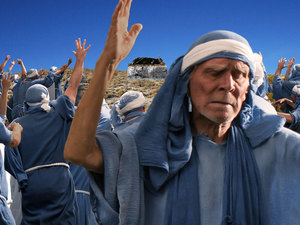
How ironic that when Elijah appears to Ahab before the prophet’s infamous confrontation with the false prophets on Mount Carmel, Ahab’s first words to him were, “Is this you, you troubler of Israel?” (18:17). There was controversy, division, problems, and trouble in the land, but Ahab’s narrative was distorted. Ahab was like a reckless drunk driver weaving in and out of traffic and blaming a law-abiding pedestrian for being in his way on the sidewalk. Elijah was not the troubler of Israel for daring to oppose the false ways of Ahab and Jezebel. He was doing exactly what God wanted him to do!

In our present, lawless age, there are so many “prophets” who come along with a message appealing to right ideas like peace, grace, unity, and love. Many of them package themselves in the garments of relevance, using our culture as their props and stage. The causes célèbre which our age reveres, some of which are diametrically opposed to the doctrine, ethics, and morality outlined in Scripture, are pushed at God’s people—who are shamed and made to feel unrighteous if they dare protest what is said. In some circles, it is asserted that anyone teaching that the Bible is authoritative, contains a pattern, and is God’s objective truth for all times, is Pharisaical, consumed with self-righteousness, hateful, mean-spirited, and divisive. In short, that they are “troublers of Israel.”

As a quick side-note, there are some who do press their personal proclivities, traditions, and convictions as divine truth. This is as accursed a thing as seeking to nullify what God has bound in heaven (cf. Mat. 16:19; Rev. 22:18-19). Such folks manufacture trouble rather than trouble people by faithfully sharing God’s Word. These occupy unenviable ground, in view of the end of all things.

Yet, anyone who conscientiously tries to follow God’s blueprint for how to share His truth (Eph. 4:15; 2 Tim. 2:24-26; Col. 4:6), who takes care to handle Scripture accurately (2 Tim. 2:15), is going to invariably encounter the Ahabs, Jezebels, Baalites, and Asherahists. Teach the singular, undenominational nature of the church (Eph. 4:4), the role of women in the church (1 Tim. 2:9-12), the essentiality of baptism in God’s saving plan (Acts 2:38), God’s plan for marriage and sexuality (Mat. 19:1-9; Heb. 13:4; Rom. 1:26-27), and the like, and it will come. The Ahabs will label you the troublemaker and the source of the problem.

In what may sound dark and grim, Paul warns Timothy that difficult times will come (2 Tim. 3:1). He speaks of men immoral in nature and inaccurate in message who succeed with the weak and impulsive (3:6), who themselves are “always learning and never able to come to the knowledge of the truth” (3:7), who in fact “oppose the truth, men of depraved mind, rejected in regard to the faith” (3:8). Ultimately, they will not carry the day (3:9). But they will always have their eager followers who “accumulate for themselves teachers in accordance to their own desires, and will turn away their ears from the truth and will turn aside to myths” (4:3-4).

Suppress the victim mentality if you are trying to be an Elijah in this Ahab society. On the job, at home, in the community, within the religious community at large, and even at times within the church, “preach the word” (2 Tim. 4:2). Do it with great patience and instruction, as Paul counsels. Don’t be a troubler in God’s eyes, but know that you will be seen as one in the eyes of some in this world. Keeping company with Elijah is not a bad thing.

012-elijah-baal

Thrown Down On Naboth’s Plot

Neal Pollard

Naboth must have been shocked and baffled as the charges of blasphemy and treason rang in his ears.  He must have felt jostled and panicked as he was grabbed and thrown outside the city of Jezreel.  Surely he was filled with the acutest sense of injustice replaced only by the undeserved pangs of pain as his own brethren stoned him with stones (1 Ki. 21:12-14).  He had been set up by wicked King Ahab (though Jezebel was really the “brains” behind the operation).  When Ahab took possession of “his” ill-gotten vineyard taken only by the brutal plot that claimed innocent Naboth, did Ahab ever think about the murdered man (cf. 1 Ki. 21:19) as he puttered around his vegetable garden?  Could even Ahab have thought that it was worth it?  Whatever Israel’s king felt, Elijah the Tishbite, God’s mighty prophet, is sent into “the vineyard of Naboth” (1 Ki. 21:18; interestingly, God still saw dead Naboth as the rightful owner) and foretells of the bloody, ignominious end of Ahab’s house.  Though God showed remarkable mercy in not ending Ahab’s dynasty in the wake of the wicked king’s humble plea (1 Ki. 21:28), the decree was only delayed.  Ahab died in his chariot, a casualty of a circumstance God used to execute His judgment (1 Ki. 22:34-38).

Some time later, though now Ahab’s second son to reign currently sat on Israel’s throne and Elijah had been replaced by Elisha, the judgment on Ahab’s house transpired.  Jehu “conspired against Joram” (2 Ki. 9:14), encouraged by one of the sons of the prophets (2 Ki. 9:7-10).  Jehu meets Joram at an interesting site:  “the property of Naboth the Jezreelite” (2 Ki. 9:21).  God says He repaid Ahab on Naboth’s plot (2 Ki. 9:26).  What a powerful lesson and warning from God!  It is a message that says not only that you reap what you sow, but that there is sometimes irony in this sort of reaping.  Another example is Haman in the book of Esther.

Let us consider this lesson first taught on Naboth’s land.  Does the gossiper, intent on spreading rumors and divulging details about another, ever become the victim of his own methods?  Does the hypercritic and unjust judge ever fall into a sin problem, only to find himself treated as he has treated others?  What about the greedy or the unethical, who climb the corporate ladder by stepping all over whoever is above him on it?  Does he ever meet the same, ironic end?  There will be some Naboths, men and women who are unfairly and unjustly treated despite their innocence.  Yet, there will also be some Ahabs, too, men and women meted out the same kind of end they inflicted on someone else.  If you have to identify with anyone in this biblical account, let it be Naboth and not Ahab.