Origen’s “On First Principles” (Book 2, Numbers 1-4)

So everything we say about God’s Wisdom applies to the Son: He is the Life, the Word, the Truth, and the Resurrection. These titles describe what He does and who He is. None of them imply anything physical―no size, shape, or color.

Gary Pollard

[Editor’s Note: Gary is translating the Ante-Nicene Fathers works, beginning with Origin’s work. It is meant to update the British English of Roberts and Donaldson. What follows is part of that translation]

1. First, we need to understand that Christ has two distinct natures: His divine nature as the only Son of God, and the human nature He took on in this final age as part of God’s plan to save us. These are not the same.

So we start by asking: who is the only-begotten Son of God? He’s called by many names, depending on the context and viewpoints of different people. For example, He is called “Wisdom” in Solomon’s words: “The Lord created me as the beginning of His ways, before anything else existed―before the earth, before the springs, before the mountains and hills―I was brought forth.”

He’s also called “Firstborn,” as Paul says: “He is the firstborn of all creation.” But “Firstborn” and “Wisdom” refer to the same person―not two different beings. Paul even says that “Christ is the power and wisdom of God.”

2. But when we say He is God’s Wisdom, we don’t mean He’s just a concept or a force that makes people wise. He is a living being who is wisdom in Himself. Once we understand that the Son is God’s Wisdom in real, personal existence, we shouldn’t imagine that He has any physical traits like form, size, or color. Wisdom, by its nature, doesn’t have those things.

And no one who reveres God should believe that the Father ever existed without His Wisdom. To say that would mean either God couldn’t produce Wisdom before He did, or that He didn’t want to―which is impossible for a perfect and eternal God.

We believe that the Son, who is God’s Wisdom, comes from the Father―but not in time. His existence has no beginning, not even one that we can imagine in thought. So Wisdom was brought forth before anything that could be called a “beginning.”

Everything that would later be created was already held within Wisdom―its design, purpose, and shape―arranged by God’s foreknowledge. That’s why Wisdom (in Solomon’s words) says she was “created as the beginning of God’s ways”―not because she was made in time, but because all things were prefigured in her.

3. In the same way, we can say Wisdom is the “Word” of God, because she reveals God’s hidden truths to all creation. She is called the Word because she expresses what is in God’s mind.

So when the Acts of Paul1 says, “The Word is a living being,” it’s speaking rightly. But John expresses it most clearly in his Gospel: “In the beginning was the Word, and the Word was with God, and the Word was God.”

Anyone who says the Word or Wisdom had a beginning must be careful not to dishonor the Father. If God didn’t always have Wisdom or a Word, then He wasn’t always the Father―and that idea contradicts God’s eternal nature.

4. This Son is also the truth and life of everything that exists―and rightly so. Nothing could live without receiving life from Him. Nothing could exist unless it came from the truth. Rational beings couldn’t exist without the Word. There could be no wisdom without Wisdom.

But since some creatures would fall away from life and bring death upon themselves―because death is just separation from life―it was necessary for there to be a power that could overcome death. That power is the resurrection, first seen in our Lord and Savior. The resurrection is rooted in God’s wisdom, word, and life.

Also, since some created beings would choose not to remain in the good they were given―because that good was not part of their nature, but something they received―they could fall away. For their sake, the Word and Wisdom of God became the “Way,” the path that leads back to the Father.

So everything we say about God’s Wisdom applies to the Son: He is the Life, the Word, the Truth, and the Resurrection. These titles describe what He does and who He is. None of them imply anything physical―no size, shape, or color.

Human beings pass on physical traits through reproduction. But we must not compare that to how the Father brings forth the Son. God’s act is completely unique―beyond comparison, imagination, or explanation.

The generation of the Son is eternal―like light from the sun. He didn’t become the Son through some external act. He is the Son by His very nature.

1 He probably means “Hebrews” here.

Genesis: These Are The Generations (XVII)

A Presumptuous Decision (16:1-16)

Neal Pollard

It is very possible that Hagar was a consequence of Abram’s decision to go down to Egypt to escape drought, where he deceived the Pharaoh and was given livestock and servants (12:16). If she came into his house through Abram’s weakness, she becomes the center of domestic drama through Sarai’s weakness. Genesis 16 tells us that Sarai “conceived” the plan to raise up children through Hagar, her handmaid, and she pitches this idea to Abram (1-2). 

This practice of a wife giving her maid to her husband is admittedly a difficult thing for most of us to grasp, but it was apparently common in the Patriarchal Age as demonstrated by Leah and Rachel (ch. 30). Typically, the child born of the union was thought to be credited to the wife. Here, Sarai defended her rationalizing by blaming God. She said, “The Lord has prevented me from bearing children” (2). Scripture does not indicate this, but simply that she was barren (11:30).

Things changed after the union of Abram and Hagar was successful. Hagar despises Sarai in a way that was transparent to Abram’s wife (4). While Sarai takes the blame for the horribly misguided choice (5), she pressures Abram to do something about it. Abram leaves it to Sarai to handle, and she treats Hagar so harshly that the Egyptian flees (6). Interestingly, her name is Semitic and means “to flee” (TWOT, 206). 

That is exactly what Hagar does. The angel of the Lord finds her by a spring of water in the wilderness (7). It seems indisputably clear that the angel of the Lord here is a theophany (physical manifestation of God, NP). This is not merely an angel, but God Himself. I agree with good men, such as Roy Lanier, Sr., and Wayne Jackson, that this is even more than a manifestation of God. This is the preincarnate (before becoming flesh) Son of God (see https://christiancourier.com/articles/a-brief-study-of-the-angel-of-jehovah and Timeless Trinity). How do we know that Hagar encounters God here?

  • He approaches her as God approaches Adam and Eve in the garden (3:9).
  • His promise to her is delivered with the weight of God, as when He issues promises to Abraham in chapter 15.
  • Moses calls this Being “Lord” (13a).
  • Hagar calls this Being “You are a God who sees” (13).
  • She marvels that she did not die, since she saw Him (13b).
  • The name given to the well where she encountered Him signifies Deity (14).

The angel of the Lord issues promises and prophesy concerning the son to be born to her. He tells her what to name the child (Ishmael) and why–“because the Lord has given heed to your affliction” (11). He foretells the contentious nature of Ishmael and his descendants, and indicates where they would settle (12). 

Abram must have believed that God spoke to Hagar since he names the child Ishmael (15). We are also informed that Abram is 86 at the time of the boy’s birth. Ishmael will become a teenager before God’s seed promise will be fulfilled. As we will see, this will cause more strife.

What a reminder that we add trouble to our lives when we make decisions without consulting God or when we take matters into our own hands. When God has revealed His will, our only response should be to wait and trust. We cannot anticipate the trouble we will bring into our lives and the lives of others when we insist on pursuing our own agenda. Yet, even when we falter, the faithful God not only sees but He foresees. The faithfulness of God persists even when we waver in our faithfulness (2 Tim. 2:13). 

Life In The Blood

Thursday’s Column: Captain’s Blog

Carl Pollard

A common practice for thousands of years was to drain “bad blood” out of the body. In fact, there are still some cultures today that practice this. The greatest doctors who were thought to be extremely smart would commonly drain the “bad blood” out of their patients if they were sick. For the longest time it was believed that if you were sick you needed to let this poisonous blood out of your body in order to be healed. 

Leviticus 17:11 says, “For the life of the flesh is in the blood, and I have given it for you on the altar to make atonement for your souls, for it is the blood that makes atonement by the life.”

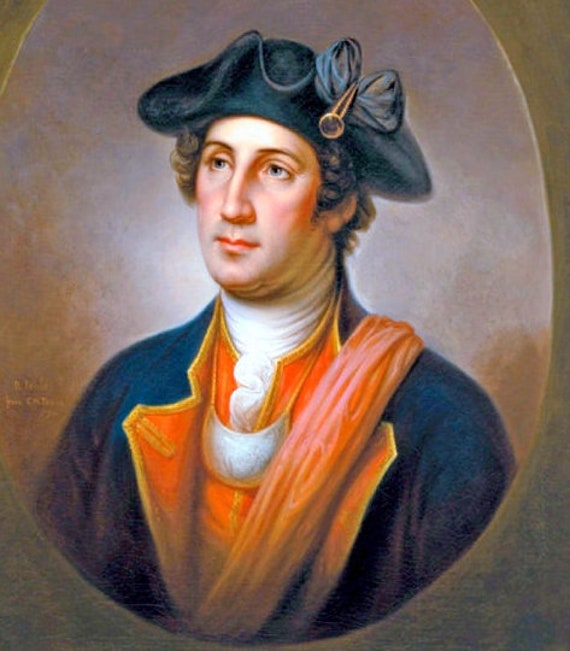
December 13th 1799 a man was riding a horse through his plantation. It was a day like any other, and everything was perfectly normal. Little did this man know that in less than two days he would be dead. The decision he made that day in December proved to be fatal. While he was out riding he got caught in the rain, and when he returned home he decided to hold off on changing out of his wet clothes because he didn’t want to be late for his dinner party. The next morning, he worked outside in the bitter cold as he had the day before. The whole day he worked through the pain that had developed in his throat. Nevertheless he pushed on and tried to ignore it. 

That evening his symptoms worsened, but he decided to see if they would improve by the morning. This man woke up and things had only gotten worse. He called in three well-known physicians and he received good news that it was just a cold and a slight fever. The physicians assured the man that he would be just fine. All they had to do was drain the sickness out of his body and he would be healed. 

This fatal decision resulted in the death George Washington. 

Bloodletting is now seen as an incompetent practice. Yet it was practiced worldwide until the late 1800s. Millions of people died thanks to this lack of understanding, but guess who knew NOT to do this right from the start? The life is in the blood and God is the one who revealed this fact to us. 

Sometimes we are a little slow in catching on to the wisdom that God has revealed in His Word. If God was right about the blood, what else could He be right about? 

Rehoboam’s Folly

Monday’s Column: Neal At The Cross

Neal Pollard

One of the facts I remember and retained from elementary school is that the purchase of the Alaska Territory by the United States from the Russian Empire was known as “Seward’s Folly.” $7 million for a frozen wasteland thousands of miles from Washington, D.C., right after the Civil War surely must have seemed bizarre (at the time, it was also called [President Andrew] “Johnson’s Polar Bear Garden” and “Walrussia,” among other things)(a few details from History.com).  History has long since vindicated the wisdom of Seward’s vision.

Rehoboam’s folly was folly from beginning to end. Though God’s foreknowledge and providence caused Him to work through these events to keep His promise of bringing the Messiah, Rehoboam was no willing accomplice. Instead, he committed an inexcusable blunder that proved him to be an apple falling light years from his father’s tree. How could he be so foolish?

First, let’s quickly review what happened. Jeroboam hears about Solomon’s death, and he leaves his exile in Egypt to return to Israel. The nation had high regard for the son of Nebat and summoned him to go with a delegation of them to ask Rehoboam to lighten the yoke of taxation his father, Solomon, had levied on them in order to fund the building projects the chief of which were his own house and the temple (cf. 9:15). Rehoboam asked for three days to consider their request. When they return in three days, he not only refused their request but answered them harshly (10). 

So what contributed to his foolhardy decision at the start of his reign? There are several implications. Cronyism appears to have played a part. He favored the flatterers from among his own friends and associates, “who grew up with him” (10).

Ego likewise factors in. Their flattering suggestion was to tell the people, “My little finger is thicker than my father’s loins! Whereas my father loaded you with a heavy yoke, I will add to your yoke; my father disciplined you with whips, but I will discipline you with scorpions” (10-11).

Akin to cronyism was his bias against the older, wiser counselors who served his father. It’s certainly not unique to Rehoboam to consider the counsel of the aged to be out of touch and irrelevant (cf. Job 12:12).

Then, there was a lack of empathy. Leadership is doomed where leaders fail to hear and grasp the plight of the people.

Finally, there was divine foreknowledge. God knew the arrogance and pride of Rehoboam and He used it to fulfill His divine will. The writer ends the paragraph, saying, “So the king did not listen to the people; for it was a turn of events from the Lord, that He might establish His word, which the Lord spoke through Ahijah the Shilonite to Jeroboam the son of Nebat” (15). 

God’s people today do well to revisit the folly of Rehoboam in order to be reminded of the wisdom of impartiality, humility, empathy, and compassion. Failure to do so is foolish indeed!

Jesus Didn’t Retire

Wednesday’s Column: Third’s Words

garyandme521

Gary N. Pollard III

Satan tried to trip Jesus with a killer deal: “I’ll give you every nation in the world if you worship me” (Matt 4.8-10). This wouldn’t have been a temptation if he couldn’t deliver. What might Jesus have gained by having Satan give up control of every nation on earth? It would have made his job a lot easier! He wouldn’t have to fight with Pharisees or other hostiles. He wouldn’t have to disappear after teaching or healing. He could avoid the kind of rejection that broke his heart (Luke 19.41). 

Sometime after this encounter, Jesus started to recruit followers. He may have had Satan’s offer on his mind as he was calling Peter (Matt 4.18ff). He knew Peter would be so ashamed of him that he’d deny any connection to him (Matt 26.69-75). He knew that every one of his followers would abandon him when he most needed them (Matt 26.56). 

He still lived his life, he still taught, he still sacrificed himself for everyone. How many of us would still pursue something if we knew how painful or difficult the outcome would be? How many of us would continue to pursue something if we were given the option to take an easier path? 

Jesus didn’t even retire once his mission was accomplished! He faced homelessness, assault, rejection, betrayal, injustice, torture, and execution. I would have retired after that in a heartbeat, and I would feel that I had more than earned that retirement. 

After he went back to be with the father, he rolled up his sleeves and got to work. He’s a full-time mediator (I Jn 2.1-2). He’s making sure the natural universe operates as it should (Heb 1.3; Col 1.17). He’s keeping evil in check (Phil 3.21; I Cor 15.27). When the end comes, he’ll destroy the universe and judge every human who’s ever lived (Heb 9.27; II Pet 3.7-10; Rev 20.12, 21.1-2). 

Whew. He still loves us (Rom 8.35; II Cor 5.14; Gal 2.20; Rev 1.5)! He still gives grace with generosity (I Jn 1.7; Rom 5.15-21, 6.14). We serve a tireless God who invested everything in us and will do so until the end of time. Life gets us down and we ask, “Why?” Just remember who’s watching our backs and won’t ever let us down! 

The wilderness of Judea