

The Duty Of Courage And Strength

Brent Pollard

The Book of Joshua is a powerful account of the Israelites’ conquest of Canaan and subsequent settlement in the Promised Land under God’s leadership. This account is woven with a resounding call for courage and strength as God exhorts Joshua and the people five times (Joshua 1.6-7,9,18; 10.25). These admonitions emphasize the importance of these virtues in a life of faith, obedience, and service to God.

Though Christianity emphasizes the virtues of humility, gentleness, and forgiveness, it does not minimize the importance of courage and strength. On the path of faith, we must exhibit courage and strength to confront the inevitable challenges and adversities. Our responsibility is to be resilient and brave in the face of these hurdles.

Believers consider fear a greater sin than non-believers because faith provides them with greater motivation for courage (1 John 4.18). Thus, discouraging fear is a comfort and a call to action, encouraging believers to confront danger, responsibility, pain, loss, and even ridicule without succumbing to fear. Avoiding the path of risk may lead us astray from our divine calling while shying away from duties that appear daunting and fail to honor our commitments.

Therefore, strength is a desirable trait and a requirement for overcoming sin and fulfilling our mission. Believers must confront their inner sinful desires and external evils by facing and overcoming moral weakness, which often stems from spiritual deficiencies. Believers, like the Israelites in Canaan, must deal with these and life’s general uncertainties. 

Grave dangers and the completion of difficult tasks emphasize the importance of bravery and strength. To claim their spiritual inheritance, resist sin and temptation, and expand God’s Kingdom, believers must actively engage and struggle, just as the Israelites confronted their enemies.

Fortunately, Joshua’s pages contain the secret to courage and strength. We must recognize that these characteristics are divine gifts that, through faith and reliance on His power, even the most naturally timid can obtain. As Moses handed over the reins to Joshua, he told the people, “Be strong and courageous, do not be afraid or tremble at them, for the Lord your God is the one who goes with you. He will not fail you or forsake you.” (Deuteronomy 31.6 NASB95).

Personal and communal victories serve as reminders of God’s faithfulness and power. They strengthen our courage to face future challenges. For example, the conquest of Canaan by the Israelites not only reinforced their faith in God’s promises but also empowered them to confront future battles. Nevertheless, the journey of developing courage and strength is ongoing, demanding the active application of divine grace. We can expand our capacity for these virtues by stepping out in faith and obedience. While developing courage and strength requires practice, individuals can enhance these traits through dedication and effort, becoming stronger and more courageous. The synergy between courage and strength equips believers with the spiritual armor needed to face life’s battles with resilience confidently.

Viewed through the Book of Joshua, God reminds us that courage and strength are virtues for the battlefield and integral aspects of the Christian life. These virtues require our continual attention and cultivation as we maneuver through the intricacies of faith, obedience, and service. Likewise, as God equipped Joshua and the Israelites for their challenges, He provided us with the same divine resources to be courageous and strong in our spiritual journey.

“Have I not commanded you? Be strong and courageous! Do not tremble or be dismayed, for the Lord your God is with you wherever you go.” (Joshua 1.9 NASB95)
Deuteronomy: The Second Giving Of The Law (IV)

“Conquering” Before The Conquest (3:1-29)

Neal Pollard

We can read ahead in the book of Joshua, appreciating that these military maneuvers were vital to building the confidence and experience of Israel in conquering their enemies and the territory belonging to them. Chapter two shows the first such battle, with the defeat of Sihon and the Amorites (2). The conquered territory was ceded to Reuben and Gad (12). Let us notice the content of this chapter briefly.

The defeat of the kingdom of Og in Bashan (1-11).  “The narrative says nothing of the route that was taken, though Numbers indicates that the point of origin was Jazer (Khirbet Jazzir) and, with Deuteronomy 3:1, agrees that its destination was Edrei (Derʿa), thirty miles southeast of the Sea of Galilee (Num 21:32–33). This would have been a fifty-mile march from the southwest to northeast through the Gilead tablelands” (Merrill, NAC, 105). Pointing to the previous battle, God reassured Israel that He would deliver Og into their hands, too (2-3). Again, they showed total obedience to God by utterly destroying everyone (3). They took 60 cities (4), “fortified with high walls, gates and bars, besides a great many unwalled towns” (5). While they destroyed men, women, and children, they took animals and spoils as booty (7). An important fact, though subtly inserted, is the impressiveness of King Og. He was the lone surviving descendant of a race of giants called the Rephaim (2:11). His enormous size is supported by his bed, confiscated by Israel. It was 13 feet long and 6 feet wide (cf. 11). 

The review of the conquered territory to this point (12-17). Moses summarizes all the land they had taken to this point in the region we call the trans-Jordan region (on the other side of the river). This will factor again in Joshua’s writings in his book that follows. Land is distributed to Reuben, Gad, and half the tribe of Manasseh here. Here, Moses gives the eastern boundary of the nation of Israel. 

Preparation for passing the baton of conquering (18-22). This is summed up in two statements: “I commanded you (valiant men; the sons of Israel)” (18) and “I commanded Joshua” (22). The soldiers from this already-conquered territory would leave their wives, children, and livestock behind, and go into battle with their brethren to conquer the rest of the territory in the allotted promised land. The soldiers are told to cross the Jordan and fight until the whole land is subdued (18-20). Joshua, the next commander-in-chief, is told to use these victories over Og and Sihon as object lessons for what was to come. He is also told not to fear, since God would be fighting for them (22). 

Moses, a man conquered by time and circumstance (23-29). Moses begged God to be able to cross over into Canaan with the people and see the land up close (23-25). This is only one of two uses of the name “Lord God” in the entire book of Deuteronomy (the other is 9:26). It means “Yahweh, the Most Powerful One.” Moses speaks optimistically, knowing what God can do (24-25). God replies emphatically, saying what He will do (26-29). He will allow Moses to see the promised land from the mountaintop view of Pisgah, but not enter. Moses once again, in verse 26, makes implicit reference to his striking the rock when asked by God to speak to it (cf. 1:37; Num. 20:12).  Instead, Moses was to focus his final energies on preparing Joshua to finish the task of conquering (28-29). 

Moses appears to allude to one other “conquering” in the last verse of the chapter. Beth-peor (29) is probably the same as Baal-peor (4:3) where Balaam’s evil influence leads to the deaths of 24,000 people who served idols and committed fornication (Num. 25:1-9; Ps. 106:28; Hos. 9:10; 2 Pet. 2:15; Jude 11; Rev. 2:14). Thankfully, not all were conquered by that temptation to sin (4:4)! 

Reading through this chapter, I am reminded of Peter’s observations about certain false teachers in his day. He writes, “For speaking out arrogant words of vanity they entice by fleshly desires, by sensuality, those who barely escape from the ones who live in error, promising them freedom while they themselves are slaves of corruption; for by what a man is overcome, by this he is enslaved” (2 Pet. 2:18-19; cf. Rom. 6:16; John 8:34). There is literal, physical conquering in this chapter (1-22) and figurative, spiritual conquering in this chapter (23-29). Deuteronomy helps us see the way to overcome, submitted fully to God’s revealed will! 

Deuteronomy: The Second Giving Of The Law (III)

On Possessing And Dispossessing (2:1-34)

Neal Pollard

After detailing the rebellion and unbelief of the nation in chapter one, Moses highlights aspects of the latter portion of their wandering in this chapter. He breezes through the first 38 years of their wandering (14), explaining that these 40 years were to purge Israel of the generation of the men of war who refused to obey God’s command under Moses to enter Canaan (16). Moses highlights how God completely took care of their needs throughout the wandering (7). But, the emphasis of this chapter seems to be multiple object lessons concerning the nations they encounter near the end of their journey, nations they have some relationship to and observations concerning God’s care for them and the opponents these nations overcame. 

First, there are the Edomites (4-8a, 12). These descendants of Esau (Israel’s brother) have a healthy fear of Israel (4), so God tells them not to provoke them, attack them, or try to take their land (5). This was Esau’s promised land (5). Instead, they were to buy food and water from Edom, trusting God to help meet their needs (6-7). Heathen inhabitants possessed the territory before Esau’s descendants drove them out (12). Moses writes, “dispossessed them and destroyed them from before them and settled in their place.” The Edomites served as a pattern and example to Israel (12).

Second, there are the Moabites (8b-11).  These are the descendants of Lot, Abraham’s nephew. The same instructions are given concerning the territory of these people. Israel is to refrain from harassing them or provoking them to war (9). This was territory promised to Moab (9). However, like the giants Israel saw in spying out their promised land, the Moabites had a people as great, numerous, and tall as the Anakim (11). The Moabites called them Emim, and they apparently displaced these fearful folks. 

Third, there are the Ammonites (19-23,37). Between his mention of Moab and Ammon, Moses reminds the people that their faithless counterparts, these people’s parents, had God against them to destroy them. He doesn’t explicitly mention why here, but we know from numerous accounts that it was their lack of faith. As the new generation heads toward Canaan, they encounter Ammon. They hear the same instructions as concerning Edom and Moab (19). Again, the Ammonites faced giants like the Anakim (Num. 13:33) who the Israelites were too fearful of.  Moses emphasizes the Ammonites courage, even doubling back to Edom to make the point with Israel that Ammon displaced the Rephaim, “A people as great, numerous, and tall as the Anakim, but the Lord destroyed them before them. And they dispossessed them and settled in their place, just as He did for the sons of Esau, who live in Seir, when He destroyed the Horites from before them; they dispossessed them and settled in their place even to this day” (21-22).  In verse 23, he seems to give another example of a people, the ancestors of the Cretans (Caphtorim), who came to the land of a people, the Avvim, and destroyed them and lived in their place. That would be Israel’s task regarding Canaan.

Fourth, there are the Amorites (24-36). This enemy forms a sort of military exercise and preparation for the conquest. First, God tells them that they would defeat and displace them (24). Israel has grown into a massive, young, and vibrant nation, and people everywhere feared them to the point of dread, trembling, and anguish (25). The king of the Amorites, Sihon, king of Heshbon, is asked to sell food and water to Israel and allow safe passage through their land as the Edomites, Moabites, and Ammonites had done (26-29). But God used this to harden his heart, that Israel might see God’s deliverance as they obeyed His command (30). In fact, God said, “See, I have begun to deliver Sihon and his land over to you…” (31). Israel fights and God delivers (32-33). Israel “utterly destroyed the men, women and children of every city. We left no survivor. We took only the animals as our booty and the spoil of the cities which we had captured” (34-35). What a transformation of attitude! They could report, “there was no city that was too high for us; the Lord our God delivered all over to us” (36)!  This land would eventually become part of the territory of Reuben and Gad (Josh. 13:15-27). 

Moses is still reviewing the events of the wandering, settling now on the more recent past. But, notice that God is using these inferior, unchosen nations–their ethnic cousins–to show them what courageous action coupled with divine favor could produce. He also clarifies that these territories were not their land of promise, but areas to pass through on the way. He gives them a taste of what the conquest would be like, enabling their victory over the Amorites.

Sometimes, we can learn from the people around us to possess the courage, conviction, and tenacity we need to have in pursuing our God-given tasks (Luke 16:8)! They should never outdo us in their pursuit of their goals and purposes. We also need to be reminded that this world is not our home; we’re just passing through (Mat. 6:19-21; 1 Jn. 2:15-17)! May we never mistake this world for the world to come. Finally, our small victories here are all part of our endeavor to gain the greatest victory there is (1 Jn. 5:4)! 

Deuteronomy: The Second Giving Of The Law (I)

Background And Introduction

Neal Pollard

It is majestic. It is Messianic. It is a masterpiece of literary genius, even among the inspired books of the Bible. Delivered by an aging Moses as Israel stands at the cusp of Canaan, it is full of preaching and persuasion. The book is material that is necessary for the next generation, who had survived forty years in the wilderness, to ready themselves for what God had prepared for them. As James Smith puts it, there was a new generation, new land, new dangers, new prospects, new challenges, new duties, and a new leader about to emerge (478). 

There are 34 chapters, 958 verses, and 28,461 words in this book. The book’s name comes from the Septuagint (Greek Old Testament) and literally means “second law.” It actually goes deeper and further applies the original law given in Exodus to the previous generation. Deuteronomy has been called “Moses’ farewell address.” The Hebrew title comes from the first line of the book–אֵ֣לֶּה הַדְּבָרִ֗ים (“these are the words”). It is written in the plains of Moab east of the Jordan River in 1406 B.C., the last year of the period of wandering.

Try to go to far without reading a command, promise, or warning. Moses’ life’s work has been to get these people into the land God promised Abraham He would give to them. He knows he will not physically finish that job, but the law-giver was trying to ready them for life on the other side of the Jordan River in their new home.

There are different ways to divide the material of the book of Deuteronomy. One can see it as three individuals sermons, a shorter one (ch. 1-4), a long one (ch. 5-26), and a last, shorter, and summarizing one (ch. 27-34). The theme of each sermon is “obedience.”  Griffith Thomas sees it as giving the necessity of obedience (the Law of God), the motive of obedience (the goodness of God), the standard of obedience (the word of God), the incentive of obedience (the faithfulness of God), and the alternative of obedience (the justice of God)(166). These sermons may have all been delivered in the same day, and the timespan of the whole book is measured in weeks. 

Alternately, one could see the book as centering around the idea of “covenant.” God initiates the covenant, Israel receives the covenant, and the book of Deuteronomy contains the recording of the covenant. As such, the book gives the character of God, the character of Israel, and the nature of their relationship. Regarding God’s character, the book reveals Him as Elector of Israel (26:5-9), Redeemer of Israel (many places including 3:24-29), Defender of Israel (ch. 2,7,31), Benefactor of Israel (32:15-18), and Judge of Israel (ch. 7, 30,32-33)(cf. Merrill, NAC, 47). 

Kline Meredith observes that Deuteronomy reflects “vassal treaties” of their time, consisting of six parts: (1) preamble (1:1-5), (2) historical prologue (1:6-4:43), (3) general stipulations (5:1-1132), (4) specific stipulations (12:1-26:14), (5) divine witnesses invoked, and (6) blessings and curses (ch. 27-28)(Treaty Of The Great King, 1963). 

One other way to break down Deuteronomy would be to see it as looking back (ch. 1-4), looking up (ch. 5-26), and looking ahead (ch. 27-34). 

There are no new characters introduced in Deuteronomy, but a total of 15 characters already introduced are found in this book. They include God’s chosen, but also God’s enemies. Yet, the focus is upon the nation as a whole and their responsibility to hear God’s Word and do it. Their obedience would cause divine blessings. Their rejection would cause divine curse.

Themes to look for include the land, remembering, blessings, repentance, ethical and moral purity, listening, and loving God. Key words include all (264), today (59), statutes (29), sons (74), see (33), people (86), live (35), heart (46), earth (34), covenant (27), and eat (59). This is not exhaustive, but helps us get some idea of what the book is about and the material it covers. 

Let us drink deeply of this divine discourse, making application as we see how God longs to interact with His chosen people. 

The Dangers Of Forgetting God In Prosperity (Deuteronomy 8:7-20)

Brent Pollard

“But that is the time to be careful! Beware that in your plenty you do not forget the Lord your God and disobey his commands, regulations, and decrees that I am giving you today” (Deuteronomy 8.11 NLT).

In today’s world, self-sufficiency and autonomy are highly valued. But Deuteronomy 8.7-20 reminds us of our reliance on a higher power. Moses used this passage to warn the Israelites before they entered Canaan, and it teaches a valuable lesson for individuals and nations: the dangers of forgetting God in times of prosperity.

Humans often overlook and take the natural world’s consistent and predictable patterns for granted. When we receive everything we require from the natural order, we may mistakenly believe our success and sustenance are solely due to our efforts or luck. We fail to recognize the divine orchestration underlying the natural order. This passage encourages us to look beyond the natural laws that govern our daily lives and recognize the divine hand that propels these laws forward.

Moving from direct divine provision in the wilderness to self-sustained agriculture in Canaan represents a spiritual journey. It depicts a shift from visible reliance on God toward a faith-based partnership. As we live, success may tempt us to forget that our progress results from working with divine will and instead take sole credit for our efforts. This forgetfulness can cause alienation from our spiritual source, arrogance, and a false sense of self-reliance.

Many civilizations rose to great heights throughout history but eventually collapsed when they abandoned divine principles. The text warns us that ignoring God’s role in our success leads to spiritual decay, which frequently precedes physical and societal decline. The Canaanites and Israelites serve as stark reminders of what awaits those who choose to live without acknowledging God’s authority.

In an increasingly atheistic society, where people prioritize “science” over spiritual beliefs, it is critical to acknowledge God’s presence in all aspects of our lives. Our achievements and the beauty and order we see in nature are not solely the result of human effort or natural laws but rather evidence of God’s grace.

As we navigate the complexities of modern life, Deuteronomy 8.7–20 reminds us of God’s omnipresence and benevolence. Remembering God during times of prosperity promotes humility, gratitude, and a sense of purpose. Let us strive to keep God at the forefront of our minds and recognize that every blessing, no matter how small or insignificant it appears, is a testament to God’s unfailing love and provision.

What’s the call to action? How can we apply the lessons from Deuteronomy 8.7–20? Take a moment to reflect on your own life. Are there any areas in which you may have overlooked God’s role? Try something as simple as keeping a gratitude journal to record God’s providence. Also, consider ways to work with God to bring about good in the world. Instead of waiting for adversity to remind you of your need for the divine, strive to live each day with a conscious recognition of God, who is the source of all your blessings (see James 1.17).

The principles outlined in Deuteronomy 8:7-20 hold significance for individuals and our communities, cities, and nations. In this secular and complex world, it is crucial to have a place where people can gather and celebrate their shared values, including faith. Coming together can cultivate wisdom, kindness, and cooperation in these spaces. Let us consider this timeless advice as a guide that reminds us that we cannot achieve true prosperity unless we are at peace with God, ourselves, and each other, not just in material terms.

A NEW WAY TO HANDLE PRODIGAL SONS

Neal Pollard

Deuteronomy was apparently a favored Old Testament book for our Lord.  It was this last book of the Pentateuch Jesus quotes each time He is tempted by the Devil in the wilderness (Mt. 4:4,7,10).  His writing on discipline (Mt. 18:16) and divorce (Mt. 5:31; 19:7) draw on Moses’ writings in that book, too.  It is interesting, considering Christ’s propensity to reflect upon the book of Deuteronomy, to see the instructions given under the old law in dealing with prodigal sons:

If any man has a stubborn and rebellious son who will not obey his father
or his mother, and when they chastise him, he will not even listen to them,
then his father and mother shall seize him, and bring him out to the elders
of his city at the gateway of his hometown.  “They shall say to the elders of
his city, ‘This son of ours is stubborn and rebellious, he will not obey us, he
is a glutton and a drunkard.’ “Then all the men of his city shall stone him to
death; so you shall remove the evil from your midst, and all Israel will hear
of it and fear (Deut. 21:18-21).

Interestingly, these statements are found in the context of meting out inheritances to sons.  Notice, however, the way God chose to deal with profligate (i.e., wasteful and immoral) sons under the first covenant.  There seems to have been a perceived tie between rebellion toward parents and rebellion against God.  The worst case scenario for such a child was the death penalty, the men of the city hurling the rocks.

How shocking Jesus’ story might have been, seen in the context and in contrast to the law under which the Jews still served at the time!  As He so often did, Jesus points to a new way of divine dealing with mankind.  The Prodigal (i.e., wasteful) Son in Luke 15:11ff was certainly stubborn and rebellious, wanting free from the rule of his father.  Yet, the father allowed the son to depart.  The son lived in total dissipation and then longed to come home.  The homecoming he received from his father was totally unexpected.  He was joyfully, lovingly welcomed.  In fact, the hard-hearted, begrudging brother is depicted as having greater spiritual problems since he refused to follow the father’s lead.

We are all sinners (Rom. 3:23).  We all are in need of the Father’s grace and forgiveness.  We also are instructed, by the Father’s perfect example and the older brother’s wrongheaded response, about how to receive our prodigal brothers and sisters who want to come home!  Thank God that because of Christ, we have a new way to handle prodigals and to be handled as prodigals who come back to the Father!

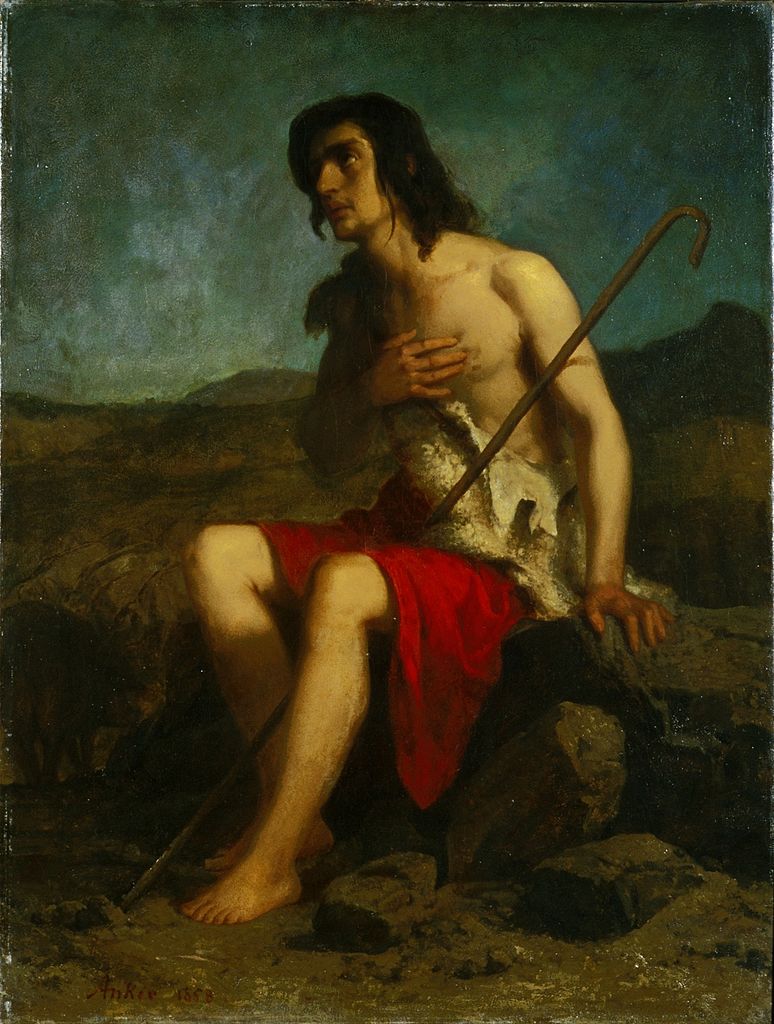
774px-albert_anker_-_der_verlorene_sohn