Are You Vexed?

Tuesday’s Column: Dale Mail

The tsunami traveled at a speed of about 200 miles per hour across the Pacific Ocean. That massive wave would kill sixty one people in Hawaii, one hundred and thirty eight in Japan, and thirty two in the Philippines. This Chilean earthquake which occurred on May 22, 1960, may be the largest earthquake ever recorded. 

The word “vexed” is an old Latin word meaning “to quake/rumble” and although Latin isn’t the language that the Old Testament was written in, the Old English word was used by scholars when translating Ecclesiastes 1.18. 

“For in much wisdom is much vexation, and he who increases knowledge increases sorrow.”

At first glance, it may seem like Solomon is discouraging one from pursuing knowledge— but the message is a lot deeper.

Some have taken the view that Solomon is speaking of an earthly knowledge. It’s true that the sort of knowledge the world offers isn’t going to bring you the kind of fulfillment that the wisdom God provides. The world’s understanding lacks the answers to major questions which are essential to our spiritual health. Where did we come from? What’s the purpose of life? What happens when we die? Is this all there is? Earthly wisdom will either provide one with answers with holes, answers that are depressing— or no answers at all. 

However, God’s wisdom can bring much vexation as well. 

With God’s wisdom you come to understand that the majority of people on earth aren’t pursuing Him. You discover that most people live their lives in a way that grieve Him. That sort of understanding also brings you closer to that God. When the Lord is upset, troubled, angered, frustrated, or vexed, then his faithful are going to feel similarly. 

With much of God’s wisdom, comes much vexation. With much of the world’s wisdom, there’s much vexation. The question we should ask, is why do we want our souls to be troubled? You can be fulfilled and troubled at the same time because with God, there’s always a light at the end of the tunnel. 

Dale Pollard

Four Waves On The Sea Of Life

Monday’s Column: Neal At The Cross

Neal Pollard

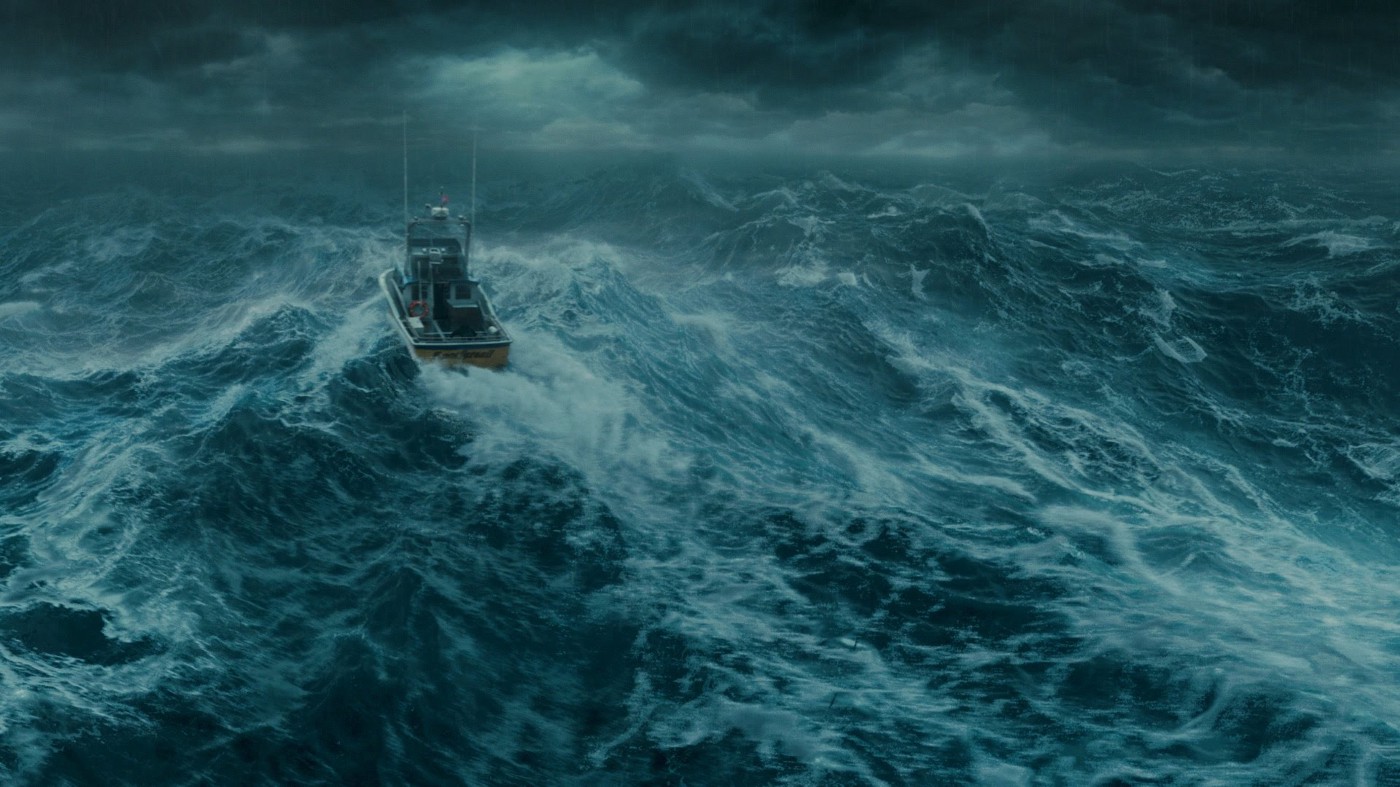
For whatever reason, I have been fascinated with stories of maritime disaster. I have read about the Titanic, but have even read more closely about the Lusitania, the Edmund Fitzgerald, the HMS Hood (for more, click here), and more. Perhaps few things could conjure up more fear than the thought of being thrust into a cold, deep ocean with no way to stay afloat, subject to attack and almost certain drowning. Poets have drawn upon such imagery, but so do the psalm writers. Read Psalm 42:7 or Psalm 69:2, 14-15 or Psalm 88:7. It is also the way Psalm 130 begins.

It seems to me that the writer is depicting the rolling waves we encounter in life, the ups and downs and the good and bad. How will I respond when I am in the storm, whether a literal storm, a storm others bring upon me or a storm I bring upon myself? What will I do when the winds have subsided and the storm has passed? Let’s look at this psalm as depicting four successive waves. 

APPREHENSION: Our Cries And Supplications (1-2)

(Wave One)

We find the writer in a watery valley, looking up at a high, but descending, wave. It causes him to cry out and voice his pleas and supplications. The crisis may be financial, medical, familial, personal, or spiritual. It may seem like the world is crashing in on top of you. Do you sink in waves of worry, fear, and doubt? Or do you cry out to God for help? The writer sets an example for us, when we feel like we will be buried by trouble!

TRANSGRESSION: Our Iniquities And Unforgiven Sins (3-4)

(Wave Two)

Though the writer moves away from the metaphor, the idea continues. When you wade in the ocean and reach a shelf, you can no longer put your feet on the bottom. You can sink or swim, but you cannot stand. Verse three asks, “If You, Lord, should mark iniquities, O Lord, who could stand?” The question is rhetorical, but a lifesaver is thrown! “But there is forgiveness with You, that You may be feared.” Perhaps better imagery is to see the Omnipotent Hand of God reaching into the deep, grabbing our outstretched, up- stretched hand! Perhaps self-inflicted trouble, our sins, cause us to sink deeper than any other trouble. 

EXPECTATION: Our Waiting And Hoping (5-7a)

(Wave Three)

Perhaps we could envision this as one floating to the top or having their head come up out of the water. The writer uses two significant, connected words–“wait” and “hope.” Help is coming! Just wait. Hope. You’re trusting, praying, studying, serving, and enduring. Maybe you feel like you’re holding onto a splintered plank that’s separating in the aftermath of your shipwreck, but you hear the sound of the rescue vessel humming on the waters. You know Who is at the helm, so you hang on!

REALIZATION: Our Mercy And Redemption (7-8)

(Wave Four)

I don’t know about you, but I don’t think I could be coaxed off a massive barge onto a rickety rowboat. But, most of us would make the exchange in the opposite scenario. Yet, the world clings to the leaky carrier of lostness when the ship of salvation is within reach. The writer calls heaven’s help “lovingkindness” and “abundant redemption.” This is the way I want to view the tumultuous waves of this world, from the safety of God’s saving grace. Resting in His everlasting arms, I can experience confidence and assurance at life’s worst while keeping my focus on Him at life’s best! 

You are probably facing, enduring, or looking back at one of those first three waves right now. We sometimes singing, “Jesus, Savior, pilot me over life’s tempestuous sea; Unknown waves before me roll, hiding rock and treacherous shoal, chart and compass came from Thee, Jesus, Savior, pilot me.” We are echoing the sentiments of the psalmist in Psalm 130. Wherever you are in life, be sure you are letting Him lift and lead you! It’s the only way to reach eternal safety (John 14:6)! 

Crisis

Wednesday’s Column: Third’s Words

Gary III

Gary Pollard

  • 1918 had the Spanish Flu pandemic that killed at least 675,000 people in the United States and 50,000,000 worldwide.
  • 1929 birthed the Great Depression, a multi year period of societal upheaval and economic collapse.
  • 1941 ultimately led to our involvement in a world war after the attack at Pearl Harbor.
  • 1963 saw the dramatic assassination of JFK.
  • 1986 put a damper on the excitement of space exploration with the tragedy of the Challenger explosion.
  • Violent crime rose dramatically from the 60’s to the 90’s, enough that most people no longer left their houses unlocked and were less likely to trust their fellow people.
  • 2001 marked the beginning of a global war on terror with an awful display of evil.
  • 2008 saw the Great Recession, the aftermath of which may be one of the causes of our great political division.
  • 2020 was a train wreck we need not discuss further.
 
This is by no means an exhaustive list! It covers some major events that affected Americans in the last 100 years, but much more could easily be said about the negatives of our history.
 
This is important: Immunity was attained after two years of the Spanish Flu pandemic. Lifespans increased by a few years during the Depression and led to a hearty generation of folks who helped to win the Second World War. That war, as horrible as it was, led to many incredible breakthroughs in medical and other sciences, not to mention historically unprecedented economic prosperity. The 1960s at least exposed the ungodly, ugly nature of hatred and racism, leading to some positive changes that were long overdue.
 
Even in the worst of times, good happens. But even if it doesn’t, hope is invulnerable! For a Christian, these issues are simply the result of a fallen world and they’re temporary. The end of life for us is the beginning! We have one important thing that no crisis can destroy: hope. We are absolutely certain that death will be the moment we get to live in a perfect world with our creator (see also II Peter 3.13ff; Matthew 19.28; Ephesians 1.18ff).
 
Nothing can or should dampen our faith in God, our hope for a better life, our mission to pull people out of darkness, our attitude, our love for each other, our dedication to spiritual growth, our responsibility to take care of people, our resilience in difficult times, and our critical compulsion to emulate Jesus in every possible way while we still breathe.

Struggling Through Our Troubles

Neal Pollard

Have you ever had a problem or struggle that started out small but kept growing until it was larger than life? Did it come to consume your thoughts, keep you up at night, and become an overwhelming obsession? Maybe you devoted a lot of emotion to it.

Just by virtue of living on this earth, we will struggle (Job 14:1-2). Job knew struggle and turmoil! He lost one thing after another. His life seemed to unravel before his eyes.  Teddy Roosevelt is credited with saying, “When you are at the end of your rope, tie a knot and hold on.” Have you ever found yourself struggling at the end of your rope of faith? You are certainly far from alone in that. We certainly see Job dangling there, asking, “Why was I ever born?” (3:11) and “Why can’t I go ahead and die?” (3:20-22). David was there (Psa. 22:1). So was Jeremiah (ch. 37-38).

Of course, trouble takes on many forms and comes from many directions. Any number of passages can help us cope with the struggle of trouble, but consider Psalm 10. It refers to the wicked seven times and to the afflicted four times. It also speaks synonymously of the wicked as the greedy (13), evildoer (15), and those of the earth (18). It speaks of the afflicted as the unfortunate (8,10,14), humble (14), the orphan and oppressed (14,18). We know that our trouble can come from the wicked, but it can also come from no one source we can identify though it hurts just the same. Consider this Psalm about our troubles and what we can do about them.

Our perception in times of trouble (1-11). Our vision can become blurry by tears or rage, but our point of view is altered when trouble comes. The psalmist goes through this. He sees God as being distant (1). He saw the wicked as being in control or prospering (2-11). God seemed far away and life seemed unfair. The majority of every generation is wicked, and each generation of God’s faithful must reconcile the seeming success of the wicked and oppression of the affilicted righteous. We don’t begrudge the psalmist for his struggle to see through spiritual eyes. We can relate.

Our prayers in times of trouble (12-15). The psalmist admits his own struggle, then he shows us how to overcome it. His first response is to pray. He asks God to deliver (12). He asks God to remember (12-14). Finally, he asks God to vindicate (15).

Our praise in times of trouble (16). Before the prayer he’s perplexed and indignant. Afterward, he has insight, peace, and greater confidence. He springs from his knees with new perspective. Doesn’t prayer do that for us? The psalmist acknowledges God’s nature—“Lord” (Jehovah, five times in the Psalm), position—“King”, and duration—“forever and ever.” Do we spend more time focusing on the source of our troubles than on the solution?

Our proper perspective in times of trouble (17-18).  The psalmist is confident at the end of this psalm, saying, “you have heard” and “you will strengthen and listen.” Do you approach God that confident in His ability and desire to do what is best? We can be as confident as he is that God hears and helps when we hurt.

What is the greatest trouble we can face in this life? A disfiguring accident? Financial ruin? Loss of a parent, spouse, or child? The deterioration of health? The fall of our nation? Through Christ, none of these are too difficult to overcome. This Psalm reminds me that God still cares and He won’t abandon me. You and I can look at the cross and the church and be reassured of that. We know we can trust God (Rom. 8:28). God is able and willing to help us through every trouble.

6359108530478803001617573448_1112-gmat-struggle-970-630x420

Identifying The Source Of Trouble In The Congregation

Neal Pollard

One of my dad’s most memorable sermons, which he preached in more than one location, was actually a two-parter.  The first part was preached Sunday morning. Dad warned that he was going to identify the source of the problems in the congregation. He used a wipe board or chalkboard, and only put the first initial of each one up there as he preached. He said that everyone should come back that night and he would disclose the full names that went with the initials.  At one congregation, after the morning sermon, a large number of people came forward in response to the invitation.  Sure enough, that evening dad put the full names next to the initials:

  • Accuser of the brethren (Rev. 12:10)
  • Adversary (1 Pet. 5:8)
  • Beelzebub (Mat. 12:24)
  • Belial (2 Cor. 6:15)
  • Devil (Heb. 2:14)
  • Enemy (Mat. 13:39)
  • Father of lies (John 8:44)
  • God of this world (2 Cor. 4:4)
  • Prince… (Eph. 2:2; John 12:31)
  • Roaring Lion (1 Pet. 5:8)
  • Satan (Mat. 4:10)
  • Spirit that works in the sons of disobedience (Eph. 2:2)
  • Tempter (Mat. 4:3)

Now, in no way am I discounting the free will choices people make. James 1:13-15 very clearly places the blame of sin on the individuals choosing to act on their lusts and desires. One is not possessed or overtaken by the devil to do his will any more than a person is overtaken by God and made to do what’s right. But Jesus calls the devil the “father” of sinful behavior (John 8:44). John tells us that the one who practices sin is “of the devil” (1 Jn. 3:8). Those who sin are doing his will (2 Tim. 2:26).

Satan is at the heart of national, congregation, familial, and individual sin.  We’re told to resist him (Jas. 4:7; 1 Pet. 5:9). The hopeful fact is that, with God’s help, we can always successfully do so.  Let’s be aware that the devil does not want God’s children or His work to succeed. If he can thwart our efforts as a church to be united, faithful to God’s Word, evangelistic, and productive, he will do so. Knowing this, we should be more determined not to let him win!

lion-692219_960_720

Her Closet Was Her Refuge

Neal Pollard

42-year-old Sefa Cebeci was with her husband in a seven-story building in Duzce, Turkey, when just before 7:00 P.M. local time on November 12, 1999, a 7.2 magnitude earthquake shook the city.  The building collapsed, and when all was said and done nearly 1,000 people were dead—including Sefa’s husband who was right beside her.  Despite rescue team leaders from some countries calling off the search for survivors after three days, an Israeli team pulled her from the rubble after nearly 5 days without food and water.  She would have to have an arm amputated and her kidney failure from dehydration nearly killed her.  She was able to survive in freezing temperatures for 105 hours under tons of concrete. How? A closet fell on top of her and protected her from her collapsed house.  Her closet became her refuge (facts via BBC News articles, 5/11/13 and 11/17/99).

Have you ever noticed a Christian whose life seemed to be crashing in all around them?  You would not imagine they could survive the spiritual carnage.  Yet, they survive.  The reasons certainly vary, but one variable that has to be in place for them has to do with their “closet.”  Do you remember in Jesus’ great sermon that He said to “enter into thy closet” to pray rather make a vain, public show of prayer (cf. Mat. 6:6, KJV)?  That word “closet,” variously translated “inner room,” “your room,” “private room,” and “inner chamber” is one found almost exclusively in the Septuagint (Greek Old Testament) and the gospels.  It is translated “storehouse” or “warehouse” (Luke 12:24; Mat. 24:26), but also “bedroom” or “chamber” (Gen. 43:30; 2 Ki. 6:12; Zodhiates, Spiros. The complete word study dictionary: New Testament 2000: n. pag. Print).  It refers to any place of privacy where one cannot be easily seen (ibid.).

Isn’t that where spiritual survival is made or broken, not necessarily and not primarily in our public assemblies or fellowship activities but in private?  When I am alone, do I seek refuge by entering into the closet of prayer, study, and private devotion?  In happy, prosperous times, I should be found there.  It will prepare me for calamitous, catastrophic events.  When my life is shaken to the core, I will survive if in my closet.

Jesus does not specify what kind of reward enjoyed by those whose prayer life is genuine rather than showy, but certainly there is no greater reward than enduring the trials of life spiritually intact. We may come away scarred and hurt, but we will survive!  Be a spiritual survivor!  Spend as much time as you can in your closet.

Actual photo of Sefa Cebeci in an Istanbul hospital (1999)


Avalanche Season

Neal Pollard

They are calling it an historic avalanche season in Colorado.  With snowpack at well over 100% due to massive amounts of mountain snowfall, conditions are prime for avalanches to breakout all over the backcountry. Already, six have died in avalanches this winter.  In fact, there have been three deadly slides just in the past week.  Warnings continue to come in from The Colorado Avalanche Information Center about dangerous conditions following two weeks of heavy snow.  Others have escaped death, but have harrowing tales of survival and, in some cases, broken bones.  Avalanches travel at the rate of a speeding car and hit with the force of a freight train. Typically, those buried in an avalanche lie beneath a ton of snow and the most common killer is either suffocation or blunt force trauma.  The head of the CAIF says the three most important tools are the beacon, probe, and shovel. The first is worn by the potential victim, while the other two are used by the rescuer.  Though these events can happen and be over in a matter of seconds, they can bring permanent consequences (information via FoxNews and Time’s Science And Space).

How often do we face overwhelming circumstances which we might liken to an avalanche?  They happen suddenly and seriously, and the aftermath can feel almost suffocating.  Though with different images, Bible writers speak of the feeling of burdens and sins being heavy and over their head (Ps. 38:4; Lam. 3:54).  David says similar things about trouble (Ps. 119:143) and iniquity (Ps. 40:12) overtaking him so that he cannot look up.  Maybe you can relate to such feelings, whether brought on by the guilt of sin or the difficulties of life. Both can threaten to bury us.  These things have even led to spiritual death.

May I suggest that we need the same three tools for our spiritual escape.  We have a beacon (Ps. 119:105), yet it also serves as a probe (Heb. 4:12) and a shovel (cf. Ps. 107:20; 147:16ff).  He also blesses us through prayer and providence.  Through all He does, God provides us a way of escape (1 Co. 10:13)!   We can survive, even in those times when problems crowd into our lives and threaten to bury us!  God is greater and stronger.  When swept up, hold on! Help is on the way.