Why You Must Repent

Carl Pollard

There’s a story told of a man who came forward every Sunday to ask for prayers. 

He continued responding every week for several months. Every time he would confess this same sin he would say, “Lord, take the cobwebs out of my life.” 

Finally, one Sunday, the man responded again with the same sin, and asked for the cobwebs to be taken out of his life. To which the preacher responded, “just kill the spider already.” Often, we come to God asking for forgiveness from the same sin time and time again, and yet we continue to leave the source of temptation in our lives. 

Sin always requires forgiveness. Forgiveness requires repentance. Repentance requires change! Repentance is a topic we are all familiar with. The word repent/repentance is used over 170 times in the Bible It is stressed as a part of the process by which we are forgiven of our sin. Verses like Acts 2:38 come to mind when we hear this word. To repent means to change your mind which leads to a change in direction. It means to feel remorse for sin, and it includes a change in lifestyle. 

When faced with temptation, true repentance is choosing not to sin. When caught in sin, repentance is a godly remorse. It is sincerity in your desire to “go and sin no more.” We understand this. It’s important for the born again Christian, but also for those who are wanting to be immersed and added to the body of Christ. 

We know what it is, but we also need to realize what it isn’t. Repentance isn’t just feeling sad. Paul tells us that worldly remorse is just feeling sorry that you were caught. 2 Corinthians 7:10 says, “For godly grief produces a repentance that leads to salvation without regret, whereas worldly grief produces death.” Godly grief that leads to repentance is remorse that you have sinned against the God of our salvation. 

Worldly repentance is hollow and empty. 

It isn’t feeling remorse just because you were caught doing what you shouldn’t. True repentance is so much more. True repentance does not regret parting with sin, false repentance does. True repentance hates sin, false repentance hates the consequences of sin. True repentance accepts godly counsel and accountability, false repentance avoids accountability. 

Our goal must be to practice true repentance, and we can’t fool ourselves. We are ALL in need of forgiveness, but we must be willing to confess our sins, to hate the sin, and change our lives to mirror Christ. 

Why Is repentance needed? Whether it is in relationships, in the church or in the world, God will not forgive us if we are unwilling to change sinful behavior.

Repentance isn’t just guilt, although guilt can sometimes motivate us to repent. 

In Luke 13:3,5, Jesus tells those who come to him to repent or they will perish. In this section several people come to Jesus to talk not about their own sins, but the sins of others. It’s a whole lot easier to see the faults in others rather than the blatantly obvious faults we have in our own lives. 

Here the people have done exactly what we continue to do today, talk about the sins of others rather than their own. But Jesus tells them they are horribly mistaken. There is power in repentance, and twice in this one conversation Jesus tells them to repent.

If I am honest, there have been far too many times I have failed to just “kill the spider.” I am ashamed of the sin I continued to feed all the while pointing out sin in everyone else’s lives. God will look at each and every one of us. He sees our sins and there is no one to blame but ourselves. Repent. Before your conscience is seared or the end comes. Repent.

Coming To Yourself

Rick Wheat (with Leigh)

We all need to come to  ourselves in life so that we can make the right changes and do the things that God would have us to do. In Luke 15 we read about the prodigal son who went out and lived a life of sin and rebellion. But one day when he was away in a far country, the Bible says, “he came to himself” and then decided it was time to go home (Luke 15:17). Here are three times in life when I have come to myself and when you might need to do the same thing. 

#1. Sobriety and turning from sin. 

There was a time in my life when alcohol had a strong hold on me, and I was not living a sober and healthy life.  I was allowing it to ruin me as a person and I had to come to myself and realize it was time to make a change.  The Bible says whoever is led away with alcohol is not wise (Proverbs 20:1). I was being led away and nothing was going to change until I came to myself.  We all sometimes notice sin in our lives, and we need to come to ourselves to repent and change it, Jesus said, “I tell you; but unless your repent, you will all likewise perish.” (Luke 13:3). 

#2. Salvation 

I came to a point when I recognized I needed God in my life and started to read and study the Bible.  At that point I came to myself and realized that I was lost.  I needed to be baptized into Jesus for the forgiveness of my sins as stated in Acts 2:38. I came to myself and made spiritual changes, and this is something everybody in the world needs to do. 

#3. Service 

After being baptized we need to find out where we can serve God and how we can be of use in his church. We need to come to ourselves and see how we can use our talents and abilities to serve in the church, help others, and glorify God. The Bible says, So, whether you eat or drink, or whatever you do, do all in the glory of God (1 Corinthians 10:31).

Be honest with yourself, find out what you can do, and then do it.   

Showing Up When It Counts

Friday’s Column: Brent’s Bent

brent-portrait

Brent Pollard

I recall watching the Atlanta Braves when they were the perennial cellar dwellers of the National League. The Braves’ games were broadcast on UHF station 17 out of Atlanta before the little independent television station went national via cable and satellite. In those days of the baby blue uniforms and small letter “a’s,” I watched stars like Dale Murphy, Rafael Ramirez, and Phil Niekro play the game of baseball on a TV with rabbit ears.  

Fast forward to 2021, and the Atlanta Braves have won the World Series. It is interesting to talk to younger fans who only know of above-average play in the last few decades. Such fans are blissfully ignorant of those days when you could count on the Braves to have more losses than wins. Yet, I noticed something about this championship year. If you look at the records of the LA Dodgers (106-56) and Houston Astros (95-67), both teams won more games during the season than the Atlanta Braves (88-73). This truth suggests that it is essential to prevail when it counts. In other words, the Braves showed up when they had to, which is why they are the national champions.  

There is something to be said of that in Christianity as well. Regarding this, Jesus gave a parable about two sons (Matthew 21.28-32). A father went and asked his first son to work in the vineyard. He refused. So, the father went to his second son. The second son said he would go and work but never showed up. In the interim, the first son regretted his answer and went to work in his father’s vineyard. Jesus ends the parable by asking who had been obedient. The crowd responded that the first son had obeyed. Jesus informed them that there would be sinners entering the kingdom of God in like manner before the religious elite.  

The religious leaders were like the second son. They gave lip service but never actually followed the Law of Moses, only their traditions. As a result, they did not show up when it counted. But the prostitutes and tax collectors, cognizant of their sins, showed up when Jesus extended His invitation (Matthew 11.28-30). So, while it is true that there is none righteous (Romans 3.10), we still note that there are people who we count on to show up despite their flaws. Ultimately, this is what matters.  

As the saying that we attribute to Benjamin Franklin goes: “Well done is better than well said.” But, of course, this idea was Biblical long before the famous Pennsylvanian put quill to paper. James reminds us to be doers of the Word, not just hearers (James 1.22). It is far too easy for us to blend in with other congregants. “Worship, Fellowship, Retreat, and Repeat.” Now, I will be the first to say that worship service attendance indicates spiritual health, but there is a vineyard out there in which we must labor. The Father asks us to go out and work in the vineyard. What is our response? We will have fulfilled our required tasks even if we have previously said no by our words or conduct but have shown up anyway. Better to be a latecomer than a no-show. Yes, we must show up when it counts. A gracious God will make up for a less-than-stellar record and proclaim us champions (cf. Matthew 25.24). 


Jeff Burroughs (1977) (via http://atlantabraves19701980.blogspot.com)

YOUR JUNK DRAWER


Sunday’s Column: Learning From Lehman

Dale Wiley

 
I read recently that one of the fastest growing business is storage units, closely following the Dollar General Stores. People have more ‘stuff’ than places to put them.
 
In our house, we have storage units we like to call  ‘Junk Drawers’. If we have an unexpected visitor we’ll do a swipe of stuff into the nearest drawer to hide all remnants of our ‘clutter’. I recently performed an ‘uncluttering’ and found some interesting items I forgot still existed. 
 
Items included:
  • 10 old TV remote control batteries that I hoped would regenerate but found that it wasn’t meant to be. 
  • 62 ink pens, each representing one of our many banks in the area. 
  • A 5 year old receipt from Auto Zone on a lawn mower battery with a 24 month guarantee. 
  • Some eclipse glasses from our big one 3 years ago. We have to be ready for the next one.
  • A receipt from Jim Fuqua Appliance Repair dated 1987. Although we don’t have the washing machine and Jim has since retired, a lifetime guarantee was promised and I holding him to it.
  • And finally, a love letter from my fiancé from 1972. After 48 yrs of marriage, She was disappointed to find it was in the junk drawer, but is now happy to have it framed and hanging on our bedroom wall.
 
You know, it’s hard to throw away old stuff and our old ways.
Eph 4:21-24 says to get rid of the Old Self and to put on the New Self.
Col 3:9-10 says to lay aside the Old Self and put on the New Self.
 
It could be that the drawers represent our lives. What we put in the drawers or leave in the drawers is up to us. We have the freedom to fill our lives with ‘junk’ or rubbish or with whatever the world gives us, or we can make sure we put  ‘in the drawer’ The things of Christ. 
 
Paul, in his letter to the church of Ephesus, pointed out some things that may be in the drawers of our lives, that we need to make a conscious decision to avoid, to lay aside, and to clear out. Look to Eph 4:17-32. Especially clear out  deceit, falsehood, anger, unwholesome words, bitterness, wrath, slander, and malice. But what happens if we just clear out the junk and then put the drawers back into the cabinet, empty?  How long will that cabinet stay empty? 
 
A 17th Century philosopher wrote, “There is a God-shaped vacuum in every person that can only be filled by the Creator and He is made known through Jesus Christ”. 
 
So, we just can’t leave the drawers of our lives empty…because something or someone or specifically the devil is always ready to creep in and fill it up again.  First Peter 5:8 reminds us to be vigilant against that adversary waiting to devour us..
 
Find the open, self-explanatory solutions to our ‘Junk Drawer’ dilemma in Col 3, 8-17.
 
  • Verse 8…To put them aside.
  • Verse 10..To put on the new self.
  • Verse 12..have a new heart.
  • Verse 13..To forgive.
  • Verse 15..Let the peace of Christ rule your heart.
  • And especially, “Beyond all things, Put on Love”. The perfect bond of unity, doing all things in the name of The Lord Jesus (Col. 3: 14-17). 

“Toying With God All My Life”

Monday’s Column: Neal At The Cross

IMG_1922

Neal Pollard

It was such a beautiful moment yesterday morning. A brother in Christ from our area who has been attending with us for a few months responded to the invitation. As Kevin and I took his confession, he spoke of sins in his past that fill him with regret. Though he was raised in the church, he has been away from the Lord for a long time. Among the things he expressed from his tender heart, he confessed, “Ive been toying with God all my life.” His point was simple. He felt doubt about God’s existence and concern for him, and it led him to make regrettable choices. But, recently, his study of God’s word and fellowship with God’s people led him to see how real God is and how much he needs Him in his life. 

I wonder how many of us could confess that, at times and in ways, we’ve toyed with God in some way. Perhaps we appealed to Him only when we were in trouble that we couldn’t solve ourselves. Maybe we promised Him we’d be faithful if only He’d give us something we specifically prayed for or thought we needed, and when we got it we broke our promise. It might have been a time or season when we “played church” and acted the role of Christian in the building but acted like the world when around them. 

This is not a tendency that started in our current generation. It is a human tendency. Bible writers exposed such thinking. God tells Ezekiel, “But as for you, son of man, your fellow citizens who talk about you by the walls and in the doorways of the houses, speak to one another, each to his brother, saying, ‘Come now and hear what the message is which comes forth from the Lord.’ They come to you as people come, and sit before you as My people and hear your words, but they do not do them, for they do the lustful desires expressed by their mouth, and their heart goes after their gain. Behold, you are to them like a sensual song by one who has a beautiful voice and plays well on an instrument; for they hear your words but they do not practice them” (Ezek. 33:30-32). This is similar to what Isaiah wrote (29:13) and Matthew (15:8-9) and Mark (7:6,7) quote. It’s playing with God to speak as though we desire His Word and even listen to it but be driven by desires and a heart that practice something different (cf. Jas. 1:21-25). 

I need to have the good heart our dear brother expressed on Sunday morning. One who wants others to see and know how much He believes in God, loves Him, and intends to serve Him. May we all keep our hearts tender to God’s Word and let its power do its surgical work in removing what doesn’t belong and moving us to act on what does belong. 

The Price Of Flight

Tuesday’s Column: Dale Mail

image

Dale Pollard

The cost of leaving God’s presence is more than many fully realize. 

It’s interesting how the phrase “away from the presence of the Lord” is used twice in Jonah 1:2-3. 

Leading up to the second mention, the text states that Jonah “paid the fare.” In the very next verse we read of a terrible storm that would end with the beginning of Jonah’s three day stent in solitary confinement within the belly of a great fish. 

He paid the fare— but the price was a little steeper than he thought. It’s expensive to flee from the presence of the Almighty. Too many Christians run away from the responsibilities that God has given us only to discover that the dark waters of sin and separation just aren’t worth it. 

Some discover this when it’s too late, but others are fortunate enough to realize this truth and return to the safety of God’s presence. May we learn from Jonah to go where the Lord leads and not make our own alternative routes. 

“But Jonah rose to flee to Tarshish from the presence of the Lord. He went down to Joppa and found a ship going to Tarshish. So he paid the fare and went down into it, to go with them to Tarshish, away from the presence of the Lord.” Jonah‬ ‭1:3‬ 


When My Love For Christ Grows Weak

Thursday’s Column: Captain’s Blog

carl pic

Carl Pollard

A problem that each one of us as Christians face at one time or another, a problem that has been around since the establishment of the church, is the problem of a weakened love for Christ. This problem results from family crisis, various diseases, the death of a loved one despite our fervent prayers and crying out to God, different forms of persecution, or watching as a respected Christians loses his faith in God.
As Christians we will experience problems that will cause our love for Christ to fail.
Our faith and love for Christ are tied together as one. If you lose your faith, love is weakened and vice versa. The song, “When My Love for Christ Grow Weak” says this, “See His anguish, see His faith, Love triumphant still in death.” Love can be restored and faith can be strengthened if we would just dwell on the sacrificial love of Christ.
Since love is strengthened by increasing our faith in Christ, notice Revelation 2. The church in Ephesus had done well in many areas. They were hard working, patient, upright (they hated evil), noble minded (tested the claims of false prophets), they knew how to deal with evil men, and rather than growing weary, they persevered and had endurance (3). But they had one major issue…their love for Christ had grown weak.
Verse 4 tells us they were living the life of a Christian, but totally devoid of love. The Ephesians were doing a lot of good things, but out of obligation and duty rather than being properly motivated by a love for Christ. While they appeared to be righteous on the surface, they had no relationship with God. They were going through the motions but it was all done without love.
Sadly this is a problem that many face in the church today. They experience hardship and lose their love. They continue to live as a Christian out of duty and because it’s the “right thing to do.” Since the Ephesians fell into the same rut that we too can sometimes struggle with, it’s beneficial for us to look at what they were told to do in order to restore their relationship with Christ.
The solution is threefold. So let’s notice what we must do “when our love for Christ grows weak.”
Remember where you came from (Rev. 2:5). When our love for Christ grows weak, what must we do? Remember why you made the decision to become a Christian. Remember where you came from. A life filled with sin. A life devoid of hope. A time when you couldn’t call God your father. Remember the blessings of baptism. The sin that was wiped away. The relationship that was established with God, through Christ. Remember what you felt the moment you came out of the waters of baptism. The joy and relief in knowing that God now calls you HIS child. “When my love to Christ grows weak, When for deeper faith I seek, Then in thought I go to thee, Garden of Gethsemane.” Remember what makes our Christianity a reality. Remember what it cost for God to forgive your sin.
Repent (Rev. 2:5).  Metanoeson means “to change ones mind.” I want you to picture yourself in your car, you’re headed to lunch with the perfect restaurant picked out. As you’re getting closer, your wife says, “I’d rather go to Chick Fil A. Step 1, your wife has changed her mind about where she wants to eat. And so…Step 2, you turn the car around, you change directions and head to Chick Fil A…making the right call to keep your wife happy. That, is repentance. “A change of mind that leads to a change of direction.” The Ephesians were told to first, remember where they came from, and then to repent. Change direction, go back to a time when they had both good deeds and a love for a christ. A change of mind, from heartless service to love filled devotion.
Return and “Do the things you did at first” (Rev. 2:5). When Our Love For Christ Grows Weak, return to the way we were living before sin ruined our relationship with God. We must confess (admit the wrong) to God, and to each other (James. 5:17). Acknowledge the presence of sin. And change, even if it costs us. Each one of us can remember the times where our Christianity was strong and growing, but since we are human, it’s easy to become:
 Complacent (feeling satisfied with where we are, with no motivation to grow or change). Depressed (with current circumstances or personal trials).
Distracted (by work, family, hobbies, friends).
Emotionless (feeling so overwhelmed with sin that we just give up, lose hope).
There’s a cure for each one of these problems. Remember Christ. Dwell on the love that God has for each one of us.
lovechristweak.001

“Good That Comes From Bad”

Neal Pollard

With a name like “Lamentations,” you know it isn’t a joke book. It’s not lighthearted or jovial. It’s the inspired record of Jeremiah’s tears and troubled spirit over the punishment of Judah for her idolatry and abandonment of God. It is graphic (see 2:20-21; 4:4-10; 5:11-14). Conditions became terrible for the nation (cf. 1:9-10). The book is filled with apocalyptic language and hyperbole (3:1-16).

In the middle of the prophesy, though, Jeremiah expresses the hopeful effect of all this calamity and reaping. The desired effect of captivity was three-fold, according to Lamentations 3:40. First, it was for self-examination–“Let us search out and examine our ways.” Second, it was for repentance–“and turn back to the Lord.” Finally, it was for spiritual development–“Let us lift our hearts and hands to God in heaven.”

When we sin or even are caught in some long-term transgression, there will very often be consequences. If we fail to overcome it, the consequences will be unending and most serious. Yet, if we “come to ourselves” (cf. Luke 15:17) and let go of what is keeping us from being right with God, it can have those same three positive impacts on us. It cause cause us to engage in proper self-examination. It will hopefully lead us to repent. Then, this paves the road for us to grow close to God through proper spiritual development.

The ideal is to avoid spiritually spiraling out of control or into some sin problem. Yet, if or when we do, let us remember Lamentations 3:40. Good can come from bad.

p19d8uriudal1tmv6ccoms1ace3

Deathbed Repentance?

Neal Pollard

“From the stirrups to the ground,
Mercy I asked for, mercy I found”
That is a distorted view of grace,
Which seeks God only in death’s face.

It cheapens that which cost Him much,
To use Him only as a deathbed crutch.
Unlike the seeker at his eleventh hour,
Who sincerely reaches for His saving power,

The hardened sinner who in last resort
Hedges his bets for some eternal life support.
So many never reach a deathbed sound in mind,
Or care for His will ’til their death warrant’s signed.

While God is long-suffering, wanting all to be saved,
The majority spend their lives to sin’s power enslaved
They only think heaven when earth’s living is through,
But an afterthought gesture will just not do.

Scripture says “come now,” not “wait til tomorrow,”
So many delayed to their own regret and sorrow.
Instead of relegating God to a last-ditch recourse,
Submit to Him now, you He’ll publicly endorse.

Deathbed repentance is not found in His Word,
No matter what men from their wisdom you’ve heard.
Obey from the heart what His doctrine requires,
Let His word be your truth, let all others be liars.

thinkstockphotos-sb10069454g-001

THE BOY WHO STAYED HOME

Neal Pollard

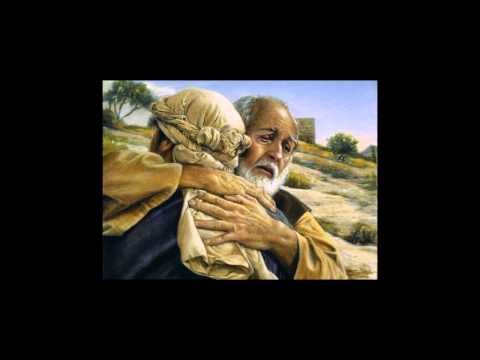
When we think of the parable in Luke 15, we inevitably think of the younger son who left home for the far country of sin. We appreciate God giving us the prodigal (reckless; wastefully extravagant) son in this parable to illustrate hope, love, and forgiveness, no matter what we may have done. Then we think of our favorite character in this story, the father. He represents God and reveals God’s eagerness to embrace and restore a sinner who repents. He gives the undeserved, unexpected, and unanticipated (cf. Eph. 2:4-8).

Then, there’s that other main character in the story. How does he strike you? After all, his brother has been reckless and irresponsible and his dad lets him off scot-free and even throws him a party. He robbed his father blind, and he isn’t even punished one bit. How do you see the brother who stayed home? Let at the text more closely and see how God sees him.

  • He was guilty of self-righteousness. He complains to the father about the reception his brother received (29). With self-righteousness, there’s an exaggerated view of our own goodness. There’s an exaggerated view of the other guy’s badness. There’s a comparison where we come out on top of the other guy. There are often judgmental assumptions made about the other guy. Let’s not forget that Jesus condemns self-righteousness (cf. Luke 18:10-14). If the Father walked up on some of our condescending conversations, He would spoil our fun since the spirit of self-righteousness is so far removed from the spirit of a loving Father who longs for His wayward children to come home.
  • He lacked self-control (28). He appears quick-tempered, not waiting for an explanation. We have the conversation between the younger son and the father, and the older son and the father. Where is the conversation between the two brothers. Didn’t he claim to be the good, righteous one? There was no self-control in the way he talked to his father or about his brother. “If anyone thinks himself to be religious, and yet does not bridle his tongue but deceives his own heart, this man’s religion is vain” (Js. 1:26).
  • He was selfish. Why did he wring his hands about the younger brother’s wasteful spending? The father, who knew this son, answered, “All that I have is yours.” There is no evidence that the older brother was concerned about his formerly depraved brother or his once-grieving father. He seems more interested in how these things impacted him. He appears faithful to his father, but for the wrong purpose. What difference would it have made if the older brother saw the prodigal as someone to serve rather than slam?
  • He had an unforgiving spirit. His brother has sinned against him, but he was unwilling to forgive him. One of the servants called him “your brother” (27), the father calls him “this brother of yours” (32), but the only time he directly refers to him he calls him “this son of yours” (30). Behind these parables, the Pharisees and scribes grumble at Jesus receiving sinners. In the first two parables, people sought the lost. In this last parable, the older brother made no effort to go after his brother. God implies as early as Cain and Abel that we are our brother’s keeper (cf. Gal. 6:2; Js. 5:19-20). Not only did he not search for his brother, but now he won’t forgive him.
  • He was jealous. He thought the father was better to his erring brother (29-30). You can almost hear him saying, “You love him more than you love me.” He couldn’t stand to see his brother honored. How contrary to the way God wants His children treating each other (Rom. 12:10; Eph. 4:31-32). The older brother was making accusations and he hadn’t even spoken to him. He thinks the worst of him and is utterly lacking in brotherly affection.
  • He was not humble, but rebellious against his father’s will.  He wanted to tell the father how to run his house. Do you notice the younger son respectfully addressing his father (21)? There’s little if any respect from the older son (29-30). The Bible condemns self-will. Peter condemned those despising authority and the self-willed (2 Pe. 2:10). Some people are loyal to the church as long as they can have their own way.

Some of us may find ourselves in the position of the prodigal. None of us will ever be in the position of the father. May we never find ourselves in the position of the boy who stayed home. If we do, we may lose our place in the father’s house!

hqdefault

HOW TO MAKE GOD SICK

Neal Pollard

When speaking of God’s attributions and actions, the Bible often resorts to a literary device called anthropomorphism (where human characteristics or behaviors are attributed to God—“the hand of God,” “the eyes of the Lord,” etc.).  But, there is one personification that’s absolutely terrifying.  Jesus utilizes it in describing the spiritual condition of Laodicea. He says, “I know your works, that you are neither cold nor hot. I could wish you were cold or hot. So then, because you are lukewarm, and neither cold nor hot, I will vomit you out of My mouth” (Rev. 3:15-16). Some translations, knowing “vomit” is felt to be too strong and graphic to the sensitivities of some readers, have gone the more antiseptic route by translating it “spit.”  But the Greeks had a word for the phrase “spit out” (you find that word translated in John 9:6, Mark 7:33, and Mark 8:23).

It has been said that what makes God sick often is what makes our culture tick. When you look at the Laodiceans, they were guilty of the following:

  • Indifferent to mission (Rev. 3:15-16).
  • Incorrect in self-analysis (Rev. 3:17).
  • Insensitive to need (Rev. 3:17).
  • Impenitent (Rev. 3:19).

Certainly, the world is blind to God’s purpose for their lives, is numb to its true spiritual condition, and is deaf to the biblical plea to repent and depend on God and His will. But these words are directed to Christians as a warning to us.  Our mission is to engage in the work He has us on earth to do, which is not to accumulate wealth, indulge in fleshly pleasures, and pursue the honor and praise of this world. Our need for God’s strength and help every step of the way must drive us to depend on Him and repent of a lack of zeal for and involvement in the work He has called us to do as Christians.

When we get so wrapped up in this world that we ignore His mission, when we get so conditioned to rely on our assets and attributes that we ignore His power, and when we get so hard-hearted that we ignore His grace and forgiveness, we make God sick.  No matter how you look at that, the very thought is just chilling! He loves us, pleads with us, and wants to reward us (Rev. 3:19-22). But that requires us to live differently from those ancient Laodiceans. We must let Scripture properly diagnose our spiritual condition or it will make God sick.

“Snodgrass’s Muff”

Neal Pollard

It happened on October 16, 1912, the eighth (*) and deciding game of the World Series. In the bottom of the 10th, with his New York Giants winning by a run, Clyde Engle sent a lazy pop fly to centerfield.  Fred Snodgrass, an average hitter and dependable fielder, settled under it and ultimately dropped it.  A lot of other things happened. Snodgrass made a spectacular catch on the next play.  Hall of Fame pitcher walked the next batter.  Tris Speaker, before driving in the winning run with a single, hit a pop foul that both Fred Merkle (aka “Bonehead Merkle,” but that’s a story for another day) and Chief Meyers failed to catch.  Snodgrass’ blunder was the scapegoat for the Giants’ series loss to the Boston Red Sox. Fred would go on to be successful in business as a banker, an appliance merchant, and a rancher, was elected mayor of Oxnard, California, and served on the City Council for three terms.  There was so much more to Fred Snodgrass than a single unfortunate moment in time, but even his obituary read: “Fred Snodgrass, 86, Dead; Ball Player Muffed 1912 Fly.” In a 1940 interview, Fred spoke of how that fated fly ball would come up as he met or spoke with people (info via sabr.org and history.com).

Isn’t it interesting how a mistake or sin committed in a moment can have such lasting implications, bringing infamy and an enormous challenge of trying to live it down?  But doesn’t Snodgrass also prove that we do not have to be defined by our failures? Maybe our blunder is not played out with such renown and infamy, but it can still stay with us and dog our continued steps.

Have you dropped the ball with something?  Maybe you let down somebody you loved or somebody that was really counting on you.  Maybe you hurt someone special to you.  It might have been a foolish or ungodly word or deed when someone was watching.  The bigger the blunder, the heavier that burden of guilt might be in your heart.  There’s no excusing it. But what will you do now?  Will you let it keep you down or will you refuse to be defined by it?  The writer of Hebrews urges us, “Let us lay aside every encumbrance and the sin which so easily entangles us, and let us run with patience the race that is set before us” (Heb. 12:1b). The focal point must be what’s before us, not what’s behind us.  So said Paul (Phil. 3:13).

Dust yourself off. Regroup. Get ready for what’s next! Focus on what’s next, not on what’s over and done.

(*) Game 2 was called on account of “impending darkness”