
LET’S BE CAREFUL WITH OUR SCRUPLES!

Neal Pollard

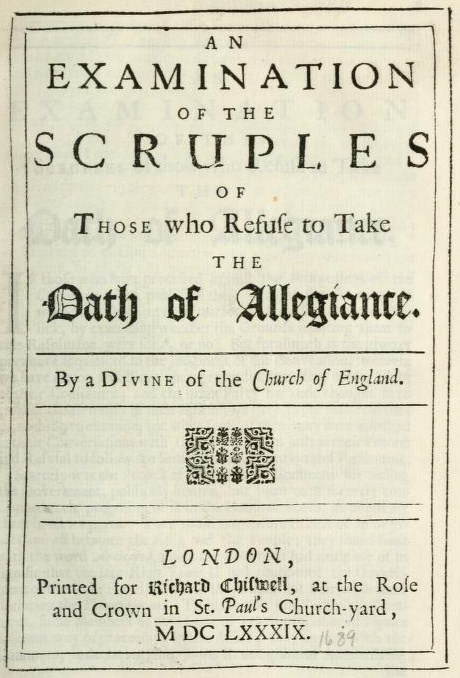
The word “scruple” comes to us, as many words do, from a Latin word (in this case, scrupus) and it literally meant “rough pebble” and figuratively meant “anxiety.” It has come to mean “a feeling of doubt or hesitation with regard to the morality or propriety of a course of action” (Apple Dictionary, version 2.2.1, 2005-2015). All of us have scruples that reveal themselves in the standards we set for ourselves.  Often, our “doubt” or “hesitation” arises because of Bible teaching. We disapprove of sexual immorality because God forbids it. We shun drunkenness because Scripture condemns it. Where God commands something be done or avoided, we are simply exercising obedience by following His Word and even echoing His will by teaching it to others. In such cases, we are not making law but only seeking to be obedient to what God has already commanded. Yet, there are areas that fall within the realm of judgment where we must be careful to distinguish between our tastes, proclivities, and convictions and what God has actually said about it. In its more serious and sinister form, we may even draw lines of fellowship or form judgments about someone because they violate, not Scripture, but our scruples. Consider a short list of areas and examples:

  • That men must wear a suit and/or tie to the assemblies and women must wear a dress to the assemblies (most especially that the preacher must don suit and tie when he preaches).
  • Abstaining from watching all TV.
  • That putting up a Christmas tree or otherwise celebrating the season is wrong.
  • That one must offer an invitation after every sermon.
  • That there must be an evening worship assembly offered for a church to be sound.
  • Opposing tattoos of any shape, size, or place.
  • That children must be educated at home or in the public school system.
  • That allowing one’s teenaged children to date is inherently sinful.
  • That a preacher must support himself with a secular job.
  • That an organized youth program is wrong.

There is no way to be exhaustive with such a list, but what all of these (and other things) have in common is that we cannot find book, chapter, and verse that causes these scruples to rise to the level of commandment. I’m not talking about whether they are wise or unwise, what role principle might play in decision-making, or what is or is not the best judgment.  Short of a heavenly mandate, we must tread so carefully.  Most of the examples above have been the source of friction between faithful brethren who otherwise stand together upon the gospel foundation. I have strong, decided feelings on most of the matters mentioned above. A few might surprise you, but many may not. When it comes down to the brass tacks of practicality, though, we need to remember to balance Paul’s injunction to not only “bear with the scruples of the weak, and not to please ourselves” (Rom. 15:1) but also “receive one who is weak in the faith, but not to disputes over doubtful things” (Rom. 14:1). This requires such Christian qualities as wisdom, grace, patience, understanding, and love. Some battles can distract us from the real enemy. Let’s not allow that to happen!
allix_examination_of_the_scruples

ROUGHING UP THE REFEREE

Neal Pollard

Perhaps you have seen the video of two John Jay High School football players targeting an official late in their loss last Friday to their Marble Falls, Texas, opponent.  Marble Falls was running out the clock to preserve their win.  Details have not been divulged to explain why the players were angry or why they took apparent revenge by blindsiding the unwitting official. It does not take too much discernment to conclude they must not have liked something this referee said or did prior to their inappropriate response.  Whether or not the official provoked these young men to anger, all would have to agree that whatever moral authority they might have had disappeared after their vicious tackle of the defenseless man (Read and watch here).

Umpires and referees exist to keep order, to enforce and interpret the rules, and make judgments about whether the game is being played as it should be. They are not a popular lot, as attested by the heckling they can receive and the jokes made about them. We may even wonder what draws a person to take on such a job.  They make an easy target for those who often know less than and have a worse view than the one on the field or the court who must execute their judgment in real time.

While as a preacher and the son of a preacher I have seen and experienced ministers blindsided by angry hearers who confused the message with the messenger, I see a much more maligned, misunderstood, and marked group whose judgment and decision-making has occasionally been unfairly attacked.  No wonder Peter promises faithful elders that they will receive a superlative reward (1 Pet. 5:4). There is certainly such a thing as bad leadership and decision-making, and elders are fallible human beings. Yet, I have never yet seen an eldership practice church discipline without at least a few members taking a cheap, undeserved shot at them for trying to follow and get God’s people to follow His “rules.”  Whenever they are faced with a difficult decision in the realm of judgment, like eliminating an ineffective ministry or starting a challenging one, a change or alteration to the place of meeting, letting a preacher go or hiring another one, or the like, they may get figuratively roughed up.

The New Testament urges a different attitude from the spiritually mature.  Paul says appreciate and highly esteem them in love (1 Th. 5:12-13). The writer of Hebrews tells us to be the kind of sheep that bring our leaders “joy and not grief” as grievous fellowship isn’t profitable even for us (Heb. 13:17).  Be careful what you say about elders (cf. 1 Tim. 5:19). In fact, why not let them know, out of the blue, how much you appreciate their efforts to shepherd the flock (cf. Acts 20:28).  That may knock them off their feet, but it will be in the good way!

Ancient, But Temporary

Neal Pollard

The oldest buildings in the world are found in Turkey, France, Italy, Scotland, Malta, England, Ireland, and Iran. All of them date back to at least 3,000 B.C.  They include tombs, temples, settlements, houses, sanctuaries, and plazas. They are historical treasures, revealing the earliest dental procedures, burial habits, religious ceremonies of pagans, societies and more. Some are remarkably preserved for their age, and many are visited by tourists after having been meticulously studied by archaeologists and other students of history.  It fires the imagination to think about what life was like for people who lived contemporary to Noah’s sons, Abraham, and perhaps Job. The fact that any part of these edifices still stand is incredible. When you consider that the oldest buildings intact in the United States are Puebloan houses and villages located in New Mexico, Arizona, Colorado, and Utah, dating only as far back as between 750-1000 A.D., the existence of the aforementioned structures in Europe and Asia is all the more impressive (information via taospueblo.com, wikipedia, et al).

History and archaeology buffs revel at the thought of visiting such sites, and who could fail to marvel at such testaments to durability?  We can hardly fathom buildings that have stood for several thousands of years.  However, they are all comparatively temporary.

Peter writes, “But the day of the Lord will come like a thief, in which the heavens will pass away with a roar and the elements will be destroyed with intense heat, and the earth and its works will be burned up. Since all these things are to be destroyed in this way, what sort of people ought you to be in holy conduct and godliness, looking for and hastening the coming of the day of God, because of which the heavens will destroyed by burning, and the elements will melt with intense heat!” (2 Pet. 3:10-12).  When Christ comes again, all the works of earth will be destroyed with fire. Such a promise is meant to motivate us to live in view of the unseen and the eternal.  Specifically, Peter says such knowledge such cause us to be holy and godly, watchful and anticipating.  Ancient buildings can be seen with the eyes of flesh.  Future destruction must be viewed through eyes of faith.  May we remember, as we live each day and build our lives, that nothing in this life is worth surrendering eternal life.

Oise-Aigne American Cemetery Plot E

Neal Pollard

My brother and fellow preacher, Brent Pollard, finds the most interesting historical facts—an ability which makes his preaching illustrations most interesting.  He sent me an article about the Oise-Aigne Cemetery in northern France.  Though I have actually visited that cemetery, I had no idea about the existence of an auxiliary burial plot known as “Plot E.”  While the 6012 military personnel buried in the four main burial plots lost their lives in World War I, the 94 interred in Plot E are infamous, disgraced soldiers who died for their crimes during or after World War II.  These men either murdered fellow soldiers or raped and/or murdered 71 people in England, France, Belgium, Germany, Italy and Algeria.  “No US flag is permitted to fly over the section, and the numbered graves literally lie with their backs turned to the main cemetery on the other side of the road” (warhistoryonline.com).

These men were supposed to be fighting for the freedoms and rights of American citizens, but instead they were most dramatically undermining the pursuit of life, liberty, and happiness of the unfortunate ones who crossed their paths.  For their crimes, they not only paid the ultimate penalty but were buried in disgrace and immortalized with infamy. They are remembered as “the dishonorable dead.”

The book of Revelation refers to the “book of life” (20:12), implying that it is possible for one’s name to be blotted out of it (3:5).  However, those whose names are not found in that book will be “cast into the lake of fire” (20:15). Those who take away from the words of this revelation—and by application any other (cf. Gal. 1:6-9)—“God shall take away his part of out of the book of life” (22:19).  More specifically, John says, “And nothing unclean, and no one who practices abomination and lying, shall ever come into it, but only those whose names are written in the Lamb’s book of life” (21:27).  For the ungodly and disobedient, John lays out in apocalyptic terms how unthinkably horrible it will be to die unfaithful to Christ.  He says, “He also will drink of the wine of the wrath of God, which is mixed in full strength in the cup of His anger; and he will be tormented with fire and brimstone in the presence of the holy angels and in the presence of the Lamb. And the smoke of their torment goes up forever and ever; they have no rest day and night…” (14:10-11a).

Everyone will stand before the judgment seat of Christ (2 Cor. 5:10).  The faithful will receive glory and honor and reward (Mat. 25:34-40).  The unrighteous, however, will go away into everlasting punishment (Mat. 25:46).  No one will deserve heaven, but will go there thanks to God’s amazing grace and his or her conscious effort to walk in the light (1 John 1:7-10). Those who know not and obey not the gospel will endure something eternally worse than a firing squad, a hangman’s noose, or blameworthy burial (2 Th. 1:8-9).  Though the world may believe less and less in the reality of hell, the Bible’s position on the matter has not changed. Knowing the terror of the Lord, may we persuade others and, ourselves, be persuaded (2 Cor. 5:11).

Should We Let The Devil Make The Rules Of Engagement?

Neal Pollard

Thanks to the hospitality of my good friend, Jason Jackson, I had the opportunity to visit beautiful AT&T Park in San Francisco, witnessing a rarity (a Rockies win) against his beloved Giants.  It was LGBT Night at the old ballpark, an annual sponsorship of “SF Pride.” It was also the day of the historic Supreme Court decision mandating the recognition of same-sex marriage in all 50 states. The crowd was enthusiastic about that event in Washington, D.C., cheering when it was proclaimed over the P.A.  The videoboard featured gay and lesbian couples for its “kiss cam.”  While San Francisco is renowned for its “sexual progressiveness,” the city of Denver has earned a reputation for similar liberality of thought regarding homosexuality. In a growing number of places in our nation and especially among those under a certain age, there is welcoming, sanctioning language for homosexuality and vehement intolerance for the least word of condemnation of the behavior as sinfulness.  Even among those professing to be Christians, there is a changing posture in how or if it is dealt with.  Understanding that no sin is worse than any other, that it is not right to display an ungodly attitude in addressing any sin, and that there should not be an inordinate amount of time, attention, and energy given to any sin to the exclusion of the other, I wonder if even some of our Christian brothers and sisters have become unwitting pawns of the prince of this world regarding this matter.  The devil is at war against the Word and will of God, and he is at war against anyone loyal to such (Rom. 13:12; 2 Cor. 10:3-6; Eph. 6:10ff; etc.).  He wants his cause, the ultimate end of which is the spiritual destruction of all men, to succeed, and he wants the cause of Christ to be overthrown.  We know that his mission will ultimately fail, with there being those who are welcomed by our Lord to heaven (1 Cor. 15:24; Mat. 25:34-39). Yet, most will follow him to everlasting punishment and destruction (Mat. 25:41-46).  He has the bulk of the resources and influence of this world, as he almost always has had in every generation. He has powerfully allies and mouthpieces from Washington to Hollywood and most media and education outlets in between.

  • Who is behind the idea that we are not loving the sinner when we speak of homosexuality as sin?
  • Who would have us believe that we are mean-spirited or unrighteous if we use terms like “unnatural” (Rom. 1:26), “exceedingly grave sin” (Gen. 18:20), “ungodly” (2 Pet. 2:6), “gross immorality” and “going after strange flesh” (Jude 7) to describe homosexual behavior?
  • Who would sell us on the idea that loving the homosexual means keeping quiet about their practice of it, failing to warn them to repent (Ezek. 33:8)?
  • Who would seek to equate a behavioral choice (1 Cor. 6:9) with one’s race or skin color (Acts 17:26; Acts 10:34-35)?

What happened in our nation’s highest court last Friday may have been necessary to shake the church out of its general lethargy and indifference regarding evangelism.  What happened there will ultimately be overruled in the highest court there is (Mat. 25:31ff).  What happened there should not become our obsession, but neither are we wrong to take note of how this is a significant societal erosion.  Jesus implies how intolerable it would be for Sodom and Gomorrah at the Judgment (Mat. 10:15). The Lord overthrew them in “in His anger and in His wrath” (Deut. 29:23). Homosexuality is not the only sin there is nor is it the chief sin, but may we not be intimidated away from calling it what it is—“sin.”

Be Sure Of The Foundation

Neal Pollard

In 2008, I traveled to Bangladesh and spent an unscheduled night in the Capitol city of Dhaka. It’s likely that I passed the eight-story tall Rana Plaza building on that trip, given its proximity to my hotel.  I certainly saw many like it.  But on April 28, 2013, during morning rush hour in one of the most densely populated countries of the world, Rana Plaza collapsed and killed well over 1000 people. It was the deadliest garment factory accident in history.  Why it happened is an outrage. It was built on swampy ground. Extra stories were constructed without proper authorization.  Costs were cut everywhere they could be. Because of this, a huge number of people paid the ultimate price.

Did you know there were warnings? Cracks appeared in the walls the day before and the building was evacuated. But five garment factory owners who had space in the building ordered their employees to go back inside Rana Plaza on that fateful day.  This fact caused global outrage, spawned boycotts and led to calls for international sanctions. It was rightly considered unacceptable and inhumane for such conditions to continue to exist.

There is an infinitely greater problem invisible to the naked eye.  Billions of people are building their lives upon a foundation guaranteed to fail.  They have either never come to Jesus, or even more tragically they have heard Him and ignored His appeals and warnings for safety.

In Luke six, the point of Jesus asking, “Why call Me Lord, then do not do what I say?” is to teach that we must build our lives on the foundation of Him.  In Jesus’ illustration there, the first builder is well protected. He has dug deep and laid his house on the bedrock foundation.  The second builder has no protection.  Incredibly, he builds on the ground with no foundation at all.  In 1 Corinthians 3:11, Paul says there is no other foundation to build your life on than Christ. In that context, Paul warns against building on other foundations—the foundations of men.  Our lives must be built on the bedrock foundation of Christ.  The very foundation of the church (cf. Mat. 16:18) is the one we must each choose for our lives.  “Storms” are coming, including the ultimate storm at the end.  On that day, it will matter how you built.

23bangladesh-superjumbo