The Art of Excuses (Jeremiah 1)

Thursday’s Column: Captain’s Blog

IMG_0806

Carl Pollard

Someone once said, “Excuses are tools of the incompetent, and those who specialize in them seldom go far.” Ben Franklin is quoted saying, “He that is good for making excuses is seldom good for anything else.” 

Jeremiah had a complete list of excuses ready when God called on him to be a prophet to the people of Israel. Many times the excuses of Jeremiah become ours when we are called on to proclaim God’s Word to this world. We see that with every excuse Jeremiah made, God gave promises in return. 

First, Jeremiah said, “the task ahead is difficult.” Jeremiah 1:5 says, ““Before I formed you in the womb I knew you, And before you were born I consecrated you; I have appointed you a prophet to the nations.” This is God speaking to Jeremiah, and notice what He says, “I have appointed you a prophet to the nations.” The task ahead is difficult, so Jeremiah gives off a list of excuses for why he isn’t the one for this job. God gives a promise for Jeremiah’s excuses. He says, “before I formed you in the womb I knew you.” God knew that Jeremiah was the one for the job, even if Jeremiah didn’t think so. 

Second, Jeremiah said, “I don’t have the talent.” Jeremiah 1:6 says, “Then I said, “Alas, Lord God! Behold, I do not know how to speak, because I am a youth.” Many times people blame their cowardice on a lack of talent. They say that it isn’t natural to them, that there are others more suited for the job. But God knows Jeremiah and the great good he can accomplish. In Jeremiah 1:9, God promises that He would put His words in Jeremiah’s mouth.  

As Christians today we have these same promises for our worries and excuses. Let’s not blame our cowardice on a lack of talent or the difficulty of the task. That isn’t a good excuse to God. Nothing is. He has promised that He will be with us, and we have HIS Word to teach to others. Let’s trust in that. 

36409255_10155649438010922_3078108464388505600_n

My God Is So Big

Tuesday’s Column: Dale Mail

IMG_1381

Dale Pollard

My problems are so big, my worries so mighty, there’s nothing my anxieties can’t do. Wait, that’s not how that song goes. It’s been said that the there are more stars in the known universe than all of the sand on earth combined. That being said, in just one grain of sand there are more atoms than all of the stars. That’s pretty amazing. Our planet is but a speck in the grandeur of space. Countless stars, planets, galaxies, lightyears and somehow God is well aware of the happenings of people.

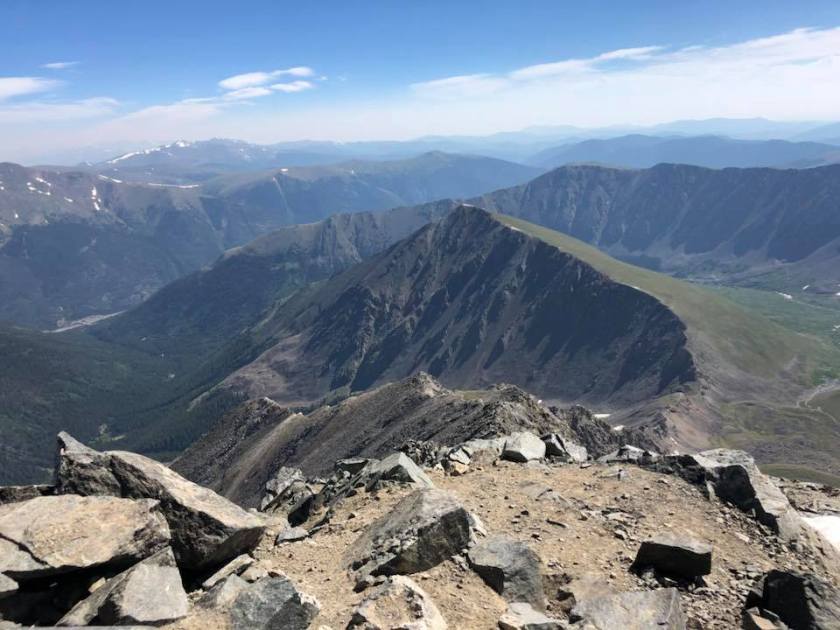
Have you stood on the mountain tops? Have you observed the power of the oceans as the waves crash on the shore? Has your heart almost stopped after the vibrating sensation of a thunder clap resinates in your chest? The might of the Creator is everywhere in the world around us and at times it just demands to be noticed.

1 Kings 19:11-13 is a section of scripture that is mysterious and fascinating. The Lord of hosts is about to show Himself to a depressed and exhausted Elijah, but in a way that he would never forget. “The Lord said, ‘go out on the mountain in the presence of the Lord, for the Lord is about to pass by.’ Then a great and powerful wind tore the mountains apart and shattered the rocks before the Lord, but the Lord was not in the wind. After the wind there was an earthquake, but the Lord was not in the earthquake. After the earthquake came a fire, but the Lord was not in the fire. And after the fire came a gentle whisper. When Elijah heard it, he pulled his cloak over his face and went out to stand at the mouth of the cave. Then the voice said, ‘what are you doing here Elijah?’” In the hush of Horeb, Elijah seeks to avoid the troubles of his world. The acoustics of the mountainous area along with the time spent in silence must have made the shattering rocks, raging fire, splitting hills, and rumbling earth all but deafening and definitely a terrifying display of divine power. Then in sharp contrast, a still whisper comes. This gentleness, no doubt, is the reason Elijah decides to cautiously emerge from his hiding place. God is teaching His worn-out servant a lesson that holds true for us today.

The fact is, there is no more God, His wisdom, power, and presence in an earthquake than there is in the sweet breath of a blooming flower. The quiet ticking of a wrist watch reveals just as much intelligence and purpose as does the striking of a clock tower’s bell. One may walk out into an open field at night and stare up into the vast sky, lit up with numerous twinkling stars and declare, “I’ve found God!” But God is no more in the sky than He is in the blades of grass flattened beneath your feet. The question came to Elijah from that still voice, “What are you doing here?” To the prophet, his problems were too great and too large and his solution was to run and hide. God, in a magnificent way, is trying to remind Elijah of his place. Our place in life is not to take matters into our own hands or solve life’s many difficulties on our own. The answer is not to run away, but to walk humbly with our awesome God. He is strong enough to lift our burdens, wise enough to counsel us, patient enough to allow us to learn, and loving enough to constantly forgive. My God is so big, so strong, and so mighty, there’s nothing my God cannot do— for you, too. 

28661198_10215059820467071_276448063235616888_n
A view from Mt. Carmel (Israel)

Serving the Living God 

Thursday’s Column: Captain’s Blog

IMG_0806

Carl Pollard

I know I’m not old enough to say this, but when I was younger I used to lay in bed at night and try to imagine what God looked like. I would try to put a face to Him, I’d wonder what He was doing, and I would ask myself if God knew that I was thinking about Him. I still ask those same questions to this day. I’m sure that most if not all of you who are reading this believe that there is a God, and that He does see and hear all that we say. So the question I’d like to ask is, “since there is a God that has all power, why do we sometimes have difficulty following the commands that we find in the Bible?” I’d like to look at a verse that may help us realize the importance of following what God has told us to do as Christians.

Jeremiah 10:12 says, “It is He who made the earth by His power, who established the world by His wisdom; and by His understanding He has stretched out the heavens.”

God has ALL power. There isn’t an area that He is lacking power in. He controls the weather, He created us, and, as Jeremiah 10:12 said, He made this earth that we live on. I believe that we sometimes forget just how powerful God truly is. Since God has all power, shouldn’t we be following what the Creator of everything has told us to do? In seven days He thought of everything we see around us. Think of it this way. We’ve never had an original thought. For example, I could say that I’m the only person to have ever thought about a pink Aardvark. But before I thought of pink Aardvarks, there was such thing as the color pink, and there were Aardvarks before I thought of them. So what I’m actually doing is taking two things that God created and putting them together. God has given us specific commands to do as Christians. Since God has given us rules on how to live, we shouldn’t have a problem following them. They may be difficult, but God knows how to take care of His creation. The thought of the God of the universe watching out and guiding me through life is a great comfort to me!

But what if we aren’t following what God has told us to do? There’s a saying that we all have heard that says, “Actions speak louder than words.” Our actions are a direct window to how we truly feel. If I don’t do what God has commanded, then that’s like us saying to God, “I don’t truly believe that there are consequences to my actions.” But that is a deadly place for us to be, because God IS real and there ARE consequences to our actions. God is real and the consequences of our actions are very real! In the end, it comes down to this: Not obeying what God has said is a reflection of how real we make God out to be. If we truly believe He is real, then we shouldn’t have a problem doing what He tells us to do. As Christians, we serve the one true God, and He is very real. I pray that this fact will push us to obey the commands He has given us because our God is alive and we all have an eternity with Him if we do what He tells us to do.

Looking back at when I was younger, I’ve realized that I asked the right question, but the most important part of those questions is how I answer them. Will I show through my actions that I truly believe He is alive? Or do I doubt the reality of God by not taking His commands seriously? Let’s try to always prove God is alive by following what He has told us to do!

maxresdefault

God Is Always In Control

Neal Pollard

While the knowledge of my fear of snakes is widespread, some of the events of my past that hardened that horror as less so. A couple of years before moving to Colorado, we were hit by Hurricane Isabel. On our one acre lot, we had well over 100 trees. In fact, about 100 of them fell in that storm, which was the deadliest and costliest of the 2003 Atlantic hurricane season. Cleanup took months, as the storm shook up the environment in some notable ways. To me, the most disturbing was that it forced a great many copperhead snakes out of their dry dens and rocky hillsides down into neighborhoods like ours. In the course of several months of cutting and removing trees, we ran into about a dozen of these demonic creatures. 

On one occasion, a copperhead was near my foot. Also near my foot was a garden hoe, which I promptly dispatched for the purpose of eliminating this threat. To my utter dismay, the blade of the hoe, put to the head of the snake, sank into the rain-softened ground. Rather than killing the snake, it made it mad. At this point, I was in a quandary. Pushing the hoe harder was not causing further harm to the snake, but releasing the snake from the hoe felt like a bad option, too. For what seemed like a week, I continued to work the hoe on that copperhead until it was hurt badly enough for me to properly finish the job.

Have you ever been caught on the horns of a dilemma which seemed bigger than you? As you were in the throes of it, you prayed, pleaded, and petitioned God for help. You realized that without His help, you were in big trouble. It could have been regarding your health, finances, a relationship, a sin struggle, or big decision. Most of us become keenly aware of our need of God’s intervention in moments like those. Yet, it is a helpful reminder that even when life is not so scary or circumstances are less dramatic, God is still in control. Our prayers should reflect this. Our plans should be governed by it. Our priorities should show that we get that.

What will happen to our nation in time to come? What might the church face that scares and intimidates us? What could happen in our individual lives that fills us with dread? No matter what, trust that God is always in control. Take heart in this truth: “The Lord is my light and my salvation; Whom shall I fear? The Lord is the defense of my life; Whom shall I dread? When evildoers came upon me to devour my flesh, My adversaries and my enemies, they stumbled and fell. Though a host encamp against me, My heart will not fear; Though war arise against me, In spite of this I shall be confident” (Psalm 27:1-3). 

In other words, God is always in control!

13533881412553

“I’ll Love You Forever”

Neal Pollard

We read it to our sons when they were growing up. We made up our own tune to the song, “I’ll love you forever, I’ll like you for always, As long as I’m living, my baby you’ll be.” It’s been hard to remember those days in the rocking chair, reading it over and over to them, without getting tearful ever since they weren’t little boys. It turns out that many people can relate. The book’s author, Robert Munsch, reports that it has sold 15,000,000 copies (http://robertmunsch.com/book/love-you-forever). His publisher didn’t want to publish it because it didn’t seem like a traditional children’s book.

If just reading the title gets you choked up with personal memories, you may not want to read the true story behind the book. Munsch says that the song came first:

I made that up after my wife and I had two babies born dead. The song
was my song to my dead babies. For a long time I had it in my head and
I couldn’t even sing it because every time I tried to sing it I cried. It was
very strange having a song in my head that I couldn’t sing (ibid.).

He later built a story around the song, and the rest is history for millions of parents and their children. I imagine Gary, Dale, and Carl would tell you this is their favorite book from childhood. It’s certainly ours.

Isn’t it interesting that such a beautiful, intense love story surrounds something heartbreaking and tragic. Out of pain and sorrow, this incredible, enduring legacy was created. Knowing the backstory only intensifies the power of the words in the book.

Have you ever looked at the story of the cross in that light? Scripture teaches us from beginning to end that God loves us, His children. He cares for us, protects us, and wants us to live with Him forever.

But there is a backstory. In fact, it goes back to eternity. There, the Godhead made a plan to make sure we could live with Him forever. But it would require His Son dying for us in order to make it happen. Discovering that may bring tears to our eyes, but it also melts our hearts. What love! It’s a forever love, one that can make us the best we could ever be.

Here is God’s message throughout Scripture: “I have loved you with an everlasting love; Therefore I have drawn you with lovingkindness” (Jer. 31:3). In other words, “I’ve loved you forever and I’ll love you forever.”

tumblr_inline_o0urztubwd1t2pr7r_1280

Seeing God In Nature: Volcanos

Neal Pollard

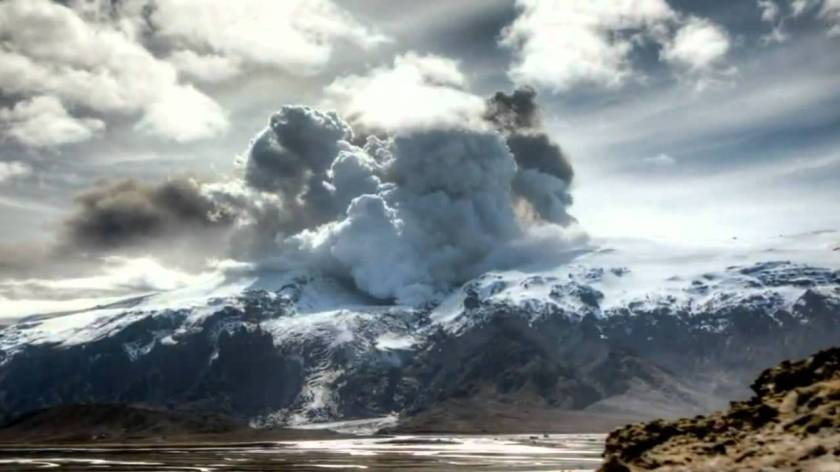
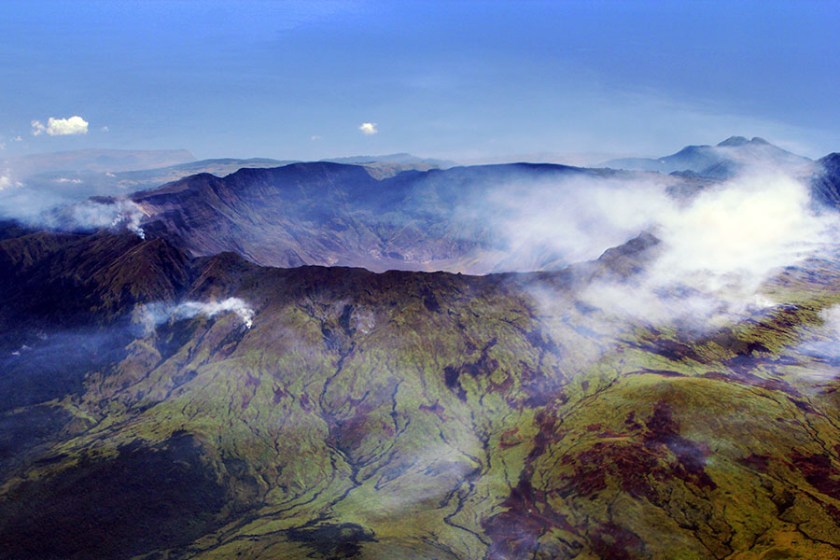
As we received word of the volcanic eruption near Guatemala City, Guatemala, yesterday, where Bear Valley Bible Institute has had an extension school for several years, we were reminded of the omnipotence of God. The power God displays through nature and His creation reveal how such a powerful effect reveals an even more powerful cause. Volcanic activity for which there is no recorded history, like at Yellowstone, Deccan Plateau, and Santorini, stand alongside several we do know about. Perhaps Pompeii or Mt. Saint Helens is most infamous, but the Mount Tambora volcano in Indonesia has been called the most explosive and deadly for which there is historical recounting. Mount Tambora’s eruption began on April 5, 1815, and the mountain blew apart on the evening of April 10th. “The blast, pyroclastic flows, and tsunamis that followed killed at least 10,000 islanders and destroyed the homes of 35,000 more” (britannica.com). It went from being a mountain 14,000 feet high to being a caldera (a crater) 3.7 miles across. Its effects were intense and global. It shot megatons of material into the atmosphere, preventing so much sunlight from reaching the earth’s surface that 80,000 more Indonesians died from famine and disease. The earth’s average temperature was reduced over five degrees. Western Europe and eastern North America experienced heavy snow and killing frost in June, July, and August, causing “crop failures and starvation in those regions, and the year 1816 was called the ‘year without a summer’” (ibid.).

Volcanos are so awesome and powerful that they evoke a strong response from us. They illustrate several things of a spiritual nature. As noted above, they are demonstrations of an all-powerful God. So often, they erupt without specific warning. There may have been tremors and signs for years, but nothing out of the ordinary. Then, too rapidly for many to escape, the cataclysmic occurs. It is a testimony of good that comes from tragedy, too. The Department of Geosciences at Oregon State University reminds us that volcanic soil is very rich and conducive to a dramatic agricultural comeback following these geological events (volcano.oregonstate,edu). These events should help remind us of a truth Bible writers like Peter teach us, that “…the day of the Lord will come like a thief, in which the heavens will pass away with a roar and the elements will be destroyed with intense heat, and the earth and its works will be burned up. Since all these things are to be destroyed in this way, what sort of people ought you to be in holy conduct and godliness, looking for and hastening the coming of the day of God, because of which the heavens will be destroyed by burning, and the elements will melt with intense heat!” (2 Pet. 3:10-12). 

Please pray for our brethren in Guatemala and for the hearts of all men outside of Christ, that they might come to a saving knowledge of the truth before it is eternally too late. May the evidence gleaned from places like nature, including volcanic events, persuade mankind of the reality and power of God. So persuaded, perhaps their hearts will be open to learning more about Who this God is as we share the revelation of Him as found in His Word!

caldera_mt_tambora_sumbawa_indonesia
Mount Tambora caldera

Paul’s Portrait Of God For Timothy

Neal Pollard

Devoting himself to a theme of godliness in writing his spiritual son, Timothy, Paul writes to encourage him to teach godliness to people who enjoy financial prosperity (1 Tim. 6:3-10, 17-19). Part of his instruction is to point rich Christians (the case can easily be made that American Christians qualify as this in nearly all instances and many preachers in foreign lands on U.S. support do, too, among their fellow natives) to where the truest treasures lay. Along with encouraging righteous behavior, Paul points to God. He gives life to all things (13). Paul also points to Christ Jesus, who is faithful (14) and who is coming again (14) to give “life indeed” in “the future” (19). Certainly, as Christ is divine, this picture describes Him, though it is obvious this is a portrait of God. He depicts God as:

  • Privileged—“Blessed” (15)
  • Particular—“Only” (15); “Alone” (16)
  • Predominant—“Sovereign” (15)
  • Preeminent—“King of kings and Lord of lords” (15); “Whom no man has seen or can see” (16)
  • Possessor—“Possesses immortality” (16)
  • Phenomenal—“Dwells in unapproachable light” (16)
  • Praiseworthy—“To Him be honor and eternal dominion!” (16)

Why would Paul remind a preacher (or have a preacher remind Christians) about who God is? As we see in the second letter to this young man, motivation is vital! What keeps me serving God when life is difficult? When the world around me ignores Him, mocks Him, rebels against Him, blasphemes Him, and dismisses Him, I need to serve and glorify Him. What will help me do that? I need to see Him for what He truly is! So Paul pulls out a series of superlatives to drive home the point, “How great is our God!” 

In a world full of ungodliness, of “worldly and empty chatter and the opposing arguments of what is falsely called ‘knowledge’” (20), we must be on “guard.” Nothing clarifies the task better than intently focusing on the nature of God. He provides (1:4), He is (1:17), He saves (2:4; 4:10), He is one (2:5), He lives and rules (3:15;4:10), He created (4:3-4), and He sees (5:21). What motivation!

p46

Proud Of My Father 

Dale Pollard

I was cleaning out the basement and found a box of old photos. You know the kind of photos I’m talking about. Cheesy, dated, and awkward family photos. There was a reason we had them hidden in the darkest corner of our house. They weren’t worthy to be put on display, but they were also too precious to merely throw away. As I flipped through them, I stumbled across some ancient photos of my dad. In one picture he had an afro and this corny smile on his face. In another picture, my dad was standing by an old pickup truck wearing a long and baggy cut-off T- shirt. He had 80’s frame glasses on with large lenses, and a truckers hat that barely sat on his head.

To most people, those were embarrassing pictures. To most people, those were things that I should hang my head in shame over. But you know, all I felt was pride. I was so proud of who I came from, and as weird as he looked, I sat there defending his fashion choices in my mind. I’m proud to be the grandson of a preacher and the son of a preacher. But, there is nothing that fills me with more pride than the fact that I am a child of God.

There are so many reasons that I’m proud of that fact, but here is the main reason… because He loves me more than I deserve. Our sins put Christ on the cross. It was my sin problem that made Jesus cry out in agony, “My God, My God, why have You forsaken me?” (Matt. 27:46). When we commit sin, we are participating in the very thing that Christ came to die for. And yet, despite all of that, my God loves me. My Father has still taken me in. He has shown unconditional love, a love stronger than any mortal could show. My Heavenly Father has offered salvation, the forgiveness of sins, and a hope of eternal glory.

I’m proud to be a child of God.

Dale is the associate minister of the Forrest Park church of Christ in Valdosta, Georgia. 

12994291_1083102885061776_4387252032365377566_n1910258_48188995921_7802_n10509496_10152319491430922_7847742518867276869_n

Some Powerful Promises

Neal Pollard

“You Will Have…”

—Treasure in heaven if you follow Jesus (Mat. 19:21; Mk. 10:21).
—Honor in the sight of all if you are humble (Lk. 14:10).
—Praise of rulers and authority if you do good (Rom. 13:3).
—An answer for the sinfully proud if you are persuaded about the Lord (2 Cor. 5:12).
—Brief tribulation if you are faithful, but then the crown of life (Rev. 2:10).

“You Will Be…”

—Judged in the way you judge (Mat. 7:2).
—Hated by all for Christ’s name (Mat. 10:22).
—Justified or condemned by your words (Mat. 12:37).
—Sons of the Most High by loving unconditionally (Lk. 6:35).
—Repaid for charitable kindness at the resurrection of the righteous (Lk. 14:14).
—Free indeed if freed by the Son (Jn. 8:36).
—Saved by faith in Christ (Ac. 16:31).
—Saved by confessing Christ (Rom. 10:9).
—Able to overcome any temptation (1 Co. 10:13).
—Enriched by being generous (2 Co. 9:11).
—Able to stand firm against the devil’s schemes if you put on the full armor of God (Eph. 6:11ff).
—A good servant of Christ Jesus by pointing out His Word (1 Tim. 4:6).
—Tested (Rev. 2:10).

“You Will Not…”

—Enter the kingdom of heaven without a righteousness surpassing the scribes and Pharisees (Mt. 5:20).
—Enter the kingdom of heaven without being converted like little children (Mt. 18:3).
—Carry out the desire of the flesh if you walk by the Spirit (Gal. 5:16).
—Grieve like the hopeless if you face the death of a faithful Christian (1 Th. 4:13).
—Grow weary and lose heart if you consider Jesus’ example of endurance (Heb. 12:3).

“You Will See…”

—Others faults more fairly when you look accurately at your own (Mt. 7:5).
—The Majesty and power of Jesus if you look with spiritual eyes (Mt. 26:64).
—The glory of God if you believe (Jn. 11:40).
—The King some day (Jn. 16:16-19).

“You Will Know…”

—Teachers by their fruits (Mt. 7:16,20).
—The emancipating truth (Jn. 8:32).
—The hope of God’s calling through faith in His revealed will (Eph. 1:18).
—How to respond to every man if you use gracious, well-seasoned speech (Col. 4:6).
—How to conduct yourself in the Lord’s church if you consult God’s Word (1 Tim. 3:15).

“You Will Receive…”

—All things you ask in prayer, believing (Mt. 21:22).
—If you ask in Christ’s name (Jn. 16:24).
—The gift of the Holy Spirit if you repent and are baptized for the remission of sins (Acts 2:38).
—The reward of the inheritance as the result of works of obedience (Col. 3:24).
—The unfading crown of glory if you are an elder who serves faithfully (1 Pet. 5:4).

In view of just a portion of God’s generosity, may we stand on the promises of God today and every day. One of the most thrilling statements of all Scripture is this: “He who promised is faithful” (Heb. 10:23). Whatever you are struggling with, claim this ironclad fact with its many implications! Holding onto it, surely you can handle any trial, temptation, or trouble you are facing.

pexels-photo-42379

God Revealed (poem)

Neal Pollard

The mighty arm of creation, brooding or building
The hand that tipped the canopy, drowning sinners
The finger that stirred the languages, babblers yielding
The heart that made the heirs of Abram winners

The Majesty presented in a bush, resilient though burning
The Master who through plagues made Pharaoh submit
The Merciful One who longed for Israel’s returning
The Measuring Rod whose justice sin did not acquit.

The everlasting to everlasting, whose word’s a holy knife
Inhabitant of the heavens, swaddling Incarnate babe
Kindling Spirit, Father, Son, the way, truth and life
Perfect in character, with power the obedient to save.

Gatekeeper of heaven, consigner of the wicked to hell
Served by angels, ruler of the living and the dead
Spirit, love and light, divinest nature not one part frail
Eyes all-seeing, mind all-knowing, power unlimited.

Hope of the hopeless, joy for the tearful mourner
Source of strength for the heavy-laden soul
Lifter of the penitent fallen, all-glory adorner
Author of salvation who one day will call the judgment roll.

Since He is and is rewarder, let not one refuse His order!
If Satan’s power you’d have repealed, obey the God the word’s revealed!

IMG_1199

THE MORE I KNOW, THE LESS I KNOW

Neal Pollard

It is a true paradox. Today,  I’ve been married longer than I have ever been.  I’ve been a father longer than I have ever been.  The same is true for me as a Christian, a preacher, and every other relationship I am in.  My experience in all of these has never been greater than it is right now.  Yet, as I examine things, I realize just how much I do not know.  I am not saying that truth is unknowable, for such a statement would be false and contradictory to what God affirms in Scripture (John 8:32; Eph. 1:18; 1 Tim. 3:15; etc.).  It is just that I realize how little I understand compared to what needs to be understood, that I find the challenge of putting truth into practice in every situation requiring wisdom and understanding as daunting as I ever have.  Yet, despite such a realization, my optimism has never been greater.  Why?  Because I have never believed more strongly in the power and wisdom of God, nor have I ever depended more on Him for strength and provision where I am lacking than I do today.  I feel smaller, but He seems bigger.  While the walk on the narrow way seems a steeper, more strenuous, incline each day and the challenges to faith more daunting, more than proportionate to this is my realization that God “is able to do exceedingly abundantly above all that we ask or think, according to the power that works in us” (Eph. 3:20). My conviction about what the Bible says has never been stronger. My belief in God’s existence, involvement, concern, and righteousness has never been more than this moment.  Yet, my awareness of my finiteness and limitations, the transiency of this life, and the ferocity of the adversary is acute.  Incredibly, this doesn’t cause me to despair. It causes me to hope. It takes the focus off me and puts it where it belongs—on Him! He is able to establish me through His Word (Rom. 16:25). He is “able to make all grace abound to” me, that I, “having all sufficiency in all things, may have an abundance for every good work” (2 Cor. 9:8).  The most important thing for me to know, every day in every challenge and responsibility, is that God is able (Rom. 14:4; Phil. 3:21; 2 Tim. 1:12; Heb. 2:18).

Don’t misunderstand me. I am not despairing. I am not even frustrated. I am hopeful and excited.  One of the greatest promises of Scripture is, “But He gives more grace” (Jas. 4:6). He will walk with me through the darkest valleys (Psa. 23:4). As He holds my hand and guides me through His word and His providence, He also points me toward His house.  He tells me He will help me get home and when the narrow way becomes too steep or arduous for me to walk alone, He will carry me in His everlasting arms (cf. Deu. 32:7). I will keep studying His inspired guidebook and striving to apply it to my life.  And as I do, I will increase my dependence and reliance upon Him, confident that “He who has begun a good work in [me] will complete it until the day of Jesus Christ” (Phil. 1:6).  That’s really all I need to know!

GOD HATES SHORTS!


Neal Pollard

 You may be thinking that the title is presumptuous, opinionated, and even out of line.  Let me disclaim what follows by asserting that God does not hate all shorts.  He does, however, hate the following types of shorts.

But not these. 🙂


GOD HATES SHORTCUTS.  At least, He hates humanly devised shortcuts for which He has given no authorization.  Man has devised shortcuts to salvation that cut out divine commands.  He has made shortcuts in ethics and morality to justify and rationalize behavior God condemns.  We should examine such “shortcuts” carefully to make sure they are not detours off of the narrow way.

GOD HATES SHORTCHANGES.  In Malachi 3:8-10, God condemns His people for “robbing Him” in their giving.  They did not give with appropriate gratitude and generosity.  Those who fail to put Him first (cf. Matt. 6:33) are shortchanging God of the time, talents, resources, and service He deserves.  

GOD HATES SHORTSIGHTEDNESS.  When we make decisions based on instant gratification or immediate benefits without giving thought to longterm implications, we often make a mess of our lives.  This is true of church plans, the person we choose to marry, unbiblical changes to the church and teaching to attract the unchurched, and the like.  Certainly, one can be too deliberate and methodical to the point of lethargy and apathy.  Yet, neither is it proper to leap before adequately looking.

GOD HATES SHORTCOMINGS.  God’s hatred for sin is so great that He sent Christ to the cross as payment for it.  Sin is falling short of God’s mark.  The sobering thing is that all of us come short of God’s glory as the result of our sin (Rom. 3:23).  The great news is that while God hates shortcomings, He deeply loves shortcomers.  That’s also why He sent Jesus to die for us.

God hates these shorts, but He has provided an alternative regarding all of them.  By full and trusting obedience, we avoid shortcuts.  By recognizing our debt and feeling heartfelt gratitude to God for paying it, we avoid shortchanging Him.  By growing in wisdom and Christlikeness, we avoid shortsightedness.  By walking in the light as children of God, we avoid the eternal ramifications of our shortcomings.  That’s because God loves us!

SOME GREAT TRUTHS ABOUT GOD


Neal Pollard

• He Is Omniscient, Yet Optimistic (Jer. 26:3).

• He Knows Us Better Than We Know Ourselves And Still Is Not Willing That Any Should Perish (2 Pet. 3:9).

• He Sees Our Stingy Tendencies, But He Still Gives Freely(Rom. 8:32; Eph 1:6).

• He Knows We Can Be Faithless, But He Is Still Faithful (2 Cor. 1:18; 2 Tim 2:13).

• We Keep Track Of Others’ Wrongs, But God Can Forget (Heb. 10:17).

• We Procrastinate And Delay, But God’s Patience Still Waits (So Far) (1 Pet. 3:20; 2 Pet. 3:15).

• In A World With Too Much Impersonal Care, He Personally Cares (1 Pet 5:7).

• When We Feel Ignored By Others, He Sees Even Minute Details (Matt 10:29-31).

• In A World Of Fickle, Fading Love, His Lovingkindnesses Never Cease (Lam. 3:22).

• People Forget The Help, Favors, And Gifts We Give Them, But God Is Not Unjust To Forget Your Work And The Love You Have Shown In His Name (Heb. 6:10).

• Though Others May Abandon You, He’s Coming Back To Claim His Own (John 14:3; 1 Thess. 4:16-18).