Christianity Should Change You

Neal Pollard

Reading Luke’s account of things, Saul may have been the chief threat to the Christians at the time recorded in Acts 8-9. He was “ravaging the church” (8:3), “breathing threats and murder against the disciples of the Lord” (9:1). He was doing “much harm” to the saints (9:13). He would look back on this part of his life, calling himself a harmful persecutor and killer of Christians (22:3ff; 26:9ff; 1 Cor. 15:9; 1 Tim. 1:13). The last thing we would expect, reading about his violent exploits against followers of Christ, would be a complete turnaround. But that’s what happens in Acts 9. 

SAUL’S PLANS ARE CHANGED (1-3). He had letters from the High Priest to authorize his imprisoning of Christians. His zeal and passion to stop Christianity is as strong as could be, but Christ has a message for him. It literally stops him in his tracks. The Christian life can be a sudden, abrupt change even today. When one comes face to face with who Jesus is, it will cause unforeseen, dramatic changes in one’s life!

SAUL’S MIND IS CHANGED (4-7). His entire worldview about who Jesus is changes in what happens on this road to Damascus. He sees a light and hears a voice asking, “Saul, Saul, why are you persecuting Me?” (4). He’s not sure who he’s speaking to, but he knows it’s no mere man. Jesus tells Saul who He is, then tells Saul what to do next. He’s not saved on the road, but told to go to Damascus to await news of what he should do (6). The greatest question of life just may be, “Who is Jesus?” Saul thought he knew, but is finding out that everything he thought he knew was wrong. 

SAUL’S PERSPECTIVE IS CHANGED (8-18). Saul is blinded on the road. He doesn’t eat, drink, or see for three days. Meanwhile, the Lord commissions a man named Ananias to go preach to Saul. Jesus could have easily laid it out there for Saul, but He chose the “foolishness of preaching” to save this persecutor (cf. 1 Cor. 1:21). Naturally, Ananias was apprehensive about his mission, knowing full well all that Saul had done to the saints (13-15). The Lord reassures the preacher that Saul has changed his mind and is ready to hear what he must do, so Ananias obediently goes to Damascus and preaches to him (17). The hardships and realities of life can totally change our perspective, leaving us receptive to the will of Christ. We might not have been seeking before suffering. 

SAUL’S CONDITION IS CHANGED (18). In this moment, he could see–physically and spiritually. With spiritual sight restored, he “got up and was baptized.” Saul would later look back on this and tell us more of what Ananias preached to him. “The God of our fathers has appointed you to know His will and to see the Righteous One and to hear an utterance from His mouth. ‘For you will be a witness for Him to all men of what you have seen and heard. ‘Now why do you delay? Get up and be baptized, and wash away your sins, calling on His name'” (22:14-16). Baptism changed his spiritual condition before God. It washed away his sins. It brought about the change of condition, opening door to a change of mission. Baptism is but part of God’s saving plan, but it is the point at which sins are forgiven for a penitent believer. 

SAUL’S FELLOWSHIP IS CHANGED (19ff). His environment is no longer Christian-haters. It’s the hated Christians. He spends several days with them. He would prove to be such an asset to the saints at Damascus, and he is ultimately, readily accepted as one of them. He fought against the very ones he fought for before becoming a Christian (22), until his former allies plot to kill him (23-24). His new spiritual family helps him steal away (25). He seeks to fellowship with the disciples in Jerusalem, but in an age long before instant communication and technology the word had not reached these saints. They fear he’s an infiltrator, coming among them to do them harm. Can you imagine sitting down for a fellowship meal with the man that imprisoned or killed a friend or loved one? That’s possibly the situation for Saul and these saints. Barnabas, the generous encourager we met in Acts 4, paves the way for Saul’s acceptance. He is ultimately welcomed into the fellowship. Sometimes, our comfort zone is challenged with the addition of new Christians into our fellowship. It could be their worldly background, their income bracket, their skin color, or some similar difference that requires our adjustment. God expects that we’ll overcome any such superficial barriers and see what ties us together–our faith in and following of Jesus.  

SAUL’S MESSAGE IS CHANGED (20-31). He proclaimed that Jesus is the Son of God (20). He proved to opposing Jews that Jesus is the Christ (22). He spoke boldly in the name of Jesus (27). He spoke boldly in the name of the Lord, talking and arguing with the Hellenistic Jews (28-29). As hard as he had been fighting against Jesus, he was now fighting that hard for Him. 

No wonder the most operative word is “change.” A change of life changes our mind and outlook, setting up a change of our spiritual state (if we respond properly to teaching) that reflects itself in a change of our spiritual environment and a change of our purpose and mission. No, it won’t happen with the flair and drama that Saul experienced, but the gospel is as powerful today as it was then (cf. Rom. 1:16). If being a disciple of Jesus hasn’t dramatically changed who we are and what we do, it may help us to look at Saul’s life and then our own. He can be an encouraging example that prompts us to go deeper and further in our faith. Conversion involves real change. Jesus says conversion is essential to entering the kingdom of heaven (Mat. 18:3), spiritual healing (John 12:40), and for sins to be wiped away (3:19). May people be able to see the change Jesus has made and is making in us!

The Man From Meroe

Friday’s Column: Brent’s Bent

We know little about the treasurer from “Ethiopia,” introduced in Acts 8. How did he come to believe in Judaism? What was his given name? What happened to him after Phillip baptized him into Christ? A study of this enigmatic figure is fascinating.

Did you know that the treasurer’s homeland was known as the “Kingdom of Meroe”? The remnant of the once-powerful Kingdom of Kush ruled over even their Egyptian neighbors for a time. If you recognize the name “Kush,” it is because Noah had a grandson named “Cush” (cf. Genesis 10.6-8; Daniel 11.43). The “Ethiopians” are Cush’s descendants.

The “Kandake” line of queens ruled over Meroe. It is known as “Candace” in English Bible translations. The sequence of queens is likely named Candace, a famous empress who ruled the Kushites during Alexander the Great’s conquest. She was a well-known military general and tactician. According to legend, Alexander refused to invade “Nubia” for fear of being defeated by her.

The Ethiopian eunuch, as treasurer, would overlook an impressive treasury. Meroe was a prosperous kingdom due to her trade with the Romans and African tribes from Africa’s western grasslands. They traded with the Romans for gold and other sub-Saharan products until the third century AD. Meroe maintained prominence after their trade with the Romans declined in the early third century due to her ability to smelt iron. Meroe’s workers’ tools and weapons were sought after by her neighbors. Meroe eventually fell from grace and was conquered by her southern neighbor, Axum. This formerly independent state is now an integral part of Sudan.

Meroe’s inhabitants worshiped Egyptian gods and a few gods of their creation. Someone proselytized people in the region at an unknown point in antiquity. According to the Old Testament book of Jeremiah, Jews were living in lower Egypt just before Judah and Benjamin’s Babylonian captivity (cf. Jeremiah 44.1ff). God foresaw those fleeing south to avoid the Babylonians and warned them against their actions (cf. Jeremiah 42.19ff). The treasurer is an example of someone who converted to Judaism. There remain adherents to Judaism in the region today. 

What distance did the treasurer go to worship God? Meroe to Jerusalem was about 3,000 miles round trip. So, the treasurer was devout. And consider that once in Jerusalem, the Old Law prohibited his entry into the Temple proper because he was a eunuch and forbade entry. Thus, his desire to be close to God was strong!

Though we do not know the treasurer’s name, we know some of the Meroitic men’s surnames. Arkinidad, Amanislo, Pakheme, Shorkaror, Teritegas, and Yesbokheamani were some of their names. Such names are foreign to the English-speaking ear. It’s possible that the treasurer’s name sounded strange to Philip as well. 

What happened to the Ethiopian treasurer after he became a Christian? The treasurer returned to Meroe and converted Queen Candace and many of his fellow Meroites, according to Irenaeus and Eusebius, two Christian writers of the second century AD. They also stated that the treasurer was a martyr dying in Ceylon after preaching the Gospel throughout Arabia Felix (i.e., Yemen). Though we cannot verify the information of Irenaeus and Eusebius, it is consistent with the character introduced on the sacred page.

Brent Pollard

4 Things the Church Owes New Converts – First Century Faith Today

THE BLOG WRITTEN BY HIRAM KEMP (ALONG WITH FOREST ANTEMASERIS), the newest minister on staff of the Lehman Avenue church of Christ. What an excellent resource!

New converts should be made to feel welcome. But, more than that, new converts should be part of the family of God! The church can do better.
— Read on firstcenturyfaithtoday.com/new-converts-church/

So You Have A Sinful Past? (POEM)


Neal Pollard

Moses was a murderer, Rahab was a liar,
David was an adulterer and to murder he did conspire,
Gideon and Timothy were timid, Peter a confirmed denier,
Paul wrecked havoc on the church, so full of hate and ire.

God, from time immemorial, has used the earthen vessel,
Sons of thunder or deceivers– like Jacob, who an angel did wrestle.
Just like Abraham and Isaac, very human if chosen and special
Barak, Samson, Jephthah, who with flaws their faith did nestle

From cover to cover, Scripture shows that God works through sinners
Preachers, prophets, kings and elders, saints and great soul-winners
It helps us who would serve today, to be better enders than beginners
To not let sin defeat us, to go from offenders to God defenders

Perhaps you have a sinful past or there’s guilt here in your today
A habit, sin, or weakness, crimes of deeds, thoughts, or what you say
Look back to men and women of old, they willed for they knew The Way
Conquer through Christ your old man, get busy, trust in God and obey!

Peter denying Jesus
Peter denying Christ

Facts Deduced About Baptism From The Eunuch

Neal Pollard

The book of Acts is wonderful for teaching the history of the church as well as providing examples of how people became Christians. From the first gospel sermon (Acts 2), baptism is central and essential to God’s plan of salvation. The emphasis is even found through facts implied from these statements and examples. Consider some facts deduced about baptism from the conversion of the Ethiopian eunuch.

  • First, baptism is part of preaching Jesus. In Acts 8:35, Philip began with the eunuch from the passage the eunuch had been reading (Isaiah 53), and “he preached Jesus to him.” Consequently, the eunuch, when they came past a body of water, said, “Look! Water! What prevents me from being baptized?” Why would this man ask such a question unless preaching Jesus included preaching the necessity of baptism?
  • Second, baptism is part of believing (Acts 8:37). Philip ties his request for baptism to the essentiality of faith preceding baptism. The eunuch confesses belief “that Jesus Christ is the Son of God.” Jesus had sent His disciples with this understanding, that “he who has believed and is baptized shall be saved” (Mark 16:16a).
  • Third, baptism involves urgency (Acts 8:38). The eunuch ordered the chariot to stop. Why? Why not wait until he was back in Africa? Why not wait until Philip collected several others and then have a baptismal service for them all at once? When the Eunuch saw water, for some reason he wanted to submit to baptism right then and there.
  • Fourth, baptism involves immersion (Acts 8:39). We primarily know this because the word “baptism” means “strictly dip, immerse in water (Friberg & Miller, 87). However, the fact that Philip and the eunuch both went down into the water indicates that baptism must involve more than sprinkling or even pouring. This man  (and Philip) went to the trouble of getting wet by going down into the water.
  • Fifth, baptism produces rejoicing (Acts 8:39). The first evidence of joy comes after the eunuch comes up out of the water, not when Philip preached Jesus or when the eunuch confessed belief in Jesus. There was something important and necessary about the act of baptism.

Despite a religious world filled with groups who resist, argue against, and deny the importance of baptism, that one example (and there are several others–Acts 2:36-47; 8:12-13; 9:18+22:16; 16:15; 16:30-33; etc.) leaves no doubt about the indispensable part baptism plays in God’s plan to redeem humanity. Thank God for this conversion example in Acts 8. May our hearts be open to accept what the Word says to us (Luke 8:15).

13055587_1079852015371168_1598737744818493967_n
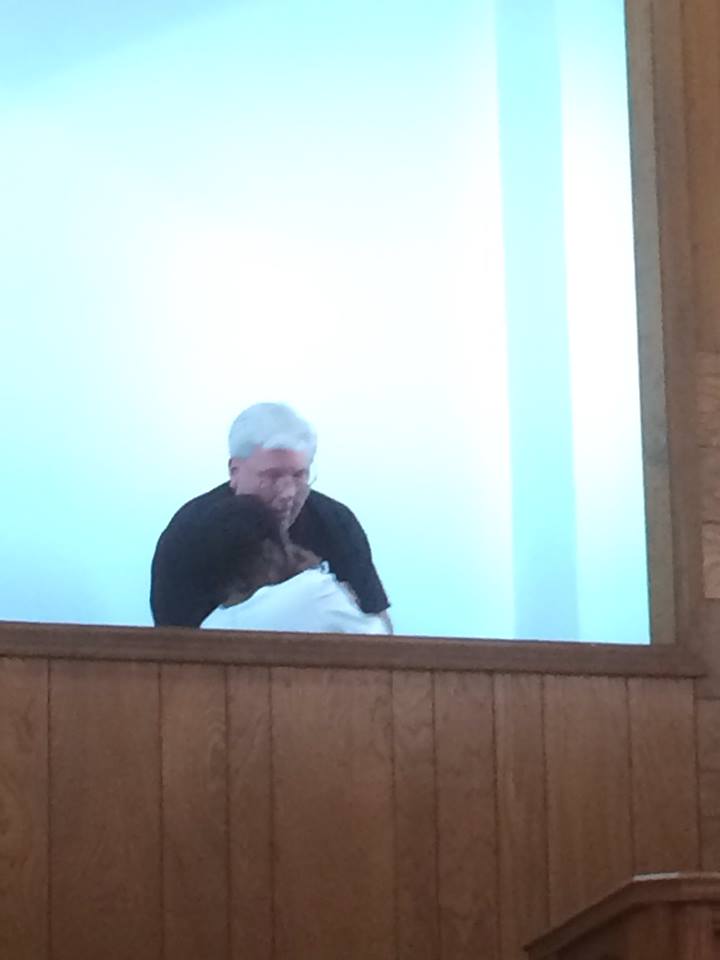
Megan Meeks was baptized this past Thursday, 4/21/16, in Denver, CO. The plan has not changed since Acts 8.

We Sure Love Baptisms!

Neal Pollard

There are some things about social media that are extremely irritating—click baiting, pot-stirring, fight-picking, self-pitying, and the like. But there are a great many positives in that medium, too. Of all of them, I believe that posts of baptisms have to be my favorite. I do not appear to be alone in that estimation.  Judging from post reactions and comments, a great many others do as well. We love it when there are pictures. We love the “back story.” We love knowing that our friends, neighbors, co-workers, and family members have good, honest hearts softened by the power of Divine Revelation. We love knowing they have a clean slate and a fresh start, and are poised to begin their walk on Narrow Road.

All of this leads me to several random observations:

  • True good news needs no hype, trumping, manufacturing, or baiting.
  • It is New Testament thinking to rejoice at such good news (Acts 8:39; 15:3).
  • What a confirmation the obedience of others to the gospel is to our own decision to do so.
  • It restores our faith in the potential of humanity and the power of the gospel (Rom. 1:16; Heb. 4:12).
  • It builds our confidence in the Bible to see people imitate the examples of the New Testament, doing what they did the way they did it (Mark 16:16; Acts 2:38; 8:13, 38; 9:18; 10:48; 16:14-15; 31-33; 22:16; Rom. 6:3-4; Gal. 3:26-27; Eph. 5:26; Col. 2:12; Titus 3:5; 1 Pet. 3:18-21).
  • The average Christian wants what is best for others, which is just one reason Christians are the best people on earth.
  • We want good news to travel fast, far and wide.
  • We know it pleases the Lord when a person comes to Him in obedient faith (see Luke 15).

There are doubtless many more observations we could make, but these are enough for me to thank God for His people and those who daily make the decision to become His people. It builds my faith and hope in my fellow human beings and my trust in heaven’s plan of salvation.  Thank you for finding joy in the right and best things! And let’s keep striving to perpetuate that joy through leading souls to the Savior.

12924440_10207948347340678_5218772026345282016_n
“Debbie” being baptized into Christ during a gospel meeting with Keith Mosher in Sylvester, GA, this week (photo credit: Jason Willis)