A New Heart From Jesus

Carl Pollard

As fall’s soft breeze turns to unexpected warmth, we feel the stir of change. But pain and loss are felt by many. These tragedies of the past week show our world needs Jesus, badly. Without Him in our homes and families, we see brokenness. Ezekiel 36:26 gives hope: “I will give you a new heart and put a new spirit in you; I will remove from you your heart of stone and give you a heart of flesh.”

Ezekiel spoke to God’s people in exile, far from home because they turned to idols. Their hard hearts led to trouble (Ezekiel 36:16-20). But God promised mercy, a new heart and His Spirit to help them obey (v. 27). This promise comes true in Jesus and the Holy Spirit (John 3:5-6). Charlie Kirk was a young father and husband, killed at a school event over political disagreement. This shows us what hard hearts can do. Yet, God can soften our hearts, filling them with His love. 

Change starts inside. We give our hearts to Jesus, and He makes them new. John 16:33 says, “In this world you will have trouble. But take heart! I have overcome the world.”That’s our peace, when the world is knee deep in anger and despair, Jesus wins over death. No matter the pain, we can trust Him and stay steady.

Romans 12:21 tells us, “Do not be overcome by evil, but overcome evil with good.” Evil, like the violence that took innocent lives comes from Satan (John 10:10). But we’re called to love, forgive, and share Jesus’ hope. In Luke 19, Zacchaeus met Jesus and changed, giving generously, fixing wrongs. His new heart showed. We’re to shine like that, letting our lives point to God (Matthew 5:16).

Our country needs Jesus. Psalm 127:1 says, “Unless the Lord builds the house, the builders labor in vain.” Without God, we get chaos. But 2 Chronicles 7:14 shows the way: pray, humble ourselves, seek God. Healing starts in our hearts and homes.

Come, Lord Jesus. Let’s let Him change our hearts, rest in His promises, and do good to fight evil. When we put Jesus in our families, we bring His hope to our nation, one new heart at a time

Who Are Gog and Magog? The Ancient Names That Echo Through Eternity

Here, we must pause and speak clearly. The temptation to identify modern nations in ancient symbols is strong. Russia, China, and Iran—it’s as if the Bible becomes a cosmic puzzle that today’s newspaper must solve.

Brent Pollard

“You will come up against my people Israel, like a cloud covering the land. In the latter days I will bring you against my land, that the nations may know me, when through you, O Gog, I vindicate my holiness before their eyes.” —Ezekiel 38.16 (ESV)

Specific names stand out from the vast library of Scripture like distant thunder—mysterious, powerful, stirring something deep within the soul. Gog and Magog are such names. For generations, these ancient words have captured people’s imaginations, sparked debates, and fueled the very speculation that obscures their true glory.

Imagine the exile sitting by Babylon’s rivers, scroll unfurled, reading Ezekiel’s vision for the first time. What did the names mean to him? What do they mean for us? And here is where we must tread carefully, because the path of truth leads to wonder, whereas the path of speculation leads only to shadows.

When Heaven Writes History in Advance

Enter Ezekiel’s world for a moment. The prophet describes Gog, “of the land of Magog, the chief prince of Meshech and Tubal.” Sounds like they have weight, don’t they? But here something magnificent happens. This is not a typical historical account. This is heaven, writing poetry using the names of nations.

Consider this astonishing fact: no man named Gog has ever walked the earth. Yet, he is attributed as the leader of a coalition comprising Meshech, Tubal, Gomer, Togarmah, Persia, Cush, and Put—groups that have never historically formed such an alliance. These descendants, mentioned in Genesis 10, are scattered across the globe and are now gathered by divine artistry rather than human ambition.

Do you see it? Ezekiel paints with a cosmic brush, creating a vision that transcends time and geography. This is not tomorrow’s newspaper, written in ancient ink; it is eternity speaking in symbols that every generation can comprehend.

The War That Reveals God’s Heart

But what about the battle itself? Here is a mystery wrapped in majesty. Gog arrives with armies as massive as the stars, ready to descend like storm clouds on God’s people. The earth shakes with anticipation. Swords gleam. Banners break in the wind.

And then, before a single blow is thrown, the Author of All Stories takes the stage.

Earthquake. Pestilence. Heaven rains hailstones, fire, and brimstone (Ezekiel 38.22). The language itself echoes back in time to Sodom’s destruction and forward to judgment’s final hour. This isn’t about military genius or political strategy. This is about a God who fights for His children.

Classical commentators have long recognized that the vision magnifies God’s power in delivering His people and destroying their enemies. Gog represents not just one man’s ambition, but every force that has ever raised its fist against the Almighty’s chosen.

Do you feel your heart racing? Hopefully, it does. This is your story as well.

The Comfort Hidden in Symbols

Why this vision? Why now? Consider the first readers—God’s chosen people, dispersed like seeds in Babylon’s soil. Jerusalem lay in ruins. The temple stood as a collection of broken stones. Has their God forgotten them? Was He defeated by pagan gods and foreign armies?

The answer thunders from heaven: never.

The Lord provides centuries-long comfort through Ezekiel’s pen: “Every force that rises against you—every Gog that emerges from every Magog—will crumble before My power. Not because you are powerful, but because the I AM is your defender.”

Biblical interpreters understood this when they pointed out that Gog represents Christ’s enemies throughout history, serving as a timeless symbol of opposition to God’s people. For centuries, God’s people saw in these words not fear, but fierce hope. Only when speculative systems emerged in recent centuries did this comfort become clouded by confusion.

When the Final Curtain Falls

Turn the pages to Revelation 20, and the names appear again, like an echo across the corridors of time. “Gog and Magog.” But look at how John uses them! Satan, freed for his final act, gathers “the nations which are in the four quarters of the earth” for one last desperate charge against “the camp of the saints.”

Once again, no battle occurs. Fire descended from heaven. The end arrives not with a clash of armies, but with the whisper of divine judgment.

Gog and Magog represent not two nations, but all of God’s enemies. These names act as symbolic bookends to the eternal conflict between good and evil, representing all rebellion against divine authority.

Do you see the comfort here? Every enemy that has ever threatened God’s people, every force that has ever made you tremble in the night, has been gathered under these two ancient names, and they all face the same fate: swift, inevitable defeat by heaven’s own fire.

The Danger of Reading Tomorrow’s Headlines

Here, we must pause and speak clearly. The temptation to identify modern nations in ancient symbols is strong. Russia, China, and Iran—it’s as if the Bible becomes a cosmic puzzle that today’s newspaper must solve.

But this path leads away from comfort, not towards it. It breeds fear where God intended peace and speculation where He promised certainty. Gog and Magog represent something far greater than any single nation or alliance—the eternal principle that the world will always fight against God’s people, but God will always triumph.

Your comfort comes not from avoiding geopolitical turmoil, but from knowing that behind every earthly conflict is a heavenly King who has never lost a battle and never will.

The Names That Mean “Never Alone”

So, what do Gog and Magog mean to you right now, as you grapple with ancient and modern fears? They tell that you are not alone.

When the headlines make you tremble, remember that every enemy is already named in God’s book, and their defeat is predetermined. When things seem hopeless, remember that the same God who scatters all rebellion with heaven’s fire is the God who walks with you today.

This isn’t about charts or theories. This is about a Father fighting for his children. This is about a King whose victory is so sure that Scripture declares all opposition defeated.

The most incredible truth of all? The story concludes not with your defeat, but with your King’s eternal glory shining over a universe at peace.

“So I will show my greatness and my holiness and make myself known in the eyes of many nations. Then they will know that I am the Lord.” —Ezekiel 38.23 (ESV)

And in that day , every knee will bow—not in terror, but in awe of the One who has always been, is now, and will always be your magnificent Defender.

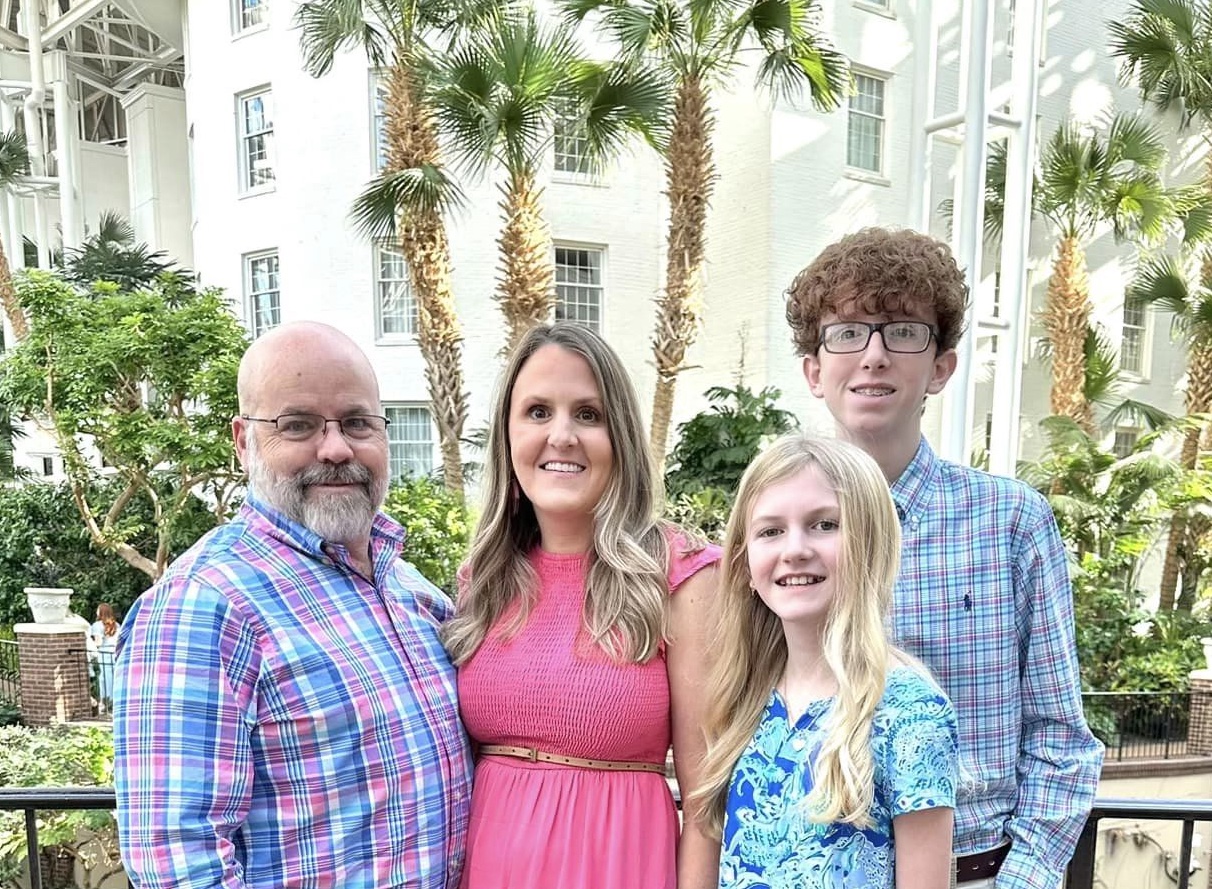
People To Lean On In Times Of Loss

Cooper Dillingham
(with his family at Lads ’23)

 As many of you know, last month my grandfather passed away. The days following this, many people reached out to my family, to comfort us. I am so thankful that my family and I have so many people to lean on in times of loss.

 In that time of ruin, I thought of our 2023 L2L theme, which was in Nehemiah 2:17-18. This verse reads, “Then I said to them, “You see the trouble we are in, how Jerusalem lies in ruins with its gates burned. Come, let us build the wall of Jerusalem, so that we may no longer suffer derision.” And I told them of the hand of my God that had been upon me for good, and also of the words that the king had spoken to me. And they said, “Let us rise up and build.” So they strengthened their hands for the good work.” This passage speaks about the importance of rebuilding the walls of Jerusalem, and when you look deeper into this verse it also shows how we can strengthen each other. 

First, we see that Nehemiah acknowledged the problem. He saw that the walls of Jerusalem were in ruins and spoke up about it. Sometimes it’s easy to turn a blind eye to problems that don’t personally affect us. Sometimes we unintentionally cause a problem and don’t want to acknowledge how it may affect others.  Nehemiah shows us how important it is to acknowledge an issue and make it our responsibility to fix it. Romans chapter 8:28 says, “And we know that for those who love God, all things work together for good, for those who are called according to his purpose.”  We, too, must be willing to recognize issues, acknowledge problems and take steps to address them, because God will ultimately use those resolutions for His glory. In the days that followed my grandfather’s passing, I saw my family rise in the midst of our brokenness. When we build one another up with helping hands, as God commands us to do, we are showing others the heart of our savior, Jesus Christ. In this way, even in the face of intense hardship, we can give glory and praise to God through our actions. 

Secondly, Nehemiah communicated a vision. He shared his message with the Israelites and told them what he believed needed to be done. He also spoke about the gracious hand of God, and the support he had received from the king. We must communicate our vision for the church, and know what is needed to accomplish God’s will. For some people, communication may be difficult. But Nehemiah shows us the importance of having a plan of action and encouraging others to join us in executing it. In the same way, we need to have the plan to expand the borders of the kingdom, the wisdom and guidance to rally others, and the love for our brothers and sisters in Christ to encourage them to keep building. We must work together, utilizing our unique skills and talents to achieve our goals.

Lastly, God gave Nehemiah strength through joy. Nehemiah 8:10 says, “And do not be grieved, for the Joy of the Lord is your strength”. This isn’t the only occurrence in the bible that tells us of God’s ability and willingness to strengthen those who show their unwavering love and faith for Him. Isaiah chapter 40 verse 31 says, “but they who wait for the Lord shall renew their strength; they shall mount up with wings like eagles. They shall run and not be weary, they shall walk and not faint.” God’s people found joy and strength in building a wall day in and day out. I know for a fact that if I had to build a wall day after day I wouldn’t have that same joy. This strength was not from their bodies but from the power of God. Now if He can give that kind of strength, then I promise you, we can all build each other up, no matter how hard we have to work for it and no matter the circumstances. 

Whether it’s supporting a grieving family, having a Bible study, or any other service  we need to be prepared to build someone up and let God work in our daily lives. We have many opportunities to spread the Good News through our actions and our words. 

I know that’s an area I can personally work harder in. I know there are going to be people in your life that you try to share the gospel with, but despite your efforts, they will completely reject all that God has to offer through Christ. It’s really hard to have the confidence to build someone up who doesn’t know God like we do and doesn’t want to know him. But like Nehemiah, we need to be confident, not in ourselves, but in our Savior.

Where To Go When You’re Feeling Down

Wednesday’s Column: Third’s Words

Gary Pollard

This time of year, seasonal affective disorder is an issue many face. Dealing with occasional slumps is part of the human experience, but for some people depression is a near-permanent experience. I’ll share some of the verses I go to for these exact issues, but with some explanation attached. 

Rom 8.18-27 can be summed up like this: “Everything in creation is a little broken, and we’re all waiting for the day when it’s not broken anymore.” 

This isn’t to say that everyone deals with depression, but everyone deals with something. Chronic depression is just as much a byproduct of a flawed reality as arthritis, economic downturn, and car accidents. 

For this discussion, there are two principles in Romans 8 that I take to heart: one, depression does NOT mean we don’t love God enough. It’s just another reminder that we aren’t supposed to be here forever. Two, it’s not going to last forever. We can put up with almost anything for a little while. Having the energy to put up with it, though, is something we’ll address with the next passage. 

I Tim 5.23 – “Stop drinking water exclusively and use a little wine for your stomach’s sake and your constant sickness.” 

Look at the principle of this verse, please. It’s not a suggestion to use alcohol as a treatment for depression. Alcohol is known to make depression much worse! The principle is that God has given us the ability to use man-made substances to help sickness. 

In fact, Paul uses commands (imperatives), not suggestions here. “Stop drinking water (only),” is one. Paul tells him to make use of (χρῶ, an imperative) a small amount of wine because it would help him manage his chronic stomach issues. 

A person dealing with chronic depression – under a health worker’s direction, of course – is absolutely free to use medication to help manage daily life. It doesn’t indicate a “lack of faith” in any way, and it doesn’t mean a person isn’t dependent on God. God himself, through Paul, encourages the responsible use of medication when necessary. 

I Cor 7.7 (paraphrased) – “Not everyone has the same abilities.” 

This is specifically talking about sexual urges in a completely different context from our discussion. Paul encouraged Christians who were about to face difficulties to avoid the issues that may come with getting married. It’s a lot easier to disown God when an enemy can exploit a person’s love for their spouse. Paul pointed out that not everyone has the same amount of self-control, so if marriage would keep away sexual temptation, go for it. 

That said, there’s still a valuable principle here: not everyone has the same abilities. Many Christians who face chronic depression often make things worse for their faith by comparing themselves to other Christians. “(Insert Name) is way more involved, more energetic, more put together, way ahead of me spiritually.” God knows our heart (I Ki 8.39; Rev 2.23). If we aren’t putting all that we can into our faith, we’ll be held accountable for that. God knows what our limits are, and will judge us accordingly. 

This principle does not excuse anyone from serving God to the best of their abilities. What it should do is help us put our own abilities into perspective. We have different levels of ability, and God knows that. 

In summary: Chronic depression is a very real byproduct of a broken world. God encourages us to take advantage of whatever medical care we have access to. God knows our hearts, which should both provide comfort and push us to grow.  

Smiling man with beard, glasses, and ball cap.

Comfort For The Hurting

Tuesday’s Column: Dale Mail

dalejanelle2021

Dale Pollard

 
Many emotions run through different individuals when faced with the loss of a loved one or dealing with intense pain. These emotions can present themselves as questions: 
  • Confusion: “Why did this happen?”
  • Sadness: “How will I go on?” 
  • Anger: “Who allowed this to happen?” 

Who can answer these questions? 

Who can provide comfort? 

Who can guide your heart through the heartbreaking moments in life? 

Is it not the Creator?

 Here’s a quick reminder to help give those who are dealing with loss and tragedy some perspective. 

Though “end” is a very human term,  

100 years from now I’ll be alive and so will you. 150, 200 years from now I’ll be alive and so will you. 

Since we are made in the image of God, that means… 

  1. When God breathed into you the breath of life He gave you a piece of Himself called the soul which will live forever…somewhere. 
  2. When God created you in a more intimate way unlike the beasts of the field and the birds of the air He gave you free choice. 
  3. He gave you the ability to reason.
  4. He gave you the ability to contact Him and be contacted by him. 

How sad and how tragic it would be to live your life with no hope. God offers wonderful and comforting news even at times where such news seems to be missing. 

God loves you more than anyone can. 

God loves you more than you can comprehend.  

Though many cry for and with you when you hurt, that love falls short of the one who expresses His love in a way that’s perfect and unfailing. 

You will and perhaps you currently experience feelings you can’t put into words, but God feels them and understands them. 

God can walk you through the hurts. Life doesn’t have to be impossibly tragic and void of purpose. 

God created the heart. He can heal yours. God created the mind. He can sort yours out. God made the soul. He can save yours. God created the body. He can give you rest. God created the eyes. He can wipe your tears away. God created the shoulder, but His are the only shoulders capable of bearing the weight of all those who lean on them. 

Living Life God’s Way

Thursday’s Column: Carlnormous Comments

Carl Pollard

When it comes to sports, there are certain ways of playing. There are rules to follow, specific plays to make, and mistakes to avoid if a team wants to succeed. This same idea applies to our Christianity. In Joshua 1:5-9, we read of certain aspects needed in order to live life God’s way. By following these things we will reap the benefits that are found inside of Christ. 

Joshua says that God’s way is conditional. In Joshua 1:7, we read, “Only be strong and very courageous, being careful to do according to all the law that Moses my servant commanded you. Do not turn from it to the right hand or to the left, that you may have good success wherever you go.” God gave Israel conditions to His being their God: be strong and courageous, do all according to the law of Moses, and do not turn from the right or to the left. 

Thinking about our personal relationship with God we can still apply these same commands to our spiritual lives today. For example, the blessings we are promised are received by being strong and courageous in the work place, doing all according to the law we are under (the new covenant), and not wavering in our faith. If we want to live our lives according to God’s will we must understand that our relationship to Him is conditional. Our relationship is based on our willingness to listen to His word. 

We must also understand that God’s way is a command, not a suggestion (1:7-8). He is the creator. He has the authority to create the way, He has the authority to make what He says a command. If we want the blessings of following His way, we must practice the commands He has given each one of us. 

Just as the Israelites were given certain commands, we also are commanded to follow certain laws. Love the Lord our God with ALL of our heart, soul, mind and strength. We are commanded to love God with every aspect of our lives (Matt. 22:36-40). When we think about our lives, every decision should be based on the will of God. We must recognize that God’s way of living is a command. 

If we want to live our lives God’s way we must recognize that the blessings we are promised are conditional, and the things we read in scripture are a command. But we should find joy in knowing that God’s way is comforting. Joshua 1:9 reads, “Have I not commanded you? Be strong and courageous. Do not be frightened, and do not be dismayed, for the Lord your God is with you wherever you go.” 

There is absolutely no reason for us to tremble when the Creator is on our side. There is never a reason to be dismayed when the defeater of sin is with us. We have a loving God with us wherever we go in life. God’s way of living is best, and if we will let Him control our everyday lives we can find comfort, hope, and joy in Him. 

Picture taken by Neal Pollard at Jericho, 3/11/18

Walking with God In a Fallen World

Thursday’s Column: Captain’s Blog

carl pic

Carl Pollard

God’s desire from the very beginning of creation was to walk with man. Scripture tells us that He would walk in the garden in the cool of the day (Gen. 3:8). This was all undone when sin entered the world and created a chasm between God and mankind.
The theme of the Bible is the salvation of man, through Christ, to the glory of God. From the moment sin entered the world, God has been proactive in seeking a relationship with His creation. Through the perfect sacrifice of Christ, that relationship has been restored, and we are once again able to walk with God.
Even though we have peace with God again, at times it feels like we don’t have peace in our everyday lives. We turn on the news and watch as courthouses are set on fire, and a widespread virus continues to harm and kill people that we love. Yes, we have peace with God, but where is the peace in our own lives?
These are questions that most everyone has asked. But there’s one question I want us to focus on for a few moments; how does God want us to react to the events that are going on today? Let’s examine three encouraging verses that tell us how we are to conduct ourselves each day.
Proverbs 15:3. “The eyes of the Lord are in every place, keeping watch on the evil and the good.” God sees the violence, the grieving families, the struggling Christian. But God also sees how His children respond. God is in every part of His creation, at every moment in time. We may feel like He doesn’t see, or that He is indifferent to what’s going on, but His eyes are on the evil and the good. We respond in love because we know that God is watching.
Psalm 23:4. “Even though I walk through the valley of the shadow of death, I will fear no evil, for you are with me; your rod and your staff, they comfort me.” God not only sees what is going on, but He is with His children. The greatest of Christians still struggle with feelings of loneliness (Elijah in 1 Kings 19). Even though we walk through the shadow of death, we don’t fear the evil that we encounter because God has promised that He will be with us. We may see the hate, the hurt and the helplessness of mankind, but the comfort of God gives hope to His people.
Matthew 28:20. “…And behold, I am with you always, to the end of the age.” This is a promise first given by Jesus to His apostles, a promise that we as Christians sometimes fail to remember. The world isn’t perfect because sin has corrupted what God has made perfect. People will do you wrong, they’ll hurt you, and they’ll do whatever they feel like doing. We have a command to fulfill, and it can only be carried out with the presence of God.
Showing love to a world that’s full of hatred can seem impossible at times, but if we will remember who we are and Whose we are, we can and will get it done. Remember that God loves you, and the church loves you. Let’s be an example to those who are without this love.
canada-forest-trees-woods


“AND HE WILL BE THE STABILITY OF YOUR TIMES”

Monday’s Column: Neal At The Cross

pollard

Neal Pollard

In a world facing ever-changing circumstances, we need to be reminded of some truths about God. A great text that can help us do this is found in the writings of the Messianic prophet, Isaiah. He tells us some exciting facts about God in Isaiah 33:5-6.  In brief, Isaiah reminds us of God’s transcendence (“exalted…on high”), His trustworthiness (“has filled Zion with justice and righteousness”), and His treasure (“a wealth of salvation, wisdom and knowledge; The fear of the Lord is his treasure”).  In the midst of upholding God’s perfect character, the prophet makes this reassuring statement: “And He will be the stability of your times.”

In part, here is what that means to us today

  • There is no minimum distance we have to keep from Him under any circumstance (Jas. 4:8).
  • There is no restriction or limit on our access to Him and His blessings, on prayer or His Word (Phil. 4:19). 
  • There is no chance that you will look for Him and He will not be there (Psa. 50:15).
  • There is no possibility that you will learn that what was true of Him yesterday is not true of Him today (or tomorrow)(Heb. 13:8)
  • There is no cancellation policy at the throne of grace for the child of God (Heb. 4:16).
  • There is no threat or danger that can keep you from the love of God (Rom. 8:38-39).
  • There is no earthly thing to nullify the truth that “the Lord is my helper, I will not be afraid” (Heb. 13:6). 
  • The more we expose ourselves to Him, the healthier we will be.
  • There is zero chance that you will go to Him for healing and have it fail (Jer. 8:22; Luke 5:31).

Scripture calls Him the Rock (Deut. 32:4), the shield (2 Sam. 22:31), my protection (Isa. 27:5), my shield, stronghold, and protection (2 Sam. 22:3), and a strong tower (Prov. 18:10). As Nebuchadnezzar understood, “all His works are true and His ways just” (Dan. 4:37). 

Take heart. Take on the day. Take comfort and refuge. “And He will be the stability of your times.”

pollard weddingDJ 410a
Random great photo: courtesy Baker Street Photography

Struggling Through Our Troubles

Neal Pollard

Have you ever had a problem or struggle that started out small but kept growing until it was larger than life? Did it come to consume your thoughts, keep you up at night, and become an overwhelming obsession? Maybe you devoted a lot of emotion to it.

Just by virtue of living on this earth, we will struggle (Job 14:1-2). Job knew struggle and turmoil! He lost one thing after another. His life seemed to unravel before his eyes.  Teddy Roosevelt is credited with saying, “When you are at the end of your rope, tie a knot and hold on.” Have you ever found yourself struggling at the end of your rope of faith? You are certainly far from alone in that. We certainly see Job dangling there, asking, “Why was I ever born?” (3:11) and “Why can’t I go ahead and die?” (3:20-22). David was there (Psa. 22:1). So was Jeremiah (ch. 37-38).

Of course, trouble takes on many forms and comes from many directions. Any number of passages can help us cope with the struggle of trouble, but consider Psalm 10. It refers to the wicked seven times and to the afflicted four times. It also speaks synonymously of the wicked as the greedy (13), evildoer (15), and those of the earth (18). It speaks of the afflicted as the unfortunate (8,10,14), humble (14), the orphan and oppressed (14,18). We know that our trouble can come from the wicked, but it can also come from no one source we can identify though it hurts just the same. Consider this Psalm about our troubles and what we can do about them.

Our perception in times of trouble (1-11). Our vision can become blurry by tears or rage, but our point of view is altered when trouble comes. The psalmist goes through this. He sees God as being distant (1). He saw the wicked as being in control or prospering (2-11). God seemed far away and life seemed unfair. The majority of every generation is wicked, and each generation of God’s faithful must reconcile the seeming success of the wicked and oppression of the affilicted righteous. We don’t begrudge the psalmist for his struggle to see through spiritual eyes. We can relate.

Our prayers in times of trouble (12-15). The psalmist admits his own struggle, then he shows us how to overcome it. His first response is to pray. He asks God to deliver (12). He asks God to remember (12-14). Finally, he asks God to vindicate (15).

Our praise in times of trouble (16). Before the prayer he’s perplexed and indignant. Afterward, he has insight, peace, and greater confidence. He springs from his knees with new perspective. Doesn’t prayer do that for us? The psalmist acknowledges God’s nature—“Lord” (Jehovah, five times in the Psalm), position—“King”, and duration—“forever and ever.” Do we spend more time focusing on the source of our troubles than on the solution?

Our proper perspective in times of trouble (17-18).  The psalmist is confident at the end of this psalm, saying, “you have heard” and “you will strengthen and listen.” Do you approach God that confident in His ability and desire to do what is best? We can be as confident as he is that God hears and helps when we hurt.

What is the greatest trouble we can face in this life? A disfiguring accident? Financial ruin? Loss of a parent, spouse, or child? The deterioration of health? The fall of our nation? Through Christ, none of these are too difficult to overcome. This Psalm reminds me that God still cares and He won’t abandon me. You and I can look at the cross and the church and be reassured of that. We know we can trust God (Rom. 8:28). God is able and willing to help us through every trouble.

6359108530478803001617573448_1112-gmat-struggle-970-630x420

Longing For The Desert Lodging Place?

Neal Pollard

The beleaguered prophet, Jeremiah, had had it. He was, in the words of Andy to Barney, “beat to the socks”—and then some! He was surrounded by sin and disobedience. At every turn, he was being disappointed by people he expected so much more from. He was fed up, and he wanted to escape from it all.  Can you relate? Have you seen so much hatred, man’s inhumanity to man, gross immorality, defiance and rebellion, God-less living, and the like that you are done with it?

Jeremiah wrote, “Oh that my head were waters and my eyes a fountain of tears, that I might weep day and night for the slain of the daughter of my people! Oh that I had in the desert a wayfarers’ lodging place; That I might leave my people and go from them! For all of them are adulterers, an assembly of treacherous men. ‘They bend their tongue like their bow; Lies and not truth prevail in the land; For they proceed from evil to evil, and they do not know Me,’ declares the Lord” (Jer. 9:1-3). Keep reading and you see a dirty laundry list of other transgressions, like treachery and deceit, immorality, and unbelief (4-8). In fact, God pronounces judgment against that nation for its collective guilt.  So, the astute and informed prophet grieved for the people and longed to escape from this agonizing reality.

Isn’t it wonderful that God has given us refuges from the similar conditions we see around us today? We can choose to consume the salacious, depressing headlines and news stories, monitoring it day and night.  We can engross ourselves in the various activist positions currently advocated in our culture and society. Or…

  • We can increase our daily devotional time.
  • We can set a goal to lead a specific someone to Christ.
  • We can unplug from the endless litany of media-driven bad news.
  • We can do our individual part to strengthen our local congregation (making visits, praying over specific prayer lists, writing encouraging cards and letters to members and visitors, volunteering for needed tasks, etc.).
  • We can deliberately focus more each day on heaven, building our desire to go there.
  • We can go the second mile to be a model citizen in this nation.
  • We can try to find people in our daily lives (co-workers, fellow students, neighbors, and others we see regularly) and build a bridge through acts of love, kindness, and humble service.
  • We can smile and be pleasant more, wherever we are (reflecting the joy and happiness we truly have in Christ).

There are probably quite a few, though lost in spiritual ignorance, who would love to know about this “wayfarers’ lodging place,” not to escape from people but to escape to God. There are brothers and sisters in Christ groping to get to such a place. Perhaps we forget that “there is a place of quiet rest, near to the heart of God. A place where sin cannot molest, near to the heart of God.” Jeremiah was discouraged by his daunting task. We who stand this side of the cross know, whatever is happening around us, “our inner man is being renewed day by day” (2 Cor. 4:16).

Wanna get away?

1619008375_9e423472e4_b