
Facts Deduced About Baptism From The Eunuch

Neal Pollard

The book of Acts is wonderful for teaching the history of the church as well as providing examples of how people became Christians. From the first gospel sermon (Acts 2), baptism is central and essential to God’s plan of salvation. The emphasis is even found through facts implied from these statements and examples. Consider some facts deduced about baptism from the conversion of the Ethiopian eunuch.

  • First, baptism is part of preaching Jesus. In Acts 8:35, Philip began with the eunuch from the passage the eunuch had been reading (Isaiah 53), and “he preached Jesus to him.” Consequently, the eunuch, when they came past a body of water, said, “Look! Water! What prevents me from being baptized?” Why would this man ask such a question unless preaching Jesus included preaching the necessity of baptism?
  • Second, baptism is part of believing (Acts 8:37). Philip ties his request for baptism to the essentiality of faith preceding baptism. The eunuch confesses belief “that Jesus Christ is the Son of God.” Jesus had sent His disciples with this understanding, that “he who has believed and is baptized shall be saved” (Mark 16:16a).
  • Third, baptism involves urgency (Acts 8:38). The eunuch ordered the chariot to stop. Why? Why not wait until he was back in Africa? Why not wait until Philip collected several others and then have a baptismal service for them all at once? When the Eunuch saw water, for some reason he wanted to submit to baptism right then and there.
  • Fourth, baptism involves immersion (Acts 8:39). We primarily know this because the word “baptism” means “strictly dip, immerse in water (Friberg & Miller, 87). However, the fact that Philip and the eunuch both went down into the water indicates that baptism must involve more than sprinkling or even pouring. This man  (and Philip) went to the trouble of getting wet by going down into the water.
  • Fifth, baptism produces rejoicing (Acts 8:39). The first evidence of joy comes after the eunuch comes up out of the water, not when Philip preached Jesus or when the eunuch confessed belief in Jesus. There was something important and necessary about the act of baptism.

Despite a religious world filled with groups who resist, argue against, and deny the importance of baptism, that one example (and there are several others–Acts 2:36-47; 8:12-13; 9:18+22:16; 16:15; 16:30-33; etc.) leaves no doubt about the indispensable part baptism plays in God’s plan to redeem humanity. Thank God for this conversion example in Acts 8. May our hearts be open to accept what the Word says to us (Luke 8:15).

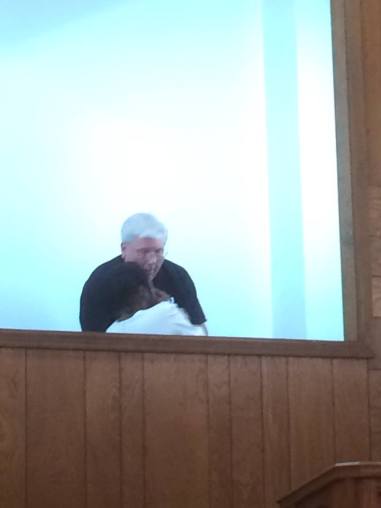
13055587_1079852015371168_1598737744818493967_n
Megan Meeks was baptized this past Thursday, 4/21/16, in Denver, CO. The plan has not changed since Acts 8.

We Sure Love Baptisms!

Neal Pollard

There are some things about social media that are extremely irritating—click baiting, pot-stirring, fight-picking, self-pitying, and the like. But there are a great many positives in that medium, too. Of all of them, I believe that posts of baptisms have to be my favorite. I do not appear to be alone in that estimation.  Judging from post reactions and comments, a great many others do as well. We love it when there are pictures. We love the “back story.” We love knowing that our friends, neighbors, co-workers, and family members have good, honest hearts softened by the power of Divine Revelation. We love knowing they have a clean slate and a fresh start, and are poised to begin their walk on Narrow Road.

All of this leads me to several random observations:

  • True good news needs no hype, trumping, manufacturing, or baiting.
  • It is New Testament thinking to rejoice at such good news (Acts 8:39; 15:3).
  • What a confirmation the obedience of others to the gospel is to our own decision to do so.
  • It restores our faith in the potential of humanity and the power of the gospel (Rom. 1:16; Heb. 4:12).
  • It builds our confidence in the Bible to see people imitate the examples of the New Testament, doing what they did the way they did it (Mark 16:16; Acts 2:38; 8:13, 38; 9:18; 10:48; 16:14-15; 31-33; 22:16; Rom. 6:3-4; Gal. 3:26-27; Eph. 5:26; Col. 2:12; Titus 3:5; 1 Pet. 3:18-21).
  • The average Christian wants what is best for others, which is just one reason Christians are the best people on earth.
  • We want good news to travel fast, far and wide.
  • We know it pleases the Lord when a person comes to Him in obedient faith (see Luke 15).

There are doubtless many more observations we could make, but these are enough for me to thank God for His people and those who daily make the decision to become His people. It builds my faith and hope in my fellow human beings and my trust in heaven’s plan of salvation.  Thank you for finding joy in the right and best things! And let’s keep striving to perpetuate that joy through leading souls to the Savior.

12924440_10207948347340678_5218772026345282016_n
“Debbie” being baptized into Christ during a gospel meeting with Keith Mosher in Sylvester, GA, this week (photo credit: Jason Willis)

“Is It Possible To Be Born With The Wrong Skin?”

Neal Pollard

Freedom of speech may be a constitutional right, but do you ever wish people did not feel so free to exercise that right?  It’s hard not to bemoan the cultural lunacy that appears to be another step down the slippery slope from rational to irrational thought.  Bruce Jenner claims to identify as a woman despite the biology of his birth.  Now, Rachel Dolezal, the president of the Spokane chapter of the NAACP who is born to two white parents, identifies herself as African-American.  Her story has ignited yet another “identity crisis” conversation, complete with its own Twitter Hashtag (#WrongSkin).  Some who have posted there are engaging in some intelligent tongue in cheek and sarcasm, but many more seem to be seriously conflicted about their racial identity.  Our ancestors would be in utter disbelief of the lack of critical thought they would hear in such discussions.

But let’s carry this line of “thought” further:

  • I was born to middle class parents, but I identify as the son and heir of Bill Gates.
  • I barely passed High School, but I identify as a Rhodes Scholar.
  • I am a lazy couch potato, but I identify as an elite triathlete.
  • I cannot carry a tune in a bucket, but I identity as a musical virtuoso.
  • I scorch water and ruin Ramen noodles, but I identify as a world-class chef.

You know, you can claim anything, but that does not make it so.  Sometimes, the best way to expose an absurdity is to escort them further down that slope.  Then, they can get a better look at themselves.

Claiming to be a woman when you are a man or to be one race when you are another is head-scratching, but did you know that there are people making a much more serious claim whose incorrect conclusion is infinitely more grave?  A great many people, asked if they are a Christian, say “yes.”  However, though they identify as a Christian, they have not followed the plan God put in place whereby one becomes a Christian.  Jesus says that claiming does not equate to being (cf. Mat. 7:21-23).  He also says there is but one way (John 14:6).  We can strongly identify ourselves as a Christian, but have we actually been “born of water and the Spirit” (John 3:5)? Jesus said, “He that believes and is baptized shall be saved…” (Mark 16:16).  Peter said, “Repent and each of you be baptized in the name of Jesus Christ for the forgiveness of your sins” (Acts 2:38).  Ananias said, “Get up and be baptized, and washing away your sins, calling on His name” (Acts 22:16). Paul wrote, “We have been buried with Him through baptism into death, so that as Christ was raised from the dead through the glory of the Father, so we too might walk in newness of life” (Rom. 6:4). He also said, “All of you who were baptized into Christ have clothed yourselves with Christ” (Gal. 3:27). Peter wrote, “Baptism now saves you” (1 Pet. 3:21).  Now, Scripture sets other conditions in place one must meet in order to receive God’s grace and salvation, but the overwhelming majority do not reject faith and repentance.  They do, however, dismiss the role of baptism as a divine condition for salvation. In light of the above Scriptures (and there are others, too), how can one refuse to obey this and yet still claim to belong to Christ (cf. Luke 6:46)?

“NO MATTER WHAT” OBEDIENCE

(video by Wes Autrey)

Neal Pollard

I cannot imagine anyone present yesterday morning to witness Janice Lee baptized into Christ could have failed to be touched at a very deep level.  J.J. and Lila Brennan had been studying the Bible with Janice, and she came to the conclusion that she needed to be baptized for the forgiveness of her sins.  So, she came to the front after my sermon and made that desire known.

She was in a wheelchair because she suffers left side paralysis as the result of a stroke.  She is also on oxygen.  Several ladies and a few of us men took special measures to help her into the baptistery.  She could walk, slowly, gingerly, and with much difficulty.  The ladies helped her up the stairs, while we stood in the water to receive her and help her the rest of the way.  Each step was tenuous and required the utmost effort on her part. Once she was finally in the baptistery, we carefully lowered her under the water and brought her back up.  Very quickly, her deeply felt emotions gently bubbled to the surface.  She softly cried, recalling difficult things from her past, and she said, “I forgive those who’ve sinned against me.”  The joy and peace on her face is something impossible to adequately describe.

What did this new sister in Christ demonstrate yesterday?  Resolve!  Afterward, I found out not only that she had to deal with the consequences of the stroke, but she is afraid of water.  Yet, she saw the need of her soul as preeminent over any obstacle she might have cited.  The constant need of oxygen, the paralysis, and the phobia were outweighed by the Lord’s command.  Her faith was so strong that they were not insurmountable barriers.  She refused to let them be!

The difference at the Judgment, in part, will be that some will offer excuses for why they did not obey the Lord while others, through genuine, trusting faith, will not need to make excuse.  They will stand before Christ, who will see His blood covering their transgressions.  What does it take to go to heaven? A “no matter what” obedience!

V__7BB1(Photo taken by Kathy Pollard)

Willing To Use Firefighters

Neal Pollard

Patrick Daly, fellow Faulkner alumni and friend, sent me a heartwarming news story from CBS in Huntsville, Alabama.  A terminally ill patient came to a knowledge of the truth and wanted to be baptized.  She contacted the Oliver church of Christ in Rogersville, and the local preacher, David O’Connell, contacted the local fire department seeking assistance to get her to the church building so she could be immersed.  They happily agreed and aided David in getting her to the building and into a member’s pool for baptism.  Doris Chandler, a 74-year-old with stage four pancreatic cancer, was met by 10 firemen and 15 members, who witnessed her burial with Christ.  She knew she faced death and she was willing to go to any lengths necessary to be prepared for eternity (Story Here).

So many meet death with less preparation or warning than our new sister had.  Death may come suddenly, the mind may precede the body, or the figurative heart may be too hardened before physical death comes.  Many others are delaying, putting off the decision they know the Bible says they must make.  They may have excuses or obstacles they deem insurmountable.  

However, the good heart is willing to obey no matter what extremes are necessary.  The eunuch stopped the chariot.  The jailor went at midnight. Saul was blind. The people on Pentecost and many of those after them were in a different religion.  They heard God’s plan of salvation and what did they do?  They “became obedient from the heart to that form of teaching to which” they were committed (Rom. 6:17).  

Jesus left heaven for earth. God gave His only begotten Son.  First-century believers at times paid with their lives.  What are you willing to do to be prepared?

firefighters baptism 

Bieber’s Baptism

Neal Pollard

It was reported on the news and all I heard was that the pop star turned bad boy, Justin Bieber, was baptized this weekend in the bathroom of a megachurch’s building in New York City.  As has often been the case, this event was surrounded by a sea of controversy involving the 20-year-old singer.  The “pastor” who baptized him said that the act was preceded by a month of intense Bible study.  Bieber sought baptism for cleansing of sin following the release of a racist-filled 5-year-old video featuring the young man. I am not contending in the least that Bieber’s baptism fulfilled the biblical requirements or that he is now, in the New Testament sense, “born again.”

However, it provides a great opportunity to ask what elements must be present in a baptism that does meet New Testament requirements.  First, it must be predicated upon knowledge.  One must understand the significance of the one baptism (cf. Eph. 4:4). Practically speaking, one must either do the personal study or have someone teach what the Bible says about the place of baptism in God’s plan.

Second, baptism must be preceded by sorrow for sin and a desire to have sins washed away.  Sorrow for sin is a part of repentance, which is a change of the mind that results in a change of action (Acts 2:38; 3:19; 2 Co. 7:10).  Repentance is more than sorrow for sin, but it includes such.

Third, baptism must be by immersion to follow the teaching and examples of the New Testament.  We read of baptism as a burial in water (Rom. 6:1-6; Col. 2:12).  We see the Ethiopian go down into the water and come up out of it (Acts 8:38).  In the New Testament, baptism took place where there was “much water” (John 3:23).

Though lacking complete knowledge of Lentz’s Hillsong Church, where Bieber was baptized, there is enough on their website to identify them as thoroughly erroneous in their teaching regarding salvation, worship, and various doctrinal matters (women’s role, instrumental music, tongue speaking, omission of baptism as part of what must be done to have forgiveness).  However, it is possible that Bieber and anyone else we would deem spiritual wrecks—which we all are to some degree and in various ways—can be taught as they were in the first century and become what they then became. May we be searching for those who desire to follow Jesus, making disciples of, baptizing, and teaching them (cf. Mat. 28:19-20).