Four On One Play

Have you ever mishandled a situation?  More than that, have you ever compounded one mistake with one, two, or more on top of the first one?  If you have been around for any length of time, you have. 

Neal Pollard

    Lennie Merullo had a memorable day on September 13, 1942.  The Cubs’ infielder had a son that day and in the second inning of Chicago’s game, he made four errors!  His teammates nicknamed Lennie’s son “boots” (baseball fans will get that).  As bad as it was for Lennie, it may have been worse for Mike Grady.  Grady, normally a catcher, was playing third base in a game for the Phillies in 1895.  As the story goes (see The Very Worst In Sports), he booted an easy grounder allowing the batter to reach first base (first error).  His throw to first was wild, allowing the runner to advance (second error).  The runner tried to stretch it to third.  The first baseman’s throw to Grady at third was in time, but he dropped it (third error).  Finally, the runner was racing home and Grady’s throw sailed over the catcher’s head into the grandstand (fourth error).  Grady allowed the proverbial “Little League Home Run.”  This was Grady’s second year in the Majors.  You might think it would have been his last, but not so.  While he is no Hall of Famer, he did log eleven seasons in the big leagues.  In 1901, he finished fourth in batting and seventh in on-base percentage.  Oh and his career fielding percentage was only slightly below the league average when he retired.

    Now you non-baseball aficionados can wake up for the application.  Have you ever mishandled a situation?  More than that, have you ever compounded one mistake with one, two, or more on top of the first one?  If you have been around for any length of time, you have.  Maybe you lied to cover up some sin and felt compelled to add a few more lies to it.  Maybe you lost your temper, then cursed, and maybe even escalated it beyond that.  Temptation has any number of ways of getting into our way and really botching up things.  The question is, “What do you do in the aftermath?”  So far as I know, Grady stayed in the game.  Merullo probably did, too.  If you fall off the horse or the bicycle, the conventional wisdom tells you to climb back on top of it.  When you mess things up with sin, divine wisdom says to get back up and keep trying.  1 John 1:9 assures us that God will forgive us in our confessing and seeking to continue on in the Light.  How badly had the Prodigal Son behave, and yet there was acceptance for him when he returned to the father’s house.  The repeated theme of scripture for those who fall is to get up and keep going.  Do not give up the fight.  The late gospel preacher, George Bailey, put it, “Success comes in ‘cans,’ not ‘can’ts.'”  

    Have you made a mess of things?  Don’t throw in the towel.  Keep the faith, and keep fighting (cf. 1 Timothy 6:12)!  Be sure to end well.

Necessary, But Not Essential

Friday’s Column: Supplemental Strength

brent 2020

Brent Pollard

Has your job been deemed “essential” during our mitigation efforts against COVID-19? If not, you are likely either working from home or are facing a difficult financial situation as we await the reopening of our economy. Noting the choices made by certain people in positions of authority about essential and nonessential workers, however, makes this whole process of determination seem…capricious.

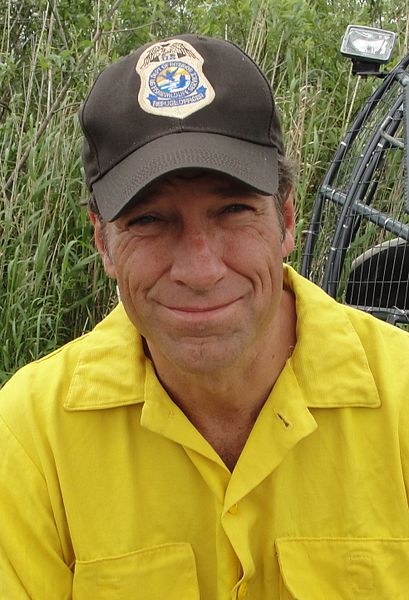
Mike Rowe, a man who made a name for himself doing the “dirty jobs” other people refused to do, stated his opinion was that there was no job that is nonessential. Appearing on a cable news program, he said, “Right now, there is this fascinating conversation going on on your network and all the networks, where we are making a distinction between essential workers and nonessential workers.” Rowe continued, “…there’s something tricky with the language going on here because, with regard to an economy, I don’t think there is any such thing as a nonessential worker.” 1

Rowe did admit that certain positions are greatly needed during a pandemic. Hence, we have greater need for a doctor now than a center fielder for a Major League Baseball team. “I just wanted to make the point that, when we talk about the economy, all work is essential,” Rowe stated. “Maybe it’s a distinction without too much of a difference, but in my mind, there is no such thing right now as a nonessential worker.” 2

Rowe makes a good point. For a healthy economy, every able-bodied person of age, must work. When person “A” earns a paycheck, he spends it in person “B’s” store. Person “B” can then provide for his own family. The property taxes person “B” pays allows person “C’s” child to go to school. In other words, the economy is something in which we all play a role, whether we appreciate our role within it or not. Yet, we see what happens when we purposely shut down a country to mitigate a virus. All the financial gains about which our country boasted for the last few years was wiped out in six weeks!

This isn’t a message about the economy or politics or Mike Rowe. It is rather about the harmful consequences we bring about by rashly judging what’s essential and nonessential without considering the bigger picture. When you have extra time, enter in the words, “baptism” along with “essential” and “necessary,” into your internet search engine of choice. I did. I found one page that proffered “101 Reasons Why Water Baptism is Not Necessary to be Saved.”

Fortunately, we have the book of Acts, also known as the “book of conversions.” Acts has many examples of people who, having heard the proclamation of the Gospel, submitted to baptism. It is a troublesome book for the one seeking to discount the necessity of baptism’s role in salvation. For this reason, such practitioners of a perverted gospel must say, “Baptism is an outward sign of an inward faith.” In other words, all these people were baptized to show their salvation rather than receive it.

Even if we only had the example of Paul’s conversion in the book of Acts, we would have enough reason to prove why baptism is not only necessary but essential. Paul was a man, made miserable by his newly acquired knowledge he was a sinner. He prayed fervently for three days. If one could “pray through” then Paul should have been able to have done so. And yet, when the preacher Ananias arrived, he saw the pathetic state that Paul was in and said, “Now why do you delay? Get up and be baptized, and wash away your sins, calling on His name” (Acts 22.16). Did Paul not realize he was saved and needed only to perform a ritual to confirm his salvation? If true, Paul was the most miserable Christian about whom we read in the pages of the New Testament during those three days he prayed and fasted.

We might make a tough judgment call because of a virus and shut down certain sectors of our economy since we believe them less essential during a health crisis. Ultimately, though, we realize even those deemed “nonessential” do play an important part in our economy, as Rowe suggested. We need them if we are going to climb up out of this trillion-dollar deficit hole this crisis has made us fall into.

Likewise, people may capriciously proclaim baptism nonessential. However, one wanting total restoration to the innocence lost in Eden must also know a demon’s faith (James 2.19) is not only insufficient to save but fatal (Mark 16.16).

References

1  Shiver, Phil. “’Dirty Jobs’ Star Mike Rowe: There’s No Such Thing as a ‘Nonessential Worker’.” The Blaze, Blaze Media LLC, 2 Apr. 2020, www.theblaze.com/news/mike-rowe-non-essential-worker.
ibid.

409px-ready_for_a_dirty_job_28cropped29

“3-2, With The Bases Loaded”

Neal Pollard

Dave Stewart, former Oakland A’s pitcher known for pitching well in the big games, was asked how he was able to shine when the spotlight was brightest. He explained that as children he and his brother would play against each other in the backyard. They would pretend they were in the “big game,” and it was always “3-2, with the bases loaded.” So, Dave would face the situation as if it were always the big game. He conditioned himself to confront the pressure situations, and through this he came to excel in the playoffs and World Series.

How do we excel in life? It is not by expecting and waiting for smooth sailing and an easy life. You do not grow in life when the sun is shining and there is zero wind resistance. Why not embrace challenges as catapults for personal growth? Look adversity in the eye and take it on.

The first-century church was in a situation where they faced opposition on an ongoing basis. They probably did not welcome this, but neither did they cower before it. In the face of fiery trials, they won the lost and kept the faith. In our own personal lives, we may dislike the thought of suffering. However, looking back, we may find these as the times where most growth occurred.

How do we face life? Are we looking for a beautiful, problem-free life? If so, we will be disappointed! More than that, we shall fail. We must through much tribulation enter the kingdom of God! Former Minnesota Vikings head football coach Dennis Green once told his team, “We are going to go on in the road, in the cold, in a hostile environment, and we don’t want it any other way.” That’s the philosophy to embrace in our spiritual lives. The world opposes us as we stand faithfully for Christ. That’s OK! It is a chance to excel to the glory of God.

dave_stewart_on_august_1_2009