“God Is So Good”

Neal Pollard

You might notice over your heading of Psalm 107 that it begins “Book Five.” You also do not see David’s name over this psalm. There may be clues pointing to this being one of the later psalms, even after Babylonian Captivity (1-3). Many believe this was a song sung by Jewish pilgrims who sang it on their way to Jerusalem for one of the major feast days. It is full of parallelism, where the writer says the same thing two similar ways (nearly every verse contains this, except 3,12,26,34,37, and 40). 

But as we pay attention to its structure, it looks like it contains four main “strophes” (poetic stanzas).  Each strophe ends with the same chorus or refrain: “Let them give thanks to the Lord for His lovingkindness, and for His wonders to the sons of men” (8,15,21,31). It covers the full range of human distress and problems and God’s gracious response. We struggle, God delivers, and for that we should always be thankful! Truly, God is so good!

GOD IS GOOD WHEN WE WANDER (4-9)

Historically, we would think of the wilderness wandering or even being scattered by captivity. But this seems bigger than just one occasion. Whether we wander by sin, wander because of struggles and distresses, God is still so good to be our beacon and compass. He will help us find our way home, which should fill our hearts with gratitude. He can lead us back from any and every direction we have gone. 

GOD IS GOOD WHEN WE ARE OPPRESSED (10-16)

Sometimes our struggle is not of our own making and choosing. Sometimes, though, it is the result of our rebellion. Either way, when we face darkness and death, chains and misery, He brings us out and breaks us free. No one has to stay in spiritual prison. God offers freedom. That should draw our gratitude, He’s so good! 

GOD IS GOOD WHEN WE ARE HURTING (17-22)

He writes of afflictions and distresses, again some of which are self-inflicted and others which are brought upon us. It doesn’t matter which way it happens, God can heal our wounds. His word is medicine and He is the Great Physician. There is salvation and deliverance. 

GOD IS GOOD WHEN WE ARE IN DANGER (23-32)

Perhaps one of the most graphic illustrations of danger is of being storm-tossed at sea. Stormy winds and waves threaten to capsize us and expose us to the deep. We may at times feel like we’re hanging on by a thread, in desperation. 

This psalm makes me think of the hymn, “Does Jesus Care?” The writer brings up four different scenarios where we hurt or struggle, and we are reminded of how much He cares! There’s a good chance you are struggling right now or you have just been through struggle or are about to go through it. Please remember the goodness of God and His ability to help you through it.  But He hushes the winds and stills the storms. God is so good! 

The writer closes by speaking of all the ways God turns chaos into calm (33-43). He may not have mentioned your specific trial in this psalm, but he covered it. Remember, no matter what you face, He will bless you and help you through it all! No doubt, it will make you sing, “God is so good!”

Proceed

Wednesday’s Column: Third’s Words

Screen Shot 2020-12-02 at 7.31.57 AM

Gary Pollard

I have some hobbies/passions that require caution: motorcycles, shooting, off-roading, auto mechanics. These are things that could be dangerous, but are enjoyable and safe if appropriate caution is used.
 
The reason any person would get on a motorcycle or under their vehicle or into a swamp or behind an optic is the reward associated with those activities. There’s no freedom like riding back roads or around beautiful scenery on a cruiser. Saving hundreds on auto repairs makes the effort worth it. Seeing how much mud/water/rock/terrain you can keep moving through is a blast. Racing the timer and improving consistency, all while hearing the satisfying “ding” of a steel target is exhilarating.
 
If an activity is enjoyable – potentially risky, but fun – we tend to do it anyway, with appropriate caution. Even those who don’t enjoy these kinds of activities are likely licensed drivers and are glad to assume the risks involved with driving (according to the WHO, 1.25 million die in a wreck worldwide every year, with an additional 20-50 million getting injured or disabled).
 
I cannot justify being willing to assume risks in many other aspects of my life, but cutting out the one aspect that impacts eternity. The CDC has accidents as the third leading cause of death in the U.S. Most of us drive to go anywhere or do anything more than a mile or so away, and we do this without a second thought.
 
Even if Christian fellowship were the most dangerous activity possible (for many in the early church it was, for some today it might be), we should be willing to pursue it. We could never hope for a greater reward than we will receive for the risk we might assume when we come together as a church.
 
(Acts 2:42; Hebrews 10:25)

Working Together To Survive The Hunt

Neal Pollard

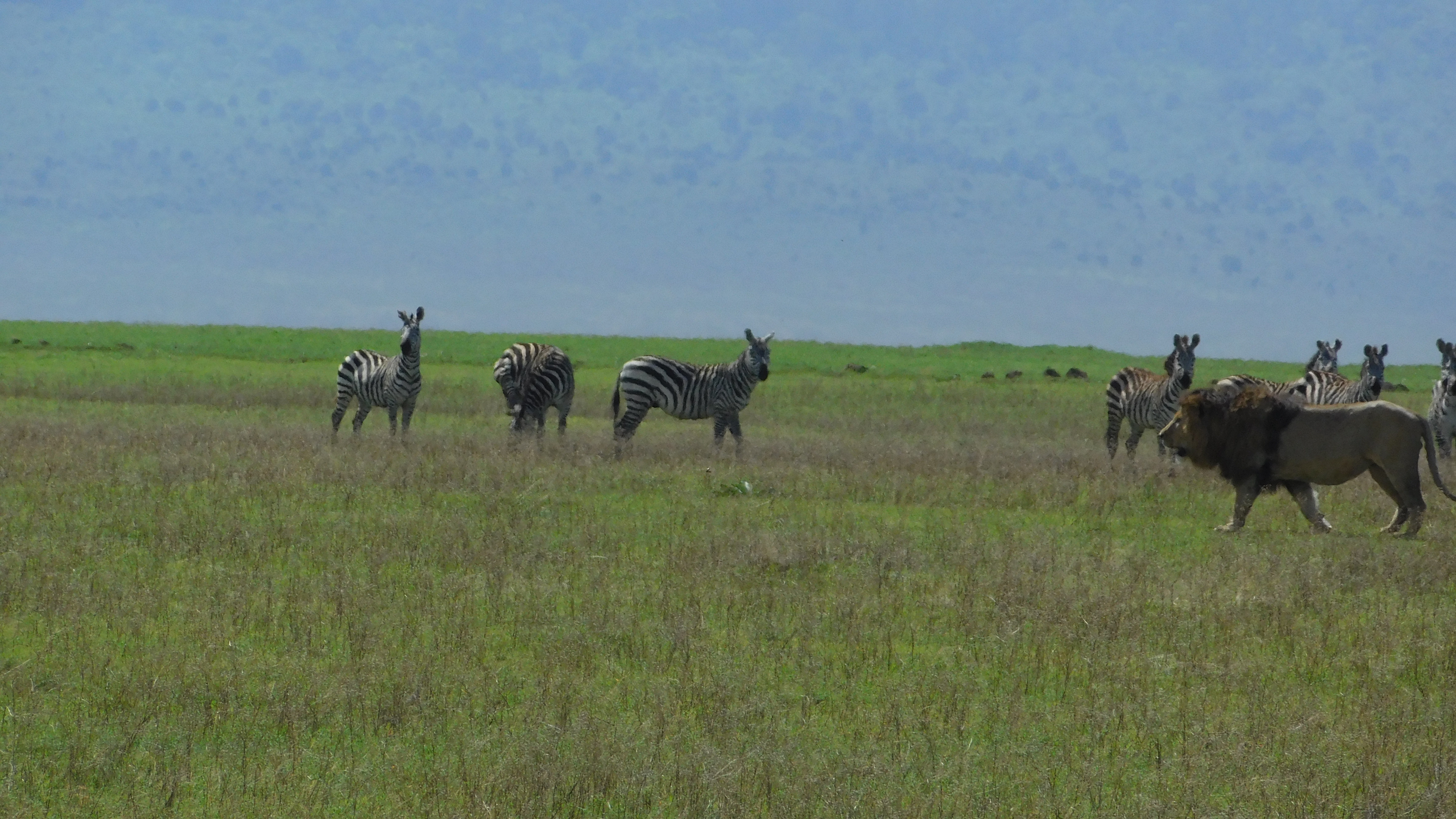
1 Peter 5:8 calls the devil a roaring lion prowling around seeking someone to devour. It is obvious that Peter’s readers would have seen or at least heard about these kings of the jungle for the analogy to make sense and be practical.  Lions lurk, longing for lunch.

In the savannas of East Africa, their meal of choice is usually either the wildebeest or zebra. Despite this, these two animals continue to graze and migrate together. In fact, because they are chief prey of the lion (and other big cats), they need to stick together. Various observers and experts give different explanations for why. Zebras have great farsightedness and the wildebeests have excellent peripheral vision, but each are poor at seeing what the other sees well. Others explain that wildebeests have mouths better suited for short grass while zebras’ are made for the long grass that grow intermittently together on the plains. Still others point to the zebras superior memories, recalling the safety routes of the previous year, and the wildebeests uncanny ability to find water even when such is scarce. Probably, it is the combination of these facts that cause the symbiotic relationship between these two large mammals. They do not all survive, but the vast majority do. The reason is because they utilize their own abilities but also because they rely on the abilities of others.

In a letter where Peter is addressing a people who were at times spiritual prey, he does more than use the simba simile. He urges Christians to stick together and look out for one another. He calls for sincere, fervent, from the heart love for one another (1:22; 4:8). He urges complaint-free hospitality toward one another (4:9). He commands serving one another (4:10). He teaches there to be mutual humility displayed toward one another (5:5). He ends the letter exhorting an affectionate, loving greeting of one another (5:14). As much as anything, this is a recognition of mutual dependence.

If we understand that we are not at home in this world (2:11) and are living and longing for the inheritance in heaven (1:4), we should come to understand our mutual need of each other. That does not just mean looking for others’ help, but also giving it. This is by God’s design. Notice, for example, the proactive protection we provide each other by being “harmonious, sympathetic, brotherly, kindhearted, and humble in spirit; not returning evil for evil or insult for insult, but giving a blessing instead…” (3:8-9a). Right before the lion passage, Peter talks about different groups looking out for and helping each other (5:1-6).

Any of us, through suffering, temptation, doubt, or some other factor, could drift away from the safety and security of the fold. Let us be more than mindful of each other. Let us depend on each other to survive the hunt and make it to eternal safety.  I will face the lion many times in this life, and I depend on you to help me survive.

DSCN0368