
The Local Preacher (Part 5)

Thursday’s Column: Captain’s Blog

Acts 20:25, “And now, behold, I know that none of you among whom I have gone about proclaiming the kingdom will see my face again.” 

Local preachers must know their congregations. A relationship is key to having a successful ministry. A man by the name of T.D. Jakes speaks of the relationship between a man and a woman, and he relates this to the preacher and the congregation. He once said, “The art of relationships requires that a man who is very different from his woman finds common ground with her and vice versa. We are meant to balance each other by attracting people whose strengths may be our weaknesses.” The preacher has the congregation, and the congregation has the preacher. With this kind of relationship, the consequences of ruining it would be catastrophic. 

Acts 20:27, “For I did not shrink from declaring to you the whole counsel of God.” Paul taught the whole Truth of God, A local preacher should never shrink away from teaching the entirety of God’s Word! Paul taught the whole truth no matter the consequences of his actions. We have the whole Truth, which is able to save the souls of the lost. If we leave out any part of the Truth, then we are trading our comfort for the souls of the lost. We must realize the magnitude of not proclaiming the whole Truth.

Acts 20:28, “Pay careful attention to yourselves and to all the flock, in which the Holy Spirit has made you overseers, to care for the church of God, which he obtained with his own blood.” 

This section centers on the work of elders. Paul gives two imperatives (commands) to them. First, we notice that he says to be on guard. This word (prosecho) means “to be in a state of alert, be concerned about, care for, take care.” Their “state of alert” needed to be twofold: firstly, for themselves (elders). Elders need to take care not to forget their own spiritual lives. This would logically be the first place that Satan would start. Then those under the care of the elders would scatter. When the shepherd disappears, the sheep scatter and become easy prey. If the elders are to guard the flock then it is partly their job to make sure the preacher is preaching what the scriptures teach. They can’t guard the flock if they’re feeding them poison. 

A bad preacher is like a wolf. This term describes a person who deals in a pitiless manner with the congregation. Instead of building the flock up he is slowly eating away at their spiritual lives. The preacher is not completely different than the average member but they are in charge of delivering the “food,” if you will. As ministers we should make sure that we are feeding the flock only the finest foods.

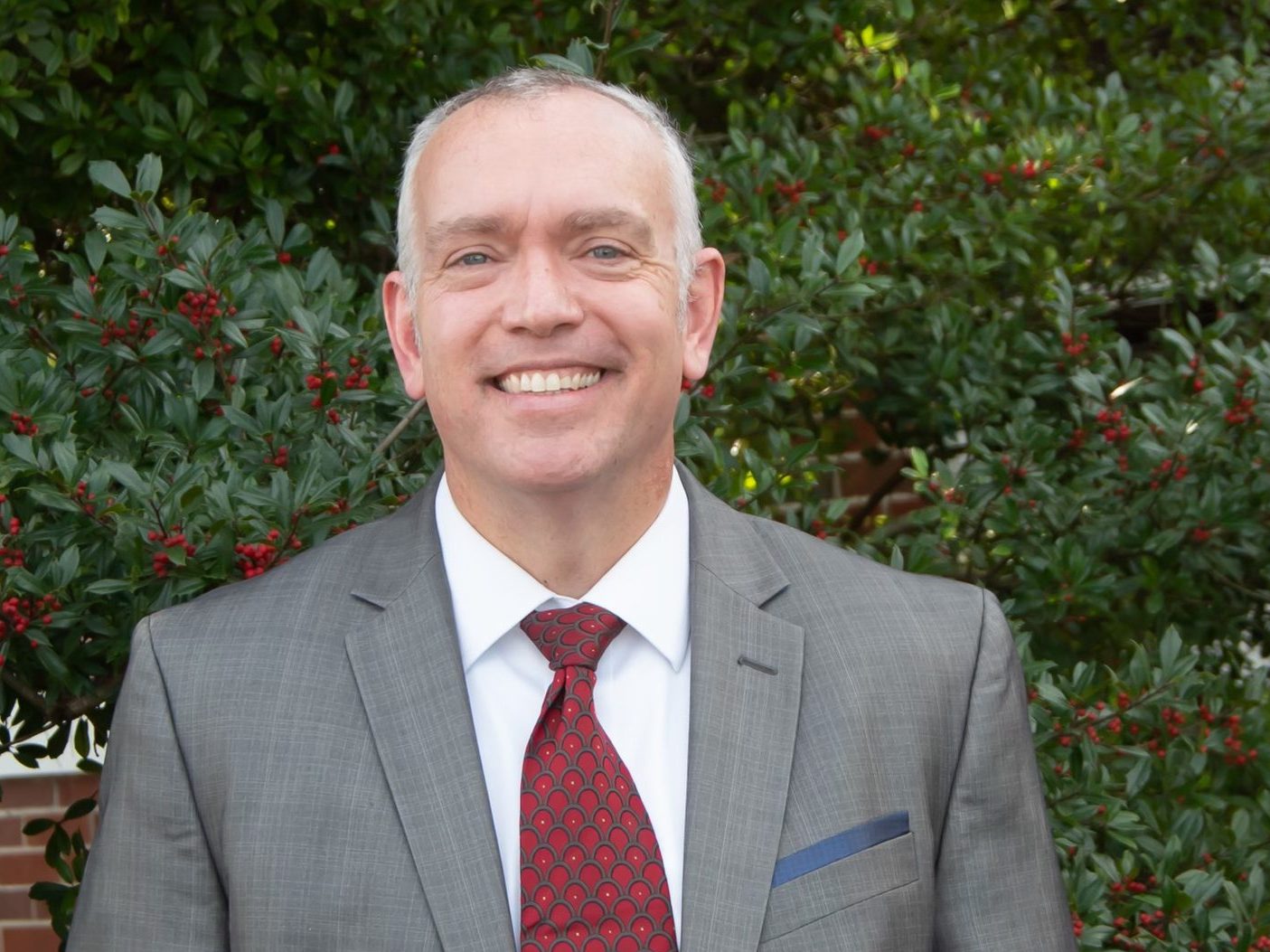
Carl Pollard

The Church’s First Unity Test

Monday’s Column: Neal At The Cross

Neal Pollard

One of the most chilling phrases to church leadership might be, “a complaint arose” (Acts 6:1). Unhappiness, dissatisfaction, or feelings of unfairness all threaten distraction and difficulty among the body of believers. We can quickly break down this problem this way:

  • The quibble. The Hellenistic Jews were being overlooked in the daily serving of food in the Jerusalem church (1). 
  • The quandary. Who should take care of this problem? The apostles responded, “It is not desirable for us to neglect the word of God in order to serve tables” (2). The proposal ultimately allows them to do just that (4-7). 
  • The qualifications. The apostles recommend finding seven men from among them, “men of good reputation, full of the Holy Spirit and wisdom…” (3). The people chose Stephen, a man full of faith and the Holy Spirit, Philip, Prochorus, Nicanor, Timon, Parmenas and Nicolas” (5). 
  • The quelling. “The statement found approval with the whole congregation” (5). The people were able to get back to the business of spreading the word and increasing the number of disciples (7). 

Every problem we face among us in congregations can be settled the same way today. Identify the problem, the biblical solution, and the right people to address it, then peace and success follow. Never again do we read about this problem arising within the Jerusalem church. 

It is interesting to see that the men who were chosen to deal with a physical or material problem were spiritual men. Stephen, one of the “table waiters,” is described as “full of grace and power” (8), a man “with the wisdom and the Spirit” (10), even a man described as having a “face like the face of an angel” (15). These opponents of Christianity are trying to undermine and put down the growth of Christianity (7), and they are willing to go to any lengths to do so (11-14). Yet, Stephen, who has already proven his worth by his compassionate, efficient handling of the Jerusalem church’s internal issue, is able to go on the offensive in sharing the Word.

Acts six does not call these men who wait tables “deacons,” but there are some strong parallels. They are both servants (6:2; 1 Tim. 3:8). They both needed to meet spiritual qualifications (6:3; 1 Tim. 3:8-12). They both could “obtain for themselves a high standing and great confidence in the faith that is in Christ Jesus” by serving well (6:8ff; 1 Tim. 3:13). 

Who does God want to utilize to solve the practical dilemmas that threaten the church’s unity? Spiritual men, servant-hearted men, and skillful men! Men like Stephen and Philip, who are multitalented–humble enough to get their hands dirty and holy enough to get the gospel out to those in need of it. 

In An Average Assembly, You’ll Find…

Neal Pollard

  • Brand new Christians
  • Young parents
  • The unemployed
  • Spiritual leaders
  • Those struggling with worldliness
  • Someone diagnosed with a serious condition
  • Strugglers with addiction
  • Couples with marital troubles
  • Those with loved ones no longer faithful to Christ
  • Widows/widowers
  • Someone who has been deeply hurt or betrayed
  • Those in serious financial debt
  • Those who are the only Christians in their family
  • Someone facing an enormous life change
  • Some who are experiencing great successes and good news
  • Empty nesters
  • Retirees
  • Community and business leaders
  • Those who grew up in the church
  • Expectant parents
  • Racial minorities
  • The highly educated
  • Extroverts
  • Introverts
  • The emotionally fragile
  • Singles
  • Divorcees
  • Those bearing burdening secrets
  • People brimming with optimism
  • Nurturers
  • Takers
  • Critics
  • Encouragers
  • The easily distracted
  • Those forced to attend
  • Hard working servants
  • The dutiful
  • The physically and mentally challenged
  • Daily Bible students
  • Non-Christians
  • Those who need to make serious spiritual changes
  • The lonely
  • Those without formal education
  • Smilers
  • Scowlers
  • The impatient
  • Notetakers
  • Probably 10,000 other “subcategories”

But, do you know what’s so amazing?  God knew that His single volume, the Bible, could reach into the hearts and lives of everyone of them through a single medium.  He calls it preaching (1 Cor. 1:18-25).  It worked 2000 years ago.  It works today.  What an awesome God to meet us right where we live through a message and means that fills our every longing.

L.E.A.D.

Neal Pollard

When speaking of the work of elders, there are multiple aspects of his work and his life outlined in Scripture.  He is an “elder” (“A person of responsibility and authority in socio-religious matters,” Louw-Nida, 53.77; “being relatively advanced in age, older, old,” BDAG).  He is a “pastor” or “shepherd” (“To care for, provide,” WSNT, Zodhiates; “To care for the congregation…to seek the lost…and to combat heresy,” TDNT, Kittel, et al, eds.).  He is an “overseer” (“one who serves as a leader in a church…caring for the needs of a congregation as well as directing the activities of the membership,” Louw-Nida, 53.71).  His qualifications are seen in 1 Timothy 3 and Titus 1, his relationship to the membership seen in such passages as 1 Thessalonians 5:12-13 and Hebrews 13:7,17, and his authority in such passages as 1 Timothy 5:17, but among the three designations identifying him nothing may be more pressing and important than his leadership.  Too often, preachers or other influential members fill the vacuum and void of leadership left by elders who fail to assume this role.  When this happens, God’s pattern for church life is not followed.

Wendell Winkler once wrote, “Leaders cannot lead where they do not go anymore than they can come back from where they have not been.  They influence some by what they say, more by what they do; but, most by what they are” (Leadership: The Crisis Of Our Times, 15).  Citing the example of Isaiah, Franklin Camp wrote, “Isaiah’s response (to God’s question in Isa. 6:8, NP) was as though he were afraid that someone else might volunteer before he did. This attitude is that of which real leadership is made. When there is a challenge placed before the church, read leaders, like Isaiah, are ready to accept it” (Principles and Perils of Leadership, 50). Then, J.B. Myers adds this, that “a leader is one who guides others and directs a course of action. Fundamental to leadership is the willingness to take the initiative in behalf of a group, such as the church” (Elders and Deacons, 166).  These and other men have written books or articles, preached sermons, and taught classes urging the church’s elders to be leaders.  The need is as great today for this as ever!

How can elders effectively lead today?

Love.  Be tender and compassionate, as a shepherd. Be gentle and wise, as an elder.  Be faithful to God’s will, loving Him first, as a leader.

Exemplify.  Study and follow the example of the Great Shepherd.  Have a long track record of righteous living, as an elder. Show before you tell as a leader.

Admonish.  Realize the care attached to warning, as a conscientious shepherd. Summon the benefit of experience, as an elder, to be reminded of the abject neglect attached to ignoring sin “in the camp.”  Appreciate that sheep need a clarion, understandable voice from the leaders.

Decide.  Know that confusion and scattering lies in the wake of an indecisive shepherd. Trust the accumulation of wisdom gained as one who has reached the age befitting an elder. Grasp the connection between decisiveness (even if unpopular) and leadership.

Bigger, stronger congregations hinge upon good, godly leaders.  The faithfulness of Christians rests in the hands of capable leaders. Evangelism flags and fails minus the sure guidance and equipping of leaders.  Pray for every elder everywhere to L.E.A.D.!