What Are You Waiting For?

Neal Pollard

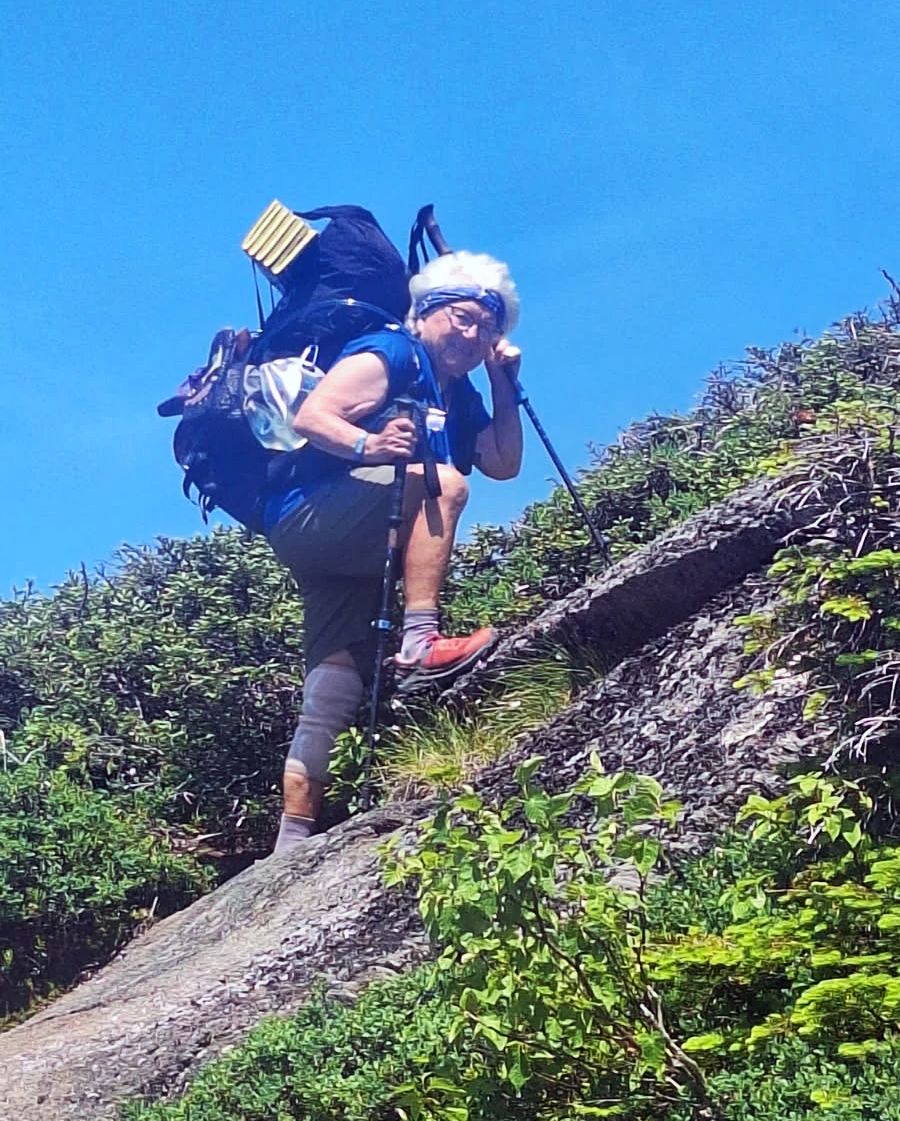
Betty Kellenberger of Carson City, Michigan, has become something of an instant celebrity. Google her name and you’ll find endless articles devoted to this remarkable woman’s unprecedented achievement. On September 12, 2025, Betty did what only 1 in 4 people (out of around 3000) do every year. She completed the Appalachian Trail, all 2200 miles of it. She averaged about ten miles per day on the trail. Did I mention she did it alone? And that she’s 80 years old? She became the oldest woman to complete this feat!

The dream to do this was sparked for Betty when she was 14 years old, reading about the trail in her Weekly Reader magazine at school. She always wanted to do it, but never seemed to get around to it. After retiring as a teacher, she began to talk to herself and reason that if she was going to do it she needed to get started. Once she made up her mind, she had to overcome health problems, knee replacement surgery, and Hurricane Helene.

Betty gave some advice for people who may be contemplating some dream or aspiration, but hesitate to try.

  • Start sensibly.
  • Study (learn as much as you can about the goal you want to accomplish).
  • Find a buddy.
  • Stay active and stay involved.

(information and picture via Rachel Nania, AARP.org).

Have you been putting off something you know you should do for Christ? It’s easy to talk ourselves out of things, especially hard things. When challenged, we trot out our excuses–our intellect, our resources, our fears, even our age. Yet, we carry our regrets with us through life knowing we should be aiming higher. The Bible is full of people who dared greatly for God despite their limitations.

  • Moses led an entire nation on a 40 year hike through the wilderness at the age of 80, and that was only one of his limitations (Exodus 4:10).
  • Caleb was 85 when he conquered his mountain in Canaan (Joshua 14:6-14).
  • Ruth was a poor, foreign widow.
  • David was just a youth (1 Samuel 17:33).
  • The woman who gave all she had to live on was a poor widow (Mark 12:41-44).
  • Mephibosheth was handicapped (2 Samuel 9).
  • Paul had a thorn in his flesh (2 Corinthians 12:7-10).
  • Joseph, Jeremiah, and Timothy had much asked of them when they were only youths.
  • Rahab had the stigma of being a prostitute (Joshua 2; Hebrews 11:31).
  • John Mark had abandoned his coworkers (Acts 13).

What good thing for God are you avoiding or procrastinating? Take Betty’s advice. Start sensibly, but get going! Study about it, but then act on it. Find a buddy, and get them to do it with you. Resolve to stay active and involved, and never quit until you cannot go on! You’ll never regret it!

Trail Magic

Friday’s Column: Supplemental Strength

81121814_2462862270639428_5746232403106463744_n

Brent Pollard

My dad has discovered YouTube. He had been using the service to watch streaming worship services during the height of the coronavirus lockdown; he has since noted its potential entertainment value. One of his favorite channels is one that plays classic country music from the 1950s and 1960s. Recently, however, he has been watching the videos of hikers along the Appalachian, Pacific Crest, and Continental Divide Trails. I use to enjoy hiking in my healthier days, so I have sat down to watch more than one of these videos with him. I have never even contemplated doing a thru-hike of one of the previously mentioned 1,000 mile plus trails, but have admired those who have completed them. As I watched one video of a hiker who undertook the Appalachian Trail to conquer his depression, I heard him use an unfamiliar term: “trail magic.” In another video, a young woman from Opelika, Alabama, used the words in regards to her trek along the Pacific Crest Trail. Curiosity compelled me to look that phrase up. The phenomenon originated on the Appalachian Trail but has since popped up along the other lengthy trails as well.

 The Appalachian Trail Conservancy defines trail magic as follows:

“1) Finding what you need most when you least expect it. 2) Experiencing something rare, extraordinary, or inspiring in nature. 3) Encountering unexpected acts of generosity, that restore one’s faith in humanity.” 1

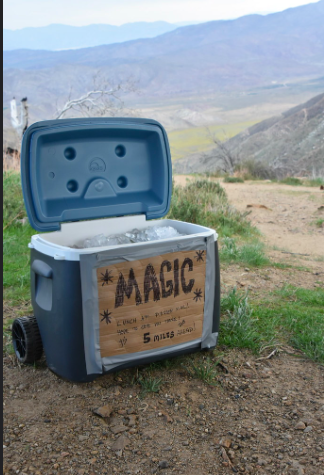
As the videos demonstrated, trail magic presented itself in a cooler of cold drinks left at a taxing point in the trail. Or maybe a veteran thru-hiker set up a tent at a spot along the pathway to feed the hikers who came through. It could also be a person volunteering to provide a wearied hiker a ride to his or her nightly lodging when the trail came close to a town offering a hostel or hotel serving hikers. Thru-hikers have no reason to expect that any of these things will happen to them as they make their journey even though it happens enough to warrant a name (i.e., trail magic). That is why it is so appreciated.

 When I read that, my mind immediately associated aspects of this phenomenon to what those of us who are Christians call “providence.” How often have we found something unexpected in our life, typically at the most opportune time, that screams “God” to us? In other words, a sudden something that points to God’s hand at work in our lives. No, providence is not a miracle, since it does not circumvent the laws of nature to occur. It works within the established framework around us, making it even more amazing since it can require God’s forethought rather than just a momentary expression of His unlimited power. Yet, it is as appreciated by us as any miracle would be since it satisfies our momentary need, whether remission from cancer or unexpected inflow of funds when presented with a financial crisis.

 This characteristic of God has earned Him a unique name first applied by father Abraham, Jehovah-Jireh. Do you recall the reason Abraham called God by that name? God had asked him to offer his only son as a sacrifice. This son was the promised one for whom he had long waited. Yet, Abraham complied. When his son, Isaac, noticing a missing sacrifice, asked his father about it, he replied, “God will provide for Himself the lamb for the burnt offering, my son” (Genesis 22.8 NASB). After nearly sacrificing his son, an angel stopped Abraham, and Abraham noted a ram with its head stuck in a nearby thicket. Abraham offered the ram as a sacrifice in place of his son and called the location “Jehovah-Jireh,” meaning “The Lord will provide.”

 Our path to Heaven is strait and narrow (Matthew 7.13-14). It is, therefore, most welcome that as we make our way through this life that we encounter this celestial trail magic. Let us never fail to thank our God since He is also Jehovah-Jireh.

 REFERENCES

1 Bruffey, Daniel. “Trail Magic.” Appalachian Trail Conservancy, The Appalachian Trail Conservancy, appalachiantrail.org/explore/hike-the-a-t/thru-hiking/trail-magic/.

Screen Shot 2020-07-03 at 7.09.01 AM