Man Digs Tunnel Through Mountain With Hand Tools

Thursday’s Column: Dale Mail

Dale Pollard

In the El Paso Mountains of the Mojave Desert, there’s a strange and mysterious tunnel. This tunnel cuts a half-mile into solid granite— but goes nowhere. William Henry Schmidt, or “Burro” Schmidt, began digging this tunnel by hand in order to provide a shortcut through the mountain. 

This solo construction project began around the year 1902 while Schmidt was hauling iron ore around the mountain to get to a railroad which would then take the ore to be smelted. 

This strenuous trip around the mountain proved to be a dangerous and time consuming journey. At some point, Schmidt decided to burro straight through the mountain which would, in his mind, save him time. With a simple pick axe and other various hand tools, he began to dig. 

And dig. 

And dig some more. 

For roughly thirty eight years he alone would continue to chisel and bore into the mountain. When he was sixty eight years old, he finally saw rays of sunlight shining through cracks in the rock wall in front of him. He finally emerged on the other side of the mountain— but his efforts were all for nothing. 

Not only did his tunnel end at the top of a steep cliff in the middle of nowhere, but unbeknownst to him during the years he had been digging, a construction crew had built a road providing the more convenient route he had been working so hard to create.

THAT SCARY SENSATION OF DESPERATION 

With four hundred men, Esau marches towards Jacob. The two brothers had parted ways years earlier under strained and deceitful conditions. Jacob, with the help of his mother, had taken advantage of his aging father and stole the birthright belonging to his older sibling. Now Jacob is filled with fear and an overwhelming sense of desperation he cries out to God.

Save me, I pray, from the hand of my brother Esau, for I am afraid he will come and attack me, and also the mothers with their children. But you have said, ‘I will surely make you prosper and will make your descendants like the sand of the sea, which cannot be counted.” 

Gen. 32.11-12 

Jacob, like so many others since his time, had spent his life carving out his own path. He attempted to create shortcuts to his own success and he suffered great losses on account of it. His family relationships were shattered, his finances took unnecessary blows, and his standing with God was turbulent at best. 

Instead of waiting on the LORD to deliver or even answer him, Jacob operates in a predictable manner. He creates a plan and sets in motion without counsel. Hundreds of cattle, servants and goods are collected and prepared as peace offerings for Esau. 

“I will pacify him with the gifts I am sending on ahead; later, when I see him, perhaps he will receive me.”

Gen. 32.21 

Let’s take a moment to assess the tense situation as it’s unfolding. 

Jacob was desperate when he didn’t have to be. Esau wasn’t angry. 

To make matters worse, the night before Jacob is to meet Esau we read that Jacob wrestles with God— when he didn’t have to. In the process he lost sleep, spent all of his energy, and then limps away with an injured hip (Gen. 32.22-32). 

WINNING WITH LESS WRESTLING 

How many times in our personal lives do we make matters more stressful than they have to be? We do that when we’re determined to find our own solutions and we leave God out of the crucial planning process. We’ll carve into metaphorical mountains thinking that we’ll solve a problem and emerge victorious only to discover that the efforts put forth were futile. 

God’s waiting for us to wait on Him. Let Him lead and let Him be the guide. Pray and wait in a ready state. When God answers and we follow with action, life is less stressful and we’re more successful. 

Burro Schmidt’s Tunnel 

How To Avoid Worrying About Your Kids

Monday’s Column: Neal At The Cross

pollard

Neal Pollard

For those not on social media and connected either with Kathy or any of our three sons, Carl, our youngest (and Thursday’s blog writer), was in a serious motorcycle accident a little over a week ago. A large pickup truck tried to turn left onto the highway and Carl hit it going highway speed. Our concern was for both his immediate safety and longterm health. Add this to two sons unofficially assisting police in breaking up a local theft ring, a son tackling a shoplifter attempting to flee a store and interrupting a gang initiation beating, broken bones, ER trips, ICU stints for health issues, and that’s not to mention innumerable “close calls,” “near misses,” “close shaves,” and “narrow escapes.”  Of course, it’s not just health. What about their relationships? What about their jobs, careers, and financial futures? What about the country they are inheriting or the children God may bless them with? Most of all, what about their spiritual condition, their faith, and their relationship with Christ? With each new phase of life, we are left to numerous consider “what ifs.” For future empty-nesters, that does not decline or disappear when they leave home. If anything, it mounts. So, how does a Christian not worry about their children?

Philippians 4:6. Paul urges us to “be anxious for nothing.” That word for anxious depicts apprehension, being unduly concerned about possible danger or misfortune. We can drive ourselves crazy thinking of all the scary scenarios. Paul says instead to pray (speak to God and petition His help), supplicate (urgently request God to meet the need, suggesting begging and pleading), and express gratitude. Specifically articulate the help you seek from God. Won’t this just make things worse? Not at all. Instead, “the peace of God, which surpasses all comprehension, will guard your hearts and your minds in Christ Jesus” (7).

Luke 12:25-26. Luke records Jesus’ voluminous teaching on various material concerns. In the middle of it, Jesus shares a principle that applies to any number of matters. He teaches, “And which of you by worrying can add a single hour to his life’s span? If then you cannot do even a very little thing, why do you worry about other matters?” What a practical, sensible truth. What do we change by endless fretting and worrying? Does it change outcomes? Does the exercise of worry keep the bad and scary things from occurring? Does it override the freewill choices of our children or others? We are at one place at a time. God knows everything (30). “He who keeps you will not slumber…nor sleep” (Psa. 121:3-4). Trust that! 

Matthew 6:33. What Matthew records is close to parallel to the material in Luke 12, though the wording and setting are different. The counsel here is about prioritization. It’s hard to “let go and let God,” but that’s Jesus’ bottom-line guidance. Again, in context, He’s dealing with material things rather than our kids. But substituting the one concern for the other does not change the principle. We are well-served to practice “God-firstness” from as early as possible, before our children are born. We should strive to live by that principle throughout the years they are in our homes, trying to show it to them. Then, we must continue to live it out personally and exemplify it before them after they leave the home. God’s kingdom, His will, His righteousness, His goals, His Word comes first and foremost. Keeping focus on that, trust Him to take care of not only us but those whose lives we care about. Jesus sweetly consoles us, “So do not worry about tomorrow, for tomorrow will care for itself. Each day has enough trouble of its own” (34).

1 Peter 5:7. I love how Peter acknowledges that we all have anxiety. We’re all tempted (and all of us at least occasionally succumb to the temptation) to worry. Peter’s words are practical. Humbling yourself under God’s all-powerful hand, throw all your anxieties on Him. He is strong enough to carry it. Do you know what’s the best part? Not only can He do it, He wants to. Why? He cares for you! He’s your Father. “Care” here means concern and anxiousness. Our lives matter to Him. His heart is involved. We may not stop to think that all of us are His children. The difference is that this Father can see the future, is fully in control, will never be startled or surprised, and never lacks for what to say, how to react, and what to do. How foolish not to give Him the things we would obsess over, be consumed with, and eaten up by. 

I wish I could tell you I will never worry about Gary, Dale, and Carl again. Those who know them know what a tall task that is. I wish I could tell you that you will never worry about your precious children again. But, none of us should. We can make progress and get better if we’ll feed on the rich truths of passages like the ones we’ve visited briefly together today. Go back and read them again. Drink deeply of their comforting, helpful truths. They will help you trust Him more with whatever frightening prospects you face regarding your children’s lives. I don’t promise. He does! 


Saturday at Hebron church of Christ (where Carl, center, preaches). This was at Carl and Emily’s wedding shower. The boys had just returned from hunting wild hogs near Demopolis, AL. It never ends!

Let Go Of The Rope

Thursday’s Column: Captain’s Blog

carl pic

The story is told about a man hanging from the end of a rope at the bottom of a well. His feet hadn’t touched the ground and he estimated that he still had about 100 more feet to go.

With no way out, and his grip starting to fail, he figured he was in the last few moments of his life. Finally he couldn’t hold on any longer and fell…6 inches to the ground.

Just like the man in the well, we all have those times when we get worried and stressed for no reason. Because this man couldn’t see the bottom of the well, he was worried.

How often are we like this? We can’t see the future, we don’t know what’s underneath us and so we do what feels natural and worry. Sometimes we let the things that we can’t control worry us and God has told us to trust Him.

Jesus in His sermon on the mount addresses this problem of worry. In Matthew 6:25-27 He tells us that God cares for our wellbeing.

Jesus said to “look at the birds of the air that they do not sow, nor reap, nor gather into barns.” Now I hope that we feel more important than birds, because we are.
Christ didn’t suffer on the cross for birds, He did that for us. Birds aren’t given the promise of eternity, But we are.

And yet, we still worry.

The man in the well thought that it was 100 feet to the bottom of the well, but that was what he thought.

Lucky for us we don’t have to “think” or guess what life holds or if we will have food and clothing. The things we get anxious about are foretold to us in scripture.

Those that aren’t Christians are worried about death, but we KNOW what happens after we die. Those that aren’t Christian’s are anxious about so much. And that all goes away if we are in Christ. Fear of the unknown is transformed into trust.

So, even though it may seem like we are hanging on the verge of death in life, don’t be anxious. I encourage all of us to let go, and let God.

We may think that there’s a 100 foot drop beneath us, but in reality God is right below us, waiting for us to let go and trust in Him.

hanging-on

The Curious Case Of The Caratinga Cow

Tuesday’s Column: Dale Mail

DaleandJanelledirectorypic

Dale Pollard


We know that tomorrow isn’t promised and we also understand that, unless God comes first, everyone will die one day. With that being said, I am almost 100% certain that nobody reading this will pass from this life after having a cow fall through your roof. The “steaks” just aren’t that high. While this is an unlikely way to die, it’s not an impossible way to go. In fact, this is exactly what happened to Joao Souza in 2013. A one-ton cow was grazing on the hills behind his home in Caratinga before it somehow found it’s way up on to his roof. An unknowing Souza was snoozing on his couch when suddenly his life was over. The asbestos-filled roof collapsed under the weight of the cow. Being done in by a bovine is not exactly a bodacious way to make that final transition, but the media had reported two more similar events of cows seemingly falling from the sky in this area just two years prior. Even though this event actually occurred, how ridiculous would it be for us to spend our days in fear— worrying that we will meet a similar fate? 

The last verse of Matthew six will tell you not to exert so much energy worrying about tomorrow. This passage has brought peace and comfort to many Christians throughout the years, but many of us still worry about our tomorrows. I guess if our tomorrows were actually ours to begin with, we may really have something to fear. The truth is, God owns the future. He doesn’t tell us not to worry about the things that are unlikely to happen, He simply tells us not to worry. God’s almighty hand still holds the world, and for the faithful believer this reality can set your mind to rest. I’m not sure what tomorrow brings. It’s possible that a cow could even come crashing through my roof and send me into eternity— but that’s alright. It’s not just alright because I could use a little more dairy in my diet, but it’s alright because a life in Christ comes with a secure future. It doesn’t matter what Fox News tells us when the Good News already told us everything we need to know. No matter what the day may bring nothing can change the fact that Jesus came, He died, and He definitely is alive, well, and active every day. Don’t worry about tomorrow. Let’s live our lives with joy and in the peace only He can provide. 

cow-2896329_960_720

    I hope this moos you and that you have an udderly fantastic day. If this beefed up your spiritual cow-fidence please share with someone else.  

 Is Our Savior Sleeping? 

Tuesday’s Column: Dale Mail

Daleheadshot

Dale Pollard

Have you ever been afraid of your imagination? At times that fear can be so convincing that you truly believe that the worst case scenario is somehow inevitable. Try and make that opening question relevant to your life. Think about a specific event or experience where you were afraid of something that never came to fruition. The grip of anxiety can be debilitating as you wait for your medical test results to come in. You agonize over the poor quality of life you might have if there is ever an unexpected economic collapse. Your hairline might rapidly recede as you stress over the outcome of the war our nation is still involved in, and do I even need to mention the new global pandemic? You’re robbed of sleep as you imagine the potential horrible outcomes that may never happen. These things may never happen because the Lord could come. They may never happen because whatever you’re afraid of— it’s simply worse in your own mind. It may never happen because God has proven Himself to be one who calms the storm instead of letting you perish.

I believe we would all benefit from recalling those occasions in our past where fear proved unnecessary and we worked ourselves up for nothing! If the fear in your life has a big appetite and it’s devouring all your time and peace, maybe it’s time to feed something else. Sitting Bull once said, “Inside of me there are two dogs. One is mean and evil and the other is good. They fight each other all the time. When asked which one wins I answer, ‘the one I feed the most.’” How vividly this illustrates a daily struggle for so many. Fear and faith will scrap with one another until we decide which one will win. Do you think our faith would emerge victorious every day if we could physically witness God’s power, but in a miraculous way? If my own eyes could witness Jesus bring the dead back from the grave, cast out a demon, or walk on stormy waters, then I would never worry again. Or would I? Seeing Jesus perform miracles never made anyone perfect. His disciples were far from perfect and they stood feet from the Savior while He did things only God could do.

On one occasion, which was hinted at earlier, Jesus calms the storm after being abruptly awakened by His terrified followers (Mark 4). There are some details about this account that will help us feed our faith when fear threatens to win the day.

First, our cries to God, even in the desperate times, are heard. The disciples exclaim, “Don’t you care that we’re about to die?” Following this fearful plea, Jesus will demonstrate a fraction of His awesome power. After all, what is calming a stormy sea to the One who spoke every drop of water into existence?

Second, excessive fear of anything in this world is a foolish mistake. God is bigger and greater than our worries.

Third, God is not asleep. It may seem like He is when we don’t feel optimistic about the future, but it’s when we recognize that He’s the only answer to our peace that He will calm our storm. 

IMG_4740

Why Do We Sigh?

Friday’s Column: Supplemental Strength

brent 2020

Brent Pollard

 I was watching a program from Japan in which the protagonist sighed. We can relate to sighing. I know I may find myself sighing quite a bit. (One researcher noted we all sigh about every 5 minutes. 1) In this program, however, another person, walking by, cautioned the protagonist not to sigh since that allowed happiness to escape. Later, I observed another Japanese show where the same idea was expressed. I know the Japanese have proverbs and idioms, but I’ve yet to locate the source for that expression. I presume it’s a cultural thing since it’s the only context in which I’ve seen it expressed.

 Why do we sigh?   A sigh serves as a reset, both physically and mentally, for the body. 2 As such, it’s an important biological function. Yet, we likewise tend to sigh when we’re frustrated. In fact, that seems to be when we become aware of our sighs. For this reason, most people interpret sighing with negative emotions. 3 If I sighed while we’re having a “vigorous discussion,” you might conclude I’m angry with or didn’t like you. However, the heated exchange might have simply stressed me, triggering a sigh to release the pent-up anxiety.

Despite being commanded to be “anxious for nothing” (Philippians 4.6), we’ve already observed people do sigh. Obviously, if we sigh every 5 minutes, our sighs cannot always be about anxiety. Yet, it remains amazing God provided for a means of regulating excess anxiety through that rush of relaxation one receives by sighing. This, is of course, in addition to the inconceivable peace received from prayer (Philippians 4.6-7). It may be that with one’s sigh, he is refocused upon his task. Thus, a burden is momentarily laid aside so one can get a better grasp of it to carry it further to the goal.

Jesus told us not to worry, but He also said each day has enough trouble of its own (Matthew 6.33-34). One should try to practice mindfulness in connection with his faith. Since we do notice our sighs of frustration and anxiety more often, we ought to allow our sigh to signal us concerning our stress and take the appropriate measures to resolve it. If a sigh is prompted by a person, either you forbear (tolerate—NASB) them in love (Ephesians 4.2), or you talk to them about the troubling matter privately (Matthew 18.15-17; Acts 18.24-28).  If a sigh is because we feel we’re a failure, let us remember the sufficiency of God’s grace (2 Corinthians 12.9). By walking in the Light, we have the continuous cleansing of Jesus’ blood (1 John 1.7). And if someone we’ve tried to reach with the Gospel frustrates us, after we’ve delivered ourselves of bloodguilt (Ezekiel 3.17-19), let us recall the sad truth that only a few find the narrow way (Matthew 7.13-14). Our sigh may be a sign that it is time to knock the sand from our sandals and move on (Luke 9.5).

Yes, rather than serving to remind him of something negative, a Christian’s sigh might also serve as an opportunity, an opportunity to reset his faith.


References

1 Heid, Markham. “3 Reasons You Sigh So Much.” Prevention, Hearst Magazine Media, Inc, 11 June 2019, www.prevention.com/health/a20508517/why-you-sigh-so-much/.

2 Lewis, Jordan Gaines. “Why Do We Sigh?” Psychology Today, Sussex Publishers, LLC., 10 Apr. 2013, www.psychologytoday.com/us/blog/brain-babble/201304/why-do-we-sigh.

3 ibid

53267075_10156153405380922_4144800791061856256_o

My God Is So Big

Tuesday’s Column: Dale Mail

IMG_1381

Dale Pollard

My problems are so big, my worries so mighty, there’s nothing my anxieties can’t do. Wait, that’s not how that song goes. It’s been said that the there are more stars in the known universe than all of the sand on earth combined. That being said, in just one grain of sand there are more atoms than all of the stars. That’s pretty amazing. Our planet is but a speck in the grandeur of space. Countless stars, planets, galaxies, lightyears and somehow God is well aware of the happenings of people.

Have you stood on the mountain tops? Have you observed the power of the oceans as the waves crash on the shore? Has your heart almost stopped after the vibrating sensation of a thunder clap resinates in your chest? The might of the Creator is everywhere in the world around us and at times it just demands to be noticed.

1 Kings 19:11-13 is a section of scripture that is mysterious and fascinating. The Lord of hosts is about to show Himself to a depressed and exhausted Elijah, but in a way that he would never forget. “The Lord said, ‘go out on the mountain in the presence of the Lord, for the Lord is about to pass by.’ Then a great and powerful wind tore the mountains apart and shattered the rocks before the Lord, but the Lord was not in the wind. After the wind there was an earthquake, but the Lord was not in the earthquake. After the earthquake came a fire, but the Lord was not in the fire. And after the fire came a gentle whisper. When Elijah heard it, he pulled his cloak over his face and went out to stand at the mouth of the cave. Then the voice said, ‘what are you doing here Elijah?’” In the hush of Horeb, Elijah seeks to avoid the troubles of his world. The acoustics of the mountainous area along with the time spent in silence must have made the shattering rocks, raging fire, splitting hills, and rumbling earth all but deafening and definitely a terrifying display of divine power. Then in sharp contrast, a still whisper comes. This gentleness, no doubt, is the reason Elijah decides to cautiously emerge from his hiding place. God is teaching His worn-out servant a lesson that holds true for us today.

The fact is, there is no more God, His wisdom, power, and presence in an earthquake than there is in the sweet breath of a blooming flower. The quiet ticking of a wrist watch reveals just as much intelligence and purpose as does the striking of a clock tower’s bell. One may walk out into an open field at night and stare up into the vast sky, lit up with numerous twinkling stars and declare, “I’ve found God!” But God is no more in the sky than He is in the blades of grass flattened beneath your feet. The question came to Elijah from that still voice, “What are you doing here?” To the prophet, his problems were too great and too large and his solution was to run and hide. God, in a magnificent way, is trying to remind Elijah of his place. Our place in life is not to take matters into our own hands or solve life’s many difficulties on our own. The answer is not to run away, but to walk humbly with our awesome God. He is strong enough to lift our burdens, wise enough to counsel us, patient enough to allow us to learn, and loving enough to constantly forgive. My God is so big, so strong, and so mighty, there’s nothing my God cannot do— for you, too. 

28661198_10215059820467071_276448063235616888_n
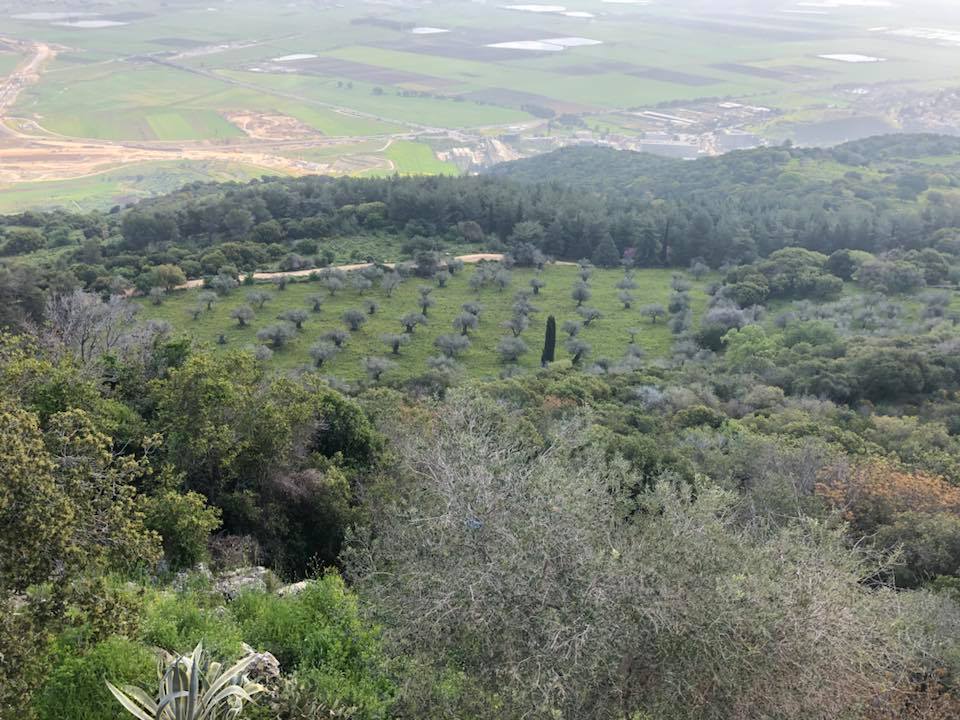
A view from Mt. Carmel (Israel)

When Will I Ever Be Free…

Neal Pollard

…Of concerns over the future–decisions to make, the specter of tomorrow, growing old, retirement?
…Of sin–fighting temptation and not always winning, beating one thing and then finding another cropping up in its place, and the guilt it brings?
…Of disappointment–both of what I inflict and what is inflicted upon me?
…Of fear–when it comes to my spouse, my children, my parents, my brethren, our nation?
…Of doubt–whether in the process of prayer, struggles with asking God “why?,” or especially doubting myself?
…Of neglect–leaving undone things central to my purpose as a Christian due to apathy, distraction, misplaced priorities, and the like?
...Of failure–trying and not succeeding, not trying hard enough, not knowing what or how to try, and of simply falling short?
…Of betrayal–whether through gossip, lying, broken promises, insincerity, or treachery?
…Of insecurity–that can result from any of these and other struggles?

We don’t always have days when we wonder these things, but they come around often enough that they can prey on our minds. Sometimes, we face these questions due to our shortcomings. Other times, it’s because of the failings of others. Both can lead to despair.

The wonderful news is that we can be free of them all. There is a day coming when none of these will weigh us down ever again. I love the encouragement of the Hebrews’ writer, who urges, “Therefore, since we are surrounded by so great a cloud of witnesses, let us also lay aside every weight, and sin which clings so closely, and let us run with endurance the race that is set before us, looking to Jesus, the founder and perfecter of our faith, who for the joy that was set before him endured the cross, despising the shame, and is seated at the right hand of the throne of God. Consider him who endured from sinners such hostility against himself, so that you may not grow weary or fainthearted” (12:1-3). 

Whether we are struggling due to our sinfulness or if it is any other weight, we’re encouraged to hang on and hang in there. When the struggle might be the greatest, that’s when we’ve got to turn and fix our focus on Jesus. Watch how He won! See what He did! Remember that He helps make it possible for us to fight and win.  

If you are in the valley of despair right now, for whatever reason, don’t give up! Look to Jesus. Hang on! The end is in sight. Through Him, we will overcome!

4345500222_b70e4f3204_b