Where Do I Fit In?

Friday’s Column: Brent’s Bent

Brent Pollard

It is likely that after learning of the importance that both Jew and Gentile bring to the church, members of the cosmopolitan church in Rome began to wonder what role they should play individually within the church. As a result, Paul addresses this issue in Romans 12. It may be helpful for those of us living in the twenty-first century to think of it as deciding on a career path. First, we can consult a few available vocations within the church to predict our aptitude for it. Then, we can use these guidelines to figure out where we fit in the Body of Christ. 

“Prophecy” is the first vocation Paul lists (Romans 12.6). The Greek word for “prophecy” means speaking God’s mind and counsel. Initially, this referred to the Holy Spirit’s inspiration to reveal God’s truth. Today, the closest thing to prophecy is preaching—expounding on God’s Word without direct inspiration. Of course, the Holy Spirit is still very much involved in this process, but today’s prophet finds His inspiration in the pages of Scripture. 

The second option for church vocation, called “ministry” by the KJV, means “to serve” (Romans 12.7). This term refers to people who have been qualified and appointed to serve as deacons. However, the Holy Spirit also uses the word to describe the actions of non-office holders within the congregation. These devote themselves to serving their brethren. Paul uses this word in this context to highlight the devotion of Timothy and Phoebe (2 Timothy 4.5; Romans 16.1-2). 

The third church vocation is “teacher” (Romans 12.7). The word “teach” means “to make another learn” when taken at face value. A more comprehensive range of applications is possible with this interpretation. For example, one can be Priscilla and do this privately, as she and her husband Aquila did for the ignorant Apollos (Acts 18.26). It can be an older woman mentoring a younger woman (Titus 2.4) or an appointed male leader of a Bible study (James 3.1). 

A fourth possible church vocation is the “exhorter” (Romans 12.8). According to Joseph Henry Thayer, the Greek word for exhorting combines the ideas of exhorting, comforting, and encouraging. Barnabas is an excellent example of someone who publicly exhorted. In Acts 4.36, Luke says the apostles called him “Son of Encouragement.” The word “exhort” derives from the same root as one of the titles given to the Holy Spirit: the Paraclete or Comforter (John 14.16). Although this position is not a formal church office, it carries a certain air of importance in its association. What congregation does not need a bevy of Barnabases? 

A fifth possible church vocation is limited to a select few, the role of “giver” (Romans 12.8). Giving in Greek refers to someone sharing their possessions with another. Only those who are financially well-off could take on this role. We cannot afford to be like the wealthy young ruler if God has blessed us with the ability to give. The rich young ruler was willing to do anything to be obedient, short of selling his possessions and donating the proceeds to the poor (Luke 18.22-23). His heart sank when he realized he would have to give up his possessions. When we give up control to God, we give up everything, including our money. 

The sixth church vocation Paul lists is an official office within the local church: “leadership” (Romans 12.8). The term “leadership” refers to someone who protects, guards, and assists others. It has specific qualifications that Paul provides to the young preachers, Timothy and Titus, elsewhere (1 Timothy 3.1-7; Titus 1.5-9). However, younger men should be mindful of this as a role into which they can grow as they mature in the Lord. Not everyone, regardless of their willingness, can serve in church leadership. Once granted that grace, however, such men must be diligent in their service. 

The seventh and final church vocation Paul gives in this short list is one that shows mercy (Romans 12.8). I could understand one feeling confused by this being a role one can fulfill, given that we must all be merciful (Matthew 5.7). To have mercy on or pity for another person is the meaning of the underlying Greek term from which we derive our English word “mercy.” However, when you dig to the root word, you discover the intimate connection between mercy and compassion. Joseph Henry Thayer translates the “mercy” in Romans 12.8 as “to succor the afflicted, to provide help to the wretched.” When Jesus looked out at the crowds, compassion often overtook Him (cf. Matthew 9.36). So, just as with the exhorter, the one showing mercy likewise assumes a role closely resembling one of the characteristics of God. 

In Romans 12.3-8, Paul enumerates the various ways in which Christians can serve the church, illustrating the diversity of the body of Christ. How do we know which role (or roles) fit us well? Make the most of the numerous educational opportunities available in teaching, preaching, evangelism, etc. You can also “shadow” more seasoned brothers and sisters as they go about their daily routines. Even if you try something and realize you’re not good at it, you’ll gain insight into the work of others and their struggles. 

Don’t be too nervous to try something new or give up after a couple of tries if it doesn’t work out. It’s possible that lack of experience, rather than talent, is to blame for setbacks. Instead, give your all in every way you can. We won’t know what we’re capable of until we put in the work. It’s possible that others would better grasp our relative strengths and limitations than we would. When we prioritize our own sense of worth and confidence over listening to and learning from those around us, we risk letting our pride get in the way. Also, younger Christians can gain a lot from listening to and following the counsel of their more seasoned counterparts. 

In closing, let us be mindful of Peter’s words in 1 Peter 4.11: “…whoever serves is to do so as one who is serving by the strength which God supplies; so that in all things God may be glorified through Jesus Christ, to whom belongs the glory and dominion forever and ever” (NASB). There is much work to be done. The sooner we discern our role in the body of Christ, the better off the church will be.  

Design And Efficiency

Sunday’s Column: Learning From Lehman

Darrell Dubree

For everything there is a designer. There is an expected level of efficiency for the product that is created or designed. Or maybe labeled as its intended purpose or job. Just for example purposes these parts are out of a 400-ton, Carrier Centrifugal Water-cooled chiller. Running at peak efficiency and full load this machine in a residential setting would have the cooling capacity to condition the air for 100, 2400 square foot homes or 240,000 square ft. of living space. Each part performs a specific job that will add to the final efficiency that the designer planned for the machine. Each part has a different monetary value. The impeller is $10,000 and the Main Processor board $5000, but the individual electronic parts that make up the board $1 or less at Radio Shack.

All the parts are equally important in reaching the efficiency the designer intended for the machine. In this particular machine and many other microprocessor-controlled machines, there are sub level microprocessors that are controlling a specific function in the overall operation of the machine. These sub level processors are constantly collecting data and communicating to the main processor. They are content with all that is going on and all is well, or they are requesting a change or an adjustment in their area of operation. The main processor contains a micro chip which contains the designer’s operational software. In order for all the boards to communicate efficiently and effectively they must all be operating with the same operational software.

The operational software sets the parameters and adjustable setpoints which the main processor will use to grant or deny changes requested from the sub level processors throughout the machine. The main processor will take all these requests into consideration. The main processor will compare to the operational software and make a decision based on the operational software and the overall operation of the machine.

For example, depending on many variables and conditions the machine has to be considerate of the overall operation and keep the machine online and efficiently operating. Some request are granted or denied, depending on different operating conditions and stress on the machine. Stress being the difference being, operating on a 70-degree day with no humidity or starting from ground zero on a 100- degree day and a building full of miserably hot people.

Most of you look kind of interested, but some of you have the look of, I’m trying to get my brain wrapped around what your saying. What does this have anything to do with me as a servant of God???? 😊

Let’s compare this principal to the local body of servants of God. Actually, there are many similarities.
Designer: God
Operational Software: Gods inspired word, The Bible.

Main Processor: The local Eldership Sublevel Processors: Deacons Other parts: Members
Just as parts of this machine, all members are equally important in the efficient operation of the body (1 Corinthians 12: 14-31).

Furthermore, the Bible teaches that:

  1. God looks at the heart, not the physical appearance (1 Samuel 16:7)
  2. God shows no partiality (Romans 2:7-11).
  3. Good knows our hearts (Luke 16:14-15).

As we strive to fulfill the work that God intended in his design of the church. May we consider one another and take into consideration all the members and different areas of work. Just as the main processor of this machine considers all areas of the machines operation before a change is granted. How will this request affect the body short term and long term. Will it edify and build relationships or will it teardown and slow the work and efficiency of the body. The doctrinal decisions are the easy ones. We have had centuries of biblical scholars who have taken these apart and reassembled them. It is the non-doctrinal decisions that are difficult. Those we are forced to address in a situation that we have no former experience in dealing with. Hopefully passages like Philippians 2:1-18 will help us in this.

In any recipe or in smooth operation of machinery, there is that secret additive or ingredient that makes it just perfect. God has given us something far greater than a secret lube additive or a special secret ingredient to a recipe: Love (1 Corinthians 13:1-13). Hopefully these passages will help us all perform the work of the church efficiently.

a 400-ton, Carrier Centrifugal Water-cooled chiller

It Is What You Do With What You Have

Friday’s Column: Brent’s Bent

Brent Pollard

“Ah! vous dirai-je, maman” is a French children’s song born from an anonymous pastoral tune in 1740. However, this melody is so well known to us that we use it to sing three English songs: 1) “Twinkle, Twinkle Little Star,” 2) “Baa Baa Black Sheep,” and 3) “The Alphabet Song.” From a musical perspective, one might think that being a “children’s song” would make the tune simple enough for a child to plunk out on the piano with a single finger. And, indeed, in the hands of a beginner, that is true. However, one might be surprised to hear what a few renowned composers did with “Ah! Vous dirai-je, maman.” 

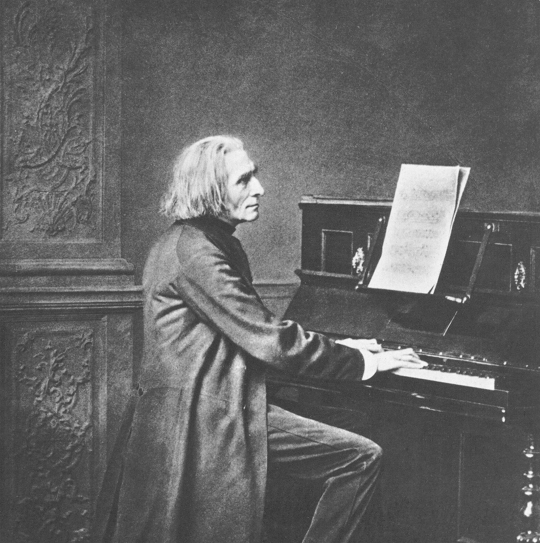
Wolfgang Amadeus Mozart wrote twelve variations on this piece. Mozart’s composition has Köchel listing number 265 and is called “Twelve Variations in C on ‘Ah! vous dirai-je Maman.’” The melody has a length of about fourteen minutes! And no one listening to it would consider it “child’s play.” Not to be outdone, harpsichordist and composer Johann Christoph Friedrich Bach created eighteen variations on the tune for the keyboard. It takes about ten minutes to play “Bückeburg Bach’s” piece, “Variations on “Ah! vous dirai-je maman” in G major.” Even romantic pianist Franz Liszt had a crack at “Ah! vous dirai-je, maman.” Liszt’s version was short and sweet, taking only twenty-two seconds to play. But Liszt still managed to embellish the song with his flourishment despite its brevity. 

So, though it is the same song, its complexity and appeal derive from the musicians’ abilities. This truth reminds me of a parable of Jesus. A master departing for a journey entrusts his valuables to three of his servants (Matthew 25.14-30). One servant received five units of currency, another received two, while the last servant, later called “lazy” and “fearful,” was given but one. When the master returned, the servant given five talents gave to his master five more which he had earned. The two-talent servant likewise doubled his share. But that lazy and fearful servant hid the money given to him in the ground. This servant claimed fear of loss caused him to hoard what the master entrusted to him. 

We cannot ignore the original context of this parable which is money. A talent began its life as a measurement of weight. By the New Testament, the talent equaled the buying power of that weight in gold or silver. Most scholars believe that the talent to which Jesus referred was equal to 6,000 denarii. If you recall, from Matthew 20.2, employers paid workers a denarius for a day’s wage. So, one talent equaled the salary earned from 6,000 days of work! Thus, the master entrusted the “one-talent servant” with about 16 years’ wages. So then, how much more impressive that the five-talent servant increased his master’s investment by an amount that would have required the ordinary worker roughly 82 years of labor? (If my math is correct, that is.)  

Today, we tend to remove our Lord’s parable from its fiscal context to refer to our stewardship over the abilities and skills we can muster in God’s service. Or we might use talent to refer to all the resources at our disposal as we worship and serve. That it is about money is seen in the master’s scolding of the lazy servant that the least he could have done was put his talent in the bank to allow it to draw interest (Matthew 25.27). The master’s rebuke implies that the lazy and fearful servant could have still been productive despite his character flaws. All he had to do was make a safe investment of his master’s funds with the bank. See how Jesus knew about compounding interest! Compounding interest is so incredible that even Albert Einstein’s genius esteemed it as man’s greatest invention. (Granted, interest rates must be more than they are now to grow wealth. I know one fellow who only earns about fifteen cents a quarter with the current rate.) 

Elsewhere, the apostle Paul reminds us that a bountiful return follows when we sow bountifully (2 Corinthians 9.6). This Scripture is also about money. So, wealth reflects what we do with what we have. Returning to Jesus’ parable, one notes that the Lord specifies that the master knew the abilities of his servants and used that knowledge to determine how much he would entrust to each man. For this reason, Jesus could also say that God expects more of the one to whom He has given more (Luke 12.48). Please understand I am not promoting the prosperity gospel of such charlatans who play preachers on the TeeVee. If you aren’t a wealthy person, it is unlikely that God will shower you with money from Heaven simply because you prayed the prayer of Jabez or sent in “seed money” to someone’s ministry. 

No, the Lord has already given you something. Using what God gives you may be like the previously mentioned child striking single keys with his fingers. But that is okay since it is what you can do with the tune. However, your brother or sister may be capable of making twelve or eighteen variations on that tune, making your jaw drop. Worry not; their talents are not an indictment of your own. You are still capable of playing a lovely song. Therefore, it is a matter of ensuring you play it your best. Don’t do like the lazy and fearful servant and hoard your talent. Such people rob God (cf. Malachi 3.8). In these difficult economic times and times of future prosperity, God will judge us for what we do with those talents with which He has entrusted us.      


Franz Liszt at the piano (public domain)

The Entertainer And The Executioner

Neal Pollard

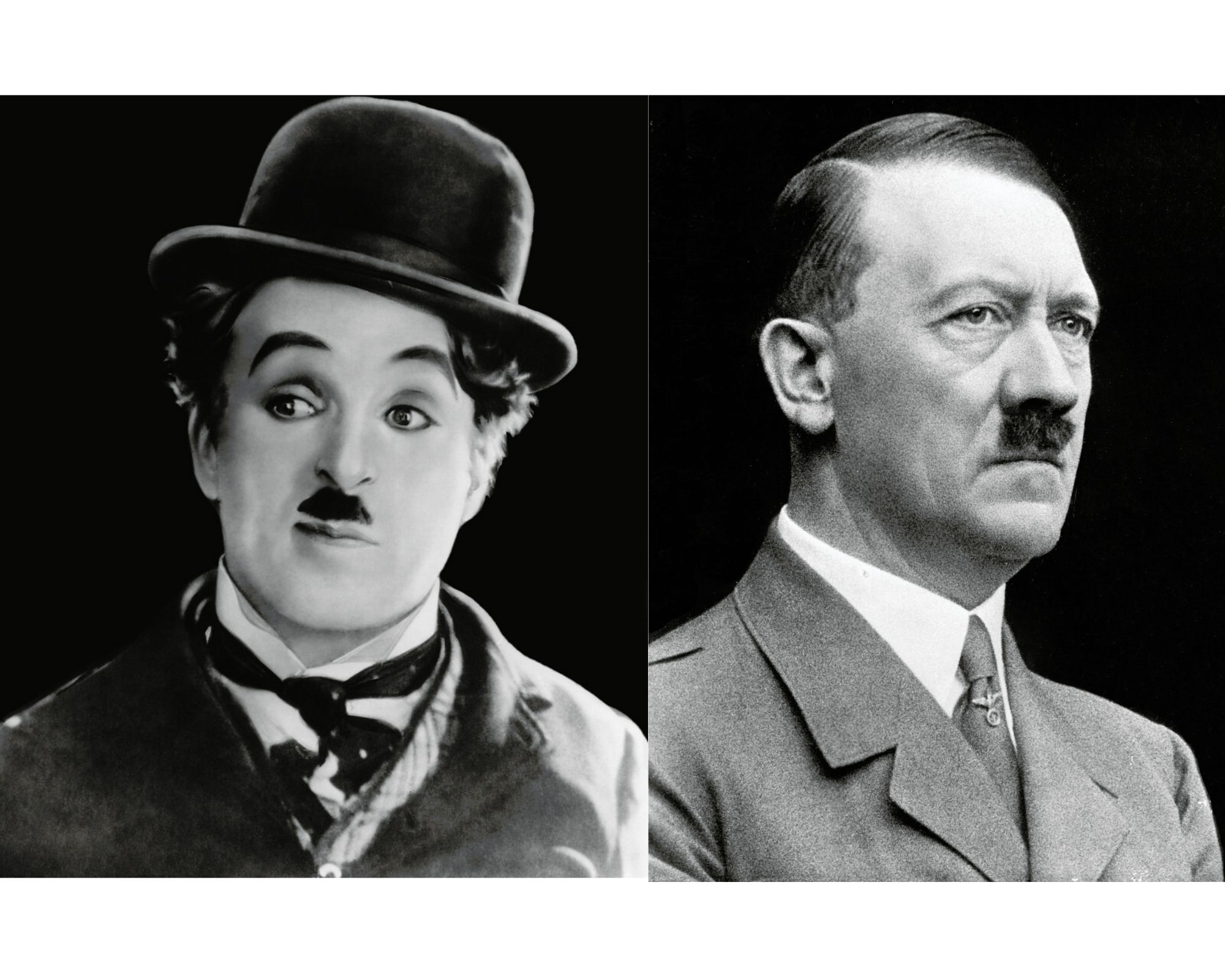
They were born within four days of each other, both on the European continent. Both adored their mothers and resented their drunken fathers. Both grew up knowing real poverty. Both were incredibly intense and ambitious. Both were mesmerizing performers who commanded crowds. Both sported the same, strange mustache and bore a striking resemblance.

One became a comedian who made people laugh. The other became a dictator responsible for the death of millions. Neither were moral giants, but each used their influence for very different ends.

It doesn’t matter where or when one is born. To a certain degree, we do not have to be defined by the home we grew up in. Being poor is not an automatic determiner of either success or failure. Our looks are a neutral commodity. Our talents and opportunities are a blank canvas we choose to decorate as we please.

The parable of the talents in Matthew 25:14-30 is a Divine reminder that we all take what God gives us and decide what we will do with it. Nothing is foreordained or forced upon us. We determine, both by action and inaction, to be a servant or slothful. What we must be aiming for is much greater and higher than earthly ambition, whether to be loved or feared by the world. Our purpose must be to be “a vessel for honorable use, set apart as holy, useful to the master of the house, ready for every good work” (2 Tim. 2:21). The good news is that where, when, and how you were born is a fact, but it does not have to define you. If we empty ourselves of ourselves and let Him fill us, He will define us!

Be Dependable!

Neal Pollard

One of the hamstrings of most every church is a lack of dependable Christians. When Christians do show themselves undependable, they contribute so much to a church—much frustration, disappointment, and friction. We should all be dependable. You probably know little about Shelemiah, Zadok, Pedaiah and Hanon.  Little is said about them. But listen to what is said.  They were placed in charge of the storehouses because “they were considered reliable” (Neh. 13:13).

What a glowing epitaph. One the other hand, David wrote of some wicked individuals, of whom he said, “There is nothing reliable in what they say” (Psa. 5:9). Too many otherwise good people are leaving such a reputation for themselves. In frustration, sometimes elders may join Solomon in asking, “Who can find a trustworthy man?” (Prov. 20:6). But, good news!  We can all be dependable.  Why?

First, we are ABLE. God blesses us with talents, time, and treasure. With them, we can (as good stewards) use our resources to God’s glory. If something hinders us from doing our duty, we can let others know and cover for us. But, whenever and wherever and however we can, we use ourselves as workers in the kingdom (Mat. 9:37).

Second, we are DEPENDENT. God pours blessings into our lives (Eph. 1:3; Js. 1:17). Without Him, we are nobody! Except God provided all our needs, we would be nowhere and have nothing. We are obligated, and our best efforts could never earn or repay God’s graciousness (Lk. 17:10). But, surely, appreciating His grace, we will be workmen (Eph. 2:8-10). When needs are made known by our elders or other church members—food or teachers or folks to visit or calls to make or new Christians to aid or missions to encourage or elderly, shut-ins to help—let us remember our dependence upon God and be dependable for those dependent folks around us.

Finally, you are thereby DEEPENED. When we do what we can in the kingdom, giving it our best, we are enriched and strengthened thereby. Our relationship with Christ is deepened, for we are imitating Him. Our appreciation for God’s blessings is deepened when we sacrifice and extend ourselves. Our faith is deepened by our interaction with those in need and by our participation in what needs doing. Our joy is deepened by being active and involved in the Lord’s work.

One song in our song book asks, “Can he depend on you?” If He has no hands but our hands to do His work today, shall we allow our hands to sit idle? Christianity is a commitment. It’s a wonderful commitment, but commitment nonetheless. Let us take it seriously and be a brother or sister upon whom our brethren and our God can rely!

800px-the_truesdell_bridge_collapse2c_view_from_the_south

WHAT YOU DO WITH WHAT YOU HAVE

Neal Pollard

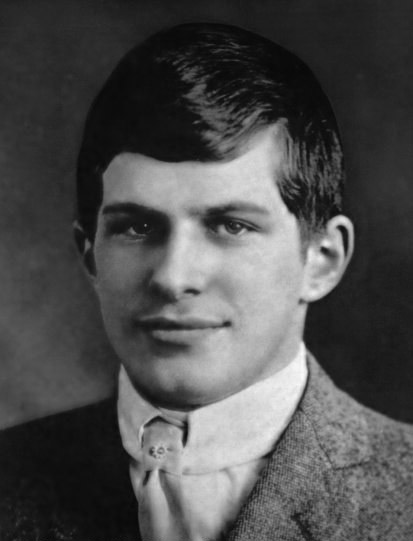
In discussions about the smartest person who ever lived, William James Sidis’ name will come up as being in the mix. Though measuring IQs with a specific number is not an exact science, he is reputed to have had an IQ of 200 or more. He was reading the New York Times at 18 months old. He taught himself eight languages and made up another one. He enrolled at Harvard University at the record young age of 11. He was a professor at what’s now Rice University by the age of 17. He was a renowned mathematician. But, adjusting to mainstream society proved an ongoing problem for Sidis, whose extreme, socialistic politics and eccentric behaviors dogged him for the rest of his life. He died of a brain aneurysm in 1944 at the age of 46. With such a brilliant mind, his contributions to the world were relatively small. In fact, most of us have never heard of Bill Sidis (much information from Amy Wallace’s sometimes disputed biography, The Prodigy, Dutton: New York, 1986).

We all know people who rose from poverty, dysfunction, and perceived disadvantage who have risen to great heights in their profession and their personal lives. Those abused as children, those who grew up in homes afflicted with drug use or alcoholism, and those whose parents went through failed relationship after failed relationship, have grown up to break such patterns by becoming loving, effective parents and spouses. Some who were given little have done much with it.

Jesus teaches the parable of the talents in Matthew 25, which demonstrates the good and bad stewardship of three particular individuals. Two faithfully used what they were given, but another was unfaithful. The Lord shows us God’s dim view toward one who fails to use what he or she has been given.

Most of us are somewhere on the continuum between the one talent man and the world’s smartest man. Scripture shows us that we must be faithful stewards (1 Cor. 4:2) and that we will give an account for our stewardship (Mat. 25:14-30), whether money, abilities, opportunities, time, or whatever our relative resources. May we be encouraged to do as much as we can with what we have been given. How great to be acknowledged by Christ before all nations as one who did the most with what we had!

william_james_sidis_1914