Planning And Preparing

Brady Baughman

Usually, people fall into 1 of 2 categories: List makers and everyone else and I don’t know what their collective is since I’ve never seen it written down. Now, myself being an introvert, I fall into the list maker category. I’m not obsessive about keeping a physical list, but a mental list is always there to almost a point of paranoia. But this list is necessary.

Me being an introvert, I need to have mentally prepared myself for what is going to happen. If there is a surprise I could freeze up. In order for me to be productive and effective I have to be prepared and anticipate all that is going to happen that day. This leads us into the lesson of being prepared for our future, specifically, by our past planning and future execution with our decisions at a high level overview.

Look with me in 1 Corinthians‬ ‭15:12-18.
[12] Now if Christ is proclaimed as raised from the dead, how can some of you say that there is no resurrection of the dead? [13] But if there is no resurrection of the dead, then not even Christ has been raised. [14] And if Christ has not been raised, then our preaching is in vain and your faith is in vain. [15] We are even found to be misrepresenting God, because we testified about God that he raised Christ, whom he did not raise if it is true that the dead are not raised. [16] For if the dead are not raised, not even Christ has been raised. [17] And if Christ has not been raised, your faith is futile and you are still in your sins. [18] Then those also who have fallen asleep in Christ have perished.

The part that I want to key in on is in vs 17. Now let’s look at vs 17 again with another lens. vs 17, if Christ has not been raised then your faith is futile and you are still in your sins. The other lens would say that a life of sin and without Christ is futile. Our whole existence, purpose, importance, any other strong words that you would want to add to that list, is futile.

Mounce defines futile as idle, ineffective, worthless, 1Co 3:20; groundless, deceptive, fallacious, 1Co 15:17; useless, fruitless, unprofitable. Reinforcing the idea throughout Scripture that without Christ what we do is useless.

If we continue reading the rest of 1 Corinthians 15 we see the importance of being baptized in ‭‭1 Corinthians‬ ‭15:22‬, “For as in Adam all die, so also in Christ shall all be made alive.” And in verse 29 we see Paul asking the question if Jesus was dead what would be the benefit of baptism. It is Christ’s resurrection that gives us victory over death as we see Paul saying in 54 and 55 which is also a quote from Hosanna 13:14. Verse 56 explains briefly the relationship between law and sin, but Christ gives us victory.

So back to verse 17. If we believe in Christ then our life has and is a purpose. Whether it be our past selves or our current selves we know how our plans and preparedness set us up for our future. Are we prepared and ready? Have we done what is needed to secure our plans and not be surprised by our eternity. The great thing about this is we hold all the control in what we decide to do. We are running the race and all we have to do is finish, not be first.

The Good, The Bad, & The Lucky

Tuesday’s Column: Dale Mail

Dale Pollard

In 1951, two to three miles off the coast of Point Reyes, California, a military plane went down after battling faulty electrical issues and then eventually running out of fuel. The plane made a crash landing in the ocean and to make matters a little more terrifying, it was a Great White shark haven. There was one Army service man who managed to escape the aircraft, but once in the water he had no idea where to go. It was in the early morning and the fog was too thick to see through. Knowing he had to do something, he simply chose a direction and began to swim. After a couple of miles of swimming he finally, to his relief, reached land. Later on in life he’d go on to become the star of several Hollywood movies, direct his own movies, and even star in movies that he himself directed! His name was Clint Eastwood. 

He got lucky. Occasionally, that happens in life. We flip a coin, spin a bottle, or make a random turn and it all ends up working out in the end. Accidental fortune might happen in some areas of life, but not when it comes to our spiritual lives. There won’t be anyone in heaven who says, “I have no idea how I got here. I just randomly went through life and made the right choices, I guess!”

 If we’re looking for a deeper faith, a closer walk with God, or directions along the narrow way, we’ll have to be intentional about that. 

Psalm 25:5 reminds us that not only does God guide us into all truth, but that this is a path that must be taught. 

WHY PLANNING IS POWERFUL

Monday’s Column: Neal At The Cross


Neal Pollard

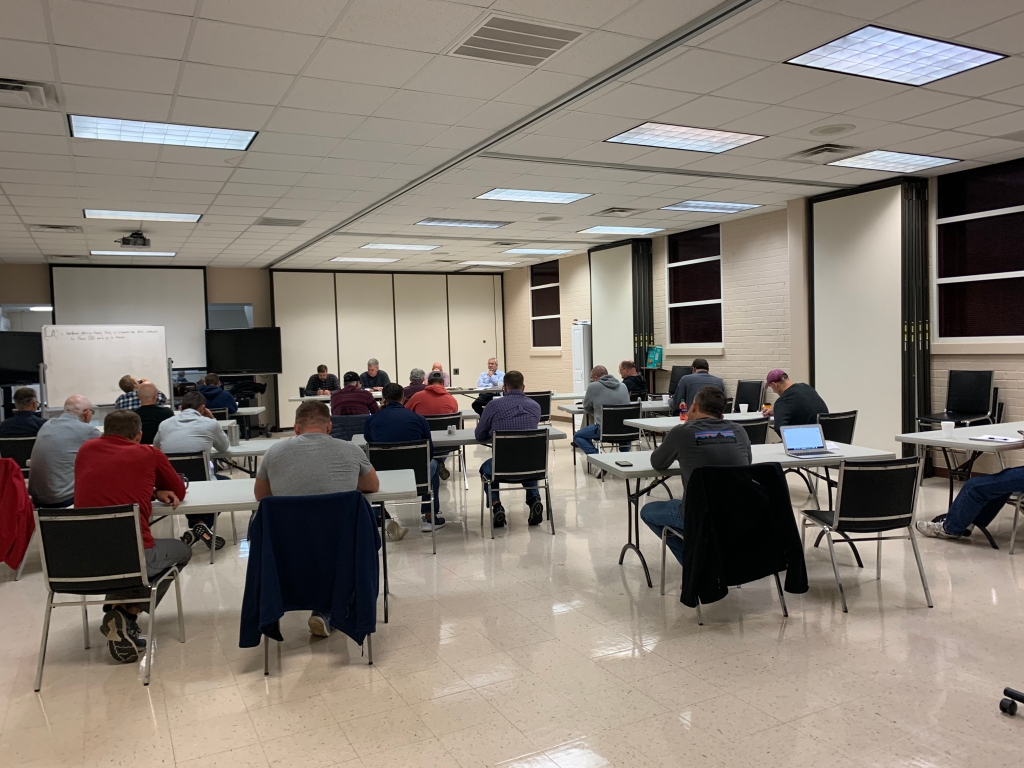
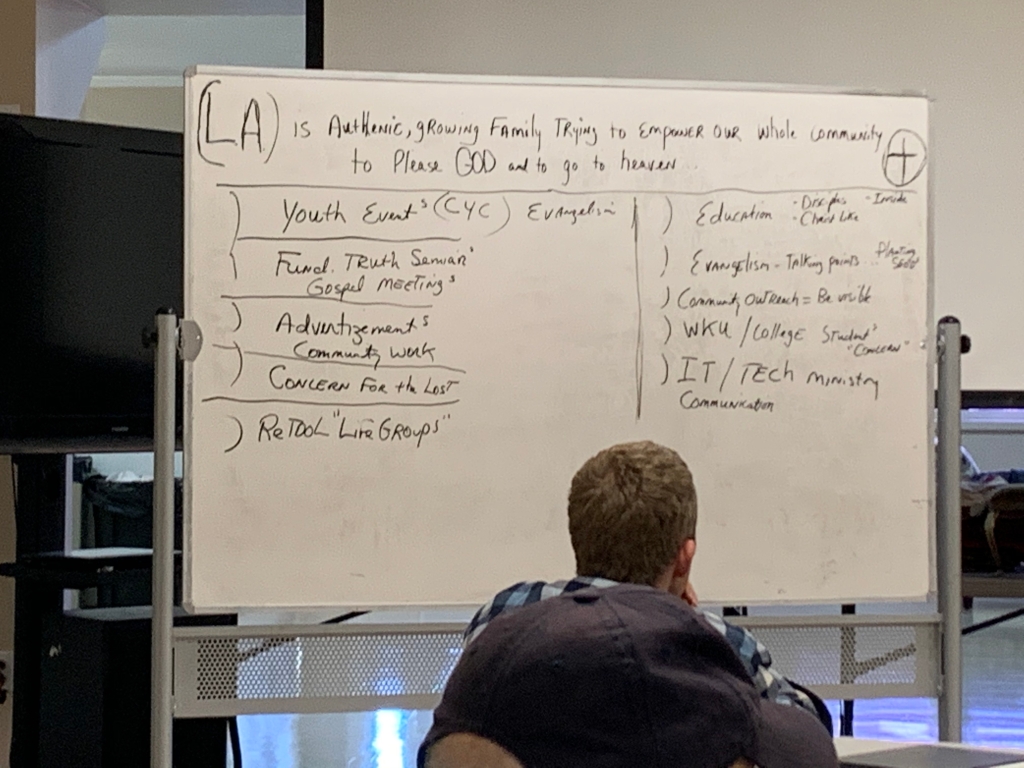
  • It forces us to focus. So often, churches just “do stuff.” We don’t ask who, what, where, when, or how. We don’t ask if the thing is effective, evangelistic, edifying, or empowering. Is it outmoded? Is it merely self-serving? Can it be improved? Planning clarifies. 
  • It makes us intentional. Whether we are looking at what is currently done or what should be done, planning makes us deliberate. Especially is this true when we consider whether or not the activity, program, or work is merely internally-focused (for us) or externally-focused (for lost souls). Do we plan to grow? Reach a tangible number of people each year? Increase the depth of our footprint in the community? If so, how? Specifically how? 
  • It says that leadership is thoughtful. Planning takes precious man hours from the leadership, but how it pays off! Personal analysis, congregational analysis, and biblical analysis require thought. Done well, it will build conviction that doctrine is never to be tampered with, but that methods and means in harmony with Scripture require judgment, discrimination, and scrutiny. Putting thought into the church’s works and needs is Acts 20:28 in motion.
  • It combats chaos. So often, a church’s works lack cohesion and coordination. There are no filters in place to ask if an individual work fits with the church’s vision and mission. Works may be good, but who knows what goes on with them or if they are working. Who is accountable? To whom are they accountable?
  • It expresses discontent with the status quo. It is easy to continue with works, programs, and activities that are already in place and have people managing and executing them. But, most of our methods and means of doing church work need to be evaluated regularly to ask if changes are needed. Change brings discomfort and takes work, but as our resources change–time, talent, treasure–we may find that we are more or less able to engage in the various works of the church. We should always be looking for more and better ways to serve and glorify God. 
  • It is biblical. Jesus had a tangible plan for world evangelism (Acts 1:8). Paul had a tangible plan for growing the church through the missionary journeys (Acts 15:36ff). Look at how 1 Timothy reflects and requires planning to help the Ephesus church (1 Tim. 3:15). Paul had a tangible plan for establishing elders in congregations throughout the island of Crete (Ti. 1:5ff). Something that was in God’s mind in the eternity before time (Eph. 3:9-11) deserves our best effort, using our brightest minds to find biblical ways that are most effective to grow and strengthen it! 

Goals, dreams, intentions, and ideas will not, by themselves, accomplish anything. We must work to make those things a reality. But, a crucial first step is to articulate where we want to go. That makes planning so powerful! 

THE DAILY PLANNER

MONDAY COLUMN: “NEAL AT THE CROSS”

16174665_10154303308455922_2453812807432667966_n

Neal Pollard

It’s the time of year when so many are buying or receiving calendars and planners or using an electronic version of the same. These can be key to organizing our lives, maximizing our time management, and strategizing ways to grow and improve in the future. Good stewardship really demands that you are “making the most of your time, because the days are evil” (Eph. 5:16).

In this task of planning life each day, please consider planning to do the following each and every day of 2020:

  • Tell someone about what Jesus has done for you every day.
  • Tell God how great He is and grateful you are for Him as you pray every day.
  • Let God speak to You through His Word every day.
  • Tell your spouse, children, and family you love them every day.
  • Show someone the servant heart of Jesus in your deeds every day.
  • Do something that will help you look more like Jesus every day.
  • Help people see the joy and satisfaction of living the Christian life every day.
  • Encourage someone (via card, social media, phone, etc.) every day.
  • Compliment someone every day.
  • Examine yourself every day.
  • Provide an example of leadership to someone every day.
  • Invest in someone every day. 
  • Count your blessings every day.

That’s enough to keep idleness from plaguing us, isn’t it? Consider how helpful this will be, not just on January 1, but also March 19, June 6, September 25, and December 30. This life is about overcoming (1 John 5:4), but perseverance is as much about the daily grind as it is the dramatic and grand. Zig Ziglar wrote that “people often say that motivation doesn’t last. Well, neither does bathing – that’s why we recommend it daily.” How profound! Plan on being a better you and on doing what that requires, day by day. 

LONGEST SPEECH, SHORTEST TERM

Neal Pollard

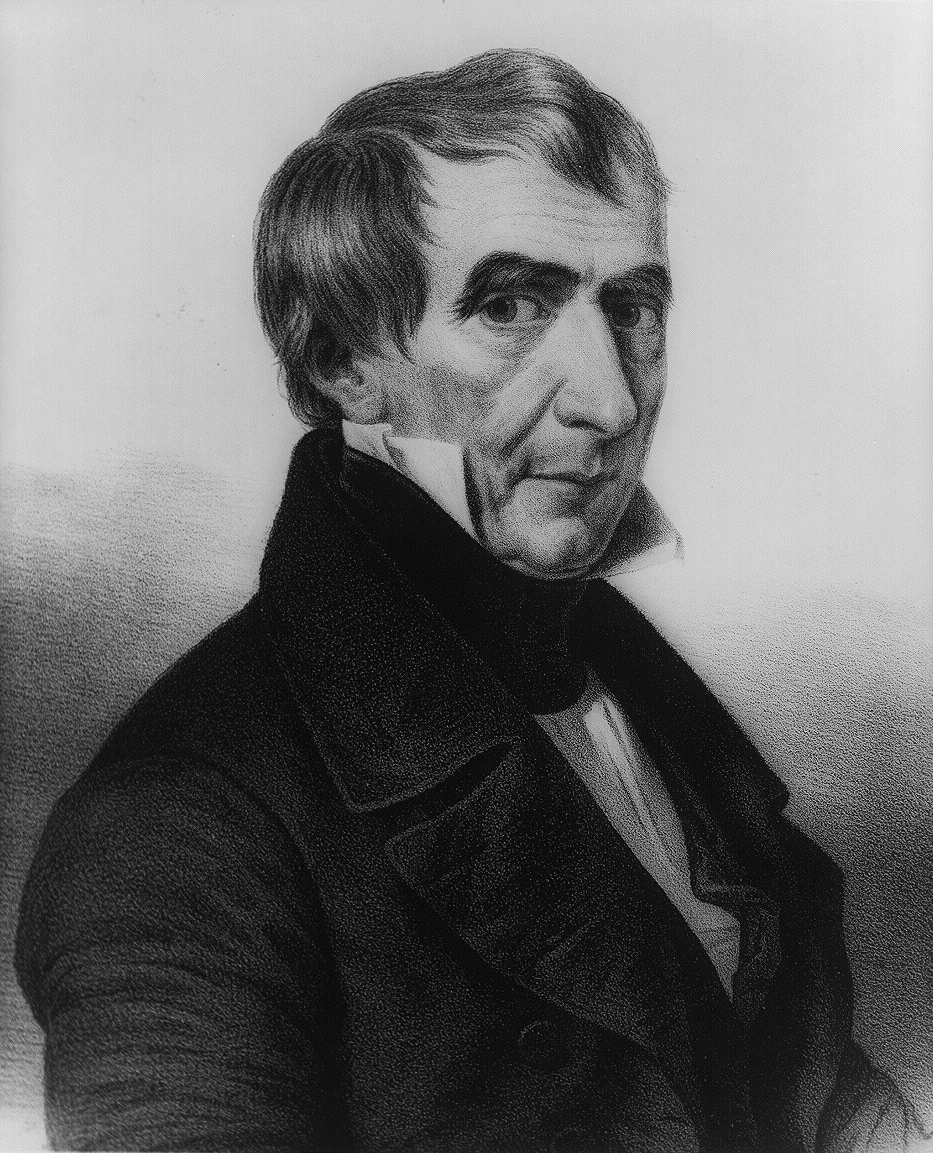
The shortest inaugural address was George Washington’s second, in 1793, and it was comprised of 193 words! William Henry Harrison, though raised a cultured, educated man, campaigned on a folksy ticket symbolized by the log cabin. To set a different, more cultured tone for his presidency, Harrison decided to give a lengthy, erudite speech on a bitterly cold, early March day in 1841. He spoke for nearly two hours, doing so without benefit of a topcoat or hat. Historians are generally agreed that Harrison’s motivation was to show himself not be a country bumpkin or simpleton. While it is unclear if his exposure led to the pneumonia that killed him exactly a month later, it still boils down to a lot of talk and very little execution.

How often do we, as congregations, spend a seemingly endless amount of time outlining, discussing, and rehashing grand plans? Goals and planning are vital to a church’s existence, but so often much talk produces little action. In any congregation’s mind, they are going to be a fast-growing, active, moving, and shaking bunch. Yet, so few churches are that. We spend our time laying out the plan and give ourselves so little time to do it.

We do that in our individual lives, too. We make big plans for tomorrow (cf. Jas. 4:13-15). Like the poet expressed it, “He was going to be all that man should be…tomorrow; no one would be kinder or braver than he…tomorrow.” Yet, the poet depicts the dreamer as one who died today while hoping for tomorrow. Are we making grand, long-winded speeches about all we are going to do? Are we spending such time outlining it that we have so little time left to execute it?

Think of all you know about William Henry Harrison compared to George Washington. Both were thinkers and planners, but oh the difference in how we remember each of the. Think, then do!