Examine Yourself

Carl Pollard

We usually lie to ourselves more than we do to others. However, repentance in and of itself is being open and honest with God. It’s recognizing sin, and turning from it. 

The prodigal son took his inheritance, left home and blew all his money. He waisted his money fulfilling his every desire. But after a while, the money ran out and he was forced to get a job working with pigs. He was so hungry the pig slop looked appetizing. 

Jesus tells us this parable in Luke 15:17-24, 

“But when he came to his senses, he said, ‘How many of my father’s hired men have more than enough bread, but I am dying here with hunger! ‘I will get up and go to my father, and will say to him, “Father, I have sinned against heaven, and in your sight; I am no longer worthy to be called your son; make me as one of your hired men.” ’” So he got up and came to his father. But while he was still a long way off, his father saw him and felt compassion for him, and ran and embraced him and kissed him. “And the son said to him, ‘Father, I have sinned against heaven and in your sight; I am no longer worthy to be called your son.’ “But the father said to his slaves, ‘Quickly bring out the best robe and put it on him, and put a ring on his hand and sandals on his feet; and bring the fattened calf, kill it, and let us eat and celebrate; for this son of mine was dead and has come to life again; he was lost and has been found.’ And they began to celebrate.”

Notice that the son said to himself, “I have sinned against heaven, and in your sight.” Do we really want to know ourselves? Be honest. Not a single human on earth is without sin. When the son was honest, the Father was forgiving. 

If you’re a Christian and there’s sin in your life, the worst thing you can do is ignore it. 

1 John 1:9 says, “If we confess our sins, He is faithful and righteous to forgive us our sins and to cleanse us from all unrighteousness.” God is READY and FAITHFUL to forgive…but we MUST confess! God doesn’t want you to bury them deep down; confess and get it over with! He’s waiting. He already knows what you’ve done, but we act like we can hide it from Him. 

You owe it to yourself to be honest, not just to others but in the conversations you have in your head. Be honest in the decisions you make, the sins in your life and you’ll be closer to knowing who you REALLY are. 

We are sinful, we are human, but God gives grace to those who come to Him. Let’s be honest, and a truthful examination will show us that we need God in our lives. 

A Need For Honesty

Thursday’s Column: Carlnormous Comments

carl-pic

Carl Pollard

 
How much do you trust a liar? A study was conducted by Psychology Today where they asked 1000 people how many lies they’ve told in the last 24 hours. The average answer was two lies, but 75 percent of men said they would lie if they were talking about their social status. 80 percent of women said they have lied about their weight.
 
The average person we come in contact with has no problem lying to us. Whether it’s at work, in school or to friends and family, the majority of people feel that it’s morally okay to lie.
 
Ephesians 4:25 says, “Therefore, laying aside falsehood, speak truth each one of you with his neighbor, for we are members of one another.”
 
“Therefore” is a grammatical tie to previous verses. Each time we read this word we should see it as a finger pointing up to the previous verses. Contextually Paul is saying, “Therefore, since we have put on the new self lay aside falsehood.”
 
If you’re a Christian reading this verse, you have put on the new self. So we are commanded to stop lying and be truthful in our interactions with others.
 
Paul commands us to tell the truth. This seems like a simple command, yet sadly we get caught up in telling lies. We want what’s easiest. Many are tempted to take what seems to be the easy way out.
But there is something to keep in mind the next time we are tempted to lie:
 
Our reputation is ruined by dishonesty. If people catch us lying, why would they believe us at all? The boy who cried wolf is a prime example of this very fact. We all know how this story goes, and the bottom line is we lose our credibility if we lie. When we are honest and choose to tell the truth, people will trust us, and God’s Word has a better chance of reaching the lost.
 
When it comes to our Christianity, we want people to trust us. When we lie we lose our credibility and our ability to proclaim the gospel is harmed. Telling the truth in every situation is an attribute we are to have in our new walk with Christ. Plus, nobody wants to be friends with a liar.

The Worth of One’s Word 

Friday’s Column: Brent’s Biblical Bytes

Brent Pollard

I am not seeking to get into a debate about the outcome of the 2020 general election. However, everyone can agree that Trump has insisted that he won the election and has a team of lawyers trying to prove it. Again, whether he is correct is not my point. However, I wish to point out that Trump’s lawyers offer the affidavits from a few hundred people as evidence of voter fraud. For example, there are 220 affidavits in Michigan alone. I understand that most news outlets have moved on and ignored Trump’s legal team’s efforts.  

Yet, lying on an affidavit is perjury. It is as if you have lied on the witness stand in court while under oath. Perjury is a felony. In many states, felons cannot even vote. So, in Michigan, and other States, hundreds of people testify something that, if false, would make them criminals and, ironically, prevent them from voting in an election in the future. Here is the question. Do people care about lying anymore? We have a former President who was impeached but not convicted for committing perjury because the subject matter of his lie concerned sexual relations with his intern. People dismissed it as political maneuvering by Republicans about a private matter, “just sex.”  

To say, “A man’s word is his bond,” is no longer fashionable, it seems. When did you last have a “verbal contract” with someone? So, it would not surprise me that people would ignore the affidavits of hundreds of people. We are so accustomed to people lying for political expediency that we believe people would become felons to achieve their political goals.  I would hope that Christians give greater value to their words. Indeed, Jesus told us that our testimony is our bond.  

In Matthew five, Jesus discusses how the men of his day diluted their promises with unnecessary verbiage. In reading about the culture of first-century Judea, I noted that if a man wanted to create a loophole for himself, he would swear by something temporary, like his head’s hair. However, if he were making a promise he intended to keep, he would swear by the Temple or something invoking God. Jesus says, “But make sure your statement is, ‘Yes, yes’ or ‘No, no’; anything beyond these is of evil origin.” (Matthew 5.37 NASB) Jesus reminded them that the principle they were violating was that one must keep his vow to the Lord (Matthew 5.33).  

The wise man of God reminds us that it is better to make no promise at all than to promise and fail to keep our word (Ecclesiastes 5.4-5). Under the Old Law, Moses commanded, “If a man makes a vow to the Lord, or takes an oath to put himself under a binding obligation, he shall not break his word; he shall act in accordance with everything that comes out of his mouth” (Numbers 30.2 NASB). The judge, Jephthah, learned this the hard way. Jephthah made a foolish vow to God that he would offer as a sacrifice whatever met him at his house when returning victorious from battle (Judges 11.30-31). Little did Jephthah know that it would be his daughter who would first greet him upon his return. Judges 11.34 states that Jephthah’s daughter was his only child. Thus, Jephthah grieved when she greeted him.  

To her credit, Jephthah’s daughter told her father to keep the promise made with God (Judges 11.36). Given God’s feelings about human sacrifice (cf. Jeremiah 32.34-36), one wonders if Jephthah had to take her life. Jephthah’s daughter’s request was to bewail her virginity with her friends. Women of antiquity, sadly, established their worth by having children. She would be childless. Therefore, there is the possibility that Jephthah’s daughter lived a life of perpetual virginity since that is the emphasis of the last verses of Judges 11. There is no mention of her death.  

Yes, Jephthah kept the promise, understanding the worth of one’s words. He knew his obligation to God. Therefore, let us observe great care, as Jesus taught when making promises to others. Neither let us seek ways of getting out of our commitments. May our words always carry the weight of sworn testimony before the Judge of the Court of the Most High!  

Sources Consulted 

Hurd, Dale. “Where’s the Evidence of Election Fraud? Trump Legal Team Delivers Opening Arguments.” CBN News, The Christian Broadcasting Network, Inc., 20 Nov. 2020, www1.cbn.com/cbnnews/politics/2020/november/wheres-the-evidence-of-election-fraud-trump-legal-team-delivers-it

Spengler, Teo. “What Is the Penalty for a False Affidavit?” Legal Beagle, Leaf Group Ltd. / Leaf Group Media, 18 May 2020, legalbeagle.com/7642670-penalty-false-affidavit.html

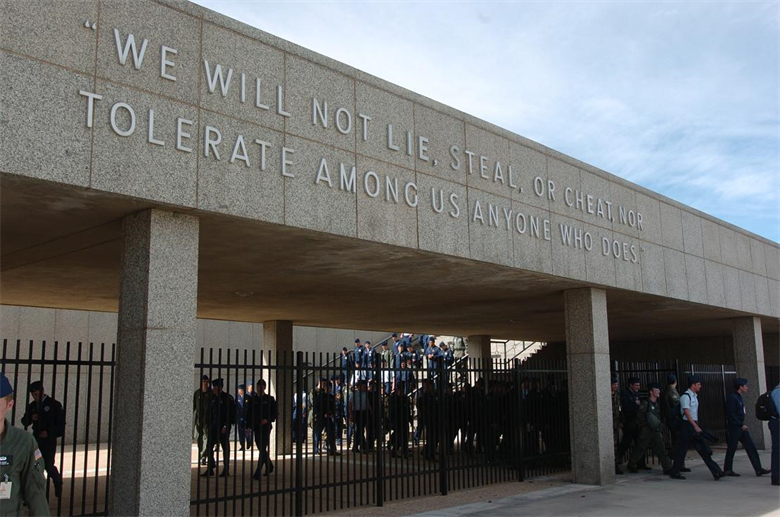
File:150306-D-AF077-067 (16736531555).jpg - Wikimedia Commons

Walking 10 Miles To Avoid The “Bear”

Neal Pollard

Spoiler alert: This story does not make me look good.

It was 1984, and my family and I lived in Roopville, Georgia. We were enjoying one of those idyllic west Georgia October days, with temperatures cool enough for a jacket but the sun graciously, brightly beaming. It was a perfect Saturday to explore the woods, which is what my little brother, Brent, and I decided to do. I was 14 and he was 9. My parents owned several acres behind our house, and we boys felt adventurous. In such a mood, I decided I’d like to see how far those woods went, but rightly wondered if Brent was game for such a walk. Therefore, I had to have a ruse. We hadn’t walked too far when there was some noise nearby, and I went to work–concerned face, raised eyebrows, hushed voice, and panicked eyes. “Brent, I think I just saw a bear!” Trusting me to be a legitimate source of truth, he accepted my statement at face value. What was my solution to this sudden dilemma? Brent wanted to retreat back to the house, probably less than a quarter mile behind us. What sense did that make? Far better to keep walking away from the safety of our home deeper into the woods of neighbors and eventually strangers. As every older sibling knows, far too often seniority can trump sensibility. So, we ran from that “bear” for miles and hours. Eventually, our circuitous journey took us several miles south just outside the little town of Centralhatchee. We were gone for most of the daylight hours of that fateful Saturday, and the only credible decision I made that day was knowing we should walk north on Highway 27 to get back home. Suffice it to say, I was not hailed as the conquering hero upon our return that evening. But, throughout that walk, I built and strengthened the narrative that this lengthy sojourn was about escaping the razor-sharp clutches of my mythic bear. I mentioned it so often to Brent that day that it just became easy to tell my parents with such conviction. Under the vise of interrogation, my story unraveled. My punishment was swift and enduring.

I knew better. I wanted this adventure and I wanted company. One needs a calculator to compute the number of bad decisions cascading from my developing prefrontal cortex. But, in my heart of hearts, I knew I was lying to Brent. In time, I believed the lie myself. We survived my harebrained scheme, but my credibility took a hit.

“Honesty is the best policy.” That’s true of character. It’s no truer than for anyone in a position to teach someone else God’s Word. Some teachers themselves are deluded and believe a lie (2 Th. 2:10-12). Others “are false apostles, deceitful workers, disguising themselves as apostles of Christ. No wonder, for even Satan disguises himself as an angel of light. Therefore it is not surprising if his servants also disguise themselves as servants of righteousness, whose end will be according to their deeds” (2 Cor. 11:13-15). Such an eternal task befalls the teacher (Jas. 3:1). We must be honest with the text, honest with our conclusions, and that starts by being honest with ourselves. We’re leading people somewhere with how we live and what we say we believe is right and wrong. Let’s handle that with care. It’s about both the journey and the destination (Mat. 7:13-14).

51443429_2225973147661676_5918745592820924416_n
Exceedingly stylish pic of me and the bro a few years before the Centralhatchee Bear Escape.

The Bible And The College Cheating Scandal

Neal Pollard

One of the nation’s biggest news stories last week involved a college admissions scam that included several high-profile people, including at least two Hollywood actresses. A California man, Rick Singer, spearheaded a scheme to bribe coaches and administrators at such colleges as Yale, Stanford, Georgetown, USC, and other prestigious universities. The bribes bought these privileged High School students extra time to take the SAT and ACT, make fake athletic profiles, and substitutes to take their entrance exams for them. This has proven embarrassing for both the colleges and those breaching this most basic of ethical codes (via Foxnews.com, Madeline Farber). 

Someone observed that there is a bit of irony and hypocrisy in all of this. We feel outraged at this glaring lack of honesty and ethics, but students who attend these (and other) universities have been taught for decades that there is no such thing as absolute truth and an objective standard of right and wrong. Are we surprised when people live out the consequences of such world views? Remove a measurable, immutable standard, and anything goes! It disgusts us to see such values in action, but people of influence in our society have been pushing such values for a long time. 

In addition to its answers to all of life’s crucial questions, the Bible lays down an ethical code that is universal and logical. Its rules are blind to nationality, economic status, gender, age, or any other category one falls into he or she might appeal to as an exception. In fact, those who have more have greater expectations made of them (see Luke 12:48).  The Judgment Day will be eminently impartial. No one will manipulate the results. No one can sidestep heaven’s requirements for salvation without an eternal consequence. Just because one is religious leader does not mean that they are above the law of Christ. Again, there are higher standards for those who are in positions of leadership (Jas. 3:1; Heb. 13:17; 1 Tim. 4:16; etc.). 

It’s not at all surprising that a society which rejects God’s guidelines finds itself sinking into a moral and ethical abyss (cf. Prov. 14:34). But, it does go to show that no one wants to reap the harvest from sowing the seeds of sin. However, there is no way to avoid it (Hos. 8:7; Gal. 6:7-8). Our challenge is to live lives of consistency, exemplifying the benefits of respecting and adhering to God’s standards. Jesus calls such modeling “salt” and “light”which highlights God’s existence and relevance in our world (Mat. 5:13-16). 

We cannot keep others from being cheaters and liars, but we can show them a powerful alternative!

070223-f-7861r-001

HOLDING THE CIGARETTE OUT THE WINDOW

Neal Pollard

I saw an older man, trying to negotiate a turn, with the window partially down and balancing a cigarette out of that window. It was 25 degrees, so my guess would be that he was not overheated by his tiny, burning cylindrical distraction. It’s not an uncommon occurrence, though I’ve normally observed teens doing this. A friend of mine in High School said he dangled his cigarettes out the window to keep his mom from smelling it in the car.  There may be more than one reason why people do this, but concealing the fact of one’s smoking (or at least its pungent smell) seemingly factors in.

Trying to conceal actions we know are wrong or think others will disapprove of is as old as the Garden of Eden. After Adam and Eve disobeyed God’s command, “the man and his wife hid themselves from the presence of God among the trees of the garden” (Gen. 3:8b). From that point forward, mankind has shown a remarkably similar tendency—regardless of century, geographical location, gender, age, or other demographical details—to try and cover up his sins. David, one whose heart was ordinarily pleasing to God, conceived such deception and dishonesty in an effort to hide his egregious sin with Bathsheba (cf. 2 Sam. 11:6-27). Solomon issues multiple warnings to those who, rather than repenting, attempt to conceal their iniquity (Prov. 10:6,11,18; 28:13).

It extends beyond just trying to conceal the smell of smoke, doesn’t it? Guilt, fear, worry, and shame usually leads the pornography addict, participant in an illicit relationship or affair, the problem drinker or drug user, as well as the general hypocrite, to use up a lot of energy and attention to covering up their wrongdoings. The hope is that they can keep discovery out of the reach and detection of the ones whose acceptance and approval they greatly desire to have. So often, these concealers have forgotten someone very important. Such is a serious miscalculation since that someone cannot fail to notice. The eyes of the Lord watch all the ways of man and his paths (Prov. 5:21) and “are in every place, watching the evil and the good” (Prov. 15:3). “The Lord looks from heaven; He sees all the sons of men” (Psa. 33:13).

We may conceal deep, dark secrets from even those closest to us for a lifetime.  Yet, ultimately, no one will get away with a lifestyle of sin.  God won’t be duped. We won’t pull the wool over His all-seeing eyes. Instead, our energy should be directed toward overcoming sin and looking to Him to give us the strength we need to do so.  All of us struggle with temptation and sin, but how we address it is an indicator of our character. May we be transparent with our God and honest with one another!

5870730384_7d062dd4d3_b

HONESTY PAID JOHNNY DUCKWORTH NEARLY $4,000

Neal Pollard

A customer who ate at Randy’s Southside Diner in Grand Junction unluckily left $3,000 in a bank envelope at his booth. Fortunately, his busboy was Johnny Duckworth. Johnny gave it to his boss, who through the ATM bank slip in the envelope was able to track down the rightful owner. That unnamed person gave Johnny a $300 tip, but strangers started a “gofundme” page for the struggling Duckworth and have raised nearly $4000 for the young man. In an interview, he said he did not for a moment consider keeping the money, adding, “I work for a living” (denverpost.com).

You’ve not likely had honesty pay so well for you. At least not financially. But, as the proverbial adage goes, “honesty does pay.”  How?

  • In reputation. Honestly builds businesses, friendships, leadership, and the like, when people have implicit confidence in your word (cf. Proverbs 14:25).
  • In relationships. People trust you and are closer to you when you are honest with them. The opposite is true, too, that people keep their emotional distance from you if you are dishonest (Ephesians 4:25).
  • In righteousness. Your character is built through dedication to unconditional truthfulness (Proverbs 12:17).
  • In reliability. Who will people come to, lean on, and go to? The honest. They know where they stand with such a one (Proverbs 12:19).
  • In respect. While you may fear hurting feelings and alienating others through courageous honesty, you gain the admiration of most through transparency and scrupulous speech and behavior (1 Kings 22:13-14).

Sadly, doing the right thing was once routine but now it merits newsworthiness. May the tribe of Johnny Duckworths increase. When we as Christians are renowned for our kind honesty, we will draw a world in search of goodness and trustworthiness to the One who “cannot lie” (Titus 1:2).

“Let’s Go Throw Rocks At The Campbellite Preacher!”

Neal Pollard

That one statement was what introduced my great grandfather to the gospel and is a big reason why my mom was raised in the church and why I was, too.  A “Campbellite preacher” (so named because of Alexander Campbell, a leading figure of the 19th Century who pleaded with people to throw off the division of denominationalism and restore simple New Testament Christianity) was in their Mississippi community, preaching at the local school house.  Several teenage boys, including my then 19-year-old great-grandfather, conspired together to stand outside and throw rocks at the preacher.  The big talk apparently came to nothing harmful, but standing out there my grandfather was convicted by the preaching.  As the result, he studied more deeply and carefully the Scriptures and found that the denomination he was a part of did not teach the same plan of salvation he read in the New Testament.

Plain, New Testament teaching and preaching, which faithfully and accurately handles the Scripture, has a profound effect on an honest heart.  One who is already persuaded that the Bible is the inspired Word of God, who is convicted that it was faithfully transmitted through time, can see from gospel preaching what God’s will is for “matters of life and godliness” (2 Pet. 1:3).  Such allow the powerful Word to operate skillfully upon their hearts, being persuaded of its penetrating truths (Heb. 4:12).  Even one who may start out angry at the messenger but who is “fair-minded” (cf. Acts 17:11) will “receive the word with all readiness, and [search] the Scriptures daily to find out whether these things [are] so.”  Such an unprejudiced, open-minded attitude will serve such individuals well not only in learning how to become a Christian, but also in how to live the Christian life.  We must keep an honest and good heart if we will be the “good soil” Jesus praises in His parable of the soils (Luke 8:15).

Whatever your age, position in life, race, education level, or physical address, are you teachable? Do you receive the word in humility (Jas. 1:21)?  James says that your soul’s salvation is ultimately at stake.  Whether it regards becoming a Christian or living the Christian life, keep an open and tender heart!  You’ll be eternally grateful that you did.  So may many of your descendants!