I learned something from dad a while ago: when you’re sick, exercise. It was rare, but whenever he got sick he would run back-to-back marathons or something crazy and would be fully recovered the next day. I decided to try his mad method and found that it really does work! Today was one of those days — I got the bug and didn’t skip the gym.
When I got there I saw one of our lifting buddies. He asked if we had a good Christmas, and I said, “It was awesome, but this year felt different for some reason. It was almost weird, and I can’t put my finger on why.” He said, “It really did! I don’t know why, but this year felt weird. The time is near.”
Maybe it is, maybe it isn’t. Peter wrote, “The time is near when all things will end. So keep your minds clear, and control yourselves. This will help you in your prayers. Most important of all, love each other deeply, because love makes you willing to forgive many sins” (4.7-8). He said that two millennia ago! From our perspective, that’s not exactly “near”. For those Christians, though, it was.
Whether the end of this earth is imminent or not, Peter’s reminder is relevant. We don’t know when our lives are going to end! Having clarity of purpose, self-control, and selfless love will keep us ready for Jesus’s return.
“Everything that God made is waiting with excitement for the time when he will show the world who his children are. The whole world wants very much for that to happen. Everything God made was allowed to become like something that cannot fulfill its purpose. That was not its choice, but God made it happen with this hope in view: That the creation would be made free from ruin—that everything God made would have the same freedom and glory that belong to God’s children” (Rom 8.19-21).
A “guilty pleasure” is something that one enjoys despite believing other people don’t generally value it or think it’s strange or unusual. It often implies enjoyment of something that societal standards may view as low-brow or embarrassing, but the individual finds personal enjoyment in it regardless. This pleasure could be a specific type of music, a television show, food, or any other enjoyable activity that might not be considered “sophisticated” or “appropriate” by some.
Embarrassment or the acknowledgment that one’s enjoyment may not be socially acceptable causes the feeling of guilt. At the same time, “pleasure” indicates the personal joy or gratification one gets from it. Therefore, “guilty pleasure” does not always mean something unethical or immoral. It’s more about finding value in something that society frowns upon or labels as “low culture,” “kitsch,” “campy,” etc.
Rather than being due to actual wrongdoing, guilt often results from a contrast with one’s usual standards or tastes or from a perception of the judgment of others. The concept of guilty pleasure is widely recognized and accepted as a regular part of human behavior. Hence, whether you realize it or not, you likely have a few guilty pleasures too.
Dystopian and disaster scenarios are some of my guilty pleasures. I’ll use the 2004 apocalyptic thriller The Day After Tomorrow as an illustration. It nicely sums up Al Gore’s and Greta Thunberg’s exaggerated climate alarmism. But even Roland Emmerich, who brought us Independence Day, couldn’t find mainstream success with his ludicrous environmental doomsday epic. A 50% audience score and a 45% Tomatometer score on Rotten Tomatoes explain why it’s one of my “guilty pleasures.”
Recently, I came across “Doomsday: 10 Ways the World Will End” on the History Channel. As I had a little time on my hands, I gave it a watch. I was not disappointed. Having Michio Kaku as a guest on the show was a highlight for me. I can’t put my finger on why I find him so intriguing. Therefore, I pause the remote and pay attention whenever I see his face. This series had everything in its ten hypotheticals, from a mega eruption at Yellowstone to the Earth being pulled out of orbit and hurtled into the sun.
I smiled wryly as I listened to an anthropologist with huge gauges in his earlobes describe how the latter scenario would result in a gradual temperature rise that would eventually engulf the planet in “hell.” I couldn’t help but notice that the only time producers used Bible-related terminology was about a place of eternal punishment “where their worm does not die, and the fire is not extinguished” (Mark 9.48 NASB).
I wonder why I find it entertaining to watch things that I know to be implausible and ridiculous. I should swallow my pride rather than end up sounding like that Pharisee in the Temple. “God, I thank You that I am not like these academics who do not believe in You.” More than likely, I use my guilty pleasure to reassure myself that everything will be fine.
I’m not a natural salesperson. The sales commission I make would not be enough to support me. However, I have studied materials on success in a cold sale. A sale that has no prior leads is considered “cold.” You are going up to a total stranger and trying to make a sale. You may see why an evangelist would read such a book out of curiosity.
Imagining the worst-case scenario is one strategy for buffering the emotional impact of rejection. You might, for instance, imagine a situation in which, after you’ve formally introduced yourself to the homeowner, he goes off and punches you in the face for no apparent reason. If the person says “no” to your sales pitch, you can console yourself by thinking, “Well, at least he didn’t punch me in the face.” This method is great for calming your nerves.
When I watch a doomsday scenario movie or documentary, I immediately notice that the show’s producer has overlooked one crucial factor: the existence of God. God’s existence ensures that nature always follows its laws. Hence, Earth will not experience any disturbance in its orbit. Instead of suggesting that past eruptions in Yellowstone indicate a repeat occurrence, this evidence is more consistent with the mechanisms God used to destroy the world in a global deluge. Although mankind can make life on Earth quite unpleasant, only God has the power to wipe out all human life forever. In the meantime, He has promised that the cycle of planting and harvesting, cold and warmth, summer and winter, day and night, will never end (see Genesis 8.22).
Perhaps you don’t enjoy watching disaster films or documentaries. I understand. But maybe this will help you see why I refer to this as one of my “guilty pleasures.” I know you will agree that God’s promises are worth holding on to. When fear overwhelms you, even if it seems irrational, remember to take solace in the words we attribute to the sons of Korah in Psalm 46.
“God is our refuge and strength, A very ready help in trouble. Therefore we will not fear, though the Earth shakes And the mountains slip into the heart of the sea; Though its waters roar and foam, Though the mountains quake at its swelling pride.” (Psalm 46.1-4 NASB)
Unveiling Sheol: Exploring the Depths of the Old Testament’s Concept of the Afterlife
During my junior year at Faulkner University, I enrolled in Hebrew classes. Unfortunately, I had to miss a semester due to illness. Because of the rotational nature of the Biblical languages courses at Faulkner, I took Greek when I returned and only passed thanks to Dr. Carl Cheatham’s grace. Because the documents of the Christian faith are written in Koine Greek, knowing the language makes more sense. However, I’ve always been interested in archaeology and Old Testament history. I still wish I could have barely passed Hebrew instead.
Consequently, I always like to plumb the depths of Jewish scholarship, tempering it with my Christian worldview. The idea that the Greek Hadean realm influenced the Christian concept of the afterlife has always piqued my interest, even though I know it is incorrect. People will say the Old Testament presents no such ideas about the afterlife. Yet that is not true. There is one word that one encounters particularly within the poetry section of the Old Testament: Sheol. The King James Version calls it “the grave.” Unfortunately, the King James translators ruined the tapestry’s richness by rendering it generically.
Sometimes the context tells you that the realm of the dead being discussed is associated with the concept of destruction. This association makes it sound like Tartarus (translated “hell” in 2 Peter 2.4) in Hades . This possibility becomes apparent when you pair Abaddon with it, as in Proverbs 27.20.
“Sheol and Abaddon are never satisfied, Nor are the eyes of man ever satisfied.” (NASB95)
Proverbs 27 extols virtues such as humility, wise decision-making, healthy relationships, self-control, and diligent stewardship as keys to a fruitful life. In verse 20, Solomon compares this life and one where greed rules. Greed has the same appetite as Sheol and Abaddon.
Indeed, such concepts denote a location, but they take on a personification akin to our true adversary, who roams the earth seeking whom he may devour (cf. 1 Peter 5.8). As a result, by the time one reaches the end of the New Testament, assuming that John’s Apocalypse was the last book written, he finds Abaddon and his Greek counterpart Apollyon as rulers of the abyss (Revelation 9.11).
I understand that Revelation is difficult for modern readers to comprehend fully, but it is simple to imagine this figure as the devil. It is not my intention to delve into the interpretation of Revelation here. To summarize, there is no need to read a future yet to-be-realized into this text as if there were some nebulous end times ahead of us. Because these concepts are associated with destruction, more than one commentator has pointed out that they could easily describe the actions of Christians’ persecutors that resulted in their deaths. And as the angel told John at the outset of his Revelation, these things would shortly occur (Revelation 1.2-3; 22.10). As a result, rather than a demonic figure or a fallen angel, the rulers of destruction could have been imperial Rome’s rulers.
However, when Sheol appears alone, it refers to the concept of the realm of the dead. For example, when Joseph’s brothers convinced their father Jacob that a wild animal had killed him, Jacob tore his clothes and put on sackcloth. Jacob warned his family that his mourning would send him “down to Sheol” (Genesis 37.35 NASB95). Jacob uses a trip to Sheol to suggest his mourning will kill him.
Hebrew is a unique language because it lacks vowels. As a result, assigning vowel sounds is dependent on the diacritical marks Jesus referred to as “tittles” or “strokes” (Matthew 5.18). As a result, you have some pairings that can mean different things depending on where one places those strokes. In other words, changing the vowel sounds creates an entirely different word or meaning. Therefore, we can reduce Sheol to “shin-aleph-lamed.” In this case, the root is aleph-lamed,” which one uses as a negation word. As a result, Sheol would be a place of nothingness or belonging to nothingness.
This understanding does not refer to the atheistic belief that after death, one becomes like the dog Rover: dead all over. Instead, it demonstrates that current opportunities are no longer available. Consider Solomon’s words in Ecclesiastes 9.10:
“Whatever your hand finds to do, do it with all your might; for there is no activity or planning or knowledge or wisdom in Sheol where you are going.” (NASB95)
That understanding fits well with what the writer of Hebrews says in Hebrews 9.27. We have a date with death, and then we will be judged. The implication is that there are no actions we can take after death to change our fate.
Returning to the concept of “shin-aleph-lamed,” the word means “to ask.” When the Israelites left Egypt, they were to ask their neighbors for gold and silver articles (Exodus 3.22). With this new dimension to Sheol, we get the idea of the earth reclaiming what God took away when he created man (cf. Genesis 2.7). It reminds us of the fleeting nature of life, that we are like vapors appearing only for a brief moment (James 4.14). As a result, as Moses stated in Psalm 90.12, we must learn to number our days. As Paul puts it, we must redeem our time (Ephesians 5.15–17).If there is an overarching theme to this brief discussion of Sheol, it is not to impress you with my research but to encourage you to go deeper in your study of God’s word. Simple tools such as Greek and Hebrew lexicons, Bible dictionaries, and reliable commentaries can help you extract far more value from the scriptures than a casual reading. And sometimes, a better understanding of even the most straightforward words can change your entire perspective on life and death.
People all over the eschatological spectrum have been watching recent news events with bated breath. Putin’s invasion of Ukraine must be a sign of the “end-times.” To some, in the premillennial camp, Putin is an antichrist. Yes, he has military might and money. And he could undoubtedly become a global dictator ushering in “The Great Tribulation,” which those unlucky enough not to be raptured must endure before Christ sets up His earthly kingdom.
But, to postmillennialist Pat Robertson, Putin fulfills Ezekiel’s prophecy showing that “God is getting ready to do something amazing…”1Postmillennialism is more optimistic than premillennialism with its doom and gloom of the worst trials and tribulations the world has ever seen. So, first, the world will come to Christ, more or less. (Though Robertson believes it will involve warfare.) Then Jesus will set up a kingdom on earth, and we will enjoy a golden age.
There is a big problem with this thinking, though. We have been in the “end-times” since about the day of Pentecost A.D. 30 or 33. In Acts 2, Jesus fulfilled His promise to pour the Spirit upon the apostles (John 16.7; Acts 2.33). Thus filled with the Spirit, the apostles began speaking in tongues, languages they had never studied. We know they were languages rather than unintelligible gibberish because the people listening to them were from various places. The people wondered why they could hear these Galileans speak their native tongues. Peter told them that it was a result of the pouring out of the Spirit upon men, something the prophet Joel wrote would happen during the “last days” (Acts 2.16-21; Joel 2.28-32).
Hence, it has been the “end-times” for about 2,000 years. And what of the kingdom? It might surprise some to hear me say that the kingdom is here. Now, I hear even someone who has only dabbled in theological studies respond, “That just makes you an amillennialist.” No, that is a misnomer. That term means “no millennium” since the prefix “a” negates the following word. It is not a denial of a period of the kingdom’s reign; instead, the Scriptures demonstrate that we are not waiting for the kingdom’s establishment. Jesus told His disciples in Mark 9.1 that there would be those listening to Him who would not die until they had seen the kingdom arrive with power. Therefore, unless there are 2,000-year-old disciples, the kingdom is with us now.
And the kingdom’s present reality is what the Bible teaches. In Revelations, the beloved apostle John wrote that he was already in the kingdom (Revelation 1.9). Furthermore, Paul thanked God for rescuing us from the “domain of darkness” and transferring us to the “kingdom of His beloved Son.” (Colossians 1.13 NASB1995) And Jesus already sits upon His throne at the right hand of God. Note the penultimate verse of Mark’s Gospel: “So then, when the Lord Jesus had spoken to them, He was received up into heaven and sat down at the right hand of God.” (Mark16.19 NASB1995) Jesus will remain on His throne until His enemies are defeated, the last of whom is death (1 Corinthians 15.24-26).
I have only touched the hem of the garment on this issue. There is much more to be said. However, to paraphrase Jude, I had intended to write a different article but thought I should write this one in response to all the “end-times” talk caused by Putin’s invasion of Ukraine. Rather than fear the unfolding of events, take comfort in knowing that you have the ear of a King. Yes, Jesus now reigns and makes intercession for us (Romans 8.34).
Peter dropped a bombshell on the early church: “Everything’s about to end…” (I Pet. 4.7). For those early Christians, that meant death was close. Our natural reaction when facing imminent death is usually panic, followed by desperate attempts at self-preservation. History (even recent history) has shown us humanity’s trend when faced with potential calamity.
So, what does God expect us to do when we face the end? We’ll look at I Peter 4 for answers.
Be reasonable and self-controlled for the sake of our prayers (7). God can’t work with us when we’re freaking out.
Love each other with dedication (8). Love hides mistakes, and we’re full of them. When everything falls apart, we have to lean on each other.
Take care of each other without complaining (9).
Use your abilities to help each other (10-11). This could be through finance, words, or serving each other.
More could be said about this! The bottom line is that we can’t react like everyone else. When everything falls apart, we should stand out in a good way. We should be lights in a dark room. Our response to crisis could very well attract people stuck in darkness. We could not possibly help our fellow man more than by giving them the same hope we have!
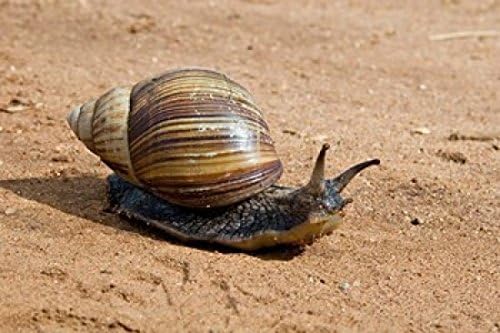
[Note: I titled it escargot because I used to get eschatology and escargot confused. Plus, in his section concerning the end of time Peter prefaces with, “The Lord isn’t slow concerning His promises the way we consider slowness.” Snails are slow. The end of time seems far away, hence escargot]
A lot of movies detailing a world-ending event are designed to elicit a fearful response from viewers (for thrills, of course). Whether it’s the Walking Dead’s zombie apocalypse, Independence Day’s alien invasion, or Knowing’s solar flare (although Nicolas Cage’s acting is probably the most terrifying thing about the movie…), the end of time is usually portrayed as a terrifying event requiring humanity to go to incredible lengths to avoid it.
Christianity is so beautiful because we’re actually dying for the end to come!
I Corinthians 1.7 – “…as you wait for the revealing of our lord Jesus Christ…” Wait is apekdechomia, which means to welcome something with great anticipation. The same word is used to I Peter 3.20 where God eagerly waited for the earth to run away from sin in the days of Noah.
Philippians 3.20 – “But our citizenship is in heaven, and from it we await a savior, the lord Jesus Christ…” Paul encouraged the Philippian church to imitate the examples of selflessness he had listed, especially since enemies of the cross were in existence (maybe even an indirect reference to Euodia and Syntyche). Unlike the enemies of the cross, we’re waiting for God to save us from this world.
Romans 8.19 – “For the creation waits with eager longing for the revealing of the sons of God…” And 23, “Not only creation, but we who have the firstfruits of the Spirit groan inwardly as we wait eagerly for adoption as sons, the redemption of our bodies.” Redemption is apolutrosis, which describes release from a captive state or from interrogation. We eagerly anticipate the last day.
Hebrews 9.28 – “…so Christ, having been offered once to bear the sins of many, will appear a second time, not to deal with sin but to save those who are eagerly waiting for him.” Verse 27 makes it very clear that we face judgment immediately after death! Jesus’ second coming is to save us from this world, which was made dysfunctional because of sin.
II Peter 3.12 – “Since all these things will be undone, what sort of people should you be in lives of holiness and godliness, waiting for and hurrying the coming of the day of God, because of which the sky will be set on fire and dismantled, and the earth and the works done within it will be dissolved.” Peter is describing the end, but far from terrifying, we are waiting for and hurrying that last day.
A lot’s going on in our world, much of it scary and anxiety-inducing. Oh well! “Come back, lord Jesus” (Rev. 22.20).







 The Preacher Pollard Blog