

Dale Pollard
The Bible doesn’t say that Noah’s ark landed on Mount Ararat in Turkey, it states that the ark came to rest on the “mountains1 of Ararat” (Gen. 8.4). Ararat is a region which is nearly in the middle of Armenia, between the Araxes and the lakes Van and Urumiah (2 Ki. 19:37; Isa. 37:38) and it’s called by the Armenians Araratis even today.2 Some sources say that the ark is somewhere in the surrounding region, like The Book of Jubilees, which makes the claim that the landing location is on Mount Lubar.3 The very best guesses can be narrowed down by investigating the reliability of the original sources since there are many other mountains that are said to be the resting place of one of the most fascinating mysteries; lost to time or buried by nature.
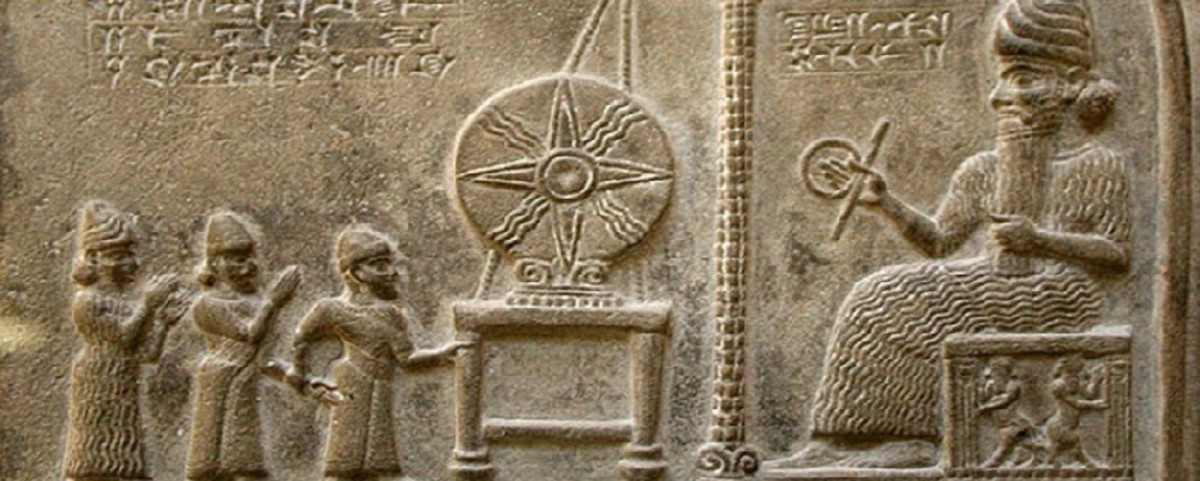
There’s a bizarre and interesting link that’s allegedly connected to one of the most famous Assyrian kings mentioned in the Bible. The loud and proud Sennacherib successfully campaigned against seven cities on Nipur, today known as Mt. Judi, on a rampage before his attack on Jerusalem. To commemorate the victories he raised nine stone panels near the top of the mountain and one located at its base. The inscriptions on the stone panels reveal the ego of Sennacherib as he describes himself as “the great king, the mighty king, king of the universe, king of Assyria, and the exalted prince!” He goes on to describe himself as an ibex, spurring on the charge up the mountain, through gullies and mountain torrents and reaching the highest summits. The impression one gets from his inscriptions is that he ventured all over the mountain to destroy those seven cities. The inscription happens to be eerily similar to what God said about him through the prophet, Isaiah (Isa. 37.23-25). Friedrich Bender visited Mt. Judi in 1954 and obtained wood samples from an object that some believe to be Noah’s Ark below the summit.4 This location also happens to be near some of the inscriptions that were left by Sennacherib’s masons.
The Bible’s account of the Assyrian King’s death is brief but says,
“And that night the angel of the LORD went out and struck down 185,000 in the camp of the Assyrians. And when people arose early in the morning, behold, these were all dead bodies.
Then Sennacherib, king of Assyria went to his home and lived at Nineveh.
And as he was worshiping in the house of Nisroch his god, Adrammelech and Sharezer, his sons, struck him down with the sword and escaped into the land of Ararat. And Esarhaddon his son reigned in his place” (2 Kings 19.35-37).
The Babylonian Talmud commentator expounds on this by stating,5
“Sennacherib went and found a beam from Noah’s ark, from which he fashioned a god. He said: This beam is the great god who delivered Noah from the flood. He said: If that man, referring to himself, goes and succeeds, he will sacrifice his two sons before you. His sons heard his commitment and killed him…this interpretation is based upon the etymological similarity between neser, the Hebrew term for beam, and Nisroch, the god that Sennacherib fashioned from a beam.”
The leading theory and argument against this claim that Nisroch is an idol carved from a beam stolen from the ark is worth noting as it might be due to a simple scribal error. The short version of the argument states that some of the Hebrew letters that make up both Nimrod and Nisroch look similar to one another, so a mistake could have been made. Outside of a possible mention in the Bible, an Assyrian god that goes by Nisroch doesn’t show up in any Assyrian texts. However, if the word Nimrod were the true intentions of the biblical scribes, that doesn’t make the passage any less interesting.
————————————————————————————————-
1Ararat a region and not a mountain. Schroeder, Thes. Ling. Arm. p. 55.
2Araratis, “the curse reversed: precipitation of curse”
3CF. Jubilees VIII.21
4Bender’s samples are far from conclusive and even challenged by other creationist.
5Babylonian Talmud: Tractate Sanhedrin, folio 96a. Sennacherib inscribed his own image and an account of his ascent on the side of Mount Cudi (Judi).
Sennacherib’s death is the first time that the Bible mentions “Ararat” again since the account of Noah.









 The Preacher Pollard Blog