Israel first heard Exodus 20.4 spoken by God from heaven in an audible voice.
“You must not make for yourself an idol of any likeness of what is in heaven above or on the earth beneath or in the water under the earth…”
Obviously this wasn’t enough to keep humans from doing the exact opposite.
“They (Israel) forsook all the commandments of the LORD their God and made for themselves molten images, two calves, and made an Asherah and worshiped all the host of heaven and served Baal. Then they made their sons and their daughters pass through the fire, and practiced divination and enchantments, and sold themselves to do evil in the sight of the LORD, provoking Him. So the LORD was very angry with Israel and removed them from His sight; none was left except the tribe of Judah.
Also Judah did not keep the commandments of the LORD their God, but walked in the customs which Israel had introduced. The LORD rejected all the descendants of Israel and afflicted them and gave them into the hand of plunderers, until He had cast them out of His sight”
(2 Kgs 17.16-20).
Both the Egyptians and the Babylonians assigned stars to their many gods. The practice of star worship was common place among the Assyrians— and especially the Chaldeans.
“…beware lest you raise your eyes to heaven, and when you see the sun and the moon and the stars, all the host of heaven, you be drawn away and bow down to them and serve them, things that the LORD your God has allotted to all the peoples under the whole heaven” (Deut. 4.19).
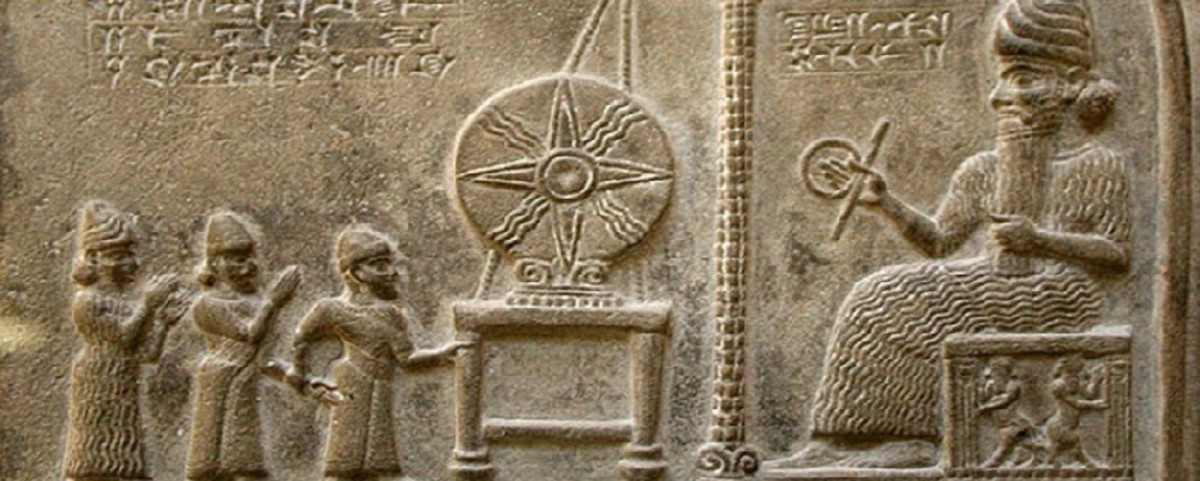
Were there any depictions of Israel’s (and our God), Yahweh? The evidence is sparse, but here’s a possible example.
An Achaemenid period coin inscribed with the word Yehud depicts a supreme deity as a seated figure riding on a winged wheel.
Images of Ezekiel’s wheel (Ophanim) or Elijah’s “flying chariot” also come to mind. These motifs are seen depicted not only in the ancient middle and near East, but throughout the entire ancient world. Orthostats (foundation blocks with artistic impression), stone stele, reliefs, and a plethora of artifacts all share a striking resemblance. While these artistic depictions and their character identities aren’t entirely accurate to biblical accounts, many aspects mimic and even seem to acknowledge true Divinity.
“He bowed the heavens and came down; thick darkness was under his feet. He rode on a cherub and flew; he came swiftly on the wings of the wind.” Ps. 18.9-10
One of our young people who was recently baptized asked Kathy to help her solve a mystery that perplexed her to no end. Her Bible class teacher took her and the other students on a tour of the building, ingeniously including a trip to the baptistery and baptismal preparation room. Among the towels, garments, and other items, she noticed two black, curly wigs hanging on the wall. Her question for Kathy was, “Why are those wigs hanging there?” Kathy’s wise answer is that they were probably put there a long time ago, perhaps for older women getting baptized whose hair was brittle or thin. They might have looked baldish when they came up out of the water with wet hair, and the wig would disguise that. Yet, between them, Kathy and Kamdyn could not completely solve the conundrum.
Sometimes we have “wigs” hanging around. They may be traditions that were started in other times for specific reasons. You may have seen communion covered by runners or tablecloths going back to times when buildings didn’t have air conditioners and the cloth was used to keep the flies off. The circumstances changed, but the cover remained.
There are many traditions we honor that are fine and acceptable, but which are only expedients and may be a mystery to our young, new Christians, visitors, and the like. That is not to disparage them, but it is to say that we should be ready to discuss them. Whether that is standing before a song or Scripture reading, leading a specific number of songs before prayer, having an invitation at the end of a sermon, having the Lord’s Supper before the sermon (or vice versa), ending worship with a prayer or a song (Mat. 26:30), the way those leading in worship enter the auditorium, or any number of habits and customs congregations settle into, we should never let these simply settle into our subconsciousness.
Periodically, it’s good to explain and discuss these whether in brief form during the course of our services, at greater length in a Bible class on hermeneutics (Bible interpretation) or another textual or topical class, and certainly in one-on-one conversations.
It is also good to ask if and how we might vary or alter some of these customs, periodically or even permanently. There are acts of worship we are commanded to engage in each Lord’s Day (Acts 2:42; 20:7; 1 Cor. 16:2), but for how long and in what order? The Word of God is to be reverenced, but does standing inherently do that? What the people did in response to Ezra was spontaneous, and they followed it up by bowing low with their faces to the ground (Neh. 8:5-6).
Let’s remember that these traditions are good, or at least they are neutral. The point is to keep them from becoming mysteries hanging on the walls of our faith or our worship. Let’s continually ask what we are doing and why.
Almost always, in the book of Numbers, the complaining comes from among the rank and file of the nation. In Numbers 12, we see this spirit infesting even the leadership. God’s appointed leader, Moses, depended much on his siblings, Aaron and Miriam, for the day to day operation of guiding the people toward Canaan. Here, we see their critical spirit and God’s response. We also learn some important insight into how such matters arise.
There was an underlying cause for the complaint (1). It is not clear from context if they were envious of Moses’ position or power, but they seem to feel equally entitled to recognition and authority. This is a feeling that God would verbally dispute (6-8). Neither is it clear why Moses’ wife’s origin, a Cushite, fueled their contempt. But it did! Likely this Cushite was Zipporah, the wife Moses took in Midian (cf. Hab. 3:7). Commentators logically surmise that especially Miriam would feel threatened by the rival influence of Moses’ wife would diminish her own influence as a woman in his life. This is certain. Often the real reason and motive for the complaint is not what is stated, but is instead some ulterior issue. Therefore, the heart is where such issues need to be addressed. If this does not happen, the consequences can be severe.
The Lord hears our complaints against his appointed leaders (2). Aaron and Miriam spoke against Moses “and the Lord heard it.” This phrase ought to sober us all. Such criticism is often petty and we fail to remember that God is omnipresent. He hears what we say, and He knows why we say it.
The Lord defends His leaders (3-9). Moses is established as a humble man back in chapter 11 regarding Eldad and Medad (11:29). Thus, in his meekness, Moses does not defend himself (3). However, God’s response is sudden (4)! It is emphatic. He summons all three of them to entrance of the tabernacle (4-5). He lets them know that their criticism of Moses was actually leveled at Him. Not only did God call Moses to lead the people (Ex. 3-4), but He maintained an intimate relationship with Moses, telling them, “With him I speak mouth to mouth, clearly, and not in riddles, and he beholds the form of the Lord. Why then were you not afraid to speak against my servant Moses?” (8). He departed from the trio, still angry (9). Does the Lord defend His leaders today? Isn’t that clear from the passages outlining their function as leaders and overseers (Acts 20:28; 1 Th. 5:12-13; Heb. 13:7,17). We should think twice, then think again, about idle criticisms against God’s leaders (1 Tim. 5:19).
The Lord responds to unjust criticism (10-16). Many Bible readers wonder why only Miriam is struck with leprosy. There is a linguistic reason. “The section begins with the feminine singular form of the verb watĕdabber, implicating Miriam as the leader in this endeavor” (Cole, NAC, 200). But Aaron fears retribution, too (11). Moses’ compassion is immediately apparent, as he cries out to God for her (13). I appreciate how the ESV shows the depth of Moses’ concern: “O God, please heal her—please” (13). What a beautiful example for leadership today, even if maligned by a critic, to intercede for them in their trouble. God shows no tolerance for petty jealousy and idle criticism. Miriam has to bear the consequences of her complaining. Divine disdain for grumbling is such that, even in the senior leadership circle, He strikes Miriam with leprosy. He immediately heals her, but she has to be the shame and ostracism of her sin for an entire week (14-15). It was a painful lesson for her, and it should have been a graphic illustration for the whole nation.
Criticism is engrained in human tendency. Oftentimes, pettiness drives it. When we do not rule over our spirit, it can lead us to trouble. Yet, God seems especially protective of those whom He sets in positions of leadership. He even wants us praying for our secular leaders (1 Tim. 2:2). Though it cuts against the grain of the culture, whose contempt for leadership declines continually, we should uphold and respect the men who shepherd the church of His Son.
We had seen these tendencies in Israel when they were in bondage (Ex. 5:15), but also when they were facing the Red Sea with Egypt pursuing them (Ex. 14:10) as well as a couple of days past the parted Red Sea which God enabled them to successfully cross (Ex. 15:25). We are often amazed at how short Israel’s memory is, but too often we are like that. We worry in our crises despite clear evidence that God has been with us through previous trials. Perhaps we think, “That was then, but this is now.” Maybe that’s what the people here thought.
They are at a place they would call Kibroth-hattaavah (34-35), so named “because there they buried the people who had the craving.” But, let us back up and remind ourselves what the craving was and why it was wrong to have it. Facing this challenge on earth was Moses, who had the burden of this people on his shoulders (11). Seeing this challenge with sore disappointment, God deals righteously with the Israelites’ incessant complaining.
The complaining (1-3). For the first time in Numbers, we see the hard, unbelieving hearts leading the people to rebel and grumble. They focused on their misfortune, and the God who was caring for them responds by punishing those at the outskirts of the camp (1). Rather than leading them to repent, it intensified their dissatisfaction.
The craving (4-9). Scripture describes the instigators as “rabble” (4; cf. Ex. 12:38) and describes their craving as “strong” (4). This spirit of discontent was strong and it spread. The people whined at what they did not have (4). They actually long to be back in Egypt, where they had variety of foods that they fondly recall (5). They were sick and tired of having the same menu every day (manna), and they wanted something more and different.
The crying (10). In their self-pity, the people turned to tears. The weeping swept through the camp, making God angry and Moses displeased. Consider the height of their ingratitude!
The cross to carry (11-15). Moses assesses his situation as leader over this massive group of grumblers, overwhelmed at the sheer number of them united in dissatisfaction (21). He wonders why this burden has fallen on him alone, to manage all their vocal venom and to respond to their outrageous raging! He questions why he has this job and where he is to find the meat to meet their needs. He’d rather die than carry the burden of this people alone. What a powerful object lesson than leadership can be lonely. They often bear the brunt of people’s spiritual struggles, which can be very unpleasant to deal with. Seeing so many at their worst, Moses is discouraged and distraught.
The consecration (16-29). The compassion of God for His chosen leader is shown by His patient solution. There is a contrast between Moses’ complaint and the whining of the people. Moses’ is a spiritual trial, while the people are succumbing to their fleshly temptation. God responds by assuring that He will supply the meat the people so strongly desire, but He also supplies Moses with a viable solution to his excessive burden. He tells Moses to “Gather for me seventy men of the elders of Israel, whom you know to be the elders of the people and officers over them, and bring them to the tent of meeting, and let them take their stand there with you” (16). Then, he told Moses to “consecrate” the people, to prepare themselves for the gift of meat God would give. He also provided 70 men to help Moses bear the burden of the people, and God placed His Spirit on them to aid Moses’ work (24-26), including Eldad and Medad who remained in the camp. While Joshua saw this as a threat, it was a welcomed sight to Moses (29).
The consummation (30-35). So, God gives the people quail in extreme abundance (31), driven in from the sea by a wind He produces. The people gathered massive quantities of it, then started eating it. We read, “While the meat was still between their teeth, before it was chewed, the anger of the Lord was kindled against the people, and the Lord struck the people with a very severe plague” (33). God gives them an object lesson, showing them the cost of being driven by their flesh rather than their faith in Him.
This is the first of many object lessons, showing us God’s disdain for the chronic complainer. In light of His generous blessings, how does He feel when we overlook those to serve our cravings for “more” and “different”? This chapter reminds us that such craving and complaining is a heart problem and a faith problem. May we learn from them (1 Cor. 10:5-6)!
The Paradox of Freedom in America’s Founding and Faith
Brent Pollard
Every year on July 4th, Americans come together to commemorate their liberation from the rule of Great Britain. However, though we praise the Declaration of Independence for emphasizing self-reliance, it can also be seen as a testament to the deep reliance on a Creator God.
Reflect upon the opening line, “When in the Course of human events.” This statement establishes a benchmark that surpasses the power of any leader. It implies the existence of a higher law, a natural law, originating from a divine source.
This fundamental document declares that some rights are “self-evident,” i.e., they are part of the human condition and not something a king or queen can grant. This fact suggests that these rights come from a source beyond the control of any human government.
The famous passage “endowed by their Creator with certain unalienable Rights” clearly recognizes the divine source of these fundamental rights. They are not merely gifts from rulers; a higher power has bestowed them upon us.
The second paragraph concludes by appealing to the “Supreme Judge of the world” and recognizing the significance of considering others’ perspectives. This reverence for humanity’s perspective is rooted in a collective faith in a superior ethical framework.
The revolution is fully justified because the king broke the sacred laws governing nature and the divine. The colonists were not rebelling against a rightful authority but rather against a ruler who violated the sacred law.
This perspective highlights the importance of relying on a higher power in various significant ways:
• Origin of Rights: Our rights are not self-derived but instead bestowed upon us by a higher power, implying that we must preserve and protect them.
• Limits of Government: The government aims to safeguard these inherent rights rather than diminish them.
• Emphasizing Accountability: A higher law applies to rulers and the ruled, fostering a more just society.
These concepts shouldn’t surprise anyone familiar with how people express their dependence on God in the Scriptures. Also, God’s word reminds Christians that God has given them freedom; it also guides them by principles of lawfulness and expediency, which prevent them from indulging in their desires without restraint (e.g., 1 Corinthians 10.23).
As we approach our conclusion, we want to highlight various statements from the Bible that show our dependence on God. These scriptures highlight different aspects of our reliance on God, including our need for His guidance, power, wisdom, protection, and existence. They stress the limits of human understanding and ability, contrasting them with God’s all-knowing and all-powerful nature.
Jeremiah 10.23: “I know, O Lord, that a man’s way is not in himself, nor is it in a man who walks to direct his steps.” (NASB95)
This verse acknowledges that humans lack ultimate control over their lives and require God’s guidance.
Acts 17.28: “For in Him we live and move and exist, as even some of your own poets have said, ‘For we also are His children.’” (NASB95)
Paul underscores that we are entirely dependent on God for our very existence.
John 15.5: “I am the vine, you are the branches; he who abides in Me and I in him, he bears much fruit, for apart from Me you can do nothing.” (NASB95)
Jesus employs a metaphor to vividly demonstrate how we rely entirely on Him for spiritual productivity.
Proverbs 3.5-6: “Trust in the Lord with all your heart and do not lean on your own understanding. In all your ways acknowledge Him, and He will make your paths straight.” (NASB95)
This passage encourages reliance on God’s wisdom rather than our limited understanding.
Psalm 127:1: “Unless the Lord builds the house, they labor in vain who build it; unless the Lord guards the city, the watchman keeps awake in vain.” (NASB95)
This verse powerfully underscores the uselessness of human endeavors without God’s participation.
Philippians 4.13: “I can do all things through Him who strengthens me.” (NASB95)
Paul admits that his capability to deal with his economic circumstances originates from God, not himself.
2 Corinthians 3:5: “Not that we are adequate in ourselves to consider anything as coming from ourselves, but our adequacy is from God.” (NASB95)
Paul reiterates that all our abilities come from God, not within ourselves.
James 4.13-15: “Come now, you who say, “Today or tomorrow we will go to such and such a city, and spend a year there and engage in business and make a profit.” Yet you do not know what your life will be like tomorrow. You are just a vapor that appears for a little while and then vanishes away. Instead, you ought to say, “If the Lord wills, we will live and also do this or that.” (NASB95)
This passage highlights our inability to control the future and our need to submit to God’s will.
Psalm 46.1: “God is our refuge and strength, a very present help in trouble.” (NASB95)
This verse vividly depicts God as our ultimate source of protection and strength, particularly in challenging times.
Isaiah 41.10: “Do not fear, for I am with you; do not anxiously look about you, for I am your God. I will strengthen you, surely I will help you, surely I will uphold you with My righteous right hand.” (NASB95)
God assures us of His presence, strength, and support, indicating our essential need for these divine provisions.
The principles of independence remind us of a profound paradox: our reliance on a higher authority closely connects us to true freedom. The Declaration of Independence acknowledges our freedom from earthly rule and dependence on divine providence. We find this sentiment throughout Scripture, continually reminding us of our reliance on God for guidance, strength, and even our existence. As we celebrate our national independence, let’s also embrace the humility and wisdom that comes from recognizing our ultimate dependence on the Creator. In doing so, we honor the enduring principles that have guided our nation since its beginning and continue to shape our understanding of freedom and equality.
Israel camped at Sinai for a total of 11 months and 20 days. This can be calculated by seeing the dates mentioned in Exodus 12:2, 19:1; Numbers 1:1, 9:5, and 10:11. So, their freedom from Egyptian slavery had been almost a year. Before that, they had been in bondage over four centuries. It is easy to see how they could give in to a fearful mindset, but to this point they had faithfully trudged toward the promise land.
The trumpets (1-10) were a key part of the mobilization process. The priests blew them to assemble the congregation at the door of the tabernacle (3), assemble the tribal heads to Moses (4), mobilize the camp (5-6), sound an alarm if attacked (9), and as a reminder of God’s presence at the feasts (10). This was the task for the “sons of Aaron, the priests” (8).
With the review of these procedures, the first incidence of the cloud moving occurs in verses 11-36. We are not told the mood of the people, but they had to be buzzing with excitement. They had been in a holding pattern for nearly a year, and now they were going north out of the Sinai Peninsula toward Canaan. In the peninsula is the Wilderness of Shur, the Wilderness of Paran, and the Wilderness of Zin.
(Via Rose Maps)
The chapter details Israel’s setting out by company in these verses. The ark of the covenant leads the way (33). The standards (flags) fly as the tribes set out in the order God prescribed–Judah, Issachar, Zebulun, Reuben, Simeon, Gad, Ephraim, Manasseh, Benjamin, Dan, Asher, and Naphtali (11-28). This is followed by Moses’ pleading with Hobab, his brother-in-law, to remain with Israel. His expertise in location and logistics in camping are skills Moses tells him he needs. He prevails upon his brother-in-law, who remains with them.
There is pomp and ceremony whenever Israel mobilized or came to rest. “Whenever the ark set out, Moses said, “Arise, O Lord, and let your enemies be scattered, and let those who hate you flee before you. And when it rested, he said, “Return, O Lord, to the ten thousand thousands of Israel” (35-36).
This procedure was a tangible reminder of God’s sovereignty and leadership. They relied on His directions, and their responsibility to go where He commanded and do as He instructed. This was their finest year of freedom, that first year. As we will see, trust is going to wane and fear is going to rise.
God expects us to treat each other with love and humility. He holds us accountable for the ways that we interact with our neighbors. Every command from God is essential to follow, but Jesus identifies two of the greatest commands in Matthew 22:36-40. “Love God with heart, soul and mind.” And, “Love your neighbor as yourself.” All are worthy of love, but we are called to love and value others the way we love and value ourselves.
However, a problem that many struggle with is how to love others if we don’t even love ourselves? God sees each one of us as valuable and worthy of love. He expects us to treat each other with respect, dignity, and honor. How will we fulfill the second greatest command if we don’t even love ourselves?
Your view of yourself directly impacts how you will treat others. If you struggle with loving others it is often as a result of low self esteem or an unhealthy dislike of who you are. Hurt people hurt people, and if you can’t see the value of your soul, how can you see the value in others?
If you had a friend that talked to you the way you talk to yourself, how long would they be your friend? This article isn’t supposed to be a self-help, life coach lesson, but at the same time we are going to dive into what makes us worthy of love.
This article is all about why you matter, not just to God, but to the church, your physical family, and to the world.
Every person on earth is unique, but you will never talk to someone that God doesn’t love! That’s why we are expected to treat each other with love. When you turn away from someone in need, you are turning your back on someone God values. When you speak hateful things to someone, you are saying these things to someone God loves. When you gossip, insult and belittle someone, you are doing it to a human that God sent His Son to die for. Every human soul is precious. Anyone who says otherwise contradicts our Creator. His opinion of you matters most.
Why treat God’s pride and joy of creation this way?
Do you see why you matter? In The Declaration Of Independence you read the phrase, “we hold these truths to be self evident, that all men are created equal.” If all are created equal, why do we treat others as if they are any less valuable? Is it true that all are created equal? According to God the answer is a resounding YES!
The joy of the gospel is that no matter how you may feel, or what others say, no matter how good or bad your life is, YOU MATTER TO GOD. I’m not just saying this as an opinion, it is the truth. Problem is, society today has some difficulty with this truth. Let’s imagine that there is no God. Imagine that we all came from a singular source of matter that evolved throughout time. Imagine that in order to become humans we had to be smarter and stronger than other species.
Imagine that existence is simply a battle of survival. If you are one of the weak ones who dies, nothing exists beyond your death.
Your life was ultimately meaningless when all memory of you dies with your lifeless cells. If all of that were true, would you matter at all? Or are we just a product of chance and time?
Theres no value found in that! According to secular science we are where we are today because we survived in a brutal fight with all other species. That doesn’t lead to valuing life at all. If there is no God, no one can say with certainty that life is of any value.
Thankfully, there is a God. And because of HIS goodness we are able to have full assurance that our lives matter.
Our view of whether someone is valuable or not is usually superficial. Our value doesn’t come from the success we’ve had in life, it comes from something far greater than anything we could do on our own. Our value is ascribed to us by God Himself. Genesis 1:26 God says, “Let us make man in our image, after our likeness.” Before we ever did anything, our origin began with God making us in His image. The value of your life isn’t based on how much money your family has. It’s not based on what physical features you have. Your value is not based on what talents or skills you have to offer. You are valuable because in the beginning God made you in HIS image! Not just a select few. ALL of mankind is made in the image of God! That’s why we are valuable and why YOU matter!
The Lord had provided a way for Israel to remember God’s deliverance in their past, the Passover memorial commemorating His delivering them from Egypt (1-14) and a way for them to observe God’s deliverance in their present. This was provided through the cloud cover by day and the appearance of fire by night (15-23). They had a perpetual reminder of the God who watched over them and took care of them. Whether it was their yesterdays or their today, they could be assured.
The Passover had commands and regulations. God dictated when it would occur, “its appointed time” (2-3). God dictated where it would be observed, “in the wilderness of Sinai” (5). God dictated how it would be done, “according to all that God had commanded Moses” (5). This included what they did with the food and the animal itself (11-12). But, God through His grace and perfect understanding provided an alternative for those “providentially hindered” through touching a dead body (6-14). Yet, if they failed to observe it simply out of neglect or disobedience, “that person shall be cut off from his people because he did not bring the Lord’s offering at its appointed time; that man shall bear his sin” (13). God’s broader vision is seen in that even strangers sojourning in the land who desired could participate in the Passover Feast (14).
From the day the tabernacle was set up, God was the guide of the people. He showed them where to go and told them when to move. That was the purpose of the cloud and fire. These objects stood above the tabernacle, the place where God designated to commune with His people (Ex. 25:8-9). At times, the cloud would stay in place for a long period of time (19). At times, the cloud remained for a short time (20). The thread that tied all of it together was the “command” of the Lord (“command” is found seven times in the last six verses). Once again, we have an endorsement of the willingness of the people up to this point in their exodus from Egypt: “They kept the charge of the Lord, at the command of the Lord by Moses” (23).
A couple of interesting facts should be considered. The Passover commemorated their deliverance from bondage. God stipulated the when, where, how, and who of this memorial. It is a type of the Lord’s Supper, which commemorates our deliverance from the bondage of sin. God has given it to us each Lord’s Day (Acts 20:7), to be taken when assembled (1 Cor. 10-11), in remembrance of Christ’s sacrifice and with self-examination (1 Cor. 11:23-29), and by those redeemed (Mat. 26:26-29). It is a reminder of God’s deliverance in our past, as well as our continual need of His deliverance today.
Second, the providential leading of God guides us through this world. We have the perfect guidance of His Word, which leads us to trust Him as we pray to Him and seek to obey what He has written down for us. Though we do not have some tangible sign like a cloud or fire, we have an unwavering confidence that God is at work in our lives helping us get to the Promised Land (Rom. 8:28).
What we know is that we always need Him (Phil. 4:19) and He will never fail nor forsake us (Heb. 13:5-6). His future integrity is forged by His past deliverance and present help! Our task is to keep moving, just as He has directed in His Word!
It’s probably safe to assume we believe strongly that Jesus is our savior. But what does that mean? It means that Jesus is going to rescue us from something bad. You don’t save someone from a good situation. Salvation always implies the existence of a negative circumstance. Jesus is the one who will take us out of that negative circumstance and place us in a perfect one. What is this negative circumstance? To understand this, we have to study the word translated “salvation” (σωτηρια). God told us what his son will save us from.
Hb 11.7 — Noah was saved from the flood, meaning that he and his family didn’t drown with the rest of the world.
Acts 7.25 — Moses thought the people of Israel would understand that God sent him to save them from Egypt, but they didn’t. Their salvation meant rescue from Egypt.
Lk 1.68-79 — God speaks through John the baptist’s father, saying that God would save Israel from their enemies and from the power of those who hate them.
Phil 1.28 — Paul says that suffering for Christ is proof that he will save us while our enemies will be lost; word for lost here is απωλεια which means “destruction”. We will be saved from destruction.
II Cor 7.10 — Paul says that the kind of sorrow God wants to see leads us to avoiding the fate of evil people.
I Thess 5.9 — Paul connects salvation/rescue to Jesus’s return, whether we’re alive or dead; this rescue means we live with him when the ungodly are destroyed.
Hb 5.9 — The Hebrews writer says that Jesus will save us from death, just like God saved him from death.
I Pt 1.9 — Peter makes it clear that our salvation comes after death when Jesus returns.
II Pt 3.7 — Peter says that the current earth and sky are being preserved for a specific fate: judgment of earth in the form of consuming fire and the destruction of ungodly men. A few verses later, our fate is very different. Our rescue means that we won’t suffer the fate of ungodly men.
Lk 21.28 — Jesus commands his followers to stand up and shake off their fear when sun, moon, and stars all show some kind of terrifying indication that the world is ending — he says, “Know that it is almost time for God to save you.” From what? Earth’s destruction!
So we’ve established two things: One, Jesus is the one who saves. We have no hope for salvation through any other source. Two, we are being saved from three things — 1. Sin 2. Death 3. Destruction. All three of those things are pretty much interchangeable. Sin is death and sinners will be “destroyed” at the end. Every person on this planet will be made immortal when Jesus returns. The difference is that our immortal bodies will leave this earth with Jesus when he comes back, and everyone else will suffer on this earth as it burns. Jesus is saving us from the fate of the wicked at the end by saving us from our sins.
After instructions on setting up the lamps and the lampstand (these would illuminate the area of sacrifice)(1-4), which bridges the material in chapter seven and the tribal contributions to the tabernacle rituals and the Levites’ participation in the work there which we find in chapter eight, Moses goes into the consecration of the Levites (5-26). It parallels the material in Leviticus eight. Notice James Smith’s chart:
ORDINATION TO MINISTRY
THE PRIESTS Leviticus 8
THE LEVITES Numbers 8
Made Holy
Made Clean
Washed with Water
Sprinkled with Water
Put on New Garments
Washed Garments
Blood Applied to Person
Blood “Waved” Before God
(Pentateuch, 423)
THE RITUAL CLEANSING (5-7). Before they did their spiritual service, they had to make sure they were purified. This included shaving, washing their bodies, and washing their clothes. No doubt, this conveyed symbolism to the Levites of the importance of coming before God having been cleansed. So it does today (1 John 1:7).
THE OFFERING OF SACRIFICES (8-11). One additional thing was to be done before the Levites sacrificed. They were to have sacrifice made for them (8-10), then they were to be dedicated before the people so as to be fit to make the offerings for Israel. They were to be consecrated before they could consecrate the others. They, like the rest of the nation, were saddled with sin (cf. Heb. 5:1-4).
THE LAYING ON OF HANDS (12-19). This laying on of hands was ritualistic and symbolic, and it was God’s way of transferring the guilt of the people onto the animal for sacrifice. The Levites were the firstborn of God and were given to Him as a gift (symbolized in verses 8-11), and the Levites thus served as a buffer and intermediary that allowed the people to be able to come to Him for atonement (19; 1:53). Of course, Jesus serves in that role for us today (Heb. 4:16). We need no earthly priest to do what the Levites did for Israel.
THE CONTINUATION OF MINISTRY (20-26). By performing these rites, the Levites could go about doing their designated work. The Levites having followed their prescribed rituals could go on behalf of the people (20-22). The remainder of the chapter deals with the tenure of these priests, who would step away from the office once they reached 50 years old. They could serve and help the Levites, but they could no longer “do service” (26). Yet again, Christ is contrasted with this ever-changing nature of the Old Testament priesthood. He abides forever, a priest after the order of Melchizedek (cf. Heb. 7:2).
God had rules and expectations for both the priests and the sacrifices. The Levites and priests served as a type and shadow (Heb. 8:5). Christ is come the perfect High Priest who continues forever. But we appreciate that even more as we understand God’s original set up regarding Aaron’s family.
“Let Pharaoh appoint commissioners over the land to save a fifth of the harvest of Egypt during the seven years of abundance” (Genesis 41.34).
*Joseph implements a similar budgeting strategy used today, the 50/20/30 model
“Dishonest money dwindles away, but whoever gathers money little by little makes it grow” (Proverbs 13.11)
Consistency and being smart with your money is the key to growth no matter how much you make.
Example:
Monthly Savings – $200
12 Month Total – $2,400
Don’t Buy What You Don’t Need
“Why spend your money on what is not bread and your labor on what does not satisfy? Listen, listen to me, and eat what is good, and you will delight in the richest of fare” (Isaiah 55.2)
Investing Principle
“The man who received five bags of money went and put the money to work and gained five bags more”
(Matthew 25.16)
Monitor What Comes In And What Goes Out
“Suppose one of you wants to build a tower. Won’t you first sit down and estimate the cost to see if you have enough money to complete it?”(Luke 14.28)
Good People Aren’t Selfish
“A good person leaves an inheritance for their children’s children…” (Proverbs 13.22).
This is the longest chapter in the Pentateuch, the first five books of the Old Testament. There is absolutely no doubt as to the theme of the material, as the word “offering” is found 68 times and other forms of the word at least an additional five times! It is interesting that what happens here predates the first six chapters by a whole month. These events occurred on the day the tabernacle was set up (1), while the material at the beginning occurs on the “second month” (1:1ff).
This chapter reveals the anticipation and preparation of Israel to possess the promised land, with representatives of the twelve tribes bringing offerings. It is all about setting up the furnishings of the tabernacle. The first 11 verses provide and introduction and overview, while the rest of the chapter chronicles day by day the offering brought by each tribe. So, it is a 12 day ritual where the leader of each tribe brought their contribution to the work of the tabernacle. Six carts and twelve oxen are donated to Moses for use by the Levites in their work. The wagons and oxen would be divided for use between the Gershonites and Merarites, since the Kohathites had no use for them as those who carried the consecrated vessels of the tabernacle on their shoulders.
The bulk of the chapter reveals the contribution, one tribe per day, for twelve days. Thus, a leader from Judah, Issachar, Zebulun, Reuben, Simeon, Gad, Ephraim, Manasseh, Benjamin, Dan, Asher, and Naphtali each bring their offering in that order day after day. Combined, they gave 12 silver bowls, 12 silver plates, 12 golden spoons, 12 kids, 36 bullocks, 60 goats, 72 lambs, and 72 rams. The precious objects went toward the tabernacle while the animals went toward the burnt, sin, and peace offerings.
Accompanying what some might see as tedious or lengthy details about Israel’s offering, note the emphasis on the need for the offerings to be anointed (God-authorized separation) and consecrated (made holy, dedicated). The tabernacle is all about God meeting His people in worship. Doing so as He desired fills the requirements found in Numbers seven. Then, at the end of the chapter, we read what happens when everything had been brought to the Lord for the tabernacle. “And when Moses went into the tent of meeting to speak with the Lord, he heard the voice speaking to him from above the mercy seat that was on the ark of the testimony, from between the two cherubim; and it spoke to him” (89). There was intention, expression, and revelation. Moses makes deliberate effort to go into the presence of God. He then spoke with the Lord. But, He also heard a voice speaking to him (cf. Ex. 25:22).
Because Christ has entered the heavenly veil as a forerunner for us, we can make good our intention to enter God’s presence in worship. Worship is to be an audible expression from a prepared heart, and it is also an activity in which we hear God’s will revealed to us through His perfect Word. Let us not miss that each of us, individually, as members of God’s holy nation but also priests (1 Pet. 2:9), bring an offering to God every time we worship Him. Doing so the way He desires is vitally important!
To me, maybe the most fascinating and mysterious person of this entire time period is the focus of 1 Kings 13. His name is not revealed, but he is simply said to be “a man of God from Judah” (1). His story is utterly tragic and serves as a reminder of how important steadfast obedience to God is. Yet, the first part of his story, as disclosed in Scripture, reveals him to be one worthy of imitation. Consider the positive attributes of this “man of God.”
He was courageous. His commission was to prophesy against the altar of the powerful, first king of the northern kingdom—Jeroboam, the man whose wicked reign is shown in the previous chapter. Given what Jeroboam started and tried to do to him (4), he had to be a man of moxie and bravery. There are portions of God’s message that require readiness, all patience, and instruction (2 Tim. 4:2). The ability to tell the truth even at great personal cost is a mark of highest integrity.
He was faithful. Notice how the text conveys this. He came “by the word of the Lord” (1). He cried against the altar “by the word of the Lord” (2). His message was, “thus says the Lord” (2). He said, “This is the sign which the Lord has spoken” (3). Again, his message was “given by the word of the Lord” (5). He was true to his message as was commanded him by the word of the Lord (9). Thoroughly, from beginning to end in this high-pressure, delicate situation, this prophet was faithful to God’s Word. No greater tribute could be paid any follower of God.
He was compassionate. Though Jeroboam was going to have his men seize him, this man of God showed the king mercy when God afflicted him. The king pleaded, “Please entreat the Lord your God, and pray for me, that my hand may be restored to me.” So the man of God entreated the Lord, and the king’s hand was restored to him, and it became as it was before (6). Jeroboam’s generosity after this act shows that the prophet did not have to do this, and a lesser man would not have. What a great combination to find someone who boldly shares God’s Word but does so with gentleness and kindness (2 Tim. 2:24-26).
He was steadfast. Apparently, before the man of God made his journey to Bethel, God told him not to delay even to eat or drink there (9). No less than the king of Israel offered to reward him, feed him, and give him drink, but he would not do it. Verse ten says he went home another way, true to the completion of this daunting mission. What an example!
All these admirable traits make what happens next unbelievable! But, this snapshot of the man of God provides an example worthy of imitation as we are going in this world. The world needs Christians who are courageous, faithful, compassionate, and steadfast. They don’t expect it, and even if they oppose the word we share we can know that God is most pleased with such attributes!
THE DISOBEDIENT MAN OF GOD FROM JUDAH
After his great moral victory in addressing wicked Jeroboam, the man of God from Judah teaches us a different, tragic lesson. Despite his faithfulness in that earlier mission, this prophet allowed himself to be deceived into disobeying God’s Word. In a strange incident, an old prophet whose motives are not revealed persuades him to go against God’s instructions. The result was, literally, deadly.
An old prophet living in Bethel hears about how the man of God had handled himself with the wicked king of Israel. He appears to want to just spend time with the valiant prophet, but he inexplicably lies to him. When he offers his hospitality to the man of God, the unnamed man repeats his solemn charge. He tells the old prophet, “I cannot return with you, nor go with you, nor will I eat bread or drink water with you in this place” (16). He again cites the Lord’s command and word (17), but he allows himself to be duped. The old prophet persuaded him, saying, “I also am a prophet like you, and an angel spoke to me by the word of the Lord, saying, ‘Bring him back with you to your house, that he may eat bread and drink water.’ ” But he lied to him (18). The man of God goes with him. Then, God actually does speak to the old man and tells him the fate of the man of God from Judah. He would die for his disobedience. On his way home, a lion mauls him to death. The old prophet mourns him and buries him, bearing the guilt of the man of God’s death. What can we learn from this?
Always take God’s Word over man’s word. God had directly told him his mission and responsibility. Without further revelation from Him, the man of God had no business taking anyone else’s word over what he already knew. No matter how persuasive or reasonable man’s word sounds, reject it if it contradicts God’s.
It’s easy to claim divine guidance. How often do people try to change God’s Word by saying God led them to new truth? Sometimes, church leadership has changed course and positions on biblical matters regarding worship, salvation, gender roles, etc., claiming the Spirit is moving among them and leading them to the changes. Some claim to hear the voice of God, disclosing new truth. Under the law of Moses, there was this warning: “When a prophet speaks in the name of the Lord, if the thing does not come about or come true, that is the thing which the Lord has not spoken. The prophet has spoken it presumptuously; you shall not be afraid of him” (Deut. 18:22). Under Christ, there is this principle: “I am amazed that you are so quickly deserting Him who called you by the grace of Christ, for a different gospel; which is really not another; only there are some who are disturbing you and want to distort the gospel of Christ. But even if we, or an angel from heaven, should preach to you a gospel contrary to what we have preached to you, he is to be accursed!” (Gal. 1:6-8). The bottom line is that any claim at odds with God’s revealed Word must always be rejected, no matter what.
Obedience is serious to God. There can be no doubt of that from this account. God says what He means and means what He says. We violate His Word to our own peril. The disobedient man of God learned that in graphic terms.
The man of God’s disobedience did not nullify God’s Word or His purpose. The old prophet understood this, in the aftermath of the man of God’s death. What he prophesied “shall surely come to pass” (32). Jeroboam persisted in evil and disobedience, and it would end his dynasty and set up a legacy Israel would never recover from. What the man of God foretold would happen (1 Ki. 14:10; 15:29-30; 2 Ki. 17:21). Both the man of God’s death and His judgment against Jeroboam proves a changeless truth, that “the testimony of the LORD is sure” (Psa. 19:7; 2 Pet. 1:21).
Priestly service was reserved for the Levites, as we saw in chapter five, but the Law made allowance for an adult (ordinarily, though Hannah took this vow for Samuel and God stipulated it for Samson’s parents) to volunteer himself or herself in devotion to God for a period of time. This is called a Nazarite vow, and Numbers six gives us the rules governing this vow. “Nazar” means “one consecrated, devoted” (BDB, 634).
The people. As already stated, this was open to either a man or a woman (2). Offering special service to God is not gender-specific.
The purpose. Moses states that it is “to separate himself to the Lord” (3). He will express this way in verses 2, 3, and 12, but use the word “separation” seven times in the text to describe the nature of this vow. This idea is also picked up in the word “consecrated” found an additional four times. A concise summary of those taking this vow is found in verse 8: “All the days of his separation he is holy to the Lord.”
The particulars. God made three requires during the days of the Nazirite’s consecration. First, they had to abstain from fermented beverages and any product of the vine (3-4). Second, they could not shave their head (5). Third, they could not come into contact with a corpse (6-8). The vow was symbolized by long hair, so to preserve the vow they would have to shave the head if they came in contact with a dead body (9). By doing this and making the stipulated sacrificial offering (9-11), they could preserve the vow and continue it.
The perfecting. Since the vow was for a finite period of time, there was a provision for how to end the vow (13-21). It involved various offerings–burnt, sin, peace, grain, and drink. These formally indicated his vow was complete. Eugene Merrill explains the purpose of each offering: “The sin offering was to atone for any sins unwittingly committed during the period of consecration (cf. Lev. 5:1–6). The burnt offering was to symbolize complete surrender to the Lord (cf. Lev. 1:10–13). And the fellowship offering was to speak of the fact that the Nazirite and the Lord were in perfect harmony” (BKC, 223).
This was a festive community event. The successful completing of this voluntary vow was to be celebrated and commended. It was a second-mile effort!
Though not connected to the Nazirite vow, Moses here covers a “model prayer” by which the Levitical priests would bless the people. It became a symbol of the love and relationship God wanted for Himself and Israel. It is among the best known words of the entire Old Testament. It is still sung today. By attaching His name to them, God was stating to the world the uniqueness of this relationship. He does that today through the name of His Son for all who have come to Him through Jesus.
“The Lord bless you and keep you; the Lord make his face to shine upon you and be gracious to you; the Lord lift up his countenance upon you and give you peace” (24-26)!








 The Preacher Pollard Blog