
Friday’s Column: Brent’s Bent

Isaiah 65.17-25 is interesting. Some have mistakenly concluded that it is a prophecy of Christ’s “millennial kingdom” because it resembles passages in John’s revelation. However, we might agree that it refers to the millennium only if others use that term to describe the entire period between Jesus Christ’s two advents.
Contextually, this prophecy appears alongside others concerning the church or the kingdom. Paul summarizes the blessings God promised Isaiah in this passage: “Blessed be the God and Father of our Lord Jesus Christ, who has blessed us with every spiritual blessing in the heavenly places in Christ” (Ephesians 1.3 NASB1995).
And we’ve been in these final days since Pentecost (Acts 2.16-21). As a result, we should not be surprised by its longevity (i.e., more than two millennia and counting) because God metaphorically predicted that its cohorts would live a long time (Isaiah 65.20). Furthermore, this extension is advantageous because it provides opportunities for those who need to repent (cf. 2 Peter 3.9).
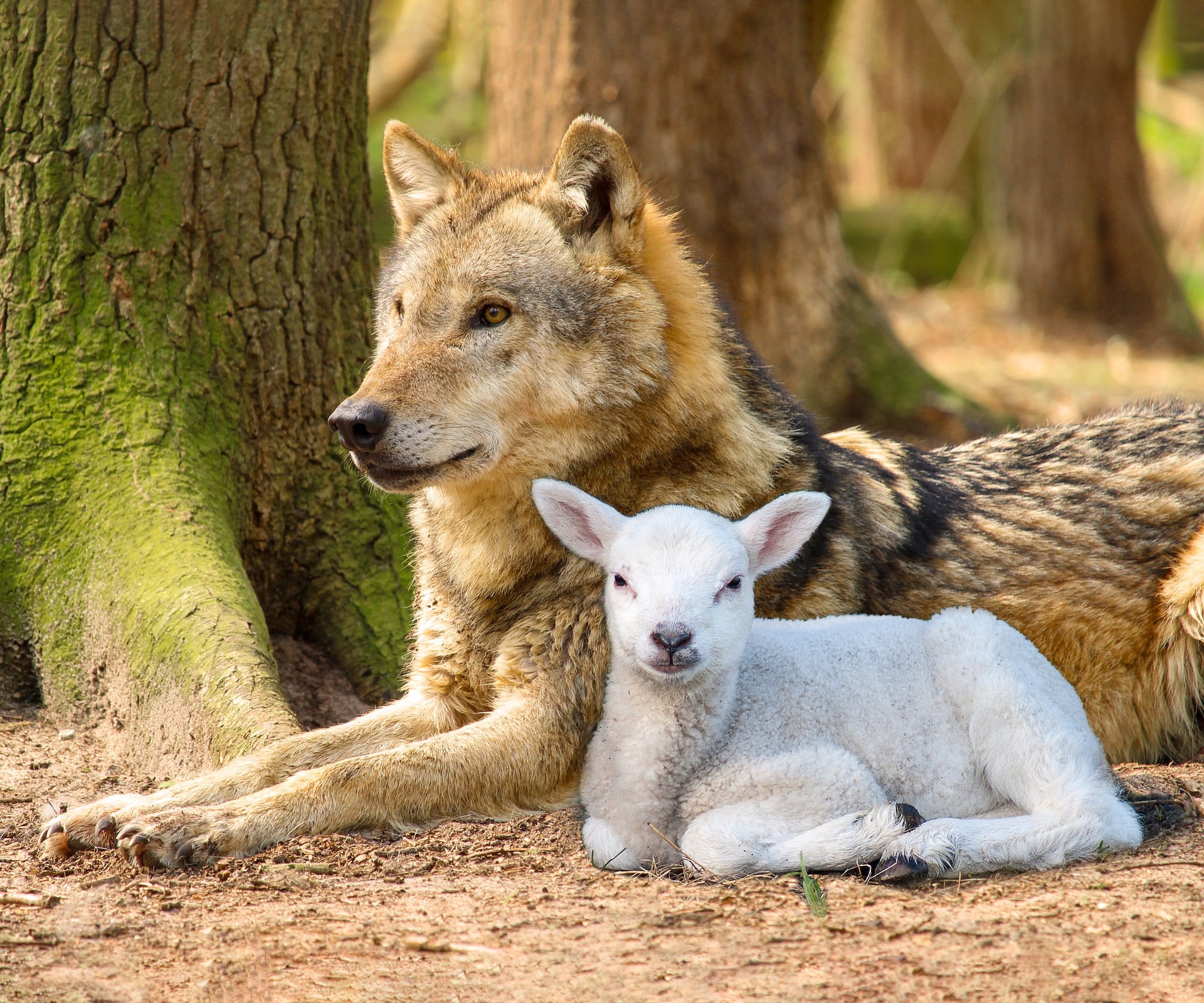
But what does Isaiah 65:25 mean by the wolf eating with the lamb? Because wolves and lambs are predators and prey, people assume it must refer to the millennial kingdom. Otherwise, the wolves would be the ones devouring the lambs. So, we can’t discuss anything current. Nonetheless, they fail to remember that there once existed a time when wolves and lambs ate together. They did so on the ark that God instructed Noah to build. The ark served as God’s refuge during His wrath.
Today, the church serves as that refuge. Even when wolves are nearby, lambs will still be able to eat within that place of safety. Some people believe God’s providence protects His children, so they have no fear despite living in a wolf-infested world. Others argue that because God changes the obedient’s nature through the Gospel, the wolves and lambs can eat together within the church because their personalities have changed. They are brand-new creatures (2 Corinthians 5.17). All of these interpretations are correct, but there is an intriguing corollary.
Who was the primary apostle to the Gentiles? Peter’s sermon converted the first Gentiles (Acts 10.34ff), but the Lord chose to send Paul to the Gentiles (Acts 26.17). Jesus tore down the dividing wall between Jew and Gentile (Ephesians 2.13-15), allowing those like Paul to welcome the Gentiles into Zion (cf. Isaiah 62.1-3). However, what do we know about Paul’s history? Paul belonged to the Benjamite tribe.
God allowed Israel to prophesy his sons’ futures as he lay dying (Genesis 49.1-27). According to Jacob, “Benjamin is a ravenous wolf; In the morning he devours the prey, And in the evening he divides the spoil” (Genesis 49.27 NASB1995). Paul was thus a ravenous wolf whose conversion caused him to eat with the lambs (Acts 20.7). No longer a church persecutor content to put Christians to death for their crime of faith in Jesus, Paul became Christ’s ambassador to increase the flock of Christ.
A true example of the wolf eating with the lamb is found only in God’s kingdom, the church.

 The Preacher Pollard Blog