“Choose Life”

“As the horizon remains constant, the journey each day requires careful judgment. We encounter intersections where responsibilities intersect, understanding is limited, or insight must develop…”

Brent Pollard

“I have set before you life and death, the blessing and the curse. So choose life…” (Deuteronomy 30.19 NASB95)

From Moses’ farewell on the plains of Moab to the final verses of the New Testament, Scripture conveys a single message: God offers each generation a clear, dual choice—life in communion with Him or death in estrangement from Him. Joshua pressed the same call: “Choose for yourselves today whom you will serve… But as for me and my house, we will serve the Lord” (Joshua 24.15 NASB95). Jesus contrasts the narrow path that leads to life with the broad road that leads to destruction (Matthew 7.13-14), proclaiming, “I came that they may have life, and have it abundantly” (John 10.10 NASB95). Paul further distills it: “For the wages of sin is death, but the free gift of God is eternal life in Christ Jesus our Lord” (Romans 6.23 NASB). John adds his testimony: “He who has the Son has the life; he who does not have the Son of God does not have the life” (1 John 5.12 NASB95). The distinction remains clear throughout the ages, and the options persist without alteration.

Yet, in this sacred context, “life” signifies a profound spiritual connection rather than a comfort guarantee. The essence of eternal life is captured in the intimate knowledge of the Father and the Son, as articulated in John 17:3. It is expressed beautifully in the words, “In Your presence is fullness of joy; In Your right hand there are pleasures forever,” from Psalm 16.11 (NASB95). He warns that tribulation will accompany discipleship (John 16.33). The apostles discovered the secret of contentment in both abundance and scarcity, as their strength was rooted in Christ rather than their situations (Philippians 4.12–13)—a life “hidden with Christ in God” (Colossians 3.3 NASB95). All the while, God “has blessed us with every spiritual blessing in the heavenly places in Christ” (Ephesians 1.3)—riches that suffering cannot erode.

As the horizon remains constant, the journey each day requires careful judgment. We encounter intersections where responsibilities intersect, understanding is limited, or insight must develop (Luke 13.10‑17; Acts 16.6‑10; Proverbs 26.4‑5). The sacred writings, the profound love for God and our fellow man, the wisdom bestowed by the Spirit, and the guidance of the body of Christ illuminate our path and direct our course (2 Timothy 3.16-17; Matthew 22.37-40; James 1.5; Proverbs 11:14). “Your word is a lamp to my feet and a light to my path” (Psalm 119.105 NASB95), guiding us step by step. These guardrails protect us from the hard-edged legalism that once blighted the Pharisees and the quicksand of relativism (Mark 9.40; Matthew 23.23).

The Bible’s message is clear and comprehensive: There are two ultimate paths before us, and to follow the path of life, we must embrace a humble heart and the Spirit. Embracing life is not merely a single decision to mark off a list; it is an exquisite act of faithful trust—at times distinct, uncertain, yet always illuminated by the unwavering truth of God’s Word. “He has told you, O man, what is good; and what does the Lord require of you but to do justice, to love kindness, and to walk humbly with your God?” (Micah 6.8 NASB95). With each new dawn comes a gentle reminder—His mercies are “new every morning” (Lamentations 3.22-23)—to take another step toward the God who has already reached out to you. Trust that the One who presents the choice also walks alongside you on this journey.

What Does It Mean To Be “First Fruits”?

Brent Pollard

“In the exercise of His will He brought us forth by the word of truth, so that we would be a kind of first fruits among His creatures” James 1.18 NASB 1995).

In James 1.18, we learn about our identity as believers and what it means to be a new creation in Christ.

James, the brother of Jesus, reminds us in James 1.18 that God’s will enables us to be reborn as new creations through the word of truth. This rebirth sets us apart as “first fruits of His creatures,” which starkly contrasts humanity’s natural inclination towards sin (James 1.13-15). We cannot save ourselves on our own, but through the transformative power of the Lord and His word (Romans 1.16), we can experience real change.

In biblical times, people offered God the first harvested crops, called “first fruits.” By drawing from this example, spiritually, being “first fruits” means dedicating ourselves to God and His purposes. It is more than just a title; it comes with a great responsibility to live our lives in a way worthy of our calling. James, in his letter, explains what this responsibility entails.

For those sanctified:

  • Control Your Anger (1.19): It is crucial to control oneself and refrain from giving in to anger, as it does not lead to righteousness, which God desires. Often, anger stems from impulsive speech and not paying attention to what others are saying. James 1.26 warns us that an uncontrolled tongue signifies a lack of genuine faith.
  • Reject Sin (1.21): We should strive to eliminate all impurity and widespread evil. As sin opposes us to God (4.4), those sanctified by God willingly accept and adopt His teachings, allowing them to fill the void left by sin. God’s word has a deep and dynamic connection with us. He expects us to actively apply His word rather than passively hear it (1.22-25). Our actions genuinely reflect our faith (2.14-26).
  • Show Impartial Love (1.27-2.9): We must protect and support the vulnerable, including widows and orphans, and show equal love for all, reflecting God’s love for humanity (2.8).

God has allowed us to be reborn through His Son’s grace. His will is evident, as He wants us sanctified (1.18). As we realize our identity as the first fruits, let us contemplate how this change affects our everyday choices and relationships. We must try to become the first fruits that truly please Him in every aspect of our lives.

“All Things Are Possible To Those Who Believe”

Carl Pollard

There’s a good chance you’ve probably heard this phrase before. While the sentiment is understandable, is this true? 

I believe a better way we could say this is, “All things are possible for God.” Whether we believe it or not, for God all things are possible! What I mean is that God blesses and uses those who will faithfully trust him, but our belief isn’t what makes things possible. It’s the One we choose to believe in who does that. I believe that Georgia is going to be the number one team this year, but not everyone will agree with me. 

So according to the phrase, “all things are possible to those who believe” whoever believes the most is the team that’s going to win…sadly that’s not how it works. All things are possible for God, but it doesn’t depend on our belief. 

This is one of those phrases that can ruin someone’s faith. If they believe and the desired outcome doesn’t happen, does that mean God doesn’t care? This is exactly what faith healers say. If someone isn’t healed, what is their response? “They didn’t have enough faith.” This isn’t what scripture tells us. 

This phrase comes from a wrong interpretation of Mark 10:27. Beginning in verse 24, it says:

“And the disciples were amazed at his words. But Jesus said to them again, “Children, how difficult it is to enter the kingdom of God! It is easier for a camel to go through the eye of a needle than for a rich person to enter the kingdom of God.” And they were exceedingly astonished, and said to him, “Then who can be saved?” Jesus looked at them and said, “With man it is impossible, but not with God. For all things are possible with God.””

For us to understand what Jesus is talking about we have to look at context. He’s not talking about a football game, or taking a test, He’s talking about entering the kingdom of God! Without God it would be impossible for us to enter Heaven and to have eternal life, but with God, all things (pertaining to our walk with Him and our journey to heaven) are possible. 

Thankfully we have a caring Father that wants nothing more than for us to succeed in our walk with Him. All things are possible WITH God. We should never forget what we can accomplish when He is in our life. But our greatest accomplishment is eternal life in the Kingdom of God.

Recognizing Who We Are

Carl Pollard

As Christians it can be easy to lose sight of what our purpose is now that we have been justified through Christ. We are offerings to God. Romans 11:36 says, “from God and through God everything exists.” Now present your bodies a living sacrifice to THAT God. So that your life is acceptable to THAT God. Renew your mind so that you will prove what the will of God is. 

You know when you buy toys for your kids or grandkids often times on the package in fine print are these words, “Batteries not included.” Do you know what that means? It means that you get the toy, but the power to make it work is not included. That is not the kind of gift that God gives. God’s gift of holiness includes the power of the fullness of the Holy Spirit – the power to make it work.

We are different from the rest of the world (Rom. 12:2). I am not an offering to me. 

A sacrifice is “an act of giving up something valued for the sake of something else regarded as more important or worthy.” What is worthy of your sacrifice? What is worth the sacrifice of your life? For way too many in the world it’s not God and I’m convinced it’s because they just don’t understand who HE is. 

Will I sacrifice my life to my job? My spouse? Family? Who is it that is worthy of my soul? If any of those things pull you away from the One that holds your breath and life in your hand and determines your eternal destination, you’ve made a costly and foolish mistake. A truly faithful christian is one that lives as an offering to God. 

God offers us something that nothing in this world can, He offers transformation that prepares us to be in His presence. God knows what we need and He has offered it. 

I found some advice for those of you that are married, what not to buy your wife…Don’t buy clothing that involves sizes. The chances are one in seven thousand that you will get her size right, and your wife will be offended the other 6999 times. Avoid all things useful. No mops, brooms, Clorox wipes, etc. 

Don’t buy jewelry. The jewelry your wife wants, you can’t afford. And the jewelry you can afford, she doesn’t want. Finally, don’t spend too much. “How do you think we’re going to afford that?” she’ll ask. But don’t spend too little. She won’t say anything, but she’ll think, “Is that all I’m worth?”

Unlike shopping for your wife, God knows exactly what we need. He knows our struggles. He knows our battle with sin, so He offered salvation. So will we recognize who we are and what God has done to make us who we are today? 

Reflections On Worship, From A-Z

Neal Pollard

How great to say with David, “I was glad when they said to me, “Let us go to the house of the Lord” (Psalm 122:1).  Another psalm also urges, “Come, let us worship and bow down, Let us kneel before the Lord our Maker” (95:6).  Both verses are the attitude of a redeemed, transformed heart.  Worship is not a substitute for daily living, and we may find ourselves primarily or solely focused on assembling to the neglect of Christian duty or evangelism. But, though those be true, we cannot lose sight of the importance of fulfilling God’s command for His people to faithfully worship Him (John 4:24; Heb. 10:24ff).  More than that, as recipients of His grace, we will want to come before Him with what He wants, giving Him our best from an enthusiastic heart. What can help us do that?

A–TTENDANCE (It puts us in the right position–for ourselves, each other, and God)
B–
RETHREN (There’s a community, communion, and camaraderie in worship)
C–
HILDREN (Is there anything sweeter than seeing and hearing them worship?)
D–
ELIVERANCE (Delivered for a few moments from the profane, delivered for a lifetime by the Prince of Peace)
E–
FFORT (Hardwork, dedication, and preparation truly pay off!)
F–
AITHFULNESS (Obedience, consistency, and holiness fuels acceptable worship)
G–
OSPEL (Bible-centered worship highlights the best news of all time)
H–
EAVEN (Worship better prepares us for it, reminds us of it, and gives us a foretaste of it)
I–
NTEREST (See “attendance” and “faithfulness”; At some level, you can’t fake this)
J–
ESUS (We lift Him up, obey Him, and center everything around Him in every service)
K–
NOWLEDGE (We seek to know God more and understand Him better, in part, by worship)
L–
ISTENING (To God, through His Word, and each other, through the various acts)
M–
EMORIES (Young or old, each occasion provides an opportunity to make more of them)
N–
OTHING (What’s more special, important, fulfilling, and encouraging)
O–
PPORTUNITY (Different places and times have been forbidden from what we get to do multiple times per week)
P–
ARTICIPATION (Not just in the door and in a seat, but actively taking part)
Q–
UALITY (Not measured by voice quality or dynamic speech, but the very best we can with what we bring)
R–
ESPONSE (Each time we assemble to worship, we are responding to God and His gospel)
S–
ACRIFICE (You cannot properly define worship without it; It may be a sacrifice to come, but it must be an offering when you do)
T–
OGETHERNESS (Worship means fellowship and building our common bond)
U–
RGENCY (Feeling a pressing need to be here, and then to act on what we hear)
V–
ISITORS (These take note of how much worship means to us; They can see and sense it)
W–
ONDERFUL (God knew we needed worship, and that can touch us deeply)
X–RAY (Worship should lay our hearts bare and show us ourselves)
Y–OU (The presence of everyone, including you, spells the difference!)
Z–EAL (Passion and enthusiasm is observable, by others and, most of all, by God!)

Maybe we cannot fully grasp all of why God wants us worshipping Him, but He, as our Creator, knew we would need it to draw us closer to Him and each other. Let’s never let anything occupy a higher place in our hearts!

537893_378947542128289_990183257_n


But, They Were Certain!

Neal Pollard

Have you ever been absolutely sure about something, only to find out you were wrong? Maybe, it was the name of the band that sang your favorite song or the name of the third baseman on your favorite team when you were in elementary school. Sometimes, the stakes are higher and being wrong more costly than that.

Erik Larson’s book, Isaac’s Storm: A Man, A Time, and the Deadliest Hurricane in History, is about a man and an entire bureau’s certainty that cost probably 6,000 their lives. And because they were so certain that a hurricane could not strike Galveston, Texas, a lot of people made fatal choices based on their own certainty—they were certain of houses that would stand, trains and tracks that would get them to their destinations, and that the slope of the coast would deter tidal waves and storm surges. Yet, in September, 1900, on Saturday and Sunday, probably the worst hurricane in modern history struck the exposed, helpless booming Texas city.

Some have been so certain about spiritual matters, but were wrong. They have been certain about what to bring God to worship (Gen. 4:2-3), about how to be saved from death (2 Kings 5:11-12), and about how to carry out God’s command (1 Sam. 15:13ff).

In the Sermon on the Mount, Jesus speaks of some who seemed certain, but were certainly wrong. Depicting the Judgment scene, Jesus preaches, “Not everyone who says to Me, ‘Lord, Lord,’ will enter the kingdom of heaven, but he who does the will of My Father who is in heaven will enter. Many will say to Me on that day, ‘Lord, Lord, did we not prophesy in Your name, and in Your name cast out demons, and in Your name perform many miracles?’ And then I will declare to them, ‘I never knew you; depart from Me, you who practice lawlessness’” (Mat. 7:21-23). These folks will have done religious acts in Jesus’ name. They will haven been certain they were on the right path, but Jesus says they will have been mistaken. They will not have done the will of the Father.

How many people will this ultimately describe? They have confidence in a preacher, a teaching, a tradition, a feeling, or a belief. Sadly, they have not even questioned whether or not it might not be what the Bible says on the matter. Jesus ends His sermon by talking about storms. This storm is more powerful than the one Larson writes about. It determines destiny (Mat. 7:24-27). We must base our certainty on the Rock!

ursuline_academy_galveston
Ursuline Academy in Galveston, Texas, before the hurricane.

Doing It Our Way Instead Of God’s Way

Neal Pollard

I have pondered lately about why there is such a growing tendency to overlook the plainly revealed will and mind of God in favor of what either lacks authority or violates His Word. It would be impossible to be exhaustive, lacking the ability to read the mind, judge the motives, and know the heart. However, in a general way, here are a few observations.

  • Feelings have taken priority over reason. Personal preference and one’s inner voice becomes the guiding star for one’s behavior and concepts, and truth gets dethroned. Hearts are hardened against revealed truth and decisions are made based on personal sentiment. In an attempt to avoid hurting feelings, escape ostracism, preserve an image with the world, and have its good will, individuals become their own judges, juries, and pardoners.
  • We have witnessed people of influence “get away with it.” For years, our national heroes and leaders, athletes, politicians, and celebrities, have “gotten away with it” (see both presidential candidates). If society’s elite and influential can do wrong and get away with it, why shouldn’t everyone else?
  • God does not practice instant retribution in the Christian Age. God does not execute immediate punishment upon the wicked or wrongdoer today. “He has fixed a day in which He will judge the world in righteousness…” (Acts 17:31). The fact that some do not get “caught” in sin in this life does not mean God won’t exact justice upon the impenitent ultimately, but because He does not immediately execute sentence against an evil work we can conclude He will not at all (cf. Ecc. 8:11).
  • Man has developed an insatiable hunger for instant gratification. Pleasure and passion, for many, have become stronger determining influences than eternity and judgment. When the flesh is in control, spiritual things are crowded out of the mind. Jesus says that one can only submit to one master, never two (Mat. 6:24). Flesh and spirit are warring parties (Rom. 8:4-8). Gratifying the flesh can kill concern over the consequence of misdeeds.

We cannot do it alone, without God. The fact is, we must totally surrender to Him. His guidance must be embraced. His will must rule. His strength must be accepted. Truly making Him Lord means making His Word the governing influence of our hearts and lives. Such a humble, honest, and heartfelt submission will help us defeat a mindset set on minding our thoughts and ways over His (see Isa. 55:8-9).

Grandpas' Bibles
My grandpas’ Bibles (Mom’s Dad’s on the left, Dad’s Dad’s on the right). 


Do We Need Permission?

Neal Pollard

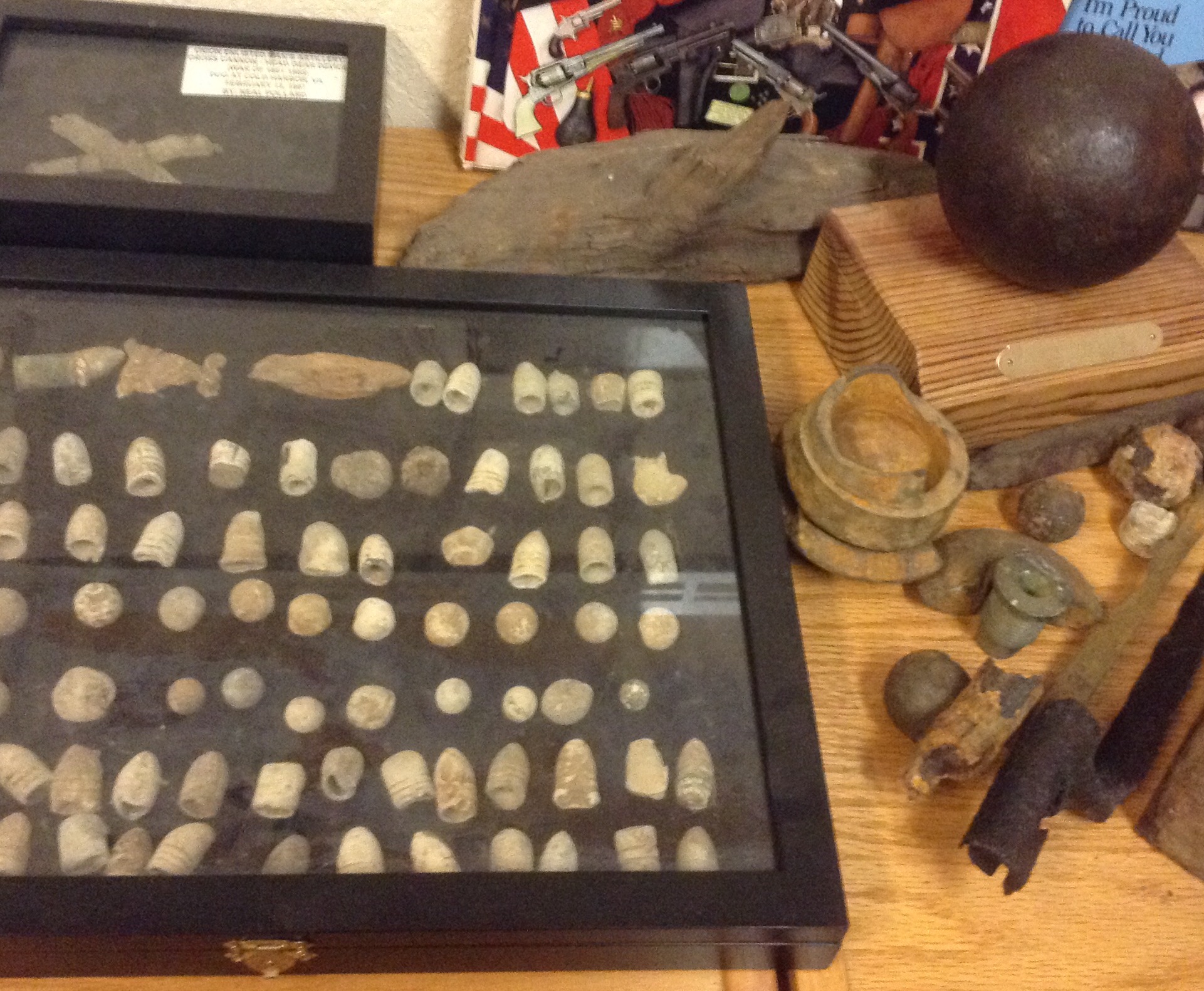
For several years while in Virginia, I enjoyed going out with a couple of dear Christian brothers to hunt for Civil War relics.  Of course, hunting on federal property was a serious crime and was unthinkable. However, so many of the personal properties owned by residents in the Richmond area were treasure troves of those artifacts. Their woods and fields held bullets, shells, buckles, buttons, and the like. Dave Young, Jr., always followed the same procedure before our hunts. He would go see the homeowners where we wanted to hunt, people he had known, built friendships and done business with for years. If we got their permission—sometimes the thoughtless or unethical practices of other hunters made them inclined to refuse us—then we would go on their property and hunt for relics. It was their land and their right to permit or deny. If we had ever chosen to hunt one of those places without permission and got caught, it would have been a silly argument to say, “They did not tell us we couldn’t hunt here.”

This example is crude and imperfect, but I think it illustrates a principle most can understand. It is not natural to construe someone’s silence as permission. Yet, when it comes to matters of faith and practice in religion, we attempt that very approach.

When it comes to how we live and serve in this life, we have to have God’s approval for whatever we do (Col. 3:17). When He tells us what His will is on any matter, our response to that should be thoughtful, careful, and submissive.  To be otherwise would be thoughtless, careless, and rebellious—with God’s stated desires.  To think that God would give us physical life, generous physical blessings, incredible spiritual blessings, spiritual life, and powerful promises on a continuous basis and we could ever be callous or cavalier about what He wants reveals an unfathomable audacity. Frank Chesser once depicted such an attitude this way, saying, “It has no respect for either the sound or the silence of God’s voice. It only does what the Bible says in a given area because it happens to agree with the Bible on that point. At the first sign of conflict, it will have its own way ever time” (The Spirit of Liberalism 18).

Church music in worship often gets isolated from the larger principle.  How we worship God in song, whether with or without mechanical instruments, is just one specific of a much broader principle. God has told us what He wants for church music (Eph. 5:19; Col. 3:16). Whatever we do must meet His expressed will. Projecting songs, using songbooks or shape notes, having a song leader, or singing in parts or four-part harmony still falls within the category of His command that we sing. But this same principle covers everything we do in worship as well as the specific commands He has for us regarding our work as a church, our response to His grace in order to have His salvation, and the like.

Our culture teaches us to ask, “Why can’t I?” It encourages us to say, “You didn’t say I couldn’t.” But, “the whole world lies in the power of the evil one” (1 John 5:19). The humble spirit of a grateful, grace-receiving child of God, when viewing the will of God, should always be, “Do I have permission for that?”  Such is neither cowering fear or abject slavery.  It is adoration and reverence for a Lord who gave everything that we “may know Him and the power of His resurrection and the fellowship of His sufferings, being conformed to His death” (Phil. 3:10).

FullSizeRender 2
Some of my relics from back in the day

From Disinherited To Inheritors

Neal Pollard
When Greek politician Andreas Papandreou died in 1996, he left his entire hefty estate to his third wife, Dimitria Liani. His three sons and a daughter, who had married a politician who was Papandreou’s political enemy, were disinherited when she and her siblings’ refused to ostracize this enemy. It was contested in Greek court for years, but so far that will has apparently not been overturned. Certainly, money can bring out the best and worst in people. The children’s point of view is almost certainly that they, as blood relatives, have as much or more right to their father’s inheritance than a woman he married in the last decade of his life (information via Ray Moseley, Chicago Tribune, 9/29/96).


In the New Testament, sin is legitimate grounds for the Heavenly Father to disinherit us. Paul tells the Corinthians this in 1 Corinthians 6:9-11. But his message is one of good news. With God, it is possible to go from disinherited to inheritors. He tells them, “Do you not know that the unrighteous will not inherit the kingdom of God? Do not be deceived. Neither fornicators, nor idolaters, nor adulterers, nor homosexuals, nor sodomites, nor thieves, nor covetous, nor drunkards, nor revilers, nor extortioners will inherit the kingdom of God. And such were some of you. But you were washed, but you were sanctified, but you were justified in the name of the Lord Jesus and by the Spirit of our God.” This passage reveals several important truths.
First, there is a pertinent fact. “The unrighteous will not inherit the kingdom of God.” He repeats the thought in verse 10. That phrase indicates missing heaven and all the reward of it (cf. Mat. 25:34).
Second, there is a potential fraud. “Do not be deceived.” How vital that message is for our current culture! There is so much deception about the consequences of sin that it is impossible to keep up with, document, or catalog it.
Third, there are the particulars framed. Notice the sinful individuals enumerated—”fornicators…idolators…adulterers…homosexuals…sodomites…thieves..covetous…drunkards…revilers…extortioners.” Each of those lifestyles and behaviors merit greater study, but these are the ones who are disinherited by the Father. It is His estate and, as such, His call to make.
Then, there is a past forgotten. Human beings can carry vendettas and grudges to their graves, but the living God is not prone to such weakness. He does require repentance, implicit in the phrase “such were some of you.” Because they changed, God put the guilt of their sins in the rear-view mirror.
Finally, there is a purification forged. Paul concludes, “But you were washed…sanctified…justified in the name of the Lord Jesus and by the Spirit of our God.” God does not just leave us to wallow in our sins. He provides a way of escape. If we take it, He will make those past sins as if they never existed!
In other words, we can go from disinherited to inheritors!