Latest News: Noah’s Ark

While skeptics might claim that the formation is made up of natural limonite, counter evidence such as the uncanny alignment/shape, subsurface architecture, ancient marine traces, and organic soil signatures prove to be an ensemble unlikely to occur by chance. Yes, I was looking for an excuse to use the word “ensemble.”

Dale Pollard

LATEST NEWS: NOAH’S ARK 

Shrouded in snow and a little suspicion, the Durupınar Formation is a mysterious boat-shaped mound just over 18 miles south of Mount Ararat, is at the center of a groundbreaking (ha!) discovery.

CAPTURING THE PAST 

Soil samples collected after 2021 by a collaborative team from Istanbul Technical University, Ağrı İbrahim Çeçen University, and Andrews University put its dramatic past on display. These samples contain clay-like sediments, marine deposits, and mollusk shells, dating between 3,500–5,000 years ago—coinciding with the biblical “Great Flood” era. Some coincidental findings, if you believe in coincidences. 

MULTIPLE DECKS 

At approximately 538 feet long, the formation mirrors the ark dimensions (300 × 50 × 30 cubits). However, the real juicy discoveries lie beneath the surface: re‑analyzed 2019 ground‑penetrating radar (GPR) scans reveal angular structures, central corridors stretching 234 ft, and a tunnel measured at 13 ft—features that align uncannily with the arks multi‑deck design (Gen. 6.16). 

WE FOUND SOME WOOD 

Inside the formation, the vegetation tells its own story—grasses grow with altered color and vigor, tied to elevated organic matter, higher potassium levels, and lower pH readings. These soil anomalies suggest the decay of ancient wood remnants. The author is no scientist, but old wood sounds good. 

The project, led by Andrew Jones and William Crabtree of Noah’s Ark Scans, aims for a carefully controlled excavation—delayed until non‑invasive scans, thorough soil mapping, and site preservation methods are fully in place. When? Who knows! 

SKEPTICS & EVIDENCE 

While skeptics might claim that the formation is made up of natural limonite, counter evidence such as the uncanny alignment/shape, subsurface architecture, ancient marine traces, and organic soil signatures prove to be an ensemble unlikely to occur by chance. Yes, I was looking for an excuse to use the word “ensemble.” 

What Comes Next? 

• Continued GPR and radar surveys,

• Core drilling for deeper context,

• Last but not least, a permitted excavation under strict guidelines.

Noah’s Ark And Nisroch

Dale Pollard

The Bible doesn’t say that Noah’s ark landed on Mount Ararat in Turkey, it states that the ark came to rest on the “mountains1 of Ararat” (Gen. 8.4). Ararat is a region which is nearly in the middle of Armenia, between the Araxes and the lakes Van and Urumiah (2 Ki. 19:37; Isa. 37:38) and it’s  called by the Armenians Araratis even today.Some sources say that the ark is somewhere in the surrounding region, like The Book of Jubilees, which makes the claim that the landing location is on Mount Lubar.The very best guesses can be narrowed down by investigating the reliability of the original sources since there are many other mountains that are said to be the resting place of one of the most fascinating mysteries; lost to time or buried by nature. 

There’s a bizarre and interesting link that’s allegedly connected to one of the most famous Assyrian kings mentioned in the Bible. The loud and proud Sennacherib successfully campaigned against seven cities on Nipur, today known as Mt. Judi, on a rampage before his attack on Jerusalem. To commemorate the victories he raised nine stone panels near the top of the mountain and one located at its base. The inscriptions on the stone panels reveal the ego of Sennacherib as he describes himself as “the great king, the mighty king, king of the universe, king of Assyria, and the exalted prince!” He goes on to describe himself as an ibex, spurring on the charge up the mountain, through gullies and mountain torrents and reaching the highest summits. The impression one gets from his inscriptions is that he ventured all over the mountain to destroy those seven cities. The inscription happens to be eerily similar to what God said about him through the prophet, Isaiah (Isa. 37.23-25). Friedrich Bender visited Mt. Judi in 1954 and obtained wood samples from an object that some believe to be Noah’s Ark below the summit.4 This location also happens to be near some of the inscriptions that were left by Sennacherib’s masons. 

The Bible’s account of the Assyrian King’s death is brief but says, 

“And that night the angel of the LORD went out and struck down 185,000 in the camp of the Assyrians. And when people arose early in the morning, behold, these were all dead bodies.

Then Sennacherib, king of Assyria went to his home and lived at Nineveh. 

And as he was worshiping in the house of Nisroch his god, Adrammelech and Sharezer, his sons, struck him down with the sword and escaped into the land of Ararat. And Esarhaddon his son reigned in his place” (2 Kings 19.35-37). 

The Babylonian Talmud commentator expounds on this by stating,5

“Sennacherib went and found a beam from Noah’s ark, from which he fashioned a god. He said: This beam is the great god who delivered Noah from the flood. He said: If that man, referring to himself, goes and succeeds, he will sacrifice his two sons before you. His sons heard his commitment and killed him…this interpretation is based upon the etymological similarity between neser, the Hebrew term for beam, and Nisroch, the god that Sennacherib fashioned from a beam.”

The leading theory and argument against this claim that Nisroch is an idol carved from a beam stolen from the ark is worth noting as it might be due to a simple scribal error. The short version of the argument states that some of the Hebrew letters that make up both Nimrod and Nisroch look similar to one another, so a mistake could have been made. Outside of a possible mention in the Bible, an Assyrian god that goes by Nisroch doesn’t show up in any Assyrian texts. However, if the word Nimrod were the true intentions of the biblical scribes, that doesn’t make the passage any less interesting. 

————————————————————————————————-

1Ararat a region and not a mountain. Schroeder, Thes. Ling. Arm. p. 55. 

2Araratis, “the curse reversed: precipitation of curse”

3CF. Jubilees VIII.21 

4Bender’s samples are far from conclusive and even challenged by other creationist. 

5Babylonian Talmud: Tractate Sanhedrin, folio 96a. Sennacherib inscribed his own image and an account of his ascent on the side of Mount Cudi (Judi). 

Sennacherib’s death is the first time that the Bible mentions “Ararat” again since the account of Noah. 

Bible Land Tours (Mediterranean)(IX)

Neal Pollard

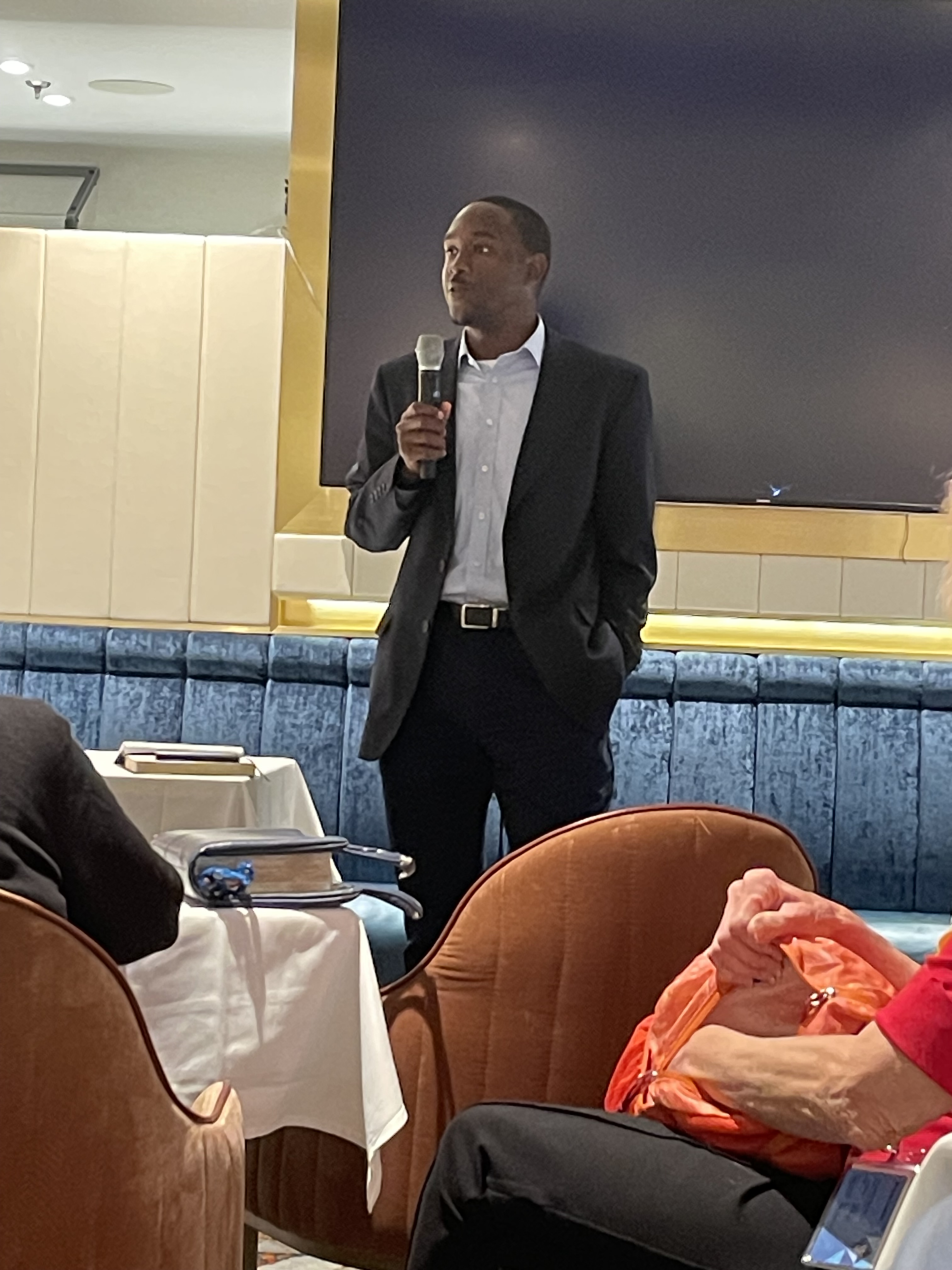
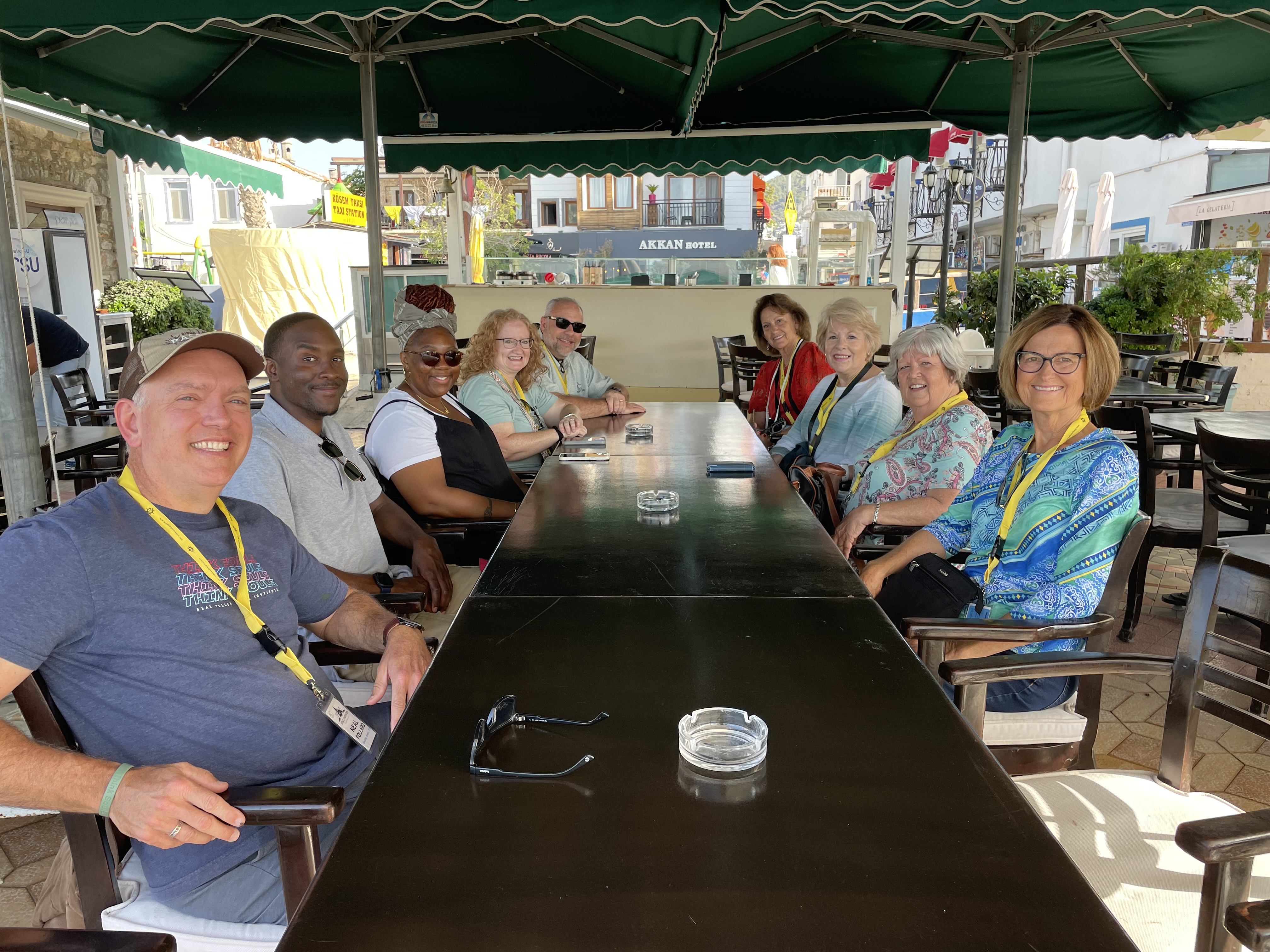
Today was a special day, not just because it was our last day in Turkey or an exciting holiday for the Turkish people that included being buzzed by fighter jets. It was special because of both God’s people and the privilege of worshipping God in such a meaningful way. We met for worship this morning in a large conference room. We had about 10-12 guests from the ship in addition to our Bible Passages group of 56. Among the several who led us in worship were Lehman’s Clint Raymer, Andrew Gott, and Hiram Kemp. Hiram’s sermon was an excellent look at 1 Peter 3:10-12, written to churches all around the very area that is the country of Turkey today (cf. 1 Pet. 1:1).

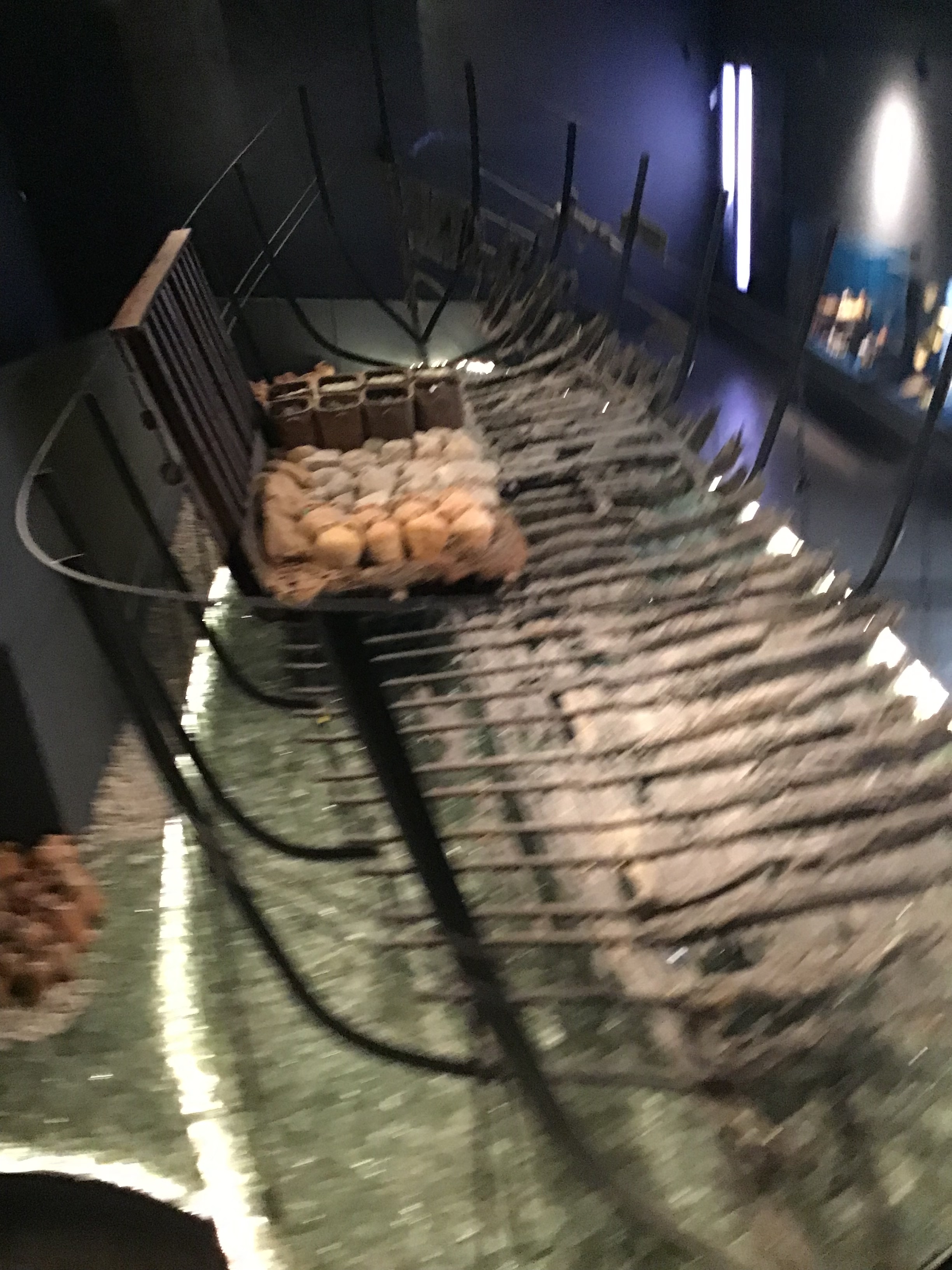
Afterward, many of our Lehman members spent several hours walking around Bodrum, seeing an archaeological museum devoted to underwater wreckage recovery. The finds went back to the 14th Century B.C. and included a ship from almost 1500 years ago that was retrieved and placed on display. It was yet another opportunity to experience the history of the areas we’re traveling in. We also were able to spend some time looking in the markets.

It was wonderful to fellowship with God’s people from all around the country and wonderful to fellowship with the brothers and sisters we spend so much time with. To do so in what was Asia Minor is a visual illustration of how we must continue to build God’s family for the generations to come. Tomorrow is another day in which we will be where the Bible records Paul’s steps. It will be exciting to continue that odyssey!

Perseverance And Faith:

Understanding Revelation’s Message for Then and Now

Brent Pollard

John wrote the Book of Revelation when the Roman Empire persecuted Christian communities. Emperor Domitian had exiled John to the island of Patmos. So, while in exile during Domitian’s reign, John wrote to encourage other persecuted Christians. Given the focus of the first three chapters on seven specific churches in Asia Minor (i.e., Turkey), as well as the emphasis on this being an urgent message (1.3; 22.10), we can conclude that the original audience of John’s apocalypse was these seven churches located in the heart of the imperial cult.

The imperial cult’s prominence in Asia Minor created significant tensions for Christians in Ephesus and Smyrna, two of the seven cities to which Jesus sent His message. Polycarp, a disciple of John, was martyred in 155 AD in his hometown of Smyrna. Domitian (81–96 AD) declared himself to be a god, adopting the title “Dominus et Deus” (Lord and God). Loyal Romans believed participating in cultic rites was a way to pledge allegiance to the emperor and Rome. We can quickly see how this caused problems for the burgeoning Christian community, which only referred to Jesus as their Lord and God.

The Christian community suffered socioeconomic consequences as a result of this refusal. Evidence shows that participation in the Imperial Cult was a prerequisite for engaging in certain types of business or trade in some parts and times of the Roman Empire. Members of trade guilds, which governed various kinds of commerce and industry, for example, might be expected to participate in the Imperial Cult as part of their membership.

Christians who refused to worship the emperor would have been economically marginalized. It’s no surprise that John compares imperial cult submission to having the “mark of the beast” (Revelation 13.16–18). The gematria system reveals the meaning of the number “666” to be “Nero Caeser.” As such, the beast was Rome, with Nero as the first prominent persecutor of Christians, responsible for the deaths of Peter and Paul, among others.

The calls for faithfulness and warnings against compromise in Jesus’ direct messages to the seven churches would have resonated in the context of the temptation to assimilate and abandon spiritual beliefs for worldly acceptance or prosperity. While the specific nature of persecution differed across time and emperors, the struggles referenced in Revelation reflect a consistent tension between the emergence of Christianity and the Roman imperial system.

Symbols like Babylon the Prostitute and the Beast represent the decadence and oppression of Rome, especially under despotic rulers who declared themselves gods and demanded worship. Revelation transitions from tribulation under oppressive powers to expressing hope in God’s ultimate triumph over evil. This message of persevering faith leading to redemption would have encouraged early Christian communities to face real-world hardships and persecution.

While modern forms of oppression differ, Revelation reminds believers that staying true to one’s values in adversity is critical. Its themes demonstrate that faith and integrity will triumph over darkness. Deliverance comes through steadfast devotion. And, in a world of growing groupthink and social credit systems, Christians in the twenty-first century may need this message of perseverance even in the face of socioeconomic isolation and persecution as a reminder not to bow the knee to anyone but Christ. 

Revelation, with its intricate tapestry of symbols, warnings, and prophecies, is a testament to the enduring human spirit in the face of overwhelming oppression. Its timeless message transcends its ancient origins, providing comfort and guidance to generations. As believers faced the might of the Roman Empire in the past, today’s challenges, while different, are no less demanding. Revelation reminds us that faith can move mountains in any age and that the light of truth, no matter how dimmed by adversity, will always find its way.

Encouragement For An Introverted Convict

Gary Pollard

A little less than 2,000 years ago, a man named Timothy moved to a beautiful coastal town in what is now Selçuk, Turkey. His mom and grandma were Jewish and his dad was Greek. When he was possibly about 45 years old, he moved to Ephesus to work with a newly formed group of Christians. Before this, he traveled with Paul all over the Roman empire telling people about Jesus and how he came back to life. 

By Jewish standards for a teacher, Timothy was a young man. He may have been naturally introverted and had difficulty with confrontation (I Cor 16.10, II Tim 1.7-8). Besides this, he had a criminal record in the Roman empire. He was arrested at least once for teaching about Jesus (Heb 13.23), possibly while he was working with the church in Ephesus. 

He had a very tough job— Ephesus was dealing with bad influences (like Judaism and Gnostic groups) and Timothy had to stop them. This was obviously very difficult for him. Paul wrote I Timothy as a pilot’s checklist of what God wanted for his family. It was also a gentle push for Timothy to keep those bad influences out of the church. This wasn’t enough of a push, though, because II Timothy is far more direct and has a distinct air of reprimand. 

Despite his weaknesses, Timothy was an awesome person and a very hard worker. Next week we’ll start our study of I Timothy 1. 

Ancient, But Temporary

Neal Pollard

The oldest buildings in the world are found in Turkey, France, Italy, Scotland, Malta, England, Ireland, and Iran. All of them date back to at least 3,000 B.C.  They include tombs, temples, settlements, houses, sanctuaries, and plazas. They are historical treasures, revealing the earliest dental procedures, burial habits, religious ceremonies of pagans, societies and more. Some are remarkably preserved for their age, and many are visited by tourists after having been meticulously studied by archaeologists and other students of history.  It fires the imagination to think about what life was like for people who lived contemporary to Noah’s sons, Abraham, and perhaps Job. The fact that any part of these edifices still stand is incredible. When you consider that the oldest buildings intact in the United States are Puebloan houses and villages located in New Mexico, Arizona, Colorado, and Utah, dating only as far back as between 750-1000 A.D., the existence of the aforementioned structures in Europe and Asia is all the more impressive (information via taospueblo.com, wikipedia, et al).

History and archaeology buffs revel at the thought of visiting such sites, and who could fail to marvel at such testaments to durability?  We can hardly fathom buildings that have stood for several thousands of years.  However, they are all comparatively temporary.

Peter writes, “But the day of the Lord will come like a thief, in which the heavens will pass away with a roar and the elements will be destroyed with intense heat, and the earth and its works will be burned up. Since all these things are to be destroyed in this way, what sort of people ought you to be in holy conduct and godliness, looking for and hastening the coming of the day of God, because of which the heavens will destroyed by burning, and the elements will melt with intense heat!” (2 Pet. 3:10-12).  When Christ comes again, all the works of earth will be destroyed with fire. Such a promise is meant to motivate us to live in view of the unseen and the eternal.  Specifically, Peter says such knowledge such cause us to be holy and godly, watchful and anticipating.  Ancient buildings can be seen with the eyes of flesh.  Future destruction must be viewed through eyes of faith.  May we remember, as we live each day and build our lives, that nothing in this life is worth surrendering eternal life.

Her Closet Was Her Refuge

Neal Pollard

42-year-old Sefa Cebeci was with her husband in a seven-story building in Duzce, Turkey, when just before 7:00 P.M. local time on November 12, 1999, a 7.2 magnitude earthquake shook the city.  The building collapsed, and when all was said and done nearly 1,000 people were dead—including Sefa’s husband who was right beside her.  Despite rescue team leaders from some countries calling off the search for survivors after three days, an Israeli team pulled her from the rubble after nearly 5 days without food and water.  She would have to have an arm amputated and her kidney failure from dehydration nearly killed her.  She was able to survive in freezing temperatures for 105 hours under tons of concrete. How? A closet fell on top of her and protected her from her collapsed house.  Her closet became her refuge (facts via BBC News articles, 5/11/13 and 11/17/99).

Have you ever noticed a Christian whose life seemed to be crashing in all around them?  You would not imagine they could survive the spiritual carnage.  Yet, they survive.  The reasons certainly vary, but one variable that has to be in place for them has to do with their “closet.”  Do you remember in Jesus’ great sermon that He said to “enter into thy closet” to pray rather make a vain, public show of prayer (cf. Mat. 6:6, KJV)?  That word “closet,” variously translated “inner room,” “your room,” “private room,” and “inner chamber” is one found almost exclusively in the Septuagint (Greek Old Testament) and the gospels.  It is translated “storehouse” or “warehouse” (Luke 12:24; Mat. 24:26), but also “bedroom” or “chamber” (Gen. 43:30; 2 Ki. 6:12; Zodhiates, Spiros. The complete word study dictionary: New Testament 2000: n. pag. Print).  It refers to any place of privacy where one cannot be easily seen (ibid.).

Isn’t that where spiritual survival is made or broken, not necessarily and not primarily in our public assemblies or fellowship activities but in private?  When I am alone, do I seek refuge by entering into the closet of prayer, study, and private devotion?  In happy, prosperous times, I should be found there.  It will prepare me for calamitous, catastrophic events.  When my life is shaken to the core, I will survive if in my closet.

Jesus does not specify what kind of reward enjoyed by those whose prayer life is genuine rather than showy, but certainly there is no greater reward than enduring the trials of life spiritually intact. We may come away scarred and hurt, but we will survive!  Be a spiritual survivor!  Spend as much time as you can in your closet.

Actual photo of Sefa Cebeci in an Istanbul hospital (1999)