Often, we panic or worry. Or we despair and even give up. We may talk like Elisha’s servant, who seeing the Syrian army surrounding them, cried, “Alas, my master! What shall we do?” (2 Kings 6:15). The problems, pressures, and pains of life can so gouge us that we are ready to come unglued!
Neal Pollard
What does a bull running amuck along the streets of Pamplona think about? If they have thoughts and they live to gore, then one particular bull may have been pretty pleased with his results. He gored two brothers, Lawrence and Michael Lenahan, simultaneously, in the annual running of the bulls festival. Fortunately for both of them, their wounds did not prove to be fatal (details here).
When we tackle a problem head on, determined to be decisive, we often say we are “taking the bull by the horns.” This phrase probably comes either from rounding up cattle or bullfighting. It assumes the person has control of (or is trying to take control of) a situation. However, what do you do when the situation seems to be taking control of you? What do you do when the bull has you by its horns?
Often, we panic or worry. Or we despair and even give up. We may talk like Elisha’s servant, who seeing the Syrian army surrounding them, cried, “Alas, my master! What shall we do?” (2 Kings 6:15). The problems, pressures, and pains of life can so gouge us that we are ready to come unglued!
What’s the answer? Elisha’s prayer holds the key when we’re gored with grief and stuck by sorrows. He pleads, “O LORD, please open his eyes that he may see” (17). In response, “the LORD opened the eyes of the young man, and he saw, and behold, the mountain was full of horses and chariots of fire all around Elisha” (17).
When you are in the midst of a painful problem, you may not actually see the power and protection of heaven in such a visible, dramatic way. But be assured that you serve the same God with the same power! He will never leave us or forsake us (Heb. 13:5).
As you find yourself running down the narrow way (cf. Mat. 7:13-14), you are prone to attack from one who’s set his sights on you. He may not actually have horns, but he has ways to try and afflict you (cf. 2 Cor. 2:11; 12:7; Eph. 6:11,16). Trust this. “Greater is He who is in you than he who is in the world” (1 John 4:4).
Have you heard of Milo of Croton? Perhaps you are carrying some heavy burdens that would take a strength greater than his to bear? Is there help?
Dale Pollard
Milo of Croton was a six-time Olympic wrestling champion and legendary athlete from the 6th century BC Greek city of Croton. He’s a well known figure in ancient history for many impressive feats including winning the boys’ wrestling competition in 540 BC and then the men’s wrestling competition for four years in a row (62nd through 66th Olympiads). However, Milo is probably best known not for his wrestling career but for his strength training methods. This supposedly involved carrying a young calf over his shoulder every day until it progressively grew larger and larger until eventually the calf became a fully matured ox. Afterwards he allegedly even carried the ox through the stadium at Olympia.
It’s unknown exactly how heavy the confused ox on Milo’s shoulder was but today they can weigh between 1,500 and 3,000 pounds. Oxen are larger and heavier than cows, are intentionally bred to be the strongest and largest animals capable of doing work. It typically takes about two years from birth to maturity which doesn’t seem like a long time— unless you’ve been picking it up every day.
Hebrews 12:10 encourages the Christian by reminding us that the temporal discipline we receive from God is for our eternal benefit. Taking up the name of Christ and lifting up our cross on a daily basis may seem daunting but it’s only for a season. The process itself increases our endurance and firms up our faith and the most encouraging part of all is that we aren’t expected to make the lifts alone.
“You shall not see your brother’s donkey or his ox fallen down by the way and ignore them. You shall help him to lift them up again”
(Deut. 22.4).
“I was pushed hard, so that I was falling, but the LORD helped me” (Ps. 118.13).
The tsunami traveled at a speed of about two hundred miles per hour across the Pacific Ocean. That massive wave would kill sixty one people in Hawaii, one hundred and thirty eight in Japan, and thirty two in the Philippines. That wave was born from a Chilean earthquake that occurred on May 22, 1960 and may just be the largest earthquake to ever be recorded.
The word “vexed” is an old Latin word meaning “to quake/rumble” and although Latin isn’t the language that the Old Testament was written in, the Old English word was used by some scholars when translating Ecclesiastes 1.18.
“For in much wisdom is much vexation, and he who increases knowledge increases sorrow.”
At first glance, it may seem like Solomon is discouraging one from pursuing knowledge— but the message is a lot deeper.
The kind of knowledge the world has to offer isn’t going to bring you the kind of fulfillment that the wisdom God provides. The world’s understanding lacks the answers to major questions which are essential to our spiritual health like: Where did we come from? What’s the purpose of life? What happens when we die? Is this all there is? Earthly wisdom provides one with answers with holes and answers that are depressing— or no answers at all.
However, God’s wisdom can bring much vexation as well.
With God’s wisdom you come to understand that the majority of people on earth aren’t pursuing Him. You discover that most people live their lives in a way that grieve Him but that understanding will also bring you closer to Him. When the Lord is upset, troubled, angered, frustrated, or vexed, then his faithful servants are going to feel similar.
With much of God’s wisdom, comes much vexation. With much of the world’s wisdom, there’s much vexation. The question we should ask, is why do we want our souls to be troubled? You can be fulfilled and troubled at the same time because with God, there’s always a light at the end of the tunnel.
Encouragement from the Bible for Those with Chronic Illness
Brent Pollard
I constantly struggle with feeling the sufficiency of the actions that demonstrate my faith (James 2.18). Some days, just getting out of bed feels like an accomplishment. Some of this is due to my physical condition, while others are due to the psychological effects of chronic illness. Chronic illness and depression often go hand in hand. Because I, too, am just one of the clay lumps shaped by the Master’s hand, readers can benefit from their study of these personal issues.
Understanding chronic illness’s profound impact on one’s life is crucial. The daily battle with physical limitations and emotional burdens can leave one feeling isolated and misunderstood. In these moments of struggle, it’s essential to remember that the Bible offers profound comfort and assurance that God is deeply aware of and empathetic toward our pain.
The Bible beautifully portrays God’s compassion for those who are hurting, emphasizing His nearness to the brokenhearted (Psalm 34.18) and His gentle touch in healing their wounds (Psalm 147.3). He is not a cold, heartless god. Instead, He is a compassionate Father who witnesses our suffering and comes close to offer solace and restoration. Knowing that a compassionate Higher Power understands and empathizes with our struggles brings comfort.
God’s strength shines brightest in our moments of vulnerability. In his testimony, Paul said, “For when I am weak, then I am strong” (2 Corinthians 12.10). Even when dealing with chronic illness, our physical limitations do not diminish our value or the boundless potential that God sees within us. In 2 Corinthians 12.9, He assures us that His grace is more than enough and that we realize His power in moments of vulnerability. Through the divine power given to us, we can echo Paul’s words, which were spoken in the context of Christ seeing us through times of need and plenty: “I can do all things through Him who strengthens me” (Philippians 4:13 NASB).
Despite not aligning with the divine’s original plan, chronic illness can catalyze positive transformation in our lives. There is a comforting belief that all events in life unfold with purpose. An often-quoted verse that supports this idea is Romans 8.28. In its original context, this verse speaks to what God has done throughout human events for the benefit of His people, explicitly bringing us Christ and the Church. However, just like the concept of the butterfly effect, the things God does here and there through His providence touch and change our lives in unseen and unexpected ways. Therefore, we find comfort in the steadfast faith that our compassionate Creator carefully arranges every aspect of our lives, even amid our suffering.
In a society that values productivity above all, the existence of chronic illness can lead to feelings of inadequacy and insignificance. However, God’s love for us is not dependent on our productivity or abilities. Jesus extends a heartfelt invitation, saying, “Come to Me, all who are weary and heavy-laden, and I will give you rest.” (Matthew 11.28 NASB95). Our true worth lies not in our accomplishments but in the essence of our being as cherished offspring of the divine (Acts 17.28). We tend to look at surface beauty, but the divine gaze penetrates deep into the core of one’s being (1 Samuel 16.7).
Ultimately, we can find comfort by trusting in God’s caring embrace. Peter encourages us to cast our worries and burdens on him since he deeply cares for us (1 Peter 5.7). In moments of weariness, God extends His gentle hand, offering strength to those who seek comfort. He lifts those who trust Him, enabling them to rise above the world’s troubles like majestic eagles in flight (Isaiah 40.29–31). Amid our struggle with chronic illness, we find solace and renewal within the embrace of a merciful and omnipotent God.
In times of trial, the comforting presence of God’s Word reminds us that we are never alone. God understands our struggles and promises to support us with His unwavering love and strength. By embracing the timeless wisdom within it, we can find comfort and stability even in difficult times.
Jesus, the master teacher (Luke 8:1-21), shows His humanity as He fell asleep as the disciples sailed across the Sea of Galilee (23). Assuming the boat to be large enough to transport at least 13 people and provide Jesus room to repose, it makes the situation more impressive when “a fierce gale of wind descended on the lake, and they began to be swamped and to be in danger” (23). We know that at least four of the men in that boat made their living negotiating these waters as fishermen, and we would guess they had seen their share of storms. But this one was apparently exceptional. They woke Jesus up in a panic, exclaiming, “Master, Master, we are perishing!” (24).
When Kathy and I were young newlyweds, we worked with the church in Livingston, Alabama. Our best song leader was a man who grew up close friends of Gus Nichols’ children. His name was Selman Falls, and his repertoire of songs was vast. He taught us the song, “He Will Hide Me,” written by Mary Servoss in 1878. The first verse says, “When the storms of life are raging, tempests wild on sea and land, I will seek a place of refuge, in the shadow of God’s hand.” Few metaphors seem more fitting than to call our trials and difficulties “storms.” I confess that more than one of these has led me to panic and to pray, “Master, Master, I am perishing!” Our trials disturb our peace, rock our world, and threaten our stability.
Will you notice how Jesus handled this? First, He acted. Then, He admonished. He did not lecture while waves crashed and water encroached. He took care of the problem. But, then He said, “Where is your faith?” Luke mentions no sober self-reflection on the part of the disciples. Instead, they marveled. They responded, in fear and amazement, “Who then is this, that He commands even the winds and the water, and they obey Him?” (25). Storms are opportunities for us to ask, then answer, such an identity question. It’s the right question. Not, why did this storm come? Why me? But, Who then is this? Who is the master of the maelstrom? Who is the commander of the crushing confusion?
Chances are great that several of you are in the midst of some kind of storm. The boat is rocking, the winds are howling, and the prospects are not promising. What will you do? More importantly, what will you allow Him to do? He still stills storms!
Business on 31W bypass, relatively close to our church building
2 Kings 4 records an incredible story. In verse one we are introduced to a poor widow who has just hit rock bottom. She didn’t know what to do or where to turn and in her pain and sorrow she did the only thing she knew she could do; she turned to God. She “cries out to Elisha” and the Hebrew word for “cries” literally means that she was wailing in anguish. This widow was heartbroken and in need. But this account reveals to us some comforting truths about God. By studying this account we can find peace in knowing that God has a solution to our problems.
Elisha says to her, “‘What shall I do for you? Tell me; what have you in the house?’ And she said, ‘Your servant has nothing in the house except a jar of oil.’ Then he said, ‘Go outside, borrow vessels from all your neighbors, empty vessels and not too few. Then go in and shut the door behind yourself and your sons and pour into all these vessels. And when one is full, set it aside’” (2-4). This woman had nothing but a jar of oil, but not for long. She does what Elisha tells her to do and the jar of oil filled every single vessel she collected.
And that’s the end of that story. The widow came to God while she was at her lowest, and God provided for her. He gave her the oil she needed to fix her problems. The end.
But what about MY oil? Maybe you’re thinking, “When is God going to fix my problems and provide my oil? When will He give me the money for an electric bill? When will He fix my broken heart? When will God take care of me?” Let me tell you about the oil that God has given you. If you’re a christian, God has already taken care of you. He has blessed us with a gift far more precious than gold. He has promised to one day wipe away every tear from your eyes. If you’re a Christian, God is already taking care of your most valuable possession–your soul.
God has given us the oil that never runs dry. Now that’s not to say that God will do for us physically what we ask, but even if he doesn’t He has already shown us more love and care than anyone else on earth. God is more concerned with my spiritual state than my bank account. God is more concerned about my work as a Christian than my 9-5 job. God is more concerned about my soul than whether or not I am comfy here on earth.
God never promised us that if we become Christians we would be financially blessed. But He HAS promised to give us a reward like no other if we are faithful in times of trouble. God has and will provide for those who are faithful to Him.
I’d like to suggest that the account from 2 Kings 4 isn’t necessarily about the oil. It was about the widow’s faith, it was about her obedience, and it was a demonstration of the power of God. But from this account we learn that God provides for those in need, and we can find peace in knowing that our most valuable possession is in the hands of Almighty God.
“Therefore humble yourselves under the mighty hand of God, that He may exalt you at the proper time, casting all your anxiety on Him, because He cares for you” (1 Pet. 5:6-7). Peter has just told younger men to be subject to elders (1-5), and for each group to conduct themselves with humility toward each other. The motivation for this is to avoid God’s rejection. Peter quotes Proverbs 3:34 to reinforce the point.
Peter then urges everyone to humble themselves in their relationship with God. That’s the same word that describes what Jesus did by being obedient to the point of death on the cross (Phil. 2:8). It means to go lower, to surrender prestige or status (BDAG 990). This humbling concerns a specific aspect of all of our lives. Each of us has “anxiety” to cope with. By definition, an anxiety is “a feeling of apprehension or distress in view of possible danger or misfortune” (Louw-Nida 312).
Right now, there are no doubt things which make you apprehensive and distressed. You may be facing danger or misfortune. On some level and to some degree, that describes the pressure and reality for nearly all of us these days. As beings created with the freedom of choice, we can try to cope with that ourselves with our own coping tools. Maybe, in our pride, we boast in our own ability to handle it all. Not only is that a delusion and a self-deception, it is flirting with disaster. Why not choose a better way? Peter lays that out for us.
Let’s survey the facts here.
GOD IS ABLE–You are entrusting yourself in His mighty hand. He is in control and has the power to rule in every situation. This is the same hand He holds you in the hollow of (Isa. 40:12).
GOD IS AWARE–He has the exclusive benefit of perfect foreknowledge. He knows what is going on now and He can see what will happen. As He works through time and events, He is choosing the proper time to lift you as you have surrendered yourself to His power and His wisdom. He knows everything that is going on in your situation. In fact, He knows about it at a much more intimate level than even you do.
GOD IS AFFECTIONATE–What motivates Him to act? He cares for you! Peter is telling us to throw all our anxiousness on God, like the disciples threw their coats on the colt so that Jesus could sit on it (Luke 19:35). Take each burden, fear, and worry you are carrying right now, that is weighing you down, and toss it into His mighty hand (a hand you will examine and find very capable–read Isaiah 40:12 again). Peter says He feels anxious concern for us. Sure, He can handle it. But it’s more than that. He wants to handle it. Why? Because you mean that much to Him!
I read this promise and I admonish myself. Why am I trying to carry this all by myself when God is offering to do this for me? He tells me to get myself out of the way and let Him handle this. Faced with my limitations and His limitless resources, it is futile and foolish to face these distressing matters in any other way!
Problems aren’t inherently negative. Will you remember that? The middle-aged man with the persistent pain goes to the doctor, who discovers the malignant mass and gets him to the surgeon. The man’s life is saved by pain. The teenage Christian girl who endures the hurt of breaking up with the boy who is ungodly but who she loves feels pain. Eventually, though, as she raises her four children and enjoys marriage with a strong Christian man, she thanks God for that former pain. Illustrations of this point are endless.
How do you view your pain? By human nature, we tend to view suffering as the very worst thing that could happen to us. The anxiety of the medical test, the chronic disease that impacts every portion of our day and life, the permanent loss of a loved one through whatever events, or a rift in the family all can seem unbearable.
Will you remember that, as with the physical body and the emotional makeup, pain in our spiritual lives can have a positive benefit? We can learn from the painful thing. Pain can cause us to grow. Pain can serve as a spiritual refinery. After all, problems aren’t inherently negative. It is how we respond to the problems that makes all the difference. If we give up due to the problems we face, it’s devastating. If we sin in response to our pain, we fail and inflict damage on ourselves and others. If we blame God, we are in danger of allowing our pain to conquer us.
Despite those possibilities, though, none of these things have to occur. The encouraging thing is that how we respond to our problems is fully under our own control. We can be the example, in our suffering, that leads a lost soul to Christ or an erring Christian back home. We can be the role models others remember when they go down the road of trouble. We can bring glory to God by faithfully enduring such things.
Problems aren’t inherently negative! Thank God for this.
Have you ever had a problem or struggle that started out small but kept growing until it was larger than life? Did it come to consume your thoughts, keep you up at night, and become an overwhelming obsession? Maybe you devoted a lot of emotion to it.
Just by virtue of living on this earth, we will struggle (Job 14:1-2). Job knew struggle and turmoil! He lost one thing after another. His life seemed to unravel before his eyes. Teddy Roosevelt is credited with saying, “When you are at the end of your rope, tie a knot and hold on.” Have you ever found yourself struggling at the end of your rope of faith? You are certainly far from alone in that. We certainly see Job dangling there, asking, “Why was I ever born?” (3:11) and “Why can’t I go ahead and die?” (3:20-22). David was there (Psa. 22:1). So was Jeremiah (ch. 37-38).
Of course, trouble takes on many forms and comes from many directions. Any number of passages can help us cope with the struggle of trouble, but consider Psalm 10. It refers to the wicked seven times and to the afflicted four times. It also speaks synonymously of the wicked as the greedy (13), evildoer (15), and those of the earth (18). It speaks of the afflicted as the unfortunate (8,10,14), humble (14), the orphan and oppressed (14,18). We know that our trouble can come from the wicked, but it can also come from no one source we can identify though it hurts just the same. Consider this Psalm about our troubles and what we can do about them.
Our perception in times of trouble (1-11). Our vision can become blurry by tears or rage, but our point of view is altered when trouble comes. The psalmist goes through this. He sees God as being distant (1). He saw the wicked as being in control or prospering (2-11). God seemed far away and life seemed unfair. The majority of every generation is wicked, and each generation of God’s faithful must reconcile the seeming success of the wicked and oppression of the affilicted righteous. We don’t begrudge the psalmist for his struggle to see through spiritual eyes. We can relate.
Our prayers in times of trouble (12-15). The psalmist admits his own struggle, then he shows us how to overcome it. His first response is to pray. He asks God to deliver (12). He asks God to remember (12-14). Finally, he asks God to vindicate (15).
Our praise in times of trouble (16). Before the prayer he’s perplexed and indignant. Afterward, he has insight, peace, and greater confidence. He springs from his knees with new perspective. Doesn’t prayer do that for us? The psalmist acknowledges God’s nature—“Lord” (Jehovah, five times in the Psalm), position—“King”, and duration—“forever and ever.” Do we spend more time focusing on the source of our troubles than on the solution?
Our proper perspective in times of trouble (17-18). The psalmist is confident at the end of this psalm, saying, “you have heard” and “you will strengthen and listen.” Do you approach God that confident in His ability and desire to do what is best? We can be as confident as he is that God hears and helps when we hurt.
What is the greatest trouble we can face in this life? A disfiguring accident? Financial ruin? Loss of a parent, spouse, or child? The deterioration of health? The fall of our nation? Through Christ, none of these are too difficult to overcome. This Psalm reminds me that God still cares and He won’t abandon me. You and I can look at the cross and the church and be reassured of that. We know we can trust God (Rom. 8:28). God is able and willing to help us through every trouble.
Yesterday, several of us traveled from Siem Reap out to Tonle Sap Lake to visit two of the graduates from the first class at the International Bible Institute of Siem Reap, one of our Bear Valley extensions. They live on a raft and operate a water filtration system capable of servicing dozens of locals each day. The lake is over an hour from Siem Reap, and they have yet to establish a congregation so our visit was to encourage them. After visiting, we were having a devotional—singing songs and having a short lesson. During the lesson, the winds started to blow and the raft started to pull against the ropes tied to the dock. Suddenly, hard and heavy tropical rains had replaced sunny skies and we were in a storm. The dock was damaged by the raft tugging against it, and quickly we were tethered by only one rope. Currents were moving downstream in this, the largest freshwater lake in Southeast Asia, and the surge flow produced fast-moving water intensified by the rains. In short, the visit could have ended much more dramatically and dangerously.
There were things that struck me about that storm—it was sudden, powerful, and intense. It is hard to think of disciples in a boat during a storm without thinking of the events recorded in Matthew 8:23-27. A storm arose, the boat was covered with waves, the seasoned fishermen and boatmen were frightened, and Jesus was asleep onboard. They awake Him, He rebuked the wind and the water, and then He rebuked them. Their faith was not as firm as the fracas. After yesterday, I am even less critical of their reaction. It’s easy to feel small and helpless when such a storm arises.
The Bible compares our trials and difficulties to storms. Job and David, among others, call them “tempests” (Job 9:17; Psa. 55:8). Jesus calls them floods and torrents (Luke 6:47-49). Solomon likens them to storms (Pro. 1:27). We appreciate the imagery!
These storms can blow us off course and can even make us drift. We can find ourselves barely hanging on and wondering how much more we can take. Let us remember that Jesus is still with us (Mat. 28:20), so no matter how fierce the storm we will ultimately survive. “Ultimately” may not mean being spared from physical death, but it does mean that we will preserve our spiritual lives. May our faith be strong enough to remember that as long as our Lord is near, we are more than conquerors (cf. Rom. 8:31).
We were “fodder” for makeshift foreigners’ photography. Here’s how I’m getting even. 🙂
Saran is one of the men in the water trying to set poles to help tie down the raft.
That’s what Tidewater resident Laila Cheikh might want to know. She made a cash withdrawal for her cab company drivers from her Newport News, Virginia, Bank of America branch and got an unexpected “gift.” Someone accidentally included a dye pack, like those given to bank robbers, in her bag of cash. It exploded, leaving a huge mess and a foul smell. That was on August 14, 2008. In March, 2009, she sued Bank of America for bodily injuries from the dye (via USA Today Online, 8/14/08; Janie Bryant, The Virginian-Pilot, 3/14/09). It’s unclear if the case has ever been solved.
I imagine you have had a day or two when you were delivered a less than pleasant surprise. It may have been a dose of bad news. Perhaps it was that person whose apparent color-blindness regarding the red light roped you into a fender bender that changed your morning plans. It might have been a pink slip from a company you’ve faithfully served for years. So many things can happen unexpectedly which alter your course or have a negative impact on you.
Though it will not compare to the day Job had (Job 1-2), it will test your character, your attitude, and your Christian example. What you do when the unexpected and unpleasant “blows up in your face” is crucial! You can be a light or you could cross over to the “dark side” (cf. Matt. 5:13-16; 1 Th. 5:8-10). It’s up to you. You never know what might be in the “bag of life.” Be ready!
(*) They used to give new customers a toaster when they opened a bank account (before my time).
They are calling it an historic avalanche season in Colorado. With snowpack at well over 100% due to massive amounts of mountain snowfall, conditions are prime for avalanches to breakout all over the backcountry. Already, six have died in avalanches this winter. In fact, there have been three deadly slides just in the past week. Warnings continue to come in from The Colorado Avalanche Information Center about dangerous conditions following two weeks of heavy snow. Others have escaped death, but have harrowing tales of survival and, in some cases, broken bones. Avalanches travel at the rate of a speeding car and hit with the force of a freight train. Typically, those buried in an avalanche lie beneath a ton of snow and the most common killer is either suffocation or blunt force trauma. The head of the CAIF says the three most important tools are the beacon, probe, and shovel. The first is worn by the potential victim, while the other two are used by the rescuer. Though these events can happen and be over in a matter of seconds, they can bring permanent consequences (information via FoxNews and Time’s Science And Space).
How often do we face overwhelming circumstances which we might liken to an avalanche? They happen suddenly and seriously, and the aftermath can feel almost suffocating. Though with different images, Bible writers speak of the feeling of burdens and sins being heavy and over their head (Ps. 38:4; Lam. 3:54). David says similar things about trouble (Ps. 119:143) and iniquity (Ps. 40:12) overtaking him so that he cannot look up. Maybe you can relate to such feelings, whether brought on by the guilt of sin or the difficulties of life. Both can threaten to bury us. These things have even led to spiritual death.
May I suggest that we need the same three tools for our spiritual escape. We have a beacon (Ps. 119:105), yet it also serves as a probe (Heb. 4:12) and a shovel (cf. Ps. 107:20; 147:16ff). He also blesses us through prayer and providence. Through all He does, God provides us a way of escape (1 Co. 10:13)! We can survive, even in those times when problems crowd into our lives and threaten to bury us! God is greater and stronger. When swept up, hold on! Help is on the way.
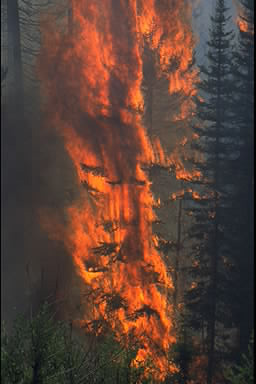
The last few years have brought heightened fire danger to Colorado. Our forest fires have made the national news several times during that span. They seem to start spontaneously and spread, well, “like wildfire.” Untold property damage, millions of charred acres, and even loss of life have followed the paths of these fires. The cause of the fires are sundry, from human carelessness to beetle infestation mixed with drought and high winds. The cost to fight these fires is exorbitant, but ignoring the fires is not a wise option. Time, resources, and manpower are diverted to these fires, and this naturally occurs at the expense of other pursuits.
I have noticed that there have been quite a few fires popping up among God’s people in the last few years, too. There’s the push for instrumental music in worship. Akin to this is the push to fellowship the Christian Church. One of the largest conflagrations involves the push for woman to assume leadership roles from worship to roles like deacons and preaching ministers. Of course, certain fires had been previously burning that are not yet contained–a looser view on marriage, divorce, and remarriage, denying the inspiration of the Bible, and such. There are even areas we could consider tinderboxes, poised for combustion. How far are we from having to combat the spreading idea that those in committed, homosexual relationships should be part of our spiritual fellowship.
Please do not misunderstand me. I am not being fatalistic or giving up hope. I believe we have the time, resources, and manpower to fight these fires. Not only that, but we must be engaged in this business. Ignoring these fires is not an acceptable option.
Yet, putting out such fires comes at an expense. There is a lost world to be won to Christ. There are so many opportunities to be proactive and serve the benevolent needs of our communities. There are needed programs to build our fellowship, Bible school, singles, young adults and college students, and more. There is the need to solicit greater involvement from members. There are projects to take on, from media ministries to mission works. These require our interest and effort. Let us man the firebreaks, but let us not be wholly consumed with just putting out the fires. Neither let us be afraid to equip ourselves to battle those flames. Such will require balance, wisdom, courage, and love. May God help us have a double portion of them all.
It’s one of those pictures where you are relieved to know that the people captured in a painful predicament survived and recovered just fine. That way, you don’t feel guilty laughing at them. In the October 2007 issue of Reader’s Digest (p. 109), there is an incredible picture from the running of the bulls in Pamplona, Spain. What are the chances that one bull would be lucky enough to skewer brothers. One either end of this bull’s rack are Americans that were, um, painfully caught. The bull, literally, took them by his horns. Even Hemingway would have to call this “poetic justice.”
It would be interesting to learn the etymology of the phrase, “take the bull by the horns.” We know it is an encouragement to endure the risks in doing something bold, daring, and difficult. It depicts bravery, bravado, and brazenness.
What happens when risk and daring backfire? What about when you stick your neck out and your nearly lose it? What about when your big dreams come to resemble a nightmare?
When the bull takes you by the horns, it hurts. Though I don’t know this from first hand experience, I have seen the video footage and enough photos like the one in RD to believe it. It hurts when you take that big risk (to invite a friend to church, to have a Bible study not end in baptism, to hand an olive branch to someone you’re at odds with and have the hand slapped, etc.). Acknowledge that those who dare and do will sometimes know defeat.
When the bull takes you by the horns, it’s not usually fatal. I have concluded it is the adrenaline rush of staring death in the face that gets these Type A’s into the narrow streets of Pamplona. The dread of the goring is felt many more times often than the point of the horns. If you’ve failed trying something big for the Lord, you may wrestle with being gun-shy. Yet, ask yourself, “Did it kill me?” If you are reading this, it obviously did not! Try again! Your next attempt may be your greatest.
When the bull takes you by the horns, learn from it! When it comes to the running of the bulls, I’d say that the lesson to be learned is stay off the streets when angry bulls seeing a lot of red are turned loose there. Perhaps another lesson is to run at least a step or two faster than the guy beside you. But, when daring to do great things for God, learn from the mistakes and failures. Let it instruct you. Be wiser next time. Try a different approach. But, at all costs, do not stop doing your very best for Christ.





/cloudfront-us-east-1.images.arcpublishing.com/gray/IAJKGJ5YCFCPLKYW2OSSQSDVZI.jpg)




 The Preacher Pollard Blog