Jesus Didn’t Retire

Wednesday’s Column: Third’s Words

garyandme521

Gary N. Pollard III

Satan tried to trip Jesus with a killer deal: “I’ll give you every nation in the world if you worship me” (Matt 4.8-10). This wouldn’t have been a temptation if he couldn’t deliver. What might Jesus have gained by having Satan give up control of every nation on earth? It would have made his job a lot easier! He wouldn’t have to fight with Pharisees or other hostiles. He wouldn’t have to disappear after teaching or healing. He could avoid the kind of rejection that broke his heart (Luke 19.41). 

Sometime after this encounter, Jesus started to recruit followers. He may have had Satan’s offer on his mind as he was calling Peter (Matt 4.18ff). He knew Peter would be so ashamed of him that he’d deny any connection to him (Matt 26.69-75). He knew that every one of his followers would abandon him when he most needed them (Matt 26.56). 

He still lived his life, he still taught, he still sacrificed himself for everyone. How many of us would still pursue something if we knew how painful or difficult the outcome would be? How many of us would continue to pursue something if we were given the option to take an easier path? 

Jesus didn’t even retire once his mission was accomplished! He faced homelessness, assault, rejection, betrayal, injustice, torture, and execution. I would have retired after that in a heartbeat, and I would feel that I had more than earned that retirement. 

After he went back to be with the father, he rolled up his sleeves and got to work. He’s a full-time mediator (I Jn 2.1-2). He’s making sure the natural universe operates as it should (Heb 1.3; Col 1.17). He’s keeping evil in check (Phil 3.21; I Cor 15.27). When the end comes, he’ll destroy the universe and judge every human who’s ever lived (Heb 9.27; II Pet 3.7-10; Rev 20.12, 21.1-2). 

Whew. He still loves us (Rom 8.35; II Cor 5.14; Gal 2.20; Rev 1.5)! He still gives grace with generosity (I Jn 1.7; Rom 5.15-21, 6.14). We serve a tireless God who invested everything in us and will do so until the end of time. Life gets us down and we ask, “Why?” Just remember who’s watching our backs and won’t ever let us down! 

The wilderness of Judea

Our God Is An Awesome God!

Monday’s Column: Neal At The Cross

Neal Pollard

Are there songs that really pump you up in your faith? While there are several that strike that chord in me, none do that more than the song, “Our God is an awesome God.” I know the melody helps, but just that short, sweet, and profound reminder puts wind in my spiritual sails. It reminds me that I can overcome because of who He is.

Psalm 104 is a much more detailed, exhaustive song that lays out how “very great” our God is. It is exciting to think about who we are serving, and sobering to think of the cost of rejecting Him. Look at the awesomeness of God.

LOOK UP (1-4)

My boys call me “sky guy.” I am known to take some pictures of sunrises, sunsets, and skies in general. I remember a night at the Ngorogoro Crater with our oldest son, Gary, when the sky looked, as the late Andrew Connelly once described it, like diamonds laying on black velvet. I remember looking over the Caribbean Sea with Kathy in Cozumel, Mexico, with the moon above us and reflected in the water as yellow as gold. But, I get the same sense on many nights when I cut off the porch light and walk out my front door. God did that!

God’s garments are splendor, majesty, and light (1-2). He stretches out heaven like a curtain, rides the clouds, and walks on the wings of the wind (2-4). How can anyone look up and fail to see God?

LOOK AROUND (5-23)

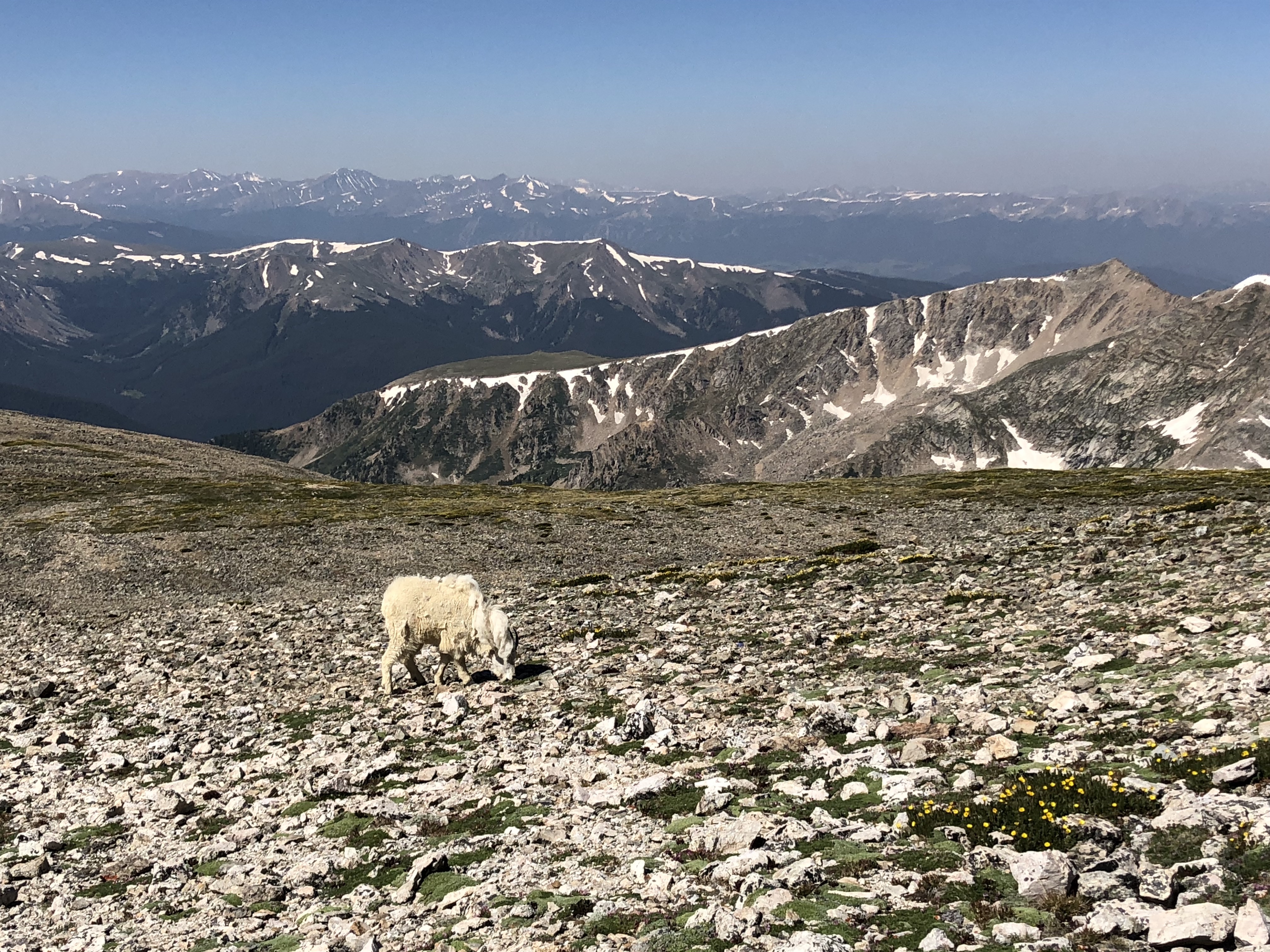
Where is the most beautiful place on earth? Often, we could say it is wherever we are at the moment. Creation’s beauty is so diverse and its complexity is so incredible. Look at its order and durability (5). Think back to how He changed it all through the flood, using water to raise up mountains, form valleys, and then prevent it from ever happening like that again (6-9; Gen. 9:11). Look at how he sustains us and all creation with water (10-11,16), food (13-15), habitat (12,17-18), seasons (19), and daylight and darkness (19-23). The earth is full of His possessions (24), the sea (25), animals (25), the sea and its wonders (26). He sustains and provides and He shows His power (27-30). On the first hike my family ever took as residents of Colorado, in Rocky Mountain National Park, we met a young woman on a trail. We had in common the fact that we had all just moved there from out of state.  We told her why we had moved, to work with the church in Denver. She, though very polite, said that she moved out there to get away from God. We were all standing, facing such incredible grandeur, and I thought, “Good luck with that!” Where do you go to get away from God when His fingerprints are everywhere? 

LOOK BEYOND (31-32)

As the psalmist begins to wrap up this tribute to God’s awesomeness, he speaks of God’s unlimited power. He makes earth tremble and mountains smoke (32). It gives Him glory and gladness (31). Really, this point is made throughout the entire psalm. Everything we see is a reflection of the One who is above all, through all, and in all (Eph. 4:6). 

LOOK WITHIN (33-35)

In a psalm paying tribute to creation, what should be my response? How should it change and shape me? I will sing to Him as long as I am (33). I will meditate about Him (34). I will be glad in Him (34). I will follow Him, knowing what awaits the sinner and the wicked (35). Listen to the psalmist’s summary: “Bless the Lord, O my soul. Praise the Lord!”  What I see above, around, and within me should melt my heart in praise. It should leave me singing every day, “Our God is an awesome God!”

(taken near the summit of Torrey’s Peak, 2018)

“Schrodinger’s Spring”​

Friday’s Column: Supplemental Strength

90357007_2526509177608070_2207438835946618880_n

Brent Pollard

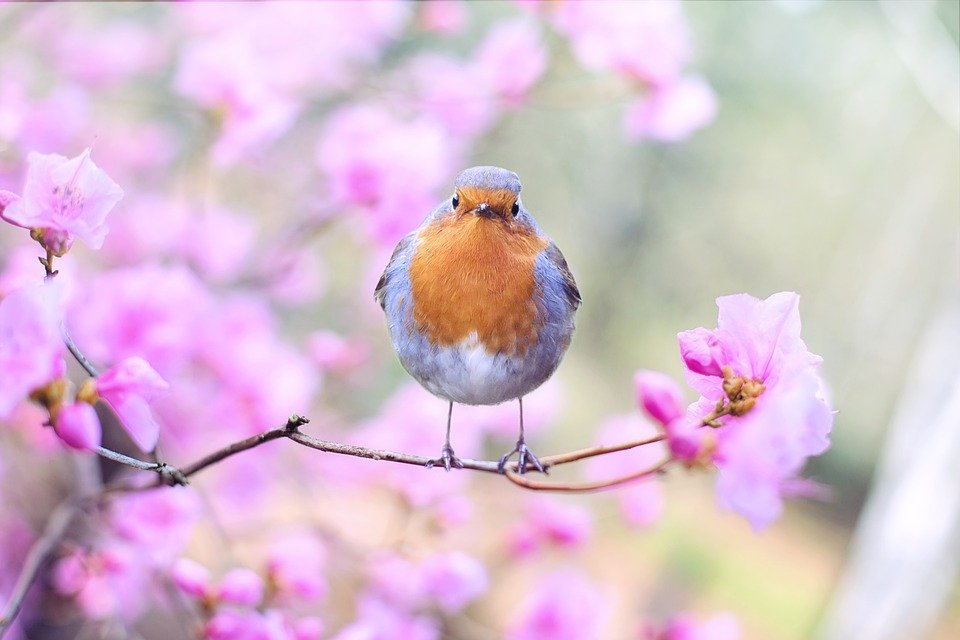
This has been a beautiful spring. I cannot recall a time in recent memory when I’ve noted so many dogwood flowers in the trees. Our daffodils have been more prolific as well. There is phlox and violets blooming throughout the yard. Since I know that it is through nature that God first reveals Himself to us (cf. Romans 1.20), I could not help if wonder if what I have been seeing is providential. Think about it. We are in the midst of a pandemic and have been asked to shelter in place. What if God providentially boosted the fertility of the spring to grab the attention of all of the people stuck at home? It is a nice thought, isn’t it? Certainly, those who’ve inherited the earth (Matthew 5L5) would take notice of that.

Yet, the truth is, I cannot say this with any degree of certainty. My statement about this spring’s beauty is contingent on the amount of attention I have paid to it this year as well as the joy I’ve experienced having more time to spend outdoors since “normal” life has been shut down. The thought has occurred to me that maybe every spring is as beautiful, I’ve just been too busy or distracted to notice. Perhaps, there were plenty of equally beautiful things that had existed but went unobserved.

Maybe you’ve heard of “Schrodinger’s cat.” This is a thought experiment proposed by physicist Erwin Schrodinger, based on idea he had gotten from Albert Einstein. I won’t bore you with the details. Suffice it to say, a poor kitty is imperiled by two deadly things inside a closed box. After an hour, you check to see if the cat has died. As crazy as it sounds, quantum mechanics allows for the cat to be both alive and dead until such time as one makes an observation; that is, until he or she opens the box. It is at the point of observation that the fate of the cat goes from superposition to a single state. If you find the thought experiment flawed, you’re not alone. Other physicists thought that it was ridiculous that a cat’s fate was contingent on whether or not we observed it. The radiation or the poisoned air would have killed the cat long before we opened the box. Another camp gave it a many-worlds interpretation. In other words, they say that upon opening the box, you as the observer become entangled with the cat on a quantum level and you both continue on in a reality in which the cat is either alive or dead. Since there are two possibilities, two worlds result in which the cat is alive and the cat is dead.

I apologize if I thoroughly confused you. Fortunately, it is not the wisdom of man that saves, but the wisdom of God (1 Corinthians 1.19-21). However, I referenced the thought experiment in order to frame my concept of a “Schrodinger’s spring.” God’s natural laws lead to a rebirth every year that He gives as we go from winter’s death to spring’s life. Because Christ sustains this creation (Colossians 1.15-17), we know that the promise God made with Noah will be kept (cf. Genesis 8.22). Hence, there will be “seedtime and harvest.” Yet, as I admitted about myself, there have likely been many years when I have failed to observe this unfolding process. There is a sense in which I allowed myself to be taken into a different world, one devoid of the joy God’s creation brings. We can do this when it comes to many different things besides nature, can’t we?

When I fail to note God’s providence and majesty, I create a world for myself that lacks contentment and joy. I don’t look to become satisfied with the state in which I am (cf. Philippians 4.11-13), but waste my life yearning for something else. We see the difference taking a moment to express gratitude made in the life of one former, Samaritan leper. Jesus had already cleansed his flesh, but extended forgiveness to him in response to the gratitude he had shown (Luke 17.18). A thankful heart is more predisposed to recognize the blessings of God, including the provisions made for our salvation. This is why, as with the cleansed Samaritan, it prompts worship. In what other way can we respond but with that desire to prostrate ourselves at His feet?

The next time you see the smiling face of the a child or a colorful sunset, remember “Schrodinger’s spring.” God has certainly surrounded you with blessings. It may be that in the hustle and bustle of life you simply haven’t had the time to notice. Make observations and change your reality as well.

spring-bird-2295436_960_720