
The Seduction, Humiliation, and Redemption of Samson

Brent Pollard
Samson’s story is both tragic and compelling. God predestined Samson to deliver Israel from the oppression of the Philistines, naming him a Nazarite before his conception. Despite his unimaginable strength, this judge succumbed to his desires, particularly his attraction to Philistine women. Samson was enticed, degraded, and finally felt a deep sense of reclaiming himself. The story of Samson’s descent and ultimate resilience is a powerful reminder that grace can lift us back up no matter how deep our struggles are.
Seduced by the Enemy (Judges 16.1-20)
Samson’s decline was not a sudden event but a gradual unraveling of his sense of purpose. Samson consistently broke his promises despite his dedication as a Nazirite, chosen for divine purpose. He became involved with three Philistine women: his wife from Timnah (Judges 14), a woman of ill repute from Gaza (Judges 16.1), and Delilah (Judges 16.4). It was with Delilah that he met his downfall. Despite her undeniable loyalty to the Philistines and her persistent efforts to unravel the mystery of his power, Samson eventually succumbed:
“So he told her all that was in his heart…” (Judges 16.17 NASB95)
In that moment of revealing his truth, Samson gave up his secret and the essence of his power. His assailants apprehended him, blinded him, and imprisoned him within that darkness. Samson learned that temptation rarely announces itself as destructive. Likewise, we gradually forfeit our strength and clarity when we flirt with sin. Samson lost his power because he gave his heart to the wrong person, a lesson that still resonates today and underscores the importance of discernment in our lives. However, the consequences of his misplaced trust would go far beyond losing his strength, plunging him into literal and spiritual darkness.
Humiliated by His Choices (Judges 16.21–25)
With his vision and power removed, Samson became a captive, grinding grain in a Philistine prison. However, his degradation reached new heights when the Philistines paraded him before the crowd at a festival, reveling in their mockery.
“Call for Samson, that he may amuse us.” (Judges 16.25 NASB95)
This summons wasn’t just to satisfy curiosity. The Hebrew term translated as “make sport” in the KJV conveys connotations of mockery, contempt, and possibly even sexual humiliation. This latter possibility is reflected in Potiphar’s wife’s use of this Hebrew word as she falsely accuses Joseph of attempted rape. She said Joseph was trying “to make sport of us” (Genesis 39.14 NASB). Given Samson’s infamous history with Philistine women, one can imagine their scornful laughter at his abasement, viewing it as appropriate retribution: the great warrior of Israel brought low, not by a clash of arms, but by the tender yet treacherous nature of love. In a tragic turn of events, Samson was reduced to a mere trophy, displayed to entertain a reveling crowd who joyfully worshipped their deity, Dagon.
Public transgressions frequently cause public shame. When reality reveals the consequences, what once thrilled us in solitude may become a source of scorn. Regardless of their disgrace, the Lord does not abandon repentant people. And it was only in the depths of his humiliation, chained between the pillars of the Philistine temple, that Samson realized this truth for himself.
Redeemed by Grace (Judges 16.26–30)
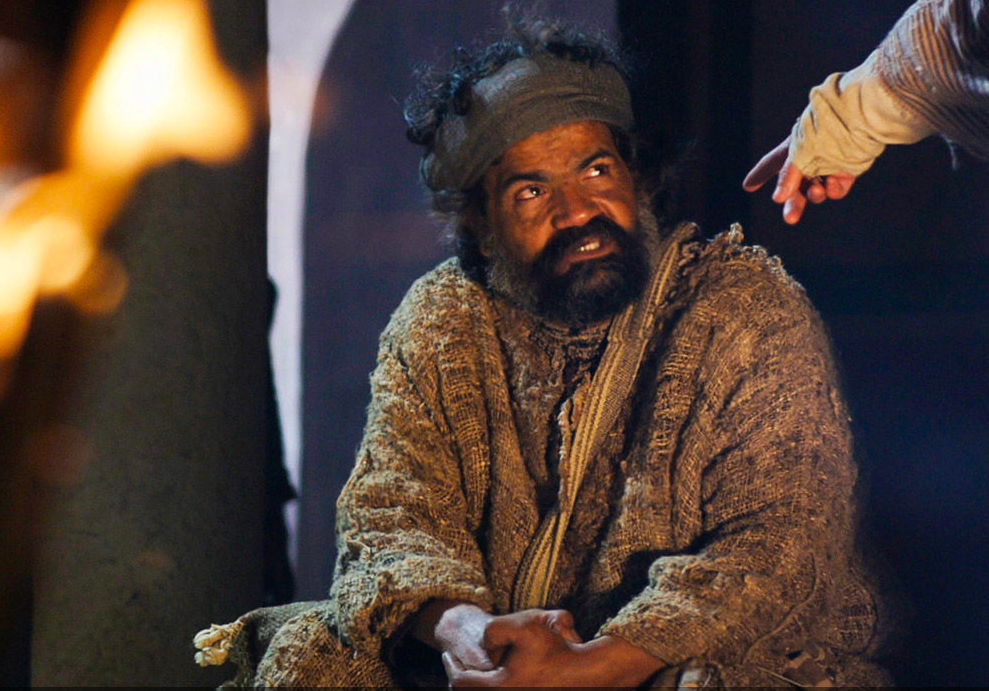
Blind, broken, and mocked—Samson finally cried out to God:
“O Lord God, please remember me and please strengthen me just this time…” (Judges 16.28 NASB95)
This prayer signified a watershed moment. In a moment of deep reflection, Samson summoned the courage to bow before the divine, shedding the burden of his former pride. In a moment of divine intervention, God answered Samson’s plea, and with a surge of newfound power, he toppled Dagon’s temple, taking more lives in his final act than he had throughout his entire life (Judges 16.30). This act of destruction was not a sign of Samson’s fall but a testament to his resilience. Despite his journey ending prematurely, it reached a pinnacle of resilience and spiritual strength. In Hebrews 11.32, Samson is among the revered figures honored for their unwavering faith.
Samson’s redemption journey powerfully reminds us that even broken people can still serve a purpose. He is not the God of flawless credentials but of contrite souls. When we return to Him, He can renew us even after stumbling.
Conclusion
Ultimately, Samson’s story is a cautionary tale about the dangers of succumbing to temptation and offers hope for redemption. His seduction and disgrace were undeniable, but his redemption was also evident. If you’ve felt you’ve stumbled through missteps, struggles, broken connections, or poor choices, know that your journey is far from over. There is a God who hears the cries of the weary and offers a hand of hope for redemption.
“My grace is sufficient for you, for power is perfected in weakness.” (2 Corinthians 12.9 NASB95)




 The Preacher Pollard Blog