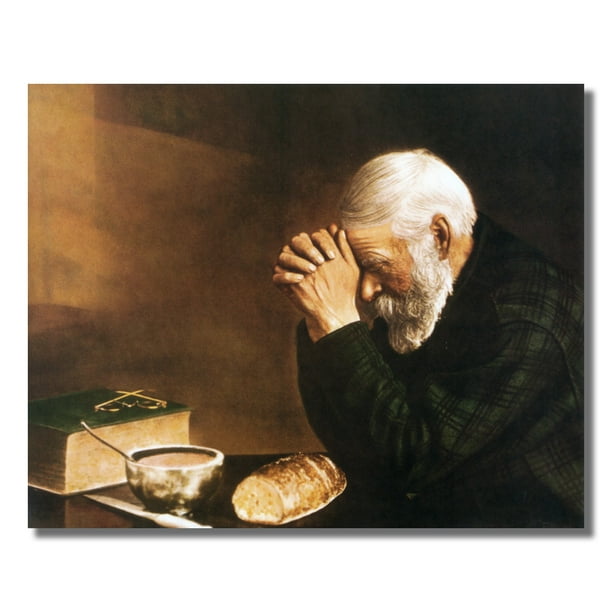
“Without You, I Am Empty Inside”

It is written that without the divine, humanity experiences a spiritual emptiness, but through Christ’s grace, a deep fullness is graciously given. Our hearts are like empty vessels—designed to be filled with God’s presence, love, and Spirit. The true and lasting fulfillment we seek can only be found in Him.

Brent Pollard

A Fascinating Motto on a Cardboard Box

My Amazon parcel displayed a curious motto on its outside: “Without you, I am empty inside.” This phrase playfully alludes to the upcoming annual Prime Days in July, but also holds a deeper meaning for me beyond shopping. My father mentioned he might develop the idea into a sermon, and I believed this slogan could inspire an article. So, here we are.

Unpacking the Emotional Significance

Let’s examine this slogan closely, out of its context. The phrase “Without you, I am empty inside” highlights a profound emotional reliance on someone to feel complete or satisfied. At first glance, it clearly expresses deep love, longing, or attachment, implying that the speaker feels incomplete or directionless without the person being addressed. Additionally, it highlights vulnerability and illustrates the profound impact that another person’s presence has on one’s emotional well-being.

When Longing Turns into Dependency

However, it also invites reflection on self-reliance and emotional health. Feeling “empty” without someone might point to dependence on external validation, which can be unhealthy if overdone. It could also mirror genuine affection in a romantic context, but might alternatively highlight vulnerability or a lack of self-identity, depending on the situation.

A Secular Slogan with Sacred Implications

This profound and complex statement conveys a strong sense of emotion and urgency, possibly revealing a search for meaning or harmony. The phrase “Without you, I am empty inside” on a retailer’s box expresses a heartfelt feeling about connection that resonates deeply. While it adds authenticity and uniqueness to the brand, it may lack clarity about the retailer’s offerings or overall tone.

Ultimately, I know Amazon cannot truly fulfill the deeper longings of my soul.

From Emptiness to Fulfillment in Christ

The heartfelt phrase “Without you, I am empty inside” reflects a core spiritual truth: without God, humanity feels a deep emptiness. True fulfillment is only found through connection with the Creator via the Redeemer. This theme runs throughout Scripture—from the chaotic emptiness at the beginning of Genesis to the abundant fulfillment foretold at the end in Revelation.

The Emptiness of Life Without God

Scripture frequently illustrates the desolation that comes with a life separated from God. Ecclesiastes 1.2 states, “Vanity of vanities! All is vanity,” highlighting the emptiness of life without a higher purpose.

Jeremiah 2.13 uses a vivid metaphor: people forsake the “fountain of living waters” in favor of excavating “broken cisterns that can hold no water.” These defective containers symbolize our faulty attempts to find fulfillment apart from the divine.

Proverbs 27:20 observes that “people’s eyes are never satisfied” (HCSB), highlighting the endless human desire for worldly pursuits. Similarly, Genesis 1.2 describes the earth as “formless and void” before God’s presence brought it order and life—symbolizing the soul’s emptiness when separated from Him.

Filled With the Spirit

The New Testament offers a divine solution for human despair through the Holy Spirit residing within us. Ephesians 5.18 urges believers to “be filled with the Spirit,” indicating an ongoing, active pursuit of spiritual growth. In Acts 2.4 and 4.31, we see a striking change in the disciples; empowered by the Spirit, they transitioned from fear to confidence. The Spirit’s presence provides purpose and direction, filling the emptiness with meaning and significance.

This deep sense of fulfillment sharply contrasts with the world’s transient attempts to satisfy the spirit. Acts 4.31 emphasizes that genuine fullness in the Spirit results in bold testimony and divine strength, not futile efforts.

Completeness in Christ

Central to biblical teachings on fullness is Jesus Christ. As Colossians 2.9–10 affirms, “For in Him all the fullness of Deity dwells in bodily form, and in Him you have been made complete.” Believers, in the divine embrace, discover they lack nothing in their spiritual path.

2 Corinthians 5.17 declares that those in Christ are “a new creature,” while Ephesians 3.19 encourages us to be “filled up to all the fullness of God.” Philippians 4.19 assures believers that God supplies every need “according to His riches in glory in Christ Jesus.” Fulfillment is not just a future hope but a current reality in Christ.

Dependence on God for Satisfaction

Humanity isn’t meant to be self-sufficient, as emphasized in John 15.5: “Apart from Me you can do nothing.” Our connection with the Savior is as essential as a branch’s link to the vine. As 2 Corinthians 12.9 shows, divine strength is fully revealed through our weakness. Psalm 127.1 reminds us that without the Lord, our efforts are ultimately unsuccessful.

Proverbs 3.5–6 encourages us to trust in God fully and warns against relying solely on our own understanding. Genuine contentment comes from surrendering to God’s guidance, not from self-reliance.

God’s Invitation to Satisfaction

The Psalms express a heartfelt longing for the divine and a strong confidence in God’s ability to meet that need. Psalm 42.1 vividly compares the soul’s desire to a deer’s thirst for water. Isaiah 55.1–2 invites those who are thirsty to come and find nourishment in God, contrasting this with the emptiness of worldly pursuits. Psalm 107.9 affirms, “He has satisfied the thirsty soul,” and Psalm 63.1 vividly equates spiritual thirst with a dry, waterless land.

The Contrast of Emptiness and Fullness

In John 10.10, a clear contrast is evident: “The thief comes only to steal and kill, and destroy; I came that they may have life, and have it abundantly.” Christ offers abundance, whereas Satan promotes destruction. Matthew 5.6 assures fulfillment for those who seek righteousness earnestly, while John 6.35 portrays Christ as the eternal sustenance, providing lasting satisfaction.

Revelation 7.16 offers a powerful assurance: “They will hunger no longer, nor thirst anymore.” Eternal satisfaction awaits the saved.

Made Whole in Him

The New Testament consistently affirms that believers are made complete in Christ (Colossians 2.10). John 17.23 offers a deep depiction of unity with God, while Ephesians 4.13 encourages us to strive for spiritual growth, reflecting Christ’s essence. The passages from Psalm 16.11 and 36.7–9 eloquently express the joy and richness experienced in God’s presence.

Conclusion

It is written that without the divine, humanity experiences a spiritual emptiness, but through Christ’s grace, a deep fullness is graciously given. Our hearts are like empty vessels—designed to be filled with God’s presence, love, and Spirit. The true and lasting fulfillment we seek can only be found in Him.

Thus, “without you,” my God, “I am empty inside.”

Unless otherwise indicated, Scripture quotations are taken from the NASB® (New American Standard Bible®, 1995 Updated Edition). Copyright © 1995 by The Lockman Foundation. Used by permission. All rights reserved.


Knowledge=Sorrow?

Dale Pollard

The tsunami traveled at a speed of about two hundred miles per hour across the Pacific Ocean. That massive wave would kill sixty one people in Hawaii, one hundred and thirty eight in Japan, and thirty two in the Philippines. That wave was born from a Chilean earthquake that occurred on May 22, 1960 and may just be the largest earthquake to ever be recorded. 

The word “vexed” is an old Latin word meaning “to quake/rumble” and although Latin isn’t the language that the Old Testament was written in, the Old English word was used by some scholars when translating Ecclesiastes 1.18. 

“For in much wisdom is much vexation, and he who increases knowledge increases sorrow.”

At first glance, it may seem like Solomon is discouraging one from pursuing knowledge— but the message is a lot deeper.

The kind of knowledge the world has to offer isn’t going to bring you the kind of fulfillment that the wisdom God provides. The world’s understanding lacks the answers to major questions which are essential to our spiritual health like: Where did we come from? What’s the purpose of life? What happens when we die? Is this all there is? Earthly wisdom provides one with answers with holes and answers that are depressing— or no answers at all. 

However, God’s wisdom can bring much vexation as well. 

With God’s wisdom you come to understand that the majority of people on earth aren’t pursuing Him. You discover that most people live their lives in a way that grieve Him but that understanding will also bring you closer to Him. When the Lord is upset, troubled, angered, frustrated, or vexed, then his faithful servants are going to feel similar. 

With much of God’s wisdom, comes much vexation. With much of the world’s wisdom, there’s much vexation. The question we should ask, is why do we want our souls to be troubled? You can be fulfilled and troubled at the same time because with God, there’s always a light at the end of the tunnel. 

Deuteronomy: The Second Giving Of The Law (IX)

Don’t Forget (8:1-20)

Neal Pollard

There are multiple memory tools–the rule of three, memory palaces, chunking, mnemonics, acronyms, and I am sure there are others I’m forgetting. How many of us have upset and disappointed others, especially loved ones, because of failing to remember something that was important to them? Three times in this chapter, Moses mentions forgetting (11,14,19). Twice, he says to remember (2,18). Yet, the whole chapter centers around the importance of remembering and the danger of forgetting. His most serious warning was that they would forget God and think they did all of it by themselves (12-13,17). Self-reliance would make them forget the One responsible for all their blessings. So Moses warns:

Don’t forget God’s past provision (1-5,14-16). He points them all the way back to Egypt and the exodus from slavery (14), but he repeatedly reminds them of how God had taken care of them in the wilderness these past forty years. There was the manna (3), the durability of their clothes and shoes (4), the protection from scorpions and serpents (15), and the provision of water (15). Without God’s provision, they would neither be free nor alive that very day! 

Don’t forget God’s precepts (6, 11). Attached to His gifts, God blesses them with perfect direction. He calls it “commandments” (6), “His ways” (6), “His commandments and His ordinances and His statutes” (11). It contained His covenant (18). Studying each of these synonyms gives aspects of God’s authority and right to govern, and each are conditions for His blessings. Moses has just restated the Ten Commandments for them. His Law was to govern them and aid them in daily life. They would forget it to their own peril! 

Don’t forget God’s promises (7-10). God is not simply being a domineering autocrat, who threw His weight around just because He could. Earthly rulers might inevitably act that way, but not the perfect God. God longed to lavish His blessings on them. He wants them to remember these promises He is making: a good land, many waters, valleys and hills, a land producing all sorts of sustaining food, and precious metals. All of it would be abundantly given! If they would remember Him and His Word, they would be blessed beyond anything any of them had experienced. 

Don’t forget God’s power (18-20). All of this was possible because of His power (18). If they forgot Him, the power He would use to overthrow their enemies in the conquest would be turned on them. He ends by saying, “Like the nations that the Lord makes to perish before you, so you shall perish; because you would not listen to the voice of the Lord your God” (20). Are you reminded of God’s impartiality? Though Israel was His special, chosen people (7:5), God is eminently fair! Thankfully, through Christ, that impartiality opens the door wide to whosoever will (Acts 10:34-35)! 

Memory is a powerful thing! Even those who suffer dementia may retain long past memories. Yet, nothing is worse than choosing to forget or allowing something else to crowd from our minds the very things that must remain firmly in place. Israel stood at the threshold of incredible hope and promise. God wants them to remember the source and respond appropriately. God wants the same of you and me today. 

The Lord Will Provide

Saturday’s Column: Learning From Lehman

Harold Nicks

In Genesis 22, we have the story of Abraham where God instructs him to offer Isaac as a sacrifice. We know from the text that God was testing Abraham and we know that God stopped him and then provided a ram to sacrifice instead. Because of God’s provision Abraham named that place THE LORD WILL PROVIDE! Three months ago, a tornado devastated many parts of Bowling Green affecting some of our own members, as well as many others in the community.

We have witnessed the outpouring of help and concern by the aid and donations made over 100 congregations and individuals – giving their money and their time to help those who have lost their homes and possessions. God has used us as the facilitators of this aid and used it as an opportunity to show His love and tell people about Him. We can honestly say THE LORD WILL PROVIDE.

I want to keep with the theme of God’s provisions but change the verb tense to THE LORD HAS PROVIDED!

THE LORD HAS PROVIDED us with a magnificent world to live in. In Genesis 1 we read that everything he made was good and He has provided everything we need to enjoy a fulfilling life. As Spring approaches (my favorite time of the year) we will see God’s handiwork as the trees begin to bud and flowers bloom and He created it all for us.

David wrote in Psalms 8 : “when I consider your heavens the work of your fingers, the moon, the stars you have set in place What is man that You are mindful of him.” He loves us and has made this world for us to enjoy.

THE LORD HAS PROVIDED each of us with talents, abilities, and opportunities to serve….and He expects us to use them to serve Him, as well as our fellow man. The Bible instructs us to use our talents and gifts to the best of our abilities as pointed out in Matt 25 in the parable of the talents and again In Romans 12: 6-8, Paul says, “Since we have gifts that differ according to the grace given to us, each of us is to exercise them accordingly: if prophecy according to the proportion of his faith; if service, in his serving; or he who teaches, in his teaching; or he who exhorts, in his exhortation; he who gives, with liberality; he who leads, with diligence; he who shows mercy with cheerfulness.”

THE LORD HAS PROVIDED us with a peace in times of trouble. Those who do not know Him can’t really understand. With Covid and all the political turmoil in our country and the war in Ukraine we can still have the assurance of God’s love and understand HE is in control.

We read in Philippians 4:6-7 to be anxious for nothing, but in everything by prayer and supplication with thanksgiving let your request be made known. And the peace of God, which surpasses all comprehension, will guard your hearts and minds in Christ Jesus. His assurances are also given to us in Romans 8. Verse 31 says, “If God is for who can be against us. In verse 38 and 39 Paul encourages us with these words “For I am convinced that neither death, nor life nor angels, nor principalities, nor powers, nor height, nor depth, nor any other created thing will be able to separate us from the love of God, which is in Christ Jesus our Lord.”

THE LORD HAS PROVIDED us with a way to live with Him for eternity through Jesus. “For God so loved the world that He gave His only begotten son that whoever believes in Him shall not perish but have eternal life” (John 3:16).

He has provided reconciliation through Jesus – He has now reconciled you in His fleshly body through death, in order to present you before Him holy and blameless and beyond reproach (Col. 1:22).

He has provided redemption through Jesus – In Him we have redemption through His blood, the forgiveness of our trespasses, according to the riches of His grace (Eph. 1:7).

God has provided many things for us, but most of all is the way to live with Him forever. Jesus said in John 14:6, “I am the way, the truth, and the life; no one comes to the Father but through Me.”

If you are searching for peace and a way to be with God for eternity, He has provided a way.

“Give Thanks To The Lord”

Thursday’s Column

Smiling middle-aged man with purple shirt and tie on with evergreens as a backdrop
Neal Pollard

I wonder if Kathy felt like she was living with Briscoe Darling and the boys (imagine them if they were talkative) through the years they were growing up. She is refined and genteel, words that are not usually connected to our three sons and me. One thing she impressed upon us was the importance of timely, thoughtful thank you notes. Gratitude, though it can be expressed with very little time and expense, is telling. It acknowledges the kindness and generosity of the giver. 

One of the elements of worship, generally, and prayer, specifically, is thanksgiving. Our songs call for it: “Give Thanks With A Grateful Heart,” they express it: “Thank You, Lord,” “For All That You’ve Done,” “How Great Thou Art,” “10,000 Reasons,” and “He Has Made Me Glad.” Though that songwriter, Leona Von Brethorst, apparently wrote the song from Psalm 100, she includes a line from Psalm 118:24: “This is the day that the Lord has made.” 

Five times in Psalm 118, the psalmist says “give thanks” (1,19,21,28,29). He urges others to do so, but also expresses his resolve to do the same. Why?

GIVE THANKS FOR HIS GOODNESS (1-4)

“Good” is a general word that takes in pleasantness, desirability, and beauty. The good quality specified here is His everlasting mercy (lovingkindness). The writer moves from the broad to the specific–Israel, house of Aaron, those who fear the Lord. Everyone is the object of God’s lovingkindness. The righteous freely express their thanks for it.

GIVE THANKS FOR HIS DELIVERANCE (5-13)

There is a sudden, dramatic shift in tone in verse five. From an upbeat, positive tone, he turns to thoughts of trouble and difficulty. Distress, hatred, being surrounded, and violence threatened him, but God was there for him as protection and help. This kept him from fearfulness. It gave him refuge. 

It is an amazing thing to think of all the ways and times God has been with me, but those are just the instances I’m aware of. How many trials has God spared me from, disasters has He caused me to avoid, and troubles has He averted for me that I won’t know about on this earth? Just what I do know humbles me, and it should fill my heart with gratitude. 

GIVE THANKS FOR HIS GREATNESS (14-17)

The writer turns to the Giver. He is strong, a Savior, valiant, and exalted. Summarizing God’s qualities, the writer says, “I will not die, but live, And tell of the works of the Lord” (17). Awareness of who God is for me, physically, materially, and spiritually, will drive me to grateful thanks.

GIVE THANKS FOR HIS DISCIPLINE (18)

Though it is almost a parenthetical phrase in the middle of this song of thanksgiving, it is important and an additional reason for gratitude. He writes, “The Lord has disciplined me severely, But He has not given me over to death.” Who is brave enough to say that with the psalmist? He implies gratitude for God’s severe discipline. Hebrews 12:7-10 tells us that God disciplines those He loves and calls His children. It is for our good and allows us to share His holiness. Can I thank Him for the trials and challenges that refine me and grow my dependence on Him? Or do I just plaintively ask, “Why?”

GIVE THANKS FOR HIS PROVISION (19-29)

He uses the imagery of a city here–gates, stones, and chief corner stone. Then, he ends with a temple analogy, with the house of the Lord, festival sacrifice, and the horns of the altar. Saved inside God’s walls of protection, we are free to offer worship which He accepts. We marvel, we rejoice, we are glad, we prosper, and we extol. He has given us light. The primary thrust is not material, but spiritual. However prosperous or impoverished you are, financially, however strong or weak you are, emotionally, we have the greatest provision of all in Christ. Eternal salvation, the hope of heaven, fellowship with God and the saved, the church, strength to endure, the list is endless. 

Today, as you go through the day, why not stop and spend time in prayer to God thanking Him categorically: physical blessings, relationship blessings, emotional blessings, national blessings, and spiritual blessings. No doubt, there are things in your life right now that are dissatisfying and disappointing. You may be struggling mightily. Perhaps those are ways God is disciplining you in His love. Whatever is happening in your life, choose to give thanks and know God is trustworthy! It’s more than polite. It’s righteous!

Bragging On The Shepherd

Tuesday’s Column: Dale Mail

image-e1601983688162

Dale Pollard

 
Have you ever been in the habit of praying the same prayer over and over again?
You’ve said that prayer as a child and it’s so familiar to you that it just rolls off the tongue. It can seem robotic and maybe this is how we read Psalm 23.
 
Many of us know this Psalm and can quote it quickly— the words fly past our lips. The author, David, practically writes this Psalm like a young boy bragging about how awesome his Father is. Let’s look at this Psalm from his perspective.
 
He says that the Shepherd is always there to protect him, lead him, restore him, and He’s concerned with his needs. He’s nothing without God, and God inspires David to articulate his view of Him.
 
Do we think of God in this way? Some might feel ashamed of Him because standing  up for Christ means saying something or doing something that makes us uncomfortable from time to time. You don’t see that in David. He’s bursting with pride because to him that relationship with the Shepherd is like no other. Today let’s humbly bow in thanksgiving and praise the perfect shepherd.