

The Kingdom Is Here Today

Brent Pollard

The author of Hebrews uses the example of the Melchizedekian priesthood to establish the priesthood of Christ. Jesus belonged to the tribe of Judah, which Moses did not mention regarding the earthly priesthood. Therefore, there was a need for a covenant change to allow a non-Levite to serve as a priest. The writer of Hebrews spends chapters eight and nine explaining how the New Testament replaced the Old Testament in line with prophecy (see Jeremiah 31.3–14). In summary, the Holy Spirit confirmed that it was God’s will for Jesus to be a priest, but since He could not serve as a priest on earth because of Moses’ Law, Jesus instituted the New Testament so that He could be our High Priest in heaven.

Some believe that Jesus will reign as King from David’s throne in a future Jerusalem-based kingdom. However, there is an obstacle preventing Jesus from doing so on earth. God cut off David’s seed from sitting on David’s throne, as mentioned in Jeremiah 22:30, making it impossible for any of Jeconiah’s (or Jehoiakim’s) descendants to reign in Judah. This fact is relevant because Jeconiah was an ancestor of Joseph, Jesus’s foster father. Matthew traces Jesus’s legal lineage through Joseph in Matthew 1:12. Since Jesus is a descendant of Jeconiah, he cannot reign as an earthly king even though it was God’s will for Christ to be King. If God had not taken away the right of Jeconiah’s descendants to reign in Judah, Jesus could have certainly been an earthly king.

So, how is Christ a king? Jesus promised to establish a kingdom (Matthew 16:18–19). When Pilate pressed him, Jesus admitted to being a king (John 18.37). However, consider how Jesus qualified the nature of His kingdom in John 18.36. “My kingdom is not of this world. If My kingdom were of this world, then My servants would be fighting so that I would not be handed over to the Jews; but as it is, My kingdom is not of this realm” (NASB 1995). This truth means that Christ’s kingship is spiritual rather than earthly, as is His priesthood. It is worth noting that Jesus also accomplished this through His New Testament.

Many people misunderstand the truth and think that the apocalyptic language of a millennial kingdom in Revelation 20.6 refers to a future earthly kingdom that Christ will rule in Jerusalem. This misunderstanding is because they do not understand the interchangeability of the terms “kingdom” and “church” in Matthew 16.18–19. The word “church” is a Latin loanword that does not appear in the Bible. The actual word for church is “assembly.” Thus, the church represents the people. The word for “kingdom” is “basileia,” which means a kingdom or realm over which a king has sovereign authority. Therefore, God’s will was for Christ to choose a group of people from all over the world willing to submit to his authority.

According to the Book of Daniel, God showed King Nebuchadnezzar a prophetic dream about the future (see Daniel 2). In the dream, a cut stone struck a large image at its feet, causing the entire image to shatter and signifying the end of all worldly authority. Different materials comprised the image’s body parts, representing different empires. Babylon was the head of gold, Persia was the chest and arms of silver, Greece was the belly and thighs of bronze, and Rome was the legs of iron and feet of iron and clay. The feet mingled with clay represented the internal weakness of Rome. Commentators are familiar with this dream’s timeline. However, some believe that the Kingdom of God, symbolized by the cut stone, is yet to appear. However, according to Daniel, the kingdom emerged during the reign of the Roman emperors, referred to as “those kings.”

Jesus said, “Truly I say to you, there are some of those who are standing here who will not taste death until they see the kingdom of God after it has come with power” (Mark 9.1 NASB 1995). For those who refuse to believe that Jesus established His kingdom as He intended, there must be more than one person of advanced years who can prove they are older than two millennia! We understand that the power to which Jesus referred was the Holy Spirit, who descended on the apostles on the day of Pentecost, around 33 AD (Acts 2.4). As a result, Jesus reigns as King today and will continue to do so until His return. Following His return, Jesus will hand over His authority to the Father and the redeemed from all ages (1 Corinthians 15.24).

Combining biblical texts and prophecies creates a deep understanding of Jesus Christ’s position as King and High Priest, which goes beyond worldly limitations. Jesus fulfills the roles God has designated for Him, not as a political leader or a member of the old priesthood, but in a heavenly and everlasting sense through the New Testament and His heavenly kingdom. This understanding challenges traditional beliefs about a future earthly kingdom, instead emphasizing Christ’s spiritual reign, which began during His ministry and continues today. As Christians, we have the honor of living in this heavenly kingdom that Christ, our eternal King and High Priest, rules over in a merciful and benevolent manner. Recognizing this broadens our spiritual understanding and strengthens our faith in the eternal truth of God’s word and His ultimate plan for redemption.
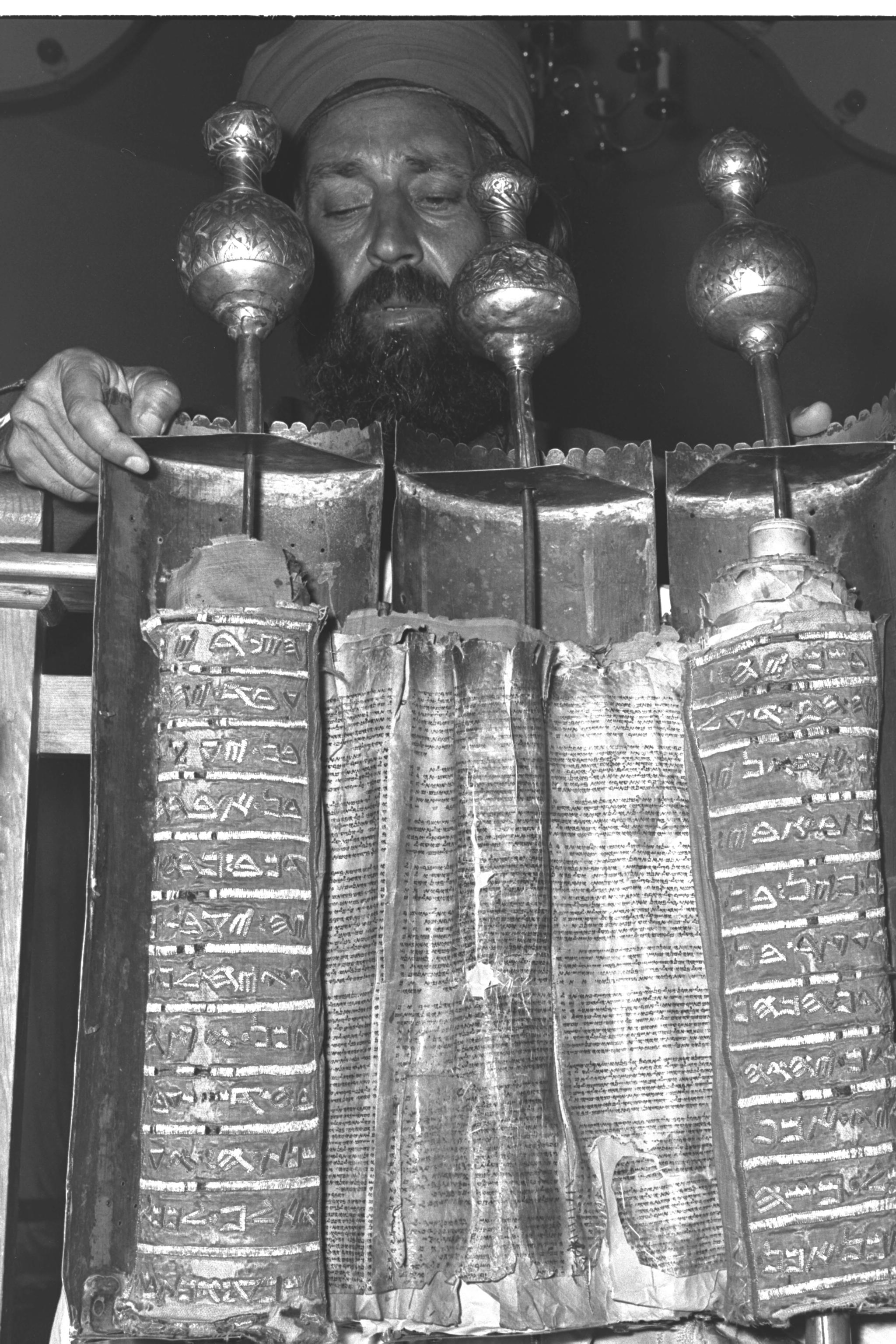
Zadok The Priest

Neal Pollard

Zadok the priest was neither an Anglican Church member or even British. Many associate his name with Handel’s 18th century coronation hymn, written first for King George II. But, he was a significant, if minor, Old Testament character. We learn at least four great lessons from his character, as revealed in Scripture.

  • He was a versatile servant of God. He is introduced as “a young man mighty of valor” (1 Chron. 12:28), but also as a priest of God (1 Chron. 15:11). Thus, he was handy in a fight while also helpful in reconciling men to God. What an example of a five or two talent man, able to serve God in more than one way. God has blessed most of us with the ability to do many things well. We should be motivated to use those skills for Him.
  • He was a respecter of God’s Word. His predecessor, Uzzah, disregarded God’s instructions for transporting the ark and paid for that with his life. Zadok was at the head of the list of priests tapped to do it the right way, according to God’s word (1 Chron. 15:11ff). Nothing we see after this does anything except strengthen the view that Zadok submitted to the divine will. What a legacy to leave, known as one who simply takes God at His word and strives to be obedient to it.
  • He was a loyal friend. When Absalom rebelled against King David, many in Israel aligned themselves with this usurping son. However, Zadok remained true to David (2 Sam. 15). David relied on him, with Abiathar, to keep tabs on the insurrection while ministering in Jerusalem. David knew he could count on Zadok. In the same way, Scripture praises such loyalty. David’s son penned that “A friend loves at all times, And a brother is born for adversity” (Prov. 17:17). We should be a friend others can count on at all times.
  • He was a good judge of character. Whether choosing to serve David over Absalom or Solomon over Adonijah, Zadok was an excellent discerner of the right choice. In both cases, these were the righteous and God-approved choices. Even Abiathar, who stood with David over Absalom, got it wrong when Adonijah tried to supplant God’s will concerning David’s rightful successor. For this reason, Zadok took his place alongside Samuel as the only priests to anoint a king during the United Kingdom period of Israel’s history (1 Kings 1:39). It was this event Handel coopted to write his coronation hymn. God had bright hopes for those who feared Him, that they would be able to “distinguish between the righteous and the wicked, between one who serves God and one who does not serve Him” (Mal. 3:18). That was Zadok, and it should be us–regarding preachers, elders, teachers, as well as every child of God we have dealings with. We must grow in our ability to be capable fruit inspectors (cf. Mat. 7:15-20; John 7:24).

Thank God for Bible characters who show us, with their lives, the way to please Him with ours. The times may, in some ways, be drastically different from when Zadok walked the earth. But, with the time God gives us, we would do well to imitate these traits of this priest of God remembering that God desires us to be faithful priests for Him today (cf. 1 Pet. 2:1-9).

flickr_-_government_press_office_gpo_-_samaritan_priest_zadok_ben-avisha_hacohen

CONSECRATING THE PRIESTS

Neal Pollard

An interesting ceremony occurs in Leviticus 8:4-11. Moses summons Aaron and his sons into the doorway of the tabernacle and consecrated them. This action consisted of four distinct things.

  • A command (4-5)—“This is the thing which the Lord has commanded to do”
  • A washing (6)—“Moses…washed them with water”
  • Specific clothing (7-9)—tunic, sash, robe, ephod, breastpiece, turban, and the golden plate
  • Anointing and sprinkling (10-11)—anointing the tabernacle with oil and sprinkled the oil on the altar and all its contents

For those of us in 21st Century America who are millennia removed from this ancient ceremony of the Jewish people, those actions are about as foreign as any that we might consider.  But, they all worked together as part of a process of “consecration.” Yet, the idea is timeless, that of being regarded as holy because of having been devoted to the Lord.

The New Testament tells Christians that we are “priests” (1 Pet. 2:5,9; Rev. 1:6). Aaron and his family engaged in religious ritual and ceremony as well as representing people to God. While our function includes the latter, “proclaiming the excellencies of Him who has called [us] out of darkness into His marvelous light” (1 Pet. 2:9), we have also been set apart to engage in religious actions for God (1 Pet. 2:5). Romans 12:1 tells us we offer up our bodies as living and holy sacrifices. Our lives are to be dedicated to Him, set apart for His use.

But the process of becoming a priest is just like the process mentioned there in Leviticus 8, if only in a spiritual sense. We are commanded to become priests (cf. 1 Pet. 1:22ff; 3:21). Our induction into this job requires a washing (Rev. 1:6; cf. Acts 22:16). We are given “special clothing” (1 Pet. 3:3; 5:5; cf. Gal. 3:27). The New Testament speaks of this in terms of “anointing” and “sprinkling” (1 Pet. 1:12). When we came into Christ, we entered a life of significance and importance. We were accepting a grand, sobering job. We have been made holy by the blood of Christ, special and dear to God. At the same time, we are set apart for God’s use. One is an undeserved blessing. The other is an unsurpassed responsibility. Let us be grateful for Jesus’ gift that made this priesthood available to us, then let us embrace the monumental task of representing Him to the world and showing the world about Him through our very lives!

hqdefault

Why Christ Became Flesh

Neal Pollard

The writer of Hebrews exhorts that Christ should be faithfully served, not abandoned, because He is a superior messenger to all other heavenly messengers (chapter one). Then, he gives another reason for holding fast to Him in chapter two. His readers were apparently struggling in their faith and gradually slipping back into the religion they had left. They lacked incentive, but the epistle gives reason after reason for why it should be restored.

In chapter two, he refers to Jesus’ humanity. Through it, He perfectly fills the role of High Priest in a way no Levitical priest could do under the old law. He enumerates the reasons why Jesus became flesh, and each reason was for each of us as individuals.

  • He became flesh to taste death for every man (9). He exercised God’s grace on our behalf. He was willing to make God’s understanding of our frailties empirical (experienced by human senses) by tasting death in a human body.
  • He became flesh to render the devil powerless (14). Before the cross, where Jesus gave up His physical body in death, the devil had the power over man. All mankind sinned and there were various sin offerings provided by God in the different ages. Yet, they could not “take away” sin (10:4,11). But, when Jesus died and was raised from the dead, He rendered the devil powerless over those who faithfully obey Christ and remain faithful unto death.
  • He became flesh to deliver the enslaved (15). Knowing no hope of deliverance from the horrible state of sinfulness makes for a miserable experience (Rom. 7:25). Christ came to deliver us from the awful slave master of sin (John 8:34).
  • He became flesh to become a merciful and faithful High Priest (17).  12 times in Hebrews, Jesus is called the Christian’s High Priest–the High Priest of our confession (3:1), in Heaven (4:14), sympathetic and sinless (4:15), appointed by the Father (5:5), without predecessor or successor (5:10), who went before us (6:20), holy, innocent, undefiled, separated from sinners, and exalted above the heavens (7:26), seated at the Father’s right hand (8:1), an offering priest (8:3), and offering His own blood (9:11). His service in administering His blood on our behalf is merciful (kind, forgiving, protecting) and faithful (trustworthy and sure).
  • He became flesh to come to the aid of the tempted (18). He well remembers what it is like to suffer in a human body. Not just that greatest moment of suffering, up on the tree, but the daily discomforts (Mat. 8:20), abandonment (John 6:66), and betrayal (John 18:27; Mark 14:45). Therefore, He can help me right now with my problem. Nothing is too big, too mysterious, or too difficult for Him.

Five reasons from Hebrews two are given for why Jesus became flesh, but all of them are for me (and for you)! What a thrilling though. Let’s serve this wonderful Savior!