The Danger of Tradition: When Human Custom Replaces God’s Word

Brent Pollard

The Unexpected Birth of a Christmas Tradition

Christmas Day 2025 has already passed. In Japan, where Shinto and Buddhism are part of daily life, Jesus Christ is often seen as just one deity among many—if acknowledged at all. As a result, most Japanese do not observe Christmas as a religious holiday on December 25. Instead, the holiday has become a romantic occasion for couples, more like Valentine’s Day than a Nativity celebration. Interestingly, since the 1970s, a tradition has persisted: to properly celebrate Christmas in Japan, people should eat fried chicken, especially from KFC.

This story shows how easily tradition can take hold in fertile ground. Takeshi Okawara, Japan’s first KFC manager, allegedly heard foreigners complain that turkey was hard to find in Japan, so they had to settle for chicken during Christmas. This casual remark inspired an idea. Okawara saw a chance to promote “party barrels” as the perfect Christmas celebration. Since Japan didn’t have strong Christmas customs, KFC found a valuable niche in the food industry, which was exactly what the franchise needed to grow.

How Marketing Became Tradition

In 1974, KFC Japan introduced its famous Kurisumasu ni wa Kentakkii! campaign—”Kentucky for Christmas!” The campaign’s success surpassed expectations. By 2019, around 5% of KFC Japan’s yearly revenue came from Christmas sales. During the holidays, customers must pre-order their party barrels weeks ahead since they sell out fast. Long lines form outside locations featuring Colonel Sanders statues dressed as Santa Claus, blending commercial symbols in a way that might surprise Western observers.

If you asked the Japanese about their Christmas tradition, they’d surely say fried chicken is the holiday’s proper food. Many are surprised to learn Americans eat turkey, not KFC, on Christmas. Interestingly, young Japanese now prefer KFC for Christmas because their grandparents started this practice long ago. In only 51 years, what started as a marketing stunt has become a genuine part of Japanese culture.

The Innocence of Cultural Misunderstanding

Japan’s misinterpretation of Christmas customs is harmless—simply a mistaken understanding of cultural practices far removed from their roots. However, this highlights a deeper spiritual risk that requires our careful reflection. We tend to be creatures of habit, often confusing familiarity with genuine faithfulness. What starts as an innovation by one generation can quickly become a duty for the next, leading us to forget to question whether our actions are truly aligned with the truth.

When Jesus Confronted Tradition

However, some customs require our careful attention. Jesus Christ sharply criticized the religious leaders of His era because they forsook God’s commandments to prioritize their traditions (Matthew 15:3; Mark 7:8-9, 13). His words resonate through time: “You are experts at setting aside the commandment of God in order to keep your tradition.” (Mark 7.9 NASB95)

If you had asked these leaders about their practices, they probably would have confidently claimed that their traditions fully aligned with Moses’ Law. These customs, after all, had been preserved through generations of faithful Jews, supported by the weight of history and validated by respected teachers. Certainly, this alone demonstrated their legitimacy.

The Sovereignty of God’s Word Over Human Custom

Yet Jesus, with divine authority, revealed how these traditions deviated from His Father’s original commands. This offers a serious warning to all generations of believers. God’s sovereignty extends not only to salvation but to every aspect of worship and obedience. We do not decide what pleases God through majority opinion or tradition. God has spoken, and His Word alone is authoritative (2 Timothy 3.16-17).

The Pharisees believed that their detailed fence laws safeguarded God’s commands, but in reality, these traditions became obstacles that kept people from approaching God as He intended. They overlooked—or never understood—that God requires genuine obedience, not just the outward observance of religious rituals (1 Samuel 15.22; Hosea 6:6).

The Call to Examine Our Own Practices

This is more than just a history lesson for our curiosity. Let us take the core message of the application: Which traditions have we accepted uncritically? What practices do we maintain just because they have always been done that way, rather than because of the commands or approval in Scripture?

We need to regularly reassess our traditions and practices to confirm they reflect the truth—Jesus Himself stated that God’s Word is truth (John 17.17). The religious leaders during Jesus’ era were so immersed in their traditions that they failed to recognize how far they had strayed from God’s revealed will. Today, we encounter the same risk.

Practical Steps for Guarding Against Empty Tradition

We shouldn’t just recognize this danger; we need to take concrete measures to protect against it. This is advice for every Christian who aims to worship God in spirit and truth (John 4.24):

Begin by cultivating the habit of asking, “Where is this written?” When someone claims that a practice is vital to Christian faith or worship, consult the Scriptures to verify if it truly is (Acts 17.11). The Bereans were praised not for blindly accepting teachings but for diligently testing them against God’s Word.

Second, differentiate clearly between issues of faith and issues of opinion. Romans 14 directly addresses this, indicating that certain practices are explicitly commanded or forbidden and must be followed. Other issues are part of Christian liberty, allowing sincere believers to hold different views without opposing God’s will. Confusing these categories can result in legalism or license—both serious mistakes.

Third, understand that sincerity alone does not justify mistakes. The Pharisees sincerely believed their traditions honored God. However, genuine sincerity does not turn disobedience into obedience or human customs into divine laws. As Proverbs 14.12 NASB95 states, “There is a way which seems right to a man, but its end is the way of death.”

The Spiritual Reality Behind Religious Performance

Religious tradition often serves as a substitute for a genuine relationship with God. It is much simpler to follow inherited rituals than to develop a meaningful connection with the living God. While tradition calls for mere conformity, authentic worship requires transformation.

Reflect on how we often find comfort in familiar routines. The Pharisees felt secure in their traditions because these practices were predictable, controllable, and measurable. They could simply check off requirements and think they were righteous, all while neglecting God’s Word in their hearts. Jesus highlighted this superficial religiosity: “This people honors me with their lips, but their heart is far away from me. But in vain do they worship Me, teaching as doctrines the precepts of men” (Matthew 15.8-9 NASB95).

The Origin and Significance of Our Traditions

It’s crucial to honestly consider where our traditions originate and what they truly mean. Are they rooted in Scripture, or have they developed through cultural choices, historical happenstance, or well-meaning but unauthorized changes?

Some traditions are simply matters of convenience or custom—neither mandated nor prohibited by Scripture. We may choose to keep or change them based on wisdom. However, when tradition conflicts with Scripture or supersedes God’s actual commands, we must have the courage to set aside human traditions and follow divine authority.

The religious leaders Jesus challenged had broken God’s clear commandments by following their own traditions. He pointed out their use of “Corban”—a practice where resources were declared dedicated to God to bypass the fifth commandment’s demand to honor parents (Mark 7.10-13). Despite this apparent contradiction to God’s Law, they vigorously defended their tradition. It shows how easily tradition can blind us!

Ensuring Our Customs Serve Rather Than Supplant Truth

We need to stay alert to make sure customs do not mask the true intent of our actions. This awareness calls for more than just occasional checks—it requires ongoing dedication from hearts committed to Scripture’s authority. We must uphold the principle that Scripture alone should be the ultimate authority in faith and practice.

Reflect on these important questions: If all traditions were taken away, would your faith stay strong because it is based on God’s Word? Or would losing familiar practices make you feel lost and uncertain? Are you worshipping God in line with His revealed will, or just following the accepted ideas of past generations?

The Jerusalem church encountered this challenge when tradition risked overshadowing truth. Jewish Christians, ingrained in ancient practices, found it difficult to accept that Gentile converts did not have to follow ceremonial laws to be saved. God intervened to clarify that salvation is by grace, not by obeying traditional rules (Acts 15.1-29; Galatians 2.15-16).

The Freedom Found in Scriptural Authority

Here’s a liberating truth: By grounding our faith and actions in Scripture rather than tradition, we find freedom rather than limitations. God’s Word serves as a lamp to guide us and a light to illuminate our path (Psalm 119.105). His commands are not burdensome but bring life (1 John 5.3). Letting go of unapproved traditions allows us to open our hands and receive what God truly intends to give.

The Japanese will keep celebrating Christmas with KFC, unaware that this fifty-year-old tradition isn’t linked to actual Christmas customs. While this harmless confusion causes no harm, problems arise when religious tradition replaces divine command and human customs overshadow biblical truth. In such cases, the core foundation of faith is compromised.

Walking in Truth Rather Than Tradition

Let’s honestly assess our hearts and actions. Instead of asking “What have we always done?” we should focus on “What has God commanded?” We should seek worship rooted in Scripture rather than sentiment, doctrine grounded in revelation rather than routine, and obedience driven by love for God rather than mere human expectations.

As we transition from this Christmas season into the new year, let us renew our commitment to the primacy of Scripture. May we find the courage to let go of traditions that oppose God’s Word, wisdom to preserve practices that align with His purposes, and discernment to distinguish between them. Ultimately, our accountability is to God, who has spoken plainly through His Word and calls us to obey Him rather than human traditions (Acts 5.29).

The Season of Impermanence:

What does an ancient oriental custom have to do with time management and the appreciation of the preciousness of time? No one can make the connection like Brent. Read more and be challenged by his unique perspective.

Reflections Beneath the Cherry Blossoms on Time, Purpose, and Eternity

Brent Pollard

In a poem, a twelfth-century Buddhist monk named Hoshi Saigyo stated that the cherry tree, or Sakura, only had one problem: it caused people to gather. Saigyo was undoubtedly referring to the ancient practice of hanami, which translates as “flower viewing.”

Indeed, people have gathered to view the lovely sakura blooms since at least the Heian period (794–1185 AD). Regarding motivation, the Japanese value the ephemeral quality of all flowers, especially cherry blossoms.

Each year, the Japanese Meteorological Corporation releases a calendar that estimates the bloom dates for sakura, reflecting Japan’s cultural reverence for impermanence. While the residents of Japan’s northernmost climes, such as Hokkaido, usually have to wait until the end of April or the first of May to see sakura flowers, people in Okinawa come together as early as mid-January to view the hikanzakura—also known as the Taiwan cherry—blossoms. Outside of the cherry trees gifted from Japan within the Tidal Basin of Washington, D.C., or the same variety of cherries planted in sufficient numbers for Macon, Georgia, to host the International Cherry Blossom Festival, one wishing to emulate the practice of hanami might well substitute another flowering tree, such as the plum or dogwood.

Some Japanese are so committed to hanami that they will travel throughout Japan’s 47 prefectures to catch the various cherry blossom spots. As for what hanami entails beyond the camera, one brings all the accouterments of a ground picnic: blankets and bentos (lunch boxes). Should you wish to participate in the celebrations, please be advised that some locations are so popular that people camp out early to secure a prime viewing spot. The most beloved of these blossoms is the Somei Yoshino, or Yoshino cherry—a variety whose pale petals are as fleeting as they are breathtaking.

In Japanese culture, the cherry blossom season marks the beginning of numerous significant life transitions. Since the academic and fiscal years begin in the spring, sakura is often associated with new responsibilities, personal growth, and the transition into adulthood—a theme not unlike the “season for everything” described in Ecclesiastes 3. It is common in Japanese films or anime to show two characters—possibly destined lovers—meeting beneath the cherry trees, their encounter tinged with beauty and impermanence as delicate pink petals fall around them. Such moments may seem mystical, but they reflect a more profound truth: Life moves quickly, bringing opportunities we must seize or let slip away. For Christians, this symbolism echoes the call to live purposefully and steward each season well—particularly those that signal the beginning of new responsibilities or callings.

The well-known Latin phrase carpe diem, meaning “seize the day,” may serve as a fitting analogy for the Japanese passion for flower viewing. Those of us in Christendom can better understand this concept through the eyes of the wise King Solomon. In Ecclesiastes 9.10, Solomon says, “Whatever your hand finds to do, do it with all your might; for there is no activity or planning or knowledge or wisdom in Sheol where you are going” (NASB95).

In other words, as the beauty of the sakura flower is fleeting, so too are our lives (see James 4.14). Though perhaps unspoken, the practice of hanami reminds participants of the impermanence of life, teaching us to hold what we have with reverence. In this way, hanami reflects a deeply rooted Zen sensibility that embraces transience not as a cause for sorrow but as an invitation to be fully present. For those of us shaped by Christian thought, this quiet awareness harmonizes with the wisdom of Ecclesiastes: that life, though brief, is to be lived with purpose, gratitude, and wholehearted devotion (see Ecclesiastes 12.13-14).

Given this potentially upsetting truth for some, it is clear how important it is to manage our time effectively. In the context of Ephesians 5.15-17, the Apostle Paul suggests that we make the most of our time by walking—or acting—wisely. Moses tells us in Psalm 90 that we are likely to live 70 years, but if we are strong, we may live to 80 (Psalm 90.10). Even so, there is no guarantee. Each of us has a set appointment with death (Hebrews 9.27) unless God’s will allows the second coming of Christ to occur first.

Thus, would you hoard the Gospel’s sacred treasure? How quickly could you overcome procrastination if you knew tomorrow would never come? How soon would you mend your broken relationships? Would you remain silent in the face of the wicked’s schemes? The questions linger—sobering, urgent, and real.

Indeed, the words of Laura E. Newell from the hymn “As the Life of a Flower” ring true: “As the life of a flower, as a breath or a sigh, so the years that we live as a dream hasten by; true, today we are here, but tomorrow may see just a grave in the vale, and a memory of me.”

Calling On And Looking To Jesus

Friday’s Column: Brent’s Bent

Brent Pollard

For practitioners of Japan’s True Pure Land Buddhism, one desires to enter the pure land upon death. In so doing, he could bypass our corrupt world and enter the western paradise where he could quickly achieve nirvana. Conversely, True Pure Land Buddhism has a hellish alternative in which souls are tortured by oni (i.e., demons) until they are purged of their sins and can enter the Pure Land. No one desires torture. So, the Japanese would recite the nembutsu: “I call on the Amida Buddha.” In medieval Japan, practitioners of True Pure Land Buddhism would lay on their deathbeds holding on to a string as an added measure. That string led to a painting of Amida and his cohorts. As they looked longingly towards the picture, they hoped that their escaped soul would travel the line and enter the western paradise. 

It may be that upon reading the previous paragraph, you thought of the apostle Paul in ancient Athens. He told the men of Athens that he perceived them as superstitious, literally δεισιδαιμονεστέρους—“very fearful of gods” (Acts 17.22). As Japan is often called the home of eight million gods, with the Buddhas incorporated into the mix, it is easy to label the Japanese as superstitious. Yet, I note something different when I hear about this True Pure Land Buddhism. It would almost seem that True Pure Land Buddhism rubbed elbows with Christianity somewhere. It is conceivable since Pure Land Buddhism arose in India during the second century A.D. before making its way to east Asia. However, note two intriguing features of True Pure Land Buddhism reminding one of Christianity. 1) Calling on Amida’s name and 2) Looking to Amida for hope. 

Joel prophesied that those calling up the name of the Lord would be saved (Joel 2.32). Peter and Paul quote this verse from Joel’s prophecy regarding salvation within the New Covenant (Acts 2.21; Romans 10.13). So, there is most assuredly power in the name of Jesus Christ. Peter says there is “no other name under heaven that has been given among men by which we must be saved” (Acts 4.12, all ref. NASB1995 unless otherwise indicated). But calling on Jesus’ name is not like reciting a nembutsu. Paul shows us that we call upon the name of Jesus when our faith moves us to action. After seeing Jesus on the road to Damascus, Paul has been fasting and praying for several days. The prophet Ananias finds Paul in his misery and says, “ Now why do you delay? Get up and be baptized, and wash away your sins, calling on His name” (Acts 22.16 NASB1995). See then how Paul called on Jesus’ name. Paul submitted himself to baptism for the washing away of his sins. In so doing, Paul called on the name of Jesus. 

Do we not also look to Jesus to give hope? Well, we do not stare at an artist’s rendering of the Christ upon our deathbed. But we do look to Him in life as our hope. After citing many examples of those from whom we could find a worthy model of faithfulness, the Hebrews’ writer adds: “Fixing our eyes on Jesus, the author and perfecter of faith, who for the joy set before Him endured the cross, despising the shame, and has sat down at the right hand of the throne of God. For consider Him who has endured such hostility by sinners against Himself, so that you will not grow weary and lose heart” (Hebrews 12.2-3). The KJV says we look to Jesus. Either way, our eyes are drawn to and become fixated upon Him. This hope we have in Jesus is an anchor for the soul (Hebrews 6.19). 

It remains a challenge to preach the Gospel in those parts of the world where Buddhism has taken root. I’ve heard missionaries remark of the antagonism against Christianity within the Buddhist world. Yet, it seems strange that within at least one branch of Buddhism, there is a central figure who is something of a Messiah. Considering that so much of Buddhism asks you to find salvation from within yourself, there are at least some within that belief system who recognize the nature of the human condition is such that we must rely on the grace of someone greater. Therefore, even in hostile environments, may we endeavor to preach that the One willing and able to save is the Lord Jesus Christ. Let us tell the world to call upon and look to Jesus.

courtesy via Flickr


Of One the Lord Has Made the Race

Friday’s Column: Supplemental Strength

81121814_2462862270639428_5746232403106463744_n

Brent Pollard

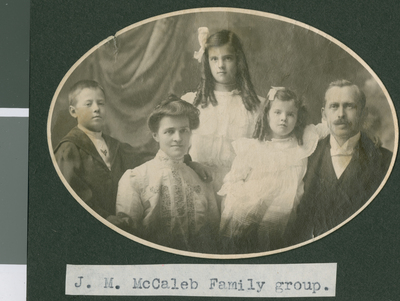
 John Moody McCaleb was a missionary in Japan for the better part of his life. He moved to the island nation during the Meiji era, in which Japan was sprinting to catch up to the technology and emulate the political philosophy of the West. The war-weary pacifist, David Lipscomb, strongly influenced McCaleb. (I would dare say that it did not take much to sway him since his father, a Union soldier, was shot and killed by a fellow Union soldier as he was crossing a stream since he did not hear the latter’s order to halt. 1)

 Hence, when Japan became an Imperial state in its early Showa era, McCaleb’s pacifistic ideology put him at odds with his adopted home. He was sent “home” to the United States in October of 1941, just a couple of months before the Japanese bombed Pearl Harbor. Since his expulsion, McCaleb’s house, which survived the tumultuous world war, has become a museum. A contemporary caretaker of the museum noted that McCaleb never flew an American or Japanese flag in front of his residence, stating “my true nationality is the kingdom of heaven.” 2

 Perhaps, it should not surprise us that the first stanza of a hymn penned by McCaleb reads as follows: “Of one the Lord has made the race, Through one has come the fall; Where sin has gone must go His grace: The gospel is for all.” Yes, this pioneering American missionary of the Restoration Movement wrote one of the most beloved hymns highlighting the Great Commission (cf. Matthew 28:19-20), The Gospel Is for All.

 I wished to share this to drive home one point. McCaleb failed to see cultural distinctions as “racial” in nature. McCaleb understood as Paul told the Athenians in Acts 17.26-27: “and He made from one man every nation of mankind to live on all the face of the earth, having determined their appointed times and the boundaries of their habitation, that they would seek God, if perhaps they might grope for Him and find Him, though He is not far from each one of us. (NASB)” Indeed, we are of one race, the human race.

 When we look for the genesis of our divisions in God’s Word, we read Genesis 11 and the account of the Tower of Babel. Within that chapter, humanity, united, sought to use its solidarity to rebel against God. God couldn’t allow that for, because thus united, He observed, “Behold, they are one people, and they all have the same language. And this is what they began to do, and now nothing which they purpose to do will be impossible for them” (Genesis 11:6 NASB). And so, God divided us by giving us different languages.

 Someone might scoff that vocabulary is not an insurmountable barrier since we learn the tongues of others today. First, it is not as if there were primers to teach one another the new languages existing initially after the Tower of Babel. Second, thus motivated to disperse, they went on to develop cultures independent of one another centered on those communication divisions. They intermarried those of their lingual group who had developed customs different from other lingual groups. It was a positive feedback loop.

 Might I humbly suggest that this remains the source of our societal ills today when it comes to poorly labeled “race relations,” since we are only one race? We have different cultures and customs. Language is not an insurmountable obstacle because we know the syllabaries and alphabets of those speaking different languages from ourselves. With this knowledge, we take the Gospel to every creature.

 But if we want to know what causes a man to kneel on the neck of a subdued man because he has more melanin in his skin, it is not a “racial problem.” It is a sin problem. And even though we all like to think that those resembling ourselves are free of such biases, it is something against which we all must carefully guard our hearts, whether we possess little or much melanin.

 Each of us is created in the image of God and must seek to treat one another as we desire to be treated (Matthew 7.12). Please keep this in mind whenever you see the “if-it-bleeds-it-leads” type of headlines the devil likes to employ to impede the progress of the Gospel in this world. He seeks to do so by convincing men that the essential things are the least important, but that the amount of melanin in one’s skin is of greater import.

REFERENCES

1 Walker, Wayne. “‘The Gospel Is For All.’” Hymnstudiesblog, WordPress.com, 6 Nov. 2008, hymnstudiesblog.wordpress.com/2008/11/06/quotthe-gospel-is-for-allquot/.

2 Ikuma, Koji. “The Old Missionary Museum of Zoshigaya, a Story of One of the Famous Christian Missionaries in Japan.” Unfamiliar Japan Tours, Unfamiliar Japan Tours.com, 19 Aug. 2016, uj-tours.com/missionary-house/.

preview

Why Do We Sigh?

Friday’s Column: Supplemental Strength

brent 2020

Brent Pollard

 I was watching a program from Japan in which the protagonist sighed. We can relate to sighing. I know I may find myself sighing quite a bit. (One researcher noted we all sigh about every 5 minutes. 1) In this program, however, another person, walking by, cautioned the protagonist not to sigh since that allowed happiness to escape. Later, I observed another Japanese show where the same idea was expressed. I know the Japanese have proverbs and idioms, but I’ve yet to locate the source for that expression. I presume it’s a cultural thing since it’s the only context in which I’ve seen it expressed.

 Why do we sigh?   A sigh serves as a reset, both physically and mentally, for the body. 2 As such, it’s an important biological function. Yet, we likewise tend to sigh when we’re frustrated. In fact, that seems to be when we become aware of our sighs. For this reason, most people interpret sighing with negative emotions. 3 If I sighed while we’re having a “vigorous discussion,” you might conclude I’m angry with or didn’t like you. However, the heated exchange might have simply stressed me, triggering a sigh to release the pent-up anxiety.

Despite being commanded to be “anxious for nothing” (Philippians 4.6), we’ve already observed people do sigh. Obviously, if we sigh every 5 minutes, our sighs cannot always be about anxiety. Yet, it remains amazing God provided for a means of regulating excess anxiety through that rush of relaxation one receives by sighing. This, is of course, in addition to the inconceivable peace received from prayer (Philippians 4.6-7). It may be that with one’s sigh, he is refocused upon his task. Thus, a burden is momentarily laid aside so one can get a better grasp of it to carry it further to the goal.

Jesus told us not to worry, but He also said each day has enough trouble of its own (Matthew 6.33-34). One should try to practice mindfulness in connection with his faith. Since we do notice our sighs of frustration and anxiety more often, we ought to allow our sigh to signal us concerning our stress and take the appropriate measures to resolve it. If a sigh is prompted by a person, either you forbear (tolerate—NASB) them in love (Ephesians 4.2), or you talk to them about the troubling matter privately (Matthew 18.15-17; Acts 18.24-28).  If a sigh is because we feel we’re a failure, let us remember the sufficiency of God’s grace (2 Corinthians 12.9). By walking in the Light, we have the continuous cleansing of Jesus’ blood (1 John 1.7). And if someone we’ve tried to reach with the Gospel frustrates us, after we’ve delivered ourselves of bloodguilt (Ezekiel 3.17-19), let us recall the sad truth that only a few find the narrow way (Matthew 7.13-14). Our sigh may be a sign that it is time to knock the sand from our sandals and move on (Luke 9.5).

Yes, rather than serving to remind him of something negative, a Christian’s sigh might also serve as an opportunity, an opportunity to reset his faith.


References

1 Heid, Markham. “3 Reasons You Sigh So Much.” Prevention, Hearst Magazine Media, Inc, 11 June 2019, www.prevention.com/health/a20508517/why-you-sigh-so-much/.

2 Lewis, Jordan Gaines. “Why Do We Sigh?” Psychology Today, Sussex Publishers, LLC., 10 Apr. 2013, www.psychologytoday.com/us/blog/brain-babble/201304/why-do-we-sigh.

3 ibid

53267075_10156153405380922_4144800791061856256_o