Bearing the Marks of Truth:

Living the Gospel in the Footsteps of Paul

Brent Pollard

Paul made a statement in Galatians 6.17 that is worth considering. Inspired by the Holy Spirit, he declared, “From now on let no one cause me trouble, for I bear on my body the marks of Jesus” (ESV). This statement raises the question: was he speaking literally? Did his fearless preaching of Jesus Christ result in physical marks? Considering the hardships listed in 2 Corinthians 11—195 stripes from the Jews, beatings with rods, and being stoned in Lystra—it’s plausible that Paul bore physical scars from these experiences. It’s unlikely any of us bear such marks for Jesus.

However, Paul’s message delves deeper than the physical scars. His letter to the Galatians also defended against accusations of being a false apostle. Critics claimed he received his message from men, not from divine revelation. Paul countered this by pointing to his scars as evidence of his apostleship and dedication to God’s truth. Thus, his physical marks were not just scars but proof of his faithfulness and the truth he preached.

This proof leads to a reflective question: if someone examined your life closely, would they see the truth of God’s Word as clearly as they might see the physical scars on Paul? It’s a challenging thought. Paul encourages us to bear the marks of Jesus, the marks of truth, in our lives. Remember Jesus’ words in John 17:17, “Sanctify them in the truth; your word is truth” (ESV). God’s word, the Bible, calls us to bear its marks in our lives actively.

Bearing the marks of Jesus Christ means living in alignment with His teachings and principles, allowing His truth to permeate every aspect of our lives. This involves reflecting His love, grace, and forgiveness in our interactions and consistently seeking to grow in understanding and applying His Word. As we embody God’s truth, we become living testimonies of His transformative power and a beacon of hope to those around us.

In conclusion, the marks of Jesus Christ that Paul bore are a profound metaphor for Christian life. Whether physical scars from persecution or the spiritual imprints of living according to Christ’s teachings, these marks signify a life committed to the gospel. Paul’s dedication serves as a reminder of discipleship’s cost and divine truth’s strength. As followers of Christ today, we are challenged to bear our own marks through our actions and life choices, not necessarily through physical suffering but through a commitment to living out His teachings. Let us strive to make the gospel’s truth visible in our lives, serving as clear indicators of our faith and commitment to Jesus Christ, thereby honoring the legacy of apostles like Paul and contributing to the witness of God’s kingdom on earth. 

Take Your Soundings

Neal Pollard

In the sixth chapter of Scripture, we read of the first vessel intended to travel upon the seas. Secular history attests to seafaring vessels being around at least 6,000 years, with perhaps the Egyptians pioneering the way around the time of Abraham. It is thought that as early as the second millennium a crude means of measuring the depths of the water had been developed. Certainly, the use of a lead weight and line measurements were in practice by the time we read about Paul’s shipwreck and the events leading up to it (Acts 27:28). One such event prior to the shipwreck involved sailors who “took soundings and found” the sea’s depth “to be twenty fathoms; and a little farther on they took another sounding and found it to be fifteen fathoms.” This was to prevent running aground “somewhere on the rocks” (Acts 27:29), so they put down anchors.

With regard to our personal lives, we need to regularly “take soundings.” Paul says it this way: “Test yourselves to see if you are in the faith; examine yourselves! Or do you not recognize this about yourselves, that Jesus Christ is in you–unless indeed you fail the test?” (2 Cor. 13:5). While it is far easier to analyze how others are living, how committed or uncommitted they are, Paul does not suggest this. It is far too easy for us to drift from where we ought to be (cf. Heb. 2:1). We may have been close to Christ last year or last month, but what about now? What about doctrinally? Are we balanced or have we moved toward extremes whether loosing where God has bound or binding where God has not? What about in our family life versus time spent with the job or personal pursuits? How is our marriage?

See, self-examination is so crucial yet for most of us so neglected. It is imperative that we frequently “take soundings” of our lives. How tragic for us to allow ourselves into dangerous waters just because we have been careless about maintaining proper spirituality and negligent about moving closer to God. I am convinced that unfaithful attendance, immorality, materialism, apostasy, and a thousand other harmful things are allowed to grow in our lives because we have ceased getting a gauge of where we are in our personal, spiritual lives. Please keep taking those soundings and determine how deep or shallow your faith is!

Examining Our Positions

Neal Pollard

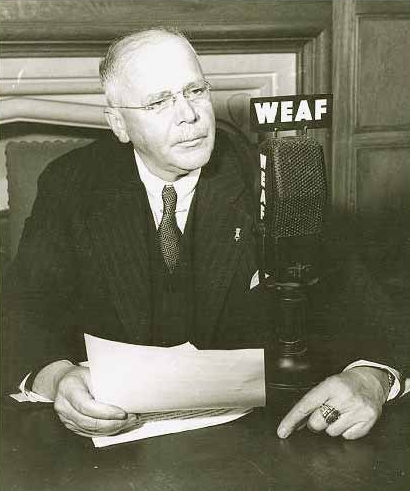
Hans Kaltenborn was an ardent admirer and defender of Adolf Hitler and the “new Germany” ushered in with the Nazi regime. Despite diplomatic warnings of assaults upon Americans, Kaltenborn, an influential American commentator for CBS and NBC and of German descent, dismissed it as flawed and skewed information gathering by biased personnel. About to return home to the states to speak against such reports and warnings, his family went to downtown Berlin to do some last minute shopping. While out, the family found themselves in the middle of one of the endless S.A. parades. When his family refused to offer the Nazi salute, his son was physically assaulted and injured. Finally, someone intervened and the incident ended with no further harm. However, the transformed Kaltenborn was apoplectic. He made a report with the American Consulate in Berlin, but no charges were filed. As Eric Larsen writes, “the senior Kaltenborn ‘could remember neither the name nor the number of the Party identification card of the culprit, and as no other clues which might be useful in the investigation could be found’” (In The Garden of Beasts, 164). Despite this, Kaltenborn was now of a different mind!

There are many ways in which life can do the same thing to us.  We may be dead certain about marriage when we are single, about childrearing “pre-kids,” about our career when still in the classroom, about home ownership when in our parents’ home, dorm room, or apartment, and so on. But, life so often has a way of rudely awakening us from some well-meaning beliefs.

Sometimes, this can happen to us in the all-important area of religion. As we stay in our Bibles and gain wisdom and experience life, we may reaffirm but also clarify and even change certain positions we have long held. This can certainly be a dangerous affair, and some have allowed life to change their positions from what is true to what is false (what Jesus says about marriage, divorce, and remarriage because of a family situation, unscriptural changes in worship because of children attending church who have adopted such, etc.). But few of us will go all the way through life without reconsidering especially some conscience or judgment matters.

There are also a great many of our friends who have been taught religious error on God’s plan of salvation, the singular, undenominational nature of the church, what God wants in worship, women’s role in church and worship leadership, and the list goes on. This can be such a difficult challenge for anyone, to revisit long-held and deeply-believed positions in light of what the Bible says.

For all of us, there must be an abiding humility that approaches scripture without the blinders of prejudices, preconceived notions, and influences like family, friends, church, and so on. That is uncomfortable, but essential—for all of us!  We may come to find that something we’ve clung to so tenaciously must be rejected or that something we rejected must be embraced. If we ever get to that place, may we have the kind of heart that puts the will of God above our own will. Without such, we cannot hope to make heaven our home.

7256698_134185460141
Hans Kaltenborn

PRAISE IDEAS FOR PRAYER

Neal Pollard

Prayer is a very personal exercise, a life built between an individual and God. Thus, these suggestions may of themselves feel intrusive or foreign to some.  However, through the years, I have heard many express some difficulty in knowing how to praise God or what to say in praise to Him when in prayer.  Leah, in naming Judah, was the first to articulate the idea (through his name), “I will praise” (Gen. 29:35).  Moses resolved the same at the head of his song in Exodus 15:2.  The remaining six times the phrase appears, the psalmist pens the words (Ps. 22:22; 35:18; 69:30; 109:30; 145:2; 146:2).  Twice in the Psalms we learn that “praise is becoming” (33:1; 147:1). In fact, it makes little sense to make the case for the importance of praise to anyone who professes a belief in God and has seen His blessings and assistance in his or her life.

Having said all of that, what are some specific things one can praise God for in the exercise of prayer?

  • Praise Him for His attributes (eternality, limitlessness, superlativeness).
  • Praise Him for the wonders of creation (try praying under a starry sky, as the sun is rising, or out in the midst of nature’s beauty—words of praise will flow like water).
  • Praise Him for His blessings.
  • Praise Him for His sovereignty and superiority.
  • Praise Him for His promises.
  • Praise Him for His desire to have relationship with you.
  • Praise Him for His providence.
  • Praise Him for His plan of salvation, giving thought to its component parts.
  • Praise Him for the glorious future He has prepared for you.
  • Praise Him for the victorious work of Christ and the spiritual benefits that brings you.

Obviously, this is just a primer list of ideas.  Contemplate God, His nature, His work, His personality, and you will have an ever-growing, ever-changing, and ever-deepening “praise component” to your prayer life.  It is good to thank Him and petition Him, but take sufficient time to exalt Him by infusing your supplications with praise to Him!  As David urged Asaph and his relatives to proclaim, “For great is the Lord, and greatly to be praised” (1 Chr. 16:25a). Amen!

Neal's Phone_20140906_003