Desire That Bubbles From The Heart And Falls From The Lips

“To see the dull indifference, the negligent and thoughtless air that sits upon the faces of a whole assembly, while the psalm is upon their lips, might even tempt a charitable observer to suspect the fervency of their inward religion.” This quotation was from a man who observed lethargy and unenthusiastic engagement in congregational singing. He decried a lack of apparent passion and zeal for God and spiritual things in this act of worship that is meant to be profound and transforming. The observer, as far as is known, was not a New Testament Christian, but he was responsible for giving us “Joy to the World,” “When I Survey The Wondrous Cross,” and over 500 more hymns. He complained about the lifeless hymns being sung in his day, and his father, who would be jailed for dissenting from the Church of England, challenged him to come up with a solution. All those hymns, which he started writing in adolescence, was his answer. Isaac Watts can be considered an expert on religious hymns, and he revolutionized congregational singing for especially English speakers. The fact that we still sing some of his hymns demonstrates that.

But, his observation in later life about indifference, negligence, and thoughtlessness from  those presumably worshipping is a fair challenge to each of us. Especially when we are singing songs so familiar to us, which we know by heart, we must guard against lips that say one thing and hearts which do not necessarily reflect those words. Is it possible to sing about Jesus’ death on the cross or God’s great love or the amazing hope of heaven or an examination of my Christian life and commitment without reflecting and contemplating? Could I be thinking about something while singing something else? The gamut might run from empty religion to understandable distraction, but we must challenge ourselves to keep our hearts and minds on the words and meaning of those psalms, hymns, and spiritual songs (cf. Col. 3:16; Eph. 5:19).  Let us cultivate desire in the heart that bubbles from the lips as we praise God and encourage one another in our song service.


21034730_1137559296377060_1380004993605666831_n
Andy Baker leading a group in singing (photo credit: John Moore)

Wanting To Want To


Neal Pollard

Do you want your marriage to flourish and grow?
Do you want to read through the Bible this year?
Do you want to lead someone the Savior to know?
Do you want to live life without worry and fear?
Do you want to lose weight and be healthy and fit?
Do you want to attain to more financial discipline?
Do you want self-confidence, courage, and grit?
Do you want to get better at caring and listening?
Do you want a closer place near the heart of God?
Do you want to trust Him when trouble finds you?
Do you want to have heaven after earth you’ve trod?
Then it all must begin with you wanting to want to! —NP

Call it desire, motivation, or willpower.  Whatever you call it, it is central to succeeding at whatever your goals are. What does it take to become a Christian? Wanting to! What does it take to defeat the sin in your life? Wanting to! What does it take to break bad habits and repeated blown judgment calls? Wanting to! What does it take to be a stronger, more faithful Christian? Wanting to! That is not to minimize or ignore our dependence on God and the strength He provides. But He is not going to overwhelm or overtake our will and make us do or be something. He did not operate that way in the age of miracles.

What will be your motivation? There are so many potential incentives. There’s the love God has shown us (2 Cor. 5:14). There’s the fear of hell (Mat. 10:28). There’s the yearning for heaven (John 14:1-3). There’s the concern about how we influence other’s destiny (Mat. 5:14-16). There’s the love we have for God (1 Jn. 4:19). There’s the longing to be like Jesus (1 Jn. 3:2). For each of us, some motivations are more powerful than others. Whatever it takes to be more for God in this needy world, latch onto it and pursue it. You can do it because you won’t be doing it alone. God gave you the church, His Word, prayer, and a personal will to help arrive at the ultimate goal. Don’t let up. Don’t look back. Don’t lose hope. Want to want to!

img_4387
4 people have motivated me to run over the past 19 years: Kathy, Joe, Bob, and Wes. Today was a 6 miler in the snow when it felt like 4 degrees. 

The Logical Progression Of The Line

Neal Pollard

Suddenly, it has become imperative that bathroom concessions be made for those who are struggling with gender identity issues. The comprehensively consuming coverage it has garnered, the blistering backlash against any opposing of this baffling blurring of the lines, and the preeminent priority this has become for a problem pestering a puny percentage of the population is actually not surprising. At least, it should not be.

The premise behind “transgender rights” is the same as that behind gay rights, but also the “right” to choose abortion, the “right” to become sexually active before marriage, the “right” to divorce and remarry at will—as well as the “right” to commit adultery. Neither does this clamor for rights reserve itself to matters identified in scripture as sexual sins. The watchwords of our culture include “feel,” “want,” “choose,” and the variants of “I,” “me,” and “my.” Self has been enthroned and each call to express, practice, and flaunt each co-opted right is expected to be not just tolerated by everyone else, but wholly embraced by them.

If you think our society lost its collective mind overnight, you have not been paying attention. If you think that this sickening syndrome was born in the 21st Century, you are likewise mistaken. We are seeing the spoiled fruit of sinister seed planted by mankind in every generation since the first generation.  There is a moral ebb and flow in every civilization and generation, but the issue is ever-present. The majority succumb to the temptation to crown our desires and condemn the declarations of Deity.

It was an illuminating moment, looking at Mark 8:34-35 last night during Teens In The Word. Michael Hite pointed out a thread used by Mark that’s summed up in those two verses. Several times, Mark speaks of what individuals “want” or “desire.” Herodias wanted to kill John the Baptist (6:19). Her daughter wanted his head as payment for the dance which pleased Herod so much (6:25). Herod did not want to refuse her (6:26). People did whatever they wished with John the Baptist (9:13). Jesus speaks of those who desire to be first (9:35). James and John wanted a position of prominence (10:35). Jesus warns about those who desire greatness (10:43-44). But, if we desire to come after Jesus—to be His disciple—we must put self to death! This is a radical idea, one completely rejected by the world. Instead, the world says to keep moving the line to wherever you want it. You decide! You’re the boss. Discipleship acknowledges that God and His Word determine where the lines are drawn. We follow Jesus and stay behind His lines.

But Jesus does not ask us to do what He did not do to the greatest degree. Facing His imminent death on the cross, Jesus prayed in the garden, “Abba, Father, all things are possible for You. Take this cup away from Me; nevertheless, not what I will, but what you will” (14:36). All these words, variously translated “desire,” “want,” and “will” in Mark’s gospel, are from a single Greek word meaning “to desire to have or experience something; wish to have” (Louw-Nida, BDAG). Jesus followed His Father’s will and denied His own. In essence, He says to us in Mark 8:34-35, if you want My salvation, you must do the same thing. The world doesn’t get that, but we must! This life is not about getting everything we want. It’s about self-denial, murdering self-will, and following Jesus. It’s about staying within His lines when it comes to everything. That’s a message we must gently share with a world bent on a self-destructive, self-guided journey!

line-in-the-sand

Are You “Boiling Over” Or Just “All Wet”?

Neal Pollard

The word translated “zealous” is from the Greek word zero (Dzay-lo-o). It is found 17 times in the New Testament. It means to “burn with zeal; to be heated or to boil, whether with envy, hatred, anger, or to be zealous in the pursuit of good; to desire earnestly, to strive after, busy one’s self about” (Thayer 271). It is found in both the positive and negative sense:

  • Negatively–Acts 7:9; 17:5 (“became jealous”), 1 Corinthians 13:4 (“jealous”), Galatians 4:17 (“eagerly seek”), James 4:2 (“envious”)
  • Positively–1 Corinthians 12:31 (“earnestly desire”), 1 Corinthians 14:1,39 (“desire earnestly”), 2 Corinthians 11:2 (“jealous”–with a godly jealousy), Galatians 4:18 (“eagerly sought”–in a commendable manner), and Revelation 3:19 (“be zealous”).

(The object of the zeal and the attitude it describes
determines whether it is an acceptable emotion or not.)

We have all known people who are prone to boil over with jealousy and anger. They seethe. They grit their teeth. They explode! They are just like that unattended pot on the stove, and they usually leave an even bigger mess. They are proving that there is something underneath them leading to such “outbursts of anger” (Gal. 5:20).

We also know people who always seem enthusiastic about serving the Lord. They are effervescent. They have an infectious smile and positive attitude about almost everyone and everything. They are eager to serve and help. They go the extra mile. They seem genuinely thrilled to be able to engage in spiritual service, no matter what it is! Guess what? They are proving that there is something underneath them leading them to be “zealous of good works” (Ti. 2:14).

Both vessels, boiling over, impact the church. Both have influence. Yet, one is using his or her passion constructively, but Satan is using the other destructively. What lights your fire? Is there one underneath you? Let it be an earnest desire to build up the Kingdom! This is one instance where a “watched pot” needs to boil–boil over with enthusiasm for serving Christ!

water_at_boil

What It Takes To Grow The Church In Our Culture

Neal Pollard

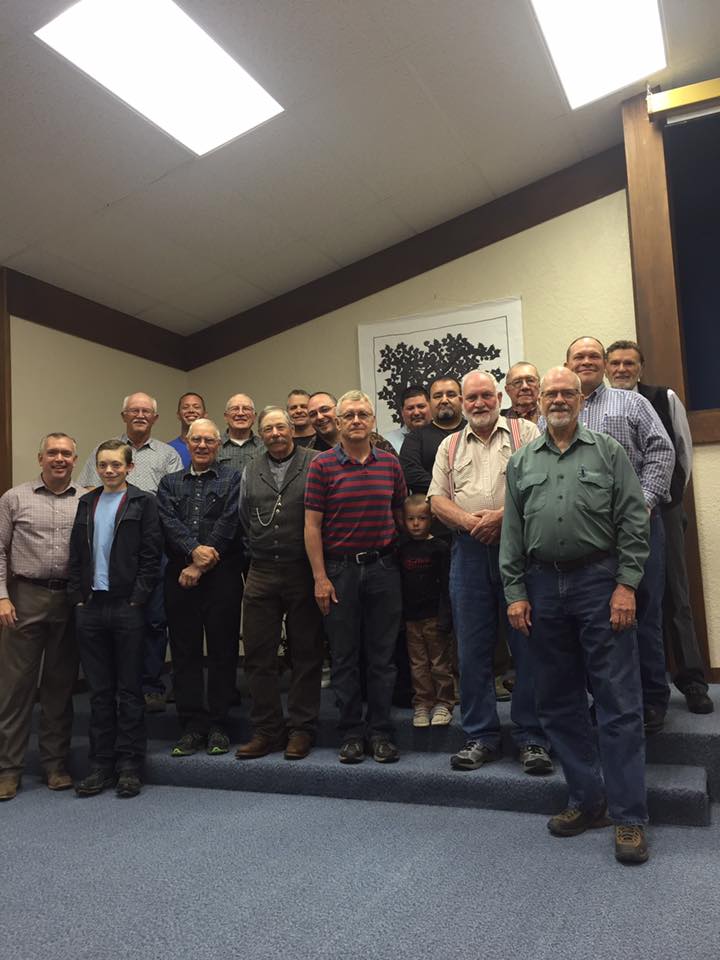
It was such a treat to be among the hearty, faithful Christian men of central Wyoming and the Bighorn Basin. By Bible-belt comparison, they come from small congregations. But their passion and desire to grow the church is humongous. Near the end of their men’s retreat, they divided into groups to discuss the obstacles to growth and suggestions for growth. What they came up with was incredibly insightful, helpful to especially anyone living in the current, western culture.

Among the obstacles they listed were:

  • Lack of commitment
  • Fear
  • Political correctness
  • Biblical ignorance
  • Sin
  • Apathy/indifference
  • Misplaced priorities
  • Lack of adequate leadership

For those in Alabama, Oklahoma, and California who would say, “Those are our obstacles!”, isn’t it interesting how common our struggle is.  The same factors are holding back our growth all over the nation.

Yet, I love the suggestions they came up with. I think they are key to tapping into our growth potential throughout the country and, to a great extent, throughout the world. They suggested the following:

  • Increase fellowship—The key to growth is being in each others’ lives more
  • Emphasize and empower Bible study—There can be no spiritual or numerical growth without growing our knowledge and understanding of God’s Word
  • Think outside the box—Staying faithful to truth, get out of method ruts and overcome fear of rejecting a different, scriptural method just because it is new
  • Challenge greater application of biblical truth—Every class and sermon must have a viable “so what”
  • Be intentional in our relationships—Realize that our jobs, community involvements, friendships, etc., are means to an end rather than an end of themselves. They all exist as opportunities to evangelize.

Our brethren in the deep south, the north, the Atlantic region, the upper midwest, the southwest, the far west, the northwest, and, in short, any recognizable region of the country share a desire to be relevant and meaningful in our communities. We want to honor Christ and grow His body. But it will take measurable steps. It won’t happen incidentally! We must act on our hopes and desires. We must personally engage ourselves in enacting these suggestions daily! In so doing, we’ll not only avoid being part of the problem but we’ll be part of the solution.

13118907_10153650222335922_7374883366678402046_n

EXCUSES OR MOTIVATIONS

Neal Pollard

Saving for retirement. Exercising and losing weight. Mending a broken relationship. Daily Bible reading.  Many are the objectives, goals, and needs we all have in this life, but just as many are the excuses we often give for not addressing them.  We fall back on lack of time, how we feel, whose fault it is, and generally why we cannot do what we know we should be doing.  It seems that until we are convicted of our need to do something, we will always find ready excuses.

But, when we are motivated to do something, we will not let anything stop us.  We find the time, muster the will, and channel the discipline necessary to keep plugging away until the objective is achieved.

Living for Christ is the greatest objective there is.  It fulfills the very purpose for our existence. It benefits everyone around us. It is imperative to gaining heaven as home.  It positively influences those closest to us.  But, when it is not our greatest priority, we will come up with a bevy of excuses. These run the gamut from sports activities to work to hypocrites to personal weakness to whatever else may come to mind.  Until we are motivated, we will find excuses.  So, what should motivate us to live for Jesus?

  • His sacrificial love (Gal. 2:20).
  • Fear of judgment and eternal punishment (Mat. 25:31-46).
  • The debt we owe (Rom. 1:14-17).
  • The love we have for Him (2 Cor. 5:14).
  • Our love for our family and others close to us (Ti. 2:3-4; Eph. 5:25).
  • An understanding of our purpose (Phil. 1:21-24).
  • The hope of heaven (John 14:1ff).
  • A sense of obligation to our spiritual family (1 Th. 5:11; Mat. 18:12ff).
  • A desire to do what is right and serve Jesus as our Master (1 Pe. 2:20; Mat. 7:21).

All of these (and more) are excellent motivation for enduring the difficult in order to successfully overcome in this life. They will help us to eliminate every impediment that stands in our way.  As the writer of Hebrews says, “Therefore, since we have so great a cloud of witnesses surrounding us, let us also lay aside every encumbrance and the sin which so easily entangles us, and let us run with endurance the race that is set before us, fixing our eyes on Jesus, the author and perfecter of faith, who for the joy set before Him endured the cross, despising the shame, and has sat down at the right hand of the throne of God” (Heb. 12:1-2).

The Lightning March

Neal Pollard

It was unusual for foot soldiers to play a major role in the Middle Ages. Harold II of England’s 7000 infantrymen were an exception. He marched them from London to York, about 216 miles, in a week. The rate of the march was 30 miles per day for an entire week!  “A sustained rate of thirty miles per day for seven days was in most circumstances unheard of. A sustained twenty miles per day would have been considered extraordinary.”  The army moved faster than news of its approach. This helped turn the Battle of Stamford Bride in 1066, known as “Harold’s Lightning March”  (Hackett, Jeremiah.  World Eras, Vol. 4: Medieval Europe, 814-1350, p. 128). What seems lost to history is how Harold motivated such rapid movement.  To build such resolve and determination in so many people, in unified purpose, must speak to Harold’s leadership ability.

All of us are marching with rapid pace toward the end of life and eternity.  Hasn’t it been going by so quickly?  It truly is a “lightning march.”  At the end of the march, will we have won the battle?  The church of every generation, and not just individuals, are making this march.  What impression are we leaving on the world around us, what battles of significance will have been won?  Think of the first-century church.  They “turned the world upside down” (Acts 17:6).  They “preached to every creature under heaven” (Col. 1:23).  They permeated their immediate communities, surrounding communities, and the remotest communities (cf. Acts 1:8-11).  Think of those brave, sacrificial Christians during the 19th Century who rallied together around the principle of restoring New Testament Christianity.  With a great reverence for the pattern of Scripture, they sought to imitate the faith and practice of that first-century church.  In their wake was growth and influence.

In both cases, profound as their influence was, they rapidly left the scenes of time.  Their influence remained, but succeeding generations of the Lord’s Army—for whatever reasons—slowed their pace considerably.  We may glorify the church of the 1950s, at one time known as the fastest growing religious group in our country.  But most of them have gone and those who remain have grown slower in their pace. What about the church of the early 21st Century?  How will we be remembered?  Never forget that, in part, this is influenced by what you and I are doing as soldiers under the Lord’s direction.  We could not want for better guidance and a better Commander.  We should have ample motivation.  It is high time we pick up the pace!  Victory awaits (1 Cor. 15:54-58).

Bible Classes, Special Services, And P.M. Worship Services

Neal Pollard

  • I attend because I want to honor God in the special way that occurs when the church assembles to worship Him
  • I attend because I want to encourage others and be with them every opportunity I can
  • I attend because I find the acts of worship so meaningful
  • I attend because there’s so much of the Bible I have yet to master, and I want to hear what the teacher and the other students may have to say about it
  • I attend because what I do know and have learned I feel compelled to share when given the opportunity occasioned by the assemblies
  • I attend because I often meet those searching for truth, those new to the area, and those brothers and sisters visiting from out of town during those times
  • I attend because I think it sets a good example for my family, friends, and neighbors
  • I attend because the very exercise of what’s done in assembling, if my heart is engaged, helps me grow in my Christian walk and strengthens me for the week ahead.
  • I attend because I want to rise above the bare minimum expectations

Certainly there are many more and probably better answers regarding the motivation for attending every time the local saints are assembled.  But these are enough to move me, when I am able, to join my spiritual family in both study and worship.  I try to prioritize the assemblies above the unnecessary things and the things that will not endure beyond this life.  The same reasons will draw me to come when we have seminars, gospel meetings, Vacation Bible School, lectureships, and the like.  When I can attend, I want to attend and will attend!  I’m thankful that so many others must feel the same way.  There’s always room for more!