
Friday’s Column: Supplemental Strength

Brent Pollard
Greek mythology is fascinating. So much so, in fact, that the Romans co-opted it as their own. As such, the Roman poet, Ovid, tells us the story of Narcissus and Echo within Metamorphoses. You likely recognize Narcissus’ name because of the mental disorder named for him. Narcissism. You may not have known that the phenomenon called an “echo” also derives its name from a mythic figure. Echo was a beautiful, but talkative, forest nymph. She cut off the goddess Juno so much during conversations that the peeved goddess cursed her with the capacity only to repeat the last words spoken by others.
Without delving too deeply into the mythology, suffice it to say Echo fell in love with the picky Narcissus, whose standard for a consort was so high that none could meet his expectations, including poor Echo. Already cursed, Echo was not able to convey her feelings to Narcissus. On one fateful day, however, Narcissus had sensed Echo’s presence and called out, “Is anyone there?” After she replied in the same, he said, “Come here!” Echo ran to Narcissus as she repeated his command. Echo’s actions repulsed Narcissus. He told her he would sooner die than allow her to enjoy his company. Echo was humiliated and ran away. Yet, she continued to love Narcissus. The vengeful goddess, Nemesis, saw Narcissus’ actions. She cursed him by making him fall deeply in love with his reflection.
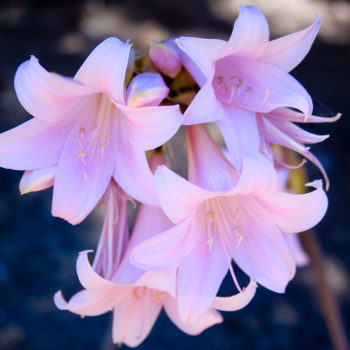
There was no redemption for Narcissus and Echo. Narcissus lingered by the pool of water, looking longingly at his reflection. Echo persisted in her love for Narcissus. As the years passed, Echo’s beauty faded, and her body wasted away, leaving only her voice. Narcissus committed suicide, realizing his impossible love would remain unrequited. A flower bloomed where he killed himself. Yes, the narcissus.
It is easy to use Narcissus as an object lesson for us, spiritually. Both James and Peter quote Proverbs 3.34 from the Septuagint to remind us that God resists the proud (James 4.6; 1 Peter 5.5). A haughty look is something we know God hates (Proverbs 6.17). Our Lord went about doing good (Acts 10.38). Since He is our example (1 Peter 2.21), Paul tells us: “do not merely look out for your own personal interests, but also for the interests of others.” (Philippians 2.4 NASB)
But what lessons do we derive from Echo? Her tongue is what initially got her into trouble. Just because the tongue is an unruly member, per James 3, doesn’t mean that we should not seek to control it. There is the talk we must avoid (Ephesians 4.29; 5.4; Philippians 2.14). Besides this prohibited speech, there remains gossip and lying, which both Testaments condemn (Exodus 20.16; Psalm 15.1-3; Proverbs 6.19; 2 Corinthians 12.20; 1 Timothy 5.11-13; Titus 2.3).
Echo also squandered a precious commodity in her quixotic pursuit of Narcissus, time. We are supposed to take advantage of the time given to us (Ephesians 5.15-17). There comes the point where even preaching the Gospel to the hard-hearted equivalent of a brick wall is like casting “what is holy to dogs” and throwing “pearls before swine” (Matthew 7.6).
Lastly, Echo loved someone incapable of justifying the precious investment of her heart. The world is like Narcissus in that regard. John reminds us that the world with its lusts will one day pass away (1 John 2.15-17). Even so, how many have laid up treasure on the earth? (Matthew 6.19-21; Luke 12.33-34). We cannot pursue both God and mammon (“wealth” NASB— Matthew 6.24).
May it be that as you search your heart that you find no kindred spirit with Narcissus and Echo. Focus outwardly upon others’ needs, be mindful of the precious commodity of time, and give your heart—and tongue—to the One Who will best use and appreciate it (cf. Matthew 22.36-38).

 The Preacher Pollard Blog