“THE GIFT OF PREACHING”

“THE GIFT OF PREACHING”.

“THE GIFT OF PREACHING”

Neal Pollard

Some men who preach have been told they have the “gift of gab.” How many of us have spoken of preachers who are “gifted” at what they do?  I think we understand the meaning of the word “gift” in that context.  We essentially mean “ability.”

A phrase that has seemingly gotten increasing usage among some in the Lord’s church, as well as the larger religious world, is “the gift of preaching.”  Recently, I heard a man pray prior to preaching, “Pour on me the gift of preaching.”  Others refer to certain preachers as those upon whom the gift of preaching has obviously been bestowed.  In many instances, those claiming such giftedness have proceeded to teach new and different doctrines from those clearly revealed in the New Testament.  Yet, what is implied in describing their work in preaching in this way is designed to silence any criticism or objection to what they go on to promote.

If they are directly endowed with a spiritual gift by the Holy Spirit, as we see referenced in the discussion in 1 Corinthians 12-14, then aren’t we fighting God if we disagree with their message?

There is no denying that some have a knack, an ability, an inclination, and an aptitude for various areas of service in the Lord’s kingdom.  Sadly, some, like the one talent man, have buried their abilities to contribute to the growth and development of the church.  Again, every one has a part to play in the body (cf. Eph. 4:16).  This is a far cry from a divine bestowal that, in turn, suggests the Holy Spirit is directly giving the speaker his message.

When the inspired apostle Paul was preaching to the Bereans, they opened their Bibles to check the accuracy of his message (Acts 17:11).  When John urges the Christians to “test the spirits” (1 Jn. 4:1), it is in the context of the one who “keeps His commandments” (3:24).  It is a warning connected to the reality that “many false prophets have gone out into the world.”  So, a man claims a passage to teach “A.”  How do we know it actually teaches “A”? Because he has the “gift of preaching”?  No, we examine the passage, and we examine the claim in light of the passage.  If there is a conflict, what do we follow? The passage or the claim?

The point is this.  To hide behind the claim of a divine endowment of “the gift of preaching” is at least misleading, if not disingenuous.  The preacher must submit himself to the process of proper interpretation, fertilize the process with much prayer, and then set about to faithfully proclaim what scripture says.  That is how one properly uses his gifts to preach. Be aware of lofty claims that God is pouring His message into their heart through some direct operation. Often, what such preachers say is at odds with revealed truth.  Truth always trumps testimony!

SINGING WITH THE UNDERSTANDING: “IVORY PALACES”

SINGING WITH THE UNDERSTANDING: “IVORY PALACES”.

SINGING WITH THE UNDERSTANDING: “IVORY PALACES”

Image

Neal Pollard

A little less than a century ago, Henry Barraclough wrote one of the most unique, lyrically-rich songs in our songbook.  The musical arrangement is soothing in a way that matches the meaning of the words.  However, its poetry has caused some problems.

The first verse begins, “My Lord has garments so wondrous fine, and myrrh their texture fills; Its fragrance reached to this heart of mine, with joy my being thrills.”  This and the following verses must be understood in light of the chorus, which essentially tells us that Jesus left the perfect splendor of heaven to come to this sinful earth because of His unmatched love.  With that background, we understand Barraclough’s meaning to be figurative.  Jesus did not wear the clothes of a king while on earth.  Thus, the writer seems to speak of the qualities of Jesus’ character, the power and influence of it.  Myrrh  is a perfume, a theme the writer uses through the various stanzas of the song.  So, this first verse speaks of the attractiveness of Jesus’ character.

The second verse talks about the sorrow and pain He allowed Himself to endure.  While we think of aloe as a healing plant, the writer speaks of it in the sense of its bitter root (see the footnote at the bottom of the song in Praise For The Lord). While Jesus was a king, He was also the man of sorrows, acquainted with grief (cf. Isa. 53:3).

The third verse shifts the focus to Jesus as the Great Physician.  He’s an attractive king, He’s a suffering Savior, but He’s also the able healer.  The word “cassia,” as once again a footnote supplies, is a “medicinal herb.”  The idea is that He rescues us from our sin problem.

The final verse refers to Jesus’ second coming.  He will bring the faithful Christian to heaven.  Taken together, we see Jesus in the “garb” (clothes) of King, Savior, Physician, and Judge.  Driving it all is “only His great eternal love.”  Understanding the underlying theme of the songwriter helps us to better worship and better appreciate the perfect Son of God. 

“DO SOMETHING RELIGIOUS!”

hope_A_thumb


Neal Pollard

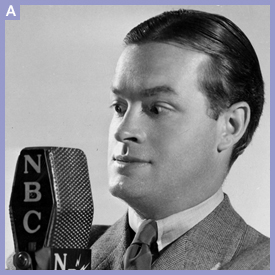
Larry Wilde included a famous bit from one of Bob Hope’s monologue:  “Once I was flying in a plane that was hit by lightning. A little old lady across the aisle said, ‘Do something religious!’ So I did–I took up a collection” (Binghamton, NY, PRESS, 7/12/69, 15).  We get the irony in his fictitious story about the lady’s panic and Hope’s greed.  Yet, it is not funny when those in religion try to take advantage of people’s fears and anxieties.  The medieval practice of the Catholic Church was to allow people to “pay” for their sins by financial contributions.  Modern televangelists have tried to do the same, assuring that financial contributions to their “ministry” would aid in their forgiveness.  It is outrageous for religious institutions and leaders would seek to extort through such disingenuous means, but equally pitiful that people would seek such an inadequate substitute.

Micah poignantly addresses this matter in his inspired book of prophesy.  He writes, “With what shall I come to the Lord and bow myself before the God on high? Shall I come to Him with burnt offerings, with yearling calves? Does the Lord take delight in thousands of rams, in ten thousand rivers of oil? Shall I present my firstborn for my rebellious acts, the fruit of my body for the sin of my soul? He has told you, O man, what is good; and what does the Lord require of you but to do justice, to love kindness, and to walk humbly with your God?”

We cannot pay for or earn our salvation.  All the money in the world could not pay the debt of a single sin.  Micah reveals the mind of God here.  He wants our hearts.  When He gets that, He will not get debates and disagreements about the need for our obedience in order to receive the benefits of His grace.  Jesus describes the good soil as the one where the implanted word is met by an “honest and good heart, and hold it fast, and bear fruit with perseverance” (Lk. 8:15).  Truly, let us do something religious!  But let that be guided by Scripture!

Transgender First-Grader?

Neal Pollard

In Fountain, Colorado, a little 6-year-old is making national news.  The focus is not as much on this little one, still innocent, born a male but professing to be a girl.  It is how the adults in the story are behaving that defies belief.

The mother, interviewed now by every media outlet, speaks solely and exclusively of the child with pronouns like “she” and “her.”  Her son believes himself to actually be a girl, so she is being raised as such.  He is in Girl Scouts, dresses like a girl, and is treated like a girl.  The story did not get media scrutiny until the child was not allowed to use the girls’ restroom at his elementary school.  It is not clear who it was, but someone alerted the media to this scandalous refusal.  The media, fully complicit with the aggressive GLBT agenda, are portraying this as a natural and normal circumstance that should draw the sympathy and support of one and all.

It appears that a great many people hearing about this are appalled and even up at arms over what these parents are pressing or even how they are parenting.  Having taken some time to consider this, my conclusion is anything but profound.  It is this, that the further we get from God the more bizarre and twisted our thinking and actions become.  However, when a society reorients its thinking in a way that moves from God, it does so to its own great peril.  Proverbs 14:34 talks about the national disgrace of sin.  This means a guilt that a person feels or should feel.  However, it is possible for a person to be beyond such feelings because of sin (cf. Eph. 4:19).  What a dangerous place at which to arrive!

Who knows how this story will end? Who knows how the six-year-old will grow up to be?What we can know from Scripture reveals a God Whose creation and design was perfect.  We change his order and pattern to our own hurt!

SINGING WITH THE UNDERSTANDING: “NIGHT, WITH EBON PINION”

bird,nature,black,wings-d1b589312dfdd0eb6cfb2f3221cfb6e7_h


Neal Pollard

Another song we often sing prior to the Lord’s Supper is “Night, With Ebon Pinion.”  Written in 1854, when Schumann and Liszt were composing, Dickens and Thoreau were writing, and Nightingale was nursing, Love Jameson wrote this beautiful hymn.  However, its wording has puzzled many a thoughtful singer.  Filled with beautiful poetry, it is nonetheless enigmatic at points.

The first verse begins, “Night, with ebon pinion.” The Praise for the Lord songbook has notations for difficult words and phrases.  Thus, at the bottom of the song is an explanation.  “Ebon pinion” means “wings of darkness.”  So, the complicated beginning can hamper our comprehension of the next phrase (“brooded o’er the vale”).  Though the word “brood” has several meanings, including those related to birds, the thought here seems to be that dark night hovered closely over the place (which context suggests is the Garden of Gethsemane).  The verse paints the picture of darkness and silence, except for the sound of the wind.  In that lonely setting, Jesus, in profound sorrow, intensely prayed, completely overcome with emotion and exhaustion (“prostrate”).  Jameson appeals to Luke’s record of events in this verse (Lk. 22:44).

The second verse begins with an allusion to Isaiah 53, blending together several ideas from that prophetic chapter which foretells the events of the crucifixion.  It also bears resemblance to Romans 4:25. But, then Jameson returns to the lonely scenes of Gethsemane, where Jesus prayed while Peter, James and John slept (cf. Mark 14:33-37).

The last verse begins by again alluding to Mark 14, where Jesus, in deep sorrow, pleads to God, “Abba, Father” (36). This is a special, Aramaic word.  It is the language of a child to his father, but its meaning is also of one who is an heir.  The songwriter seems to be drawing on the intimate, personal aspect of the relationship between Son and Father. The rest of the verse alludes back to Jesus’ prayer (Mat. 26:39 and Luke 22:42).

Taken together, this song is meant to lift a single facet of Jesus’ diverse suffering, His time in agonizing prayer in prospect of His arrest, trial, scourging, mockery, hanging, and all else that He endured.  It helps us remember the anxiety our Savior, all-man as well as all-God (Heb. 5:7).  If we comprehend and contemplate its meaning, it can aid our mental preparation for the Lord’s Supper as well as remind us of God’s great love for each of us!


Who Ruined Ray Fosse’s Career?

Neal Pollard

One of the most unforgettable moments in all of sports history must be the 12th inning of the 1970 All-Star game, when the young Cleveland Indians’ catcher, Ray Fosse, was violently upended by Mr. “Charlie Hustle,” Pete Rose, of the Cincinatti Reds.  It was such a hard hit, many wrongfully credit Rose with ruining Fosse’s promising career (he would retire before the end of the decade). Rose did separate Fosse’s shoulder, but closer investigation uncovers more clues as to what happened to Fosse.

Fosse actually spent five tours on the disabled list, for everything from a side muscle pull to a neck injury suffered while breaking up a fight in the clubhouse (Reggie Jackson and Billy North got into a brawl and Fosse suffered a crushed disk trying to stop them from hurting each other, bleacherreport.com).  He was also hit by a cherry bomb, thrown from the stands, that blew up by his foot, “badly burning the arch of his foot and causing a shock” (baseballlibrary.com).


Sometimes, when we suffer and struggle, we look for a scapegoat–something or someone to blame.  We may blame the church as a whole or a congregation where we attend.  We may blame someone who mistreated us or a bad series of events in our life.  If we are not careful, we may be placing the blame in the wrong place.  Others, from the outside looking in, may think our troubles are from one source when they actually are from quite another.


Others who cause us to stumble share responsibility for our fall (Lk. 17:3).  We are influenced by outside influences.  However, ultimately, no one else can be blamed for our lostness if we allow ourselves to fall and do not overcome it.  Elders will give an account for their oversight (cf. Heb. 13:17). Preachers and teachers must be careful about their preaching and teaching (1 Tim. 4:16).  So must more mature Christians (Rom. 15:1ff). But, let us remember, “Each one of us will give an account of himself to God” (Rom. 14:12) and “each one will be recompensed for his deeds in the body” (2 Cor. 5:10).

1 Corinthians 11 And Women’s Role In The Church

Neal Pollard

For about a generation or so, there has been a significant, ever-growing push within churches of Christ to put Christian women into an “egalitarian” (equal) role with men in the worship and, sometimes, leadership of the church.  Sometimes, such a movement was prompted by perceived cultural pressures.  Emotional arguments have been made. At times, scriptural arguments have been put forth.  About a decade ago, I was asked to participate in a book project in which I was assigned the subject, “The Role of Women In The Church” (Dyer, Haynes, and Jenkins, Redeeming the Times, 128-140). My task was to show the many things Christian women can do in the church, as well as examine New Testament passages that “legislate” (no doubt, an unsavory word to some) the role of women in the church.  Consider a brief excerpt from this book, where I dealt with just one of several passages (1 Cor. 11:2-16):

There Is An Ordained Model For Gender Roles (3)

Actually, Paul points out three relationships: man in relationship to Christ, woman in relationship to man, and Christ in relationship to the Father. Only one of these relationships involves gender–the second. yet, all three are hierarchical (by which this writer means an arrangement according to order of role). In each pair, one is “head” and the other is to be in subjection to that head. Some maintain that an ambiguity exists about whether “husband” and “wife” rather than “man” and “woman” is intended in this passage. In light of the larger context it seems that these gender roles are applicable with regard to function and role within the church. To limit it to the home or stretch it to mean all situations is to do violence to the text. Paul seems to be addressing church matters, so the verse is best understood as addressing the function of men and women within church life and work.

This Model Could Be Violated (4-7a, 14-15)

Though the example seems obviously cultural in nature, Paul references it to show that the Christian man and the Christian woman could potentially be guilty of violating the gender roles established by God. At the end of the thought begun in verse four, Paul gives the underlying rationale for why the cultural practice was to be observed. Yet, the mention of head-coverings here, a matter that was “obligatory and temporary,” seems to serve as an example of how the Corinthian Christians were violating their gender roles. In any age, though cultural variables and norms may change, the man or woman could be guilty of violating the biblical model for gender roles in the church.

This Model Is Established By Order Of Creation (7b-9)

The reasoning given by Paul is tied to creation. The why of the order of creation may be endlessly debated. That it is a fact cannot be denied. The very reason why woman was to recognize man as head goes back to Adam and Eve.

This Model Is Maintained For A Heavenly Reason (10)

The mysterious statement in verse ten may refer to angelic involvement and interest in the activity, obedience, and worship of Christians. Whatever it means, it is given as support for the woman to observe the cultural symbol of subjection to the man.

This Model Does Not Allow For Abuse (11-12)

While the model has certainly been abused, the scripture makes neither allowance nor permission for such abuse. Each gender is dependent upon the other. Interdependence has primary significance in the marriage relationship (Gen. 2:18,23), but it also seen in the church. The very propagation of the human race is a matter of interdependence (12). Therefore, neither gender has cause to boast. The church is complete because of the presence of men and women. Neither gender is superior or inferior because of the roles given them by God!

SINGING WITH THE UNDERSTANDING: ‘TIS MIDNIGHT, AND ON OLIVE’S BROW

Neal Pollard

I love the poetry and melody of the William Tappan hymn, “‘Tis Midnight, and on Olive’s Brow.”  It is also so rich with meaning, but inasmuch as it was written 191 years ago it is possible that its wording gives younger worshippers, new Christians, non-Christian visitors, and a good many of the rest of us difficulty with comprehension.  Good worship requires not only proper actions, but mental engagement and a heart-connection with the lyrics.

The first verse begins, “‘Tis midnight, and on Olive’s brow.” Some may have no idea what that means.  The song is about Jesus in the Garden of Gethsemane the night He was arrested and ultimately led to the cross.  Tappan seems particularly influenced by Luke’s account of the events.  While scripture does not single out the hour of midnight, it does indicate Jesus was there at night (see Lk. 22:56, 66; cf. Jn. 18:3; Mt. 26:31, 34; etc.). Luke 22:39 indicates the garden’s location as the Mount of Olives.  “Brow” would be a poetic, late Middle English word for the top of a hill.  The phrase, “The star is dimmed that lately shown” would simply reinforce the idea of darkness and the anxiety such would add to Jesus’ suffering.

The second verse is pretty self-explanatory, though it might help some to remember that the phrase, “the disciple whom Jesus loved” (John 19:26; 20:2; 21:7,20) appears to be a humble term the apostle John uses to describe himself in his gospel.  “Heeds not” simply means “does not hear”; he had fallen asleep with the rest of Jesus’ inner circle of disciples (Mk. 14:37).

The third verse is also straightforward, though we have another allusion to Luke’s gospel, with “the Man of Sorrows weeps in blood.”  Luke 22:44 tells us that Jesus, “being in agony” was “praying very fervently; and His sweat became like drops of blood….” The second line of this verse speaks of Jesus’ kneeling in anguish, which Luke cites in the last part of Luke 22:44, saying Christ was “falling down upon the ground.”

The last verse might cause some trouble, especially without consulting the footnote found under the song in the “Praise for the Lord” songbook.  “‘Tis midnight, and from ether plains is borne the song that angels know,” is, for many, incomprehensible.  “Ether plains,” as explained in the book, is a poetic way to reference “upper regions” or “heaven.”  The song seems to allude to that part of the garden experience where “an angel from heaven appeared to Him, strengthening Him” (Lk. 22:43).  While this verse of the song seems to strain the meaning of Luke’s words, it is a beautiful thought that angels or even the Father sang to comfort the suffering Son (cf. Heb. 5:7).

We should take the time to understand the words of the songs we sing in worship to God.  This keeps worship from being merely external, without heart, and a disconnection.  Perhaps, too, it serves as a notice that we should explain the meaning of older songs, especially those couched in language we do not use today.  It should also awaken the awareness that we need to incorporate songs in worship that are more contemporary in language and melody along with these beautiful, older songs.

Never Become Jealous Of One Another!

Neal Pollard

  • If You Do Not Want To Be Enraged, There Is No Room For Jealousy (Prov. 6:34).
  • If We Do Not Want To Lend Our Hearts To Contradicting Scripture And Blasphemy, There Is No Room For Jealousy (Acts 13:45).
  • If We Do Not Want To Be Part Of Chaos And Division, There Is No Room For Jealousy (Acts 17:5).
  • If We Want To Behave Properly, There Is No Room For Jealousy (Rom. 13:13).
  • If We Do Not Want To Be Fleshly, There Is No Room For Jealousy (1 Cor. 3:3).
  • If We Love One Another, There Is No Room For Jealousy (1 Cor. 13:4).
  • If We Wish To Avoid Being What We Do Not Wish To Be, There Is No Room For Jealousy (2 Cor. 12:20).
  • If We Are Trying To Bear The Fruit Of The Spirit And Avoid The Lusts Of The Flesh, There Is No Room For Jealousy (Gal. 5:19ff).
  • If We Wish To Avoid A Reputation For Loving Disputing And Controversy, There Is No Room For Jealousy (1 Tim. 6:4).
  • If We Would Avoid The Unprofitable And Worthless, There Is No Room For Jealousy (Titus 3:9).
  • If We Do Not Desire To Be Arrogant And Lie Against The Truth, There Is No Room For Jealousy (Js. 3:14).
  • If We Do Not Wish To Engage In Disorder And Evil Things, There Is No Room For Jealousy (Js. 3:16).

The Bible has praise for zeal for the right things, but it roundly condemns that negative passion prone to strife, contention, and wrangling, that spirit that will “degenerate into a jealousy which makes war upon the good it sees in another, thus troubling and diminishing it” (Zodhiates on ZELOS, WSDict., elec. ed., 2000).  Let us discipline ourselves to be happy for the successes and happinesses of others, choosing never to let jealous feelings overcome a godly heart and attitude.  Never become jealous of one another!

SEEKERS

Neal Pollard

We are a world on a search, looking for happiness, fulfillment, and purpose.  Nation by nation, people are filing into and ultimately out of this world.  The majority never find that for which they look.  It is a timeless quest, one that has spanned the ages without respect of person–those of every race, status, and skill have sought.  The problem, most often, is they are looking in the wrong place for the wrong thing.

Near the end of the seventh century, Judah, who should have known better, had abandoned God in search of something better.  This, of course, was a futile quest from the outset. As the result, they faced 70 years of Babylonian Captivity as reward for their looking elsewhere for what only God could supply.  Jeremiah prophesied to them, and it was mostly an ominous, stern message.  Yet, in Jeremiah 29, peering down the corridor of time past their punishment in a foreign land, Jeremiah reveals God’s great exhortation, telling Judah, “You will seek Me and find Me when you search for Me with all your heart” (13).  Upon searching, they would find reward, restoration, reunion, and rest (14).  Dark days would lie ahead in the captivity, but, given the proper condition of heart, Judah could find hope.  In this profound statement of Jehovah, consider these exciting truths.

God sees potential in us.  He looks beyond the capture, slaughter, and violence His people would endure for their sins and despite their false assurance.  God cannot let sin go unpunished, but even when He views His sinful children He looks with optimistic eye.  He saw the day when Judah would seek Him.  While others see the worst in us and see our past, God sees the best in us and knows what we could be.

God can be found.  Despite the mantra of modern muddiers of the mind, God is “findable.” Paul preached that “He is not far from each one of us; for in Him we live and move and exist” (Acts 17:27b-28a).  Truth is knowable because the source of truth is knowable.  It would reflect on the perfect character of God for Him to create us, then remove Himself from the affairs of life, to be shrouded in an impenetrable cloud of mystery.  In the Bible, we have a roadmap that leads to the mind and heart of God! By it, we come to know Him (1 Jn. 2:3).

God must be sought with all our heart.  Judah was guilty of heartless religion, ritualistic worshippers drowning in worldliness during the week then pretentiously entering His presence on the Sabbath, as if He could not see them the rest of the time (cf. Jer. 7).  God rejects hollow honor and surface service.  He requires the heart!  But, remember that He is found when we search with all our heart (cf. Dt. 4:29).  Isn’t this part of the greatest command, to “love Him with all our hearts” (Dt. 6:5; Mt. 22:37).  He wants service (Dt. 10:12), deeds (Dt. 26:16), obedience (Dt. 30:2), trust (Pr. 3:5), and repentance (Joel 2:12) to be done with all our heart.

The great search continues.  How tragic that so many are on such fruitless quests, looking everywhere but where they should!  May we who know where He is to be found search ourselves and show others where to look!

“Dear Valentine, Divorce Me”

Neal Pollard

Anugrah Kumar, a Christian Post contributor, shares a strange offer from a Southfield, Michigan, attorney. Perhaps Walter Bentley is seeking publicity, but the law professor and Detroit-area lawyer is offering his services for free to the “lucky” couple with the best break up story.  He adds his twist of irony by providing this “gift” on Valentine’s Day, a day so many in our nation use to demonstrate their love for their mate in a special way.  Bentley claims to have had dozens of takers for his offer, and he believes he is providing a big help to some couple.  According to the article, a divorce costs $3,000.  The article ends with this shameful quote from Bentley, who says, “We’re really looking for the most heartwarming, that person who truly deserves it” (http://www.christianpost.com/news/mich-attorney-offers-free-divorce-on-valentines-day-89821/).

How much do you value your marriage and the relationship you have with your spouse?  What are you doing to invest in it and make it better?  Certainly, a nation saturated with sin cannot help but dishonor divine institutions like marriage.  Marriage, God’s way, is about faithfulness, commitment, unselfishness, sacrificial giving, and an active desire to serve and please the other person. Pleasure and satisfaction are produced in the wake of such an approach.  Marriage, man’s way, is disposable and disdained, discardable and destitute of the happiness that only comes in living for Christ and others above self.   Despite a desperate pursuit for fulfillment while remaining self-centered and self-sighted, the one so jealously guarding self’s wants, wishes, and feelings is doomed to misery and unhappiness.

Bible books like Song of Solomon proclaim the utter bliss of marital love.  You will find it lauded in the Proverbs, too.  New Testament passages lift high this heavenly institution (Eph. 5:23; Ti. 2:4-5; Heb. 13:4).  God knows what makes us tick, and so He has provided the means to our happiness. This includes our basic needs of companionship, affection, and intimacy.  How much better off might we be filled with fewer people looking for free divorce and more people willing to invest the time, effort, energy, and money is building a better marriage?

Are Your Hands Heavy?


Neal Pollard

No man is an island unto himself. We cannot make it alone (Ecc. 4:9). You will not stand among the redeemed in heaven without having had your many encouragers to uplift you. Nor will you so stand without having lifted up the discouraged yourself.

Amalek was a powerful opponent of Israel at Rephidim. God’s people had just fled mighty Egypt, and they continued to face adversity. Their leader, Moses, went up a hill at Rephidim with God’s staff in his hand. Aaron and Hur accompanied him. As long as Moses held up his hand, Israel was winning the battle. When his fatigued arm drooped, sagged, and dropped, Amalek got the upper hand. Imagine holding your hand up for a protracted period of time. The aching and pain soon compounds. Exodus 17:12 says, “But Moses’ hands were heavy.” Physically, he was at his limit. Thankfully, Moses had an Aaron and a Hur to support his hands, “One on one side and one on the other. Thus his hands were steady until the sun set” (13). Ultimately and consequently, “Joshua overwhelmed Amalek and his people” (14).

Look to Aaron and Hur for your example. All around you are people with “heavy hands.” Will they successfully make it to the setting of their sun? Many do not. Many would, if they had someone to encourage them. Our congregation has so many with “heavy hands.” Christian adults without a Christian spouse need us to lift up their hands. So do widows and widowers, whose “help meet” has gone on ahead of them. What about our young people, still in the fledgling stages of their personal battles with peer pressure and identity? Lift up their hands! Elders, burdened with the responsibilities of leadership and shepherding, are not exempt from weariness of spirit in their fight with Satan. Hold up their hands. Young parents, for whom a typical church service can be a twelve round contest with their little one(s), need to be encouraged.

Make up your own list of heavy-handed folks. They may be losing ground to their spiritual enemy, ready to give in and give up the fight. Your overtures and comfort might turn the tide for them. Take Paul’s admonition to heart, and “encourage one another, and build up one another” (1 Thess. 5:11).

Six Qualities Of Quality Leadership

Neal Pollard

In Deuteronomy, Moses begins to review the events of the last forty or so years-what happened to cause the wilderness wandering and then what occurred while in it.  In the middle of the first chapter, he talks about the time he implemented his father-in-law Jethro’s plan to handle the numerous issues that were coming up between the Israelites.  These men he called “judges” (as contrasted with the men and women who would wear that title and deliver the people beginning a few generations after Moses) had certain divinely-given qualifications to meet.  Deuteronomy 1:15-17 says, “So I took the heads of your tribes, wise and experienced men, and appointed them heads over you, leaders of thousands and of hundreds, of fifties and of tens, and officers for your tribes. “Then I charged your judges at that time, saying, ‘Hear the cases between your fellow countrymen, and judge righteously between a man and his fellow countryman, or the alien who is with him. ‘You shall not show partiality in judgment; you shall hear the small and the great alike. You shall not fear man, for the judgment is God’s. The case that is too hard for you, you shall bring to me, and I will hear it.'”

They were to be wise.  Verse thirteen adds “understanding” and “knowledgeable.”  Knowledge is the foundation beneath wisdom and understanding is an outgrowth and application of wisdom.  Problem-solving and issue-resolving require wisdom.

They were to be experienced.  “Not novices.”  They were to have demonstrated the ability to judge and discern difficult situations.

They were to possess righteous judgment.  In conflict, everybody feels they are right and the other party is wrong.  How were these leaders to tell?  A mind clear from improper motives and rash judgment would more clearly discern situations.

They were to be impartial.  Favoritism was tantamount to corruption.  Conflicts had to be resolved with utmost fairness.

They were not to ignore “big” or “little” problems.  The “small” and the “great” fell to them to handle, if they could.  If it was too big for them, Moses could be called upon to intervene.  Yet, the design of this system was for these men to handle these matters.  “Big” problems were not to be shied away from for their enormity, neither were “small” problems to be scoffed at in their seeming insignificance.  Those enduring “big” problems needed intervention, and those who had “small” problems no doubt saw them as big in their own eyes.

They were not to fear any man.   They could easily face intimidation, threats, bullying, bribery, ostracism, or the like.  But, God through Moses gives and unqualified and unequivocal command that they stand tall and fearlessly before each situation.

The system set up by God right outside Egypt and before the wilderness journeys is not a direct parallel to God’s pattern for leadership today.  Yet, the text is dripping with principles and application.  These same qualities will help God’s leaders be quality leaders today!

A PLEA TO THOSE WHO LEAD WORSHIP

Neal with Bill Burton
me standing with the most enthusiastic song leader I’ve ever known–Bill Burton (who was one of my elders when I preached at Cold Harbor Road in Virginia)


Neal Pollard

From the man who gives the announcements before worship to the man who closes the worship in prayer or song, each has a serious responsibility and a stewardship entrusted to him.  The worshippers each have a personal accountability for worshipping in spirit and truth, but by the very nature and definition of leadership those who lead have even greater accountability.  We expect the preacher to have prepared his sermon in worship.  Should we expect less from the others who lead in that period of worship?  To those who lead us, please pray, put forethought and planning, and maintain an appropriate level of zeal and reverence in carrying us through the various acts of worship.  Please consider the following suggestions, humbly submitted to those men who lead us in worship.

  • Be equipped–prepared and ready to lead whatever part of the worship is your task.
  • Be enthusiastic, and hopefully your “face will really show it” (Ps. 122:1).
  • Be encouraging, remembering to focus on those who are there and not those who are not (Heb. 10:24).
  • Be energetic, not frivolous or “over the top,” but alive with passion for praising God (Phil. 3:3).
  • Be engaged, knowing not only what you are doing but what you are doing next (1 Cor. 14:15).
  • Be earnest, a sincere, heartfelt worship leader whose main objective is to worship God himself (Jn. 4:24).
  • Be empathetic, having a fellow-feeling with your fellow-worshippers that causes you to be attuned to them as well as attuned to the joy of worshipping God (Heb. 10:24-25).
  • Be edifying in your words, your tone, and your every effort in leading (cf. 1 Cor. 14:15).
  • Be educational, knowing that you teach and admonish, too (Col. 3:16).
  • Be emotional, not sappy or pseudo-pious, but one whose heart is clearly into leading us in worship (cf. Ps. 42:4).

Each opportunity is precious and God-given.  Each time is an appearance in the very throne room of heaven.  Each moment is directed to the Divine.  Let us lead reflecting that we understand that!

KATHERINE WEBB’S RISE TO FAME

Neal Pollard

Alabama was handling Notre Dame handily.  There was not much to notice on the field, so Brent Musburger observed the Tide signal-caller’s girlfriend in the stands, saying, “You quarterbacks, you get all the good-looking women.  What a beautiful woman.”  Kirk Herbstreit agreed, and the cameramen could not show her enough.  By now, many have heard that her Twitter followers jumped from 2,300 that morning to 96,000 by night’s end.  She’s a celebrity favorite, and she will appear in a reality show, perhaps on “Dancing With The Stars,” and the ever-lascivious Sports Illustrated Swimsuit edition this year (via http://www.ibtimes.com).  I mention this certainly not to endorse a woman whose prior greatest claim to fame, besides her attachment to A.J. McCarron, being finishing sixth in the Miss Alabama contest.  She epitomizes our culture’s obsession with sexuality and the body (Paul urges the godly woman to accentuate the inward, spiritual self in 1 Timothy 2:9-10).

My point in bringing her up is to show the power of the “right” word spoken at the “right” time.  Musburger had a national audience and he had something to talk about that was of interest to many of those listeners.  Certainly, Ms. Webb, as she assesses from a carnal standpoint, would consider herself a winner.

You and I have the most vital message the world could ever hear, the heart of which is the eternal salvation of the soul.  We may never have a forum like Mr. Musburger did on the night of the BCS National Championship, but we have daily opportunities to share this good news.  The Bible says, “Like apples of gold in settings of silver is a word spoken in right circumstances” (Prov. 25:11). A timely word is “delightful” (Prov. 15:23).  In the context of evangelism, Paul says, “Let your speech always be with grace, as though seasoned with salt, so that you will know how you should respond to each person” (Col. 4:6). Repeatedly, God conveys the power of the “right” word being spoken at the “right” time.

How can we do this?  Pray. Be discerning.  Open your eyes.  Have courage. Genuinely care about souls.  Keep Ephesians 4:15 dear.

Consider that what you are after is infinitely more noble than any earthly ambition.  Do well in this and heaven’s population will grow.  What is more, you add fruit to your own account and are in position to have the acclaim of heaven on the greatest day of notoriety and infamy that will ever be (Prov. 11:30; 1 Cor. 3:11ff).

“Vous Avez Travaille Pour Rien”

Neal Pollard

Neriah LeBlanc related an interesting story regarding the history of an island nearby his native home.  He says,

In 1715 the French established their rule on a small island state called

Dominica. One of the cultures the French brought to that island was that

when one died, their life would be evaluated by the leaders of the

community. If that person was seen as one who was an ungodly person,

an inscription would be placed on their tomb which read, ‘vous avez

travaille pour rien.’ Translated into English, this means, ‘You have worked for nothing.’

Most people are very concerned about their legacy, what impression and memory they will leave on this world.  Presidents, facing the end of their last term, often think about what their legacy will be. The wealthy may donate millions of dollars to a university to have a building or even the school named after them, a legacy to their generosity.  Actors, athletes, and entertainers may wish to be remembered for something groundbreaking they did in their field.  Average, everyday folks like you and me wish to be remembered as having fulfilled a deeper purpose, too.

How will we know that we have not worked for nothing, that we have not misspent our time, talents, and thoughts?  In His teaching that repelled many of His disciples, Jesus urged, “Do not work for the food which perishes, but the food which endures to eternal life, which the Son of Man will give to you, for on Him the Father, God, has set His seal” (John 6:27).  In this short statement, Jesus speaks profoundly about living with purpose.

Whether your occupation is in the secular or the spiritual realm, this principle is immovable.  Make sure you leave a measurable, spiritual footprint in all the pathways of your life–job, community, church, family, and wherever else you walk.  Did your example, influence, and words lead people to see and know Jesus? Would people say that when you were around, it was easier for them to be and do good?

The Judgment itself will be a testimony to this principle.  In essence, when we stand before Christ, He will say either “you have worked for nothing” or “you have worked for Me” (cf. Mat. 25:34-45).  Each day, we are building our spiritual legacy. May we labor for that “which endures to eternal life.”

IS IT POSSIBLE TO RECEIVE DIRECT REVELATIONS TODAY?

Neal Pollard

A letter dated January 17, 2013, and addressed to me at the church’s address arrived a few days ago.  It was from a woman pastor who works with a “charismatic” church just east of Denver. It purported to be a message dictated to her from Jesus.  The message was for His “servants throughout this city” and it said, “All you who cry out for revival, All you who are waiting for the move of God; I have prepared my servant, I have prepared my holy warriors, I have released them to bring revival to this city, open the doors of your church to my chosen ones, so that I may bless you through them, and grant you the revival you have been crying for.” She assured me (and the other recipients?) that at this revival there would be “Open heavens, deliverance, healings, opening of spiritual eyes, baptism of Holy Spirit and fire, outpouring of spiritual gifts and much more.”  As I do not receive many letters like this, I found this correspondence quite noteworthy.

The question is, “Could this be true?”  Could this very ardent and sincere woman have received such a revelation?  If so, I am troubled by the implications.  Going to their website, I saw teaching about salvation (“sinner’s prayer”), the end of time (premillennialism), worship (“holy dance”), women’s role (multiple women prechers) and demon possession that contradict revealed Scripture.  If Jesus was behind what she and her church claims He is, then the situation exists that He would be contradicting through people like these what He taught through the apostles and prophets who wrote the New Testament.  Ironically, the web site prominently features a passage from near the end of the Bible which says, “Beloved, while I was making every effort to write you about our common salvation, I felt the necessity to write to you appealing that you contend earnestly for the faith which was once for all handed down to the saints” (Jude 3).  Jude declared “the faith” (objective, not subjective) handed down “once for all.” What does that mean? The faith was handed down once, not continuously or progressively.  The faith was handed down for all, not just the saints of the first-century.

When people claim receiving direct messages and revelation from Christ, they face two insurmountable problems.  The first is confirming the message with miracles, wonders, and signs, since the miraculous age ceased.  The second is pitting God against Himself, by having Him tell us in the Bible that it (the Bible) is His complete guide for man (cf. 2 Peter 1:3; Gal. 1:6-9) and then sending messages in addition to it.  Not doubting the lady’s sincerity, I still dispute her claim.  May we be content to faithfully receive God’s Word and actively live it.  Alleged additional revelations today are impossible in light of the fact that God chose to limit Himself to that message “once for all handed down to the saints.”

WHO WAS IN OUR GARBAGE AT 3:45 AM?

Neal Pollard

I knew something was wrong when Kathy was rustling the blinds in our bedroom, holding our new puppy whose “needs” I thought she had helped address.  In my fog, I asked her what was wrong.  In the hushed tone of concern, she said, “I think somebody is going through our trash cans.”  She explained that when she opened the door to let Chipper out, she heard a clanging noise on the side of the house.  She heard it again, and it sounded too methodical and rhythmic to be an animal (we get the occasional skunk and opossum like anybody else). She stealthily peeked out our front bay window and thinks she saw a dark figure going through the neighbor’s trash cans.

In my groggy state, without the sense to be more afraid than angry, I headed downstairs and then outside with a big stick in hand.  The pilferer was gone, but his handiwork was apparent.  A bag of garbage had been methodically opened and the contents rifled. Perhaps he sought unshredded documents.  Maybe he was hungry.  No one knows, but it makes one feel violated to have a stranger secretly sifting through one’s refuse.

Really, no matter why he was there, his actions were audacious, self-serving, and potentially harmful.  I cannot see the justification.  He chose an hour when he thought he would not be discovered.  He trespassed on our property, thus being an uninvited guest.  He was trying to take possession of that was not rightfully his.

How different was this “refuse rifler” from the gossip and the backbiter?  They both do their work clandestinely, under the cover of “darkness.”  They both enjoy going through other people’s garbage.  They both are trying to get a hold of what does not belong to them.

Like the one enamored with a “different doctrine,” the gossip is afflicted with a “morbid interest” (cf. 1 Tim. 6:4).  Maybe it is in secrets (Prov. 20:19), separating friendships or strife (Prov. 16:28), smudging character (1 Pet. 2:12), or something else, but backbiting is about as noble as rummaging through another person’s rubbish. Peter warned against being a “troublesome meddler” (1 Pet. 4:15; KJV–“a busybody in other men’s matters”).  The next time we are tempted to gossip, let us remember that such makes us the spiritual equivalent of the “dumpster diver.”  Let us all endeavor to mind our own business!